
Introduction–
Linen, made from the fibers of the flax plant, has been prized for thousands of years for its comfort, durability, and sustainability. In fact, archaeologists have found linen in Egyptian tombs, highlighting its longevity. This linen fabric guide explains what linen is and why organic flax linen can be the healthiest choice for your home. Additionally, we will cover linen’s origins, how it’s made, and its natural properties, as well as its eco-friendly advantages and how it compares to other fabrics.
What Is Linen Fabric?
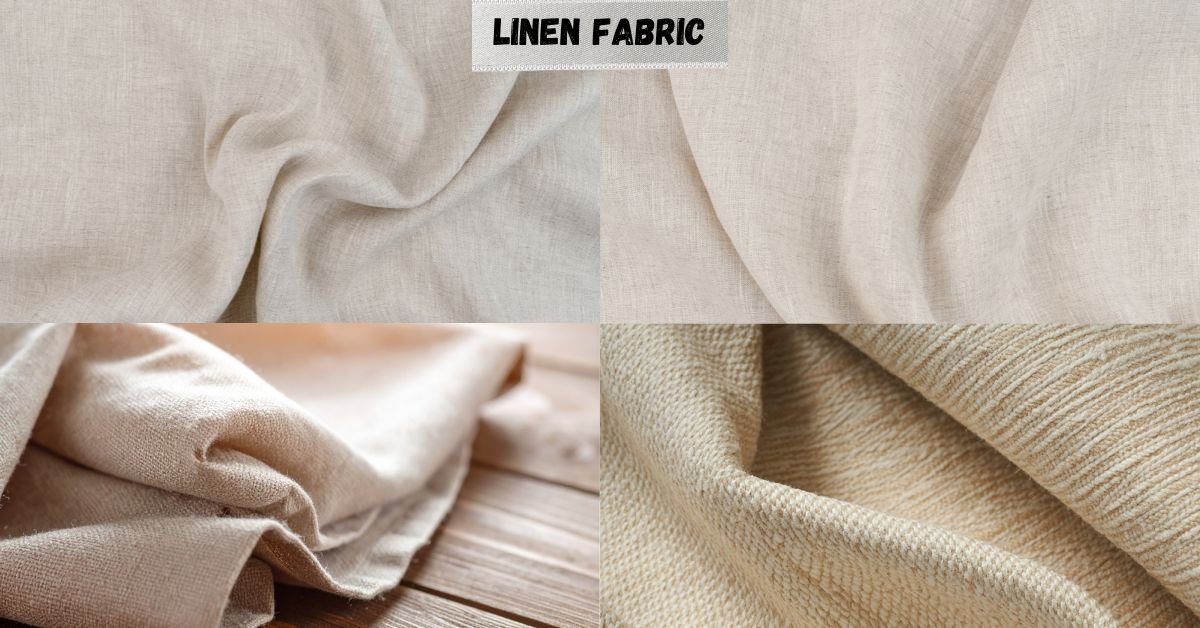
Linen is a natural textile made from the bast fibers of the flax plant. In particular, its fibers are longer and more tightly spun than cotton’s, making linen exceptionally strong (up to three times stronger than cotton). Linen is also highly absorbent and dries quickly, which helps keep you cool. These qualities make linen lightweight, breathable, and ideal for warm-weather clothing and bedding.
History of Linen Fabric
Ancient Origins of Linen
Linen’s history is ancient. Linen was grown in early Mesopotamia and used in ancient Egypt for clothing and mummies. Egyptians even wrapped their pharaohs in linen shrouds as a symbol of purity.
Linen in the Middle Ages
Linen production thrived in medieval Europe. For example, medieval Europe’s linen industry grew, with flax widely cultivated in Flanders, Ireland, and England. Linen cloth was used for everyday life – undergarments, bedding, table linens, and even ship sails were made from home-woven linen.
Linen During the Industrial Revolution
Its production became mechanized in the 18th and 19th centuries. For example, steam-powered looms and machines dramatically increased output, making linen products cheaper and more available. In turn, linen goods became more affordable, although cotton’s cheaper mass production eventually eclipsed linen for many everyday uses.
Modern Linen Fabric Production
Linen is enjoying a renaissance in sustainable fashion and home textiles. Modern European flax often requires no irrigation and no pesticides, making it very eco-friendly. Designers and homeowners love linen’s natural look and durability. In fact, one report found that searches for linen clothing surged 1,200% in a year, reflecting its current popularity as a relaxed, natural textile.
How Linen Fabric Is Made (From Flax to Fabric)
Flax Cultivation
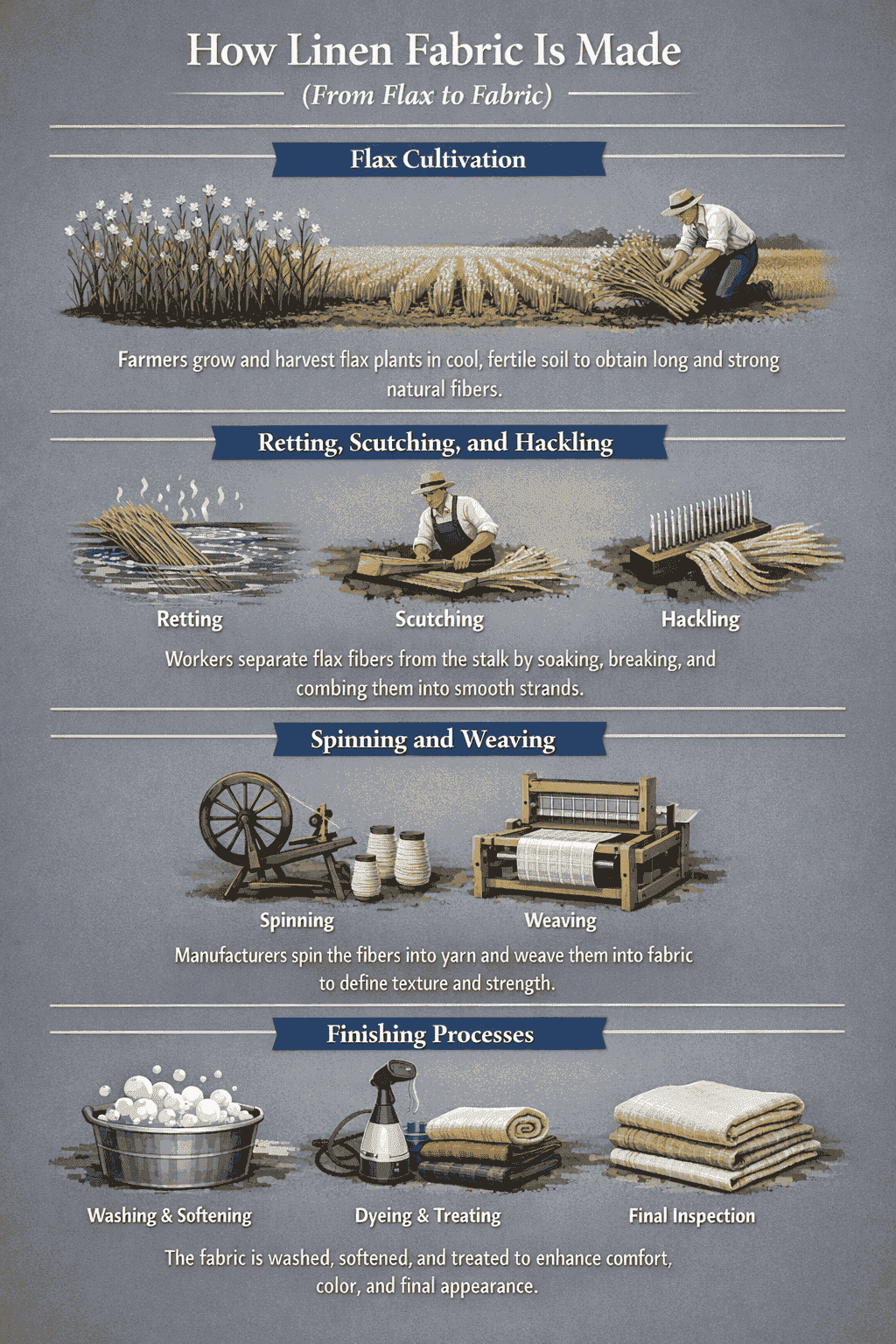
Flax thrives in temperate climates. Farmers sow flax seeds in spring, and by early summer the plants bloom with small blue flowers. In midsummer, when the plants mature, the entire stalk is pulled from the ground to harvest the flax fibers. The flax stalks are then dried in the field and their seeds are removed.
Retting, Scutching, and Hackling
After harvest, the flax stalks are retted in water, dew, or moist soil so that microbes break down the pectin that binds the fibers. Once retting is complete and the stalks are dry, they are scutched. Scutching means crushing and scraping the stalks to remove the woody core, leaving mostly flax fibers. Finally, the fibers are hackled (combed) to pull out any remaining short strands and reveal the long, smooth flax fibers.
Spinning and Weaving
Next, the cleaned flax fibers are spun into yarn. These yarns are then woven or knitted into linen fabric. For example, the yarns can be woven into a tight, breathable textile. The woven fabric is crisp at first but softens significantly with each wash.
Finishing Processes
After weaving, linen fabric is finished for use. It can be bleached to whiten the fabric or dyed in various colors. The linen may also be printed with patterns or given special treatments (like stonewashing or calendaring) to soften it. Finally, the fabric is pressed and inspected before being used in clothing, sheets, or other products.
Types of Linen Fabric
Linen comes in several weaves and blends, each suited to different needs.
Damask Linen:
Damask linen is woven with intricate, reversible patterns. These patterns often use a mix of satin and plain weave. It feels smooth and elegant. Damask linen is commonly used for formal tablecloths, napkins, and drapes because its decorative patterns hide stains well.
Plain-Woven Linen:
Plain-woven (or tabby) linen uses a simple over-under weave. It is very strong and durable. This weave is common for everyday items like dish towels, placemats, and casual bedding. It holds up to frequent washing and actually becomes softer with use.
Loosely-Woven Linen:
Loosely-woven linen has more open spaces between the threads. It feels very light, airy, and breathable. For example, such linen can absorb about 20% of its weight in moisture and dries very quickly. This makes it ideal for summer clothing (like airy shirts and dresses) and quick-drying towels.
Sheeting Linen:
Sheeting linen is a heavier, softer weave that drapes very well. It has a smooth surface and feels gentle against the skin. It’s used for bedding – sheets, pillowcases, duvet covers – because its weight helps regulate temperature and enhances durability.
Linen Blends:
Linen is often blended with other fibers. For instance, a linen-cotton blend adds linen’s cool feel to cotton’s softness. Similarly, linen-silk blends add a silky sheen. These blends tend to wrinkle less and are easier to care for. In general, linen blends offer many of linen’s advantages (breathability, natural feel) along with extra qualities like added softness or elasticity.
Read More>> About Soft and premium types Belgian Linen vs. Irish Linen.
Linen Fabric Properties & Characteristics
- Breathability: Linen’s fibers allow excellent air flow. Air passes easily through linen, so garments and sheets stay cool. For example, linen bedding wicks away heat from the body, making it feel much cooler than synthetic fabrics.
- Moisture Absorption: Linen can absorb up to about 20% of its weight in moisture. It wicks sweat away from the skin rapidly. For instance, linen clothing will soak up perspiration and let it evaporate into the air, keeping you dry and comfortable.
- Strength & Durability: Linen is very strong—up to three times stronger than cotton. As a result, linen textiles last for many years under normal use. For example, antique linen garments and sheets remain intact for centuries, far outlasting other fabrics.
- Texture and Aging: Initially, linen feels crisp and slightly stiff. However, linen softens with each wash. For example, high-quality linen becomes very smooth and comfortable after repeated laundering, without losing its strength. Natural slubs (tiny irregularities) in the weave give linen a characteristic texture that many people find charming.
- Wrinkle Resistance: Linen has very low elasticity, so it wrinkles easily. Many people view linen’s relaxed wrinkles as part of its casual charm. If you prefer a smooth look, you will need to iron linen (or accept a bit of creasing as its natural texture).
GSM of Linen Fabric & Why It Matters
- Understanding GSM: GSM stands for grams per square meter. In linen, GSM indicates fabric weight and thickness. A higher-GSM linen is heavier and more substantial, while a lower-GSM linen feels lighter and airier. For example, a 200 GSM linen sheet feels much thicker than a 150 GSM sheet.
- Low vs High GSM: Lightweight linens (around 130–150 GSM) are very airy and cool. Midweight linens (160–190 GSM) are a versatile balance of breathability and durability. Very heavy linen (200+ GSM) is thick and crisp; it feels sturdy and provides extra warmth.
- Ideal GSM: Choose GSM by use and climate. For example, 130–150 GSM linen is ideal for summer sheets or clothing. A 160–180 GSM linen is often recommended for year-round use. Heavier linen (200+ GSM) is suited to cool climates or heavy-duty items.
Pros and Cons of Linen fabric
Advantages of Linen Fabric
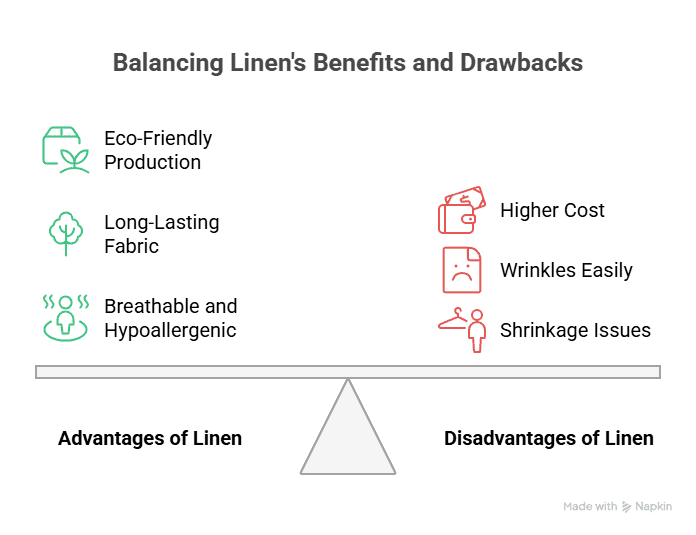
- Eco-friendly: Linen is highly sustainable. Flax needs very little water (rain only) and almost no pesticides. For example, producing one linen shirt requires only about 6.4 liters of water (from rain), whereas a cotton shirt might need thousands of liters. Linen is also biodegradable and almost every part of the flax plant is used.
- Long-lasting: Linen is extremely durable. Ancient linen textiles survive to this day. This longevity means fewer replacements over time, saving resources. For example, a well-made linen tablecloth can easily last decades without tearing or fading.
- Breathable: Linen fabrics feel cool and fresh. In hot weather, linen bedding and clothing help regulate body temperature. For instance, linen sheets will soak up body heat and release it, keeping hot sleepers comfortable.
- Hypoallergenic: Linen is moisture-wicking and resistant to bacteria and dust mites. It feels gentle on sensitive skin. For example, linen bedding is often recommended for people with allergies because it stays dry and clean.
- Softens Over Time: Linen actually improves with age. Each wash makes linen softer without weakening it. For example, a new linen shirt may feel crisp at first, but over months it becomes very supple and luxurious.
Disadvantages of Linen Fabric
- Wrinkles Easily: Pure linen creases far more than cotton. After washing, linen items often come out heavily wrinkled. If you prefer a smooth fabric, be prepared for ironing or a deliberately rumpled look.
- Higher Cost: Linen garments and sheets are usually more expensive than cotton or synthetics. Flax harvesting and processing are labor-intensive, driving up the price. For example, a linen duvet cover will often cost more than one made of cotton.
- Shrinkage Issues: Linen can shrink a little (usually a few percent) if not pre-shrunk. To avoid surprises, many people wash linen items in cool water and air-dry them. Buying linens that are slightly larger or prewashed helps prevent fit problems.
Linen vs Cotton vs Other Fabrics
Linen vs Cotton
Cotton and Linen are both natural fibers, but linen has some advantages. Linen is stronger and dries faster. It also needs far less water to grow. Cotton, on the other hand, feels softer from the start and usually wrinkles less. In short, linen is cooler, more durable, and more eco-friendly, while cotton is more inexpensive and plush.
Linen vs Hemp
Hemp and flax (linen) share many qualities: both require little water and no pesticides. However, hemp fiber can be even stronger—up to eight times stronger than linen. Hemp fabric tends to be heavier and coarser, whereas linen is finer and softer. Both are breathable and sustainable; linen is more common in clothing, while hemp is often used in heavier-duty textiles.
Read More>> Cotton vs Hemp
Linen vs Polyester
Linen is a natural, breathable fiber; polyester is synthetic. Polyester resists wrinkles and is inexpensive, but it traps heat and sheds microplastics. Importantly, linen biodegrades in months, while polyester can last centuries. For example, a linen rag will compost in weeks, but a polyester shirt may never fully decompose. In summary, linen is far more eco-friendly and cooler to wear, whereas polyester is cheaper and easier-care.
Comparison Table
| Feature | Linen (Flax) | Cotton | Hemp | Polyester |
|---|---|---|---|---|
| Source | Flax stem fiber | Cotton plant fiber | Hemp stalk fiber | Petroleum (synthetic) |
| Breathability | Excellent (very high) | High | High | Low |
| Moisture Wicking | Excellent (~20%) | Good | Excellent | Poor |
| Strength | Very strong | Strong | Extremely strong | Moderate |
| Wrinkle Resistance | Low (wrinkles easily) | Moderate | Moderate | High (resists wrinkles) |
| Biodegradability | Biodegradable | Biodegradable | Biodegradable | Not biodegradable |
Uses of Linen Fabric
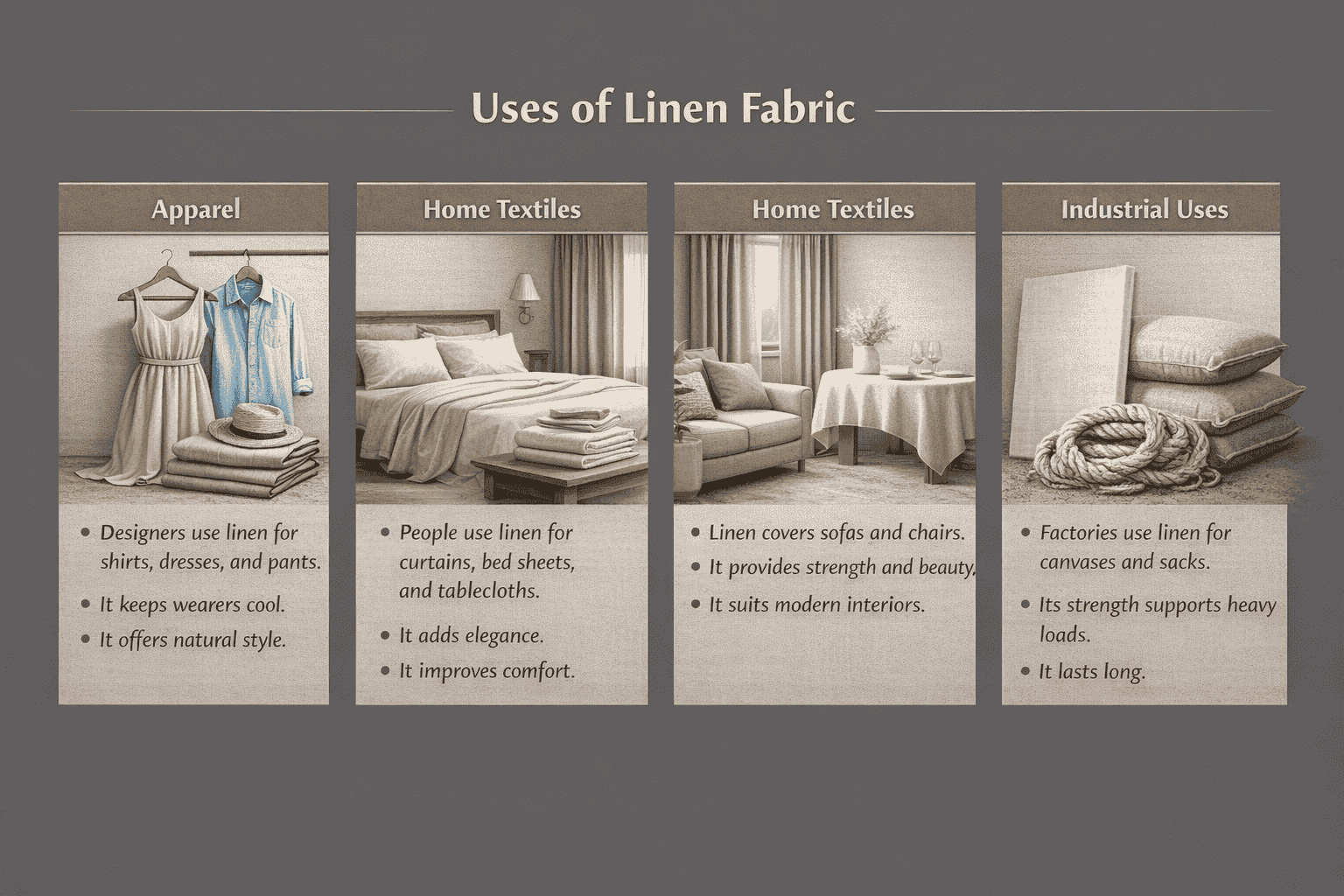
- Apparel: Linen is widely used in clothing, especially warm-weather apparel. For example, summer shirts, dresses, and suits in linen keep you cool. Its casual elegance and breathable feel make linen a designer favorite for fashion.
- Home Textiles: Linen is a classic choice for home goods. You’ll find linen sheets, pillowcases, tablecloths, napkins, linen curtains and towels. For instance, linen sheets feel cool in bed and linen towels dry you off quickly. Its absorbency and fresh look make it ideal for bedding and dining.
- Upholstery: Linen and linen-blend fabrics are used to cover furniture and curtains. The material’s strength gives furniture a natural, stylish look while standing up to daily use. For example, a linen sofa cover adds texture to a room and resists wear.
- Industrial Uses: Linen has traditional industrial roles. For example, heavy-duty textiles like sailcloth, canvas, and rope have been made from linen. Even paper money often contains linen for strength. Linen’s durability and low stretch made it ideal for these applications.
Is Linen Fabric Sustainable?
Linen is one of the most sustainable fabrics. For instance, flax requires almost no irrigation – it mostly relies on rainfall – and needs virtually no pesticides. To grow enough flax for one linen shirt uses only about 6.4 liters of water. After use, linen is biodegradable. Nearly every part of the flax plant is utilized, making linen production very resource-efficient. Many linen products carry certifications like OEKO-TEX® or GOTS, which guarantee eco-friendly growing and processing practices.
How to Care for Linen Fabric
- Washing: Wash linen on a gentle cycle with cold or lukewarm water. For example, avoid bleach or harsh detergents that can damage the fibers. Use a mild detergent to protect the fabric.
- Drying: Tumble dry on low heat or air-dry linen. Remove linen items from the dryer when they are just slightly damp to reduce wrinkles. Overdrying in high heat can weaken linen fibers.
- Ironing: If needed, iron linen on medium heat while it is still a bit damp. For instance, using steam will help remove deep wrinkles. Otherwise, the natural wrinkles can be left as part of linen’s relaxed look.
- Storage: Store linen in a cool, dry place away from direct sunlight. For example, fold or hang linen loosely (instead of packing it tightly) so it can breathe. Avoid plastic bags or containers that might trap moisture.
How to Identify High-Quality Linen Fabric
- Fiber length: High-quality linen comes from long flax fibers. For example, European-grown flax often produces longer fibers, resulting in smoother and stronger linen.
- Weave quality: Look for a tight, even weave. Premium linen will feel substantial and have a uniform appearance. Some natural slubs (tiny bumps) can appear, but the fabric should not feel rough. Also, genuine linen wrinkles easily; if it feels too rigid or doesn’t crease, it may be a blend or lower quality.
- Weight (GSM): Good linen usually feels substantial in weight. Medium to heavy GSM linens (140–200+ GSM) feel durable and thick. Very flimsy or gauzy-feeling linen may not be pure or high-quality.
- Finish and color: The finish should be smooth and the color uniform. High-quality linen dyes evenly without blotches. After softening, quality linen will maintain its integrity, whereas inferior linen might look faded or wear through after a few washes.
Conclusion: Why Linen Fabric Stands the Test of Time
In summary, linen’s blend of strength, breathability, and sustainability makes it a standout fabric. For example, linen’s enduring presence – from ancient Egyptian shrouds to today’s eco-friendly bedding – shows its timeless appeal. Choosing organic flax linen for your home means opting for a healthy, natural material that only improves with use. Though linen wrinkles and may cost more upfront, its longevity, comfort, and low environmental impact make it a truly smart, long-term choice.
FAQs About Linen Fabric
Absolutely. Linen’s exceptional breathability and moisture-wicking keep you cool. It lets heat and sweat escape, making linen bedding and clothing ideal for hot, humid weather.
Yes. Untreated linen will shrink a little (usually a few percent) on the first wash. To avoid surprises, wash linen in cold water and air-dry it. Many linen items are sold pre-shrunk or one size larger to account for this.
It depends on your needs. Linen is cooler, stronger, and more eco-friendly (it uses less water), but it costs more and wrinkles easily. Cotton is softer from the start and less expensive. Linen excels in hot climates and longevity, while cotton excels in softness and ease of care.
With proper care, linen can last for decades. Linen fibers resist wear and sunlight better than many fabrics. In fact, even 2,000-year-old Egyptian linen is still intact. Linen’s durability means your linen garments or sheets can become lasting heirlooms.