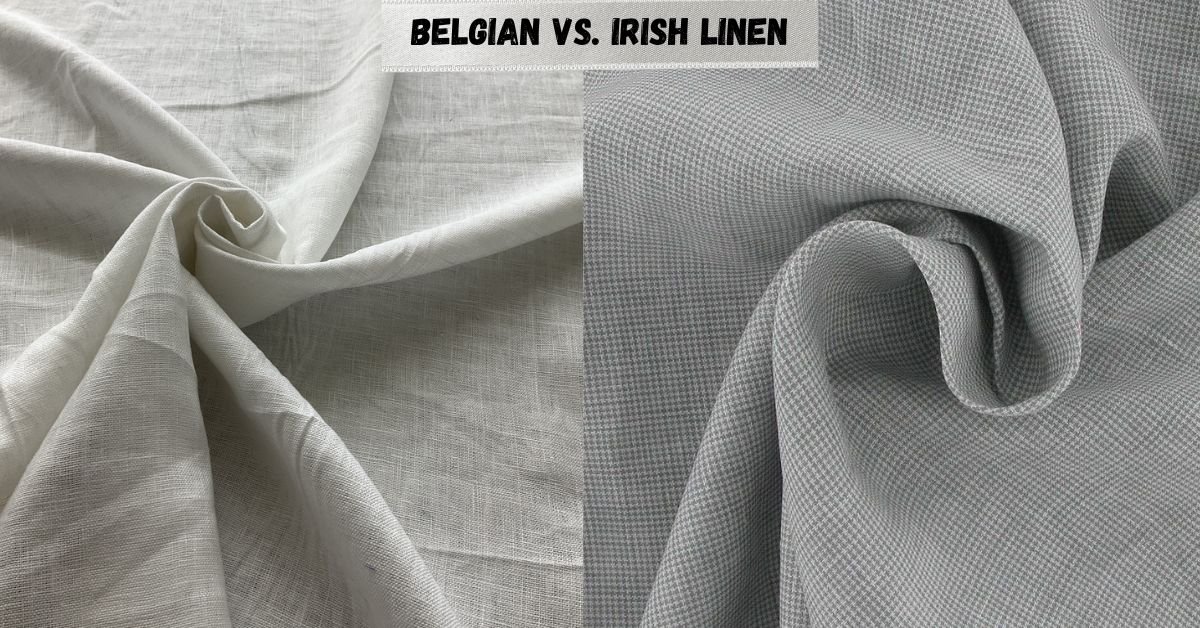

Linen is a premium fabric made from flax fiber, prized for its strength and breathability. Belgian linen and Irish linen are both high-quality European linens, but shoppers often compare them on factors like quality, price, authenticity, and best uses. Belgian linen typically carries a trademark certifying its origin and quality, while Irish linen carries a heritage reputation dating back centuries. In the first 100 words or so, it’s worth noting that Belgian vs. Irish linen comparisons often focus on who grows the flax, how it is woven, and the fabric’s feel.
Understanding the difference helps buyers decide which is best for bedding, apparel, or home décor. Belgian linen comes from Western European flax grown in a temperate climate, woven in Belgium under strict standards. Irish linen comes from flax historically grown in Ireland’s cool, damp climate and woven on the island, known for its smooth finish and durability. People compare them because each has a loyal following: some praise Belgian linen’s certified pedigree, while others prefer Irish linen’s cultural legacy and feel. Below we compare them in depth.
What Is Belgian Linen?
Origin and History of Belgian Flax
Belgian linen is a certified high-quality linen fabric made in Belgium from mostly European flax. The Belgian Linen™ Certification is an official label indicating a fabric is woven in Belgium and contains at least 85% flax fiber sourced from Western Europe. This certification is controlled by the Belgian Flax & Linen Association. For example, Belgian linen fabrics must have 85% European flax by weight and be woven in Belgian mills. The remaining fiber can come from other high-grade linen sources in France, Belgium, or the Netherlands.
Climate and Soil Advantages in Belgium
Belgium’s climate and soil are ideal for flax. In the lowlands between the Seine (France) and Amsterdam, the cool, moist conditions and rich soil produce exceptionally long and strong flax fibers. These fibers yield fine yarns when spun. Belgium’s linen industry dates to medieval times, but the formal Belgian Linen™ mark was created after World War II to revive and protect the region’s linen reputation. Woven linen from Belgium is known for its very fine, even weave and natural luster. Manufacturers often use both traditional methods and modern looms to achieve luxurious handfeel.
Belgian Linen Certification Meaning
The Belgian Linen label guarantees authenticity: only guild members who meet strict rules can apply. Each certified batch of Belgian linen carries a unique identification code, ensuring traceability. In practice, “Belgian linen” means European-grown flax, spun into yarn and woven into fabric in Belgium. It also implies a high standard of quality and craftsmanship. Many Belgian linen producers also belong to the Masters of Linen™ program, which requires European sourcing and traceability. In short, Belgian linen is famed for European origin, controlled production, and an elegant finish.
What Is Irish Linen?
History of the Irish Linen Industry
Irish linen is linen woven in Ireland, with a history going back hundreds of years. Ireland’s linen heritage began in medieval times, but it boomed in the 17th and 18th centuries when skilled French Huguenot weavers settled there. By the 18th century, Northern Ireland’s Belfast was nicknamed “Linenopolis” for its booming industry. The Irish Linen Guild, founded in 1928, now oversees the use of the “Irish linen” trademark. According to the Guild, genuine Irish linen yarn must be spun in Ireland and fabric woven by Guild members. Garments or table linens made from that woven fabric can bear the Irish Linen name, even if assembled elsewhere.
How Irish Climate Affects Flax Quality
Originally, Irish flax thrived in the moist climate of Ireland, producing fibers known for strength. Historical accounts note that flax grew well in Ireland’s damp soil and yielded “superior” linen with a very smooth finish. For example, Irish linen was long prized for its strength and smoothness by everyone from common households to royalty. Today, however, very little flax is actually grown on Irish soil. By the late 20th century, environmental regulations and changing industry practices ended commercial flax cultivation in Ireland. Now, “Irish linen” fabric is usually made from premium flax imported from France, Belgium, and the Netherlands. The flax is spun and woven in Irish mills with generations of local expertise.
Irish Linen Guild and Authenticity Marks
In modern times, Irish linen emphasizes craftsmanship and sustainability. Weavers use traditional techniques (some on old looms) as well as modern machinery to produce fine fabrics. Authentic Irish linen is known for being exceptionally fine and strong: it can be woven to very high thread counts while remaining durable. It also develops a natural softness and sheen with use, making it prized for clothing and bedding. The Irish Linen Guild mark (a harp-shaped symbol) guarantees authenticity. In short, Irish linen refers to high-quality linen made with Irish-spun yarn or Irish-woven fabric, celebrated for its luster and durable feel.
Belgian vs. Irish Linen: Quick Comparison
| Aspect | Belgian Linen | Irish Linen |
|---|---|---|
| Fiber Quality | Premium European flax fibers (long staple, fine) | Similarly premium flax fibers; historically grown for strength |
| Softness | Often milled very fine; may be enzyme-washed for softness | Naturally crisp hand; softens significantly after washing |
| Durability | Very durable flax fabric; built to last | Extremely strong; flax fiber is ~30% stronger than cotton |
| Weave Consistency | Very even, tight weave (Belgian mills use precision looms) | Dense fine weave; Irish linens historically noted for smooth finish |
| Price Range | Generally high (luxury-grade); €$/yd – often premium | Moderate to high (still luxury); sometimes slightly less expensive |
| Best Use | Luxury bedding, high-end apparel, upholstery | Fine apparel (shirts, dresses), table linens, summer clothing |
| Availability | Limited (sold by specialty brands and European weavers) | Niche (heritage brands, some mills still weaving) |
| Certifications | Belgian Linen™ label (85% EU flax, woven in Belgium); Masters of Linen™ | Irish Linen Guild trademark for Irish-spun/yarns and woven fabric |
Belgian vs. Irish Linen: Fabric Quality & Feel Comparison
Texture and Smoothness
Belgian linen and Irish linen both have a crisp, natural texture, but subtle differences exist. Belgian linen tends to feel extremely smooth and even, thanks to very fine European flax and meticulous weaving. Irish linen often feels slightly rougher at first touch but softens significantly with washing and use. In either case, linen’s texture is light and slubby by nature, and both Belgian and Irish linens develop a comfortable softness over time. Overall, Belgian linen is often finished to a buttery smooth hand, whereas Irish linen showcases its fine weave with a pleasant natural grain.
Read More>> Best GSM Guide for different types of Fabrics.
Breathability
Belgian and Irish linens are both highly breathable fabrics. They have open weaves and hollow flax fibers, so air circulates easily. This makes both types ideal for warm weather: they wick moisture and dry quickly. For example, European flax in Irish linen has a natural structure that “allows for excellent breathability, rapid moisture absorption, and quick drying”. Likewise, Belgian linen shares this property. In practice, a Belgian linen sheet or an Irish linen shirt both keep you cool and dry in summer.
Weight and Drape
Belgian linen fabrics often come in medium to heavy weights, giving them a very drapey, luxurious fall. They hang elegantly and hold shape well. Irish linen fabrics can vary: some are lighter and crisp for shirts, while others (like damask cloth) are heavier. In general, both fabrics drape softly, with Belgian linens often feeling slightly heavier under hand. In either case, linen’s natural weight provides good opacity (better than cotton per gram) and a graceful drape, whether it’s a blouse or a curtain.
Aging and Softness Over Time
Both Belgian and Irish linen improve with age. Linen fabric is strong yet naturally stiff; through use and washing, it becomes gentler on the skin. For instance, authentic linen develops “an unusually soft texture despite its durability”. Initially crisp linen (especially unwashed Belgian linens) will relax and smooth out after a few washes. Irish linen in particular is known to become very soft and supple after multiple launderings. In short, with time and gentle washing, any quality linen will get more comfortable rather than wear out.
Belgian vs. Irish Linen: Durability & Longevity
Strength of Fibers
Flax fibers (the source of linen) are very strong: about 30% stronger than cotton fibers. This means both Belgian and Irish linens are durable. High-quality linen fabrics from either origin resist tearing and abrasion. In fact, many premium linen pieces can last decades if cared for properly. Belgian mills often triple-weave or tightly finish their fabrics for extra strength, while Irish linen spinners traditionally produce very fine yarns that are also exceptionally strong. Overall, expect either linen to outlast most fabrics under normal use.
Read More>> Is linen Fabric Stretchy?
Wash Performance
Linen generally holds up well to washing. Both Belgian and Irish linens should be washed gently (cold or warm water) with mild detergent. Avoid bleach. In practice, linen may shrink slightly if not pre-shrunk (Irish linens often are sanforized). Belgian Linen™ products often come pre-washed for uniform results. After washing, linen regains shape when reshaped and dried flat. Of note, Belgian and Irish linens tend to soften further after each wash, yet their fibers remain intact. Proper care (air-drying, gentle ironing) ensures that both will continue to look fresh for years.
Wrinkle Behavior
One trademark of linen is that it wrinkles. Both Belgian and Irish linen will develop character-rich creases easily. However, many buyers love this natural texture (“elegant wrinkles”). Neither type has a major advantage here: woven linen of any origin will tend to wrinkle when folded or slept on. Belgian linen garments may sometimes be enzyme-washed to reduce initial stiffness, but both fabrics generally require ironing if a crisp look is needed. Many users simply embrace the relaxed creases of linen, which soften with wear and do not weaken the fabric.
Color Retention
Linen holds dyes well. Both Belgian and Irish linens retain color beautifully, especially with gentle detergent. Because flax has a smooth, hollow fiber, it often displays rich, earthy tones with a subtle sheen. Over time, bright colors may fade slightly in sunlight (linen, like cotton, is best kept out of direct sun to prevent bleaching). In general, expect that Belgian and Irish linens, whether dyed or natural, keep their color comparably well, especially when washed inside-out and sun-dried in the shade.
Belgian vs. Irish Linen: Manufacturing Process Differences
Flax Sourcing
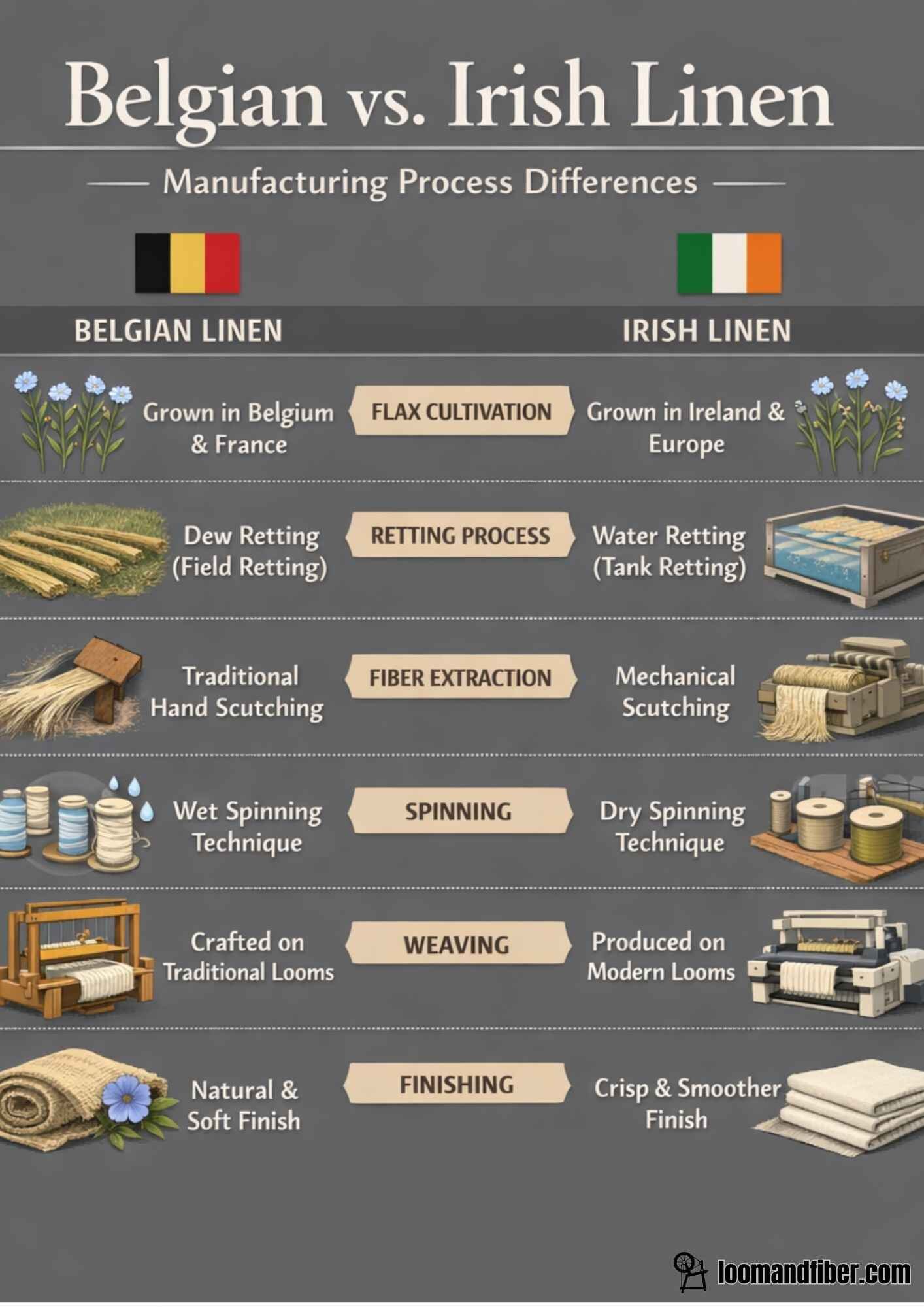
Belgian linen producers almost always use European-grown flax. The official standard requires at least 85% of the flax by weight to come from Western Europe (France, Belgium, Netherlands). This region’s soil and climate produce top-grade fiber. By contrast, Irish linen yarn is usually made from flax grown in northern France, Belgium or the Netherlands as well. Today, both Belgian and Irish linens rely on the same European flax sources, so raw material quality is essentially equivalent. However, under the Masters of Linen™ and Flax™ certifications, Belgian producers guarantee traceability of each fiber, whereas Irish linen standards focus more on where weaving is done than where the flax is grown.
Spinning and Weaving Techniques
Belgian linen mills use a mix of traditional craftsmanship and modern precision. They often spin flax in Belgium or nearby and weave on high-speed Belgian looms. Belgian mills are known for an exceptionally uniform weave and tight weave control. Irish linen is traditionally woven on looms in Ireland by families of weavers. Modern Irish factories combine heritage techniques with new looms to maintain a soft hand. In both cases, the goal is a fine, even fabric: Belgian mills have advanced finishing (like enzyme or stone washing), and Irish manufacturers focus on artisanal quality. Neither has inherently better methods; both follow centuries-old expertise specific to their regions.
Eco-friendly Practices
Sustainability is a priority in both industries. European flax (used by both Belgian and Irish linens) follows strict eco-standards. For example, under the European Flax Charter, farmers avoid artificial irrigation, GMOs, and encourage dew-retting in fields. Dew-retting (flax left on fields to rot naturally) uses no harsh chemicals. Belgian and Irish mills also tend to recycle all parts of the flax plant and use no toxic dyes. The Belgian Linen Association and the European Masters of Linen label even emphasize certified environmental practices: they audit plantations and factories for transparency and sustainable production. In short, both types of linen share the benefits of Europe’s eco-conscious flax industry.
Quality Control Standards
Belgian linen’s quality control is very structured. Only members of the Belgian Flax & Linen Association can use the label, and they must submit fabric samples and production details for approval. Each certified roll of fabric gets an ID. The Masters of Linen™ certification adds an extra layer: it ensures all processing stays in Europe. Irish linen’s quality control revolves around the Irish Linen Guild. The Guild permits use of its trademark only on yarn spun and fabric woven in Ireland. However, the Guild does not audit every stage of flax sourcing. In practice, a Belgian Linen™ piece guarantees strict chain-of-custody, while the “Irish Linen” label guarantees Irish weaving (and a symbol of heritage), but with less mandatory traceability of the flax origins.
Belgian vs. Irish Linen: Price Comparison & Value for Money
- Average Market Prices: Belgian linen products often command higher prices. Retail Belgian Linen™ textiles can run at the top end of the market (reflecting the certification and labor costs). Irish linen is also premium, but sometimes a bit less expensive than comparable Belgian items. Exact prices vary by weight and finish, but in general Belgian linen is priced at the upper luxury tier, while Irish linen is premium but occasionally more modest.
- Why Belgian Linen is Often More Expensive: The Belgian linen label and strict European origin rules add value. Belgian mills invest in advanced finishing and certification processes. Many Belgian linen brands also market the fabric as an ultra-luxury product (even citing its 2,000-year heritage). These factors raise the price.
- When Irish Linen Offers Better Value: Irish linen may offer better value when certification is not a buyer’s priority. If you’re looking for authentic linen without the Belgian label premium, Irish linens woven by Guild members still provide excellent quality. Irish linen garments (like shirts or dresses) can be slightly more affordable. Also, smaller Irish brands or vintage Irish damasks may be found at good prices relative to comparable Belgian offerings.
Belgian vs. Irish Linen Uses
Uses of both Belgian and Irish Linen are given below;
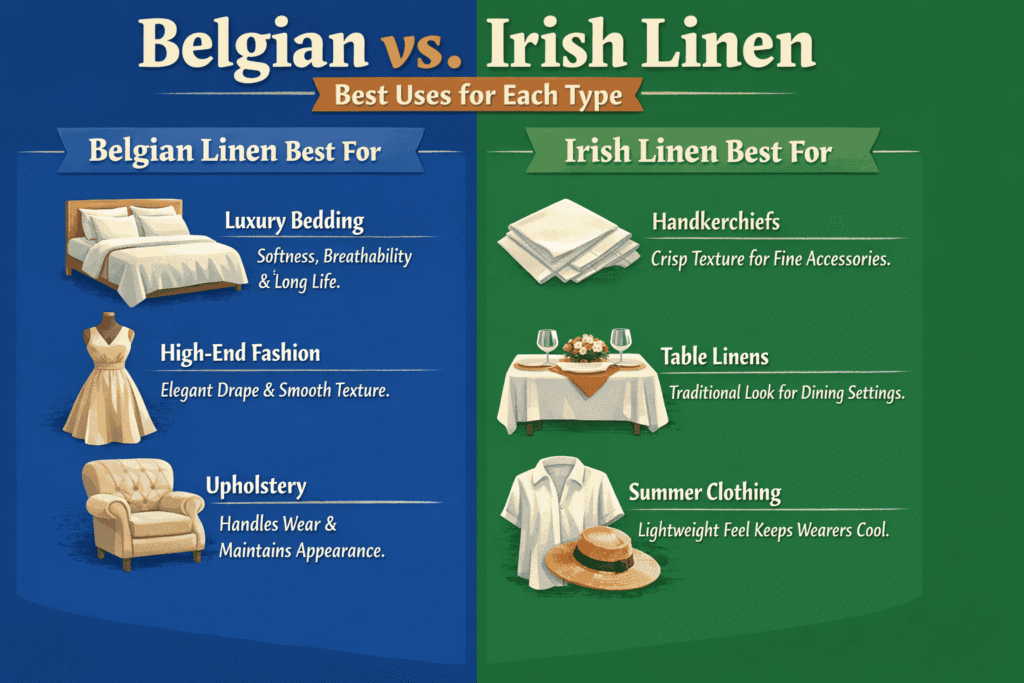
Belgian Linen Best For:
- Luxury Bedding: Belgian linen sheets and duvet covers are a top choice for luxury bedding. The fabric’s softness and durability make it ideal for high-end bed linens.
- High-End Fashion: Belgian linen is favored by designers for upscale clothing and accessories. Its fine weave and uniform texture suit elegant dresses, suits, and shirts.
- Upholstery: Belgian linen’s strength and fine finish work well for premium home furnishings and draperies. Its even weave and durability are great for sofas, chairs, and curtains.
Irish Linen Best For:
- Handkerchiefs: Irish linen is traditionally used for fine handkerchiefs. Its absorbency and the crisp hand give a smooth, elegant feel ideal for dress handkerchiefs and pocket squares.
- Table Linens: Irish linen is famous for tablecloths and napkins. Fine Irish damask and woven linens add a classic touch to dining, thanks to their natural luster and long life.
- Summer Clothing: Irish linen is perfect for warm-weather garments. Breathable and cool, it’s often used for light dresses, shirts, and breezy trousers. Its ability to wick moisture helps keep the wearer comfortable on hot days.
Sustainability & Environmental Impact
Linen production is generally eco-friendly, especially in Europe.
Water usage: Linen (flax) requires far less water than cotton. European flax fields rely on rain and dew rather than irrigation. For example, flax plants naturally mature with just seasonal rain, so Belgian and Irish linens have a lower water footprint than many crops. The photo above shows a flax field in bloom – these plants thrived on rainwater, illustrating the crop’s efficiency.
Chemical processing: Natural retting (field dew-retting) means few chemicals. Both Belgian and Irish linen avoid heavy pesticides and use no artificial irrigation. When processing flax into yarn, European mills often recycle all parts of the plant, leaving minimal waste. In short, linen production follows sustainable practices (no GMOs, no irrigation, and zero waste) as set by the European Flax Charter.
European linen standards: In Europe, linen companies often carry certifications (Masters of Linen™, OEKO-TEX, GOTS) that enforce strict environmental criteria. For example, Masters of Linen™ explicitly promotes “sustainable practices of certified companies” throughout the supply chain. Both Belgian and Irish linen producers typically adhere to these standards, giving buyers confidence in the fabric’s green credentials.
Organic flax options: Organic flax is grown in Europe under GOTS standards. Some Belgian linen producers offer organic lines. Irish linen mills also use high-quality flax that can be certified organic. In either case, one can look for organic or GOTS labels on linen products for even more assurance of environmental care.
How to Identify Genuine Belgian vs. Irish Linen
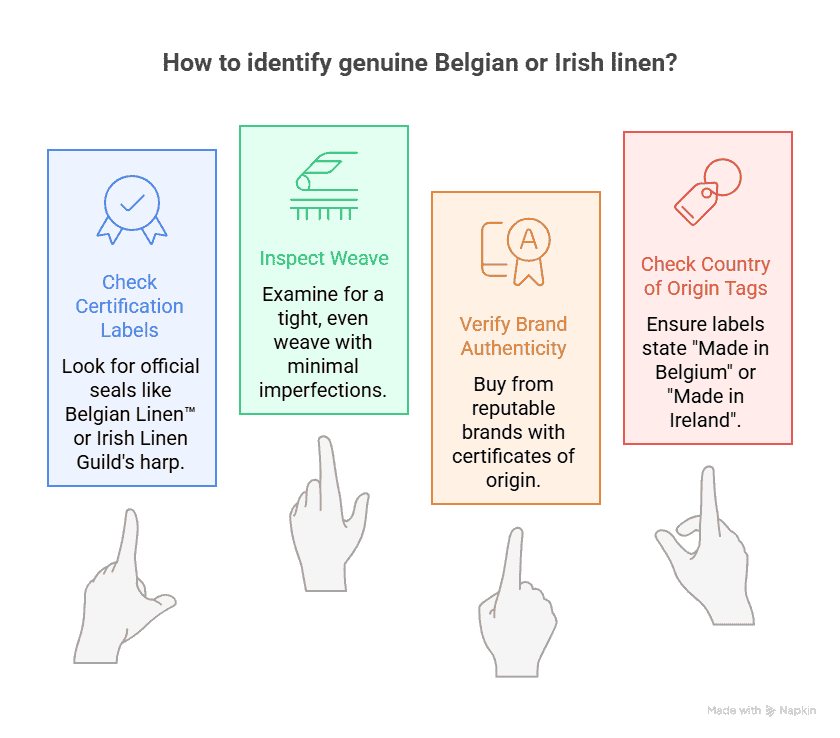
- Certification labels: Check for official seals. Authentic Belgian linen often carries the Belgian Linen™ logo, meaning at least 85% EU flax and weaving in Belgium. Some products also list a Masters of Linen™ badge. Authentic Irish linen will have the Irish Linen Guild’s harp-like trademark. This symbol confirms yarn spun or fabric woven in Ireland.
- Weave inspection tips: Examine the fabric closely. Genuine Belgian or Irish linen has a tight, even weave with minimal imperfections. Quality linen will feel substantial yet smooth. If a linen cloth feels flimsy, excessively stiff, or has irregular slubs, it may be lower quality or non-European. Look for a consistent, dense weave: high-end Irish linens (like Thomas Ferguson or Givans Royal Warranty) have exceptionally fine, even threads.
- Brand authenticity checks: Buy from reputable brands and sellers. Established Belgian linen manufacturers (e.g. Libeco, Anne de Solène) and Guild-member Irish producers (e.g. William Clark, Thomas Ferguson) provide certificates or labels of origin. If in doubt, ask retailers if the linen is certified by the Belgian Flax & Linen Association or the Irish Linen Guild.
- Country of origin tags: Always check the label. Genuine Belgian linen products should be labeled “Made in Belgium” or state European linen origin. Genuine Irish linen will be labeled “Made in Ireland” (or at least “Irish Linen Fabric”). Beware of vague tags like “100% linen – made in X” without certification claims.
Belgian vs. Irish Linen: Pros and Cons
- Belgian Linen – Pros: High-grade European flax yields an exceptionally fine, durable fabric. Belgian weaving is top-tier, giving a consistent, luxurious feel. The Belgian Linen™ certification ensures authenticity and quality. Products often carry traceable origin codes. Also, it has a long heritage (dating back to Roman times) which many buyers value.
- Belgian Linen – Cons: Belgian linen tends to be expensive, reflecting its luxury status. It can be hard to find outside specialty markets. Some cheaper “Belgian linens” may be mislabeled or blended with non-EU flax. Real Belgian Linen items often require careful care (ironing, gentle wash).
- Irish Linen – Pros: Irish linen is renowned for its natural luster and strength. It’s typically crisp and breathable, ideal for summer wear and bedding. Quality Irish linens soften wonderfully with age. Because of its rich history, Irish linen often carries a premium look at slightly lower cost.
- Irish Linen – Cons: Most “Irish linen” now uses imported flax, so origin can be less transparent. The Irish Linen Guild’s mark doesn’t guarantee organic or audited sourcing. Irish linen wrinkles easily (like any linen). If unwashed, it can feel stiff. Due to limited local production, authentic Irish linen products are also expensive relative to generic linen.
Belgian vs. Irish Linen: Which One Should You Choose?
- Based on Budget: If you have a high budget for pure luxury, Belgian linen (with its certified stamp) is a top choice. Its price reflects its pedigree. If budget is moderate, Irish linen still offers great quality for slightly less cost.
- Based on Use: For everyday dining or casual summer wear, Irish linen may offer better value (think Irish linen shirts or tablecloths). For heirloom bedding or designer fashion, Belgian linen’s supreme craftsmanship can shine.
- Based on Climate: Both linens excel in warm conditions. They are cool and moisture-wicking. If you often see hot summers, any high-quality linen helps. However, Belgian linen (being often heavier) might be cozier in mild climates, while light Irish linen is perfect for hot, humid weather.
- Based on Care Preference: Linen requires gentle care no matter the origin. If you prefer fabric that softens beautifully, either is fine. If you want guaranteed traceability (for example, “I need 100% EU linen”), Belgian linen wins. For slightly easier maintenance, both similar – just follow linen washing guidelines below.
Irish vs. Belgian Linen: Care & Washing Guide
- Washing: Use cool or warm water with a mild detergent. Avoid bleach, especially on colored linens. Linen can be hand-washed or machine-washed on a gentle cycle. Both Belgian and Irish linens should be washed separately or with similar fabrics to avoid pilling.
- Drying: Air drying is ideal for linen. Hang or lay flat in shade. If using a dryer, tumble on low heat and remove while slightly damp. This prevents excessive wrinkling. Linen shrinks a bit; pre-shrunk fabrics will be more stable.
- Ironing: Iron linen while slightly damp for best results. Use the linen or cotton setting on your iron. Belgian linens (often lightweight) and Irish linens both iron to a crisp finish, though ironing is optional if you like the relaxed, rumpled look.
- Storage: Store linen in a cool, dry place. Avoid plastic—use breathable cotton bags or pillowcases. Keep out of direct sunlight to prevent yellowing or fading over time.
Conclusion
Belgian and Irish linens are both fine European linens, each with unique strengths. Belgian linen is prized for its strict certification, consistent ultra-fine weave, and high luxury appeal. Irish linen is celebrated for its rich heritage, robust feel, and natural elegance. In the end, either choice offers superb quality. If you want a trademarked guarantee of origin and don’t mind paying a premium, Belgian linen is a great pick. If you favor classic craftsmanship and perhaps a slightly lower price, Irish linen is equally outstanding.
Read More>> Linen Fabric Complete Guide.
FAQs
There is no absolute “better” – both are top-tier linens. Belgian linen carries a trademark certifying its European origin, which some buyers prize. Irish linen boasts a long heritage and is equally high-quality in feel. If you value strict certification and a silky-smooth weave, Belgian may suit you.
Look for the Belgian Linen™ certification label or logo. It means the fabric is woven in Belgium from at least 85% European flax. Many products also display a unique batch ID or “woven in Belgium” tag.
Softness depends on finish, not the country. Both can be finished to be very soft. New Irish linen may feel a bit stiffer than a washed Belgian linen, but after a few washes they both become luxuriously soft. Typically, Belgian linens are often enzyme-washed to feel immediately soft, whereas many Irish linens start crisp and soften over time.
High-quality linen, whether Belgian or Irish, is excellent for hot weather. Linen fibers naturally wick moisture and breathe. Choose lighter weights and looser weaves for the hottest climates. For example, an Irish linen shirt or a Belgian linen sheet will both keep you cool.
Yes. Both Belgian and Irish linen brands offer organic lines. Look for GOTS or OEKO-TEX certified linen, which means the flax was grown organically. The Irish Linen Guild mark itself does not guarantee organic material, so check labels for specific organic certification.