

Does Wool Shrink?
Yes wool can shrink but only under certain conditions. Shrinking does not happen every time wool gets wet or when it gets washed. Usually the wrong method of washing or drying is to blame for the shrinkage. When wool is subject to heat, moisture, and movement, it shrinks. Conversely, if wool is washed in cool water it will be stable. Therefore, it is reasonable to say that mistakes were made in their care, not evidence of a weakening of the fabric. When treated correctly, garments made from wool should, and will, last for many years. They will not shrink and will maintain their original shape and comfort.
Why does wool shrink?
Heat, Moisture, and Agitation
There are occasions when wool will not react at all or become unmanageable and are the perfect combination of heat moisture and agitation. When a wool fiber has absorbed water, it softens. This enables the fiber to become more pliable. Movement is introduced the fibers to tighten. When they besiege and lock together the wool will become permanently shrunk.
Wool Fiber Scales and Felting
The tiny scales that run along the fiber surface which create a lot of backwards friction when they rub against each other. This is what causes wool to become ridiculously dense and smaller in size.
Why do washing machines cause shrinkage?
Washing machines provide all the right elements to create the ultimate environment for the shrinkage of wool. Water, heat, and agitation all help to quickly felt wool fibers, causing unexpected shrinkage.
What Causes Wool to Shrink Most?
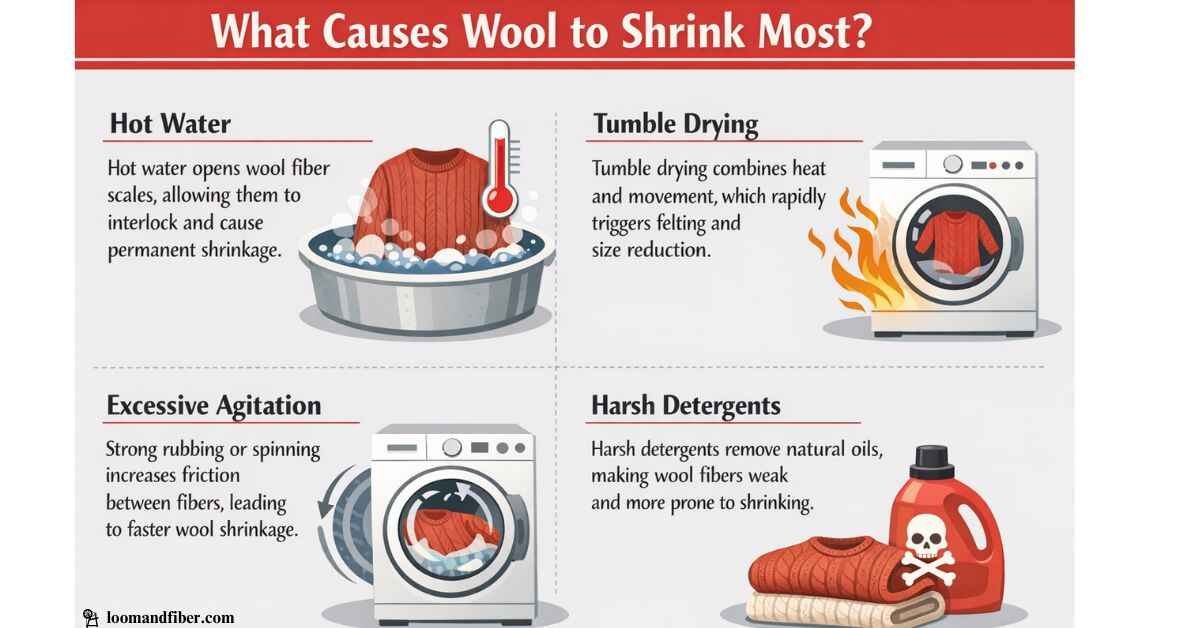
- Hot Water: Washing wool with warm or hot water causes serious damage. Heat causes the scale on the fiber to open and promotes felting. Washing machines warn that hot water will lock wool fibers together and cause major shrinkage.
- Tumble Drying: Tumble drying wool is very risky. The heat from the dryer sets the shrinkage that begins in the wash and shrinks the fibers some more. High heat drys out and weakens the fibers making the wool stiff and brittle. Even “low heat” settings are too hot for wool.
- Excessive Agitation: This involves rough handling like vigorous machine tumbling or scrubbing. This pushes wool fibers past each other. This action is what causes the scales to hook and lock. The more you tumble, rub, or twist a wool garment, the more it will shrink.
- Harsh Detergents: Strong soaps and enzymes strip wool of its natural oils and raise the wash to damaging levels. Alkaline detergents (pH 9–12) dry out the fibers, stiffen them, and cause them to felt. Always use a wool safe detergent with a neutral pH, that is free of bleach, enzymes, and brighteners.
Does Wool Shrink in the Wash?
Machine Wash vs Hand Wash
Wool hand washing is usually safer than washing machine wool. Of course, hand washing is always safer. On the hand washing side, the wool garments are swished in cold water and that minimizes the friction, whereas, even in the delicate cycle, the machine tumbles the item. The machine wash does have to wash and that part of the cycle uses the hot water. The tumbling can cause shrinkage through agitation. If you do use a washer, always choose the gentlest wash cycle. Adding a mesh washing bag wool in the machine wash is added protection against rubbing.
Hot water vs cold water
Hot water is not friend of the wool and should be avoided always. When you wash your wool items it is best to do it in cold water, since it flattens the scales and prevents them from shrinking. Wool can be washed in lukewarm water but be careful anything higher is not ideal. In wool experts say that, “hot water significantly increases the risk” of wool shrinking, therefore wash your wool in cold water always.
Understanding Spin Cycles
How much a machine spins can impact the wool cycle. The higher the machine spins, the higher the heat and friction, which can harm the wool. The best option for a wool cycle is to use the machine’s no-spin and lowest spin options. If the washing machine has a cycle specifically for wool or wool and silk, it should spin very gently. To recap, the safest way to wash wool in a machine is to use cold water, a slow cycle, and to limit spinning to reduce mechanical stress.
Does Wool Shrink in the Dryer?
Why dryers are risky
Hot air produced by a dryer is almost a surety of wool shrinkage. Dryers perform two significant evils: they hasten shrinkage (as does hot water) by shrinking fibers, and they destroy fibers by drying them out… The heat actually solidifies any felting which has begun. Practically, it implies that even a brief trip to the dryer will destroy the size and softness of a wool item. These reasons explain why professionals highly recommend against putting wool in the dry-cleaner.
Air-drying best practices
The mildest way of handling wool is air drying. Wash delicately, and put wool pieces on a towel or a drying rack, and roll them into their natural size. This will avoid any strain and heat. Also, do not subject the garment to direct sunlight or radiators as even ambient heat will cause gradual shrinkage. As much as is possible, dry in the shade. (Should you have to put on a wool garment, arrange it on a padded bar or soft clips on shoulders to prevent it being distorted, and yet not to have any source of warmth)
Heat damage explained
Wool is damaged even by low temperatures of drying. Proteins are stiffened and lanolin (natural fiber oil) is destroyed by heavy heat. The outcome is coarse wool that is brittle. One wool expert is plainly straight, and he says: No you should not put wool socks in the dryer. A significant reason of shrinkage is the excessive heat and it may brittle the wool fibers. That is, any kind of heat in a dryer that is not substantial will destroy the structure of wool. This is why the answer to the question is short: No- wool, should not be put in the dryer.
Do All Types of Wool Shrink?
Merino wool
The merino wool is a fine, long-fibered wool. These are long slender fibers, with less natural crimp than more coarse wools, thus untreated Merino may slow down to felt and contract. Actually, the merino clothing is pre-treated (superwash) and therefore cleans well. Otherwise, Merino will become smaller like wool unless it is taken care of. However, practically most of the products of the Merino breed do not shrink due to its fine fibers and special treatment.
Cashmere
Cashmere is a soft wool of Cashmere goats, which acts like any protein fiber when subjected to heat and water. It will diminish in case it is subjected to hot or even warm water. Cashmere is sensitive and delicate; hence, it is advisable to hand wash it using cold or cool water. Concisely: yes, cashmere does shrink when mishandled, and therefore it is always necessary to use cold water and take special care.
Lambswool
Lambswool (young sheep) is wool, which is subject to felting. It’s products will either shrink or lose their shape unless they are washed and dried carefully. It has a natural softness that does not hinder felting in case it is heated or agitated. Lambswool should be treated as any wool: cold gentle washes and flat drying must be used to prevent the shrinkage.
Alpaca wool
Alpaca wool is an animal fiber technically (like wool) and it has certain merits. It is also usually lighter and slippery and thus it does not pill and felt like most wools would. When well taken care of (washed in cool water and dried flat), alpaca need not shrink readily. In reality, alpaca clothes are typically described as delicate, and adherence to those instructions (no dryer, in particular) will not make it shrink.
Virgin vs recycled wool
Virgin wool (fiber that is not previously used) is relatively high-strength and stretchier than recycled wool. Recycled wool can be made by shredding old clothes which makes the fibers short in some cases. Due to this fact, the recycled wool is less elastic and weaker as compared to virgin wool. This implies that a garment made of recycled wool would tend to deform or shrink a little more when under stress. But the same precautions must be taken: keep off the heat, and abrasion, on any wool. Generally, virgin wool is able to perform laundry more easily, just due to the fact that its fibers are unbroken and straight.
Is Merino Wool Shrink-Resistant?
Fine Fibers vs Coarse Fibers
Fine merino fibers are easily bent; they do not lock together. Unfine fibres interlock more quickly in the course of washing. The thickness of fiber is significant in shrink resistance.
Performance Wool Treatments.
Most merino clothes are treated with special anti-shrinking measures. These processes velvety or coated the fiber scales. This minimizes the risk of being felted in the course of washing.
Real-world use cases
Outdoor and sportswear: Treated Merino is frequently used as base layers, hiking shirts, and socks. Such clothes are designed to undergo machine washing.
Casual wear: Numerous Merino sweaters and scarves are being sold as washable wool. These clothes usually recommend to wash hands or wool cycle, but natural resistance to the Merino fiber allows to retain size in case you do it according to the instructions.
Technical apparel: Travel tees or underwear of Merino are usually described as being lightweight and not being shriveled in the laundry. The Merino (sometimes mixed with polyester) is spun fine thus giving them the built-in stretchiness to conform.
Does Wool Shrink More Than Cotton?
Wool vs cotton comparison
The shrinking of wool and cotton takes place in different ways. The scale interlocking of wool felt-shrink, and this may occur many times in the presence of agitation. Cotton (a cellulose fiber) is also spun-out and relaxes. The initial wash in hot water causes a release of the internal tension in the cotton, and it usually contracts once (usually 3 – 5 only). Additional laundering is of relatively minor effect following that first shrink. On the contrary, wool may continue to be contracted as long as you keep subjecting it to felting conditions. According to one source: cotton will only shrink once, whereas wool may shrink when it is over-agitated.
The question of why Cotton Behaves Differently?
Cotton reduces in size due to relaxation of fibers post weaving. The shrinkage is normally foreseeable. The shrinkage in wool occurs abruptly, by felting.
Which Fabric Is Safer to Wash
Cotton is more machine washable and machine dryable. Wool is sensitive and requires low temperature. Thus, cotton can be washed more often.
Can Wool Shrink Be Prevented?
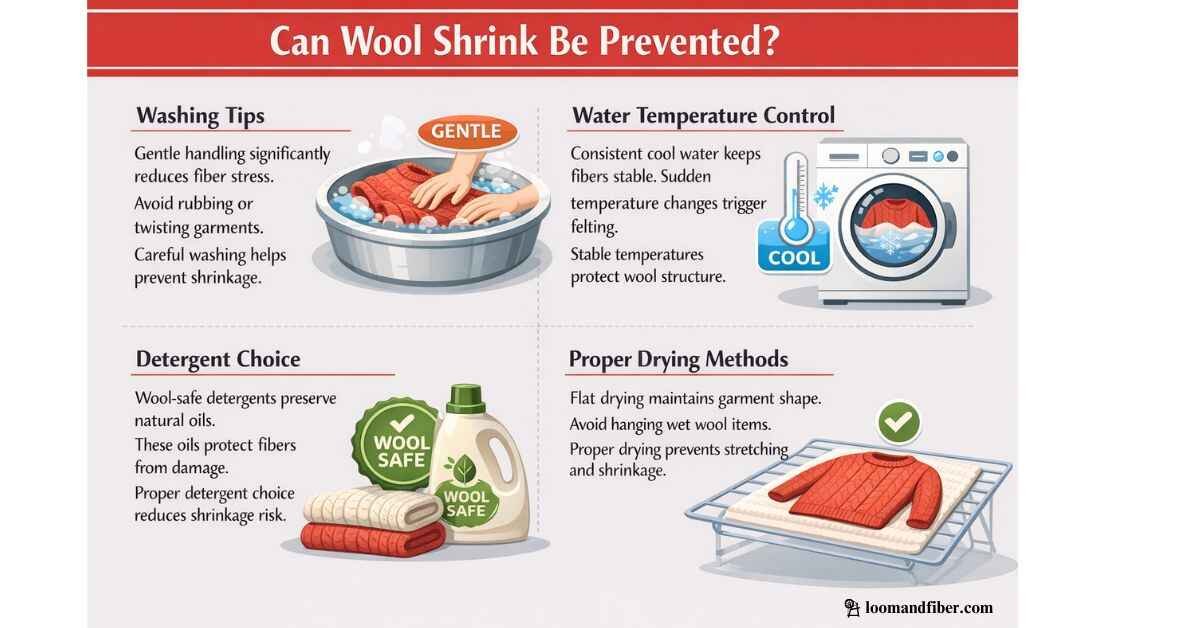
Washing tips
- Turn inside-out: This serves to cover the outside fibers and to avoid abrasion. In case of knits or carpets, it implies that the scales are not likely to be scaled out.
- Utilize a gentle cycle: In the case of machine washing, select the wool cycle or delicate cycle. They have a lower drum speed and shorter wash times to minimize rubbing.
- Do not overload: Leave wool stuff to move. A half loaded machine implies reduced friction between garments. Overpacking brings about additional tumbling of wrinkles.
Water temperature control
- Never hot (or warm): This is the first and the most important rule. Cold water maintains shrink at its minimal. This is normally safe even at lukewarm (less than 30 o C). Do not use warm or hot water unless the label on a garment says it is all right.
- Fill and do not agitate: When washing hands, fill the basin with cold water first then add detergent, and use cold water. When it comes to machines, it is better that all water is cooled down before spinning to prevent any remaining heat.
Detergent choice
- Wool-safe formula: Apply a wool-safe or delicates detergent of neutral-pH enzyme free. Protein fibers are tender to these formulas. On the contrary, normal detergent has the ability to strip lanolin and weaken fibers. Wool-safe detergents tend to promote, no bleach, no enzymes, no brighteners.
- None of bleach or fabric softener: Bleach (chlorine) will instantaneously harm wool proteins and even oxygen bleaches are excessively severe. Fabric softeners penetrate fibers and may promote matting. Pass any product that is not wool labelled.
Proper drying methods
- Lay flat to dry: Press out the water (do not wring) and reshape the garment after washing. Then place it on a towel or rack in cold. In this manner it is even dried in its natural form.
- Do not use tumble dryers: Dryers, as it has been mentioned, lead to irreversible shrinkage. An air-only tumble environment is not even required.
- Tumble (gently, when necessary): There are dryers that have a no-heat fluff setting. This simply fills the air at room temperature and can accelerate drying a bit. Still, it is safer to simply air-dry flat but air tumble is better than heat.
How to Wash Wool Without Shrinking
Step-by-Step Washing Guide
- Turn Inside-Out: Turn the clothes inside out before washing to cover the outer surfaces.
- Use Cold Water: It is always recommended to wash cold or cool water on wool. Add detergent to the machine to prevent shock.
- Select Gentle Cycle: Select the wool /delicate/hand-wash cycle on your washer. When there is space, laundry bag can be used with small objects (such as socks) to soften them.
- Add Mild Detergent: Add a small amount of wool specific, pH-neutral detergent. Keep the load easy – no mixing up heavy jeans or zippers.
Hand Wash Method
- Fill and Mix: Fill a basin with cold water (approximately 20 30 o C). Place little wool detergent or weak shampoo and blend.
- Place and Swirl: Dip the wool product into the water and gently swirl it. Don’t wring or rub hard. Let it soak for 5–10 minutes.
- Wash with a lot of caution: Wipe the soapy water and pour the cold water. Gently agitate to rinse. Repeat until the water clears up.
- Take Water away: Hold the garment and squeeze it to take the extra water (do not twist). Place it on a towel and roll up and squeeze to dry it.
Machine Wash (Safe Settings)
- Pick Wool/ Delicate Cycle: Choose the minimum agitation level. A large number of machines possess a distinct wool cycle.
- Cold Water Only: Make sure the temperature is on cold.
- None/Low Spin: Turn the speed of spin to its lowest or eliminate it. This reduces heat build-up and friction.
- Use Mesh Bag: When it comes to such products as hats and socks, put them in a laundry bag. This helps to avoid hooking up on other objects.
Can Shrunken Wool Be Fixed?
Stretching techniques
Wet stretch: If the garment has slightly shrunk, then you can stretch it. Wash and then pull the damp object gradually back into shape. Concentrate on extending it on the shrunk direction (typically width). And do this so tenderly in order not to tear fibers.
Pin and dry flat: Spread the wet piece of clothing and pin the edges (e.g. using sewing pins or heavy objects) into the size you want. Allow it to dry so as to retain the stretch. This technique is able to rebuild a certain size in case the shrinkage was not so much.
Baby shampoo or conditioner technique
Condition with conditioner: Choose a basin of the lukewarm water and add half a capful of hair conditioner or soft baby shampoo. These are products that are able to relax and lubricate wool fibers. Wet the shrunken garment.
Let to rest: Go and leave it to rest 3060 min. The conditioner will assist in making the felted fibers soft and loosening.
Rinse and restyle: Rinse the conditioner under cold water. Next, re-shape and re-stretch the wet cloth, very carefully (i.e. with hands or flat). Dry flat as above.
Restate: It may be helpful to do a second soak with conditioner. Nonetheless, patience is the key, no matter how aggressively the item is pulled, it still might be harmed.
When it’s not reversible
A permanent alteration in the fiber structure is wool felting. Where wool has been felted and contracted it is highly difficult to undo in its entirety. Shrinkage (felting) of wool is quite hard to reverse. In most instances, you are only able to stretch the item in parts and regain some of the shape, it might never be able to adopt its original size. The above methods may assist provided that the shrinkage is not very high. However, when a wool sweater has indeed felted (thick, fuzzy, much smaller) then it can be salvaged.
Conclusion-
Wool is shrinkable- it does not necessarily shrink. It is all about the behavior of wool, specifically, that it is only when subjected to heat, water, and agitation, that the wool becomes felt. Your wool clothes will look great by washing them in cold water, using appropriate detergent, and not using dryers. Keep in mind that wool should be handled carefully. Assuming you have a slightly shrunken sweater, there are some methods to loosen it (lukewarm soak with conditioner and stretching), but it is much easier to prevent it. Ultimately, with only a bit of care during laundry time, wool can be maintained in its natural warm and durable state. Do the tips above and everyone will be the one to get the wool care wrong and not yourself.
Read About>> Can you Iron Wool?
FAQs
No. Wool does not shrink without some conditions (heat + moisture + agitation). Your wool will retain its size in case you use correct care instructions, i.e. wash in cold water, not heat.
Usually no. Cold water never opens the scales of wool, and therefore there is little felting. As the study reveals, the application of cold water helps to keep the scales largely closed, which means that they will not interlock. Therefore, the cold washing of wool in cold water with little agitation should not lead to shrinking wool.
Rarely. Dry cleaning involves organic solvents (no water), and, therefore, all the felting triggers (water + heat + agitation) are excluded. Actually, dry cleaning clothes will hardly shrink compared to those laundered in the machine. Nevertheless, some risk may be involved when very hot steam is being dried at the cleaners. Ideally when it is printed on a label that it has to be dry cleaned, then that is the best path to take so as to prevent shrinkage.
There are also clothes that are also treated in order to avoid shrinkage. Manufacturing processes (such as wetting wool and drying it, to make it stable) can be used to pre-shrink the wool or the finish applied can be washed to prevent shrinkage. Numerous woolen products of high quality actually claim to be washable wool or Super-wash processed.
Not necessarily. And it will only diminish when it is washed in wrong fashion. With the correct technique (cold water, gentle cycle, correct detergent), you are able to wash wool a dozen times without it becoming any different. Inappropriate washing is the top offender.
I was surprised to learn that even low heat settings are risky for wool. The scales on wool fibers apparently lock together easily, especially with tumble drying