
Introduction–
Yes – linen is one of the most breathable natural fabrics. Its loose, open weave and natural flax fibers let air circulate freely, making linen garments and bedding feel cool and fresh. This topic is popular among people choosing summer clothes, bedding, and home textiles: folks search “Is linen breathable?” because they want comfortable fabrics for hot weather and humid conditions.
Breathability in fabrics means that air and moisture (sweat) can pass through the material. A breathable fabric works like “your personal climate control system”: it lets heat and moisture vapor move out, so sweat evaporates instead of clinging to your skin. This airflow and moisture-wicking action is essential in hot, humid climates, since breathable clothing keeps you cooler, drier, and rash-free. In other words, breathable clothing wicks sweat away and vents body heat, rather than trapping them like a raincoat.
What Does “Breathable Fabric” Mean?
Breathable fabric simply allows airflow and moisture to pass through. In breathable textiles, body heat and sweat are not trapped; instead, warm air and water vapor escape into the environment. For example, a breathable shirt “lets heat and moisture vapor escape instead of trapping it against your body”. This means you stay cool rather than marinating in sweat.
Put another way, breathable clothing helps regulate your body temperature. When you perspire on a hot day, the fabric channels that moisture outward, letting it evaporate into the air. In humid conditions especially, fabrics that let vapor out (instead of holding it close) are vital to comfort. In contrast, non-breathable clothes feel sticky or hot because no air moves through them. Thus, airflow (looser weave, channels in the fabric) and moisture-wicking ability are key to breathability.
Is Linen Breathable?
Yes – linen is exceptionally breathable. Linen comes from the flax plant and has a unique fiber structure: the flax stalks yield long, hollow fibers. Each linen thread has a built-in open core, so a strand of linen acts like “a natural straw for air and vapor”. Combined with linen’s naturally loose, coarse weave, this means there are gaps and channels in the fabric for air to pass freely. In practice, this lets body heat and sweat travel out through the shirt or sheet quickly.
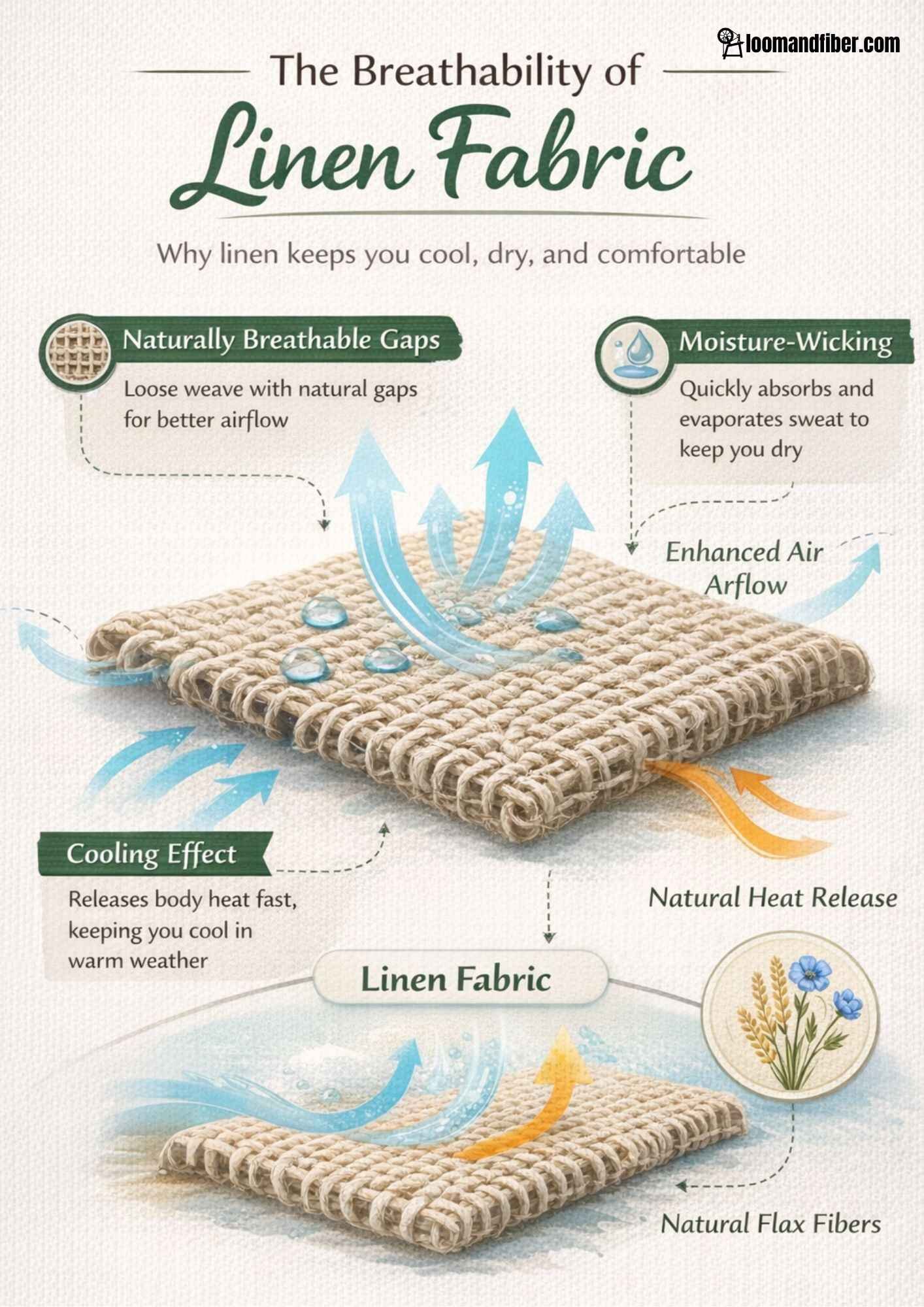
Linen’s hollow fibers and loose weave work together to keep skin cool. Heat is conducted away from your body faster, rather than being trapped. In fact, linen is a great heat conductor, so it disperses warmth quickly and never feels clingy. One source notes that linen garments can feel up to 30% cooler than cotton in warm weather, thanks to this rapid heat-release. Similarly, linen absorbs sweat nearly instantly (up to about 20% of its weight) and dries fast.
In short, linen’s fiber and weave create maximum ventilation. Its threads allow air to flow through, sweat to evaporate, and heat to escape with ease. This is why linen fabrics feel as though “you’re wearing shade” on a hot day – the air moves, and moisture never builds up. Linen is often called “nature’s cooling fabric” for these reasons.
How Linen Compares to Other Fabrics
| Fabric | Breathability | Moisture Absorption | Cooling Effect | Comfort Level | Best Use |
|---|---|---|---|---|---|
| Linen | Excellent (open weave) | High (absorbs ~20%) | Very strong (wicks & cools) | Textured but softens | Hot, humid weather |
| Cotton | Good (looser weaves) | High (holds moisture) | Moderate (can feel damp) | Soft, smooth | Warm climates |
| Polyester | Low (unless engineered) | Low (doesn’t absorb) | Low (traps heat) | Durable but synthetic | Activewear, cold |
| Silk | Moderate (natural fiber) | Moderate | Good (wicks, smooth) | Luxurious, silky | Sleepwear, mild |
| Rayon/Viscose | Moderate (cellulose-based) | Moderate | Moderate (quick dry) | Soft drape, comfortable | Warm weather |
Linen vs Cotton
Linen and cotton are both breathable natural fibers, but linen generally wins for airflow. Linen’s long hollow fibers and open weave let it ventilate better. In comparison, cotton fibers are shorter and denser, so cotton tends to trap moisture against the skin. Linen wicks moisture away faster, whereas cotton “holds onto sweat” and can feel heavier when damp. In practice, linen clothing breathes more freely, making you feel cooler, while cotton feels soft but a bit more insulative in hot, humid weather.
Linen vs Polyester
Polyester is durable but not naturally breathable. Polyester traps heat and moisture, even if it is fast-drying when engineered for athletics. In contrast, linen is naturally airy. Its loose weave and hollow fibers allow excellent airflow and help your skin stay dry. For example, a linen shirt will vent body heat much better than a plain polyester shirt. If you need high breathability in summer, linen is the better choice; polyester is better reserved for applications needing durability (with special wicking finishes).
Linen vs Silk
Silk and linen are both natural, but they work differently. Linen is highly breathable and cooling, letting air move freely. Silk also breathes and can wick moisture, but it is silk’s fine, smooth threads that move sweat. One report found linen stands out for its superior air circulation, whereas silk’s strength lies in its luxurious texture and moisture-wicking. In short, linen tends to cool by air flow, while silk cools by pulling moisture away with a smoother feel. For hot weather, linen is typically cooler; silk remains a good light fabric for those who prefer a soft luxury fiber.
Linen vs Rayon/Viscose
Rayon (viscose) is a semi-synthetic cellulose fiber that feels very soft. Linen, being plant-based, is more rigid and porous. Linen’s hollow flax fibers allow maximum airflow and quick drying. Rayon absorbs moisture and drapes beautifully, but it does not have linen’s open weave – it holds heat a bit more even though it also dries fast. In practice, linen garments keep you ventilated and structured, whereas rayon garments are fluid and cool but less “airy.” Both are lightweight options for summer, but linen is generally more breathable.
Why Linen Feels Cool in Hot Weather
- Thermoregulation: Linen’s hollow fibers trap a layer of air. In cool conditions this helps retain warmth, yet in heat the fibers let heat escape easily. This natural thermoregulation means linen adapts to temperature changes – it cools you in hot air and keeps you from feeling clammy.
- Heat Dissipation: Linen conducts heat away from the body faster than many fabrics. In other words, linen does not “hold on” to your body heat. As soon as warm skin makes contact, the heat is quickly spread through the linen and evaporated, so you immediately feel cooler.
- Lightweight Structure: Linen fabric is lightweight and drapes loosely, creating space around the body. It never clings tightly, so air can circulate between the garment and skin. This open structure also means your skin feels a breeze through the material, adding to the cooling sensation.
- Air Circulation Through Fibers: The microscopic structure of linen fibers and weave acts like a breathable mesh. Tiny gaps in the yarns and the fabric allow even small breezes to pass through. Each pore in the weave lets hot air move out and cool air move in, ensuring a continuous flow of ventilation around your body.
Breathability in Different Linen Types
Pure Linen:
- 100% linen fabrics are the most breathable of all linen varieties. The fabric’s natural breathability is “unmatched” because nothing is added to block airflow. A shirt or sheet made of pure linen will maximize those air channels in the fiber.
Linen-Cotton Blends:
- Blending linen with cotton slightly softens the hand and reduces wrinkles, yet the blend remains airy. A quality linen-cotton blend still offers good breathability – better than pure cotton – because the linen component keeps the fabric from binding up. In fact, one summary says a linen-cotton blend has “the breathability of linen with cotton’s softness”.
Heavy GSM vs. Light GSM:
- Linen fabric weight (GSM) affects breathability. Lightweight linen (roughly 120–180 GSM) is very airy and drapey, allowing maximum airflow. Heavyweight linen (e.g. 300 GSM) feels firmer and traps more air in its thickness, so it insulates more and breathes less in hot weather. For summer clothing, a lighter linen weight is usually preferable.
Washed Linen vs. Raw Linen:
- Many linen garments and linens are pre-washed or “stone washed.” This process softens the fabric by breaking down natural starches (pectin) in the fibers. Washed linen is softer and feels immediately comfortable, though the breathability remains. Raw (unwashed) linen may feel stiffer at first, but even raw linen breathes well and will soften with wear. Importantly, repeated washing only makes linen softer without reducing its durability.
Linen for Clothing vs Bedding vs Home Textiles
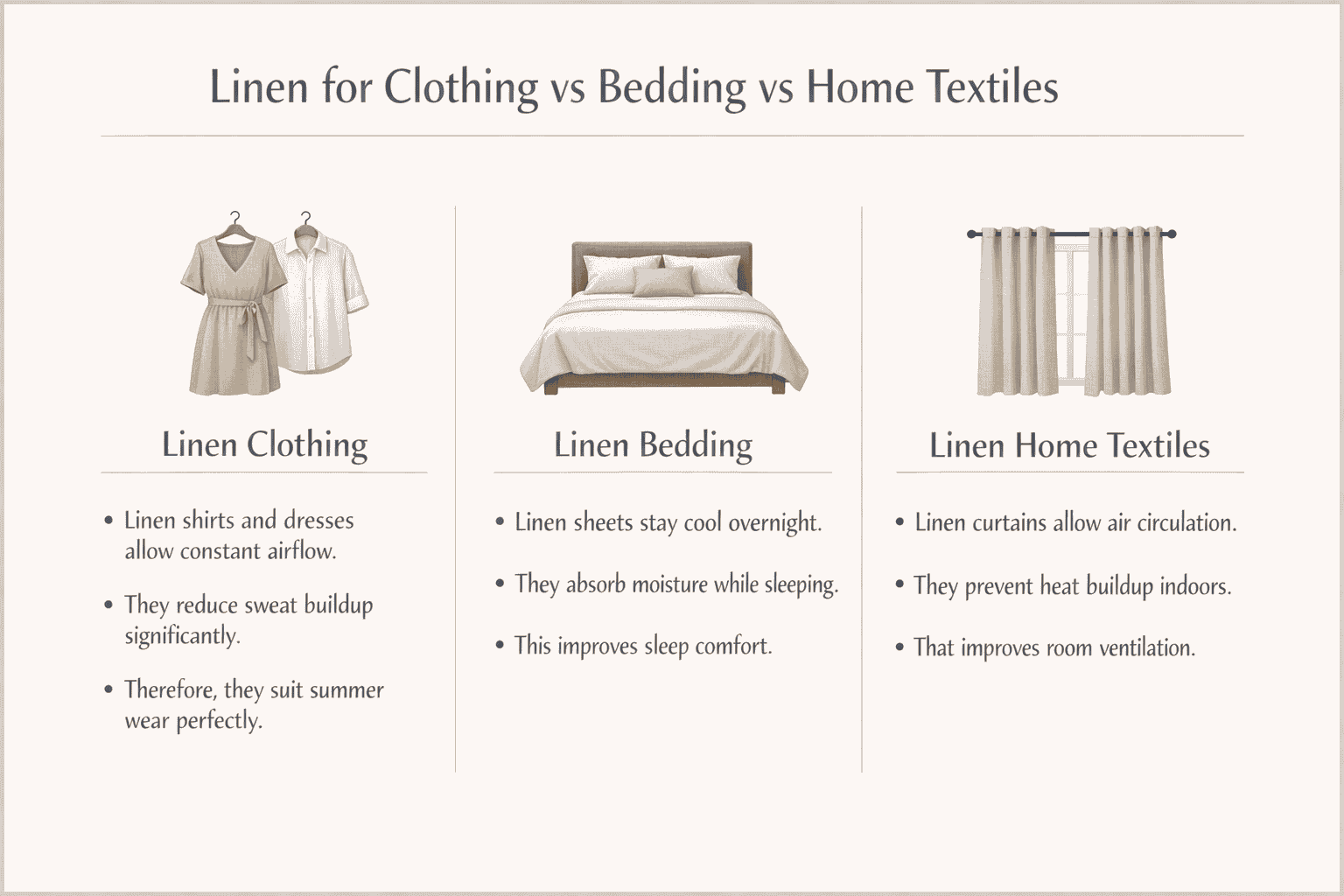
- Clothing (Shirts, Dresses, Pants): Linen is a top choice for warm-weather apparel. Linen shirts and dresses allow body heat and sweat to escape easily, keeping you cooler than many other fabrics. Its moisture-wicking and quick-drying nature means linen clothing dries out faster after sweating. The result is a breezy, relaxed comfort in summer wardrobes – linen pants or tops simply stay drier and cooler on your skin.
- Bedding (Sheets, Pillowcases): Linen sheets are prized by hot sleepers. The same qualities that cool linen clothing apply to bedding: linen bedding has high ventilation and absorbs night sweats to keep skin dry. It can absorb up to about 20% of its weight in moisture without feeling wet. Many find linen sheets comfortable because they prevent overheating; studies even show linen bedding can “quickly dispel excess heat” for a refreshing sleep. In humid climates, linen sheets can improve sleep by wicking sweat away from the body.
- Home Textiles (Curtains, Tablecloths, etc.): Linen curtains and tablecloths bring breathability into home design. Linen curtains, for example, have a textured weave that allows air to flow freely, creating a light and airy atmosphere in a room. While not directly cooling like clothing, linen curtains do let breezes pass and filter warm sunlight. Linen tablecloths also have some natural absorbency and simply add a cool, crisp look to summer dining. In general, home linens made of linen contribute to better ventilation in living spaces (especially curtains) and can help moderate indoor temperature.
Linen Performance in Moisture-Wicking & Sweat Control
Linen excels at moisture management. It can absorb a large amount of sweat – up to about 20% of its own weight – without feeling damp. When you sweat, linen pulls that moisture up into the fiber and spreads it over the fabric surface. Because of its coarse, open fibers, linen dries very quickly. In practical terms, a soaked linen shirt will evaporate wetness much faster than a comparable cotton or denim shirt.
These moisture-wicking properties also help control odor. Bacteria thrive in warm, moist conditions, but linen’s dryness and airflow prevent that. One linen manufacturer even notes that “linen shirts rarely smell, even after long hours,” because linen doesn’t give bacteria a moist home. Compared to synthetic fabrics that often trap odor, breathable linen naturally resists smells – staying fresher longer under hot, sweaty conditions.
Linen Seasonal Performance
Summer:
- Linen is at its best in hot weather. Its excellent airflow and cooling effect shine in summer wardrobes and bedding. On a hot day or night, linen lets body heat escape and handles sweat well, keeping you up to 3–4°C cooler than non-breathable fabrics. For this reason, linen clothing and bedding are often recommended for tropical climates and peak summer.
Spring/Fall (Layering):
- Linen remains versatile in shoulder seasons. On mild days, a linen shirt or dress still breathes well on its own. As temperatures drop at night or into fall, linen’s hollow fibers will actually trap a bit of warmth if needed. Many people wear linen as base layers or mix it with light knits in spring/fall – it wicks remaining moisture and keeps airflow going without overheating. In moderate weather, linen pieces adapt by balancing breathability with a gentle insulating feel.
Winter:
- Pure linen is lightweight, so it isn’t a heavy insulator in cold weather. By itself, linen won’t keep you warm like wool or flannel. However, linen can still be used in winter by layering. For example, a thick linen shirt under a sweater will let sweat escape while the outer layers trap heat. Since linen fibers regulate temperature both ways, they will not freeze your skin even under additional cover. In practice, linen can be worn year-round if you pair it properly: think linen shirts under jumpers or linen-blend blankets rather than as the sole warm layer.
Pros and Cons of Linen’s Breathability
Pros:
- Ultra-Cool: Linen’s unique fibers and weave give it a very strong cooling effect. Studies note you can stay up to 30% cooler than in cotton, thanks to linen’s efficient heat release.
- Natural Airflow: The porous structure of linen fabric means air circulates freely on your skin. Its breathability is built-in by nature.
- Skin-Friendly: Linen is naturally hypoallergenic and gentle on skin. It contains no harsh synthetics or irritants, so it often feels comfortable against sensitive skin.
Cons:
- Wrinkles Easily: Linen readily creases, especially when dry. While some consider the wrinkles part of its relaxed charm, others may dislike the constant ironing it can require.
- Initial Stiffness: New linen can feel a bit stiff or rough until it is washed and worn. Over time and laundering, linen becomes softer, but initial stiffness is a common drawback.
- Higher Cost: Quality linen usually costs more than cotton or synthetics. Its fine cultivation and processing drive up the price. (Many users accept this trade-off because linen’s durability and comfort make it a long-lasting investment.)
How to Choose Breathable Linen
- GSM (Fabric Weight): For hot weather, choose light to medium-weight linen. Around 120–180 GSM is ideal for summer garments and bedding, as it allows the most airflow. Heavier linen (250+ GSM) will be thicker and less airy.
- Weave Type: Opt for looser weaves and open textures. Fabrics like linen gauze, chambray, or seed stitch linen have more gaps that improve airflow. Tighter weaves will restrict breathability.
- Pure vs. Blended Fabric: Pure linen is most breathable, but high-linen blends (e.g. linen-cotton) still breathe well. A fabric labeled “linen blend” can be a good compromise of softness and cooling. If ultimate breathability is the goal, check that linen is a majority of the content.
- Color Choices: Select light colors for hotter climates. Pale or white linen reflects more sunlight and heat than dark hues. (Dark linen will absorb heat like any other fabric.) Light-colored linen linens and clothes will keep you slightly cooler in direct sun.
Care Tips to Maintain Linen Breathability
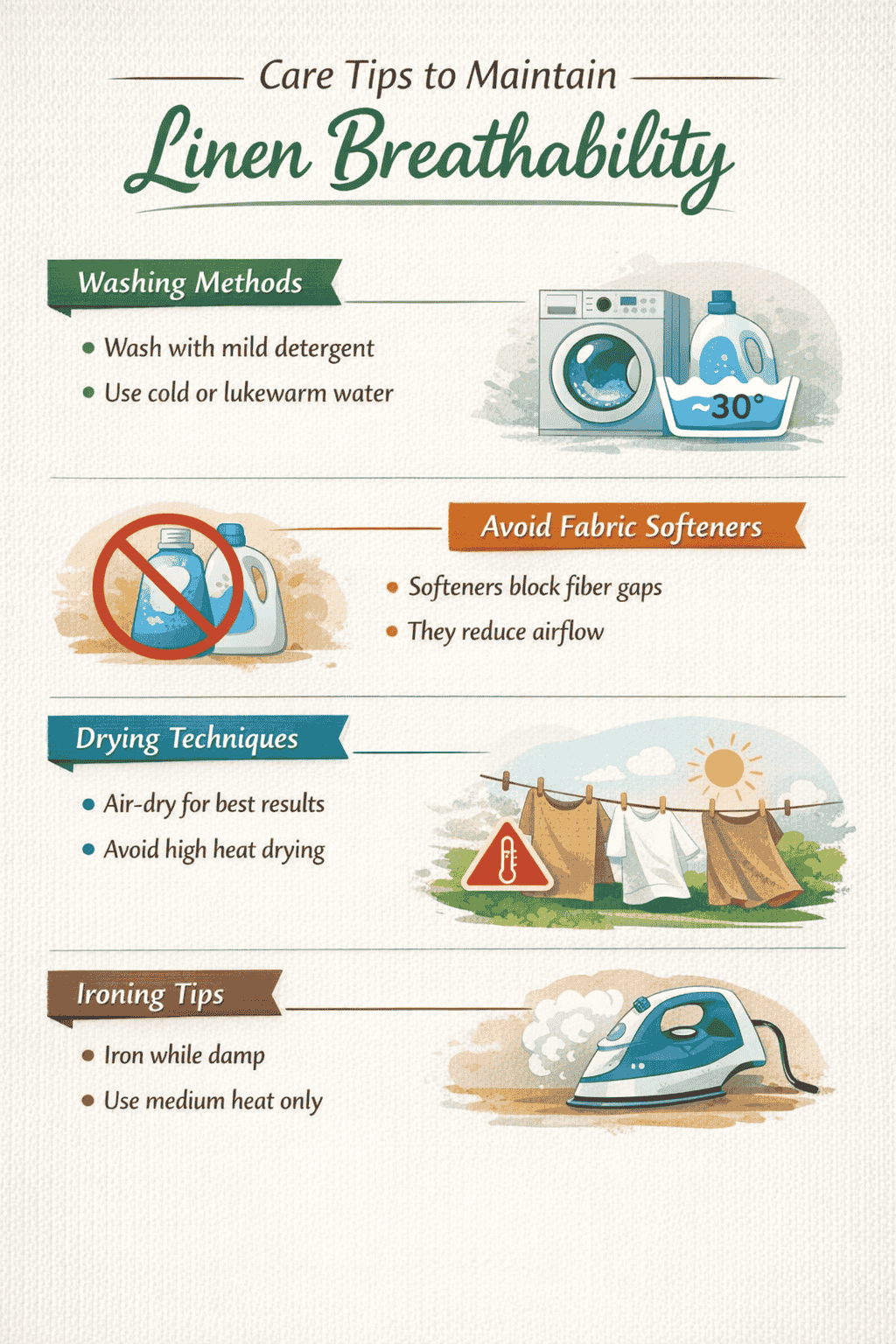
- Washing: Machine wash linen in cold water on a gentle cycle (or hand wash) with mild detergent. Avoid chlorine bleach or harsh chemicals that can weaken fibers.
- Avoid Fabric Softeners: Do not use fabric softener, as it can leave residues that clog the fibers and reduce breathability. Linen naturally softens with washing, so extra softeners are unnecessary.
- Drying: Air-dry linen when possible or tumble on low heat. High dryer heat can shrink linen and stiffen the fabric. Hanging linen allows it to dry quickly and remain airy.
- Ironing: If you prefer a crisp look, iron linen while it is still slightly damp. Damp ironing yields a smoother result without flattening the natural texture. Note that linen’s wrinkles tend to come back quickly after wearing.
Is Linen Good for Sensitive Skin?
Yes. Linen is often recommended for sensitive skin because it is hypoallergenic and chemical-free. Its fibers are naturally resistant to dust mites and bacteria, and linen rarely irritates the skin. Unlike synthetic fabrics, linen does not contain added petrochemicals, so it avoids many common allergens. This makes linen garments and bedding a gentle choice for those with eczema, allergies, or delicate skin. In comparison, many synthetic fabrics can trap sweat and irritate. Linen’s natural, breathable nature means you stay dryer and less itchy at night and day.
Sustainability & Eco Benefits
- Flax Farming: Flax (linen’s source plant) is a low-impact crop. It grows with far fewer pesticides and fertilizers than cotton. Flax has deep roots that help preserve soil health and even improve fertility. Its cultivation also often uses crop rotation, which benefits the land.
- Water Usage: Linen has a low water footprint. Flax needs only a fraction of the water that cotton does – estimates suggest about 40% of the water used for a comparable cotton crop. This makes linen a far more water-efficient fabric. Additionally, linen textiles require minimal water to wash in daily use.
- Biodegradability: Linen is 100% natural and fully biodegradable. At the end of its life, a linen garment or sheet can decompose in weeks, returning nutrients to the earth. This is in stark contrast to synthetic textiles, which can persist for centuries. Linen’s biodegradability (it can break down in as little as two weeks) makes it an environmentally responsible choice.
- European Standards: The linen industry has strong eco-certifications. Many linen makers meet stringent sustainability standards (such as the “Masters of Linen” label) for growing and processing flax. European linen standards emphasize organic practices, minimal chemicals, and efficient resource use. These certifications give consumers confidence that linen’s superior breathability goes hand-in-hand with eco-friendly production.
Conclusion
Linen truly is one of nature’s most breathable fabrics. Its unique flax fibers and airy weave give it superior ventilation and cooling for hot-weather clothes, bedding, and home textiles. If you are picking summer garments, neutral curtains, or cooling sheets, linen is an outstanding choice. (Be sure to check our related guides for more on linen – see our posts on linen GSM and weight, how to choose linen fabric, and the differences between linen and cotton in warm weather.) Whether you’re shopping for a linen dress or breezy linen sheets, remember: it’s linen’s breathability that makes all the difference. By choosing linen, you get natural airflow, moisture-wicking comfort, and sustainable, eco-friendly luxury in one.
FAQs
Yes. Linen’s fibers are longer and hollow, and its weave is typically looser. This allows air and moisture to pass through more freely than in cotton, making linen generally more breathable.
Absolutely. Linen’s open weave and moisture-wicking properties help your body release heat quickly. In fact, linen clothing can feel up to 30% cooler than cotton under the same conditions. Many people find they overheat less in linen shirts or bedding during heatwaves.
Yes, linen is ideal for humid climates. Its rapid moisture absorption and quick-drying nature mean sweat doesn’t stay on your skin. Even when it is very humid, linen fabric wicks moisture and lets it evaporate, so you remain relatively dry. Linen’s comfort in the tropics is why it’s a classic hot-weather fabric.
Definitely. Linen bed sheets and pillowcases breathe extremely well, ensuring airflow around your body as you sleep. Their ability to wick nighttime sweat keeps sleepers comfortable and cool throughout the night. Many sleep experts recommend linen bedding for exactly this reason.
No – it remains breathable. In fact, linen improves with age. Linen fibers soften with each wash without losing strength. The fabric’s pores stay open, so a well-cared-for linen piece is as airy in year five as it was in year one. You can expect linen to keep working hard to ventilate and cool long-term.