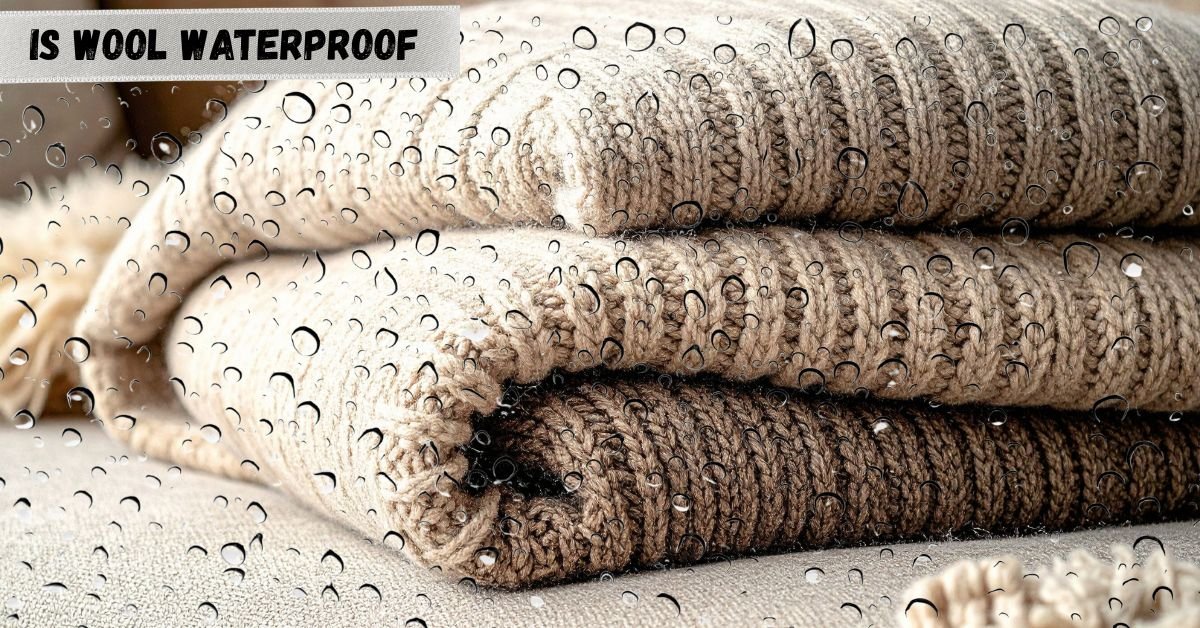

Is wool waterproof?
Wool, however, is not totally waterproof, though it is naturally water-resistant. Due to the waxy coating on the lanolin and scaly fiber structure, wool can protect moisture and can absorb a lot of water (sometimes 20-30 percent of its weight) before being wet. Practically the wool will keep you warm when wet, but it will get wet through heavy or long rain.
Why Wool Repels Water (The Science)
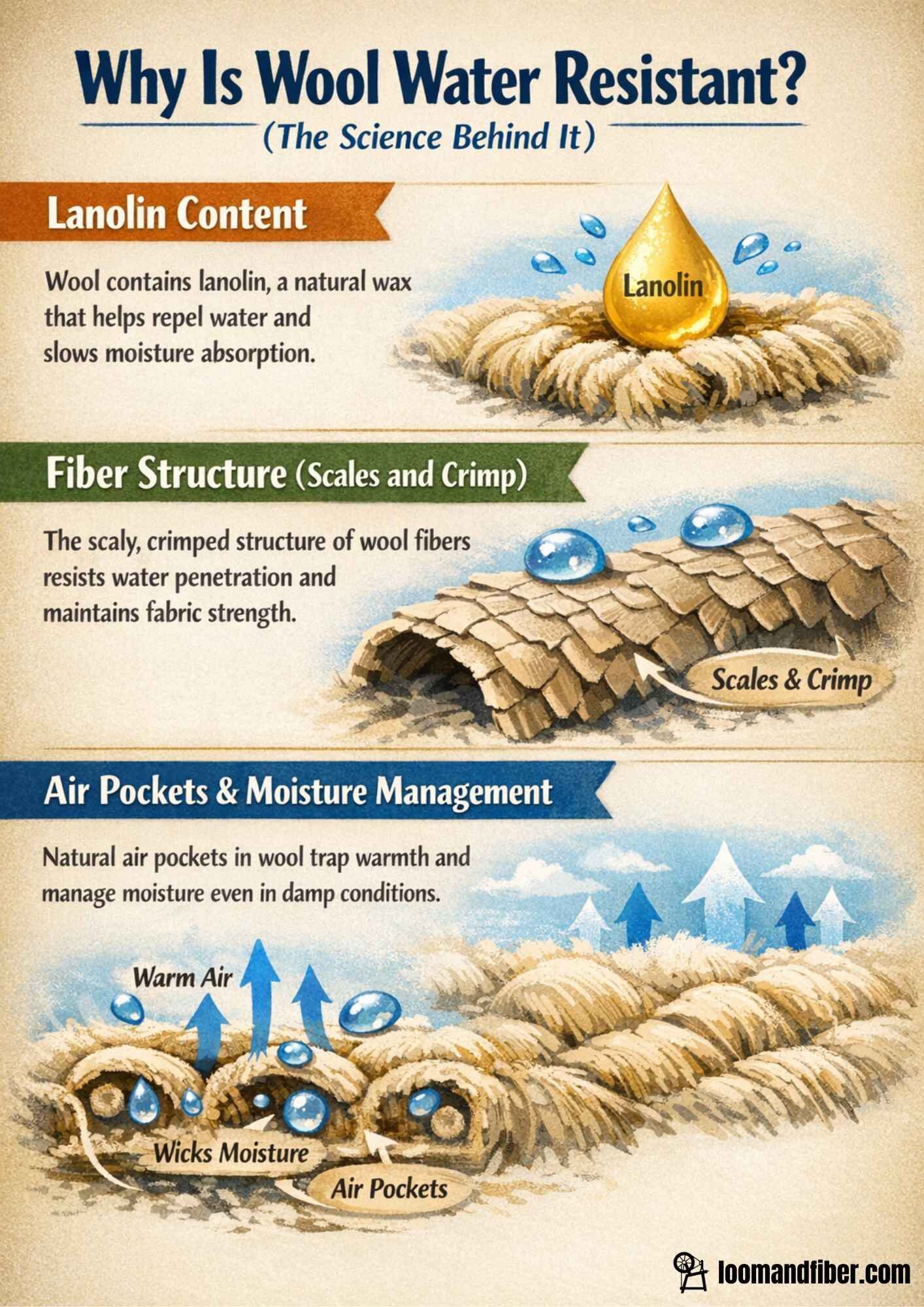
Lanolin Content
Wool fibers are covered with lanolin which is a natural wax produced by sheep. This layer of lanolin keeps off rain and moisture as a greasy waterproof layer. Actually, the raincoat that sheep use is made of lanolin, hence making the surface of wool fibers to be hydrophobic, therefore, the water beads up and rolls off.
Fiber Structure (Scales & Crimp)
Each fiber of wool has a scaly exterior that sheds liquid water further. When a microscope is used, you can observe minute overlapping scales on wool (see image below). Water strikes these scales and cannot penetrate quite easily. At the same time, the natural crimp (waviness) of wool fibers entraps air and maintains fibers loft, which assists in insulation as well as water resistance.
Air Pockets and Moisture Control
The crimpy wool forms small air pockets among fibers which helps to trap warm air and reduce the speed at which water penetrates. Wool is also hygroscopic: it easily absorbs moisture vapor (up to about 35 percent of its mass) into the inner of the fiber as opposed to having liquid water sticking to your skin. Water vapor even condense and releases heat in the fiber inside and thus a wool garment may feel dry outside and can hold water inside the fabric.
Waterproof vs Water-Resistant vs Water-Repellent
It is important to draw the line between these terms. Waterproof materials come with an entire shield (they usually have sealed seams or membranes). Resistant fabrics, such as untreated wool, are only resistant to light moisture; they will keep off light drizzles or splashes but will eventually get wet. Water-repellent typically refers to a water-resistant fabric which has been treated (e.g. with a Durable Water Repellent finish or an additional coat of lanolin) such that drops bead up and roll off. Wool itself is resistant to water: it pours off more readily than cotton or most synthetics, but not an impenetrable shell like a raincoat.
| Term | Definition | Example (Fabric) |
|---|---|---|
| Waterproof | Completely blocks liquid water under normal conditions. | Rain jackets with Gore-Tex or sealed membranes. |
| Water-Resistant | Resists some water ingress; stands up to light rain or splashes. | Untreated wool or tightly-woven canvas. |
| Water-Repellent | Treated so that water beads off; not fully waterproof. | Lanolized wool, waxed cotton, DWR-coated fabrics. |
Natural resistance of wool belongs to the category of water-resistant (or even, water-repellent to a certain degree). Synthetic waterproof shells have a sealed layer, whereas wool does not; the heavy rain will wet it eventually. Nevertheless, in the case of modern wool garments, it is possible to make them rainproof.
How Water-Resistant Is Wool?
Light Rain vs Heavy Rain: Wool is good at light drizzling. In a brief shower, a wool coat or sweater will keep you dry and warm. However, in wet or deep rain, untreated wool will ultimately be wet due to the absorption of water. Tightly-knitted dense wool (such as melton or tweed) will withstand longer during downpours than loose knits. Overall, wool is ideal when it is drizzling or drizzling occasionally, but when it is a full-blown storm, you would put on a waterproof coat.
Limit of Absorption: Wool has the capacity to take in a lot of water before it becomes wet. A good woolen garment (e.g. merino) can absorb water (a lot of) and still not get wet. It works likewise with (Lambswool) about 20 per cent before the moisture comes into contact with the skin. Internal moisture is what keeps wool warm but at that point, it will leak eventually.
The Length of time the Wool will remain dry: Since the wool retains water in its fibers, it will dry slowly. Woolen garments can also take hours or even overnight to completely dry even after a heavy drenching. The positive thing is that during the drying process, the wool is not so wet. Its surface is moderately dry to touch since the moisture is evaporated inside. This is why wet wool will be hung in a warm room, so it will end up taking away the moisture (although, this may take days).
What Happens When Wool Gets Wet?
What Happens When Wool Gets Wet?
Insulation When Wet:
Wool keeps on insulating even when it is wet. Actually, the vapor of moisture that is absorbed by wool is condensed to release heat (approximately 533 calories/gram of water). A kilo of dry wool in air with high humidity emits the same amount of heat as a blanket running on electricity over several hours. To put it in simple words, a wool sweater does not lose its warmth when wet. That is why the outdoor men say that wool keeps you warm even when wet.
Drying Time:
It takes a long time to dry wet wool because of the moisture that is locked up in the fibers. It does not dry as rapidly as synthetics which do not absorb any water at all or even cotton which absorbs the water faster (yet cold). The drying of wool is soft and slow: you could put up a wet piece of wool clothing and the following day it would be fully dry.
Odor Resistance:
Wool does not odorize even when it is wet. Due to its form and wool natural oils, the wool stores the odor molecules in the wool fibers, the bacteria can not multiply easily. Studies have indicated that woolen clothing does not smell of anything despite wearing as compared to cotton or polyester. Practically, a wet wool sweater or sock does continue to be relatively fresh, you can wear a base layer made of wool days later and not stink of sweat or rain.
Warmth:
Wool is warmer than most other materials when it is wet. The outer part of wool remains rather dry because the moisture is trapped within the fibers. You will not experience that sweating wetness on your skin. The damp cotton literally chills the body as observed by one textile expert, but the wool remains soft and insulating. Wool, even wet, therefore will not stick to you or don’t make you tremble like cotton will.
Is Wool Warm When Wet?
Yes. The peculiarities of wool allow it to remain warm even after being wet. Those warm spots of moisture trapping within the wool keep you warmer during cold and wet weather. This is the reason why wool is popular among hikers and outdoor brands. Searches have revealed that the 100% Merino construction would keep warm even when wet and can resist the smell. This is one of the reasons why many wool base layers are so valued: they pull the moisture away, handle it, and ensure that you remain warm on a wet trail. Overall, the coziness of wool and its thermal resistance as a garment in cold, humid weather, along with its insulating loft, render it a favorite choice in winter.
Kinds of Wool and Water Resistance

Merino Wool:
Fine merino fibers are very good at moisture regulation and wicking. When dry, a pure merino garment is able to take approximately 30 percent of water content before it becomes wet. The warmth of the air is trapped by its fine crimp and its lanolin provides it with a natural water-resistance (but not waterproof). Merino has better moisture-wicking, hence it dries comparatively fast among the wool; and it maintains its warmth in wet conditions.
Lambswool:
Lambswool (the first shear of a lamb) is soft, elastic, and pretty warm. It is also water-resistant: lambswool is able to absorb approximately 20% of its weight of water before it starts leaking. As with any other wool, it keeps things warm and keeps away smells. It can be a little heavier than fine merino, thus it will dry a little slower, yet it still performs better than a lot of non-wool fibers when wet.
Cashmere:
Cashmere is a goat product that has been famous due to its luxury and softness. It is hygroscopic as wool of sheep -it may take in a lot of water, up to perhaps 30 per cent of its mass, without being instantly soaked. But the production of lanolin by the cashmere goats is considerably less than what sheep give. Therefore, the cashmere fibers are more smooth and do not resist liquid water as effectively. Cashmere will be wet in rain- it can withstand a small drizzle because of the loft, however it is not suggested to be used during the heavy rain.
Alpaca Wool:
Alpaca fiber (alpacas) is a light and warm fiber. It is hypoallergenic (no lanolin) yet it has naturally water resistant structure. The fibers of alpaca are hollow and this aids in shedding the moisture and preserving the air. Alpaca wool does not pull water like merino, however, since it has a hollow center, it does not get soaked. As a matter of fact, alpaca garments are superior in wet weather – they will keep off light rain, yet will dry more slowly, similar to a waxed canvas (yet lighter).
Is Wool Better Than Cotton in Rain?
Yes. Wool is much more superior in wet weather than cotton. When wet, wool keeps warm and retains the warmth, but cotton absorbs water and becomes a non-insulator. Wet cotton sticks and takes out your body heat, but wet wool makes a warmer, buffered coating. A wet wool sweater will make you much warmer than a wet cotton shirt. This is the reason why wool (or synthetics) is highly recommended by those who are deeply engaged in the outdoor activities in every rain or snow situation instead of cotton.
Is Wool Good in Rainy Weather?
Everyday Wear: Wool products (sweaters, scarves, coats) are fairly convenient in the rain and the snow. When it is light or moderate, then a wool coat or a rain hat will help in shedding the wetness and keeping you warm. They will keep insulating even when they become slightly wet. During heavy rains, a simple wool cannot make you dry, it is always good to wear under a rain shell. DWR treatments or wax finishes are used in many wool jackets nowadays.
Outdoor Options: In hiking, cold sports (skiing, etc), wool is valued. Wool base layers dry up and keep you warm as long as you are sweating. Wool socks which make the feet warm in wet snow- they keep air which insulates them even when wet. Historical fact: in the extreme wet conditions, sailors and outdoorsmen wore wool due to its warmth in wet conditions that were water-resistant.
Cold vs. Mild Rain: Wool is better in cold rain: The warmth of its insulations counteracts any cold, and thus a wet wool sweater may be kept warm on the winter day. When only in mild or short showers, the wool fibers lose their moisture easily and you may not be aware that there is any substantial wetting of the surface. Nevertheless, continuous heavy rainfall will ultimately wet wool despite the temperature. To recapitulate, wool is quite helpful in the majority of wet weather (particularly in cold weather) but like any cloth there is no limit in a rainstorm.
Is Wool Waterproof Enough for Outdoor Clothing?
Yes, wool works much better in wet conditions than the cotton does. The water is absorbed quickly and the insulation is lost instantly on cotton. Consequently, cotton is cold and heavy. However, wool does not lose its warmth and shape even when wet, so it is safer to use it outside.
Can Wool Be Made Waterproof?
Lanolin Treatments:
It is possible to lanolize wool – i.e., reintroduce lanolin into wool clothes. Lanolin occurs naturally in wool, yet it can be washed off. You restore the waxy coating by smearing pure lanolin (which may be in the form of a spray or additive to the wash). This reinstates a good deal of waterproofing in wool. Wool that is treated with Lanolin will shed light rain and bead water much easier than the entirely clean ones.
Waxing Wool:
Wool may be waxed (with such a waterproofing substance as beeswax) to prevent water penetration. In the past, individuals oiled or waxed wool materials and coats. A type of coat can make wool garments to be water-resistant without being completely sealed, thus permitting the garment to breathe (beeswax, such as waterproofing water but not covering, is an example). Now it is common to have wool parkas that are waxed or waterproofed with beeswax-based products on wool caps and capes. It is like waxed-cotton jackets (e.g. Barbour style) except that it covers the wool with a wax.
Contemporary Coatings:
Most contemporary wool clothing incorporates waterproofing with high technology. In place of lanolin or wax, they use artificial Durable Water Repellent (DWR) finishes, or even membranes that are waterproof. A DWR (in most cases silicone free of fluoropolymer) makes the water bead down the wool fibers. Others sew wool over a thin waterproof coating providing the garment with the real waterproof ratings. Such treatments make wool absolute rainproof apparel.
Does Washing Reduce Wool’s Water Resistance?
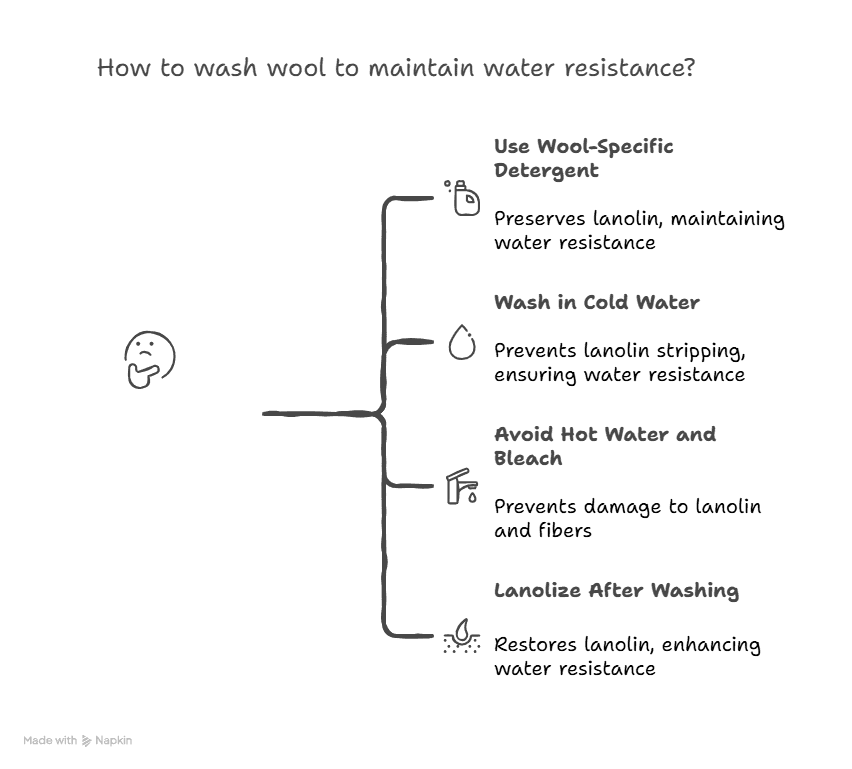
- Influence of Detergents: Wool is washed in regular washing (particularly with harsh detergents), this drains the oils of wool. Wool becomes less water-repellent with the ability of detergents to strip out lanolin and open up the cuticle of the fiber. This will be hastened by washing in hot water or bleach.
- Significance of Lanolin: Lanolin is the secret of water resistance of wool. It is important to have lanolin in the fiber. That is why wool-specific cleansers usually include added lanolin. As an illustration, a lanolin-rich wool detergent will wash and leave (or even restore) the oils in the fiber. Conversely, the normal soap or high-pH detergent cleanse the oils.
- Water Resistance: To preserve the water resistance in wool, use it sparingly and wash it gently. Wash in cold water by using a wool detergent or lanolin detergent. Hot water or intensive spinning should be avoided. Once washed, it can be lanolized (immersed in tepid water with some lanolin) to restore water repellency. Do not, too, wring wool–blot it to take off the water.
Conclusion-
So, is wool waterproof? The answer remains no. Nevertheless, wool is very water-resistant and innately efficient in rainy conditions. It repels light rain and insulates when wet and it is also resistant to odor as compared to most of the natural fabrics. It is due to these attributes that wool beats cotton and is a reliable fabric to make outdoor and daily wear. Wool provides impeccable comfort, warmth and longevity when overlaid with waterproof shells.
Read More>> Is Wool Flammable?
FAQs
No. Wool is not waterproof, it is water resistant. Although it keeps the light moisture out, it will ultimately be saturated during heavy rain.
Yes. The highest amount of water that wool fibers can hold is approximately 30 percent of the weight without getting wet. The majority of that moisture is absorbed into the fiber, which in fact makes you warm.
No. Merino wool does not differ in its properties with other wools. It is highly resistant to water and wicks moisture, but it is not completely waterproof. Under continuous rains it will become wet.
Wool will also shrink or felt when it is very wet and stirred or is subjected to heat. Hot water or tumbling can result in a significant amount of shrinkage. To prevent it, wash the wool in cool water and dry it in a flat position.