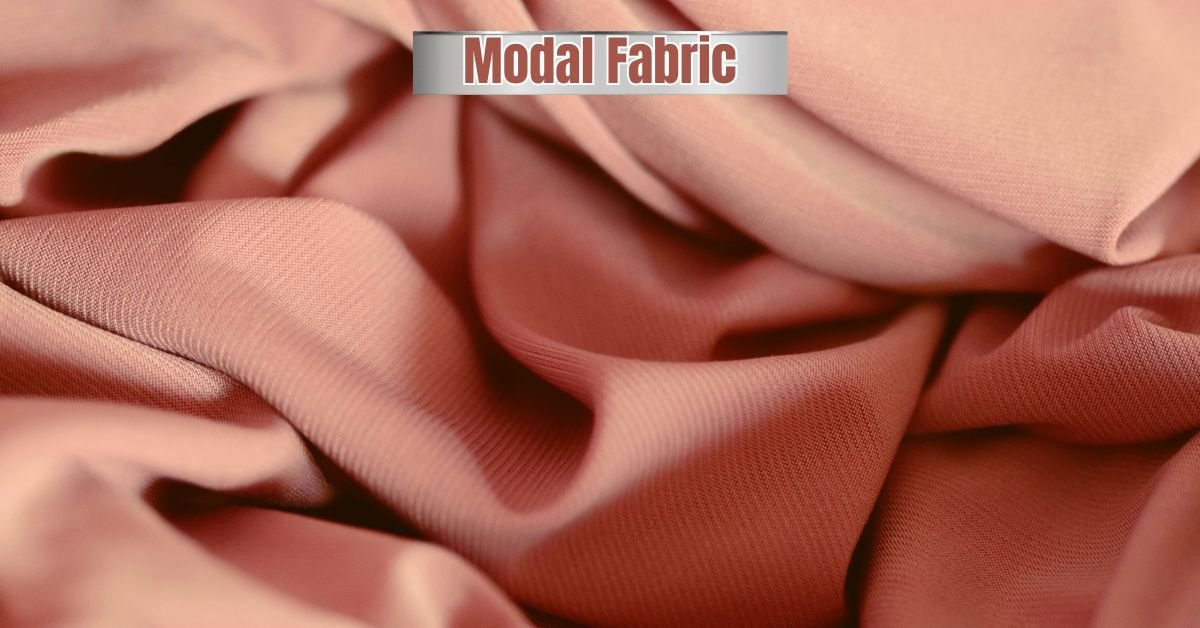

Introduction–
The question many people ask is what is modal fabric? as it is very soft and smooth. Modal is currently applied in fashion clothing and bedding. Besides, it is comfortable, durable and breathable.
Mode is also becoming popular as the new generation of consumers demands environmentally friendly fabrics. Thus, knowing about modal will enable you to wear more appropriate materials on a daily basis.
What Is Modal Fabric?
Modal is a special form of rayon. Rayon is a semi synthetic fiber, that is, it is produced using the natural cellulose but it is processed with chemicals. Modal fiber is in practice made by dissolving cellulose of the beech tree, treating the dissolutions, and spinning them into yarn. What has emerged is a light fabric that is characterized by the silky smooth touch and good wearability. In colloquialism, modal is referred to as soft as silk, strong as cotton: it is very soft to touch but can withstand being worn. Notably, modal retains color and form, therefore, clothes and beddings made of modal always remain bright and hang well after being washed.
Origin of Modal Fabric
The development of modal started in 1951 in Japan. It was developed by Japanese scientists as a better rayon to replicate the feel of cotton. The Austrian Lenzing AG company commenced producing modal later on a commercial basis. Lenzing currently owns the trademark modal (in common parlance TENCEL Modal), and operates massive modal mills in Europe and Asia. Concisely, modal originated in Japan and emerged as one of the landmark products in Lenzing AG in Austria.
What Is Modal Fabric Made Of?
Modal is essentially composed of beech wood cellulose. All fibers are plant pulp, in reality plant fibres, thus they are naturally grown, although they are chemically treated, hence semi-synthetic.
Beech tree cellulose
Cellulose of fast-growing beech tree cell wall is the core raw material. The cellulose is extracted by cutting and pulping the wood.
Natural origin vs. semi-synthetic
Despite the fact that the base is natural wood pulp, chemicals (such as sodium hydroxide and carbon disulfide) must be used to turn the pulp into a spinning solution. Due to this added processing, modal is considered a semi-synthetic fiber (as opposed to cotton, fully natural, and polyester, fully synthetic).
Regenerated cellulose fiber
Modal is a fiber that belongs to the category of rayon, a type of regenerated cellulose. This implies that the plant cellulose is recycled as fiber. That is, modal is chemically treated cellulose dissolved and re-solidified into long fine strands.
Natural vs. synthetic fibers
As opposed to the all-synthetic fibers (polyester, nylon) made out of oil, modal has a base made of plant cellulose. It shares chemical structure with natural cellulose and thus it acts in many ways in a manner similar to natural fibers. Nevertheless, due to its processing, it may be made to be extra smooth and powerful. Cotton on the other hand is natural and unprocessed (except in cleaning), whereas polyester is a fiber made of oil.
How Modal Fabric Is Made (Manufacturing Process)
There are a number of steps of modal production. It is a step higher than the old viscose rayon processes and the fiber that is formed is more stable and strong. Every step is under strict control:
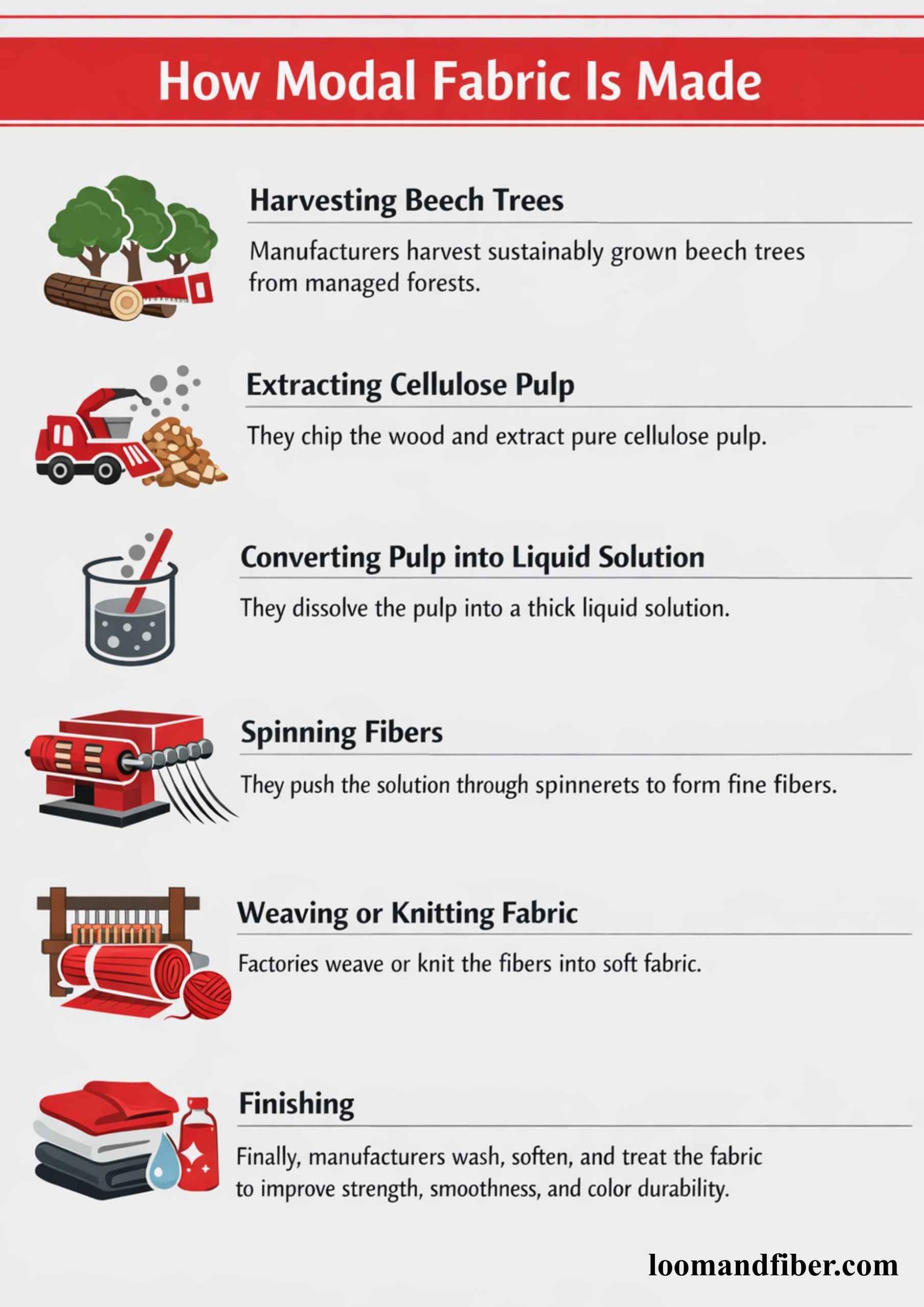
Beech harvest
Beech harvesting (commonly of sustainably managed forests) is done on commercially planted beech trees. These trees regenerate fast and less water is needed to irrigate them. The logs are sliced into wood chips that are small to be processed.
Cellulose pulp extraction
The wood chips are treated chemically to extract the lignin and other components and the cellulose is left almost pure. This is carried out using alkaline solutions. The pulp that is extracted is then washed.
Pulp to liquid solution
Pulp is converted into liquid solution using chemicals (a viscose process). In the case of modal, this typically entails impregnation of the pulp sheets with sodium hydroxide and carbon disulfide creating a viscous cellulose solution in liquid (a dope). This solution includes long chains of cellulose which is pre-spun.
Spinning fibers
The cellulose liquid is pressed through small spinerets (resembling a showerhead) into an acid bath. This converts the cellulose solution to solid fibers. Most importantly, the fibers are elongated in the process of their formation. This straightening makes the cellulose molecules run in line with the fiber axis that makes them stronger and less shrinkage. Actually, modal is also referred to as high wet modulus (HWM) rayon since it does not lose its strength and stability when wet like in the with the case of ordinary rayon.
Weaving or knitting cloth
The modal fibers, which have been spun, are gathered together in the form of yarns. These yarns can be knitted or woven into a fabric as any other textile fiber does. The modal fabric produced is very fine, soft and wears well.
The modal fibers are stronger than the normal viscose rayon since they are molecularly oriented during spinning. The additional reinforcement is provided by the stretching step: all the fibers are stretched to orient their polymer chains, which results in the final fabric being stronger and being less likely to shrink. The resulting product is a textile that is luxurious and resists washing and wear.
Key Characteristics of Modal Fabric
The characteristics of modal fabric are unique due to the following features:
Very soft:
Modal is a material that is very soft to feel and is frequently even softer than cotton. Its fibres are silky and soft. It is soft and that is why modal is popular in loungewear, underwear, and bedding.
Breathable:
Modal allows air flow to pass freely. It takes in moisture fast and repels it off skin. Modal is drier as it can absorb more moisture than cotton up to 50 percent. The material is quick drying and not clingy. Practically, modal clothes remain colder and more comfortable in the hot weather.
Light:
The material is light and thin, which provides it with a pleasant drape. Modal clothing is airy and feels nothing.
Grain-less texture:
Modal is smooth and smooth. It is slightly shiny and it feels like it would be almost slippery, which contributes to its luxurious touch.
Moisture-wicking:
Since modal is a good water absorbent, it removes moisture and sweat through the body. This keeps skin dry. As an example, the athletic wear brands refer to the fact that modal is about 50 percent more water-absorbent than cotton.
Long lasting:
The modal fibers are powerful and durable. The garment is tear and pill free. High-quality modal does not lose its shape, softness, and color even after numerous washes.
Anti-shrinkage:
Due to the wet modulus processing, modal barely shrinks during a proper washing and drying process. The majority of the modal clothes can be washed even in a tumble dryer (without being shrunk as with ordinary viscose).
Resistant to fading:
Modal has excellent retention of dyes. Modal-made clothes and sheets fade much more gradually than these goods made of cotton or inferior rayon, and thus colors remain alive longer.
Is Modal Fabric Breathable?
Yes. The structure of modal fabric is composed of cellulose fibers and thus it is highly breathable. The fibers are of a smooth surface which allows easy circulation of air. Consequently, modal clothes touch cold on the body. When it is hot or during exercise, modal will absorb the perspiration at a fast rate and distribute it across the fabric surface, leaving the latter to evaporate under the heat. Indicatively, one of the reviews observes that modal wicks evaporate at an increased rate and dry more rapidly than the cotton, hence wearers are drier. Practically, modal is breathable, which implies that it controls temperatures. You are cooler in hot weather and you feel good in wet weather. These attributes render modal suitable to summer wear and sports wear.
Is Modal Fabric Good for Summer?
Absolutely. In hot climate, modal is a good option. It has a natural cooling effect due to its high moisture absorbing nature and the fact that it dries to a fast rate. A modal T-shirt or dress absorbs the moisture released when you are sweating, which carries away the heat when it gets hot. Besides, the lightweight feel and the air-permeable knit of modal make sure that hot air does not get stuck. To the point, modal is cool in summer since it keeps off heat and dampness and leaves you feeling cool. It is precisely because of this reason that modal T-shirts, tanks, and even swimwear are regarded as very comfortable by many people even in hot climates.
Modal Fabric vs Cotton
| Feature | Modal | Cotton |
|---|---|---|
| Softness | Very soft and silky | Naturally soft, but coarser than modal |
| Breathability | Highly breathable, wicks moisture quickly | Breathable, but retains moisture longer |
| Durability | Strong fibers; resists shrinkage and pilling | Durable but can shrink and wrinkle |
| Shrink Resistance | High; holds shape well (especially HWM modal) | Low; often shrinks and loses shape |
| Moisture Absorption | About 50% more absorbent than cotton (dries faster) | Absorbs well but dries slowly |
| Cost | Generally more expensive due to processing | Typically less expensive and widely available |
Sources: The excellent softness, moisture-wicking, and stability of the fabric of Modal is properly documented. Cotton is cheaper, but lacks in its ability to absorb and dry fast.
Modal vs Viscose vs Rayon
The other related types of cellulose fiber are modal, viscose, and rayon though the difference between them is in their quality and production:
Strength
Modal is a high wet modulus (HWM) rayon, the rayon is more spun and stretched during the manufacturing process. It is this additional stretching that brings the cellulose chains in line and makes modal fiber stronger and more resistant to deforming when wet. Standard rayon viscose (which is sometimes simply known as rayon) is weaker in contrast, and may lose its strength when wet. Rayon is also medium strong though typically wrinkles and shrink more easily compared to modal.
Quality and Softness
Typically, Modal is of better quality than generic rayon. It is more delicate, smoother and silkier. Viscose rayon may be soft, whereas modal has a more luxurious higher soft hand. Others refer to modal as an upgrade of the basic viscose in regard to softness and feel.
Durability
Modal clothes are more durable and take a better shape. They are not pilled and colorless. Viscose is both strong and firm; however, when compared to other fibers, it can pill easily and even run out of shape. viscose (rayon) garments can be difficult to take care of. The advantage of longevity of modal is due to its strength.
Manufacturing Process
The three of them begin with wood pulp, though the process of modal is a more sophisticated version that operates in a closed loop. Lenzing is more environment-friendly than the older processes of viscose because of modal special spin-drying processes and chemical recovery systems. Viscose rayon involves the use of similar chemicals with reduced recycling. Another rayon known as lyocell is soluble in a different solvent (NMMO) and is even more environmental-friendly.
Price
Generally, modal costs more to manufacture (and purchase) than the viscose rayon. The price is increased by added processing and brand (e.g. Lenzing TENCEL™ Modal). Ordinary viscose or generic rayon clothes tend to be less expensive and this is why most cheap clothes brands use it.
Modal vs Polyester
| Characteristic | Modal | Polyester |
|---|---|---|
| Origin | Natural wood cellulose (beech trees); biodegradable | Fully synthetic (petrochemical polymer) |
| Breathability | Highly breathable and moisture-wicking | Poor; holds in heat and moisture |
| Comfort | Very soft, silky and smooth | Can feel rough or slick; less natural |
| Environmental Impact | Made from renewable trees; biodegradable | Derived from oil; non-biodegradable; shedding microplastics |
Polyester does not stand a chance in terms of environmental and comfort as compared to modal. It also feels and looks like a natural fabric and polyester is strong but can trap body heat and rub against the skin. Notably, there is a problem of polyester pollution (microplastics, non-biodegradability).
Types of Modal Fabric
Micro-Modal
This is a finer variant of modal fiber. It is incredibly fine and smooth, which makes the fabric feel silky and luxurious and is frequently used in the underwear and intimate wear in higher prices. Micro fibers are spun to form micro-modal and this results in making the fabric very light and very smooth.
TENCEL Modal
TENCEL Modal TENCEL Modal is the trademark by Lenzing AG of modal. It is produced in closed-loop mills which are environmentally responsible. In essence, it is identical cellulose fiber which is certified by Lenzing brand. TENCEL Modal has been marketed as being ultra-soft and environmentally friendly, as Lenzing re-uses the majority of the solvents used in manufacturing.
Read More>> What is premium Lenzing Modal Fabric?
Modal Blends
Modal has been commonly mixed with other fibers to improve some of its characteristics. As an example, cotton-modal mixtures are combined to give the breathability of both fabrics (typical with T-shirts and dresses). Modal-spandex combinations provide stretch, which is why the garment is excellent in form-fitting sports wear or underwear. Modal-polyester blends may compromise a little bit of plushness to achieve an additional durability and wrinkle-resistance. Blends can be cost-effective and performance-based: adding cotton will make modal a little cheaper, and adding spandex will make it more elastic. Anyway, blending modal tends to provide a combination of some softness and moisture-wicking on the side of the modal, whatever fiber is added (e.g. stretch or increased strength).
Common Uses of Modal Fabric
The softness, drape and moisture control of modal can make it popular in most clothes and fabrics:
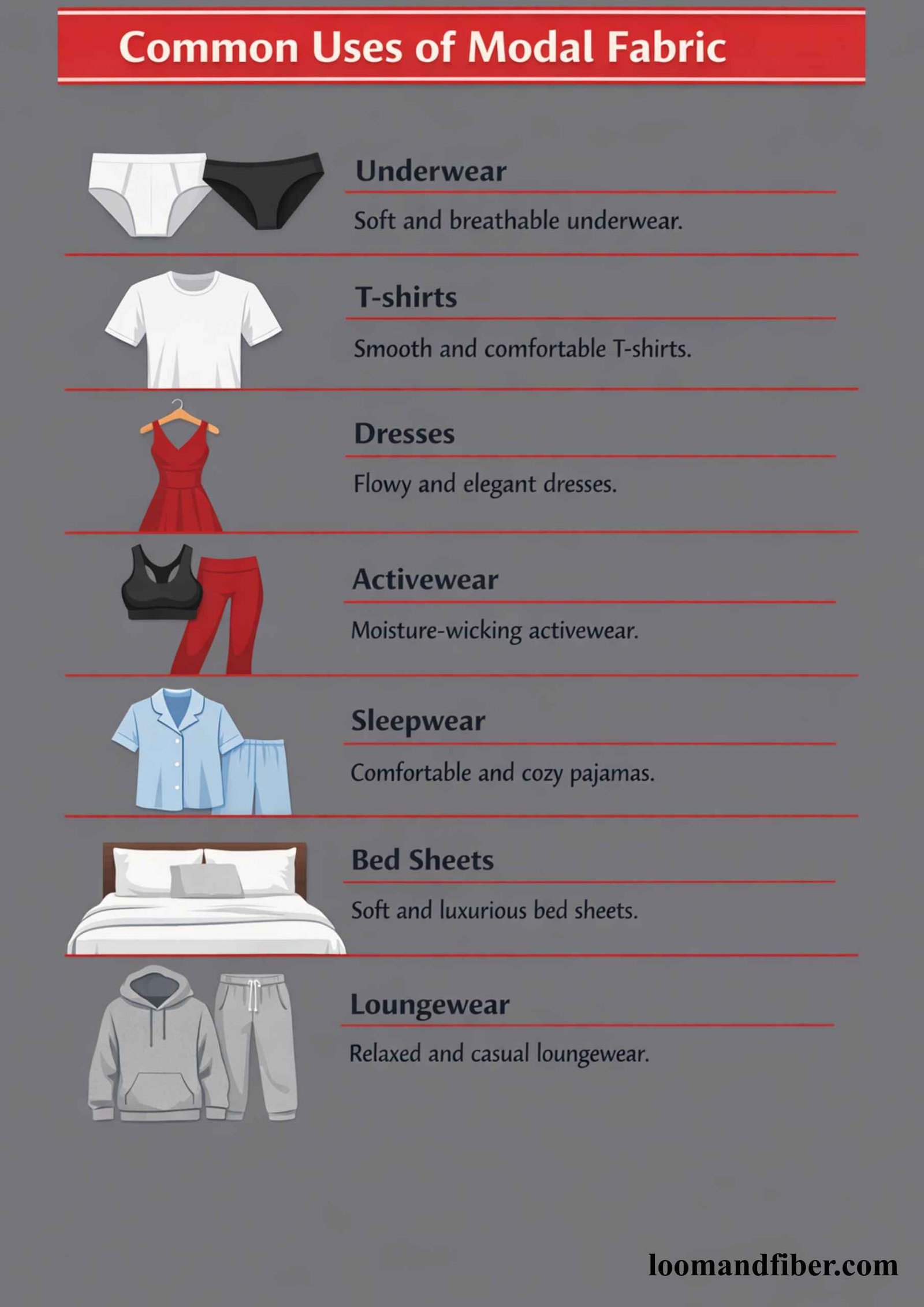
Underwear: The underwear and lingerie business is at the right time with the softness of Modal. It is soft on tender skin and sweeps away sweat on the body.
T-shirts and Tops: Modal has the same effect as cotton or on its own in tees and casual tops. It produces light and comfortable shirts, which breathe freely and do not sag.
Dresses: The flowing dresses and skirts are ideal to wear using modal as it emphasizes a smooth drape. It flows well and remains tender after numerous occasions of wearing.
Activewear: Modal is popular among sportspeople as a fitness apparel. It keeps the sweat away and cools down during the workouts. Leggings and yoga clothes become stretchy but soft with blends with spandex.
Sleepwear: Pajamas, nightgowns, and loungewear, modal is commonly used since it is soft and does not heat up on hot nights.
Bed Sheets: Modal sheets have a smooth feel of high thread count cotton or silk. They are smooth to the skin, airy to wear and less wrinkly. A great number of high-quality bedding brands utilize modal or modal-cotton mixes.
Loungewear: Sweatpants, robes, and casual home wear qualify as modal with its comfort and flexibility. The fabric can withstand clothes washing but is soft enough to be used in local lounge sets.
Is Modal Fabric Stretchy?
Modal is flexible in nature, and not necessarily very elastic. The fiber is stretchable to some extent under tension and therefore modal clothes are stretchable and recover (better than stiff fabrics such as linen). But modal will not be elastic like spandex or elastane. Where indeed the garment is actually stretchy, modal is often combined with elastic fibres (say 510 percent spandex). With a modal-spandex, you have an entire and nice stretch that fits the body (perfect in tights or exercise attire). Briefly, modal is soft and can call upon the body, and to achieve substantial bends, seek modal blend.
Is Modal Fabric Better Than Cotton?
It depends on your needs. Modal beats cotton in terms of softness and moisture management. Modal is smooth and cold (because it has moisture winding). It also has a tendency to be long lasting without diminishing. Modal is more likely to work better as comfortable, activewear, and luxurious bedding.
Cotton however prevails in terms of cost and ease. Cotton is cheaper, simple to maintain (it may be hot-washed), and entirely natural. It is tough in itself, and may be highly durable (particularly high-grade cotton), but it can shrink, and wrinkle. When you want a cheap daily garment, one would normally resort to cotton.
Is Modal Fabric Sustainable?
Modal has the potential to be more sustainable than most fabrics, but it relies on sourcing and production. The beech wood that is the raw material is renewable. Beech trees are fast growing; they are commonly found in managed forests which are replicated after harvesting. Beech forests require as little water as compared to cotton and require no irrigation. As a matter of fact, modal production consumes about 10-20 times the amount of water that cotton farming consumes. In addition, beech trees can also be planted on the land that cannot produce food crops, which decreases the strain on agricultural land.
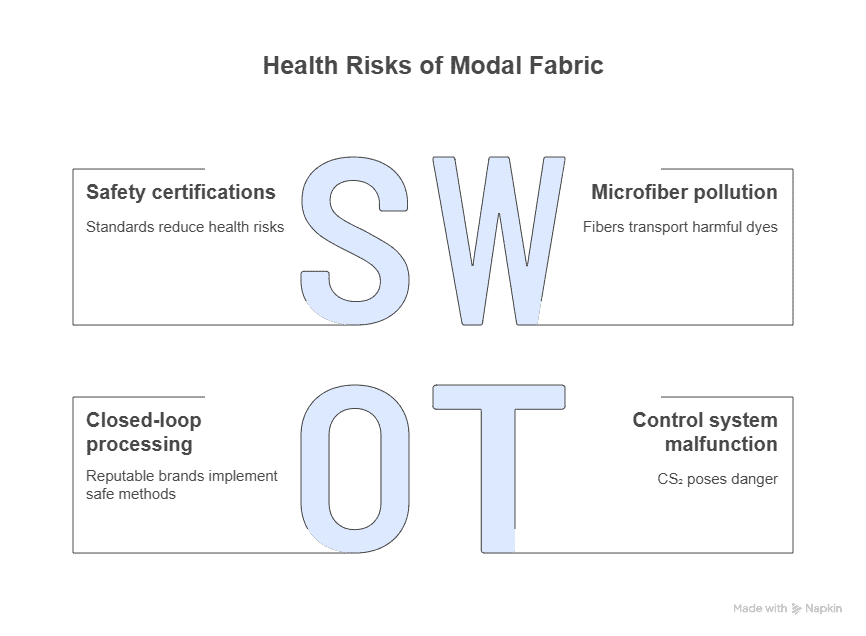
In the processing end, firms such as Lenzing employ closed loop in order to recycle the severe chemicals that are used to dissolve the cellulose. Lenzing states that it recycles about 80 percent of solvents and the bleaching is eco-friendly. This implies that modal production creates less emissions and wastes than methods used in old viscose.
The repercussion: modal is partially renewable and tends to be more environmentally-friendly than polyester, which is made of oil, or water-intensive cotton. Modal is biodegradable (as opposed to polyester). In cases when modal garments end up waste, they decompose significantly quicker than synthetics.
There is, however, no equal modal. Sustainable modal (such as TENCEL Modal) is derived in certified forests (FSC / PEFC) and mills are environmentally friendly. In case, manufacturers harvest beech trees in a way that is not sustainable, it decreases the advantage. Nevertheless, modal has good sustainability credentials in general, and they include renewable wood source, reduced water consumption, and mostly closed-loop production. These have caused modal to be very popular in fashion that is environmentally friendly.
Pros and Cons of Modal Fabric
Pros:
Very soft:___ Modal is extremely soft and gentle to the skin.
Breathable:___ It wicks and dries quickly, keeping you cool and dry.
Durable:___ Strong and stable: modal has more lasting power, and does not pill/shrink.
Ecological footprint:___ It is created of renewable beech wood; it consumes less water in comparison to cotton.
Lightweight:___ The fabric is slim and silky, contributes to the comfort and drape.
Cons:
Price:___ Modal is more costly as compared to ordinary cotton or viscose (because of processing and branding).
Caution:___ It should be washed carefully (with cold water) and dried without any heat to preserve its softness and size.
Semi-synthetic:___ It is produced with the use of chemicals and thus, it is not as natural as pure cotton is. Organic cotton may be of interest to buyers who want 100% natural.
How to Care for Modal Fabric
It is simple to treat modal by observing soft procedures. The following tips will assist modal garments to last long:
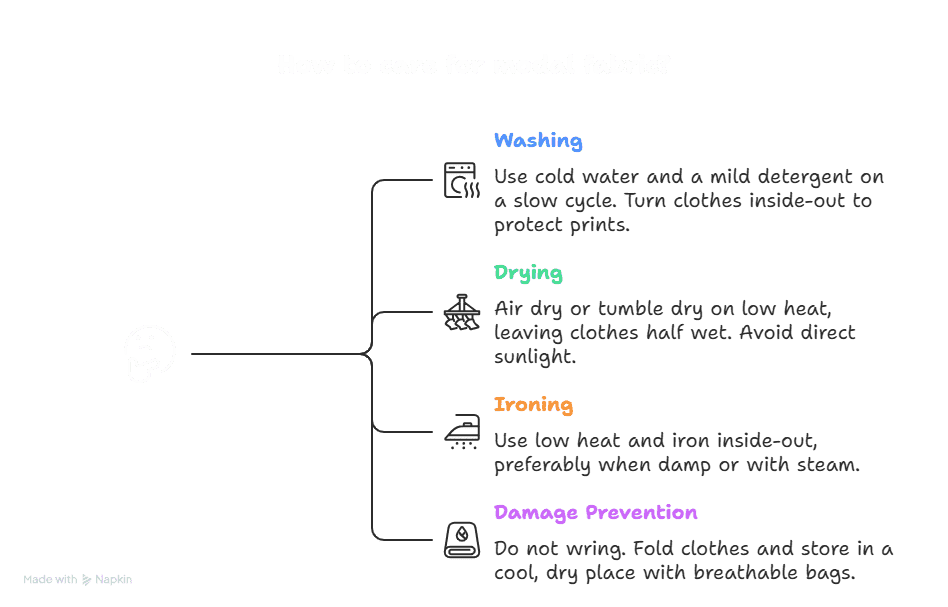
- Washing:>>> Wash by machine in a slow cycle with cold water (less than 30 o C). Apply a light, non-detergent, environmentally friendly washing detergent and do not use bleach or other harsh chemicals. Washing Before washing, it is good to turn clothes inside-out to protect the prints and color.
- Drying:>>> Air drying is best. Items in lay modal are put flat or hung up, and should not be exposed to direct sunlight. When using a dryer, you should only tumble dry with low-heat and leave clothes half wet so that they are not damaged or shrunk.
- Ironing:>>> In case ironing is required, then set it to low heat. It assists in ironing some of the modal garments when they are damp to some extent, or the steam option. Iron the opposite side of the piece of fabric (inside-out) to shield the surface.
- Damage prevention:>>> It is advisable not to wring modal fabrics as they are prone to being stretched. Keep modal clothing folded (not long term hung) in a cool, dry place. Store in breathable cloths (such as cotton bags) to avoid mildew and stretching.
When well taken care of, modal clothing does not lose its luxurious touch and shape in spite of numerous washes.
How to Identify High-Quality Modal Fabric
These indicators of quality are found when purchasing modal products:
- Smooth flowing texture: High-grade modal has a smooth texture and there are no bumps on the surface. Take the cloth to the light; you are not supposed to see big holes or blots or anything of that kind.
- Soft hand feel: Premium modal feels very soft and smooth when it comes out of the package. It must be soft and a little cold to the hand.
- Label and brand: Check fiber labels. Find a modal blend or modal 100% modal, and observe the source of the modal. The yarn or products labeled as LENZING 2 – LENZing modal or TENCEL 2 – Lenzing modal are quality-controlled modal of Lenzing. Famous brands that act responsibly with modal frequently state (patagonia, uniqlo airism, and so on).
- Weight and construction: Good modal is not feeble. Although it may be lightweight, it must still be substantial. Check the seams and weaves: high quality modal clothes are usually knitted or weaved carefully (there are no loose threads).
- Certifications: Certification of some quality modal fabrics is provided on the sustainability (FSC-certified wood, OEKO-TEX label, etc.). Responsible manufacturing can be denoted through such certification as Oeko-Tex Standard 100 or EU Ecolabel.
Concisely, a premium modal fabric is soft as they claim, constructed, and sold by respectable brands that make it clear that it is modal.
Modal Fabric for Different Seasons
Summer:
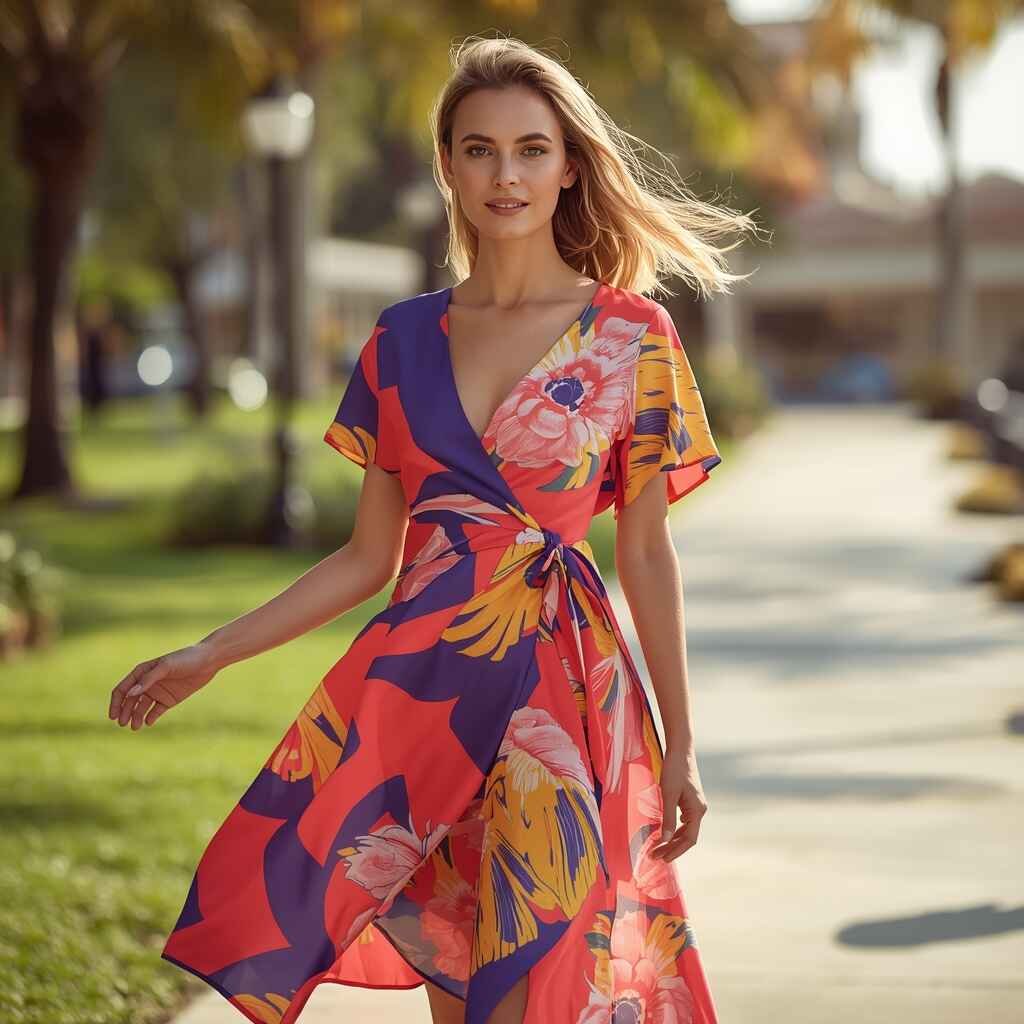
Modal is outstanding in hot weather. Its breathability and drying speed keep one cool. Light modal tops and dresses are worn to enable air to circulate and remove sweat like a natural air conditioner.
Winter (Layering):
Modal is not a warm fabric on its own since it is not that insulating. Nevertheless, it forms a good base layer since it keeps moisture off the skin (you are not wet when you are under sweaters). Cozy winter wear may also be made of modal blends (with wool or fleece).
All-Season Comfort:
Due to the warmth and coolness of modal, the garment can be used all year round in the mid seasons. A modal-cotton blend sweatshirt or a modal-spandex pant is comfortable and provides moisture control especially in transitional seasons. It is a flexible fabric; hence, modal is a flexible type of textile that everybody should have in their wardrobe.
Modal Fabric Blends Explained
Modal + Cotton:
This is a popular combination of the soft silky feel of modal with the known feel of cotton. The result is a soft, breathable fabric, typically a bit cheaper than pure modal. Modal-cotton blends continue to be a popular choice in T-shirts and summer dresses because they are able to wick moisture and also dress well.
Modal + Spandex (Elastane):
Adding a low percentage of spandex will provide the material with stretch and the ability to hold its shape. This combination is perfect with limited-fitting clothes such as yoga pants, leg-ins, and bodicted tops. You are fond of the softness of modal and just the right degree of elasticity so as to fit loosely though snugly.
Modal + Polyester:
The fabric is blended with polyester to become resistant to wrinkles and be more durable. The garment maintains its shape through the polyester which is also a strength to the garment. It remains much softer and easier to breathe compared to 100 percent polyester, and might actually be a little less cool than pure modal. A modal-poly blend is common in traveling and athletic wear and provides a compromise in comfort and easy-care.
Buying Guide: How to Choose the Best Modal Fabric
Fabric weight (GSM): Things to consider include the fabric weight. Modal may be in lightweight (100-150 GSM) to mid-weight. In the case of 150 to 200 GSM (light to medium), go to clothing such as T-shirts or dresses. In the case of bed sheets, a more weighty and durable feel is required, so the higher the GSM (200 or more). Airy lighter weights suit summer, and the heavier weights are loose fitting.
Blend type: Choose whether to have 100 percent modal or a blend. Maximum softness is found in pure modal. Blends of modals and cotton are somewhat cheaper and very soft. Modes-spandex will provide you with stretch. Look for the fiber content in the labels and make your selection on the basis of your application (e.g., pure modal to use in the sheets, modal-spandex in activewear, etc.).
Use (clothing vs. bedding): Find the reality in what the fabric is going to be used in. In the case of sleepwear and beddings, softer but a bit heavier modal should be used. For sportswear and casual apparel, it is okay with a lighter modal or a knit modal mix of modal. If you need to be warm (e.g. modal winter socks or underlayers) find a modal-wool mix or a heavier one.
Quality indicators: Quality modal fabric most commonly is branded (TENCEL™, LENZING™). These certifications are found on the label of the fabric. Also look at Oeko-Tex or GOTS labels of chemical safety. Test the feel: preferably feel the fabric, and make sure that it is smooth and soft. Lastly, purchase through trusted retailers or cloth dealers; the cheap modal mixes do not necessarily have much of the real modal.
Conclusion-
So, what is modal fabric? It is a breathable, light, semi-synthetic fabric that is manufactured using the beech tree pulp. It is very versatile as it is made of natural comfort and modern durability. Furthermore, it does not shrink and fades easily as other conventional fabrics. Since it possesses high capacity of absorbing moisture, it cools and dries the body.
Moreover, it has a soft texture that is kind to the sensitive skin. Durability in its production processes also makes it more acceptable to the environmental conscious consumer. As such, modal is a great option should you like softness, strength, and comfort all year round.
Read More>> Is Modal fabric Toxic?
FAQs
Modal is a semi-synthetic textile produced using cellulose pulp of beech trees. It is of the rayon family and is very soft and breathable.
Modal is semi synthetical in that it involves natural cellulose and chemical treatment. Then the question is, is modal natural or synthetic the answer is both.
Most modal is more durable and non-slippery when compared to cotton. Nonetheless, cotton is more inexpensive and easily accessible.
Yes, it is true that modal fabric is good in terms of air circulation. It is also highly efficient in absorbing moisture hence ensuring the body is cool and dry.
Yes, modal is heat regulating and light to the skin. Hence, it is ideal in hot and humid environment.
Modal is more resistant to shrinkage compared to normal cotton materials. Nevertheless, hot water might result in slight contraction despite washing.
Modal is made with beech trees that are renewable and require less water than cotton. Sustainable closed-loop systems are employed in eco-friendly versions such as TENCEL ™ Modal.
Yes, modal is soft and tender to the skin. Its smooth texture makes it less irritating and makes it much more comfortable in everyday life.