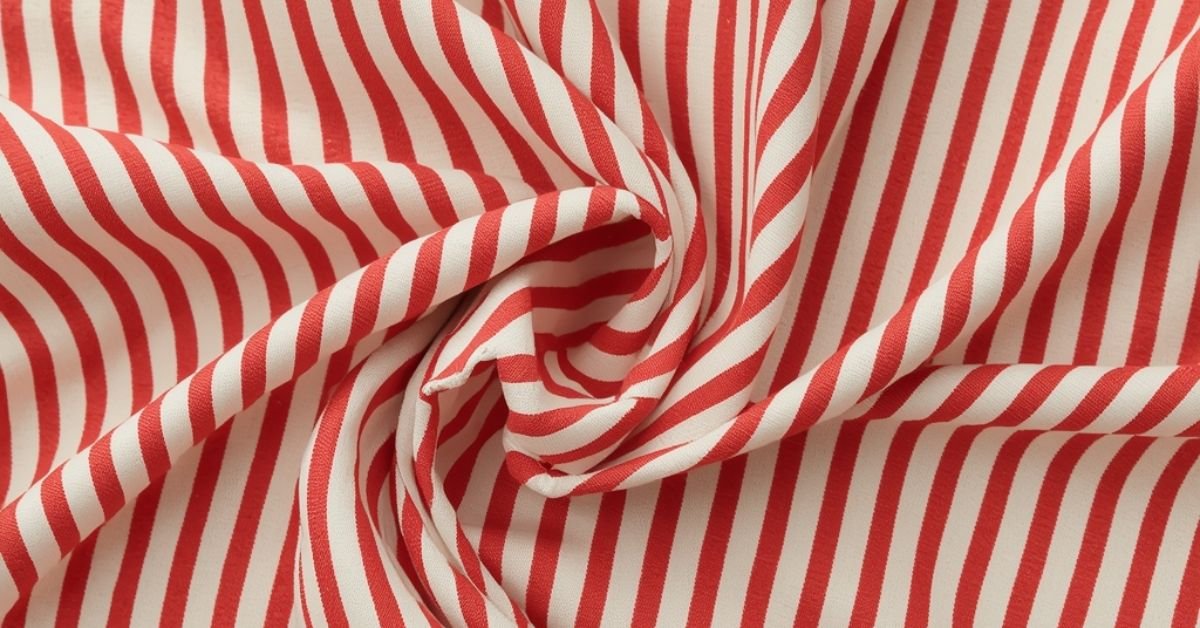

What is Nantucket summer fabric? Nantucket summer fabric is a lightweight, breathable cloth inspired by the coastal style of Nantucket Island. It typically refers to cotton or linen-based fabrics—often twill or canvas—that are soft, comfortable, and ideal for warm weather. Traditionally tied to Nantucket Reds attire, this fabric is known for a slightly washed, faded look and an airy feel. In effect, the term describes a style of summer clothing fabric rather than a single material, though cotton canvas and linen blends are most common. Its association with Nantucket comes from the island’s sailing culture, where durable yet breathable clothes are essential. Nantucket summer fabric became linked to preppy summer fashion through the island’s famous faded red trousers. Overall, this coastal classic cloth is celebrated for staying cool in the heat while looking effortlessly chic.
History and Origin of Nantucket Summer Fabric
Nantucket’s maritime life shaped this fabric’s history. In the 1960s, Murray’s Toggery Shop on Nantucket introduced a red canvas cloth inspired by the red sails of French fishing boats. Those sails were tanned with tree bark and faded under sun and salt, so Murray crafted similar cotton canvas pants that softened and faded over time. These “Nantucket Reds” pants became iconic island wear.
Over decades, the style spread beyond workwear to yachting and resort fashion. Notably, the Official Preppy Handbook later hailed Nantucket Reds as “de rigueur at country and yacht club affairs”. Thus a practical cloth for sailors evolved into a symbol of coastal privilege. Today, Nantucket summer fabric evokes both its working-class nautical origin and its place in luxury summer wardrobes.
Key Characteristics of Nantucket Summer Fabric
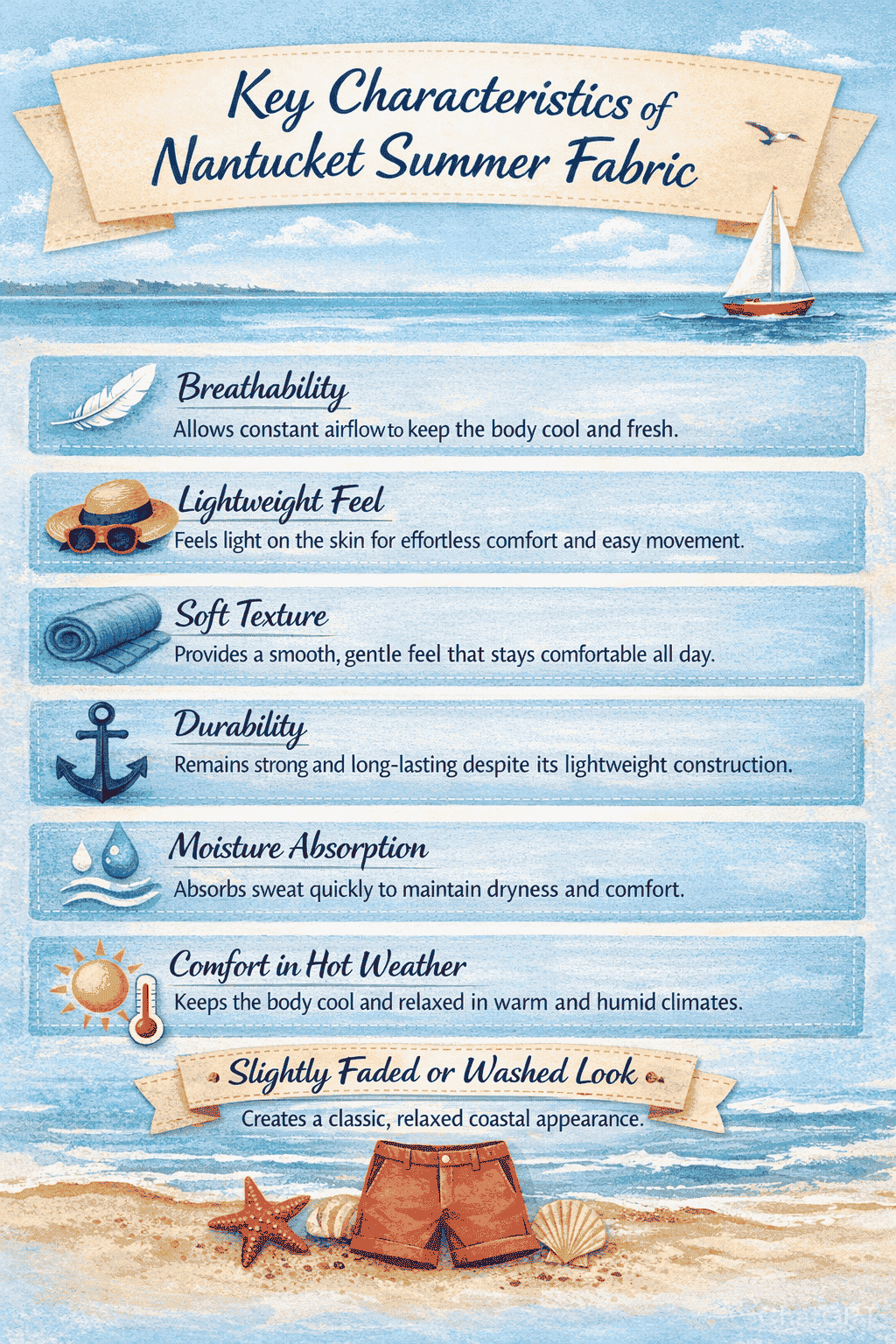
Breathability
These fabrics use natural fibers with open weaves, allowing air to circulate easily. As a result, heat and moisture escape quickly, keeping skin cool. Cotton and linen yarns in Nantucket fabrics are known for excellent airflow.
Lightweight Feel
Nantucket fabrics tend to be medium-weight rather than heavy. This gives them a light, airy drape that feels almost weightless in summer. Garments move freely with a gentle billow, unlike stiff winter cloth.
Soft Texture
Many Nantucket fabrics are pre-washed or brushed to soften the weave. For example, a cotton canvas may feel crisp new at first but quickly softens with washing. The result is a soft, lived-in hand that’s gentle against skin.
Durability
Despite being light, these fabrics are strong. Twill weaves and canvas constructions are sturdy, resisting tears and wearing well through repeated use. Nantucket clothing often came from workwear originally, so its cloth is built to last.
Moisture Absorption
Cotton and linen excel at wicking moisture. They soak up sweat and transfer it to the surface, where it evaporates. Linen especially can dry up to 20% faster than cotton, so Nantucket-style linen garments stay comfortable even in humidity.
Comfort in Hot Weather
Overall, the combination of breathability and moisture wicking makes Nantucket fabric superb for heat. It does not cling to the skin, which means wearers stay dry and comfortable on hot summer days. These materials keep the body cool by promoting evaporation.
Slightly Faded or Washed Look
A signature trait is the subtly worn appearance. Original Nantucket Reds apparel was pre-washed to set the color, so pieces arrived with a muted, vintage look. Over time, fabrics continue to fade in the sun and wash, giving a relaxed, classic feel. This gentle fading is now part of the Nantucket aesthetic.
What Materials Are Used in Nantucket Summer Fabric?
Cotton Twill
Cotton twill is a common choice. Its diagonal weave adds strength and a bit of structure, yet still breathes. Nantucket cotton twill is often lightweight so that shirts or shorts don’t feel stiff. It holds dye well and softens with each wash, making it feel broken-in and comfortable.
Linen
Linen is prized in Nantucket summer wear. Made from flax fibers, linen is extremely light and airy. It allows maximum airflow through its coarse weave. Linen fibers also wick moisture efficiently, so linen garments keep you cool. The slightly rough texture of linen gives outfits a relaxed, elegant look.
Linen Blends
Blending linen with cotton (or other fibers) creates a fabric that combines strengths. A cotton-linen blend will be softer and less prone to wrinkling than pure linen, while still retaining much of linen’s breathability. These blends often appear in Nantucket-style shirts and dresses to balance comfort and structure.
Lightweight Canvas
Canvas for Nantucket fabrics usually means a light or medium-weight cotton canvas, not the heavy sailcloth of the past. This canvas is woven tightly for durability yet finished softly. It is used in classics like the original Nantucket Red pants. Because it is pre-washed, this canvas is easier to wear in summer than raw duck cloth.
Chambray
Chambray is a plain-weave cotton similar in appearance to denim but much lighter. Often used in summer shirts, chambray has a smooth texture and good breathability. It has a crisp look and is especially popular in blue and white, fitting well with the seaside color palette.
Seersucker
Seersucker is a puckered cotton fabric that is synonymous with preppy summer style. It has a wavy, textured surface created by slack-tension weaving. This puckering lifts the fabric slightly away from skin, increasing airflow. In Nantucket fashion, seersucker is sometimes used for shorts, dresses, and even lightweight suits or blazers to add a bit of casual texture and cooling.
Why Nantucket Summer Fabric Is Popular
Ideal for Hot and Humid Climates
These fabrics excel in warm weather. By letting air pass through easily, they help the body cool itself. Linen in particular is ideal for summer days. Cotton’s natural moisture management also prevents the sticky feeling of heat. In the South or by the ocean, breathability is crucial, making Nantucket fabrics go-to materials.
Coastal and Preppy Fashion Appeal
Nantucket style carries a timeless, nautical charm. The clean, light colors (whites, blues, soft pastels) and natural textures evoke seaside ease. As a result, Nantucket fabric is associated with the classic “New England summer” or yachting wardrobe. This preppy vibe is deliberate: The Official Preppy Handbook and style masterminds have long touted Nantucket’s signature reds and neutrals as summer staples. Wearing these fabrics instantly conveys a coastal lifestyle.
Comfortable and Stylish
Nantucket fabrics manage to be both relaxed and refined. They drape nicely, so clothes look neat yet unfussy. At the same time, the softness and lighter weight make them very comfortable to wear for long periods. You can look pulled-together (linen trousers and a shirt) yet feel like you’re in pajamas. This blend of comfort plus effortless style keeps them popular among both design-conscious shoppers and practical dressers.
Durable Yet Lightweight
Another advantage is longevity. Even after many washings, quality cotton and linen pieces hold up. The fabrics soften, but don’t easily tear or thin out. This durability makes expensive Nantucket items a worthwhile investment. Many families still pass down vintage Nantucket Reds or linens, treating them like warm-weather classics. Durability paired with lightweight comfort is a winning combination.
Common Clothing Made from Nantucket Summer Fabric
- Shorts: Casual shorts are a summer staple, especially the iconic Nantucket Reds shorts—faded red cotton twill shorts first made famous on Nantucket. Beyond those, airy cotton or linen shorts in pale khaki or navy are popular for a beach-ready look.
- Shirts: Button-up shirts and tees in crisp white, light blue, or stripe patterns are common. Linen camp shirts and cotton chambray shirts capture that Nantucket feel. They often feature short sleeves or rolls, so they stay cool yet look polished.
- Pants: Trousers made of lightweight cotton canvas or linen are classic. The original Nantucket Reds® pants are 100% cotton canvas. Today you also see relaxed-fit linen drawstring pants or casual chinos in muted tones.
- Dresses: For women, summery dresses in soft cotton or linen are practical and pretty. Think sundresses, shirt dresses, or linen wrap dresses in whites, pinks, or floral prints. They move freely and breathe easily.
- Blazers: Even blazers can use Nantucket-style fabrics. Unstructured linen or seersucker blazers (often in navy or red) are worn for a smart-casual ensemble. These pieces nod to the island’s tradition of pairing a jacket with summer attire.
- Skirts: A-line or pencil skirts in light cotton poplin or linen blends fit right in. Pairing one with a light blouse makes an elegant yet relaxed outfit for Nantucket weather.
- Casual Summer Suits: Men’s and women’s suits made from seersucker or fine linen are stylish resort wear. The texture or weave keeps them air-cooled. A white cotton shirt with a linen jacket and light chinos is a preppy warm-weather suit idea.
Nantucket Summer Fabric vs Linen
Breathability
Linen’s loosely woven flax fibers allow the most airflow, so it often feels cooler. Nantucket cotton or blends still breathe well, but generally retain a bit more moisture than pure linen. In practice, both feel airy, but linen typically has a slight edge.
Texture
Linen has a natural slubby texture that gives it a rustic look. It is coarser at first, though it softens over time. Nantucket-style cotton twill, by contrast, has a smooth, even surface. Cotton fibers start soft, so a cotton shirt feels softer right off the hanger than a new linen one.
Wrinkle Resistance
Linen wrinkles very easily, which is part of its charm. Nantucket cotton fabrics (especially if they are twill or canvas) tend to hold their shape better. Cotton may creaseline moderately but typically looks neater after wear, whereas linen appears crinkled.
Durability
Linen fibers are actually stronger than cotton fibers, meaning a linen garment can last many years and often becomes more comfortable with age. Nantucket cotton is also durable, but cotton generally wears out slightly faster than linen under heavy use. Both are sturdy, but linen wins on longevity.
Cost
Linen is more expensive due to labor-intensive processing. Nantucket fabrics made from cotton (or cotton blends) are usually more affordable. You may pay a premium for the Nantucket brand name or for special washes, but pure linen pieces are typically pricier than similar cotton ones.
Best Uses
Use pure linen on days when you need maximum coolness (like a humid afternoon). Choose Nantucket cotton or blends for everyday summer wear that demands both comfort and structure. For example, linen is ideal for a breezy tunic or kaftan, whereas cotton is great for shirts, shorts, and lightweight jackets that keep their shape.
Nantucket Summer Fabric vs Seersucker
Texture
Seersucker is defined by its puckered, crinkled texture, created by uneven tension in the weave. It feels bumpy and has vertical stripes or checks. Nantucket cotton or linen fabrics, on the other hand, are generally smooth and flat in texture (aside from any intentional garment washes). The lack of puckers gives them a simpler look.
Appearance
Seersucker traditionally appears in blue-and-white stripes or pastel checks, giving it a playful, casual vibe. Nantucket fabrics usually come in solids or simple weaves (like plain dyed cotton or linen) and often in faded pastels or reds. Seersucker stands out due to its stripe pattern, while Nantucket materials often showcase woven texture or color fade instead.
Cooling Ability
Seersucker’s raised stripes actually improve ventilation: air flows under the puckers, keeping you cooler than flat cotton. Nantucket cotton and linen are also cooling, but they have a denser feel than seersucker. In practice, seersucker might feel slightly airier on the skin because of its texture.
Formal vs Casual Use
Both fabrics are summer-casual compared to wool. Seersucker has a longstanding association with lightweight summer suits and dresses – it can be dressed up or down. Nantucket fabric is primarily seen in casual attire (shorts, shirts, beach wear) and rarely in very formal settings. In other words, you might see a man in a seersucker sport coat at a summer wedding, whereas Nantucket shorts or a canvas blazer would be more for vacation or club events.
Is Nantucket Summer Fabric Good for Hot Weather?
Absolutely. Its natural fiber composition and loose weaves make it ideal for summer. Scientifically, these fabrics promote air circulation around the body, so sweat evaporates quickly. For example, cotton and linen won’t cling when you perspire; instead, they let moisture escape and dry fast. They also prevent overheating by not trapping heat. In practical terms, wearing Nantucket cotton or linen feels like you have a light breeze on your skin. This cooling effect is why Nantucket-style garments are favorites on sweltering days at the beach or sailing on the water.
How to Identify Genuine Nantucket Summer Fabric
- Fabric Feel: Genuine Nantucket fabric has a substantial yet soft hand. It may start crisp (like canvas) but should feel naturally pliable after washing. It should not feel slick like synthetic.
- Weight: It is often a midweight textile (heavier than a flimsy poplin, lighter than heavy denim). For example, classic Nantucket Reds pants are made from canvas-thick cotton.
- Appearance: Look for a pre-washed finish. Authentic Nantucket clothing often has a muted color – as if gently faded. Colors (especially reds, greens, or blues) may look softly muted rather than flat and bright.
- Material Composition: Check labels. Traditional Nantucket fabric is usually 100% cotton canvas or cotton twill. Modern pieces may be cotton-linen blends. Avoid cheap synthetics and see if it lists cotton or linen.
- Quality Indicators: True Nantucket garments have sturdy stitching and a firm weave. Original brands like Murray’s Toggery often include a Nantucket Reds logo tag. Authentic items might note “pre-washed” or “continued to fade” (as spot-cleaning can cause uneven fading). High-end Nantucket fabrics will feel substantial, not flimsy.
How to Style Nantucket Summer Fabric Clothing
Coastal Outfits
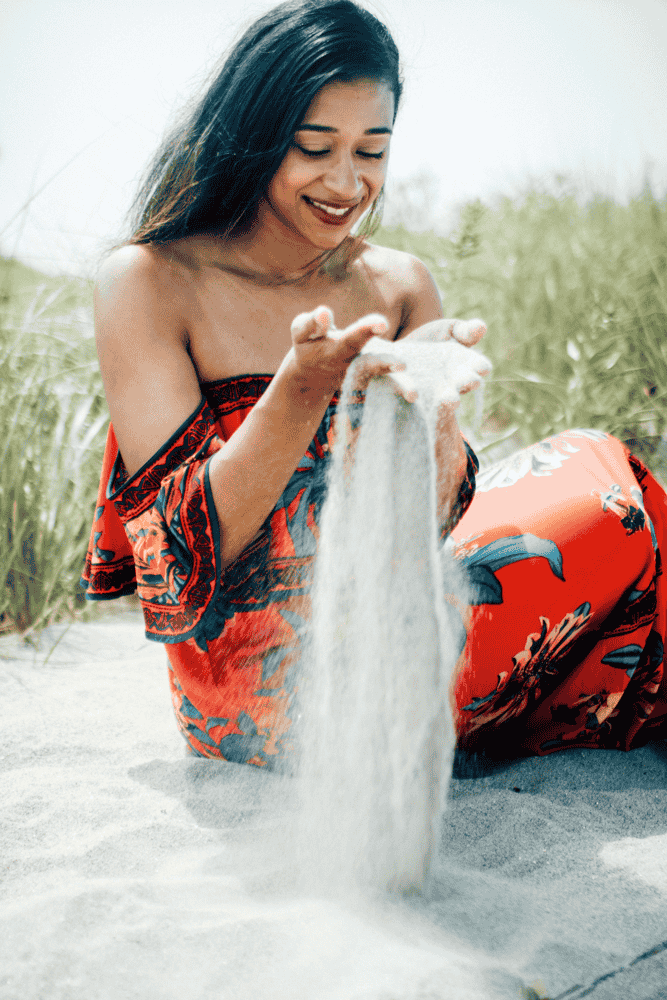
Coastal style leans into the sea breeze. For example, pair a lightweight white linen shirt with navy or pastel shorts for a crisp harbor lunch look. A woven straw hat and boat shoes complete the outfit. Think navy-and-white stripes or natural tones with vibrant accents (like the iconic Nantucket red).
Casual Summer Outfits
Keep it easy for everyday sun. Try a cotton chambray or linen dress with sandals, or a simple tee with Bermuda shorts. Soft prints (floral, seersucker plaid) and loose fits are typical. For men, a pastel polo with rolled chinos or relaxed shorts works well. The goal is comfort: breathable fabrics and classic silhouettes that let you move and cool off.
Preppy Style Combinations
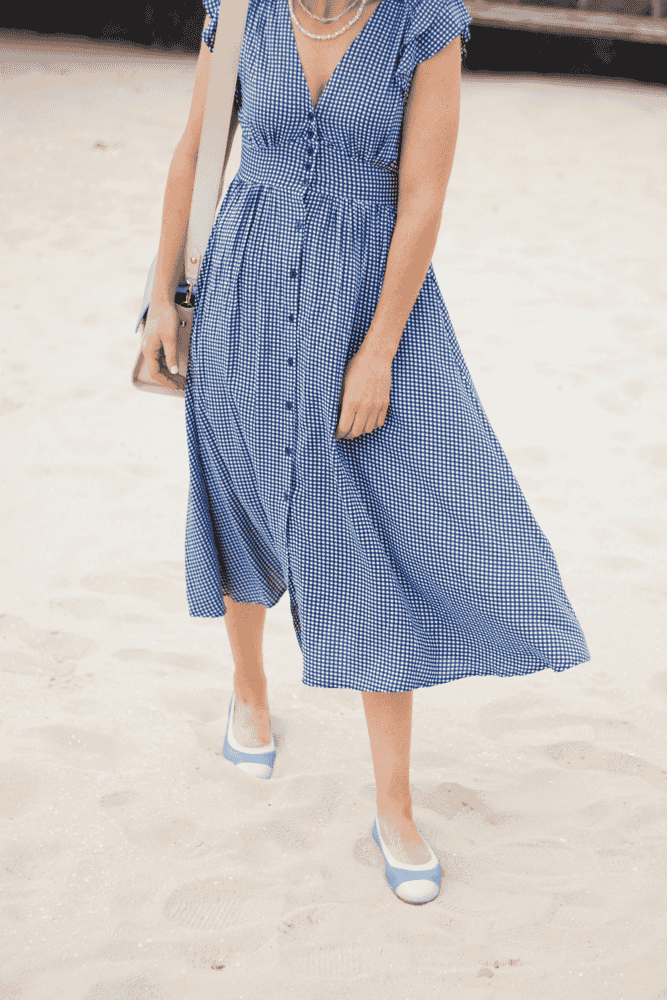
Nantucket style is rooted in prep. Mix classic pieces: pair Nantucket Red shorts or a skirt with a crisp blue-button Oxford or striped shirt. Throw on a lightweight navy blazer or knit sweater for boat club evenings. Accessories like leather boat shoes, a simple pearl necklace, or a skinny club tie add polish. For women, try a Breton striped top under a linen blazer, or a pastel chambray dress with a navy cardigan.
Vacation Outfits
On vacation, aim for versatile comfort. Long linen kaftans or cotton maxi dresses are both elegant and breezy. One-piece cover-ups in gauzy cotton work from beach to boardwalk. Pack items that layer easily: a linen blazer that drapes over a swimsuit or sundress, or a chambray shirt that goes from day to night. Light scarves and bright accessories (sunglasses, totes) fit right in. Essentially, resort wear made of Nantucket fabrics feels upscale yet laid-back.
How to Care for Nantucket Summer Fabric
- Washing: Machine wash on a cold or gentle cycle with mild detergent. (Original Nantucket Reds care says “machine wash cold”.)
- Drying: Air drying is best to minimize shrinkage and fading. If using a dryer, tumble on low heat only. (Murray’s recommends hang drying.)
- Ironing: Iron on low-to-medium heat. Linen and cotton become smooth easily. For linen blends, you may press while slightly damp. Iron with the garment inside out to protect any pigments.
- Prevent Fading: Turn clothes inside out before wash to preserve color. Use cold water and a gentle cycle. Avoid bleach and prolonged sun-drying, as these can accelerate fading of dyes. If possible, rinse with a touch of white vinegar to set colors.
Pros and Cons of Nantucket Summer Fabric
- Pros:
- Breathable: Natural fibers let skin breathe.
- Lightweight: Comfortable in heat without extra bulk.
- Stylish: Classic coastal-preppy aesthetic.
- Comfortable: Softens quickly and feels good on skin.
- Durable: High-quality weaves last for years.
- Cons:
- Wrinkles Easily: Especially linen-rich blends tend to crease.
- Not Warm: Too light for cold seasons (no winter versatility).
- Color Fades Over Time: The washed look is charming but some dyes lighten.
- Special Care Needed: Usually requires gentle washing to maintain look.
Best Uses of Nantucket Summer Fabric
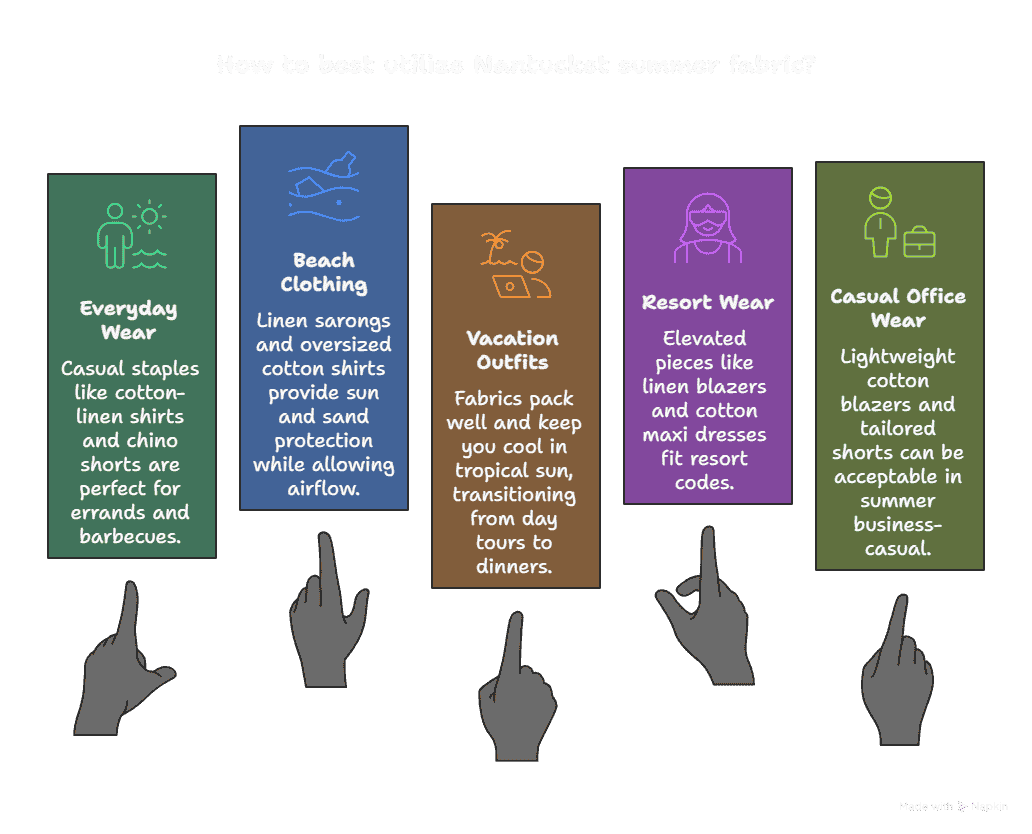
Everyday Summer Wear
Opt for casual staples: cotton-linen shirts, chino shorts, sundresses. These fabrics are perfect for running errands or a backyard barbecue. Their breathability keeps you cool from morning to night.
Beach Clothing
Ideal for cover-ups, tunics, and swim wraps. A linen sarong or oversized cotton shirt keeps sand and sun at bay while letting air flow. Even a simple cotton T-shirt with shorts is a classic beach combo.
Vacation Outfits
These fabrics pack well and don’t overheat you in tropical sun. Wear linen trousers with a loose blouse for exploring, or a cotton shift dress with sandals for sightseeing. They transition easily from day tours to casual dinners.
Resort Wear
Elevated pieces like a white linen blazer or a pastel linen skirt suit fit resort codes. Light-colored cotton maxi dresses or jumpsuits also read dressed-up but remain relaxed. Think of them as the summer suit version: cool yet refined.
Casual Office Wear
In summer business-casual, a Nantucket fabric blouse or tailored shorts can be acceptable. For men, a lightweight cotton blazer with chinos works in warm climates. The key is neat silhouettes—like a crisp shirt in seersucker—paired with breathable trousers, bringing island flair to the office.
Buying Guide: How to Choose the Best Nantucket Summer Fabric
- Best Materials: Look for 100% cotton canvas or cotton-linen blends. These give the classic feel. Avoid synthetic fabrics. Italian or Irish linen labels can also fit the style.
- Ideal Weight: Aim for midweight fabrics (around 200–300 GSM) that hold structure yet remain airy. Papers labelling “lightweight” cotton or linen suiting often suit Nantucket clothing.
- Quality Indicators: Check that the fabric is pre-washed or pigment-dyed for that fade. The weave should be tight and even. Heavy double-stitching on seams (as on Nantucket Reds) signals durability. Authentic Nantucket Reds garments will note “100% cotton canvas, pre-washed”.
- Brands and Fabric Types: Murray’s Toggery Shop’s Nantucket Reds® is the gold standard (made in USA, fading guaranteed). Castaway Clothing offers similar styles (cotton seersucker, linen). In fabric terms, search for “Nantucket cotton” or “coastal linen” in collections. Trusted coastal fashion brands and textile mills often carry Nantucket-style materials.
Conclusion
In summary, Nantucket summer fabric refers to a breathable, lightweight coastal cloth—most often cotton canvas or linen—that’s perfect for warm-weather wear. Its origins lie in Nantucket’s sailing heritage, especially the faded-red cotton pants known as Nantucket Reds. Key benefits include outstanding airflow, soft feel, and durability, making it a favorite for summer clothing like shorts, shirts, and dresses. Despite its luxury connotations, Nantucket fabric is very practical: it wicks moisture and stays cool on hot days. Whether you’re dressing for a beach vacation or a yacht-club picnic, garments in Nantucket summer fabric will keep you comfortable and stylish in true coastal fashion. This coastal classic continues to stand out in warm-weather wardrobes thanks to its natural fibers, faded charm, and island-inspired legacy.
FAQs
Nantucket summer fabric is typically made of natural fibers. Most often it is 100% cotton canvas or twill (like the classic Nantucket Reds pants). It can also include 100% linen or blends of cotton and linen. The emphasis is on light, breathable weaves.
Yes. Traditionally, the iconic Nantucket clothing was cotton. For example, the original Nantucket Reds pants were made from cotton canvas. Today you will still find many Nantucket-style garments in cotton or cotton-rich blends. Some pieces also mix in linen for extra coolness.
Its popularity stems from a blend of comfort and style. It’s cool, breathable, and soft, perfect for summer. Culturally, it evokes the relaxed yet refined Nantucket preppy look. The history of Nantucket Reds and notable wearers (like JFK) gave it a status as a cornerstone of preppy summer attire. In short, people love it for its classic coastal charm and functional comfort.
Definitely. The cotton and linen materials excel in heat. They allow air to circulate and wick sweat away, creating a cooling effect. Scientifically, these fibers do not trap body heat; instead they help you stay dry and comfortable. In practice, wearing Nantucket fabric on a hot day feels much cooler than polyester or tight-weave fabrics.
Yes. Because it is usually made of cotton or linen, Nantucket fabric is highly breathable. Air flows through the weave easily, so you won’t overheat. Both cotton and linen are known for free airflow and moisture wicking, making them ideal for hot weather.
Nantucket fabric generally refers to a style of fabric (often cotton or a blend), whereas linen is specifically the fiber from flax. In effect, linen is one type of Nantucket summer fabric. Linen is usually more breathable and wicks moisture faster than cotton, but wrinkles more. Standard Nantucket cotton (twill or canvas) is smoother and less prone to wrinkling.