
What Is Wool Tapestry?
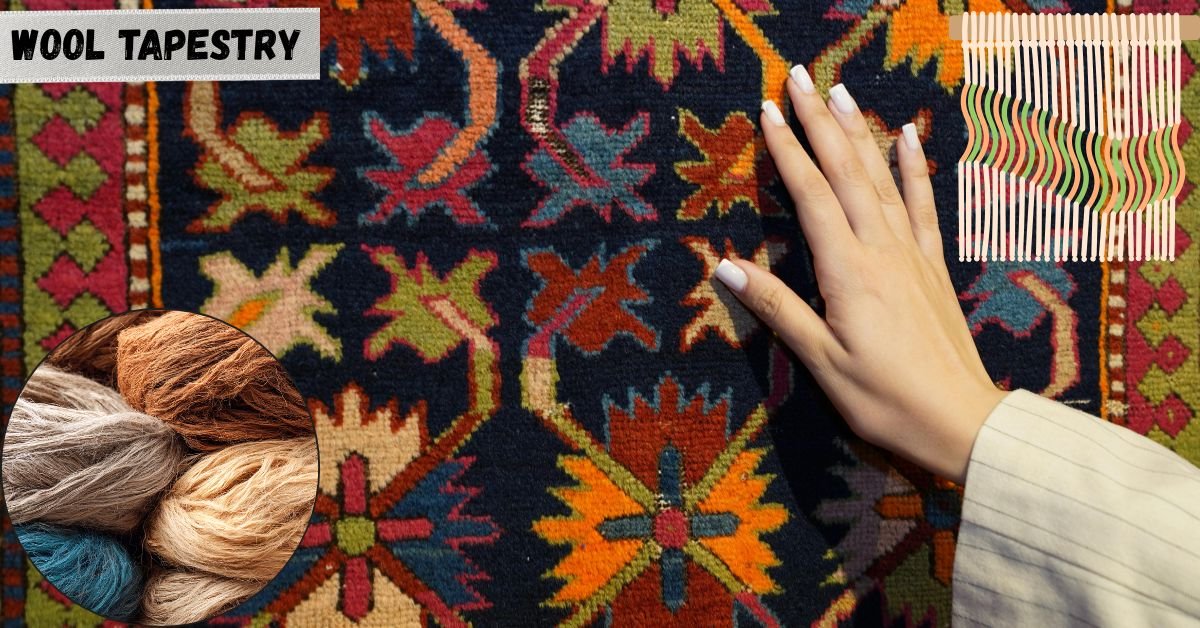
Wool tapestry refers to a decorative piece of textile artistic creation that is woven with yarn made of wool on a loom. It has images, symbols or patterns, which are made using the weaving structure itself and not printing on the surface. Hence, the wool tapestry connotation consists of artistic value and practical interior decoration.
In contrast to ordinary wall hangings, the creation of the tapestry is completely based on the use of interlaced threads. Wall decor is frequently done in painted cloth, embroidery or printed material. Nevertheless, the tapestry designs based on wool are still considered to be one of the pillars of the fabric, which makes them strong and rich.
In addition, the wool tapestries are heavier, warmer and sturdier than usual fabric hangings. They are mostly used in decorative, acoustic, and insulation purposes at the same time. Consequently, the knowledge about what is wool tapestry makes consumers understand the craftsmanship and value that it has over time.
History of Wool Tapestry
Wool tapestry has a medieval European origins whereby the craftsmen invented forms of weaving to narrate stories. Tapestries became some of the key aspects of castles and houses of the nobles during the Middle Ages. Therefore, they represented affluence, education and political authority.
Wool tapestries were also used to cover cold stone walls to keep them warm. Religious images were woven with symbolic images in churches. However, at the same time, royal estates depicted the historical battles and mythological tales by the use of traditional tapestry weaving.
The material used was mostly wool since it was easily accessible and very tough. Moreover, wool was very accepting of dyes, and did not fade away. Thus, wool tapestry became a practical and aesthetic variant of interior furnishings of historical houses.
Why Wool Is Used in Tapestry Making
Craftsmen prefer wool to cotton or synthetic fibers in weaving tapestries due to a number of reasons:
Natural elasticity
The wool fibers are naturally crimped and elastic. This implies that a wool tapestry will be able to bend under tension without breaking. Consequently, a wool tapestry is tight and firm when hung. In comparison, cotton is not as stretchy and it is more apt to breaking or falling under the same pressure. Thus, the springy nature of wool in the form of fibers makes it more adapted to large weavings on the loom.
Color retention
Wool has a remarkable capacity of taking dye. The scales of wool fibers entangle deep in dyes thus the wool tapestries have bright colors that last long. Good wool tapestry is able to demonstrate the same vivid colors over decades. True, the wool may be dyed in the most vast variety of colours. This implies that the colors of a wool tapestry will not fade easily as compared to several other materials. Color will not fade over time as it would be in the case of a wool tapestry, but would fade in the case of cotton or inexpensive synthetics.
Durability
Wool is a highly tough and hard fiber. A wool tapestry can be tied to the wall and hung years without any tears or without being thin. The resilience of wool can be seen in fact because hundreds of wool tapestries have been in good condition even after several centuries, as can be seen in the Middle Ages. The natural ability of the fiber and crimp make the fabric resistant to abrasion and normal wear. This is what contributes to the longevity of wool tapestries they serve as long-lasting pieces of art: a well-maintained wool tapestry can withstand several generations.
Insulation properties
Wool is a very good insulator. Its crimp makes it trapping small air pockets thus providing wool tapestry with the natural thermal and acoustic insulation. A wool tapestry on a wall prevents a substantial amount of heat loss and echoing. In medieval castles, however, tapestries were used to, as an example, provide a form of insulation in large stone rooms. Even nowadays, a wool carpet tapestry will keep the room warmer by insulating cold walls. This is an advantage, because wool has these insulation qualities when compared to cotton or polyester tapestries which are not as insulating.
How Wool Tapestry Is Made (Step-by-Step)
Weaving on wool is a complex and multi-phase process. The basic steps are:
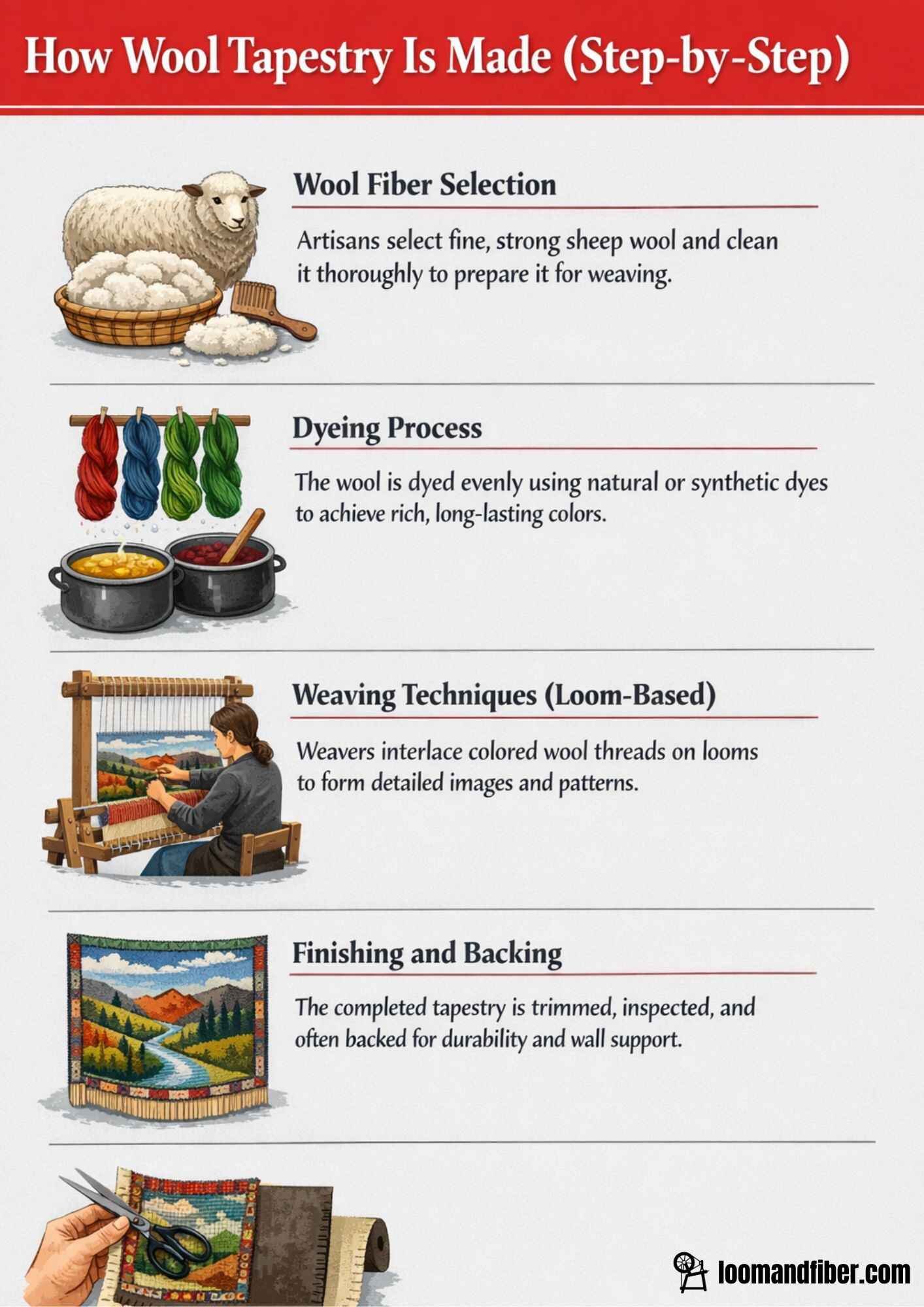
Wool fiber selection
Weavers begin with the choice of the appropriate wool. They seek the wool yarn of high quality and uniformity in the required colors. The wool is often worsted (tightly spun), or carded as required by the weave. The fiber is selected because of its strength and consistency, as the wool of high quality translates into more detailed clarity. There are also those weavers who blend sheep wool of other breeds or even sources in order to achieve the ideal texture and color to use in the design. In the historical workshops, where people worked with tapestry, English or Spanish wool was used due to its fine quality.
Dyeing process
Next, the wool yarn is dyed. The yarn is immersed in dye baths in order to attain the required colors and shades. Dyers either work with natural dyes (plants, minerals) or with modern dyes on wool (acids) with strict attention paid to time and temperature. Before weaving, wool needs to be dyed as the wool is easily soaked in dye to produce deep color. The coloured yarn is then dried, sorted and stored according to the colour. Even dyeing is essential in order to have each thread of the tapestry to be within the intended palette.
Loom weaving (weaving techniques)
Tapestry is woven in a machine called a loom, which is vertical (high-warp) or horizontal (low-warp). The warp (mostly wool) is pulled to a taut position on the loom. The artist employs a complete cartoon (pattern drawing) as a pattern. The weaver then proceeds to work on the underside, and weft threads are then passed back-and-forth through the warp, smacking them down with a beater. Every weft color is only woven in the portion that is required to construct the image. The tapestry is built up in rows as the weft is thrown completely over the warp. Weavers frequently employ such tricks as slit tapestry joins or interlocking to transit colors in a fluid manner.
Finishing and backing
After the tapestry weave is finished, it is removed off the loom. Then the craftsman ties up loose threads: the unused yarns are knitted or sewed down and the edges of the weft and warp are trimmed off. The tapestry is often washed (usually with delicate water or chemicals) to fix the wool strands and take off all the dust of the weaving. Once dry a backing cloth can be sewn on the back to add support. Lastly, the top is hung with hanging loops or rod pocket, and displayed. The surface of the tapestry is evened with the use of a finishing brush or final vacuum. The outcome is a ready-to-hang wool tapestry – a heavy, all-woven piece of art.
Types of Wool Tapestry
Wool tapestries come in various types depending on how they are made and designed.
Handwoven Wool Tapestry
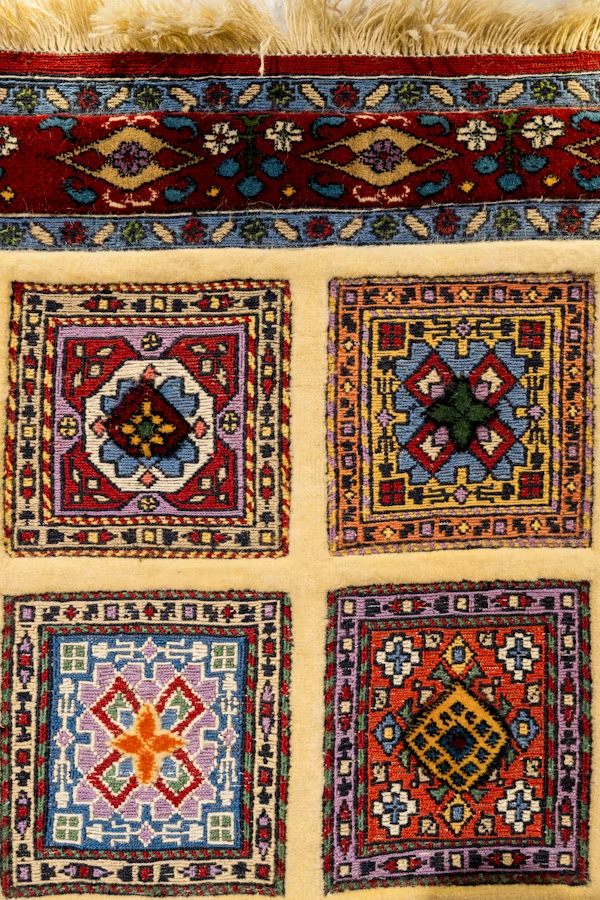
Wool tapestries that are completely handcrafted are considered to be handwoven wool tapestries. They are usually lavishly designed and put together with artisan skills on a loom and can be done with custom designs or traditional designs. Because these wool tapestries are done by hand weaving, there is a pretty good chance that they could end up having some minor flaws. Signs of “character” are very common and hand woven tapestries are generally a lot more priced than others.
Machine woven tapestries
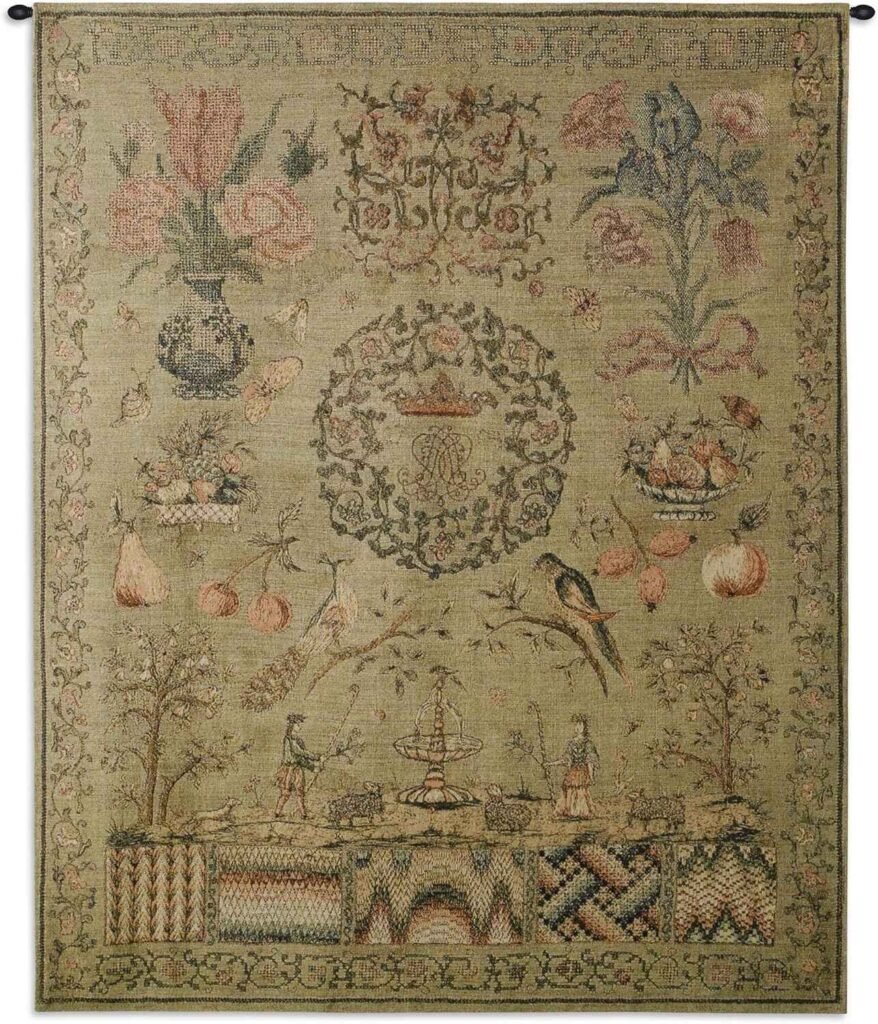
Replicating hand woven tapestries are factory made tapestries, woven in a decently faster time, of younger and more even quality. Labeled factory made, these tapestries take less time and are less expensive then hand woven tapestries, keeping the factory made tapestries a decently good option. However, color attributes of the hand woven tapes may be lost in the factory made ones. In terms of craft, the factory made tapestries are more orientated towards the mass produced decor, than the art ones.
Traditional vs modern designs
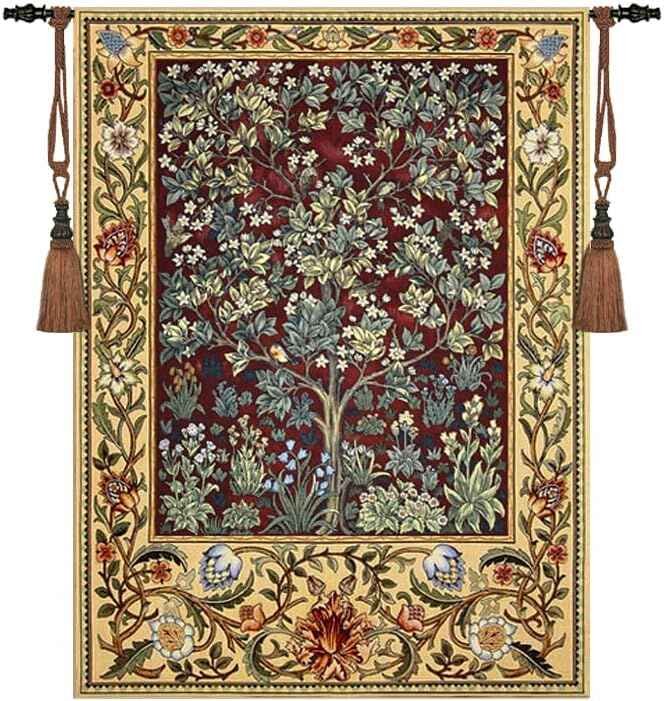
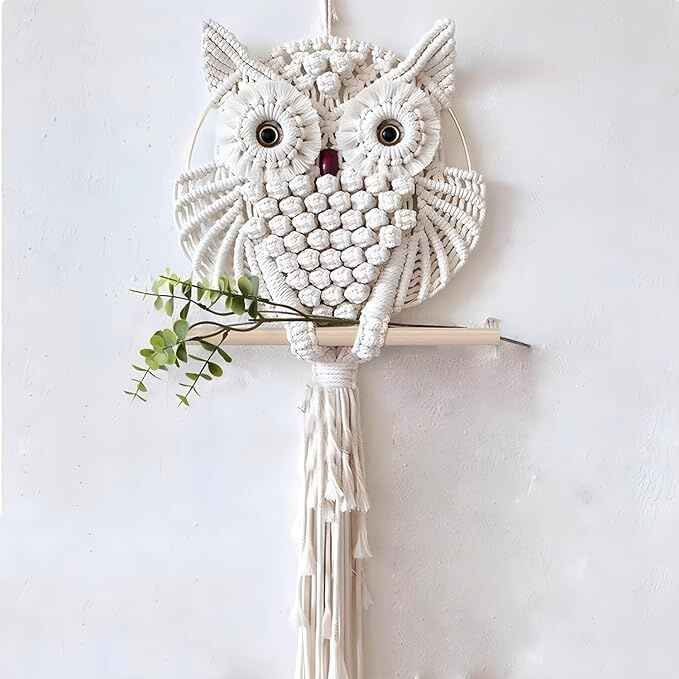
Wool tapestries used to be more historically, religiously or romantically oriented, often depicting battles and medieval tapestry life. These tapestries would use rich dyes, often intertwining floral patterns in the designs. Modern wool tapestries are the total opposite, embracing contemporary styles. Initiative weavers would use random, unorthodox designs to create a more modern and contemporary tapestry, breaking from the initial tradition of the weaving. Using the same weaving styles, the aesthetics would be completely opposite from one another.
Wool Tapestry vs Other Tapestry Materials
| Feature | Wool Tapestry | Cotton Tapestry | Polyester Tapestry | Silk Tapestry |
|---|---|---|---|---|
| Fiber Source | Natural animal fiber (sheep’s wool); breathable and resilient. | Natural plant fiber (cotton); breathable but less insulating. | Synthetic polymer (e.g. polyester); man-made, non-biodegradable. | Natural animal fiber (silk); very smooth and lustrous. |
| Durability | Very durable and resilient; resists wear and abrasion. | Moderately durable; can fray or stretch and sag over time. | Highly durable; resists moisture and abrasion well. | Less durable; fine, delicate threads prone to damage. |
| Color Retention | Holds dyes superbly; colors stay vivid for decades. | Good color uptake but may fade faster under sunlight. | Excellent colorfastness; dyes stay bright (no fading). | Good sheen and color; may dull with prolonged light. |
| Insulation | Excellent thermal and acoustic insulation. | Moderate warmth; not as insulating as wool. | Poor insulation; feels cooler to the touch. | Low insulation; very light and delicate in feel. |
| Environmental Impact | Renewable and biodegradable; sustainable when sheared ethically. | Renewable and biodegradable; requires high water and pesticides to grow. | Petroleum-based; non-biodegradable; higher carbon footprint. | Renewable and biodegradable; however, production can be resource-intensive. |
| Typical Cost | Mid to high (premium wool and handweaving cost more). | Usually lower cost than wool. | Generally lowest cost (mass-produced polyester). | Highest cost; prized luxury fiber. |
In conclusion, wool impresses for its natural strength, insulating, and eco-friendly properties. It’s true cotton is cheaper, but its durability is quite lacking. Polyester is cheaper and more durable, but it’s also synthetic. Silk is beautiful, but it is also quite delicate. When it comes to durability and richness, wool is often considered the “best material for tapestries.”
Common Uses of Wool Tapestry
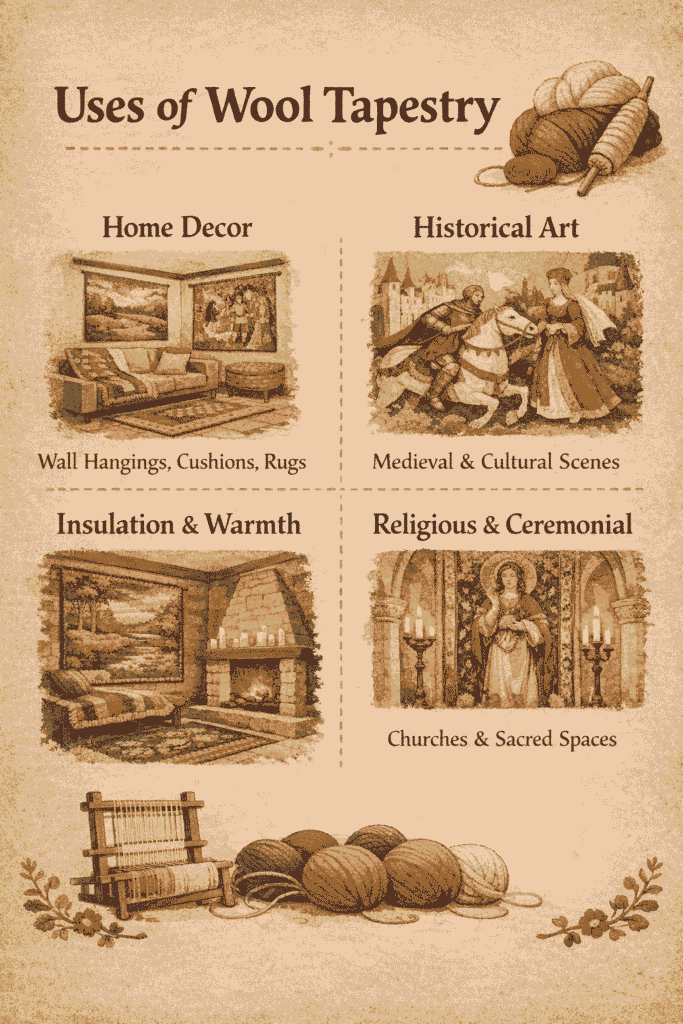
Wool Tapestry as Home Decor
Wool tapestries can be hung on walls as decorative art. They bring color and texture to walls, and can even become the center art piece of a living room, hallway, or office. Big wool tapestry wall hangings can define spaces like paintings do, but tapestry is a richer texture than flat paintings, bringing more depth to a room.
Wool Tapestry as Home Insulation
Besides decorative purposes, a wool tapestry can also keep your home warm. Just like how tapestries were used in the medieval times, a wool tapestry hung on a wall adds an extra layer of insulation, blocking cold walls. In older homes and cottages, people used to hang tapestries behind wooden panels or furniture to cut down on drafts.
Acoustic Decoration
Wool tapestries absorb sound. They prevent echoes and noise in concert halls, theaters and recording studios. In homes, a tapestry can soften room acoustics by reducing the echo off bare walls.
Luxury Interiors
There is an undeniable sense of luxury and history that wool tapestries convey. They can often be seen in the interiors of upscale hotels, manor houses and luxury office suites. A wool tapestry enhances the space with its rich handcrafted details, especially when combined with classic or antique-style décor.
Benefits of Wool Tapestry
- Durable: A wool tapestry is a long-lasting one. The natural strength of the wool material ensures that the tapestry with a proper design may last decades (even centuries) in the exhibition. Its bulky fibers do not tear and wear easily hence the tapestry does not wear out much in the long run.
- Fade Resistant: Wool is a great dye carrier. Colors remain bright after several years and sunlight only causes gradual fading. This colorfastness also gives a wool tapestry its original palette much longer than most other fabrics.
- Natural & Eco-friendly: Wool is a renewable biodegradable fiber. At the end of life a wool tapestry will decompose (as opposed to synthetic tapestries). Besides, tapestry is an eco-friendly decision as responsibly-sourced wool (sheared in the most humane way) is utilized. As a matter of fact, wool does not release microplastics to the environment as it is done by plastic-based fabrics.
- Provides Coziness to Room: Having a wall covered with wool literally warms a room. Wool tapestry serves as natural insulation, and it traps the heat and makes rooms warmer. This was one of the practical purposes why they were used in medieval castles. A tapestry today does not only adorn a place, but also makes it cozier and welcoming.
Is Wool Tapestry Sustainable & Eco-Friendly?
Sustainable wool tapestry fits the current environmental demands. The source of wool is renewable sheep fiber. Thus, production does not include the constant loss of resources.
Wool is biodegradable and it does not produce harmful pollutants. Further, wool processing takes less chemicals in comparison to synthetic fibers. This renders environmentally-friendly tapestry as an ethical choice of decoration.
Sustainability is also promoted by ethical sourcing of wool. Certified farms guarantee the welfare of the animals and the management of the land.
How to Care for a Wool Tapestry
A wool tapestry will remain beautiful with minimal attention.
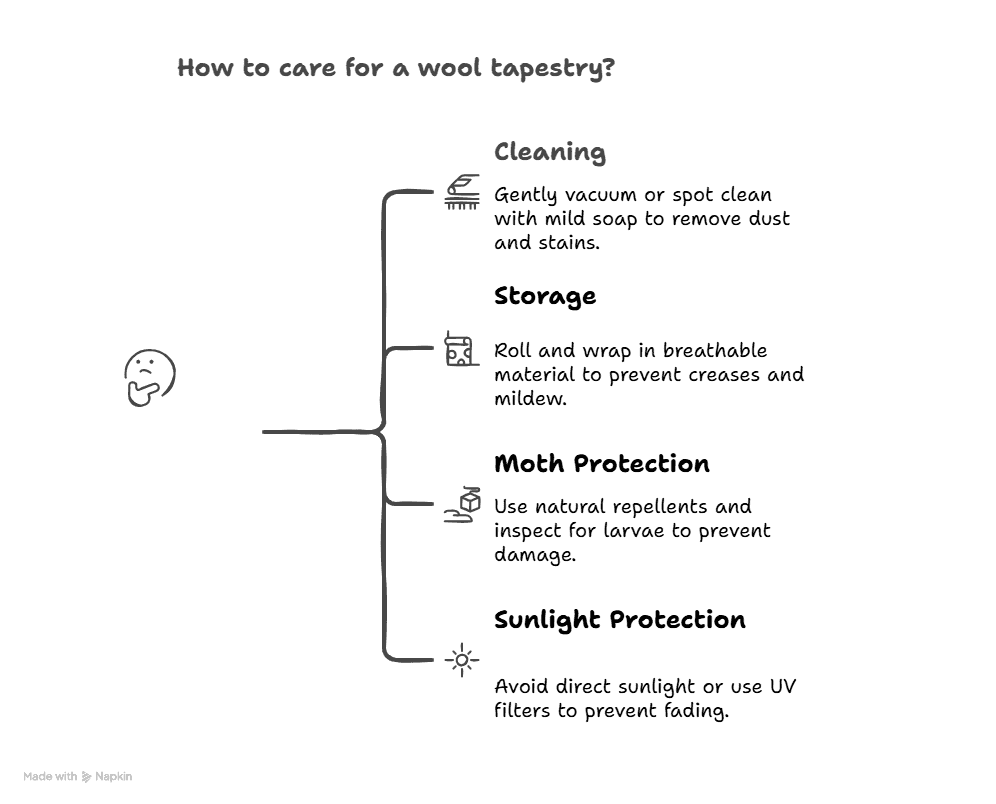
- Cleaning: You can clean it with the help of a gentle vacuum. Ensure that you have it on low suction and you move the vacuum head in the direction of the weave. Wool tapestry is never to be washed. In the case of spots, wet cloth and light wool-safe soap is to be used and dry the spot by a pat, but do not rub hard. In case of deep cleaning, refer to a professional cleaner.
- Storage: When you are storing a tapestry you must always roll it and never fold it. Creases can be formed permanently by folds. Roll the roll in a piece of cotton and keep them in a cool dry place. Ensure that the area is dry. It should not be stored in tight containers made of plastic where humidity may accumulate and form mildew.
- Moth Protection: To keep the moths off of the tapestry, it is recommended to have the tapestry aired periodically and clean. Add more moth repellent with cedar blocks or lavender sachets. Look at the tapestry to see whether it has moth larvae, particularly when it is put up. In case the damage of moth of any kind is detected, the tapestry will have to be washed and repaired.
- Exposure to sunlight: Wool dyes can withstand everything but when exposed to sunlight they will fade. In order to cover them, either hang the tapestry in the shade or use UV ray blocking curtains or window films. Assuming that one side of the wall is lighted more than the other, change or switch the tapestry occasionally with that to have the fading evenly.
How to Choose a High-Quality Wool Tapestry
The quality and texture of wool should be observed when purchasing wool tapestry. The wool will be soft and dense at the same time of high quality. Fractured fibers indicate low quality wool.
The life of woven tapestry is relative to the density of weave as well. Tight weaving whereby the threads are woven tightly are structurally strong. The specifics in the imagery will not wear out very easily. Sloppy weaving will work greater hours.
The quality of dyes is particularly vital as much as craftsmanship is of importance especially in handling colorfast dyes. Both will be fine, but the purchase of handmade pieces will be more distinctive, whereas the purchase of machine-made pieces will be cheaper. So the taste and money of the consumer is put in consideration.
Conclusion-
Knowing what wool tapestry is, we can see the artistic, historical, and practical importance of that matter. The meaning of wool tapestry goes further than decoration to craftsmanship and sustainability. Thus, it is still applicable in the contemporary interiors.
Durability, insulation and environmental friendliness are some of the features that make it a prudent investment. In addition, wool tapestry not only makes the experience comfortable but also beautiful. Therefore, there is a harmonious way of selecting wool tapestry, tradition, beauty, and responsibility.
FAQs
Moderate humidity can be managed with wool since it is a material that wicks the moisture and its drying process is gradual. But too much dampness may promote any textile to any kind of mold or mildew. A very humid climate means that it is prudent to place the tapestry in a dry room or a dehumidifier. Good ventilation is key. Do not hang it in damp places (such as bathrooms). In most cases, wool tapestry can be preserved in a wet environment as long as they are well taken care of but additional measures are possible to avoid moisture.
When well taken care of, a wool tapestry can be used over several decades, possibly centuries. The quality of wool in terms of its durability and resistance to abrasions ensures that tapestries are not easily worn out. Actually, numerous tapestries that were woven in the middle ages remain today. Life span is affected by the exposure to light, humidity and handling. When a wool tapestry is properly cared for, you can usually expect a high quality of the tapestry to be alive and well in 50-100 years or so. Examples in museums of the Middle Ages demonstrate that it is possible to live a hundred and more years with proper care.
Wool is very colorfast. A wool tapestry that is well dyed does not fade. The colors will remain rich in a number of years in normal indoor application. But in long periods, the sunlight may slowly make the wool light. Constant direct sun should be avoided. However, in comparison with most textiles, the dyes of wool retain color remarkably well, thus, fading is insignificant.