
Does Alpaca wool shrink?
Yes, alpaca wool will shrink in case it is subjected to improper washing or drying processes. Similar to sheep wool, it has microscopic scales which when subjected to heat, movement or rough detergents bind together. Alpaca wool does not act in the same manner as standard sheep wool, however. It tends not to shrink and felt as easily since scales of alpaca fibers are smoother. This softens, makes alpaca wool more durable, and a little more resistant to shrinkage.
That said, not the entirety of alpaca wool is shrink-proof. When placed in hot water, or in a dryer, the fibers become shorter and are permanently shortened, or felted. Even cold water may create problems as in case the cloth is agitated excessively. The key is proper handling. Your alpaca clothes can last a long time with only care before you need to worry about their size.
Why Does Alpaca Wool Shrink? (The Science Behind It)
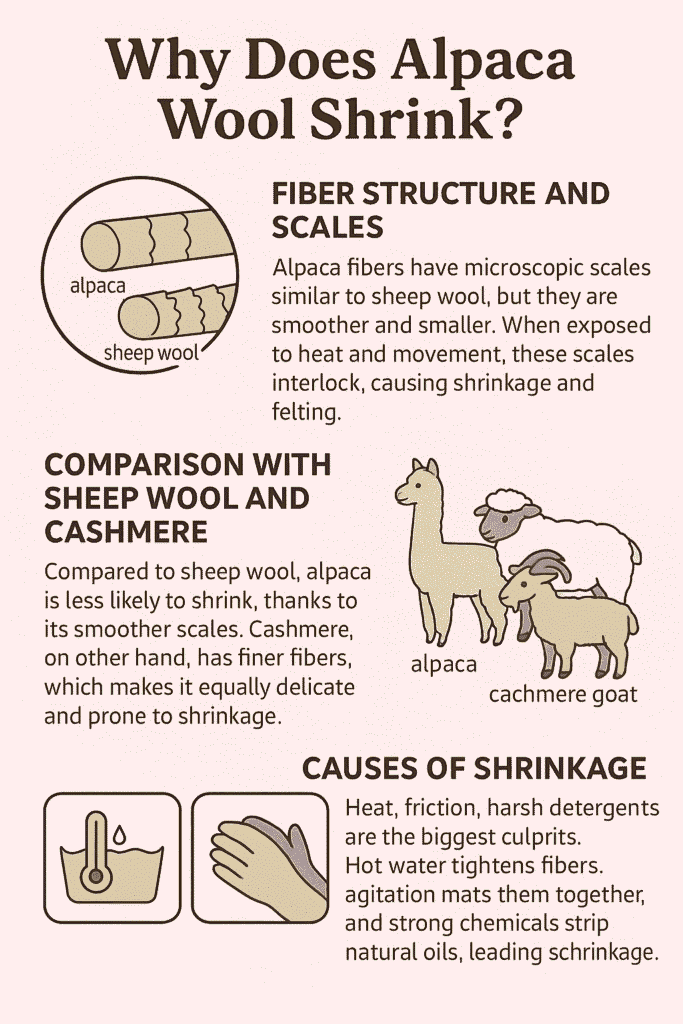
Fiber Structure and Scales
The alpaca has hollow core fibers with unusually short smooth scales. The fine structure increases the elasticity of the fibers as well as reduces the tendency of the fibers to interlock when subjected to stress. Consequently, the alpaca wool does not felt: the fibers do not become entangled, but only bend and straighten. That is, the smaller and the finer the scales the less the shrinkage with washing.
Elasticity and Lanolin Absence
Notably, alpaca wool contains none of the lanolin (wax oil present in the sheep wool). This keeps alpaca in order and it tends to require less intense treatment. Moreover its hollow-core fibers are able to stretch and spring back. This elasticity of nature allows alpaca clothes to regain their shape after being wet or worn. Effectively, alpaca is resistant to shrinking forever when you wash it.
Heat, Friction and Shrinkage Triggers
Alpaca is still capable of shrinking even with such a strong structure in case it is mishandled. The principal offenders are heat and water. Subjecting alpaca to hot water, hot dryer or coarse agitation will cause the fibers to loosen and rewind back into place. Even cold water may result in a problem provided the item is aggressively mixed. Equally, harsh detergents may be used and this may strip off protective oils as well as coarse the fiber surface. Concisely, temperature shock and friction open the fiber scales, which causes the shrinkage. By contrast, gentle, cold-water hand washing avoids these triggers and keeps alpaca safe.
How Much Can Alpaca Wool Shrink?
Mild Shrinkage vs. Severe Felting
When alpaca wool is very carelessly treated it might end up shrinking a bit, but it still can be worn. Felting is intensive though when exposed to heat and agitations, the garment becomes rigid and also smaller.
Pure Alpaca vs. Alpaca Blends
Simple alpaca fibers are more resistant to shrinkage as compared to its mix. Mixes with wool of sheep or artificial fibers can respond in different ways, occasionally with unpredictable shrinking.
Home Washing Expectations
When washing at home, mild shrinkage can be expected provided there are greater care measures. Nevertheless, noncompliance with instructions can cause permanent decreases in volume and structure.
How to Wash Alpaca Wool Without Shrinking It
Handwashing guide
- Use Cold or Lukewarm Water: Water should not exceed 30 C or the heat can damage the color.
- Select Wool-Safe Detergent: Select mild cleaners that have a pH of 7 and are intended to work with delicate fibers.
- Avoid agitation: Do not rub or scrub the garment, swirl it gently.
- Rinse: Do it in cold water and wash clothes gently.
- Dry Flat: Place on towel, re-shape and not to hang.
Washing Machine Caution:
Some machines have to be used, in this case, use a delicate or wool cycle and use cold water. To protect the alpaca wool product against friction, put it in a mesh laundry bag. Wash with a non-detergent that is mild in nature and put no bleach or fabric softener. Choose the slowest spin and do not pre-wash. After the cycle complete, clear it off. High spins or any heat should never be used- these will shrink alpaca at a fast rate.
Dry Cleaning (Alternative):
Professional dry cleaner may be used when it comes to important or excessively dirty alpaca clothing. Make the cleaner aware of the fact that the item is alpaca wool. As dry cleaning does not use water at all, it removes the risk of shrinkage due to washing. Nevertheless, remember that cleaning by dry cleaners involves chemicals and requires a person with experience of working with wool and alpaca.
Drying Alpaca Wool: Does It Shrink in the Dryer?
Alpaca wool is extremely sensitive to high heat. The heating of a clothes dryer will result in the fibers contracts and the loss of their inherent loft. Thus, do not put alpaca in a dryer. Rather, never dry alpaca in dry cleaners. Wash, then refold and put it flat on a dry towel or a rack where it is not in direct heat. Very carefully squeeze the wet clothing or roll it in a towel (a sleeping bag roll) to get the water out. And then leave it to dry flat in its own mold. This is a flat-drying process that does not affect the fit and the softness. Simply put, do not tumble or dry flat is the best way to avoid shrinkage and stretching.
Does Alpaca Wool Shrink in Cold Water?
Cold water significantly decreases alpaca shrinkage but in no way eliminates it. At cold water the scales of fibers will not open, and agitation is also dangerous. That is to say that even a fast wash program in cold water can be used to wash wool, albeit roughly. That would be much worse, by comparison, with hot water making the scales swell and fasten together. The most important thing is softness: wash alpaca products manually or in a very gentle cycle even in cold water. Never twist or scrub. It is advised by many specialists that 10-20 C water is used. However, practically the alpaca sweater will not shrink in a cool and gentle handwash water but cold water with heavy agitation may have a problem. Cold water is less dangerous due to low temperature, and, though, it should be handled with care.
How to Prevent Alpaca Wool Shrinking
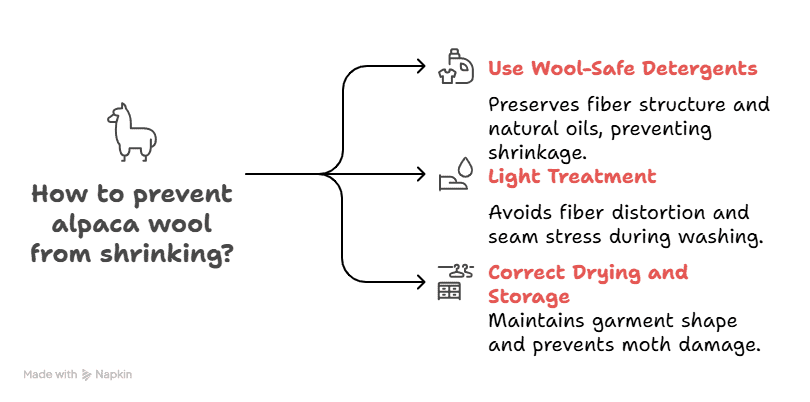
- Wool-Safe Detergents: You must never use a general detergent, but a wool or alpaca one. Unkind laundry soaps, enzymes and bleach would coarse the fibers and loot natural oils which would cause shrinkage to occur faster. The structure of the fiber is preserved with the help of a soft, lanolin-free detergent.
- Light Treatment: Do not wring or twist damp alpaca. Rather roll the water out of the item, or press carefully. Wash as little as possible during and after washing. Do not stress seams or edges. Move heavy, wet alpaca with support- heavy, wet sweaters can be stretched out and drawn tight when lifted or thrown.
- Correct Drying and storage: Dry alpaca flat and in a natural form. The fibers will be distorted by hanging or heat-drying. Drying it then keep the garment folded in a cool dry place. Moths will be prevented without using chemicals with the help of cedar blocks, lavender bags, or breathable cotton bags. Storage is not hung, it is folded to avoid stretching. These easy steps (mild detergent, no twisting, flat drying-no sharp folds, proper storage) are the basis of the alpaca sweater care and will keep your woolies in shape.
Alpaca Wool vs Sheep Wool: Which Shrinks More?
The wool of sheep tends to shrink more easily than alpaca does, in comparisons. The wool fibers of sheeps are also coarse in nature and overlapping with scales and covered with lanolin which also facilitates felting. The finer, smoother alpaca fiber is not covered with lanolin, therefore, the fibers do not interlock as easily. Due to this, alpaca clothing requires less aggressive washing and can withstand the wash. Simply put, alpaca wool shrink resistance is greater, although it is not completely waterproof. Normal care will lead to alpaca garments retaining their size more than a similar wool sweater.
Can You Stretch or Fix Shrunken Alpaca Wool?
Soak to Relax the Fibers
Start with immersing the shrunken alpaca in lukewarm water by adding a mild conditioner or wool wash. The conditioner aids the fibers to relax and soften. Allow the garment to soak a minimum of 2030 minutes (as many as several hours). Once soaked, rinse the water and press off the excess water- do not wring or squeeze. This measure prepares the fibers to be re-shaped without additional stress.
Gently Stretch and Shape
Then place the wet garment on a damp towel, or blocking board, flat. Delicately roll the thing back to its initial size. Work gradually and with smooth actions and pull all sides or hold the edges with the shape. You can consider using rust-proof pins in order to keep corners or edges fixed. Be careful, alpaca is easy to rip, and pulled. The wool should shrink over time (and maybe with a repeated gentle stretch as it gets wet) to a size nearer to its original size.
Air-Dry Flat
Air dry after reshaping, in the stretched posture. Flattening it assures that gravity does not out of shape. Certain methods even suggest the use of steam: such as hovering a steam iron slightly over the material and keeping it stretched (avoid direct contact). No heat pressing, however, it is fibers relaxing with the aid of the steam. Once dry, remove any pins. The dress is supposed to maintain the elongated fit and to look more like a regular one.
Does Baby Alpaca Shrink the Same as Regular Alpaca?
Extra-fine alpaca fiber (usually in the range of 19 – 22 microns in diameter) is just referred to as baby alpaca. It is not related to age of the animal. Baby alpaca yarn are softer and more luxurious, yet the same care rules are applicable as on alpaca of average. That is, baby alpaca does not shrink in different ways compared to normal alpaca, you still wash it in cold water by hand and dry it flat. It feels more silky with the fine fibers, which are equally sensitive to agitation and heat. Therefore, when you are nice to baby alpaca, it will act like a typical alpaca garment during the wash.
Best Practices for Long-Lasting Alpaca Wool Garments
- Air Out After Wearing
- Allow alpaca clothes room to breathe in-between rather than washing frequently.
- Spot Clean Stains
- Small marks should be washed using a moist cloth and low-strength wool soap.
- Brush Gently
- Prepare fibers with soft brush, to keep them smooth and fresh.
- Fold Instead of Hanging
- Stretching out of the fabric, and folding to preserve the shape will aid.
- Store in Breathable Bags
- Garments should be covered with cotton or linen bags to keep off moths and dust.
- Wash Only When Necessary
- Wash less to minimize fiber stress and increase the life of the garments.
- Practice Sustainable Care
- These environmental friendly processes conserve alpaca wool and minimize on the environmental degradation.
FAQs
Yes, alpaca wool may shrink unless it is washed properly. You should always apply cold or lukewarm temperature water and a gentle detergent. Do not twist or rub the fabric and even slight movement can tighten the fibers.
NO, alpaca wool must never be in the dryer. Felting and irreversible shrinkage occur as a result of the heat and tumbling. Rather, be sure to hang clothes on a towel in a flat position out of direct sunlight or heat.
You may pour in some baby shampoo or conditioner in some lukewarm water. This loosens the fibers and they stretch in a gentle way back to shape. Complete recovery is however not common and outcomes are determined by the extent of shrinkage.
Yes, alpaca wool is durable in most cases and not prone to pilling compared with cashmere. Its threads are more resistant, and therefore clothes have a longer lifespan under the right treatment. Simultaneously, alpaca retains high-end softness, but it is a bit more resistant to shrinkage.
Conclusion-
So, does alpaca wool shrink? Yes, it does–but as a rule when mishandled. Carefully alpaca will be healthy, soft and damage-resistant. The trick is to keep it out of the heat, agitation, and harsh detergents which are the prime culprits of shrinkage. Should it shrink, repair it in part, but preventive measures are the best. With these tips of caring about alpaca sweaters, you can take care of them to last many years.
Read more>> about comparison between alpaca and merino wool.