

Introduction–
Associating velvet with everything luxurious, elegant, and comfortable is an understatement. However, buying velvet made products comes with a range of emotions. Questions such as what is velvet fabric made of and is fiber choice important often buzz in buyers’ minds. The confusion is justified as the word velvet characterizes a weaving structure and not a singular fiber. Thus, velvet can be constructed using natural, synthetic, or mixed materials. When buyers understand the different compositions of velvet, they can select the fabric that best suits their needs in terms of comfort, durability, care, and cost.
What is Velvet Fabric Made of?
With its soft feel and dense pile, velvet fabric is plush and luxurious. A variety of fibers can be used to make velvet fabric. Traditionally, velvet fabric was woven using only silk, which gave it amazing luster. Velvet today can be made using: silk, cotton, wool, linen, rayon (viscose), polyester, nylon, and a variety of other products. A small percentage of spandex is sometimes incorporated in velvet to allow the fabric to stretch.
Natural vs Synthetic Fibers
Silk, cotton, and wool are examples of natural fibers that are used to produce velvets that are more breathable and have wonderful warm feels. For example, cotton velvets are comfy and allow airflow. Natural velvets, though, often need more gentle processing (for example, handwashing or dry cleaning). On the other hand, natural velvets are in contrast to synthetic velvets (made of polyester or nylon). These are very durable and moisture, fading, and abrasion resistant. Therefore, when colorfastness and ruggedness are sought, synthetic velvets are often preferred. Blended velvets are the combination of natural and synthetic fibers. These are optimally soft and durable at a reasonable cost.
How Velvet Fabric Is Made
Methods of Weaving
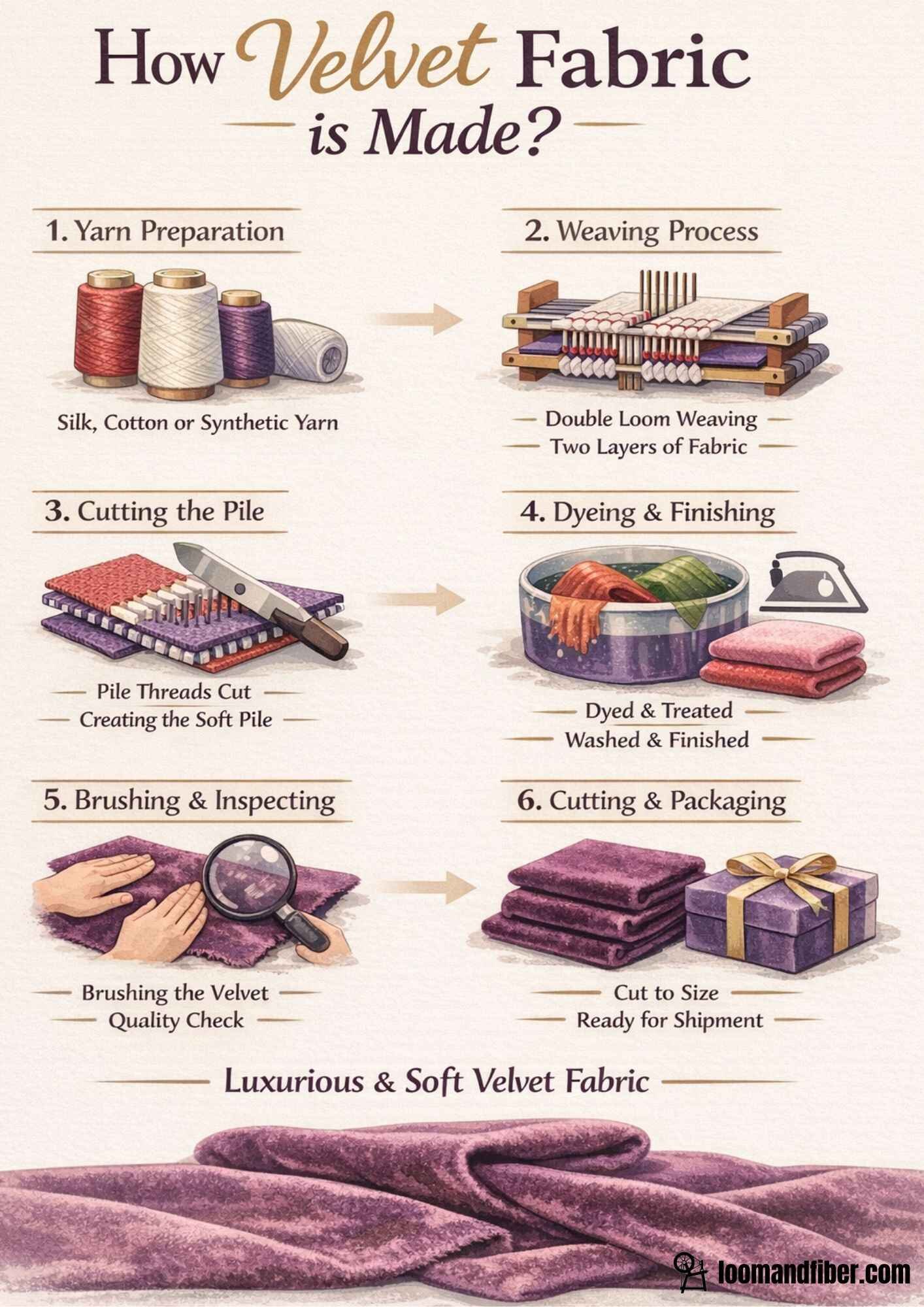
Using the warp-pile technique, velvet is made. Two layers of fabric are created face to face, with additional warp yarns that bridge the two layers. These yarn bridges form the fabric loops that create the velvet pile.
Yarn Weaving Process
Once woven, the yarn bridges are sheared to separate the two layers of cloth, and the velvet is cut into two pieces. Each piece has a surface with the cut pile. Then the cut pile surface is brushed and sheared to produce an even, smooth, and shiny surface on the velvet.
How Fiber Choice Affects the Velvet’s Quality and Texture
The feel of the velvet is influenced by fiber selection. A smooth and shiny pile is achieved by silk velvet. On the other hand, a cotton velvet yields a denser, matte surface. Velvet made of polyester has a uniform pile and good shape retention. Therefore, silk and viscose velvet feel soft and very drapey, whereas synthetic velvet is firmer to touch with better durability.
Fibers Used for Velvet Fabrics
Silk Velvet = Luxury and Softness
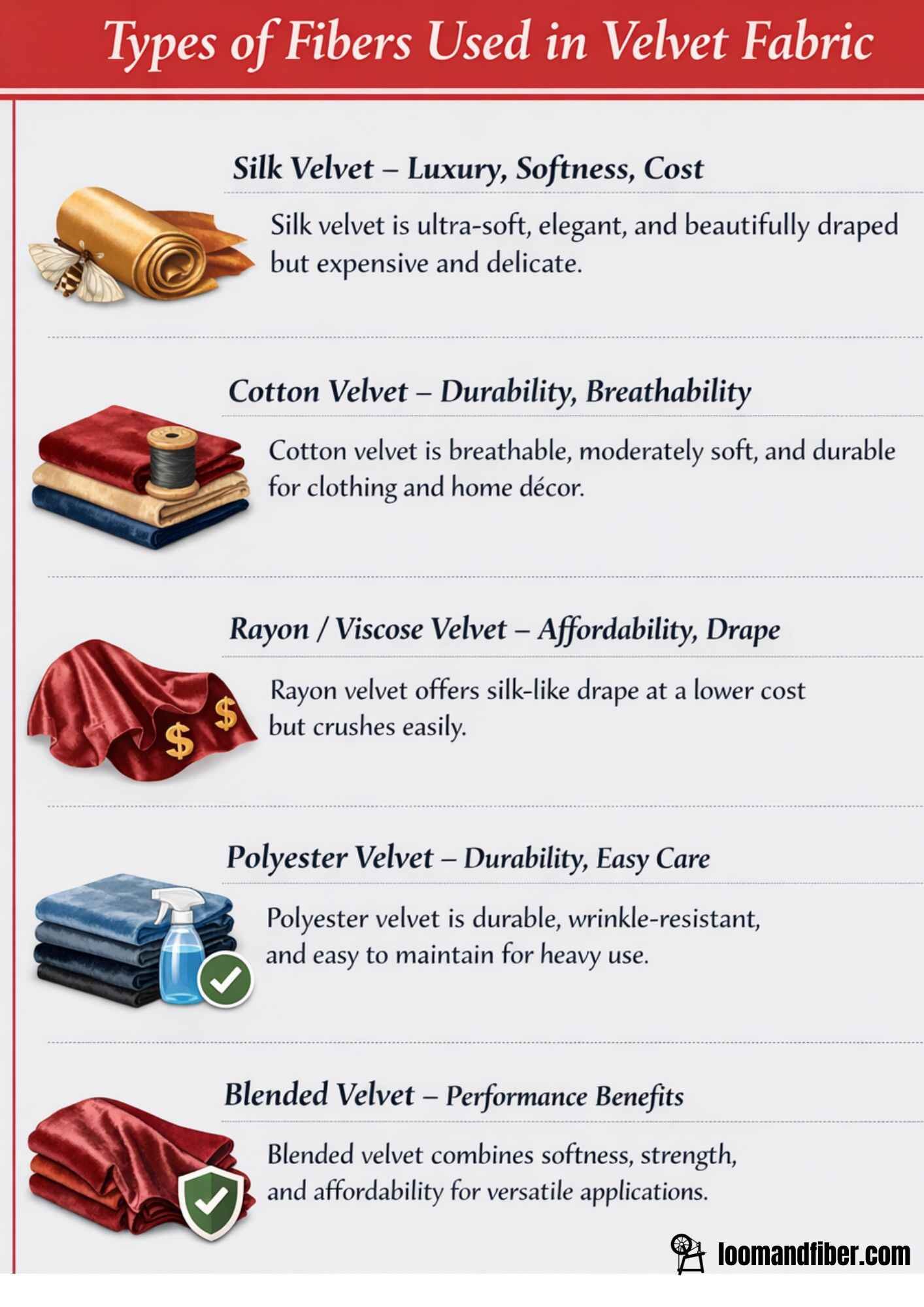
Silk velvet has the softest feel and highest luster out of any fabric, making it extremely desirable for high quality clothing and upholstery. The fabric has a beautiful light reflection that creates and enhances rich color depths and drapes beautifully. These qualities, however, come at a price– silk velvet can be highly expensive and can be damaged easily. Because of its high price and fragility, it is usually only used for clothing or decorative pieces that will only be used a few times.
Cotton Velvet = Durability and Breathability
Cotton velvet has a soft and smooth matte finish that is cozy and comfortable, and unlike silk velvet, it is very durable. Because cotton is more breathable than its silk counterpart, cotton velvet can be worn comfortably even during the warmer months. Compared to silk velvet, cotton velvet’s pile crushes more easily. Because of its durability and ease of care, cotton velvet remains popular among a variety of consumers.
Rayon/Viscose Velvet – Affordability and Drape
When trying to imitate the softness and surface of silk, viscose and rayon velvet are the first options to make a selection of. The feel and drape of rayon velvet are almost similar to that of silk. Furthermore, rayon velvet is cheaper and holds vibrant colors well. It is, however, sensitive to moisture and handling. Overall, viscose velvet maintains a silklike feel customer satisfaction without the costs.
Polyester/Nylon Velvet – Durability and Easy Care
Polyester and nylon velvet are great because of the easy care and added durability. This type of velvet is the best option to go for if your primary concern is the aforementioned. If you mix the polyester fibers with other cotton fibers, you still provide a great option because of the added softness and fibrous feel of the overall product. Because of these added benefits, polyester velvet is a great option for fabric, curtains, and garments.
Blended Velvet – Performance Benefits
Because of the added benefits of multiple fabric blends, most commercial velvets are made of blends. For instance, a blend of cotton and polyester will become a great option and provide stronger fabric. A polyester-cotton blend will provide a stronger overall fabric as well as a more silky feel. This is why blended velvet is a great selection option for fabric.
Which Material Makes the Best Velvet?
Everyone’s priorities differ, so defining the “best” velvet can consider many aspects. We are comparing the most common fabrics below:
Softness
Silk velvet is the softest, with the greatest amount of sheen. Following, is the softer and silk-like rayon velvet. Firm cotton velvet and polyester velvet are less soft than the others. In summary, silk or viscose velvet is usually the softest option.
Durability
Nylon and polyester velvets are the most durable. They are the most able to endure consistent wear and are easily cleaned. While cotton velvet is also strong, its fibers will flatten over time. In comparison, silk velvet the most fragile; the fine silk fibers abrade easily. However, velvets crafted from wool and mohair are also very durable.
Expense
Silk velvets are the most pricy. Following them, are wool and high-quality cotton velvets. Medium-range priced velvet types include rayon, linen, and cotton. In the bottom of the price-range are polyester velvets, with blended velvets falling in the middle. More costly fibers also result in higher priced velvets.
Optimal Uses of Various Types of Velvet
- Silk Velvet: Most suited for luxury evening gowns, bridal wear, and luxurious drapery.
- Cotton Velvet: Most suitable for casual blazers, pants, and furniture.
- Rayon/Viscose Velvet: Most suited for flowing dresses, scarves, and linings.
- Polyester/Nylon Velvet: Ideal for economical clothing (easy care) and for use in sofas and curtains.
- Wool/Mohair Velvet: Great for heavy-duty upholstery and winter coats.
| Fiber Type | Softness | Durability | Price | Typical Uses |
|---|---|---|---|---|
| Silk | Very soft, lustrous | Fragile (handle carefully) | Very high | Luxury apparel, drapery |
| Rayon/Viscose | Soft, drapey | Moderate | Medium | Dresses, scarves, linings |
| Cotton | Soft, matte | Moderate | Medium | Casual clothes, cushions |
| Polyester/Nylon | Less soft, uniform | Very high | Low | Upholstery, curtains, basics |
| Blends (Poly/Cotton) | Balanced softness | High | Varies | Versatile apparel & decor |
Natural vs Synthetic Velvet: What’s the Difference?
Feel and Appearance
While synthetic velvet looks and feels very uniform and structured, natural velvet feels warmer and richer, due to more organic fibers. Both will look great.
Breathability
Natural fibers breath more easily and do a better job of moisture control, while synthetic fibers will trap heat. Thus, there is a difference of comfort depending on the material.
Maintenance
Natural velvet will require more care and handling, while synthetic velvet will requrie very little and will resist stains. Thus, the expectations on maintenance differ.
Environmental Impact
Natural fibers will biodegrade better over time, while synthetic fibers will use a routine based on petroleum. Recycled synthetic also lessens the impact.
Is Velvet Fabric Natural or Synthetic?
Velvet is a term that defines a weave and not a fiber, so a velvet can be natural, synthetic, or a blend. Traditionally, a velvet would be pure silk, but nowadays there is 100% natural velvet, such as pure silk, and other cotton and wool velvets. At the same time, there is fully synthetic velvet, which is synthetic fiber velvets, such as polyester or nylon. There also synthetic and natural blends, such as velvet that is 60% cotton and 40% polyester. Always check the fiber content if a label says velvet, because velvet refers to the texture of the material, not what it’s made from.
What Is Velvet Fabric Used For?
The softness of the fabric is important. It is the fabric of:
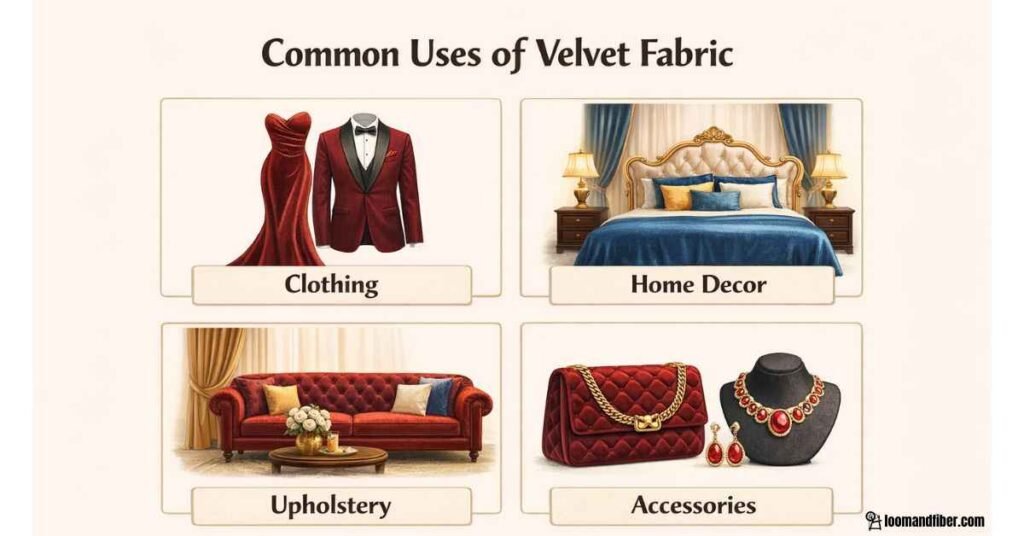
Clothes:
Dresses, gowns, and skirts for an elegant look.
Jackets, suits, and blazers for a luxurious look.
Casual velvet: Tops, trousers, and jumpsuits.
Accessories like scarves, capes, and slippers.
Upholstery:
Sofas, armchairs, and ottomans for softness and sophistication.
Cushion, decorative pillows, and throws for softness, the best, and color.
In luxury office, and auto interiors.
Curtains:
Heavy drapes and valences. Velvet’s weight is great for blocking light and sound.
The curtains and backdrops of stages.
Accessories:
Covers that are quilted and throw blankets.
Clutches, and handbags.
Pins, and velvet wrapped gifts.
Is Velvet Fabric Breathable or Warm?
Generally, Velvet is rather warm and non breathable. The dense materials do trap moisture making it optimal to wear in cooler climates. Velvet materials will generally perform better in colder weather. Even cotton velvet performs better in terms of insulation compared to many other materials. Velvet can often be quite bulky in hotter temperatures, making it difficult to wear.
Pros and Cons of Different Velvet Materials
Pros
- Beautiful Appearance: Velvet appears rich and elegant.
- Good Drape: It is good in formal wear and seamless to use.
- Color: Velvet holds die and gives bright colors to the materials.
- Soft Touch: The pile of gives a velvet a soft touch.
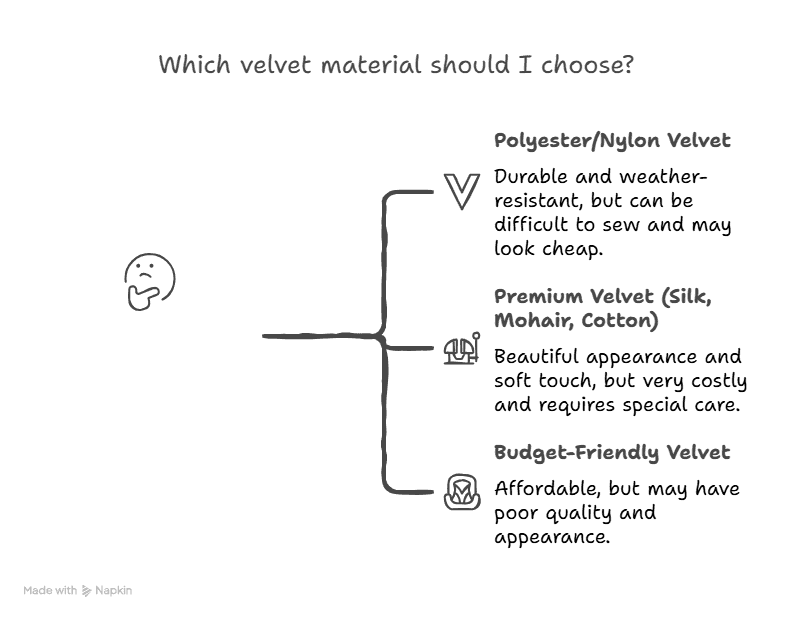
- Durable: The polyester and velvets use of nylon is durable and weather resistant.
Cons
- Difficult to sew: The machine or cutting can be a pain doing cheap velvet.
- Pile Damage: The materials can be damaged fairly easily with too much pressure. Velvet can be too warm in hotter weather
- Cost: Premium Velvets (silk, mohair, premium cotton) are very costly. On the other hand, budget-friendly velvets could look bad.
- Care Requirements: Dry cleaning or gentle washing may be needed for some items, increasing the overall upkeep.
How Fiber Content Affects Velvet Care
Washing: Viscose and silk velvets often require hand washing or dry cleaning. When velvet is made out of cotton, it is possible to wash it on a gentle cycle with cold water. Velvet made out of polyester and nylon can be machine washed on a gentle cycle with cold water. Always cold water and a mild detergent should be used.
Drying: Velvet can be air dried, either lying it flat or hanging it. Velvet should not be tumble dried at high temperatures. If necessary, use the tumble dryer on low heat or the “fluff” cycle, and remove it promptly.
Stain Resistance: Velvet made out of nylon or polyester is better at repelling stains. If a spill happens, it is important to blot it immediately, and not rub. Stain remover should be used gently on the fabric. A spray of fabric protector can help.
Wrinkling & Crushing: Velvet’s pile is what causes it to wrinkle. Gently steam velvet to remove any wrinkles instead of ironing directly. Velvet garments should be stored on padded hangers. If the pile is crushed, gently brush it or steam it.
Does Velvet Fabric Shed or Pill?
Fiber-Specific Behavior
Velvet can shed some lint, especially when new. Velvets that are cheaper or made with short-staple fibers, like cotton and wool, tend to shed more. Velvet made with polyester is less likely to shed. Velvet can also pill with wear. Pilling is more common for velvets of cotton and wool. Velvets made with polyester or nylon filament fibers pill less.
Tips for Prevention
- Lint rolls or vacuuming velvet can help reduce the number of loose threads.
- Cotton or wool velvet fabrics that are new should be prewashed to get rid of the excess fuzz.
- Use a fabric shaver to remove any pills that do form.
- Stay away from using pressure or causing friction on velvet surfaces.
Conclusion-
Velvet can be made from many materials and is defined by having a cut pile. It can be made from silk, wool, cotton, and synthetic fibers. Real velvets (silk, cotton) need more delicate cleaning and treatment. Velvets made from synthetic fibers (polyester, nylon) are more durable, and easy to clean. When getting velvet, pay attention to the fiber, it will determine how soft and durable it is, and how much care it will need. If the fabric is made from the right fiber and velvet is a timeless and luxurious addition to any garment or decor.
FAQs
Silk can be used to make velvet, but not all velvet is silk. Traditionally, all velvet was made using only silk. Nowadays, velvet can be made using many different materials, including silk, cotton, and polyester. “Silk velvet,” as the name suggests, contains some silk, but that does not guarantee that the velvet is made using only silk. Many modern velvets are made using polyester, cotton, or even both, which is known as a cotton/polyester blend.
Velvet can be made using cotton or even polyester. Cotton velvet feels soft and natural, while polyester velvet is very durable and has great color retention. Blended velvets are also available to combine the qualities of both fibers.
Velvet can be synthetic if it is woven with polyester, nylon, or other similar man made fibers. But it can also made using natural fibers silk, cotton and even wool. Many inexpensive velvets are made using synthetic materials while luxury velvets are made using natural materials.
Silk velvet is considered to be the softest velvet available. Rayon velvet is also very soft and has great drape. Polyester velvet is typically the least soft, while cotton velvet is a little more giving.
When it comes to upholstery, durability matters most. Mohair and polyester velvets excel in this regard. Mohair velvet, made from Angora goats, is exceptionally durable. Polyester velvet also withstands wear. In contrast, silk velvet is often too delicate for typical furniture use.