
Introduction-
Velvet is an expensive material that is very smooth. Nevertheless, a lot of individuals are afraid of washing it at home. This tutorial describes the process of washing velvet. You will know how to preserve its pile, its color, and smooth texture as well. With the help of these steps, you will be able to maintain your velvet items beautiful over years.
What Is Velvet Fabric?
Velvet is a woven material that consists of a soft elevated cover known as a pile. The heaps make velvet shiny and pleasant to touch. Velvet however requires special care since the pile is very prone to crushing, flattening or becoming soft. Its structure can be damaged by heat, water and friction.
To know more, check our extensive information relating to what is velvet fabric and its production.
Can You Wash Velvet Fabric?
A common question most individuals ask themselves is whether velvet can be washed. The answer to this is: it depends on the type. Items made of silk or pure velvet are normally marked with “Dry clean Only and it is always safe to discover that. Nevertheless, contemporary velvets of polyester material or mixtures can be usually home washed. Where possible, cold water and the lowest settings should be used. Always inquire of the care label. Velvet needs to be washed in the most careful way, otherwise it may be shrunk, crushed or discolored, therefore they must not be washed carelessly.
How to Determine the Type of Velvet Fabric?
Silk Velvet
Silk velvet is extremely soft and light and smooth. It is usually naturally shiny and remotely flowing. This one kind typically requires dry cleaning.
Cotton Velvet
Cotton velvet is heavier and not so shiny. It is more water absorbent and warm to touch. This type is capable of managing soft hand washing.
Polyester / Synthetic Velvet
Artificial velvet is stretchy and soft. It is also water-resistant and less wrinkly as compared to natural fibers. The type can be washed by machine very carefully.
Crushed Velvet
Crushed velvet is patterned and has a textured surface. The pile looks pressed in different directions. Washing gently is generally good with this type.
Velveteen
Velveteen are solid and thick and have a short pile. It is not shiny, but often matte. This type could be washed occasionally.
Read More>> what is velvet fabric made of?
Care Label Explanation:
Always check the care label inside your garment or fabric. Symbols inform you whether to wash, dry clean or steam.
How to Clean Velvet Fabric of Different Type?
The cloths vary in their mode of cleaning. The following are the risk-minimizing methods of cleaning each type:
How to Wash Silk Velvet
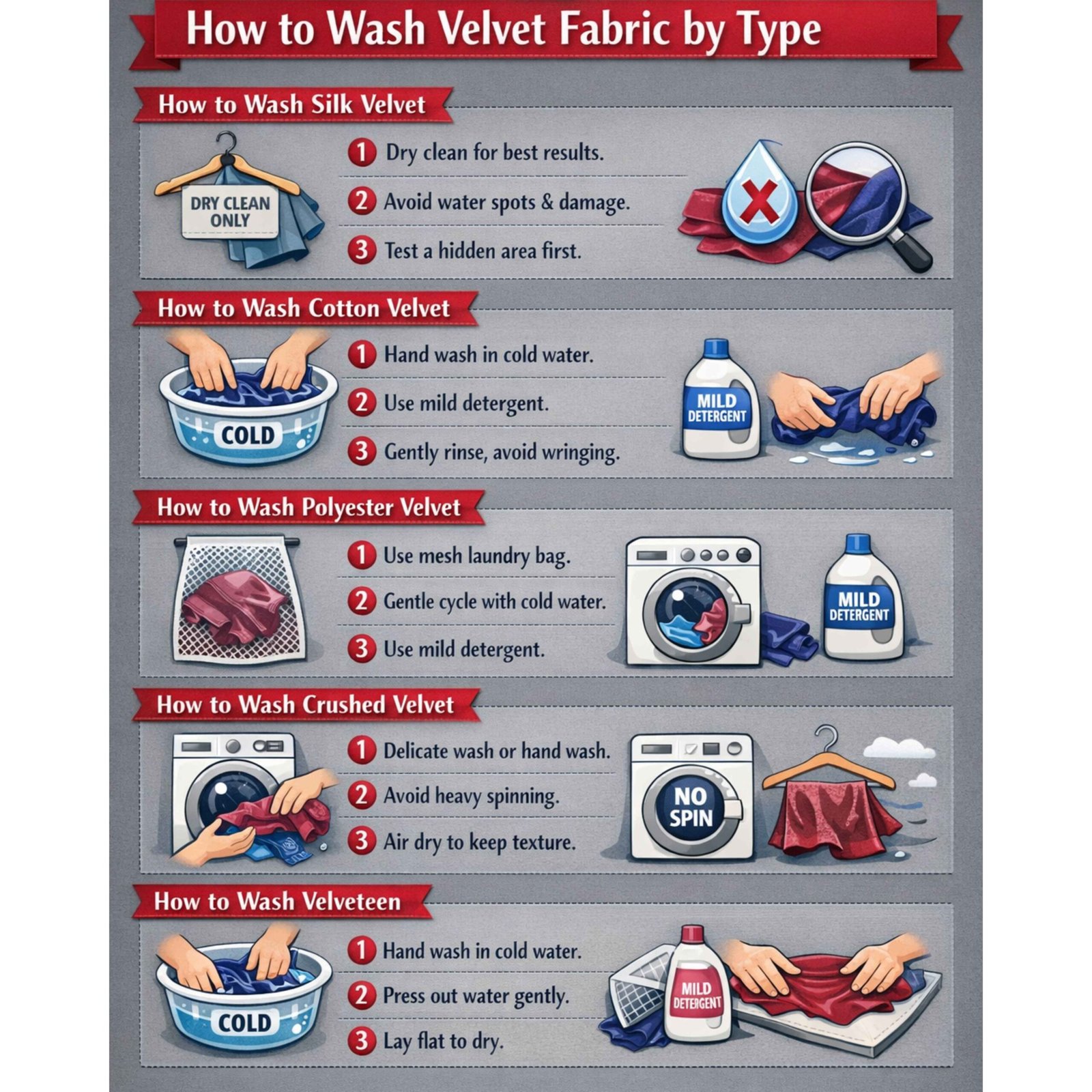
Silk velvet is very delicate. Silk velvet is usually best done through dry clean. If the label permit hand washing, cold water combined with a mild detergent (such as baby shampoo or wool cleaner) should be used. Moisten the fabric then spin it around (do not rub) for a minute or two. Wash under running cold water. Wring not, but squeeze out by rolling in a towel. Then air-dry the garment flat. Avoid any direct heat. Due to the fact that silk loses its pile and sheen easily, cleaning by professionals is suggested by many specialists.
How to Wash Cotton Velvet
The cotton velvet is durable, yet requires maintenance. It can often be hand washed. Put cold or lukewarm water with a small portion of mild detergent in a basin. Immerse the cotton velvet very gently and swirl it gently. Rinse fully in cold water. Similar to silk velvet, do not wring or twist, just squeeze or blot out water. Keep it flat to dry so as to keep its shape. In some cases (such as a cushion cover), the size of the item is small, and the care tag allows it; in that case, you may machine wash cotton velvet on a gentle cycle, although in most cases, hand washing is a safer choice to prevent shrinkage.
How to Wash Polyester Velvet
Polyester and synthetic velvet can be cleaned at home the easiest. These fabrics are normally allowed to be machine washed. Wash the item inside out in a mesh laundry bag. Cold water and mild detergent with the gentle/delicate cycle. Please no bleach or fabric softener. Wash and dry up (see drying section below). Polyester velvet has holding power, meaning that most of the time it will usually come out intact.
How to Wash Crushed Velvet
Crushed velvet (in most cases a polyester mixture) is generally washable with ease. Turn the fabric inside out. Wash in the machine on cold delicate cycle preferably in a mesh bag. Wash with a light detergent and no fabric softener. Due to its texture, crushed velvet may flatten in the wash, although normally the pile can resume its texture after drying (see steaming tips later). In case the item is small and can only be washed by hand, then wash it in cold water, no scrubbing, use a little soap.
How to Wash Velveteen
Velveteen is typically heavy in cotton, therefore, it does not heat well. Should you have to wash velveteen, make sure that it is handled very carefully. Cold water and a weak detergent should be used. The item can be hand washed or washed in a machine in a delicacy cycle (up to 30 C) with the item being turned inside out. Spin should be avoided, no spin/lowest spin should be used when machine washing. Wash and dry. Do not tumble-dry. Velveteen ought to be soft and appear intact on the part of correct tender care.
How to Hand Wash Velvet Fabric (Step-by-Step)?
Hand washing velvet: These steps are to be carefully followed:
- Water Temperature: Cold or lukewarm water is used only. Velvet can be shrunk or faded by hot water. The fibers are covered with cold water.
- Detergent Type: Delicates (wool or silk wash, baby shampoo, or a light laundry soap) should be washed in a mild detergent. Do not use bleach, enzyme or harsh chemicals. It even works with baby shampoo or even a drop of dish soap in water.
- Gentle Handling: Wet the velvet and stir it softly in the water. Do not scrub, wring, or twist. Rather, shake the cloth softly in a circular motion. In case it has a stain, wipe off very carefully with a soft cloth (see stain removal below). Drain the soapy water after a short dip (5 – 15 minutes).
- Rinse Thoroughly: Rinse under an abundance of running clean cold water until all the soap is removed. Again, do not squeeze hard. You just need to lift the cloth and squeeze it in water to rinse out soap.
- Wipe Out Moisture: Place the item on a clean towel and wipe it out. Rolling up: Roll the towel and velvet and press lightly to get out the water (do not wring). Roll, and flatten the velvet again.
- Dry: Air dry the velvet on a fresh towel in a cool place. Store it out of the direct sunlight or heat (hot sun or heaters) that can untint the pile. Do not put a wet velvet in a dryer.
- Washing with hands: Washable velvets can be washed carefully by hand washing in cold water with gentle detergent so they do not get damaged. Always play with the cloth so that the pile is not damaged.
Can You Machine Wash Velvet Fabric?
Only some types of velvet can be washed in a machine, and it can be a risky choice. Never machine wash velvet unless the care tag explicitly says it can be washed in a machine, and only if the velvet is a synthetic fabric or a durable polyester blend. Please remember the following guidelines:
- When Allowed: it is only permissible to wash velvet made of polyester or synthetic blend, or ones that have machine washable tags. Pure silk or rayon velvet (usually tagged dry clean only) should never be washed in a machine.
- Machine Settings: Select the gentlest cycle available on your machine (called delicate, hand wash, or something similar) and use only cold water. Use a slow and short spin cycle, if your machine requires spinning. This reduces the stress on the fabric.
- Use a Mesh Bag: We recommend washing your velvet inside a mesh laundry bag to protect the surface from friction, snagging, and pilling. Wash the velvet with only other delicate washables.
- Mild Detergent: Use only liquid mild detergent. Bleach and fabric softeners are a no-go, as the residues can coat and stiffen the fabric of the velvet.
- Washing Cycle: Use the shortest and slowest cycle on your machine. When the cycle is finished and the velvet is washed, remove it immediately.
- Drying: When drying, reshape and air dry the velvet (refer to the drying section). Do not use a tumble dryer unless the care tag allows it, and only on a low heat tumble cycle and very short duration.
How to Wash Velvet Upholstery, Curtains, or Sofa Covers
Accent pieces covered in velvet require special care to protect the fabric. Most of these items are not machine washable. Follow the steps listed below:
Vacuuming
Using the soft brush attachment on your vacuum, gently dust velvet curtains or upholstery to pick up particles. For an even finish, vacuum while aligned with the nap.
Cleaning Stains
When dealing with stains, time and technique are critical. Use a clean and dry cloth to blot the stain (do not rub) to soak up the moisture. For solid the residue, use a spoon or a butter knife, and then remove the rest of the stain using a clean cloth dampened with soapy water (do not soak the fabric). Blot with a fresh damp cloth and dry with a towel.
Washing Instructions
Only if the care tag allows it, attempt to steam clean or wash the cover of the cushions. If not, use spot cleaning and leave the rest to the experts. Most removable upholstery pieces are not machine washable.
Handheld Steamer
You can use handheld clothes steamers to freshen up velvet. When using a clothes steamer on velvet, use light strokes to lift the foil and remove wrinkles. Make sure to hold the steamer a few inches away, and don’t let the velvet get soaked.
Professional Steam Cleaning
For larger items, like drapes and couch cushions, you can have your velvet pieces steam cleaned professionally. Make sure the steam cleaner uses a gentle setting. Always allow velvet to dry fully after steaming
When to Call a Professional Cleaner
Some velvet cleaning jobs should be left to professionals. If your item says “dry clean only,” or if your velvet is a finer subset (like silk velvet), don’t do your own washing. Massive pieces with stains or dirt (like heavily soiled upholstery or ornate drapes) is where the professional cleaner’s tools come in to avoid damage. When in left your clean velvet and upholstery to the professionals. They do deep cleaning on velvet and can get stains out.
How to Dry Velvet Fabric Properly
Drying is also very important to maintain the appearance of velvet. Follow these guidelines:
Air Drying vs. Machine Drying
Velvet should always be air dried. Machine dryers produce heat that has the capacity of shrinking and crushing the velvet pile. When you need to dry clothes, tumble dry no-heat or on the lowest heat (air fluff), and leave them in the dryer a few minutes. It is still safer then to remove and lay the velvet flat to dry. In general, the mildest technique is to allow velvet to dry in a free place.
Why Heat Ruins the Velvet Pile
The fibers raised on velvet are heat sensitive. Dryers or irons are used to produce high temperatures that can melt or warp synthetic fibers, shrink natural fibers. The pile is also flattened by heat and killed the plush feel of the fabric. Heat may leave permanent marks on rayons and silks or cause them to crush. Concisely, do not tumble dry or iron velvet, even low dryer heat will destroy it.
Best Drying Position (Flat vs Hanging)
Most velvet pieces should be dried lying flat. Laying flat will ensure no stretching and also that the fabric maintains its shape. Dry it by laying it on a towel of clean and dry towels and flatten it out again. Hanging velvet to dry may draw up the cloth and make wrinkles with the weight of the water. When you have to store some lightweight velvet (a scarf or wrap), then you should put it on a padded hanger and place it in a cool spot. Wet velvet should never be clipped to a clothesline or it will leave marks.
Important tip: In case of necessity, change the drying location, so that the velvet will dry evenly. Indoor dry always without direct sunlight or heat sources. This makes the pile look healthy and colors not to fade.
Can You Iron Velvet Fabric?
Why Ironing is Risky?
Velvet is not usually suggested to be ironed. The fine stack can be flattened by direct heat and pressure of an iron leaving crushed marks which can be difficult to remove. The texture of velvet is dependent on the presence of those erect fibers; they are ironed and a shiny spot or permanent crease is left.
How to Steam Velvet Safely
Rather than ironing, steam the clothes to take away the wrinkles and restore the pile. The velvet will be relaxed without being touched by a handheld fabric steamer that has only a few inches above it. Gently rotate the steamer and leave the steam to infiltrate, and brush the nap instantly. Always make a test on a small area first. In case you do not possess a steamer, you may hang the velvet in a hot bathroom over a few minutes and flatten it with your hand.
How to Restore Crushed Pile
When velvet pile appears flat due to drying or storage, it is usually possible to revive it by using a steam and brushing. When steaming is done, a soft clothes brush (or a velvet brush) is used to raise the fibers. Use a small brush to gently brush along the nap in the direction that the nap is in. In the case of crushed velvet, several light steam-and-brush operations may bring the fabric all the way back to life. Note: steam on the cloth, and brush softly. The velvet will come back with the right steaming and brushing to give it the soft plush texture.
How to Remove Stains from Velvet Fabric
Various stains have to be treated differently. The point is that it should be done fast and tenderly:
Water Stains:
Wipe up new spills as soon as they occur using a clean white cloth to sop up the water. In the case of dried water rings, consider wetting the entire surface uniformly (using a damp cloth) to prevent a pronounced ring, followed by the use of mild soap solution with damping. The advice that is given on most stains is to put a little dish soap in cool water on a cloth and blot the stain. Wipe off using a wet cloth, then air dry flat.
Oil & Grease Stains:
To begin with, sprinkle the stain with cornstarch or baking soda and allow it to dry in order to absorb the oil. After half an hour, carefully brush or sweep off the powder. In case there is any stain left, a small print of dry-cleaning solvent can be put on a clean cloth, but in this case you must use slightly soaked in the mild dish soap and water. Blot without scrubbing as this may destroy the fibers. Pat it using a clean cloth and allow it to dry.
Pet Hair & Lint:
Velvet is prone to hair and lint. A lint roller or wide-tape can be used to collect pet hair. To clean it further, a soft brush and brush head vacuum can be used to pick up debris. You may also slightly dampen a cloth or a dryer sheet and wipe it over the velvet to get the hairs that are loose. Frequent brushing maintains the pile smooth and free of hair.
Common Mistakes to Avoid When Washing Velvet
When washing velvet, be careful to avoid the following pitfalls:
- Washing Velvet in Hot Water: Velvet must never be washed in hot water, as high temperatures can cause the fibers to shrink and dye to fade. Always use cold or cool water.
- Washing Velvet Too Viciously: Velvet must never be rubbed, scrubbed, or violently wrung out in order to avoid crushing the pile. With all fabrics, gentle handling must be used to keep the integrity of the fabric, and therefore, wet velvet must be handled with care.
- Wrapping Velvet When Wet: Velvet must never be left or bunched up to dry in order to avoid deep wrinkles and damage to the pile. Instead, allow it to regain its shape and dry it in a flat position.
- Regular Detergent and Chemical Softener: Velvet must never be washed in strong soaps, bleach, or fabric softener. Velvet can only be washed with gentle detergent. Harsh chemicals can strip the protective oils and cause the fabric to become more stiff. Even regular laundry detergent can be too abrasive, and therefore, detergent that is designated for delicates must be used.
Washing Velvet vs. Dry Cleaning: Which Is Better?
Cost Comparison
When avoiding dry cleaners fees, it is cheaper to wash velvet at home than to professionally dry clean the items. However, if you have an expensive piece of clothing or one that is labeled “dry clean only”, then home damage risk may not be worth it. Time is saved if you have the dry cleaners do the work, and damage risk is negated, as they will be a fabric expert handling the delicate velvets.
Fabric Longevity
As long as the velvet is not washed exceedingly, and proper washing technique is used, it will keep the velvet looking good. Excessive washing leads to “fiber degradation”, detrimental to the fabric. On the other hand, professional dry cleaning is kinder to delicate fibers than washing, at least in one cycle of cleaning. In practice, either washing and dry cleaning will have an impact on longevity; velvet will live longest with the gentlest care, which includes minimal washing, spot cleaning, and steaming.
Environmental Impact
An impact of home washing is the energy and water used in the washing machine. Chemical solvents, such as perchloroethylene, have been used in dry cleaning include, which have health and environmental effects. Washing with no detergent, if dry cleaning poses velvets, is the more environmentally friendly option. Chemical cleaners should only be used if the fabric cannot be preserved without them.
Conclusion-
The most secure method of washing velvet fabric is determined by the type of fiber it is made from. Always read the label of care first. Use cold water and mild detergent and gentle handling. Try not to expose to heat and to heavy agitation. When in doubt dry cleaning.
By following this guide, you can be sure to answer the question, how to wash velvet fabric, with confidence. You will protect your fabric and keep it soft, rich and beautiful for years.
Read More>> What is Velvet Fabric?
FAQs
Yes, does shrink in hot water or high heat. Always cold water & air drying.
Some dyed velvet may fade. Always test a hidden area first.
Yes, incorrect methods may crush the pile. Always follow care labels.
Only wash velvet when necessary. Spot clean as much as possible.