
Introduction-
Acrylic fabric is a man-made fabric of synthetic nature comprising of acrylonitrile, which is a product of petroleum. It is soft and wool like and is used where a welcome alternative to natural fabrics such as wool is needed, it is a lightweight and cheap alternative. Acrylic fabric is mostly used in sweaters, scarves, gloves and in home furnishings as well. It can be designed to be durable, warm and environmental resistant because it is a man-made construction.
This cloth resembles the wool but does not absorb moths, mildew, and water. But because it is synthetic, people always tend to question how one is supposed to take care of it particularly in regards to shrinkage.
What is Acrylic Fabric?
Acrylic is synthesized using plastic polymers and this is done through a process known as wet or dry spinning. The outcome is a more Bi-Directional durable, wrinkle- free fiber that is easy to dye and form. Acrylic is chosen by many as it is cheap, retains the color brilliantly and it is insulative. However, despite it, the main question still appears, Does acrylic fabric shrink?
Does Acrylic Fabric Shrink?
When you wonder about a question like, Does acrylic fabric shrink? then you must know the following: No, not normally. The material acrylic is naturally shrank resistant owing to synthetic nature. Composed acrylic is unlike the natural fibers like cotton or wool, most of which do not absorb a great deal of water and are not subject to the same shrinking problems in routine washing.
Why Acrylic Resists Shrinking
Manufacturing of acrylics is accomplished by heat-setting acrylic fibers. This causes them to be frozen into shape thus being more stable as compared to natural options. Although wool may shrink through felting and cotton because of its absorbency feature, acrylic with low absorbency and thermoplastic material will make it resist deformation. But sometimes trouble can arise with improper treatment, in particular heat.
Factors That Could Cause Acrylic to Shrink (Rare Cases)
Although acrylic fabric is non-shrinkable, there are exceptional cases when shrinkage might take place. Okay, let us take them apart:
Extreme Heat (boiling water, hot dryer)
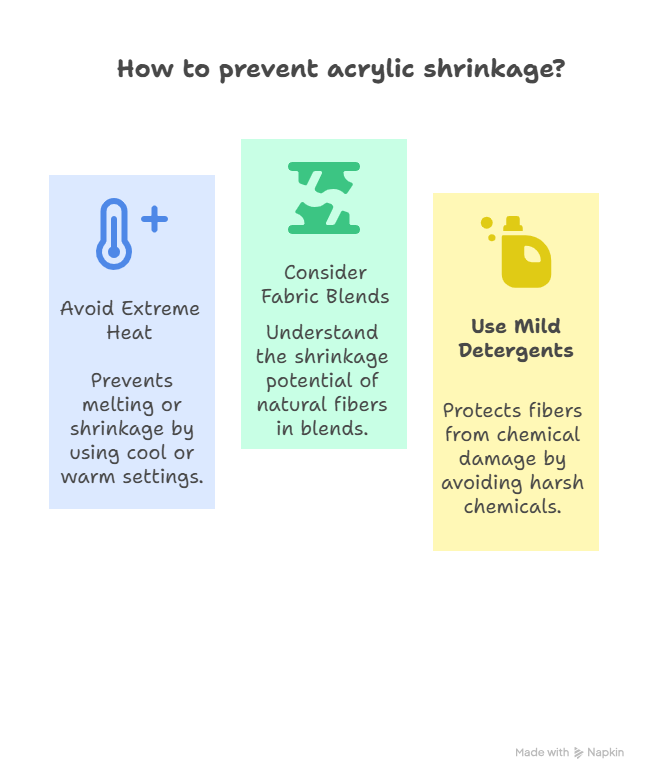
Acrylic behaves much like plastic when it comes to heat. In rare cases, very hot water or a high-temperature dryer can make acrylic shrink. Tests show acrylic yarn starts to shrink above about 110 °C. For context, a clothes dryer can reach around 150 °C on high heat. Therefore, soaking acrylic garments in boiling water or running them in a hot dryer can indeed cause shrinkage or melting. To avoid this, always use cool or warm settings on washing machines, and if you use a dryer, select only a low heat setting.
Blended Fabrics (acrylic + wool/cotton)
A lot of acrylic garments are actually blends. For example, the blending of wool or cotton fibers to acrylic yarn is widely practiced. Natural fibers within such blends are capable of inducing shrinkage. Pure acrylic, for example, shrinks very little, but cotton and wool do shrink. As one study noted the more acrylic in a blend, the less it shrinks, because “acrylic can shrink, but substantially less than cotton.” Practically speaking, in the case of an acrylic sweater blend, any significant shrinkage will be due to those natural fibers. Therefore, a cotton-acrylic blend may shrink modestly, but 100% acrylic would not.
Chemical Damage (bleach, strong detergents)
Harsh chemicals can also affect acrylic’s dimensions. Chlorine bleach or strong alkalis may weaken or warp acrylic fibers over time. While acrylic is fairly chemical-resistant, repeated exposure to bleach or very strong detergents can make the fibers brittle or misshapen. To prevent any chemical damage (and avoid shrinking), always use a mild detergent when laundering acrylic and never soak it in bleach.
Can Acrylic Fabric Stretch Over Time?
Although acrylic is not prone to shrinking it can stretch, sometimes quite a bit. This might be shocking to many but it is one of the few disadvantages of this otherwise reliable fabric.
Does Acrylic Stretch?
Yes, acrylic tends to expand under any excess weight or moisture or when stored carelessly. A case in point is Sweaters which usually become shapeless when frequently worn, or when not folded properly.
Causes of Stretching
- Heavy Use: The acrylic sweater and scarves tend to become slack and lose shape, with heavy usage.
- Non-proper hanging: Acrylic clothing should not be hung up (particularly in wet condition) long. Instead fold them always.
How to Prevent Stretching
Acrylic items should never be hung in order to avoid stretching. After rinsing in cool water do not wring. Lay garments flat when dry so as to maintain the initial forms. Stress on fibers can also be minimized by using garment bags when using the machine to wash.
How to Wash & Dry Acrylic Fabric (Shrink & Stretch Prevention)
Care will help to keep your acrylic garments. This is how to put them through the wash and allow them to dry:
Washing
- Cold or Lukewarm Water: Do not heat water to more than 40 o C (104 F ) to keep out heat damage.
- Delicate Cycle or hand wash: The safest washing procedure is performed on a gentle or delicate washing program or hand washed.
- Mild Detergent: You can use a detergent that is bleach and fabric softener free to help keep your fiber strength.
Drying
- Air Dry Flat: This keeps air dry, which avoids stretching as well as shrinking under heat.
- Low Heat when necessary: With a dryer, use the minimum hot setting and item when they are still a little damp.
Ironing Tips
They are regularly not required to be ironed. However, you can use low heat, in case you want, and put a cloth in between the iron and fabric. Steer clear of using high heat that is direct.
Can You Un-Shrink or Fix Stretched Acrylic?
Un-shrinking Acrylic Fabric
Smaller shrinkage can be caused, do not lose your head. It can be reversed.
- Take a bowl of lukewarm water and pour a tablespoon conditioner in it.
- Saturate the cloth with water in a span of 30 minutes.
- Restore and remodel it with fingers when wet.
- Do not pull too hard- it can bend the fibers.
- Put it down on a towel and dry naturally.
- Do the same as many times as needed until it returns to shape.
Fixing Stretched Acrylic
Stretching is a more frequently occurring than shrinking. Here is how you can fix it:
- First, move the item through a cold water gentle wash cycle or hand washing.
- After that, just gently press out excess water without wringing.
- Have it lay flat then reform it to its original form.
- Let it dry completely flat, lying flat.
- Do not use hangers or clips that cause unrelenting stress on the fabric.
- For knitwear , add towels or forms to put back shape.
Pros and Cons of Acrylic Fabric
Pros
Cost Effective: Significantly less than wool or high-end synthetic materials
Light in Weight Yet Warm: Exceptional calorific value with no bulk
Shrink Resistant: Maintains form and elasticity after an average wash
Mildew and Moth Resistant: Ideal for garments not regularly worn
Brilliant Shades: Good fastness and vibrancy of dyes used for long lasting color
Cons
Pills Over Time: Especially with friction
Less Breathable: Not ideal for hot weather
May Stretch Out: Especially if mishandled
Can Feel Scratchy: Lower-quality versions may feel coarse
Common Uses of Acrylic fabric
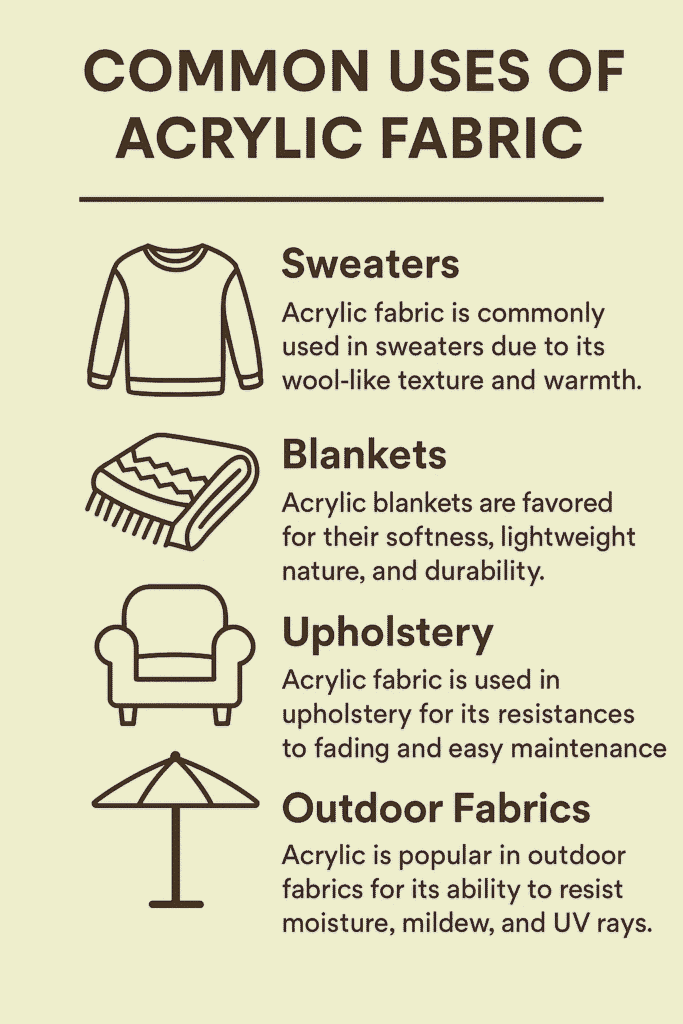
Acrylic is widely used in everyday textiles, including:
- Sweaters and knitted garments (scarves, hats, socks).
- Blankets, throws and bedding items.
- Upholstery fabrics (furniture, drapes, indoor/outdoor cushions).
- Outdoor textiles like awnings, boat covers and patio cushions (chosen for their fade and mildew resistance).
Acrylic vs. Other Fabrics (Shrink & Stretch Comparison)
Rayon
Rayon (viscose) is a semi-synthetic fiber that behaves quite differently. It shrinks readily – often even in cold water – because it is made from regenerated cellulose. The guide notes “the shrinkage mostly happens when the fabric is heated, but even in cold water, it’ll shrink some”. Moreover, rayon weakens when wet, so it’s easily damaged by washing. Unlike acrylic, rayon requires very gentle, cold-only washing to avoid shrinkage and loss of strength.
Cotton
Pure cotton (a natural cellulose fiber) is well known for shrinkage. Hot water and dryers can shrink cotton fabrics by up to 20%, unless they are pre-treated. In contrast, cotton has relatively little stretch compared to acrylic; it tends to hold its shape (beyond any shrinkage) more than stretch. In cotton–acrylic blends, you’ll notice that as acrylic content goes up, overall shrinkage goes down.
Wool
Wool fibers shrink dramatically with heat and agitation. Any hot wash or dry cycle will cause wool to felt and shrink, often unpredictably. On the other hand, wet wool hung to dry can also stretch or distort under its own weight. Overall, wool is much more likely to shrink than acrylic if exposed to heat. Acrylic will not felt like wool does. However, wool has better insulation and breathability than acrylic, so each has its uses.
Polyester
Polyester is very similar to acrylic in its behavior. Both are synthetic knits that hardly shrink or stretch under normal conditions. In fact, polyester is praised for its shape retention: it “resists shrinking, stretching and wrinkles”. Like acrylic, only extreme heat or improper care will alter polyester. In everyday use, polyester and acrylic garments will maintain size and shape in much the same way.
Best Alternatives to Acrylic Fabric
For Warmth: Wool or Fleece
Natural wool is the classic choice. In fact, wool is “warmer than acrylic”, making it excellent for cold climates. On the synthetic side, fleece fabrics provide “warmth without weight”– they are lightweight, breathable knits designed for insulation. So for ultimate warmth, consider wool or a high-quality fleece over acrylic.
For Breathability: Cotton or Bamboo
Natural, breathable fibers such as cotton or bamboo can be better. Bamboo fabric in particular “promotes excellent air circulation, keeping you cool”. It wicks moisture and regulates temperature. Cotton is also very breathable and comfortable for everyday wear. If air flow and moisture-wicking are priorities, organic cotton or bamboo blends are a good eco-friendly alternative.
For Durability: Polyester or Nylon
Polyester and nylon are among the toughest fabrics. Polyester is known for superior abrasion resistance and shape retention. Nylon goes even further – it is exceptionally strong and durable, often used in activewear and industrial textiles. Both polyester and nylon stand up to repeated wear and harsh conditions better than acrylic. Choose them for gear and garments where strength and longevity are key.
Eco-Friendly Options
If you want more sustainability, try recycled acrylic or organic cotton. Recycled acrylic (made from reclaimed plastic yarn) uses fewer new resources than virgin acrylic, cutting waste. For a natural choice, organic cotton is grown without toxic pesticides. Organic cotton is renewable, biodegradable, and far gentler on the environment. These options give similar performance to standard acrylic or cotton but with a much smaller eco-footprint.
Common Myths About Acrylic Fabric
- Acrylic is shrinking like wool.
- → False. Acrylic does not contract except under intense temperature.
- It is impossible to machine wash acrylic.
- → False. They can do a gentle cycle using cold water.
- Acrylic is never comfortable.
- It is not the case. Good acrylic is rather soft and comfy.
Conclusion-
In summary, acrylic fabric rarely shrinks under normal washing or drying. Its synthetic fibers give it stability that natural fibers lack, as long as you avoid high heat. However, acrylic can stretch if mishandled – heavy wear or hanging a wet knit can make it sag. The best care is to wash acrylic in cool water, use gentle detergent, and dry it flat. Store garments folded rather than hung to prevent stretching. By following these simple care rules (cold wash, low heat, flat drying), you keep acrylic items looking new. If breathability or environmental impact is a priority, consider alternatives like organic cotton or bamboo. Otherwise, acrylic remains a practical, affordable fabric that “resists shrinking” and adds color and warmth to clothing and home goods. With proper care, acrylic clothes, blankets, and upholstery fabrics will keep their shape and color for years. Hope you get the answer the the question “Does acrylic fabric shrink?”
Read More>> About Spandex fabric.
FAQs
Only under extreme heat. A very hot dryer cycle can cause acrylic to shrink. In practice, acrylic clothes should be dried on low heat or air-dried to stay safe.
Yes. Acrylic tends to stretch or sag under stress more than cotton does. Cotton holds its shape relatively well, whereas acrylic knits can lengthen if exposed to heat or weight.
No, not as much as natural fibers. Acrylic does not breathe as well as cotton or wool. It can trap some moisture and heat against the skin, which is why blends are often used.
Use a fabric shaver or sweater comb. Gently shave off the little balls of pilling by hand. You can also carefully trim pills with scissors, but a battery-operated shaver makes it quick and even.
True care is rare— was exactly
that.