

Introduction-
Flannel Fabric Does Indeed Shrink, But Only If Certain Conditions are Fulfilled. Fabric Flannel Will Almost Certainly Shrink If Flannel is Dried or Washed in High Temperatures. Flannel Shrinkage Depends on Multiple Factors, Such as Fabric Quality, Fiber Type, and How One Takes Care of it. Flannel Shrinkage Is A Common Concern for People Because of How it Affects the Fabric’s Fit, Texture, and Softness.
Flannel, Cotton Flannel, Wool Flannel, Synthetic Blends All Include Different Types of Flannel. Washing The Flannel Having Knowledge of the Specific Type of Flannel You Possess is The Most Important Step in Avoiding Irreversible Shrinkage and Maintaining the Softness of Flannel Fabric Over the Years.
What Is Flannel Fabric?
Flannel is a warm, breathable, medium-weight textile that is typically manufactured from cotton, wool, or synthetic fibers. The fabric is brushed or napped to give it a fuzzy surface. The the brushed texture traps and retains heat. Flannel is a fabric weave that is plain or twill and comes in a variety of colors and patterns, like solids and plaids.
There is a variety of flannel fabric and the fiber content can significantly affect its shrinkage. Cotton flannel is the most popular and is known to shrink a lot when exposed to heat. Conversely, flannel made from synthetic blends is polyester and other materials, and they are typically not prone to shrinkage after normal laundering. Wool flannel is also known to shrink and even felt if not washed carefully. Shoddy or lower-quality flannel is known to shrink, pill, and wear out more so than high-quality flannel, while premium, tightly woven, or pre-finished flannel is known to be more durable. The fabric type and quality are the most important factors for predicting how much any given flannel will change in size.
Does Flannel Fabric Shrink?
Flannel fabrics will shrink, especially if they are 100% cotton or wool and washed in hot conditions. Untreated cotton flannel can shrink by several percent in a single wash (around 3-5% is common, though users have reported up to 10% on low quality flannels). This shrinkage mainly happens on the first wash; after the initial wash, further shrinkage will be minimal. For example, a flannel shirt manufacturer warns losing about a half to a full inch in length if the shirt gets washed and dried in hot conditions. Overall, hot and agitated conditions lead to the most shrinkage, while cooler and gentler conditions will keep flannels the same size.
Does Cotton Flannel Shrink?
Out of all of the types of flannel, cotton flannel shrinks the most because of how the cotton fiber relax when subjected to heat and water. For example, a standard, untreated 100% cotton flannel material usually shrinks about 2-5% after its first hot wash. Many people who sew have noted a size reduction closer to 3-5% after a wash, equating to roughly 1-2 inches of shrinkage per each yard of fabric. Pre-shrunk cotton flannel has been specially treated and will retain its size much better because most of the initial shrinkage has been removed.
Does Wool Flannel Shrink?
Wool flannel shrinks even more than cotton flannel, but for a different reason. This is because of a process referred to as felting, which is the process where scales on the surface of wool fiber interlock when the wool is agitated by hot water. If treated incorrectly, wool flannel can shrink 6-10% or more, which is a drastic size reduction. In practice, even binding wool flannel to a warm water wash or using a standard machine cycle will result in drastic shrinkage, while more agitating machine settings promote felting. Wool flannel is best washed by simply steaming it or using a cold water wash with low agitation.
Does Synthetic or Blended Flannel Shrink?
Flannels with synthetic fibers or a fiber blend are much more resistant to shrinking compared to 100% cotton or wool.
Polyester flannel, for instance, does not shrink or does so very marginally with everyday laundering. It has been indicated that polyester flannel shirts are ‘almost shrink-resistant’ due to the presence of synthetic casing that does not absorb moisture or loosen up like natural fibers. Cotton blended with polyester, to an extent, has a blend responsive to laundering. A 50/50 blend will slightly shrink (about 1-3%) due to the first wash, but will not shrink as much as a polyester mixture.
Why Does Flannel Shrink?
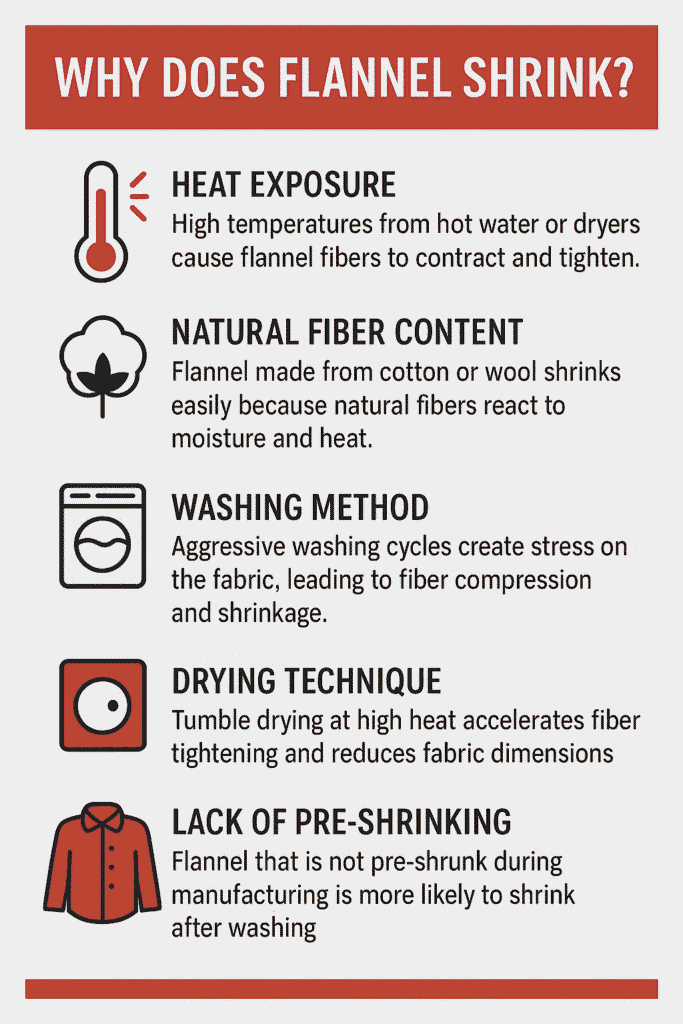
Fiber Relaxation
When flannel cloth is laundered, the embedded tension within the fabric relaxes, and the fabric shrink. Specific threads are tightened at the loom, and washing allows them to relax to a more natural state. Resultantly the fabric can “spring back” smaller after laundry.
Heat Exposure
Heat is a primary factor causing the fabric flannel to shrink. The heating during washing allows natural fibers to swell and the fibers are set to a smaller size. In fact, experts in the textile field has noted the washing of material in hot water as one factor that ‘accelerate fiber expansion’ whereby high heated air which is the dryer, set the fabric in a smaller size.
Mechanical Agitation
Overly active washing and or drying introduces friction that results in fibers being pulled inwards. The consistent agitation results in the loosely woven threads of the flannel being condensed or settled into a much denser weave. In result of this total mechanical agitation, the yarn fibers are compacted causing more shrinkages to take place as result of the combined inputs of heat and agitation.
Manufacturing Tension Release
Flannel fabric is stretched when weaving and finishing. When the fabric is wetted and dried, the built in tension is released causing the fabric to tighten more in the weave. In other words, the fabric is left to shrink as it is ‘returned’ to its built unstressed condition.
How to Prevent Flannel Fabric from Shrinking
Temperature Guidelines
Always wash flannel in cold or lukewarm water on the gentle cycle. Avoid temperature as high as possible to reduce the possibility of the fabric shrinking. Use no detergent or a mild detergent that will clean the flannel without causing the fiber to swell.
Methods of Drying
Air drying flannel is the best option or, of it is necessary to use a dryer, it should be set to a very low temperature. Flannel will shrink if high temperatures are used in the dryer, so it is best to not use heat or to use very low heat. Items should be removed from the dryer while they are still slightly damp in order to avoid over drying.
Use of Fabric Softener
When washing flannel, fabric softeners and do not use bleach. The softener will coat the fibers and does nothing to reduce shrinkage. Use a gentle detergent or a small amount of white vinegar in order to retain a natural fabric softener and keep the fabric soft.
When to Pre-Wash Fabric Before Sewing
Flannel should always be pre-washed prior to sewing or first use. Pre-washing flannel ensures that it is allowed to shrink when it is washing in warm water and fully dried so that it will not change the size of the finished piece after it is cut and sewn together. Flannel is advertised as shrinking a lot, so it is very important to pre-wash flannel in order to shrink it before making the item.
How to Dry Flannel Without Shrinking
- Air vs Tumble Dry: When air-drying fabric, there is no risk of any heat being applied, unlike drying fabric in the dryer. When using the dryer, pick the air setting or the lowest heat setting. Whenever possible, air-drying is recommended as it prevents any shrinkage.
- Low-Heat Settings: If you decide to use the dryer, you should use the lowest setting possible. Moderate heat is all it takes to shrink flannel, so using the lowest heat setting is the best approach. Reducing drying time will result in the fabric spending less time in the dryer, which is good. You can use wool dryer balls to speed up the drying process on low heat.
- Remove While Damp: Over-drying will result in additional shrinkage and can cause the flannel to warp and become rough. You should take the flannel out of the dryer while it is still slightly damp so you can reshape it, lay it out to finish the drying process and avoid using excess heat.
Does Flannel Shrink More Than Cotton or Denim?
| Fabric | Typical Shrinkage |
|---|---|
| Cotton flannel (100% cotton) | ~3–5% on first wash |
| Regular cotton (woven) | ~2–5% on first wash |
| Denim (usually pre-shrunk) | ~1–3% |
Does Flannel Shrink After Every Wash?
Flannel mostly shrinks during the first couple of washes when the fibers relax. After the tension is released, the size of the fabric is much more stable. After prewashing, the amount shrunk during each subsequent wash is extremely small. In time, flannel that is well cared for will stop significant shrinking, usually only loosing another 1-2% during subsequent washes. After gently washing the flannel, it will retain the dimensions it obtained after the first few washes. In the long term, always use cold or warm water, and a low heat setting when drying. Avoid hot cycles and high heat in the dryer, as these could shrink the flannel more.
How to Fix Shrunken Flannel (If Possible)
Soaking and Stretching Method
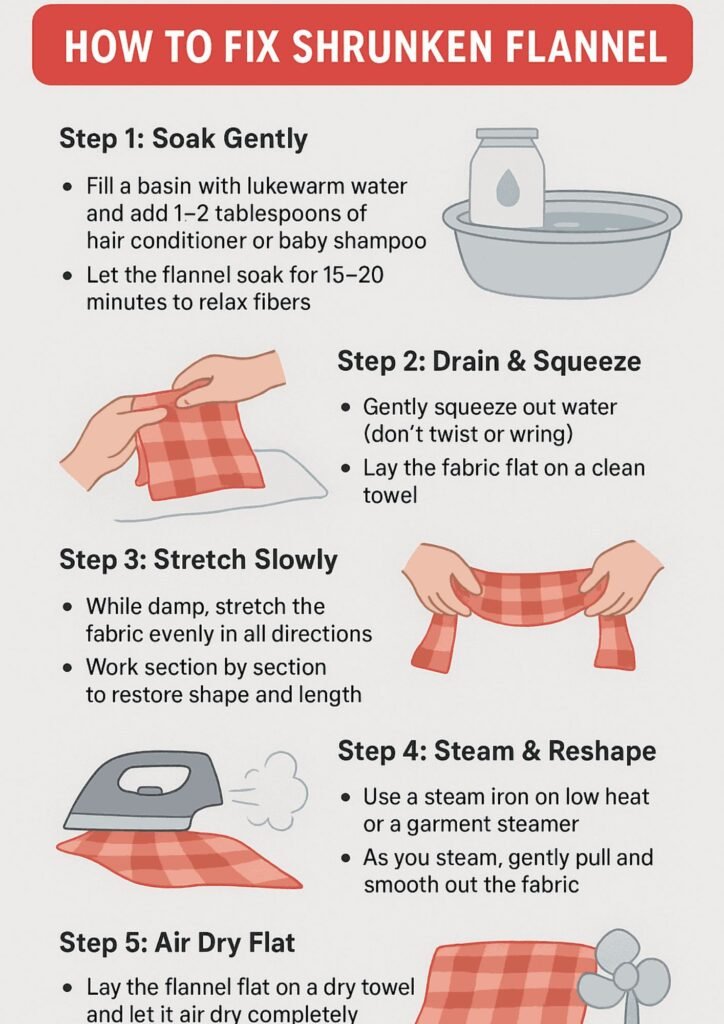
Flannel can be soaked in lukewarm water, fabric softener, or baby shampoo. Let the conditioner relax the fibers before you stretch the fabric back to shape. Leave it to air dry flat, and this can help recover some of the lost length and width.
Steam and Reshape Technique
For this method, you can hang the flannel and moisten the fabric with a steamer or steam iron. Once it’s warm and moist, stretch and smooth the fabric into shape using your hands or some pins. Make sure to hold it in place until the fabric cools and dries; this can help the fabric retain the new shape and recover some of the lost fit.
When Shrinkage is Permanent
If the flannel shrunk with high heat, the result is called felting, and this extreme shrinkage cannot be undone. In this case, very minimal stretching is possible to recover 1-2 inches of length. Any more than this, and the shrinkage is likely to be permanent.
Is Pre-Shrunk Flannel Shrink-Proof?
“Pre-shrunk” flannel has been washed at the factory to remove most of its natural shrinkage. It should not change size with normal washing. However, even pre-shrunk cotton can still shrink slightly with very hot water or high dryer heat. Pre-shrunk flannel will be more dimensionally stable, but you still need to avoid extreme heat.
How to Tell If Flannel Will Shrink Before Washing
Reading Care Labels
Before buying, make sure the care instructions allow for the washing and drying processes that you plan to use. It’s okay to wash fabrics that have care instructions saying to wash in cold water and then hang to dry. Fabrics marked pre-shrunk will not continue to shrink, unlike most cotton flannel that will continue to shrink if no pre-wash noted.
Fabric Feel and Weave Clues
If the weave of the flannel is open and not tightly sewn, it has a higher chance of shrinking. Plus, if the flannel has a fluffy or hairy surface, it will also shrink more. You should also see if it is stretchy: a flannel that is more stretchy will tend to shrink more during washing.
Manufacturer Notes
Most product descriptions and tags will note if the fabric is already pre-shrunk, and is of good quality. If you are reading reviews, customers often mention if the flannel they bought shrunk quite a bit.
Conclusion-
Taking care of flannel is essential because of the risk of shrinkage. The risk is highest with cotton flannel, and with wool flannel there is also the risk of overheating and felting, although much less with synthetic flannel. When dealing with new flannel, always wash with cold water and the gentlest cycle and then use low heat for the dryer – air drying is an even safer option. Prewashing is also ideal for removing extra shrink. The flannel will keep its fit and softness over the years with good care.
Read More>> About Cotton flannel fabric.
FAQs
Not at all. Laundering in cold temperatures will help maintain the current size because the fibers won’t expand in cold water.
Correct. Hot drying will shrink flannel because of the high-temperature heat. If you want to keep the flannel from shrinking, run the drying cycle on low heat.
High temperatures and high agitation in the washing machine can increase the shrinking rate of flannel. Cotton flannel will shrink about 3 to 5% from the first wash.
Not at all. Ironing flannel, will not unshrink it. Ironing can help get rid of wrinkles, however, it will not help get back the length lost to shrinkage. The only way to help get back some of the lost length is to steam and then gently stretch the fabric.
Definitely not. If you look at the flannel that is shrunk, it will not grow back to the length it is supposed to be. You can partially get back some of the length, however not all of it is recoverable. If you follow the above instructions, then you will be able to recover 1 to 2 inches of length, but that is all.