

Introduction-
Modal fabric has earned a spot among sustainable fashion materials due to its popularity. Modal fabric excels in providing luxurious softness while maintaining excellent breathability and eco-friendly properties. Beech tree pulp serves as the raw material for this semi-synthetic textile which combines natural elements with contemporary fabric qualities for comfort and durability.
The question about whether modal fabric shrinks keeps resurfacing as a frequent inquiry.
The silky texture of modal fabric attracts consumers yet nobody wants their cherished modal clothing to shrink after washing. This article provides a clear solution to your question about modal fabric shrinkage. The article teaches you the proper methods for washing, drying, and maintaining modal clothing. Join us as we explore the facts regarding modal fabric shrinkage together with its maintenance.
What Is Modal Fabric?
Beech tree pulp serves as the raw material for modal which is a kind of rayon made from cellulose fibers. The Austrian company Lenzing brought modal to the market during the 1960s where it gained recognition under the TENCEL™ Modal brand. Modal comes from a biological source in contrast to fully synthetic fibers such as polyester and nylon. The manufacturing of cellular fiber begins through the collection of fast-growing renewable beech trees which require no irrigation. Wood chips undergo chemical processing to form fine fibers which are subsequently spun into yarn. The semi-synthetic production method utilizes fewer aggressive chemicals when compared to certain rayons and requires significantly less water than growing cotton.
Origins
Modal owes its origin to beech forests. Spun reconstituted cellulose from beech trees forms the fiber. After harvesting beech trees and chipping them their cellulose is dissolved before being extruded into yarn. Threads made from high-wet-modulus rayon demonstrate finer structure and greater strength than those from standard viscose. Modal fabric exhibits a silky texture as well as exceptional draping qualities. Different modal variations like Lenzing’s MicroModal produce highly soft and lightweight textile materials.
Comparison with Cotton & Polyester
Although modal resembles natural fibers it surpasses numerous of them in performance. Modal demonstrates superior stretchability and softness compared to cotton. It’s material demonstrates exceptional absorbency which exceeds cotton’s by 50%, allowing it to wick moisture effectively while maintaining a cool touch. Modal maintains superior durability when exposed to moisture compared to both rayon and cotton. Modal stands apart from polyester since it allows air circulation and breaks down naturally whereas polyester does not. Polyester retains heat and has limited stretchability as opposed to modal blends with cotton or spandex which mimic natural cotton’s feel. Modal fabric provides the comfort found in cotton along with superior strength.
Eco-friendly Properties
Manufacturers frequently advertise modal as an environmentally friendly textile option. The fabric modal originates from fast-growing regenerative beech trees that typically require minimal water to grow. Lenzing is able to reclaim 80% of production chemical solvents which results in decreased waste generation. Modal production requires significantly less water compared to traditional cotton manufacturing processes. Once produced the fabric remains soft and durable but will break down naturally when thrown away. Modal provides cotton-like softness and breathability while resulting in a reduced environmental footprint yet remains a semi-synthetic fabric.
Does Modal Fabric Shrink?
Modal fabric is engineered to minimize shrinkage more effectively than many other types of textiles. An expert guide points out that modal fabric demonstrates reduced shrinkage during washing compared to most rayon types. Modal garments typically maintain their original shape during wear and cleaning. Research results demonstrate that modal fabric exhibits approximately 50% greater resistance to shrinking compared to cotton. With proper washing and drying practices a high-quality modal garment generally maintains its original size.
The fabric is not entirely immune to shrinkage. Improper care can cause some shrinkage. When modal fibers undergo high heat exposure or strong agitation they will contract. After the initial wash TENCEL™ modal products can shrink as much as 5% particularly when high heat is used to wash or dry them. Modal fabric maintains minimal shrinkage risks when you take proper care of it. Following the correct washing and drying instructions will help maintain the fabric’s size. In summary, does modal fabric shrink? Not by much under normal care. It is generally stable. Modal fabrics show slight shrinkage when washed in hot water or dried at high temperatures. We’ll cover those factors next.
Factors That Affect Modal Fabric Shrinkage
The degree of shrinkage that modal will experience varies depending on multiple care factors. Important factors to consider are water temperature along with drying method and fabric blend. Modal should be treated with care because all fabrics shrink with exposure to heat and moisture.
Washing Temperature:
Hot water makes fibers swell, then contract. Modal fabrics shrink faster when washed with hot or warm water. Cool and lukewarm water prevents modal from shrinking. The safest washing practice is to use cold water but remember to review the label instructions. Using cold water when washing minimizes fiber tension and substantially lowers shrinkage risk.
Drying Method:
Modal fabrics tend to shrink when exposed to high heat during the drying process. The high heat setting in tumble-dryers leads to increased fiber constriction. Strong sunlight exposure results in color fading and fiber stiffening. To prevent damage to your clothes you should either air-dry them or tumble-dry them at the lowest heat setting. Take modal garments out of the dryer when they’re still slightly damp and complete the drying process by laying them flat or hanging them to prevent over-drying and wrinkling.
Fabric Blends:
When used alone modal performs optimally but combining it with other fibers changes its behavior. Modal-cotton blends exhibit shrinkage similar to pure cotton materials. Fabrics blended with spandex (elastane) gain stretchability while maintaining their shape recovery capabilities. Always mind the fiber tag. If a shirt is 70% modal and 30% cotton, treat it like you would delicate cotton: cold wash and gentle dry. Blended fabrics require care based on the most delicate fiber present in the mix. Always opt for the most gentle washing method when you are uncertain about how to proceed.
Each of these factors works together. Using cold water for washing and a gentle drying cycle along with low heat prevents almost all shrinkage. The few percent changes become obvious when you apply high heat and rough handling.
How to Wash Modal Fabric to Prevent Shrinking
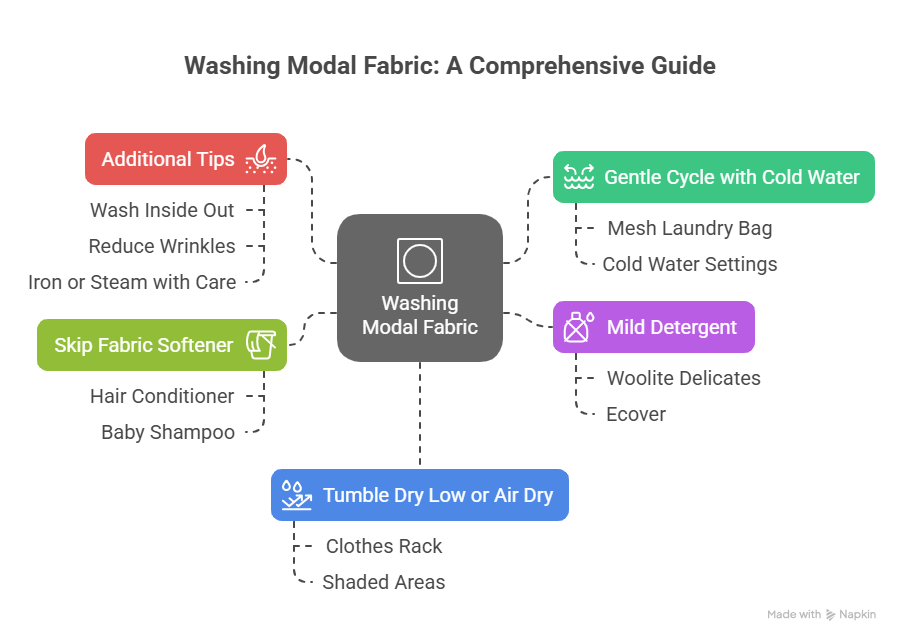
- Run your laundry through the Gentle Cycle with cold water: Select cold water settings and opt for a gentle or delicate washing cycle. This minimizes fiber agitation. If you own a mesh laundry bag use it to wash your delicate modal items.
- Use a Mild Detergent: Select a mild detergent that lacks strong bleach or elevated alkalinity for best results. Liquid detergents like Woolite Delicates and The Laundress Delicate Wash perform effectively for delicate wash cycles. Effective cleaning results can be achieved with sustainable brands like Ecover and Seventh Generation Free & Clear. These detergents clean without damaging modal fibers. Chlorine bleach must be avoided because it will weaken the fabric fibers.
- Skip Fabric Softener or Use Sparingly: Excessive fabric softener application results in residue build-up and disrupts the fiber’s ability to wick moisture naturally. To achieve softness in clothes you must use only a minimal quantity. According to The Spruce guide you should add gentle conditioner to your wash by using a teaspoon of hair conditioner or baby shampoo to help relax fabric fibers without causing damage.
- Tumble Dry Low or Air Dry: Modal garments should not be placed in a hot dryer after washing. Select your dryer’s lowest heat option then take out clothing while they remain slightly moist. Modal clothes should be spread out on a towel or suspended in shaded areas to dry naturally. Using a clothes rack or line for air drying clothes lowers the chances of shrinking the fabric. Do not expose garments to direct high heat and sunlight because they can lead to slight shrinkage.
- Additional Tips: Washing modal clothes inside out will prevent friction damage during the process. Reduce wrinkles by stretching out items before starting the drying process. Use low heat settings to iron or steam as necessary because high temperatures can damage plant fibers.
For detergents, consider specialized products. Woolite Delicates and Dreft detergents are specifically created to clean delicate fabrics. Alternative eco-friendly cleaning options include diluted Dr. Bronner’s Pure-Castile soap and Biokleen. Modal fabrics remain safe when you wash them with Eucalan No Rinse Wool Wash. Brand recommendations: Modal fabric maintenance benefits greatly from detergents such as Woolite or The Laundress and both Tide Free & Gentle as well as Seventh Generation Free & Clear. The best results come from following your garment label care instructions.
Can You Unshrink Modal Fabric?
Attempting to restore a modal garment that has shrunk yields unpredictable outcomes. Keep expectations realistic: Modal fabric has limited elasticity which means that it cannot recover from all types of shrinkage. These methods provide potential steps to reverse shrinkage in your modal clothing.
- Warm Soak and Stretch: Start by filling a basin with lukewarm water and mix in a gentle hair conditioner or mild baby shampoo. Submerge the shrunken modal article in water for a duration of 15 to 30 minutes. The conditioner works to loosen the fibers in a way that parallels the technique used to stretch-back polyester fabrics. Remove excess water from the fabric with a gentle squeeze but avoid wringing it out. Position the garment on a towel and stretch it back to its original size and shape with care. The modal item should air dry flat on the towel while maintaining its stretched shape.
- Steam or Gentle Ironing: Sometimes steaming can relax fibers. Hang the garment to use a handheld steamer or iron it with low steam from the inside while gently pulling the fabric. The objective is to carefully return the fabric to its original shape. Avoid excessive heat to prevent fixing the shrinkage into place.
- Repeat if Needed: Performing the soak-and-stretch procedure one more time or twice might be necessary. The fabric should be completely dry before shaping it manually between each attempt. Wear the damp garment while moving and then let it dry naturally in the air.
Modal fabric responds better to stretching and reshaping than pure cotton fabric does.
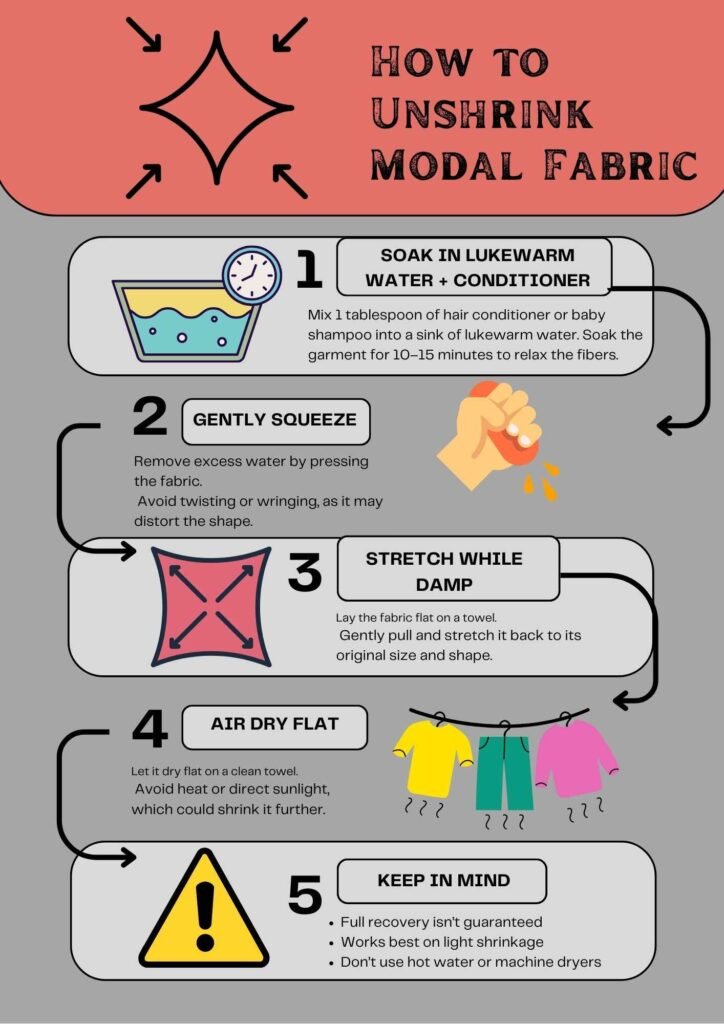
This method shows the best results when applied to synthetic fabrics that contain blends or stretch properties. A badly shrunken cotton-modal blend might not return to its original shape through this method. Gentle conditioning treatments paired with deliberate stretching methods frequently restore some of the fabric’s original dimensions. When a garment experiences minimal shrinkage, these methods could restore it to its original fit.
Modal vs. Other Fabrics: Shrinkage Comparison
This fabric shows distinctive shrinkage patterns when compared against typical textiles.
Modal:
Proper washing techniques for modal fabric usually result in minimal shrinkage. A modal shirt that receives proper care maintains its original size. Hot water washes or high heat drying can cause modal to shrink by as much as 5% after its initial wash. The amount of shrinkage modal experiences remains quite limited when contrasted with other natural fibers.
Cotton:
Cotton is notorious for shrinking. Garments made entirely from cotton can experience shrinkage between 2% and 7% after exposure to high temperature washing and drying cycles unless they are pre-shrunk. When cotton fibers experience agitation in hot water or high heat they contract noticeably. Polyester fibers demonstrate lower shrinkage compared to cotton which shows that cotton reacts more to heat exposure.
Polyester:
Garments made from 100% polyester experience minimal shrinkage when washed under standard laundry settings. The synthetic fiber maintains its shape while repelling water absorption. This synthetic fiber requires washing and drying at high temperatures to undergo shrinking. Polyester resists shrinking more effectively than natural materials such as cotton. It requires exposure to extreme heat to achieve any noticeable shrinkage. Polyester demonstrates significantly greater stability than cotton and bamboo when subjected to shrink testing.
Bamboo (Rayon):
Bamboo rayon is a plant-based fiber that shrinks like modal because both are rayon varieties. Care instructions for this fabric typically mimic those used for modal. Pure bamboo-rayon items will shrink several percent when washed at high temperatures. Cellulosic fibers like bamboo, rayon, and lyocell experience similar shrinkage problems to modal when exposed to high temperatures.
Spandex (Elastane):
Spandex provides stretch properties to fabric blends and stands up well against shrinkage when used alone. Items made entirely of spandex don’t shrink while garments that claim to contain spandex are typically blends like 95% cotton combined with 5% spandex. The spandex component in fabric blends allows garments to maintain their shape by minimizing visible shrinkage. Excessive heat damages spandex so you should avoid ironing your garments too hot.
So modal shrinks in a manner that resembles polyester properties rather than those of cotton. The material maintains its form but unlike polyester it absorbs water and requires gentle washing. Modal fabric maintains its dimensions better than either cotton or bamboo-rayon materials. Modal proves to be an ideal fabric choice because it combines natural fiber softness with low-maintenance care requirements.
Common Myths About Modal Fabric Shrinkage
Let’s clear up some misconceptions:
- Myth: “Modal will never shrink at all.”
- Fact: Modal is highly resistant, but not immune. Modal fabric demonstrates less shrinkage potential compared to standard rayon. As we mentioned before modal fabric can experience slight shrinkage when handled improperly. The fabric shrinks a small amount when exposed to high temperatures. Even though washing at low temperatures helps prevent shrinkage it is essential to use cold water.
- Myth: Modal shrinkage behaves differently than regular rayon because modal maintains its shape better.
- Fact: Modal represents a distinctive rayon classification known as high-wet-modulus rayon. Modal retains its form more effectively than ordinary viscose rayon. Modal fabrics demonstrate greater stability and do not shrink as easily as cheaper rayon materials. So the myth is backward: Modal fabrics experience less shrinkage compared to most other viscose textiles.
- Myth: “All modal fabrics are preshrunk.”
- Fact: Not necessarily. While some manufacturers treat their modal textiles to prevent shrinking others leave them untreated. Always check the care label. Pre-shrunk modal fabrics may still shrink when subjected to hot-washing conditions. Modal fabrics should be assumed to shrink slightly unless they are confirmed to be 100% preshrunk.
- Myth: Modal fabrics can be washed using any water temperature which makes them similar to polyester fabrics.
- Fact: Modal fabrics perform best with cold or mild water temperatures unlike polyester which can handle hotter washes. Although pre-shrunk, modal fabrics may still experience minimal shrinkage when washed with hot water.
- Myth: “Modal is the same as cotton.”
- Fact: Modal is not cotton. Modal originates from the same type of cellulose but is produced through a distinct manufacturing process. Modal fabric retains cotton’s soft texture but exhibits varying behavior during washing since it absorbs moisture 50% better than cotton. As a result of these properties modal fabric does not contract at the same rate as other materials. Remember, modal is semi-synthetic.
- Myth: “After it shrinks, modal can’t be fixed.”
- Fact: The same methods of soaking and stretching mentioned previously can help restore some of the fabric’s original dimensions. While full recovery is unlikely, attempting to fix mild shrinkage can be beneficial.
Clearing these myths should give you confidence: Modal fabric maintains its low-shrink properties when you use proper care techniques.
Tips for Buying & Caring for Modal Clothing
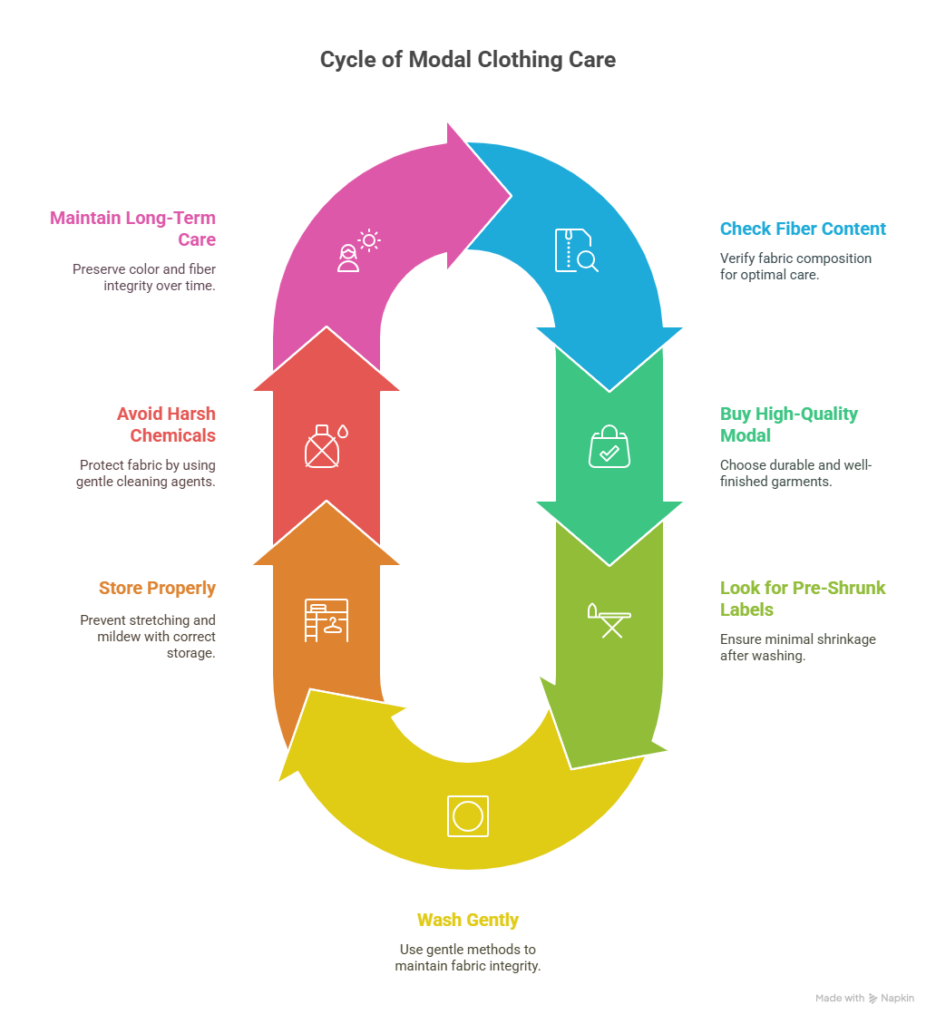
- Check Fiber Content: Look at garment labels. Achieving optimal performance requires selecting garments made from either 100% modal or fabrics with modal content between 90% and 100%. When you see “modal/cotton blend” on clothing labels understand that cotton properties will affect how you should care for it. When you purchase from brands that offer Lenzing Modal or TENCEL™ Modal you can expect high-quality products.
- Buy High-Quality Modal: Not all modal is equal. Modal clothing from Lenzing and garments with high thread counts provide better durability. Some good examples of modal clothing are from eco-conscious brands: Modal fabric features in Toad&Co and Pact products like shirts and underwear while Boody offers modal basics across multiple markets. Even some activewear and lingerie lines (e.g. The Align pants from Lululemon and Calvin Klein underwear incorporate modal for a luxurious texture. Selecting well-known brands usually results in higher fabric quality and appropriate finishing.
- Pre-Shrunk Labels: Check the availability of a pre-shrunk fabric label when possible. “Preshrunk” labels indicate that the garment will experience minimal shrinkage during initial washes. Non-preshrunk fabric will likely change size after initial washing so handle it with care for the first wash.
- Gentle Washing: Always use the care tips above. Always wash modal items with colors that match each other while placing delicates in mesh bags and flipping your clothes inside-out. To avoid extra wash cycles you should clean your clothes after two wears unless they are stained.
- Storage: Proper storage methods prevent modal clothes from losing their shape. Use folding techniques for heavy modal knits to prevent stretching while hanging lighter shirts on padded hangers. Keep them in a cool, dry closet. Keep modal garments dry and properly folded because moisture and pressure can lead to mildew growth and fabric wrinkles.
- Avoid Harsh Chemicals: Skip bleach and harsh spot treatments. Begin stain removal with cold water rinses or apply a gentle delicates-specific spot cleaner.
- Long-Term Care: Modal softens through usage but retains its nature as a cellulosic fiber. Extended sun exposure should be avoided to protect both the color and fiber integrity. Over time, reapply care: Should you notice any pilling or stiffness develop on your modal clothes follow the same gentle washing technique. With regular maintenance modal clothing can sustain for many years.
Conclusion-
Modal fabric brings together the best of natural and synthetic worlds: It balances its soft texture and breathability with eco-friendly production and lasting durability. Modal fabric shows promising results because it almost never shrinks. It maintains its shape more effectively than both cotton and standard rayon fabrics. Cold water washing combined with a gentle cycle and low heat or air drying helps maintain the new appearance and fit of modal clothes. A minor alteration in appearance can often be undone by soaking and reshaping the material. Modal’s limited shrinkage together with its luxurious texture produces a fabric that delivers convenience and comfort. Quality modal garments and proper laundry practices will ensure your clothes and linens remain soft and durable. Take advantage of modal fabrics by avoiding the hot dryer and washing your clothes gently.