

Introduction: Why Cashmere Needs Special Care
One such soft and luxurious fiber in the world is cashmere. The fine nature of its texture and delicate woven fabric causes it to be very comfortable, but also easier to become destroyed. Cashmere fibers are delicate as opposed to cotton or polyester and when mishandled they can change their shape or texture.
That is why, it is necessary to know how to remove the stains on cashmere. Unless taken care of, the beauty may be ruined forever by stains when treated rough or using the wrong products. Ordinary stain removal tricks usually come back to haunt, and leave the shrinkage, fuzziness, or discoloration.
Rather, the softer methods maintain the softness and the durability of your cashmere. When you know how to clean the right way, then you are able to take care of the spills, spots and the stains with no fear.
Understanding Cashmere Fibers
What makes cashmere different from wool or cotton
The cashmere and wool are both animal fibers, although the cashmere is three times warmer and much softer. Conversely, cotton is a plant type of fiber that can be washed by machines using machine heating and allows better heat resistance. Wool is more wearable whereas the cashmere garments have to be handled carefully since they are fragile. That is why cashmere is rather expensive and considered as a luxury good.
Reaction to water, detergents, and heat
This is a fiber that is warm luxurious, and it does not resist heat or harsh chemicals. Cashmere should be washed on cold water; hot water will shrink or felt it. Washing of cashmere ought to be done with a soft pH neutral soap (e.g. baby shampoo or light detergent) as enzymes and bleach will destroy the fibers. Cashmere should be reshaped and dried straight but not near heat in the event of it being washed.
Common cleaning mistakes
One of the mistakes is to confuse cashmere with cotton. Hot water, a washer and even a dryer are frequently used by people, which may destroy cashmere. Do not wring, tumble-dry, or bleach cashmere. Nor should it be vigorously scrubbed or brushed up as it will break or fuzzy the fine yarns. To put it briefly, cashmere is not a working cloth, but it should be treated like delicate fabric.
Types of Stains on Cashmere
Understanding the nature of a stain helps you remove it safely from cashmere. Below are common stain types: food & drink, makeup, sweat/oils, and ink. Each requires a gentle approach.
Food and beverage stains (coffee, wine, oil, chocolate)
Coffee, wine or juices spills usually have tannins and dyes, which may leave behind in cashmere. Greasy foods or cooking oils are also able to leave shiny marks. Quick blotting: wipe the excess off and wipe with some mild detergent or soak solution. Since it is a mixture of liquid and oil, it is essential to wash it immediately with cold-water and remove the excess with a light spot-clean. With cold water and a little light soap the fibers can be raised up without distress.
Makeup and cosmetic stains (lipstick, foundation)
Cosmetic products typically consist of dyes, oils and waxes. In the case of lipstick or foundation, scrape or blot a superfluous amount of product first. Apply some little gentle cleanser or cashmere-safe detergent then. You can apply a specially designed remover of stains that does not contain solvents or even a drop of baby shampoo with water. Dab not rub, and rinse under cool water. These spots may react positively to spot treatments that are repeated using dilute soap or oil-cutting solution.
Sweat, deodorant, and body oils
Body oils and deodorant may also cause yellowish stains which appear under arms. The cashmere catches the heat and as such, sweat does accumulate. Odors and light yellow stains may be removed by rinsing with vinegar (1 part white vinegar 2 parts cold water) after blotting. Rinse again as necessary and then wash using light soap. It is advisable to keep the accumulation of deodorant to a minimum by letting the sprays dry completely before dressing and re-treating any areas early enough.
Ink and dye transfer stains
Cashmere can be permanently stained by the ink on pens or dye of other clothing. Address tackle ink immediately by putting alcohol (not rubbing) on a cotton pad and blotting it. Work from edges inward. Nevertheless, cashmere is fragile and it is prudent to do testing in an inconspicuous spot. It is difficult to get off and once the ink stains have not been removed by using the gentle solvents, then you have to think about seeking professional assistance. A severe dye run or ink spot may need a special pro solvent which is not harmful to fine wool.
Immediate Steps: What to Do When a Stain Happens
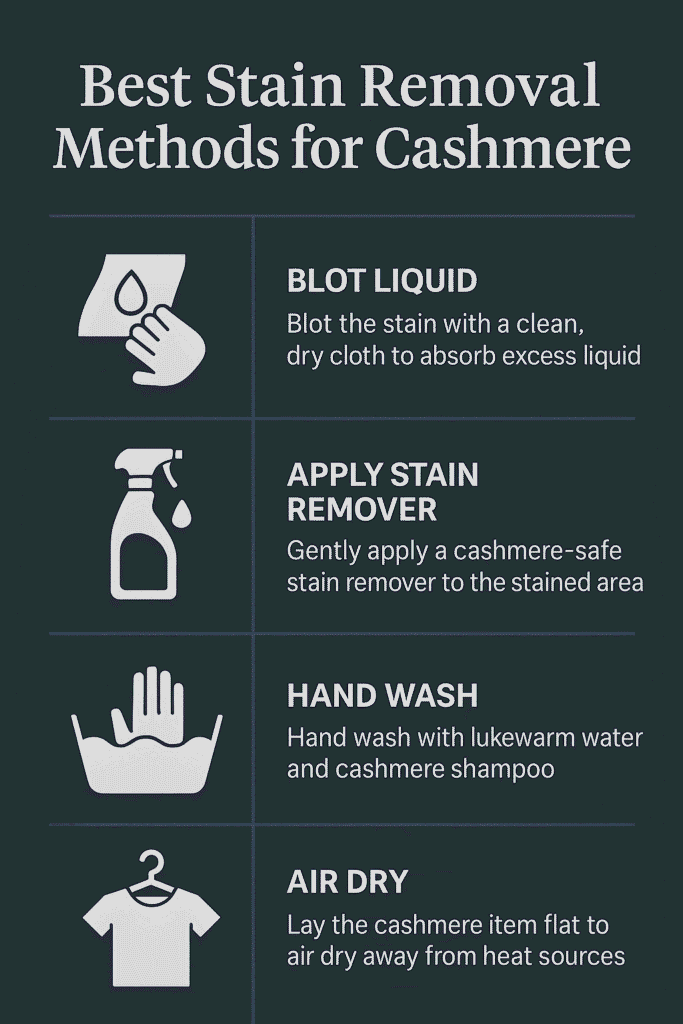
- blot, do not rub: Once you spill on cashmere, you should blot the spill lightly with a clean cloth or paper towel. Wipe or squeeze, do not scrub. Rubbing diffuses the stain and stirs up the fibers.
- Apply cold water first: As far as possible pour over the stained area (at the back of the fabric if feasible). Stain is avoided by cold water. In case you are not able to rinse under a lot of water in the sink, wet a piece of cloth in cold water and.
- No heat: Heat sets the stains in cashmere. Do not apply hot water or use heat (such as a dryer) to a stain because it is likely to become permanent.
Read About>> How to store cashmere effectively.
Best Stain Removal Methods for Cashmere
Spot cleaning with mild detergent or baby shampoo
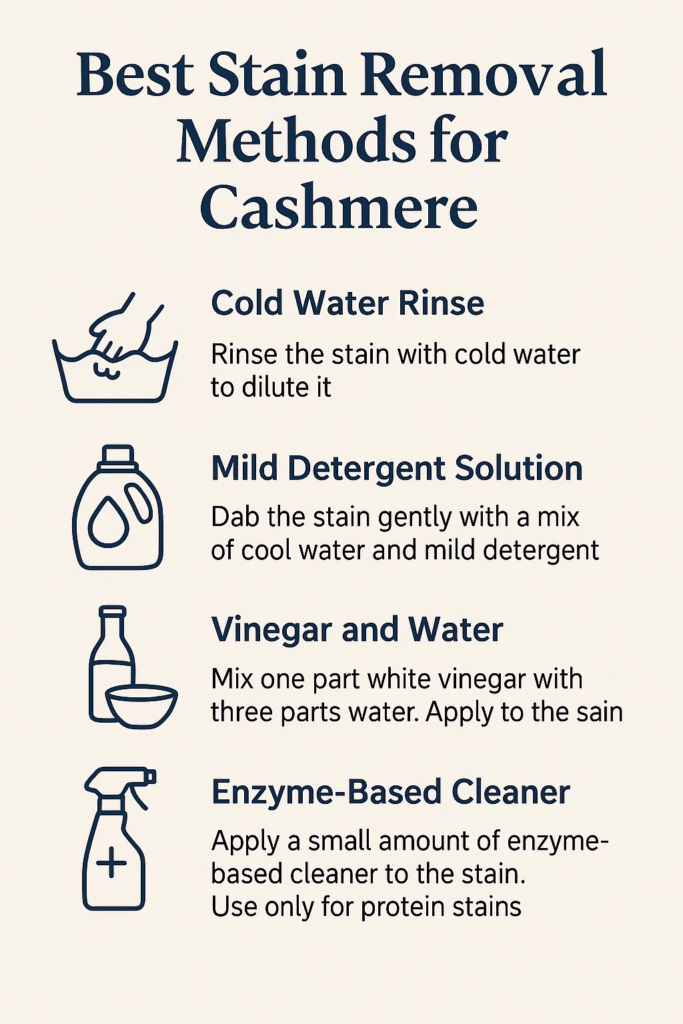
Some little diluted gentle soap is sufficient. Add a drop of a baby shampoo or wool friendly detergent and cold water. Wipe it gently on the stain using a soft cloth or sponge. Allow to soak a couple of minutes, and run under a little cold water. Apply enough soap to wipe the area wet – it is better to wipe it off and add more than the fiber was oversaturated. Rinse followed by wringing out water. It is a basic technique that can be used to remove food and drink stains without damage to the fabric.
Vinegar rinse for odors and light stains
In the case of sweat odor or light tint discoloration, white vinegar solution may be taken. Blend a quarter or three-quarters cup of distilled white vinegar with a basin of cool water. Swish or soak underarm or stained area a little with vinegar mixture after blotting residue. Vinegar is a mild acid that makes colors brighter and neutral and does not contain aggressive chemicals. Unless you rinse off with cold water. This will not take away heavy stains, but it will refresh cashmere and will perhaps help to keep yellowing away.
Cornstarch or talcum powder for oil and grease
Stains of oil and grease must be absorbed. Generously sprinkle the stain with cornstarch or unscented baby powder and allow it to dry up (a few hours or overnight). These powders are used as soft sponges, which extract the oil in the fibers. Then brush off the powder, then wipe off the rest. This process is relatively delicate and will not cause any damage to cashmere.
Professional-grade cashmere stain treatments
Special products exist that are designed in cashmere and wool. As an illustration, The Laundress Cashmere Stain Solution or others is non-toxic with plant-based ingredients that are not detrimental to fibers. Some such product (or a piece of wool detergent) can be applied to a spot directly and can remove difficult stains. Always rubbed and rinsed thoroughly. Such commercial stain solutions are supposed to be delicates-safe, though should not be excessively applied and used.
The case of Dry Cleaning of Cashmere
When it comes to a home-made repair, sometimes it is not good enough. When any stain is too tough, ingrained, or you do not know what to do about it, seek professional help. Luxury cashmere can be of special finish, or extremely fine. Include the type of stain and your method of treating the stain to the cleaner. Remember that not every chemical of dry-cleaning is safe. Nevertheless, an experienced cleaner well aware of good wool will be able to salvage a garment that cannot be repaired at home. In the event of uncertainty, it is always better to use less DIY on valuable cashmere.
DIY vs Professional Cleaning
When home remedies are safe
Home treatment is satisfactory in case the stain is small and fresh. Wipe immediately with soft recommended detergents (such as gentle shampoo, dish soap, or vinegar) and cold water. It is usually effective to wash a stained area with hands immediately.
Signs you need professional help
When the stain is dry or when you have tried several light solutions to no avail, then it may be time to quit. Solvents may be necessary in ink, deep dye stains or stubborn oil. In addition, when the garment is highly valuable or antique, expert washing will eliminate the possibility of an unintentional shrinkage or felting. Generally, big stains, set-in color, or the delicate heirlooms are best candidates to the professionals.
Cost vs risk considerations
Dry cleaning is not cheap, and a balance that should be considered against the value of the garment. Cashmere clothes are very expensive, and it may be a good idea to pay a housecleaner. Washing at home, on the other hand, can destroy you in case you are not attentive. To save money, DIY can be used when dealing with smaller spills. Finally, it is up to one individual: does one take the dilemma of DIY shrinkage risk? With extremely adored cashmere, it is not frequently the case.
Common Mistakes to Avoid
- With hot water: This shrinks and fixes stains in cashmere. In all cases cold or lukewarm water should be used.
- Rubbing vigorously: Rubbing a stain vigorously may shred fibers and give it a fuzzy appearance. Blot lightly instead.
- Bleach or enzyme detergent: These severe chemicals consume natural fabrics and change the feel of cashmere. They will destroy the color and the softness.
- Washing it in the machine or dryer: Although the machine is on a sensitive setting, machines still spin excessively and dryers place cashmere in harming heat. Always hand-wash and air-dry.
Conclusion-
Cashmere is an investment and one should treat it right to have it beautiful over the years. Knowing how to remove stains on cashmere guarantees that your sweaters, scarf as well as shawls will always be soft and nice. Weak procedures such as blotting, mild detergents, vinegar solutions or cornstarch preserve fragile fibers.
In this case, professional dry cleaning is the best option to use on tough or deep stains. damage can be avoided by not using hot water, rough handling and harsh chemicals.
With the use of stain prevention and due diligence, you will be able to prolong the life of your cashmere. Be patient and careful with any piece that you will give in and it will give back to you in the form of long-lasting comfort.
Read More>> What is cashmere made from?
FAQs
Yes, baking soda helps to absorb light odors and light stains without being harsh. It is always good to sprinkle little over the stain and leave it to dry over a few hours. Then brush it off softly without rubbing it since this may destroy fibers.
Typically, yes – dry cleaning can be a safe option provided that the cleaner has experience with sensitive fabrics. Nevertheless, not every cleaner specializes in luxury fibers, which is why it is better to request it in advance. The possibility of shrinkage or loss of texture is minimized by selecting a professional with knowledge in cashmere.
Wool and cashmere special detergents are the safest and most effective to use in removing stains. Babies may also use the baby shampoo that is soft as a substitute in case there is no specialty detergents. Strong chemicals or bleach based cleaners should be avoided, as they may weaken and turn fibers discolored.
Yes, most stains can be washed using hand washing in cool water with mild detergent. Wear and wash the garment with a lot of care and do not twist or wring to keep the fibers intact. After washing the cashmere flat, dry it off using a towel.
It is most effectively done by blotting the stains with a cloth and mild detergent or baby shampoo. In the case of oil stains sprinkle with cornstarch or talcum powder to absorb grease overnight. Hot water, scrubbing, or harsh chemicals should be avoided and tough stains can be looked up to dry cleaning.
Very nice post. I simply stumbled upon your blog and wanted to mention that I have truly enjoyed browsing your blog posts. After all I’ll be subscribing for your rss feed and I hope you write once more very soon!
Handy guide! Gentle blotting with mild soap or vinegar works wonders on cashmere stains. Always air dry flat—keeps your knit looking luxe for years.
The very root of your writing while appearing agreeable at first, did not sit well with me after some time. Someplace throughout the sentences you were able to make me a believer unfortunately only for a very short while. I still have a problem with your leaps in logic and you might do well to help fill in those gaps. When you can accomplish that, I will definitely be fascinated.
I?¦ve recently started a blog, the info you offer on this site has helped me tremendously. Thanks for all of your time & work.
You are my inhalation, I own few web logs and rarely run out from to post .
I simply couldn’t depart your web site before suggesting that I extremely loved the standard information an individual provide for your guests? Is gonna be back continuously to check up on new posts.
Very nice info and straight to the point. I am not sure if this is in fact the best place to ask but do you folks have any thoughts on where to hire some professional writers? Thanks 🙂
Very interesting information!Perfect just what I was looking for!
This really answered my problem, thank you!
Good write-up, I’m regular visitor of one’s website, maintain up the nice operate, and It’s going to be a regular visitor for a long time.
I see something truly special in this internet site.