
Introduction-
While many people consider cotton to be one of the most breathable fabrics, if you’ve ever worn cotton on a hot and humid day, you probably would beg to differ.
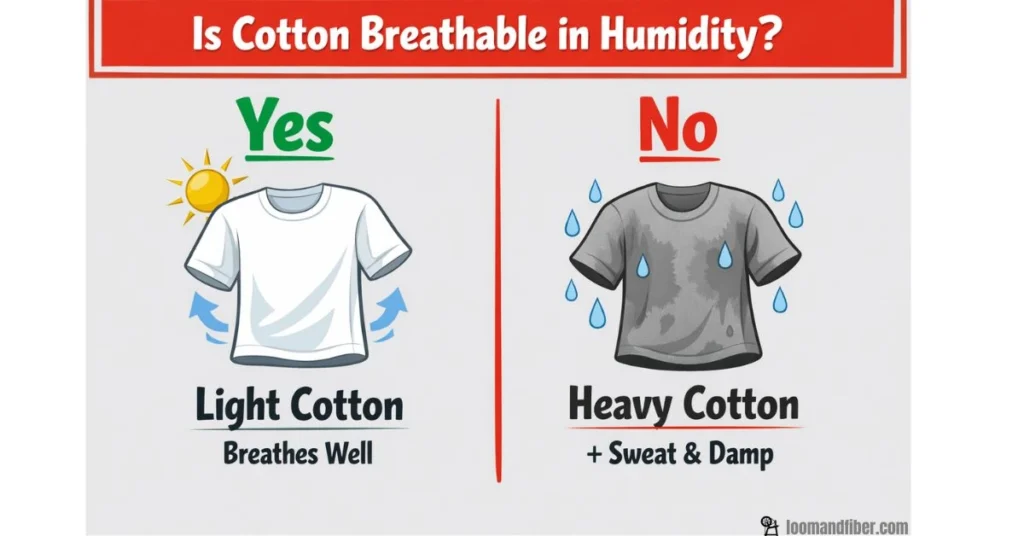
Cotton can be breathable in humid conditions, but only under the right circumstances. Thin, open-weave cotton (like lawn or voile) lets air move freely and cool skin. However, when cotton soaks up sweat in high humidity, it holds onto moisture and dries slowly, making it feel damp and heavy. In very humid weather, cotton clothes can become damp, clammy and sticky, interfering with your body’s cooling process. In summary: Cotton breathes well in moderate heat or low-humidity situations, but in hot, humid conditions it may trap moisture and feel uncomfortable.
This guide is to help you learn all the nuances of cotton fabrics so that you can remain cool, dry, and comfortable.
What “Breathable” Really Means in Humidity
Airflow vs Moisture Handling
Breathability refers to airflow through a fabric – essentially letting air and water vapor pass through. A breathable fabric has a high air permeability, meaning cool air can reach your skin. However, breathability alone doesn’t guarantee comfort. Equally important is how the fabric handles moisture (sweat). Cotton, for example, is very breathable to air, but it absorbs moisture into the fibers rather than pushing it out.
Why Humidity Changes Everything
In high humidity, the air is already saturated with moisture, so sweat can’t evaporate quickly. Normally, breathable clothing lets sweat evaporate and cool your skin. But when humidity is high, evaporation slows to a crawl. As a result, even breathable fabrics feel wetter and less effective at cooling. Imagine wearing clothes in a sauna – sweat stays trapped, and garments cling to your skin, preventing airflow and evaporative cooling.
Breathable vs Moisture-Wicking
Breathable fabrics and moisture-wicking fabrics are not the same. Breathable means air and vapor can pass through the cloth. Moisture-wicking means the material actively pulls sweat from your skin to the fabric’s outer surface, where it evaporates. Cotton is breathable, but it does not wick sweat away. Instead, cotton absorbs and holds onto moisture. By contrast, synthetics like polyester or natural fibers like wool channel sweat outward so it evaporates fast. In humid heat, this difference matters: a wicking fabric helps you stay dry, whereas cotton will stay damp and heavy on the skin.
How Cotton Performs in Humid Weather
Cotton Absorbs Sweat Instead of Wicking
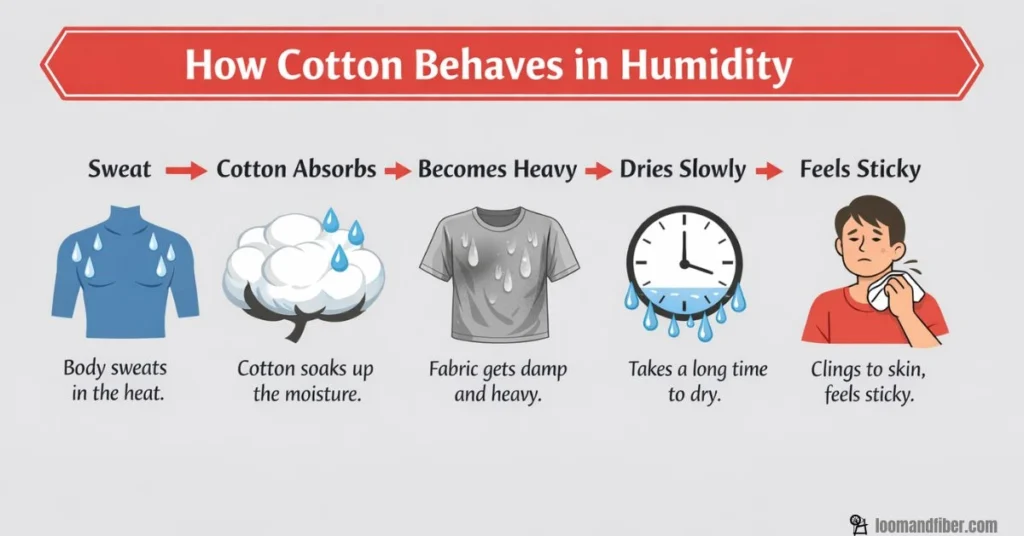
Cotton readily soaks up moisture from your skin. Unlike technical fabrics, cotton does not move sweat to the surface for evaporation. Instead, it absorbs sweat into its fibers and holds it. This means a cotton shirt will feel damp when you sweat, rather than dry. While absorbing sweat can initially keep you from feeling wet, in humid weather the trapped moisture prevents cooling.
Can Feel Heavy/Sticky When Saturated
When cotton fabric becomes soaked, it quickly grows heavier and clingy. Heavier cotton garments hold more water, so they take longer to dry and can feel like they’re weighing you down. In fact, studies show heavier cotton “holds more water near the surface” and creates that soaked “wet weight” feeling. In very humid conditions, you’ll notice cotton clothes turning damp, clammy and sticky as they accumulate moisture with little evaporation.
Dries Slowly in Humid Air
Cotton’s ability to dry also suffers in high humidity. Even if the fabric is thin, if the air is saturated, that moisture cannot evaporate quickly. Cotton typically dries slowly because it holds water within its fibers. In humid weather, this drying time stretches further. As one source notes, cotton can “dry slowly, even on a hot day” when moisture is high. Thus after you sweat or get caught in a shower, cotton garments may stay damp for a long time in humid air, reducing their cooling effect.
When Cotton Is Good in Humidity
- Light, Loose Weaves (Lawn, Voile): Lightweight cotton fabrics with open weaves let more air circulate. For example, cotton lawn and cotton voile are semi-sheer and feel airy even in heat. These fabrics are excellent for hot, humid days because the loose weave promotes airflow and rapid evaporation of sweat.
- Low-GSM (Lightweight) Fabrics: Cotton garments with a low GSM (grams per square meter) weigh less. Lighter cotton “allows better airflow, dries faster, and feels less heavy when damp”. A lightweight cotton shirt will dry and ventilate better than a heavy denim shirt of the same size.
- Casual Use vs Intense Activity: Cotton works well for everyday, low-intensity situations. For example, a cotton dress or shirt is fine for office wear or walking in mild heat. When you won’t sweat much, cotton can “absorb a bit of sweat without getting damp or sticky”. However, avoid cotton for heavy exercise or long hikes in humidity. In high-activity scenarios (like running or gym workouts), sweat drenching your cotton shirt will make it uncomfortable and slow to dry.
When Cotton Is Bad in Humidity
- Heavy Cotton (Twill, Denim): Thick cotton fabrics (denim, canvas, twill) trap moisture and heat. They have more fiber mass, so they absorb more water and take longer to dry. A heavy cotton jacket or jeans will feel wet and clingy in humid heat. For example, wearing a denim shirt in 35°C humidity will quickly become uncomfortable as it soaks sweat.
- Tight Weaves: Closely woven cotton fabrics block airflow. Tight weaves (like twill or dense jersey) limit ventilation. Even a thin cotton tee can feel stifling if it has a tight knit. In humid weather, you want airflow against your skin; tight-woven cotton blocks that flow.
- High-Sweat Situations: Cotton is a poor choice if you expect to sweat a lot in heat. Activities like long walks in 40°C humidity, heavy outdoor work, or gym sessions will drench your cotton gear. In such cases, cotton holds onto sweat and rarely lets it dry, making you feel sticky and even hotter. Instead, moisture-wicking fabrics (polyester, wool or technical blends) keep you drier and cooler during intense sweating.
Best Types of Cotton for Humid Weather
When you choose cotton for humid climates, some types perform better:
| Cotton Type | Breathability | Drying Speed | Ideal Use Case |
|---|---|---|---|
| Cotton Lawn | Extremely lightweight & open-weave; very airy | Dries quickly (thin fabric) | Summer dresses, blouses, tunics in heat |
| Cotton Voile | Lightweight, semi-sheer; excellent airflow | Quick-drying (light weave) | Tropical dresses, sheer shirts |
| Seersucker | Good (puckered texture lifts fabric off skin) | Moderate (fabric crinkles) | Summer suits/shirts (puckered cotton) |
| Muslin | Very breathable (fine, open weave) | Quick (very light) | Hot weather wraps, lightweight scarves |
Each of these cotton fabrics is lightweight and designed for ventilation. For example, cotton voile and lawn are semi-sheer and airy. Muslin is a gauzy weave known to keep people cool in extreme heat. Seersucker’s puckers create pockets of air, helping regulate temperature. In general, the thinner and looser the cotton fabric, the better it performs in humidity.
Read More>> Best Cotton Fabrics For Summer.
Cotton vs Other Fabrics in Humidity
Cotton vs Linen
Linen generally outperforms cotton in hot, humid weather. Linen fibers are stiffer and allow rapid moisture transport; they also dry faster. Importantly, wet linen doesn’t stick to the skin – it remains slightly crisp, creating tiny air pockets. In contrast, wet cotton clings to skin. Thus, in very humid climates, linen keeps you drier and cooler (it “absorbs moisture quickly” and “creates small air pockets”), whereas cotton stays damp and heavy.
Cotton vs Rayon
Rayon fabrics (viscose, modal) feel cool and drape well, but they aren’t as breathable as cotton. Rayons are semi-synthetic: they feel airy, yet they don’t move moisture as effectively. In fact, one source notes that rayon is not as breathable or moisture-wicking as natural fibers like cotton. However, cotton still absorbs more moisture, so a cotton shirt will feel wetter than a rayon one under sweat. Bottom line: cotton is more breathable than many rayons, but both can feel damp in humidity; neither wicks as well as performance fabrics.
Cotton vs Polyester
Neither is ideal in extreme humidity. Cotton absorbs sweat and stays wet, while standard polyester doesn’t absorb sweat at all. Polyester traps moisture on your skin, giving a plastic-like clammy feel. One source bluntly warns: “Polyester – Doesn’t absorb sweat and makes you feel sticky”. Cotton will at least take in sweat (up to 25% of its weight) but then remain heavy. In practice, cotton may leave you sweaty undergarments, and polyester may leave you feeling like you’re under a raincoat. For humid sweating, moisture-wicking blends or natural wicking fibers (wool, bamboo) outperform both.
Best Fabrics for Humid Weather
Beyond cotton, the top fabrics for humid climates include:
- Linen (Top Performer): Linen is extremely breathable and wicks moisture well. It can absorb about 20% of its weight in water before feeling wet. Wet linen breathes and dries quickly, so you stay cool. Because linen doesn’t cling when damp, it keeps you slightly cooler than the surrounding air. It’s ideal for scorching, muggy days (and even bedding in heat).
- Bamboo: Bamboo fabric (a type of rayon) is known for high breathability and thermal regulation. It has low thermal conductivity, meaning it feels cool to skin and resists heat. Bamboo also has natural antimicrobial properties, so it resists the bacteria that cause odor in sweaty clothes. Overall, bamboo remains light and cool even during intense humidity.
- Lightweight Blends: Fabrics blended for summer (cotton-linen, linen-cotton, or lightweight knits) can combine softness with breathability. For example, a linen-cotton blend yields a fabric that is softer than pure linen but still highly ventilated. Tropical wool and Tencel/lyocell blends (like modal) are other options: they can mimic linen’s airflow and wick properties while being more wrinkle-free. These blends often dry quicker than pure cotton.
How to Choose the Right Fabric for Humidity
- If you sweat heavily → Go for moisture-wicking fibers. Look for synthetic blends or wool that pull sweat away. Fabrics like polyester or nylon (with wicking finishes) or merino wool will dry faster under heavy sweat.
- If you want softness → Pick natural fibers. For comfort and skin feel, cotton or bamboo blends excel. They won’t wick as well, but in everyday humid use they feel nice.
- If you need fast drying → Choose linen or synthetic. Fabrics like linen, Tencel (Lyocell), or synthetic performance fabrics dry quickly. For example, in very humid summer weather, “try linen, TENCEL™, or bamboo, which wick moisture better”.
Consider the balance: if your priority is cooling with minimal wetness, lean toward linen or high-tech blends. If comfort and softness are key, go with light cotton or bamboo fabrics, and accept that you may need to change if conditions get extreme.
Read More>> Types of Lightweight Cotton Fabric.
Practical Tips to Stay Cool in Humidity
- Wear loose-fitting clothes. Loose clothing allows air to circulate next to skin. Tight clothes trap heat. A loose cotton or linen shirt flows freely and evaporates sweat better.
- Choose light colors. Light-colored fabrics reflect more sunlight and heat, keeping you cooler than dark colors which absorb heat. In humid sun, wear whites, pastels, or light grays.
- Avoid heavy layers. In sticky weather, extra layers multiply insulation and moisture. Stick to a single light layer. If needed, a mesh underlayer with a breathable shirt over it is better than cotton under cotton.
- Care for your fabric properly. Wash cotton garments with fabric softener or conditioning agents that make them feel lighter. Hanging damp clothes in the breeze and sun (if possible) helps them dry and prevents that soaked feeling. Also, replace old cotton that has shrunk or become denser over time – fabrics can lose their breathability after many washes.
By combining the right fabric choice with these habits, you can stay relatively comfortable even when the humidity soars.
Conclusion-
Yes, cotton is breathable in humidity, but it’s also dependent on certain conditions, for example, which type of cotton it is. If it’s a lightweight cotton then it will be breathable in low humidity situations. However, in situations where it is heavy cotton, it would be bad because it would make you hot and sweaty. This is almost a universal rule where you should pick the right cotton suits you best for the conditions and what you will be doing, and choose a fabric that is most comfortable, because it will make a lot of difference.
Now, do you think you wear the best fabric to beat humidity in your daily?
Read More>> Is Modal Fabric Better than Cotton?
FAQs
Most cottons don’t breathe, but there are a few that do. Cotton lawn and cotton voile are examples of breathable cotton and are a good choice in hot conditions.
Unlike many synthetic fabrics that moisture wick, cotton does not remove moisture from the skin and relies on evaporation to do so, and when there is humidity, evaporation is slowed.
Compared to natural fibers, cotton feels cooler because of the evaporation cooling effect of the moisture. But in high levels of sweating and moisture, polyester is a better choice because it dries faster and handles sweat better.
In hot and humid conditions, your better options are polyester or bamboo, which wick moisture away from your skin, and but also dry quickly. Because of this, they help you stay cooler and more comfortable.