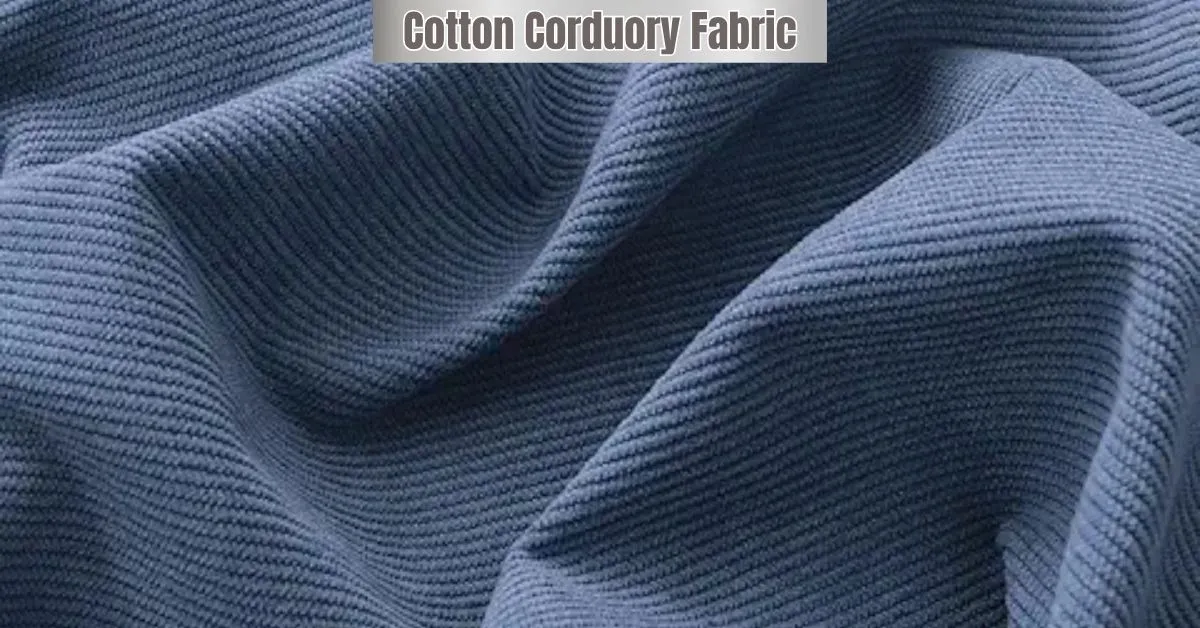

Cotton corduroy is a thick cotton pile fabric with a distinctive ribbed texture (raised “wales”). It’s woven with extra yarns that are cut to form soft vertical ribs. This construction makes corduroy durable and warm.
- Ribbed texture (wales): Corduroy’s trademark ridges are called wales.
- Cotton-based pile fabric: It’s usually 100% cotton or cotton-rich, giving a soft, velvety hand.
- Durable & warm: The thick cut-pile makes corduroy sturdy and insulating, ideal for cooler weather.
What Is Cotton Corduroy Fabric?
Cotton corduroy is a cut-pile textile made by weaving extra yarns into a base cloth and then slicing them to create velvet-like fibers. The result is a soft yet structured fabric. Its defining feature is the vertical wale – the raised cord (ridge) that runs down the length of the cloth. The term “wale” refers to the number of these ribs per inch, with a higher wale count meaning finer, narrower ribs. Because corduroy is usually 100% cotton (or predominantly cotton), it feels supple and breathable. At the same time, the dense pile and weight give it firmness. In practice, cotton corduroy feels smooth to the touch (thanks to the many small fibres) but holds its shape well in garments. This cut-and-brush technique makes corduroy unique: it feels velvety soft against the skin, yet the ribs provide reinforcement so the fabric is strong and long-lasting.
The history of corduroy goes back centuries; its name likely comes from “corde du roi” (cloth of the king), as it was once valued in France. Over time, pure cotton became the norm for corduroy, prized for its ease of care and softness.
Types of Corduroy Fabric
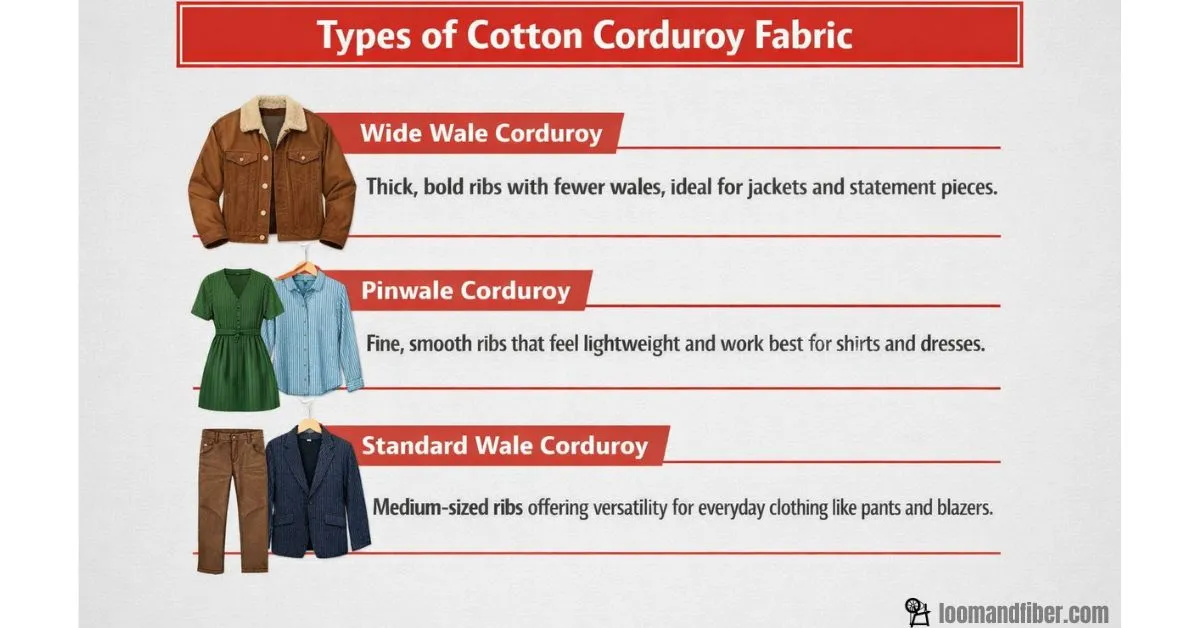
Corduroy comes in several wale sizes, each lending a different look and weight to the fabric. The size is defined by wales per inch: more wales means finer ribs, fewer wales means wider ribs.
Pinwale (Fine-Wale) Corduroy
Pinwale corduroy has very fine, closely spaced ribs – often 16 or more wales per inch. The surface is smooth and almost glossy, giving it an appearance similar to velvet. This makes pinwale corduroy very soft and lightweight. It’s commonly used for shirts, dresses, and children’s clothes because it drapes well and feels silky against the skin. Pinwale is delicate and elegant, so it suits finer garments and detailed designs.
Standard (Mid-Wale) Corduroy
Standard corduroy has medium-width ribs, typically around 8–14 wales per inch. It offers a balanced texture and weight – not too coarse, not too fine. This mid-wale corduroy is extremely versatile: it has enough pile for warmth but isn’t overly bulky. Designers use it for everyday pieces like pants, skirts, and casual jackets. Because of its moderate thickness, standard corduroy holds its shape well but remains soft enough for comfortable wear.
Wide (Elephant) Wale Corduroy
Wide-wale corduroy (also called elephant cord) has thick, boldly spaced ribs – as few as 1–6 wales per inch. The ribs are large and very pronounced, giving the fabric a dramatic, textured look. Because the pile is so heavy, wide-wale corduroy is extremely durable and warm. It’s usually found in heavy garments like coats, overalls, and workwear, and even in upholstery fabrics. The name “elephant cord” comes from its exaggerated size (the ridges remind some of an elephant’s skin folds). Use wide-wale corduroy when you want a chunky, rugged appearance – it’s perfect for statement pieces or sturdy home items.
Corduroy vs. Other Fabrics
Velvet vs Corduory
Corduroy and velvet are both pile fabrics, but they feel very different. Corduroy has obvious vertical cords (wales) that you can see and feel. In contrast, velvet’s cut pile is distributed evenly across the surface, so velvet looks smooth and has no visible ribs. Texture-wise, velvet is ultra-soft and plush, while corduroy feels a bit firmer and structured. Velvet tends to show a sheen and drape more fluidly, whereas corduroy has a matte finish with a cozy, sturdy hand.
Corduroy vs Denim
Both corduroy and denim are cotton fabrics, but they have different weaves. Denim is a twill weave – it has a diagonal pattern with no pile. Jeans fabric is a classic example. Corduroy, on the other hand, is woven with extra yarns that are cut to form parallel vertical ribs. Denim feels rugged and smooth, whereas corduroy feels soft and fuzzy. Because corduroy has the thick pile, it generally traps more warmth; denim is cooler and often stiffer. Visually, denim has a flat, bluish surface, while corduroy clearly shows raised stripes. In summary: denim = sturdy twill with a flat face; corduroy = soft cotton with cut-pile ribs.
Corduroy vs Cotton Twill
Cotton twill (like chinos or gabardine) and corduroy can look similar at first, but they differ in texture. Corduroy always has the tufted wales (vertical cords) tufts on its surface. Plain cotton twill has no pile – it’s simply a weave that shows diagonal lines (herringbone or plain diagonal). Twill fabrics tend to drape smoothly and can vary from lightweight to heavy depending on thread count. Corduroy, by contrast, is inherently fluffy and insulating due to its pile. As a result, corduroy is thicker and warmer, while a smooth twill is lighter and cooler. Twill is often used for shirts and chinos that suit many seasons, whereas corduroy is chosen for its unique ribbed look and cold-weather warmth.
Read More>> What is Cotton Gabardine Fabric?
Corduroy and Weather: Warmth & Seasonality
Cotton corduroy fabric is best suited to cool and cold weather. Its velvety pile traps air and heat, making it inherently insulating. In fall and winter, corduroy pants, jackets, and overalls keep you warm while adding texture to your outfit. Because of this, corduroy is often called quintessential cool-weather garb. On the flip side, corduroy is not ideal for hot, humid summer months. The thick ribs don’t breathe as freely as a plain cotton, so on a hot day a corduroy jacket or pants can feel stuffy. (Very lightweight pinwale corduroy might work in early fall or spring, but it’s generally too warm for full-summer.)
Common Uses of Corduroy Fabric
Corduroy’s blend of durability and warmth makes it popular in both clothing and home textiles. Common uses include:
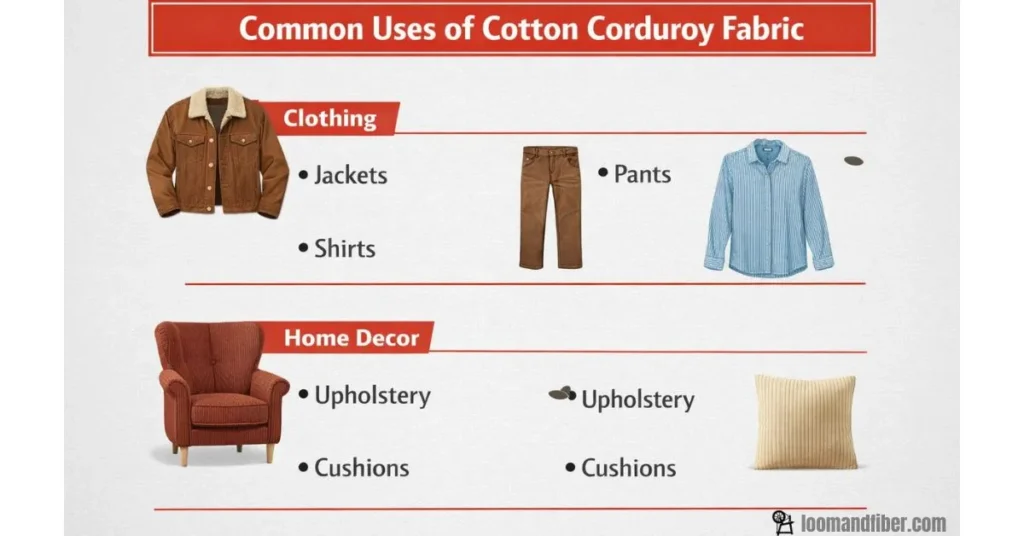
- Jackets: Corduroy jackets and blazers add texture and insulation. The pile helps block wind, so corduroy coats are cozy for fall. They often have a casual, vintage look. Corduroy outerwear can be 100% cotton or have a lining for extra comfort.
- Pants (Trousers): Corduroy trousers (corduroy pants) are classic. Standard-wale corduroy works well for trousers because it’s durable yet comfortable. These pants are sturdy enough for daily wear but feel softer than denim. They are favored in autumn fashions for their warm feel.
- Shirts: Pinwale and light corduroy make soft, casual shirts and overshirts. The narrow ribs allow the shirt to drape nicely. Corduroy shirts bring a retro touch to an outfit and are cozier than plain cotton button-ups.
- Upholstery: Heavy-duty wide-wale corduroy covers sofas, chairs, and other furniture. Designers use it for upholstery because the thick pile withstands wear. The ribbed texture adds a tactile interest to home decor. It also insulates upholstery fabric, so couches feel warmer in a room.
- Cushions and Pillows: Decorative cushions often use corduroy covers. Corduroy’s plush ribs give pillows a soft, inviting surface. Even small accents like throw pillows or seat pads use corduroy to add coziness and durability (the pile hides minor stains and dings).
Pros and Cons of Corduroy Fabric
Pros
- Durable: Corduroy is a sturdy, long-lasting cloth. Its woven base and dense pile resist wear and tear, so garments last years.
- Warm: The plush pile traps heat, so corduroy garments are excellent insulators. In cold weather, corduroy is cozy against the skin.
- Unique Texture: The vertical ribs give corduroy a distinctive look and feel. This adds visual interest to clothing and home items, making them stand out.
Cons
- Can Be Heavy: Thicker corduroys (especially wide-wale) feel bulky. This can be good for warmth, but it may weigh a garment down or restrict movement.
- Attracts Lint: The fuzzy ribs easily collect lint, dust, and pet hair. Keeping corduroy clean may require more lint-rolling or brushing than smooth fabrics.
- Not for Hot Climates: Corduroy’s warmth is a disadvantage in heat. In very warm or humid weather it can feel too insulating and uncomfortable.
By honestly considering these factors, you can decide if corduroy suits your needs. Its rugged durability and warmth are great for many uses, but the bulk and maintenance should be kept in mind.
How to Choose the Right Corduroy
When selecting cotton corduroy fabric or garments, consider these factors:
- Wale Size (Texture): Match the wale to the garment type. Fine pinwale (lots of narrow ribs) is best for lightweight shirts, dresses, or children’s wear because it’s smoother and drapey. Standard (mid-wale) corduroy suits everyday pants, jackets, and skirts – it strikes a balance of softness and structure. Wide-wale (elephant) corduroy is ideal for heavy coats, trousers, or upholstery. Getting the wale right ensures the item looks and feels appropriate.
- Season and Weight: Pick corduroy weight by season. For spring/fall, a medium-weight or fine-wale corduroy works well. For winter, heavier wide-wale corduroy will keep you warmer. Thicker corduroy (heavy cotton) means more insulation, so avoid it on mild days. Conversely, very fine corduroy may feel too flimsy in deep winter.
- Outfit Style: Think about formality and color. Narrow-wale corduroy (like pinwale) gives a sleeker, more refined appearance for blazers or slim-fit pants. If you want a casual or retro vibe, a brightly colored or wider-wale corduroy works. Also consider stretch or blends: some corduroy includes a bit of spandex for comfort. Choose a blend if you need flexibility (e.g. in skinny pants), or 100% cotton for maximum natural texture.
By considering wale count, fabric weight, and the intended garment style, you can pick the corduroy that fits your needs. These guidelines help turn corduroy shopping into a quasi buying-guide: the right corduroy will look intentional, not an afterthought.
Price & Quality Guide
Cotton corduroy fabric ranges widely in price. Several factors affect cost and quality:
- Fiber Quality: Premium corduroy uses long-staple cotton fibers. Long-staple yarns are smoother and stronger, resulting in a softer pile that pills less. Cheaper corduroy may use short or mixed fibers, which can feel rougher and wear out faster.
- Weave Density: The thread count of the base cloth matters. High-quality corduroy often has a very tight weave (e.g. over 150 threads per inch). This dense foundation supports the pile better and resists abrasion. Budget corduroy might have looser weaves (80–100 threads per inch), making it lighter but less durable.
- Pile Density and Evenness: Good corduroy has a uniformly thick pile across the fabric. Premium corduroy features dense, even ribs with no bald spots. Inferior corduroy can have sparse pile that shows the base fabric between ribs, which feels thin and less luxurious.
- Weight (GSM): Corduroy is sold in weights (GSM or oz/yd). Heavy corduroy (10–14 oz/yd²) costs more due to more yarn usage, and it’s used for outerwear and upholstery. Light corduroy (4–6 oz) is cheaper and used for shirts or dresses. Weight often correlates with warmth and thickness.
- Finishes and Treatments: Higher-priced corduroy may have extra processing. For example, sanforization (preshrinking) is often done on quality corduroy so it won’t shrink much after purchase. Budget corduroy may skip this, leading to shrinkage in your wash. Water-repellent or stain-resistant finishes (common on outdoor corduroy) add cost. Garment-dyed or pigment-dyed corduroy (for vintage look) is also pricier.
- Source and Branding: Luxury designers or sustainable brands charge more even for similar fabric. Organic cotton or artisanal mills add premium. Off-the-shelf mass-market corduroy tends to be the cheapest, while mill-end or fashion-grade corduroy costs more.
Care & Maintenance
Proper care keeps corduroy looking its best and preserves the pile. Follow these tips:
- Washing: Turn corduroy garments inside out before washing. Use cold or lukewarm water on a gentle cycle. Wash corduroy separately from lint-shedding items (avoid towels, fleece, etc.), because corduroy nap easily grabs lint. A mild detergent is best; avoid bleach.
- Drying: Tumble-dry on low heat or air-dry. High heat can shrink cotton corduroy. Remove the garment while still slightly damp to reduce wrinkles. Overdrying can set wrinkles and crush the pile. For shirts or light pants, line-drying flat can help maintain shape.
- Ironing: If ironing is needed, flip the fabric inside out or use a pressing cloth on top of the wales. Apply a medium heat setting. Direct heat on the pile (face side) will flatten the ribs and ruin the texture. Steaming is often safer – simply hang the corduroy in a steamy bathroom or use a garment steamer to relax wrinkles without pressing the pile.
- Lint and Dust: After wear, gently brush corduroy with a clothes brush or lint roller to remove dust and lint. This is best done before washing. Shake out cushions or clothing outside to dislodge debris from between the ribs.
- Preventing Shrinkage: Choose sanforized (pre-shrunk) corduroy when possible. If not, always wash in cool water. Air-drying or tumble-drying on low will minimize further shrinkage. If a corduroy item is uncomfortably tight after one wash, it likely was not pre-shrunk.
- Storage: Store corduroy garments by hanging or folding loosely. Avoid heavy clipping on hangers that can mark the pile. For upholstery or cushions, regular vacuuming prevents dust build-up.
Common Mistakes with Corduroy
- Choosing the Wrong Wale: A frequent error is picking an inappropriate wale size. For example, using wide-wale corduroy for a fitted shirt can make it look bulky, whereas pinwale corduroy on a heavy coat may wear out quickly. Always match the wale count to the garment purpose.
- Season Mismatch: Some buy corduroy for summer without realizing how warm it is. Wearing thick elephant-wale corduroy in hot weather leads to overheating. Conversely, using very fine corduroy in freezing winter may leave you underdressed. Remember corduroy’s warmth and plan by season.
- Overwashing: People sometimes wash corduroy too often or in hot water, thinking it’s sturdy. In reality, excessive washing can fade the color, shrink the fabric, and crush the pile. Corduroy often doesn’t need frequent cleaning; spot-washing and airing out can help. When you do launder, be gentle.
- Ironing the Wrong Side: Ironing directly on the ribs is a common mistake. High heat flattens the pile permanently. Always iron on reverse or use a cloth between the iron and fabric. Never press the nap side.
- Ignoring Shrinkage: Some buyers skip checking care labels. If you assume all corduroy is pre-shrunk, you might find a new garment has shrunk after the first wash. Always check if it’s sanforized; if not, wash with caution.
Avoiding these pitfalls ensures your corduroy looks great. In short: pick the right fabric weight, handle it gently in care, and use it seasonally, and you’ll sidestep most problems.
Conclusion
Cotton corduroy fabric stands out as a versatile, cozy material. Its raised ribs (wales) give it a unique look and feel that combine softness with strength. By understanding the differences in wale size, and knowing how to care for it, you can confidently use corduroy in your wardrobe or home. Whether you choose pinwale for a soft shirt or elephant corduroy for a statement coat, its durability and warmth will serve you well. So, is it time to add corduroy to your fall and winter collection and experience its comfort for yourself?
Read More>> Types of Lightweight Cotton Fabric.
FAQs
Often it is, but not always. Many corduroy fabrics are made entirely of cotton (which offers breathability and softness). However, blends with polyester or elastane are also common to add stretch or reduce cost. Always check the label: “cotton corduroy” usually means mostly cotton.
Corduroy (especially 100% cotton) has natural breathability. It absorbs moisture like regular cotton. However, because it is densely woven with thick fibers, it feels warmer and less airy than a plain cotton fabric. In cooler weather it breathes adequately, but in heat the thick nap holds in heat.
Yes. Pure cotton corduroy will shrink if washed or dried in high heat. Quality corduroy is often sanforized (pre-shrunk) to prevent shrinkage, but cheaper corduroy may shrink a lot on the first wash. To avoid surprises, wash in cold water and low heat or hang to dry.
Absolutely. Corduroy is ideal for cold seasons. Its plush pile traps warmth and keeps the body insulated. This makes it great for winter pants, jackets, and even heavy skirts or overalls. Many people turn to corduroy each winter for its cozy, substantial feel.