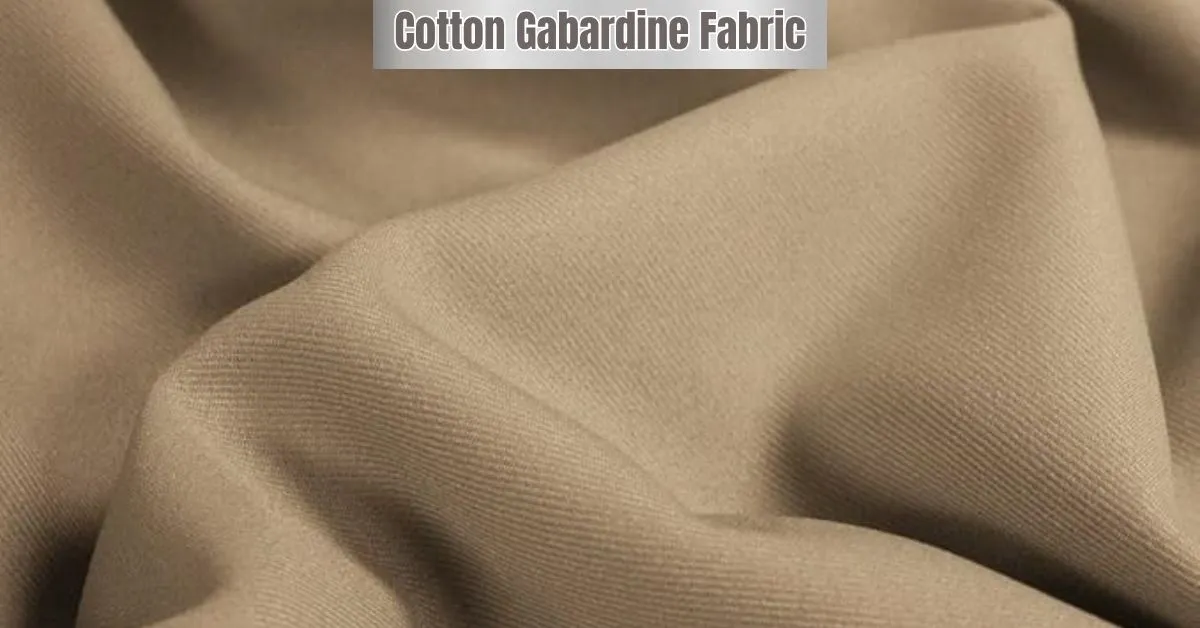

Cotton gabardine fabric is a tightly woven cotton twill known for its fine diagonal ribs. It has a smooth, slightly textured surface and offers exceptional durability and light water resistance. This combination of strength, structure and breathability makes it ideal for tailored garments like trousers, jackets and uniforms.
What Is Cotton Gabardine Fabric?
Cotton gabardine evolved from the original gabardine developed by Thomas Burberry in 1879. Unlike regular cotton, cotton gabardine is defined by its steep twill weave, not just its material. In a gabardine weave, most threads run lengthwise (warp), creating a very tight diagonal rib. This dense construction sets it apart from plain cotton: gabardine feels smoother and is much harder wearing. Its tight weave makes it stronger and gives it a faint water-shedding quality. As a result, brands favor cotton gabardine for anything needing a polished look and durability: think crisp trousers, sleek jackets, and reliable uniforms.
Key Characteristics of Cotton Gabardine
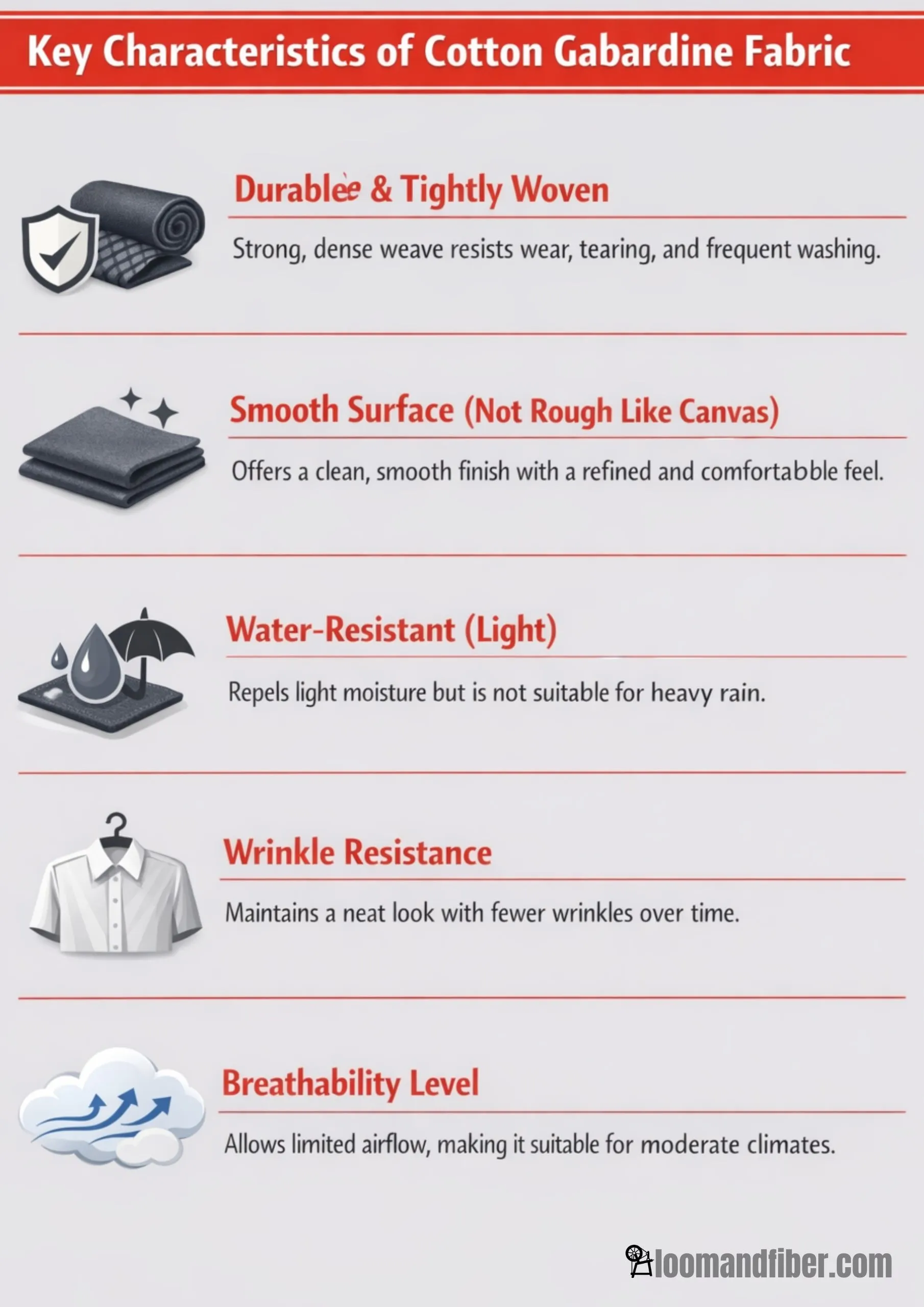
Durable & Tightly Woven:
Cotton gabardine’s warp-faced twill structure packs the yarns closely, making it very strong. It resists wear and tearing much better than a looser cotton weave.
Smooth Surface
The diagonal weave creates a sleek front. Unlike coarse canvas or denim, gabardine feels smooth and polished on the outside. Its firm weave also helps it keep a crisp, structured appearance (great for tailored garments).
Light Water Resistance
While not fully waterproof, gabardine’s dense twill repels light moisture. A tight weave means water beads up longer on the fabric. This makes gabardine garments handy in drizzle.
Wrinkle Resistance
Thanks to its sturdy weave, gabardine holds its shape and resists creasing. Clothes stay neat longer without constant ironing.
Breathability
Surprisingly, gabardine remains fairly breathable for its density. Cotton gabardine especially lets some air flow through, so it is more comfortable than heavy waterproof fabrics.
Gabardine Weave Explained
Steep Warp-Faced Twill
Gabardine uses a specific twill weave where many more threads run lengthwise (warp) than crosswise (weft). This creates a steep diagonal pattern on the fabric face, unlike regular twill or herringbone weaves. The tight twill angle makes the fabric exceptionally dense.
Why It’s Stronger
The extra warp yarns and tight angle lock the threads firmly in place. This high thread density means gabardine tears and snags far less than a looser weave. It also naturally breaks the wind and sheds water. In short, the weave itself lends gabardine most of its strength and weather resistance.
Visual Texture
On the right, observe the fine diagonal ribs characteristic of gabardine. The ribs are very close together, so the surface looks almost smooth. This subtle pattern is visible when you look closely but gives gabardine its clean, uniform appearance.
Cotton Gabardine vs. Other Fabrics
| Comparison | Key Difference |
|---|---|
| Cotton Gabardine vs. Cotton Twill | Gabardine is a specific type of twill with a tighter, warp-faced weave. This makes cotton gabardine more durable and water-resistant than standard cotton twill (like dress chinos). Regular cotton twill has a looser weave that wrinkles more easily and is less dense. |
| Cotton Gabardine vs. Denim | Both are cotton twills, but denim is heavier and rougher. Denim’s classic blue warp/white weft gives a textured, lived-in feel, while gabardine is finer and smoother. Denim stiffens and fades over time; gabardine stays crisp, retains color, and drapes more softly. |
| Cotton Gabardine vs. Canvas | Canvas is a plain-weave cotton fabric that is much thicker and stiffer. Canvas feels heavy and coarse, whereas cotton gabardine is lighter and has more drape thanks to its twill weave. In short, gabardine looks dressier and moves more fluidly, while canvas is more rigid and typically used for bags or rugged outerwear. |
| Cotton Gabardine vs. Polyester Gabardine | Both share the gabardine weave, but cotton vs. polyester fibers give different results. Cotton gabardine is more breathable and feels natural. Polyester gabardine, by contrast, is very wrinkle- and shrink-resistant and often cheaper. Polyester gabardine holds bright colors well and is easy-care, but it won’t breathe or feel as soft as pure cotton. |
Is Cotton Gabardine Good for Summer or Winter?
Cotton gabardine balances breathability and thickness. The cotton fiber and micro-porous weave allow airflow, making it cooler than heavy wool gabardine. In fact, experts note that cotton gabardine is preferable for summer, while wool gabardine suits winter. In warm months, a lightweight cotton gabardine garment (like a summer suit or unlined jacket) can be comfortable, especially in spring/fall climates. However, gabardine is still heavier than linen or seersucker, so it may feel too warm in very hot, humid weather. In cold weather, cotton gabardine alone isn’t very insulating; you’d usually switch to wool gabardine or layer cotton gabardine pieces. Overall, cotton gabardine works best in moderate to slightly cool climates – it breathes well enough for milder summer days, and if layered, it provides structure through chillier seasons.
Common Uses of Cotton Gabardine
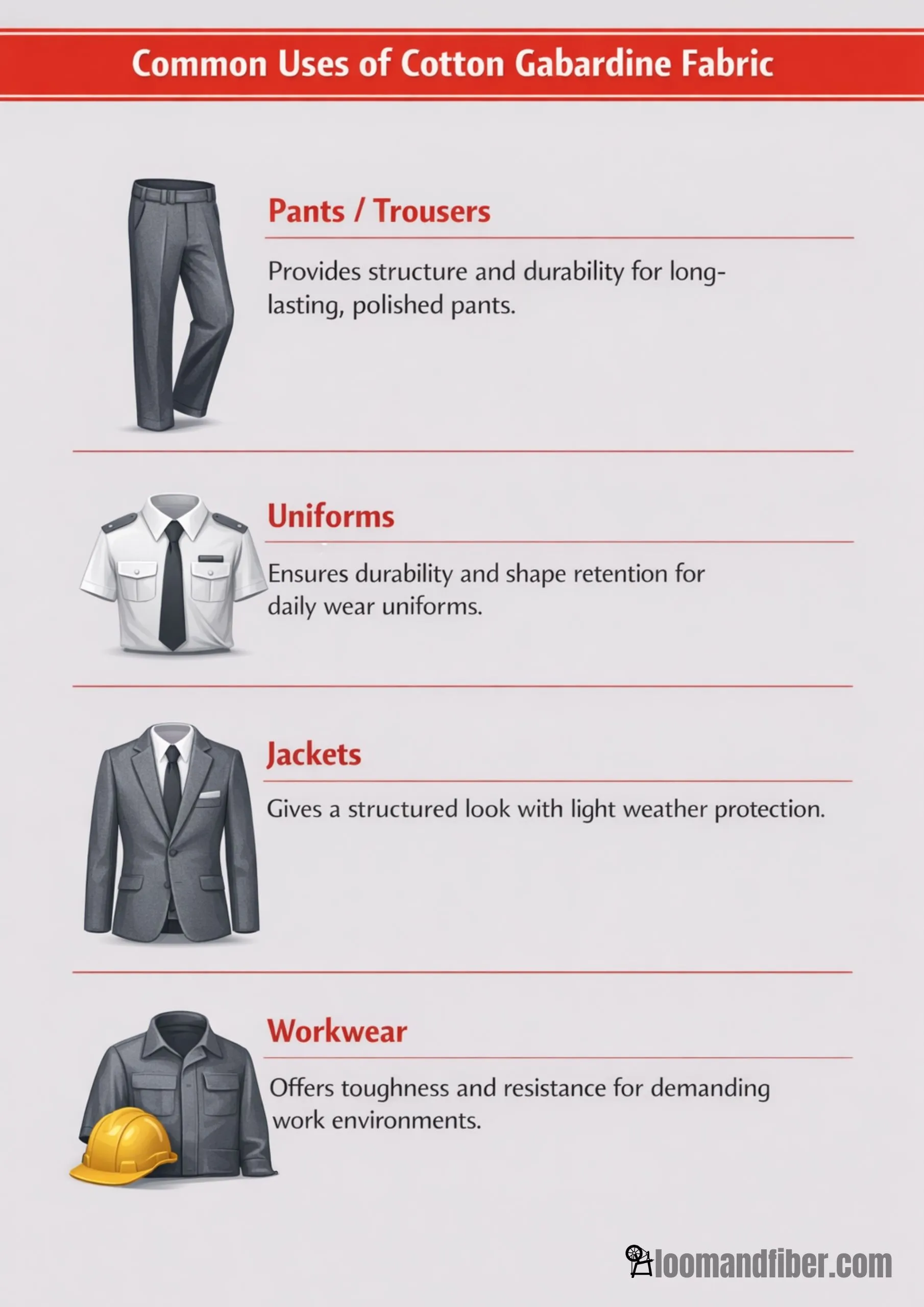
- Pants / Trousers: Cotton gabardine is a top choice for quality trousers. Its firm weave keeps pants looking sharp and resists wear. Tailored slacks, chinos, and high-end casual pants often use cotton gabardine for its smooth finish and shape retention.
- Uniforms: Many school, military and workplace uniforms use gabardine. The fabric’s polished appearance and durability help uniforms stay crisp through long days of use. For example, officers’ trench coats and classic dress uniforms have long been made in cotton gabardine for precisely this reason.
- Jackets / Trench Coats: Cotton gabardine’s light water resistance and structure make it ideal for jackets. The classic trench coat was originally gabardine because it stays sleek yet repels drizzle. You’ll also see gabardine in blazers and lightweight coats where a smooth drape is desired.
- Workwear: Gabardine’s toughness means it’s often used for durable work garments. For instance, many lab coats, coveralls, or medical uniforms are made of cotton gabardine because they stand up to heavy laundering and keep a professional look under tough conditions.
Each use takes advantage of gabardine’s “why”: its strength, clean look, and ease of care.
Pros and Cons of Cotton Gabardine
Pros
- Durable & Long-Lasting: Cotton gabardine is very hard-wearing. Its dense weave resists tearing and abrasion, so garments can last for years.
- Structured, Polished Look: The fabric stays crisp and retains its shape. It provides a smooth, tailored finish that looks sharp in suits and coats.
- Wrinkle-Resistant: Gabardine doesn’t wrinkle easily, which means fewer wrinkles and less ironing for everyday wear.
Cons
- Midweight (Not Ultra-Light): While lighter than wool gabardine, cotton gabardine is still thicker than summer fabrics. It won’t billow or feel as breezy as linen or thin cotton.
- Can Be Stiff Initially: New gabardine can feel a bit rigid, particularly in the shoulders or high-bias areas. It breaks in with wear, but initially it’s crisper than soft knits.
- Less Breathable in Heat: In very hot weather, even cotton gabardine can feel warm due to its density. It’s not ideal for temperatures well above comfort range.
By weighing these pros and cons honestly, you can decide if the structured style and durability are worth the trade-off of extra weight.
How to Care for Cotton Gabardine
- Washing Tips: Always check the garment’s care label first. In general, wash cotton gabardine gently in cool or lukewarm water with a mild detergent. Use a delicate cycle or hand-wash if possible, and never use bleach or harsh chemicals.
- Shrinkage Risk: To avoid shrinkage, it’s safest to air-dry gabardine. If using a dryer, tumble on a low-heat setting and remove garments immediately while still slightly damp. Smooth the fabric into shape before hanging. Rapid heat drying can shrink and damage the tight weave, so low temperature is key.
- Ironing: Iron cotton gabardine on low to medium heat. It helps to iron while the fabric is a bit damp. Always use a pressing cloth between the iron and the fabric to protect the surface. This will help maintain the fabric’s sheen and avoid leaving shiny marks.
With proper care—gentle wash, careful drying, and cautious ironing—cotton gabardine clothing will retain its strength, color, and crisp appearance for years.
Is Cotton Gabardine Worth It?
- Who should buy it: If you need a fabric that lasts and looks refined, cotton gabardine is worth considering. It’s excellent for making tailored pants, work uniforms, and stylish outerwear that see heavy use. Designers and professionals love it for pieces that must remain neat all day.
- Who should avoid it: If you want super lightweight, ultra-breathable summer clothes (like beachwear or active athletic wear), gabardine may be too heavy or formal. Also, budget shoppers might prefer cheaper cotton blends over high-quality gabardine, since gabardine can be pricier. Those who dislike any stiffness may find it a bit rigid at first.
- Alternatives: For everyday casual wear, consider cotton twill or canvas – they cost less and are softer, though less crisp. Linen or chambray are good hot-weather alternatives. If you need similar durability but lighter weight, a cotton-polyester blend might balance breathability and strength. For a wintry version, wool gabardine gives the classic gabardine look with added warmth.
Conclusion
In summary, cotton gabardine fabric offers a unique blend of toughness and refinement. Its tight twill weave delivers durability, water-shedding ability, and a smooth finish that keep clothes looking neat. At the same time, cotton fibers lend it comfort and breathability that many heavy fabrics lack. For anyone seeking long-lasting, structured garments—like sharp trousers, coats or uniforms—cotton gabardine is often worth the investment.
Whether you’re considering a gabardine trench coat or a pair of gabardine chinos, think about what matters most: durability and shape, or airy lightness. Cotton gabardine stands out for strength and poise. So, given these qualities, is cotton gabardine the right fabric for your next piece? Consider its benefits and decide if its blend of sturdiness and style fits your wardrobe needs.
Read More>> What is Cotton Corduory Fabric?
FAQs
Not necessarily. “Gabardine” refers to the weave, not the fiber. It can be made of wool, polyester or other fibers. If labeled “cotton gabardine,” then yes it’s 100% cotton. But gabardine fabrics often use wool or synthetic blends today.
Yes, especially cotton gabardine. Its tight weave might sound like it would trap heat, but cotton fibers and small air gaps make it reasonably breathable. It’s more comfortable in warm weather than, say, a rubber-coated raincoat. However, heavier gabardine (especially wool or polyester) is less airy.
No. Gabardine resists wrinkles much more than plain cottons. Garments stay smooth through sitting and moving, which is why gabardine is popular for suits and uniforms.
Gabardine is water-resistant, not fully waterproof. The weave naturally sheds light rain thanks to its density. Traditional gabardine was even pre-treated with lanolin for extra repellency. Still, heavy downpours will eventually soak through if not coated. Think of gabardine as a shelter in drizzle, not a substitute for rubber rainwear.
Absolutely. Gabardine is famous for pants. Its durability and crisp drape make it ideal for trousers. From slacks to chinos, cotton gabardine pants hold their crease and last much longer than softer cotton or linen pants. Many classic suits and military uniforms feature gabardine trousers for this reason.