
Introduction–
Velvet fabric has reappeared with a lot of boldness and modernity. This fabric is being displayed by fashion designers, interior decorators and content creators in social media. Nevertheless, a large number of customers always wonder, what is crushed velvet textile? This guide provides the answer to this question in a straightforward manner with a pragmatic insight. Besides, it describes the reasons why this textured velvet remains appealing to both high-end and low-end markets. Crushed velvet is a trendy fabric in terms of its shine, depth, and dramatic sense, as the trends shift towards expressive fabrics. Hence the knowledge of its origins, structure and care would enable the buyers to make assured choices.
What Is Crushed Velvet Fabric?
Crushed Velvet: As Simple As That.
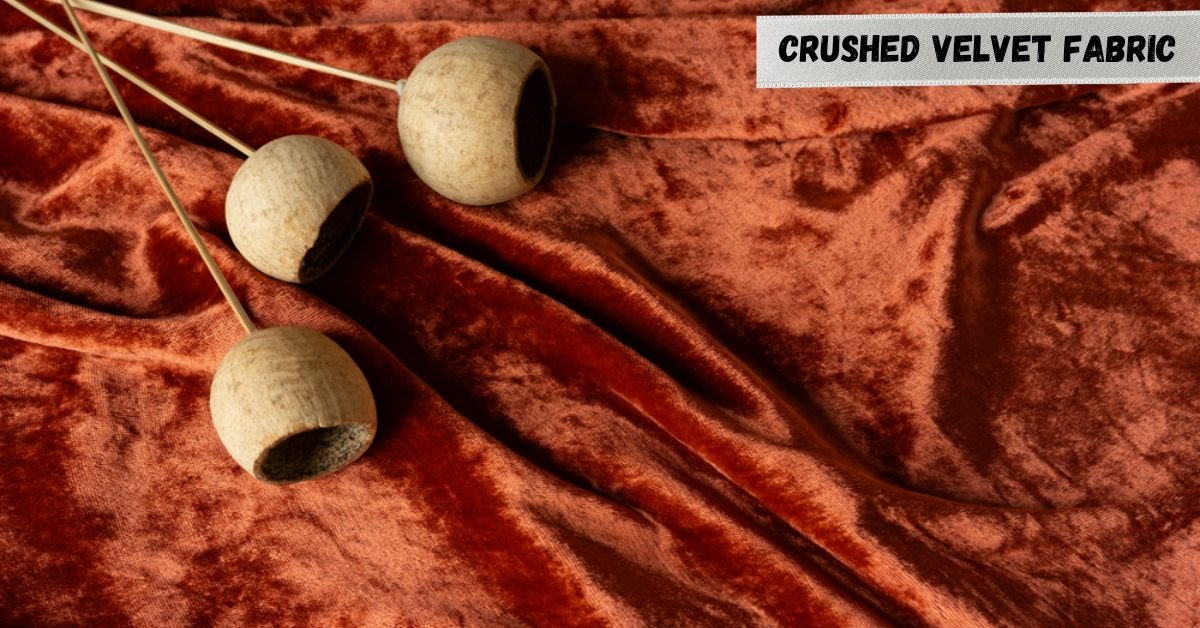
The crushed velvet fabric is a form of velvet that has a purposely wrinkled surface. During the setting, manufacturers twist or press the pile. Consequently, the fibers give back light in various directions. This procedure gives it a glossy and smooth appearance. It is said to be soft, shiny and visually dramatic by many. Hence, it can be seen in statement fashion and loud domestic decor.
The difference between crushed velvet and regular velvet
Velvet and regular velvet have a smooth and even pile on its surface. Crushed velvet, on the contrary, presents uneven shapes and a change of light. Due to this reason, crushed velvet appears to be more animated and informal. In addition, it conceals tiny spots compared to conventional velvet. This is why designers prefer crushed velvet on the modern interiors and trend-based clothes.
The History of the Crushed Velvet Fabric.
Velvet roots in Old civilization
Velvet was originally used in ancient Asia, particularly in China and the Middle East. Silk fibers were weaved into pill fabrics by artisans to the royalties. With the growth of trade, the Silk Road brought velvet to Europe. Later on, several Italian weavers perfected the art of making velvet in the Renaissance. Consequently, velvet was an indication of wealth and authority.
When Crushed Velvet Became Popular
The popularity of crushed velvet started at the end of the twentieth century. It acquired a dramatical appearance in fashion brands in the 1970s and 1990s. Crushed velvet was used by musicians and performers when present on stage. Due to this exposure, the cloth became culturally known. With time, it was linked to high-risk and lively style.
Fashion, Decor, Pop Culture
Velvet was used in jackets, dresses and accessories in crushed form. It was applied by the interior designers on sofas, cushions, and curtains. It was also aided by the pop culture in the form of movies and music videos. The trend intensified as the celebrities put on crushed velvet costumes. Thus, it turned into a sign of creativity and originality.
The Process of making Crushed Velvet Fabric

Traditional Crushing Methods
Historically, plain velvet can be crushed by hand to create crushed velvet. When the velvet has been woven, it is twisted, folded or pressed when the fibers are still wet. Artisans could also knot and roll lengths of velvet to arrange the pile in various directions. When the cloth is dry, the wrinkles in the pile are permanent as the twists and pleats. This is the classical look of crushing produced by this mechanical procedure. As an example, velvet ribbon was traditionally twisted when wet so as to give it a marbled appearance. The designs created by these manual processes are a distinct design on each piece of cloth.
Heat, Pressure and twisting process
In the modern production, machines are frequently employed to make the process go faster. The velvet is heated and pressed under pressure by special rollers or heated drums. Other factories run velvet over a calendar (a series of heavy rollers) or press the velvet to toil the wrinkles. Some of them will submerge the cloth in water and then pass through twisting machines or embossing rollers. The heat, moisture and pressure combination fixes the irregularities in the piles fast. An example is that a heat roller can impose a controlled crush to the fabric. By whatever means, the aim is to mess up the velvet pile in a way that it will dry or heat in a way that leaves the fibers in an angled form. The pattern is crushed under high heat and pressure to make it long lasting.
Mechanical vs. Chemical Crushing
The majority of crushed velvet is done mechanically, although there are also other methods of keeping the effect by chemical treatment. One of the problems associated with it is that crushed velvet may lose its texture when it is wet or stretched. In order to fight this, chemical finishes have been patented by inventors. As an illustration, once the pile has been crushed, the resin or heat-setting solution can be applied in such a way that the fibers will recall their new position. Crushed velvet can even have its wrinkles when it is washed because it is patented. In conclusion, the texture is produced through mechanical crushing (twisting, pressing) and the mechanical finishes are assisted by chemical finishes (resins or adhesives) in securing the crushed appearance as long as possible.
Read More>>What is velvet fabric made of?
What Is Crushed Velvet Fabric Composed of?
Many types of fibers can be used to make crushed velvet. Every fiber option has an impact on the hand, shine, and price of the fabric.
Polyester Crushed Velvet
This is a synthetic velvet which is highly prevalent. It is durable and cheap made out of polyester yarns. Polyester crushed velvet does not wrinkle or fade, and can be made machine-washable. It is likely to be shiny and durable to use in furniture or daily fabrics. The multitude of mass-marketed crushed velvets are polyester or polyester blends since they maintain their shape and are simple to maintain.
Rayon (Viscose) Crushed Velvet
Viscose (a form of rayon) is a semi synthetic fiber which resembles and feels like silk. Rayon velvet is a soft and highly lustrous drape that is very similar to silk but is at a cheaper price. Rayon crushed velvet is very plush and flows very well and is popular in dresses, blouses and also as lining. Nonetheless, rayon fibers may become wrinkled and are not as sturdy, and, therefore, these velvets can, in most cases, be cleaned only with easy handling (often dry-cleaning) to preserve their look.
Silk Crushed Velvet
The final extravagant one is made of silk velvet. Pure silk crushed velvet involves thread pile using silk. It is so soft and it has a rich and glowing sheen. Silk is costly and weak and therefore, crushed silk velvet is a luxury material. It is a beautiful-looking and nice icy cloth. Nevertheless, silk crushed velvet is delicate (it is usually dry-cleaned) and expensive. Indicatively, one of the sources mentions that silk velvet is the highest luxury and this shows how royal this material is.
Velvet Blends
Crushed velvet is frequently produced using blended fibers to balance cost and performance. The most used combination is a blend of cotton or rayon and polyester or spandex. As an example, cotton-rayon crushed velvet could be used, mixing the softness of natural fiber with the power and flexibility of synthetic ones. Such blends are cheaper than pure silk and softer or more draper than pure polyester. Fabric mills also provide stretch velvet, where a small percentage of spandex is added which provides some stretch to the crushed velvet to be used in clothing. Blends are quite popular due to the fact that blends enable crushed velvet to possess soft hand and bright color and still be durable and easier to use.
Key Characteristics of Crushed Velvet
Shiny, Textured Appearance
The crushed velvet has several directions of light reflections. This aspect is a glossy and dramatic look. Thus, the fabric appears different in all angles. This attribute suits it best in statement designs.
Softness and Drape
The surface of the piles is soft and smooth. The garment also drapes itself about contours. Consequently, clothes look shapeless and flowing. It is commonly used in dresses and tops designed by designers.
Reflection of Light and Color depth
The surface is crushed giving it better color. Dark colors appear darker and brighter. Light tones look bright and tender. Thus, crushed velvet can be used in bright and neutral colors.
Wrinkle Resistance
The rough surface conceals wrinkles quite well. Small lines merge with the pattern. Consequently, crushed velvet has a well-crafted look. This advantage assists in travelling and in everyday life.
Crushed Velvet vs Regular Velvet
Both the crushed and standard velvet are soft fabric which is luxurious but they are used in different aesthetics. The major differences are marked in the table below:
| Property | Regular Velvet | Crushed Velvet |
|---|---|---|
| Texture & Appearance | Smooth, even pile; uniform sheen | Wrinkled, uneven pile; variegated shimmer |
| Luster | Consistent, classic sheen | Multi-directional shine and shadow |
| Drape | Soft and fluid | Slightly fuller body and more textured drape |
| Typical Uses | Formalwear, evening gowns, high-end décor | Trendy outfits, bold décor accents |
| Care | Needs careful cleaning (usually dry clean) | Similar care; handle gently to preserve texture |
Crushed velvet is a more active visual effect as compared to that of normal velvet. Classic velvet is ideal when one wants to have long-standing elegance (reminds me of opera cloaks or wingback chairs) unlike crushed velvet, which is rather modern and playful. The broken texture provides volume and colors are vivid.
They are equal in durability in case they are manufactured with the same fibers. Nevertheless, folds are already present on the surface of crushed velvet, and it covers the traces of wear more easily (scuffs and small dots are mixed). Both types tend to need mild treatment as far as maintenance is concerned. Velvet is also infamously difficult to clean because of the pile and crushed velvet should be treated with the same care – any washing or heavy ironing will destroy the pattern. Simply put, regular velvet will be more traditional luxury and crushed velvet will be more purposeful, textural.
Crushed Velvet vs Other Fabrics
Velour
Velour is a knit fabric that comes in the form of velvet. It is quite loose and elastic (usually knit out of cotton or polyester). Velour is plush pile with less sheen and it is generally cheaper than velvet. Crushed velvet on the other hand is of woven fabric and is not often stretchy except when it has spandex. Both are soft, though some casual garments are made of velour (think tracksuits), whereas business-like or decorative garments are made of crushed velvet.
Velveteen
Velveteen is sometimes known as cotton velvet and has a less long, denser pile and is usually all-cotton. It does not have the appearance of velvet, it is more matte and rigid. Crushed velvet is softer and shinier as compared to velveteen. Moreover, as the pile of velveteen is quite low, flattening it would not do much. Practically, velveteen comes into use in heavy clothes and for furniture, where simple stability is required, and crushed velvet is selected, which is a more dramatic look.
Satin
Satin is a non-piled woven smooth fabric normally known to have a glossy finish on one side. It is smooth and also slippery. Crushed velvet is nearly the reverse: it is fuzzy and light absorbing in a different way. Satin is an extremely shiny material that is flat, crushed velvet on the other hand is interrupted with texture. Satin fabrics are cool and flowy and crushed velvet is sterner and warmer.
Suede (Faux or Real)
Suede (or microfiber suede) is a matte-napped brushed leather-like fabric. It is durable and cozy and not extremely glossy. Suede is far less lustrous than crushed velvet, and with a dry velvety feel. Jackets and shoes are made with suede, and crushed velvet is preferred because of its color-depth and softness.
Chenille
Chenille is a dense, fluffy, yarn cloth, which is very soft in nature. It is also likened to velvet, although it is more slubby and rope like. It is observed, velvet tends to be very denser and smooth compared to chenille which may have a rope like look. Chenille fabrics or upholstery is a warm appearance, and is missing the crisp feel of velvet. Crushed velvet is shinier and more exquisite whereas chenille is fluffier and warmer. They are both applied in home fabrics, but are evidently different fabrics.
Is Crushed Velvet Stretchy?
It depends on how it’s made. Most upholstery velvet, woven crushed (as opposed to woven stretch) typically has very little stretch. There is a small amount of crushed velvet, however, that are knitted (velour) or spandex/lycra. Elastane is added to crushed velvet and it is going to stretch 10-20 percent or above. Actually, most stretch velvet garments in the market have 5-10 percent spandex to provide give in garments. Knit velour is also elastic in nature. On the contrary, a pure polyester or rayon velvet devoid of elasticity will be stiff. Therefore: knit/spandex crushed velvets will stretch, woven ones generally will not.
Is Crushed Velvet Warm or Breathable?
Crushed velvet is also normally warm and insulating, and not breathable. The reason why the velvet pile traps air and renders thickness is because this fabric offers weight. The warmness of the fabric depends on the fiber: cotton or wool versions (or cotton blends) have more airflow, and silk or polyester crushed velvet is like a blanket. Overall, the crushed velvet would be appropriate in the cooler months or indoors. It is no feathery or light summer cloth, consider winter dresses, vacation clothes, or snug curtains. The plush pile has made it comfortable during cold weather but it can be hot when worn during a warm climate over a long period.
Common Uses of Crushed Velvet Fabric

Fashion clothing:
Crushed velvet is being used in dresses, tops, and suits. It is frequently employed in evening dresses and party clothes due to its dramatic shine. Designers create blazers, skirts and jumpsuits made of crushed-velvet and wear in a very elegant manner. It is also worn in costumes, dance costumes and formal ethnic costumes.
Upholstery and Furniture:
Such materials as sofas, armchairs, headboards, and bedding are made out of heavy crushed velvet. It is luxurious to a room due to its rich texture. Upholsterers prefer crushed velvet on dining seats or accent benches to make them look vintage glam. Its pile makes it look deeper and warmer when sitting on any piece of furniture due to its pile.
Curtains and Decor:
Crushed velvet would be good in curtains, window drapes and wall hangings. It has the capacity of making plain hangings posh to the extent of blackouts. Accents such as pillows, cushion covers, and bedspreads are used in homes as decorations in crushed velvet, which makes them look and feel warm and rich. Table runners and lampshades are also decorated with the use of crushed velvet to add some elegance.
Accessories:
Crushed velvet is also useful in smaller objects. Accessories such as bags, hats, shoes, scarves, headbands, etc. are frequently adorned with crushed velvet in order to give them a texture. Gift wrapping and crafts are done with velvet ribbons and trims. Where the use of crush velvet trim on pillows or curtains may upgrade the design in home accessories. The touch of it makes any item appear more expensive.
Is Crushed Velvet Durable?
The type of fiber and weave determine durability. Polyester crushed velvet is not susceptible to wear and fading. Silk ones are tender and they should be handled carefully. Crushed velvet used in upholstry has good recovery of the pile. There are clothing-grade types that are more oriented towards comfort. Hence, the buyer must align durability with the purpose of use.
Pros and Cons of Crushed Velvet Fabric
Advantages
- Elegant and glamorous looks.
- Soft and comfortable feel
- Hides wrinkles and marks
- Large variety of colors and prices.
Disadvantages
- Can attract dust and lint
- There are those variations that are not breathable.
- Special attention is needed to the types of silk.
- Not ideal for hot climates
How to Care for Crushed Velvet Fabric
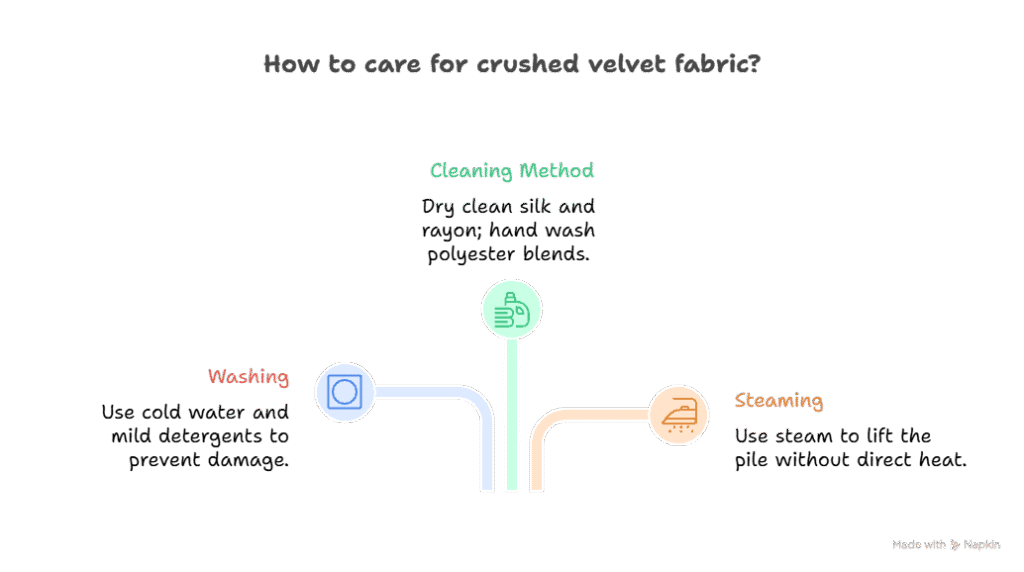
- Washing Instructions: Check the label and the content of the fabric at all times. A majority of crushed velvets can only be dry cleaned particularly silks and fine blends. Polyester crushed velvet could be subjected to hand-washing in cold water with mild detergent. Wash in a light hand-wash MP (no wringing) and run under water. Wash clothes and dry them out. Wash by hand or use the dry clean only when it is indicated on the label.
- Dry Cleaning vs. Hand Washing: Professional dry cleaner is typically advised when the crushed velvet (silk, wool) is high-end and it is necessary to avoid water spots or damage. Poly-cotton types are cheaper, and can be washed by hand. In case of hand wash please do it very carefully and do not shake a lot. The texture will be maintained the best by dry cleaning.
- Steaming vs. Ironing: Steam to get rid of wrinkles or fix the pile. Have a clothing steamer a few inches off and allow the steam to permeate; raise or fluff the garment. Do not iron the pile directly, it will flatten the pattern being crushed and make marks. Should ironing be necessary at all (on a cotton-back or lining) do as little of it as possible: iron on the opposite side, using a cloth barrier, but only on a very low heat, and at once, follow up with steaming. It is the safest to allow the cloth to fall and steam in the majority of cases.
Does Crushed Velvet Wrinkle or Crush Further?
The crushed velvet seldom displays the conventional wrinkles. The creases are obscured by the textured pile. Nevertheless, extreme pressure may cause flattening of fibers. Thus, appearance is preserved through proper storage. Deep folds are prevented by hanging garments. Some light steaming regenerates pile direction.
Conclusion-
Velvet fabric has remained trendy due to its combination of luxury and modernity. It is shinny, soft and flexible. With bold textures adopted in fashion and decor, this cloth would be preferred. You now understand what is crushed velvet fabric and how it is differentiated to the normal velvet. You know its history, production and care as well. Thus, you will have a choice of the appropriate type. Crushed velvet makes things richer and more personality-filled, be it clothes or home furnishings. This perennial texture is a fashionable option as the trends change.
FAQs
Yes, crushed velvet is real velvet fabric, just with a different finish. Velvet is made with small piles, and in crushed velvet the piles are crushed to create the texture. It is an artistic process, so crushed velvet is real velvet, with an artistic treatment.
The price of crushed velvet depends on the fiber from which the velvet is made. Fast fashion brands, and brands selling home goods use crushed polyester velvet. It is very cheap and abundant. Velvet high end blends or velvet with silk use crushed polyester velvet.
The quality of velvet depends on the construction of it (how it is made) and the fibers. The quality construction of velvet, in which the piles are dense, and even the crushed pattern made, can make it high quality. The process of being crushed can also hide flaws.
Excess moisture should be avoided if possible. If water is applied, the pile will be temporarily flattened. Most crushed velvets are treated to resist moisture, but it is still best to avoid soaking it. If crushed velvet fabrics get wet, air dry them, then steam or hand fluff the pile.
Certainly, most crushed velvet upholstery fabrics are designed for use on furniture. For example, crushed velvet is a staple in upholstery because of the luxurious appeal it provides. It contributes a rich visual and tactile quality to the furniture of your choice, be it chairs, sofas, or headboards.