
Introduction:
Possibly you’ve encountered silky and strong cotton that is unusually shiny to the touch? Most likely it is mercerized cotton. Although it looks and feels luxurious, it’s still pure cotton— simply enhanced through a special process.
So, what is mercerized cotton? To explain it simply, it’s cotton that has been chemically treated to improve its strength, appearance, and ability to hold dye. This fabric is popular in premium clothing, embroidery threads, and luxury home textiles. For designers, consumers, or even textile enthusiasts, understanding treated cotton is very beneficial as it provide extensive choices in textile selection.
What is Mercerized Cotton?
Mercerized fabrics are products of cotton yarns, mercerized cotton, or fabrics that undergo a caustic soda (sodium hydroxide) treatment. This type of treatment is done under tension to prevent shrinkage of the cotton fibers. The outcome is a fabric that is stronger, shinier, and more absorbent than standard cotton.
This process was first developed in 1844 by British chemist John Mercer, who initially aimed to enhance the strength and dye retention capabilities of cotton. The significant enhancement came in 1890 when Horace Lowe modified the process by adding tension—and with it, mercerized cotton gained its characteristic luster. These advancements shaped a new frontier in the world of textiles and made mercerized cotton commonplace in luxurious uses.
This treatment alters the molecular composition of the cotton. The fiber expands, becomes more flattened, and better reflects light which results in a smooth surface that is softer to the touch as well as brighter in appearance.
How is Cotton Mercerized? (Step-by-Step Process)
The process of cotton mercerization is as follow;

Step 1: Treatment with Caustic Soda
Initially, the cotton yarn or fabric is treated with a caustic soda solution. This makes the cotton fibers swell more and become increasingly ready for the abrasion of light and dyes. The chemical reaction alters the arrangement of the fiber’s structure by making it smoother and stronger.
Step 2: Stretching Under Tension
During the soaking process, the fabric undergoes controlled stretching. This crucial step facilitates aligning the cotton fibers and prevents further shrinkage. Along with these, the glossy and silky finish which is a definitive characteristic of mercerized cotton is also achieved using this method.
Step 3: Neutralization and Washing
After completing the treatment, the fabric undergoes acid neutralization, most often with acetic acid. The chemical reaction is halted along with the removal of the caustic soda. There is also thorough washing afterwards in order to guarantee that there are no remaining residues which makes the material safe for skin contact, greatly ensured during the cotton washing.
Optional Step: Schreinerizing
Another treatment is also done called schreinerizing which serves as the additional finish. Shiny look is added by luxury textile treatments through engraved heated roller, dramatically improving the overall luster.
Key Benefits of Mercerized Cotton (Why It’s Superior)
Enhanced Strength
Compared to untreated cotton, treated cotton has greatly increased strength. Due to the chemical treatment, the fiber structure is tightened, reducing the chances of breaking. That durability is ideal for garments and textiles that undergo rigorous wearing or washing.
Increased Luster
Substantial increase in gloss is one of the most distinct attributes. The scoured surface of fabric sews more light than before so it’s s sheen is flawless and satin like. Such perfect lustrous cotton is made suitable for high class textiles and posh fashion.
Improved Dye Affinity
Due to the treated fiber structure, cotton with mercerized finish has far more retention of dye. The processed form of cotton has fading resist that holds vibrant colors, even after severe number of washes without losing its rich brightness.
Reduced Pilling
Due to wear, cotton fabrics commonly fuzz or pill. This does not occur with mercerized cotton due to its smooth surface. It also does not lose its polished look even after extensive washing and wearing.
Softer Feel
The treatment process combines the loosening and mittering of fibers resulting in an ultra-soft and silky mercerized cotton. It is very soft to the skin mercerized cotton is popular for apparel and linens.
Better Absorbency
Wicking moisture and absorbency mercerization improves these features contrary to what you may expect. The fiber structure’s absorbency increases which enhances breathability and comfort especially in hot climate regions.
Mercerized Cotton vs. Regular Cotton
| Feature | Mercerized Cotton | Regular Cotton |
| Luster | High (silky shine) | Dull or matte |
| Strength | Stronger | Less durable |
| Dye Retention | Bright, vibrant colors | Fades over time |
| Softness | Ultra-smooth | Slightly rough |
| Cost | More expensive | More affordable |
The comparison illustrates why mercerized cotton is preferred in high-end textile products. The disparity in quality is apparent and easily felt.
Common Uses of Mercerized Cotton
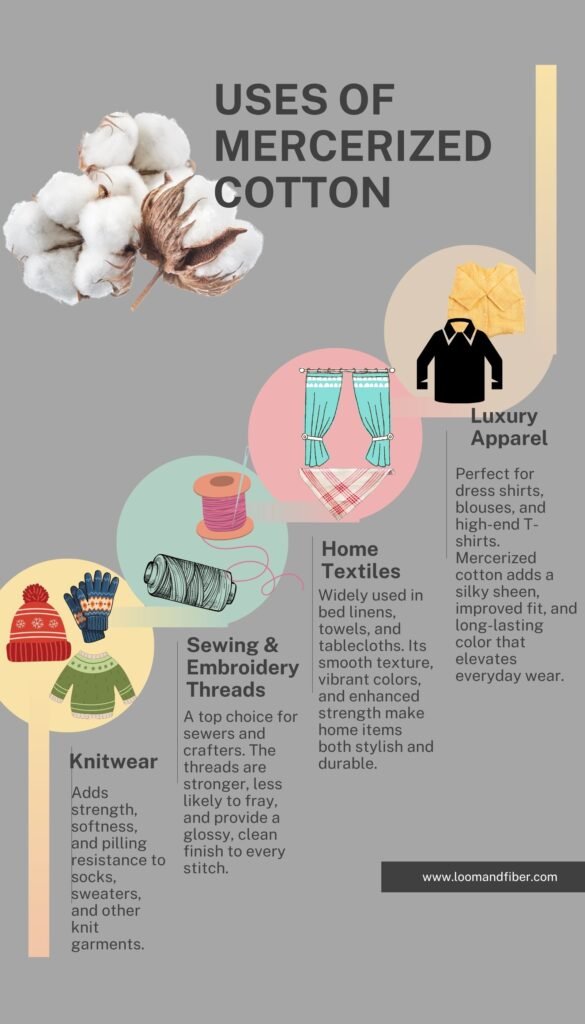
Luxury Apparel
Dress shirts, blouses, and even high-end T-shirts are made using mercerized cotton which is a staple in luxury fashion. The smooth feel and glossy appearance of the fabric enhances the looks and feels of ordinary clothing.
Home Textiles
Mercerized cotton can be found in luxurious home items such as bed linens, towels, and tablecloths too. Its absorbency and durability, along with visual appeal make it ideal for comfort and aesthetics.
Sewing & Embroidery Threads
Crafters and designers often use mercerized threads, for they are stronger and smoother. An option that is preferred by many conducting sewing machines as mercerized cotton threads glide smoothly, they pass through fabrics with ease and create precise and bolder stitches.
Knitwear
Knit garments ranging from socks to sweaters enjoy the use of mercerized cotton for it add’s softness and durability. The term ‘everyday wear’ often comes to mind as it is less prone to pilling making it a long lasting option.
Pros and Cons
Pros
- Improved durability – Enhanced lifespan compared to normal cotton.
- Silky shine – Couture and sophisticated finishes are provided.
- Better dye retention – Reserves vibrant colors and avoids fading.
- Resistant to shrinkage and pilling – Preserves shape and look over extended periods of time.
Cons
- Higher cost – Priced higher because of the specialized treatment process.
- Less breathable – Offers less aeration compared to organic or untreated cotton, particularly in warm climates.
These drawbacks may not be for everyone, but in most cases the minor cons do not outweigh the advantages of specially treated cotton.
Washing & Maintenance Tips
To sustain the aesthetic and the mercerized cotton quality of your cotton clothing, these care practices are recommended:
- Do not use hot water: Washing with cold and warm water is acceptable as hot water can destroy the fibers.
- Use milder detergents: Stronger detergents will wear down the finish, so try to use milder ones.
- Avoid the use of bleach: It is harmful since it weakens and discolors the fabric.
- Use low heat tumble dryer: High temperatures reduce shine and strength, so air drying is preferred.
- Avoid steam settings: This is only if needed, otherwise iron on medium heat.
Following these practices will help sustain lustrous cotton clothing and keep them smooth, fresh and vibrant.
Conclusion
After learning about this lustrous cotton and its creation process, one can conclude why it is favored for premium textiles. The wearability, luster, strength, brilliance, and retention of color makes it ideal for anything ranging from apparel to home textiles.
Whether you are on the hunt for meticulously engineered bed sheets or planning your next embroidery piece, don’t forget about mercerized cotton. Its look enhances the beauty of the textile while its durability makes it worthwhile.
What do you think, will you choose this premium cotton the next time you’re shopping for textiles?
FAQs
Is mercerized cotton natural?
Sure, it is made from 100% cotton. Nonetheless, it goes through a chemical process; this renders it chemically treated, but the material is still natural in origin.
Does mercerized cotton shrink?
The shrinkage is almost negligible. Thanks to treatment under tension, these garments retain their shape over time due to structural stabilizing aids incorporated within the fibers.
Is mercerized cotton better than Egyptian cotton?
They fulfill different functions. Egyptian cotton is revered for its exceptional softness and length, while mercerized cotton is stronger, shinier, and a better dye binder.
Can mercerized cotton be organic?
Yes, it can. If the starting cotton is organically certified, then the mercerization process does not affect that status — assuming it adheres to approved guidelines.
Secure a comfortable and convenient taxi ride from Welland, Ontario, to Toronto with Central Taxi. Trust the well-established Welland taxi service for reliable transportation.