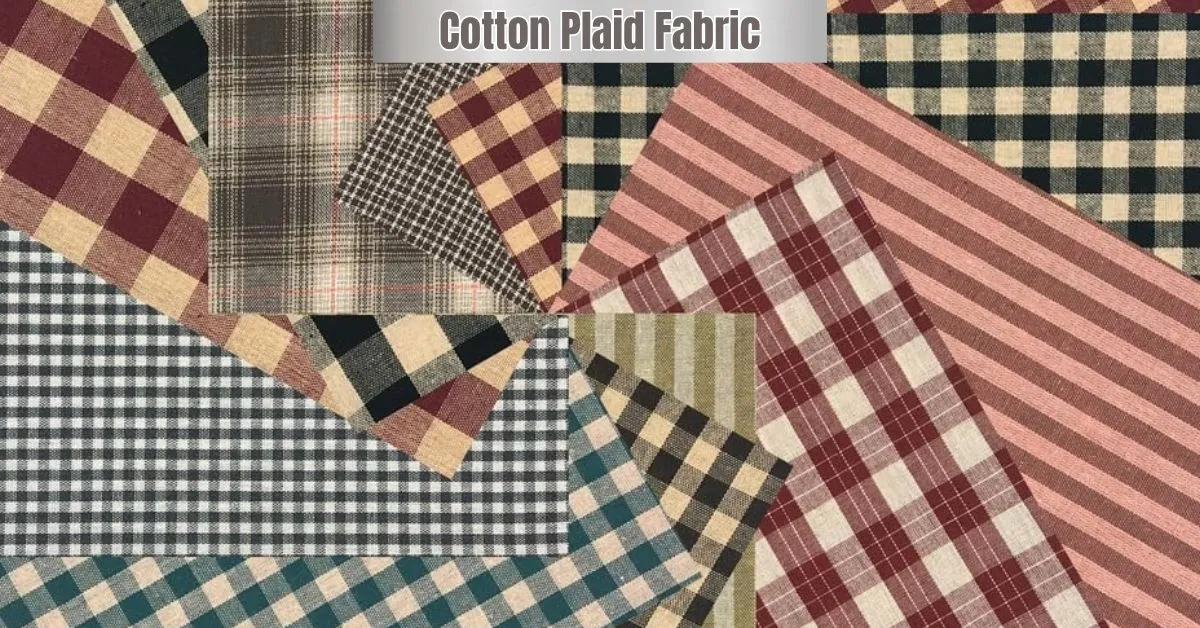

Plaid cotton fabric is made from cotton fibers and is an adaptable fabric. It contains stripes that are patterned in a crisscross formation and are made from different hues. These designs feature textiles, like Tartan and Gingham. Because of its airflow, comfort, and softness, it is predominantly utilized in crafts, apparel, and home decor.
What Is Plaid Cotton Fabric?
In plaid cotton, “plaid” speaks to design, not fiber type. Using a weave pattern, designers construct a crisscross pattern that uses multiple colors. This results in a colorful, square, layered, overlapping fabric. Since cotton is a fiber that is soft and takes dye easily, it is commonly used in this type of design.
The word “plaid” originated from medieval Scotland in association with the word “tartan”. The first tartans appeared in the 18th century in Scotland and were used to identify clans through weaving patterns in wool. Today, this weaving style used to create fabric of various functional densities and colors is loosely termed plaid. A cotton plaid would refer to a cotton fabric that is designed with a plaid structure.
The first step in the production of plaid fabric involves the use of a loom. Weavy alternates colors vertically and horizontally. This alternation yields a distinct checker pattern that is characteristic of plaid. The weave holds the structure of the fabric and a clear, layered pattern.
Types of Plaid Patterns
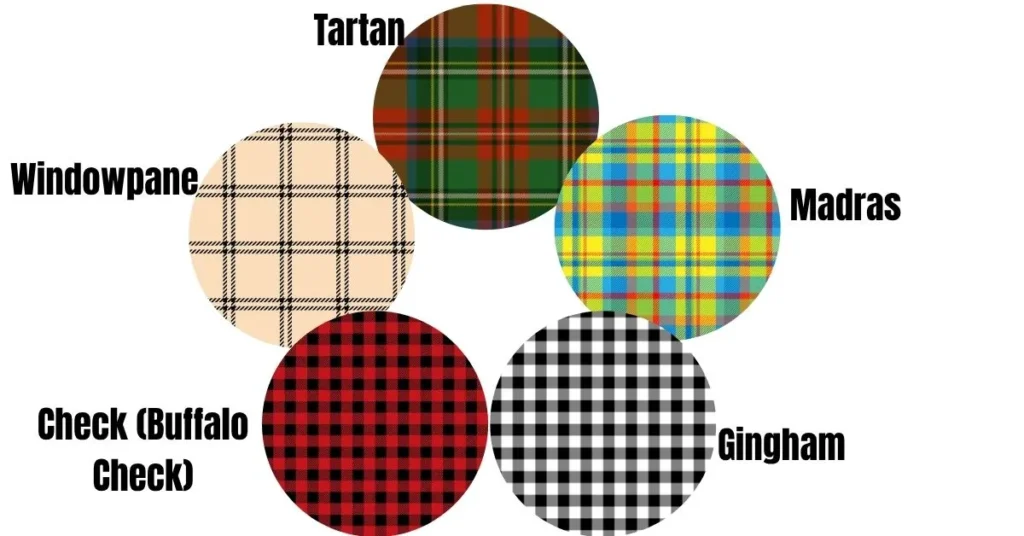
Plaid patterns are iconic across all types of fabrics and textiles, but here are five of the most popular and recognizable variations:
Tartan
Perhaps the most recognizable form of plaid stems from the Scottish Highlands, known as Tartan. It consists of interweaving wool and twills, creating a beautiful multi-colored settlement pattern. Because of its dense and rich pattern, Tartan variations are easy to recognize as kilt or blanket designs across all types of cotton. Historically, each Tartan design belonged to a Scottish clan.
Gingham
Gingham patterns guarantee a clean look with its uncomplicated pattern. There are checked designs across different colors, almost exclusively paired with white, and printed bleeds. Try to look for Gingham cotton because its presence, especially on a summer day, is a guaranteed fresh feeling.
Madras
Madras has a lightweight feeling with soft designs and provides airy fabrics at the same time. It originates from the city of Chennai or Madras, with a rich a history of usage. Coated with a subtle design of Tartan and plaid variations, Madras allows a variety of colors while remaining textured. These types of fabrics are perfect for summer short, dresses, and even casual shirts.
Windowpane
The windowpane plaid pattern is distinguished by its large squares with thin stripes that are spaced apart. These large squares are often larger than regular squares used in gingham patterns. Windowpane plaid is a more subtle and sophisticated pattern that is mostly in use with men’s suiting. It is also used in modern textiles for the home. It has a somewhat bold and large grid and therefore can add height and structure without being visually overwhelming in a given design.
Check (Buffalo Check)
Buffalo check is a pattern consisting of a check design with squares of bold and uniform sizes and with alternating color patterns. The typical example is made up of large blocks that are red and black. This is a large and simple pattern that is mostly used in farmhouse decor and designs and in flannel shirts. Check design can mean the design of any square grid but for buffalo check specifically, it refers to the large blocks of alternating square designs of fewer color types.
How Plaid Cotton Fabric Is Made
Weaving Process
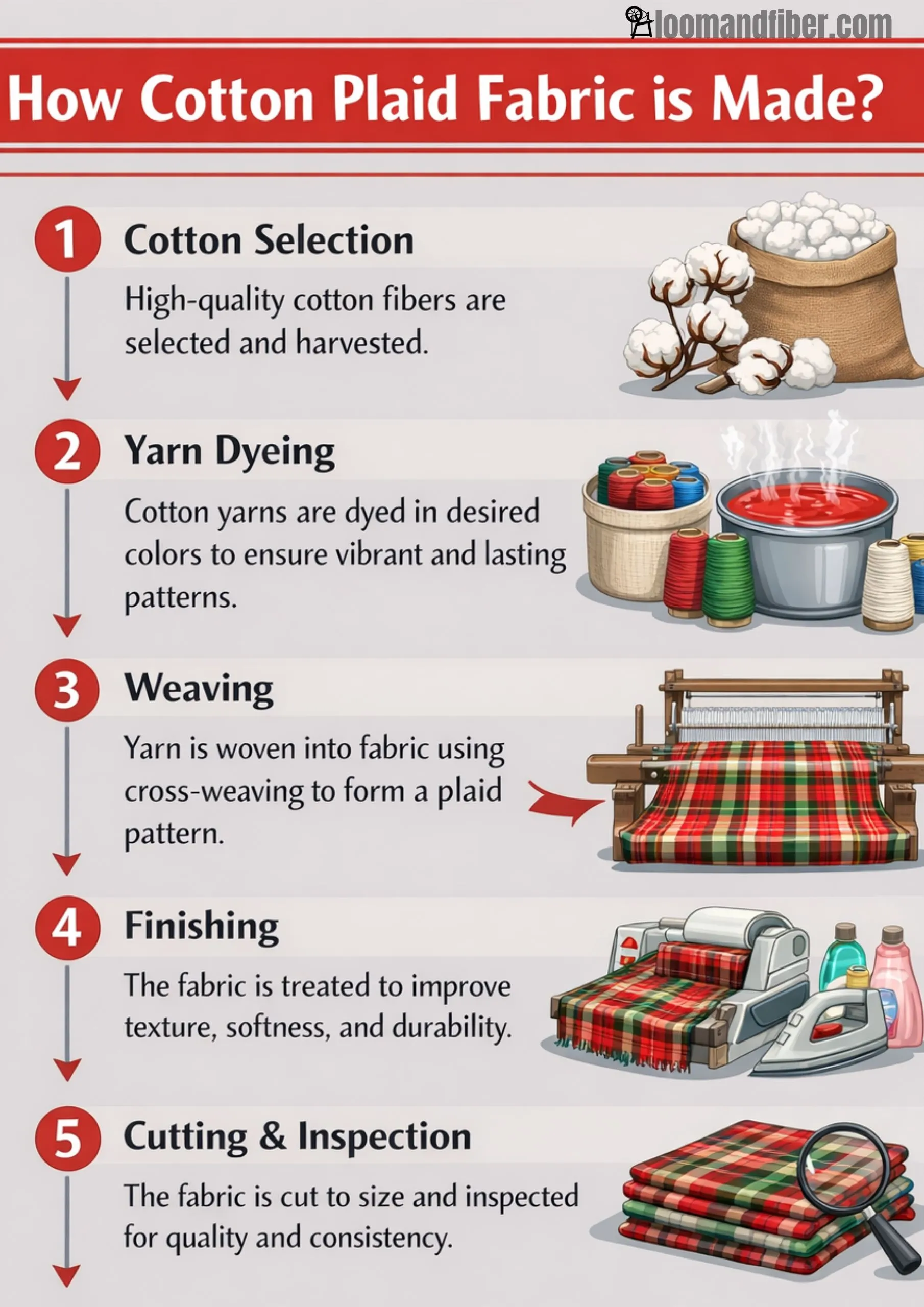
Typically, a loom is used to weave plaid cotton. The warp (vertical threads) includes color-dyed yarns. Weavers use yarns in different colors to span horizontally across and under the warp. In this way, a plaid design is produced by alternating threads in both directions. Consider a basic two-toned plaid. If the warp threads are red, and the weft threads are black, then checks that are red and black will show. The pattern is permanently secured into the fabric by this over-and-under weaving.
Yarn-Dyed vs. Printed Plaid
There are two major ways to create a plaid pattern on cotton.
Yarn-Dyed: Individual yarns are dyed in different colors prior to the weaving process. The yarns are then woven into various patterns of stripes and checks. This will create a lasting plaid because the pattern is visible on both sides. The yarn-dyed fabrics have sharply defined pattern lines, and due to the quality of the yarns and weaving, are resistant to fading. They often are woven on shuttle looms or with specialty yarns that enhance the crispness of the pattern.
Printed Plaid: Originally, a plain white cotton fabric is woven first, this is then followed with the printing of a plaid design. Printed plaid fabrics costs less and are more readily available, but they only show the design on one side, the reverse side is unembellished. They also are more prone to fading with washing. When comparing the two, yarn-dyed plaids are superior in quality, printing methods are noteriously poor with color retention and durability with washing.
Key Features of Plaid Cotton Fabric
- Breathable: Cotton’s own fibers are able to ventilate freely. Plaid shirts made of cotton fabric do a far better job at breathing than ones made of polyester. Wool also breathes but wool is warmer. Cotton is lightweight and breathes well in the summer.
- Soft: Cotton is a naturally soft and gentle fabric. Plaid designs made of cotton are used in a cosmetic line because of the comfort such designs bring. Unlike cotton, polyester, and wool can lack comfort and feel tacky and itchy unless the wool in question is merino, which is soft.
- Durable: Cotton plaid design is naturally strong and can withstand loads of washing. Cotton defeats and outlasts more delicate fiber designs. Wool and polyester are also strong, with the former lasting more when blended with cotton. Cotton’s naturally strong design makes it last when used for everyday.
- Versatile: cotton is naturally varied when it comes to design and fabric choices. This characteristic runs true for plaid cotton. There are designs that will do well for summer while there are designs for winter. Wool plaid is suitable for winter and polyester is ideal for activewear. Cotton is central to making stylish and seasonal fitting designs.
Common Uses of Cotton Plaid Fabric
Clothing (Shirts, Dresses)
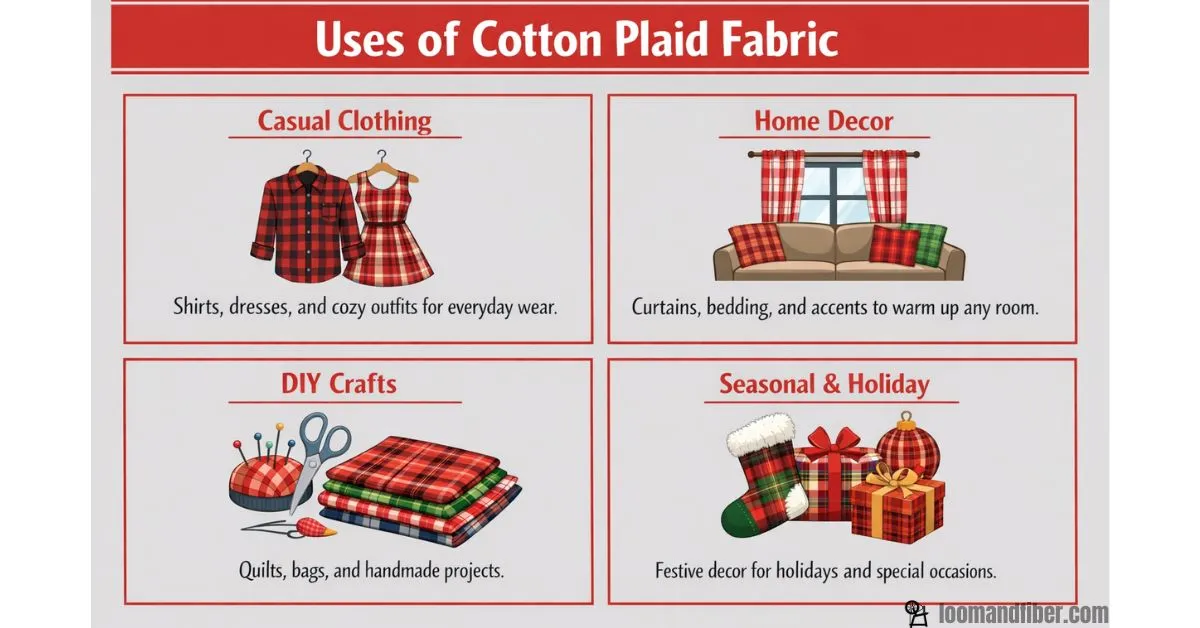
Cotton plaid patterns have been incredibly popular for designing casual apparel. Shirts, blouses, skirts, and casual summer dresses have all been integrated into designers. For summer, gingham printed cotton shirts and for the winter, tarten cotton printed shirts have been a winter favorite. Lighter cottons such as gingham and madras are ideal for child dresses. Medium-weight winter cottons are ideal for cool-weather shirts.
Home Decor (Curtains, Bedding)
Cotton plaid helps add classic charm to textile design. It has been incorporated into window treatments, throw pillows, decorations, bed sheets and even bedding sets. Print-durable cotton (which are sometimes blended with linen) are used as table linings and upholstering while soft brushed cotton (aka cotton flannel) are used as cotton sheets and duvet covers. For example, a modern bedroom design with a black and white cotton windowpane plaid duvet is as simple as adding a touch of a rustic design with red buffalo checked curtains. Rooms that are designed with a goal and cotton fabrics that are breathable and cozy are created.
DIY Crafts
Cotton plaid patterns are simple to work with and are loved by crafters. Blankets, pillows, and clothing are all created by crafters and quilters using cotton gingham and tartan. The shape holds perfectly to sewing cuts and the design remains crisp (unlike stretch knits). Quilting cotton is medium-weight, smooth, and holds a patch. Crafts such as quilting are combined with cotton plaid that provides great quality stitching. The best choice for pattern control quilters used to yield aligned results for stitching each individual plaid box was a cotton fabric that had tight weaving.
Pros and Cons
- Airy: The fabric of the cotton-plaid cloth has natural air circulation abilities, so it can keep the clothes cooler. (Pros)
- Pleasant: Clothes and sheets made of cotton fiber are pretty comfortable due to the softness of the material. (Pros)
- Sewing: The fabric and material of cotton are good for sewing because with the pattern and stitches can stay aligned during sewing. (Pros)
- Wrinkles Easily: Out of all the fabrics, cotton creases more than synthetics. This means plaid garments can look more wrinkly. (Cons)
- May Shrink: Cotton plaid, if not pre-shrunk, may shrink 2–5% on the first wash, so wash carefully. (Cons)
- Pattern Alignment Issues: When sewing plaids, you need to be very careful when cutting, as misaligned stripes can be very frustrating. (Cons)
Plaid vs Gingham vs Check vs Tartan
| Pattern | Complexity & Design | Origin | Common Uses |
|---|---|---|---|
| Plaid | A broad category of woven checks (multiple colors and stripe widths possible) | Global (modern term); based on Scottish tartans | Versatile – shirts, pants, jackets, home textiles |
| Gingham | Simple two-color, evenly spaced checks | Southeast Asia/Europe (17th–18th C); named for Guingamp, France | Classic summer shirts, dresses, tablecloths |
| Check (Buffalo) | Bold two-color large checks (e.g. red & black) | USA (19th C wool blankets by Woolrich) | Casual flannel shirts, blankets, fall décor |
| Tartan | Symmetrical multi-color stripe pattern (twill weave) | Scotland (ancient; clan-specific since 18th C) | Kilts, scarves, uniforms; plaid fashions referencing heritage |
Is Plaid Cotton Fabric Good for Summer?
Yes. The breathability of cotton coupled with airflow is what makes cotton a great choice in fabrics for warm weather. Light-weight cotton plaids like cotton lawn, cotton voiles, or madras let heat escape and allows sweat to vaporize. A cotton plaid shirt will feel lesser hotter than other synthetic shirt alternatives, even in a warm climate. Naturally, cotton plaid is a great choice for summer apparel because of the breathability.
Read More>> Best Cotton Fabrics for Summer.
How to Choose the Best Plaid Cotton Fabric
- Thread Count: A higher thread count (threads per inch) means a more durable weave. Count 200–400 threads for a crisp and breathable fabric. Don’t fall for gimmicky ultra-high counts (800+). These often use twisted yarns and are heavy and warm.
- Weight (GSM): Fabric weight is measured in GSM (grams per square meter). For airy summer dresses and shirts, choose lighter weights (100–150 GSM). Heavier weights (160+ GSM) are thicker and warmer, and are made with less breathable cotton (like flannel).
- Pattern Scale: Choose a pattern scale based on your project size. For children’s clothing or detailed quilts, use smaller, tight checks. For jackets and curtains that need a bold statement, use large-scale plaids (like buffalo checks).
- Colorfastness: Check that your fabric is colorfast. Typical high-quality cotton plaids are yarn-dyed or reactively dyed, so colors are less likely to run or fade. Test for color bleeding by washing a new cotton plaid in cold water with like colors. Shrunk and color-fast fabrics will maintain neat checks over time.
Care & Maintenance
- Washing: For plaid cotton, use cool and lukewarm water with a gentle cycle. Avoid hot water, as it can shrink the fabric. Use a mild detergent, and for an ideal wash, don’t overload the washing machine. For the pattern, wash cotton plaid inside out. To cut down on shrinking and remove the finishing chemicals in the fabric, a pre-wash is suggested.
- Drying: When drying cotton plaid, it is ideal to use a low to medium heat setting, and the best option is to air dry. Cotton fabric shrinks easily, and with the dryer, it can shrink even more. If you do use a dryer, remove items before the completely dry to avoid excessive shrinkage.
- Ironing: Cotton can wrinkle easily, but it can also be an easy fabric to iron. For iron settings, use a medium-high setting while the fabric is a little moist, or you can spray water on it. With the iron, you can align the checks on the plaid again. It is best to avoid bleach on cotton, as it can fade the material and weaken it.
- Mistakes to Avoid: Pre-washing is a must for plaid cotton. It is especially important to avoid drying it with high heat and using high iron settings as that can shrink and damage the fabric. Finally, when sewing or aligning plaid patterns, pin carefully: mismatched stripes are the most common sewing error. Taking these steps will keep your plaid cotton fabric looking sharp and lasting longer.
Conclusion-
You have learned what plaid cotton fabric is and why it is still popular. The reason is because it brings together comfort, style, and adaptability. Use it for apparel or home furnishing and it will be a great addition. Next time you go shopping, will you select a bold tartan or a plain gingham?
Read More>> What is Cotton Corduroy Fabric?
FAQs
Yes. The fibers of cotton are literally built to last and withstand the tests of time. A typical plaid cotton material that is well constructed can withstand years of consistent and repetitive washing.
Not really. Classic plaid patterns go in and out of fashionable cycles. However, old designs such as buffalo checks or tartans are timeless and maintain consistent demand. Plaid patterns are quite versatile and can be used to achieve a rustic or even a modern look. Fashion experts have noted plaid’s, “enduring appeal” thanks to its versatility. It may become less trendy at times, but it never truly goes away and is a staple in a thriving closet and a well-decorated space.
Absolutely. Cotton plaid shirts are a must-have in any wardrobe. The breathability and softness of cotton adds to their appeal. The cotton plaid flannel is a perfect example. It is a plaid shirt that can be worn in any season. It adds a warm, snug feel in winter and breathable comfort in the summer. Lightweight plaid shirts that are made from cotton such as, seersucker and poplin are great summer shirts. The end result is a plaid shirt that looks sharp and is easy to take care of.
In general terms, “plaid” is any woven, crisscross pattern of stripes, while “check” often refers to a simpler, two-color square pattern. For example, gingham and buffalo check are types of checks: they have two colors (like white and blue, or red and black) with uniform squares. Meanwhile, a multicolor tartan or windowpane pattern with more intricate layering is called plaid.