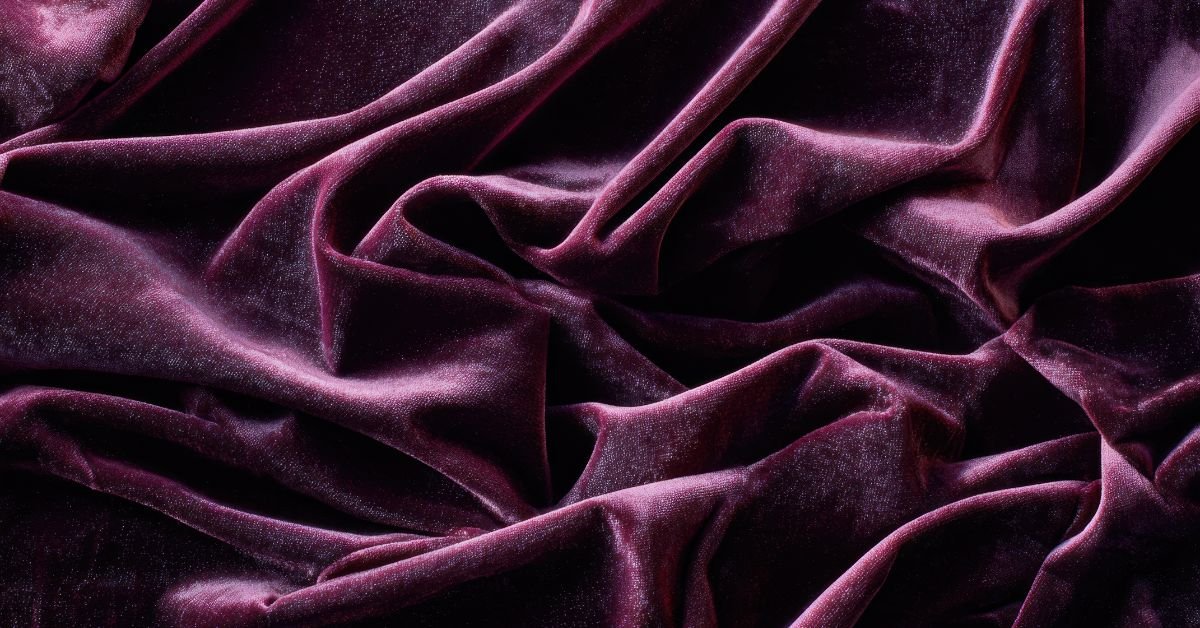

Introduction–
Velvet has been the essence of chic, style and eternal beauty. This fabric still draws attention since royal clothes to the contemporary home decor. Nevertheless, there is a rather basic yet quite important question that a lot of people continue to pose, and that is, what is velvet fabric.
Velvet is unique due to its smooth texture and high visual depth. When compared to a flat fabric, velvet does not reflect light in a similar way producing a glowing effect. This way, both homeowners and designers regularly resort to using velvet in fashion and in interior.
This guide is going to help you understand the process of making velvet, components of the fabric, and its smoothness. Moreover, you will get to know how to take good care of it. You will know entirely why velvet is a favorite amongst the cross-cultural and cross-industrial spheres.
What Is Velvet Fabric?
Velvet is explained in a simple way
Velvet is a woven cloth that has a soft raised textile known as a pile. This stack produces a soft and cushy consistency that is soft to the touch. Consequently, velvet appears opulent and its feel is cozy, classy, and welcoming.
What sets Velvet Apart in Compared to other fabrics
Velvet involves an additional set of yarns that are used in order to make its raised surface. This has a light reflector on it that makes velvet have the appearance and appearance of light. Thus, velvet is heavier and richer in comparison with plain woven materials.
History of Velvet Fabric
Representing affluence, sophistication, and royal lineage, velvet fabric has an extensive historical background encompassing over a millenium.
The first ever instances of velvet creation are placed in Medieval Time, in Ancient Asia, specifically in China, and Egypt. Because of the special and rare weaving techniques, the fabric was very expensive. Production of velvet then continued to spread along the Silk Trading routes, eventually making its way to the Middle Eastern regions.
From the 13th and 14th centuries, velvet started being produced in European regions, specifically in Italy across the Venetian, Florentine, and Genoese territories who were leaders in the production of this highly sought after fabric. Robes, church furnishings and garments were are made with the Italian produced velvet.
Velvet was a sign of prestige in the Renaissance period. The fabric was expensive to make and was only worn by the royal and the elite. After the 17th century, the fabric started being produced in large economies – the Industrial revolutions looms were able to mechanize the process of making the fabric. Velvet also started being made in a combination of woven synthetic materials and not just the expensive silks.
Presently, velvet is made using contemporary equipment, along with different kinds of fibers such as polyester and rayon, in different countries. Although velvet is no longer exclusive to nobility, it continues to signify sophistication and is extensively utilized in clothing, furniture, and home decoration.
How Velvet Fabric Is Made

Weaving and pile construction
Velvet is weaved on a special type of double-cloth loom which makes two layers of cloth simultaneously. Additional threads tie the layers as the circles of the piles are made between them. And, lastly, the layers are sliced in two, forming two pieces of velvet with their upright pile.
Loop-cut process
When weaving, the strands of the yarn are taken in between the two cloth layers. Then what happens is that a blade cuts through these loops and cuts them to make up the pile. Every loop of cutting is formed into a bulk of vertical fibres forming the plush topography of velvet.
Why velvet is so soft and plush
Velvet is thick and has an upright pile of fibers that gives its fabric a plush feeling. These numerous cut loops are tightly settled together forming a cushioning surface that absorbs pressure and is soft. Also, in a situation where the velvet is produced using smooth filament such as silk or rayon, the fibers become even smoother and this increases the luxurious feel of the fabric.
What Is Velvet Made Of?
What is velvet fabric made of;
Silk velvet
Silk velvet is composed of untainted silk fibers and the most opulent type of velvet. It is very soft hand, and naturally shiny. Due to the high cost and its delicacy, pure silk velvet is not common and is usually extremely costly.
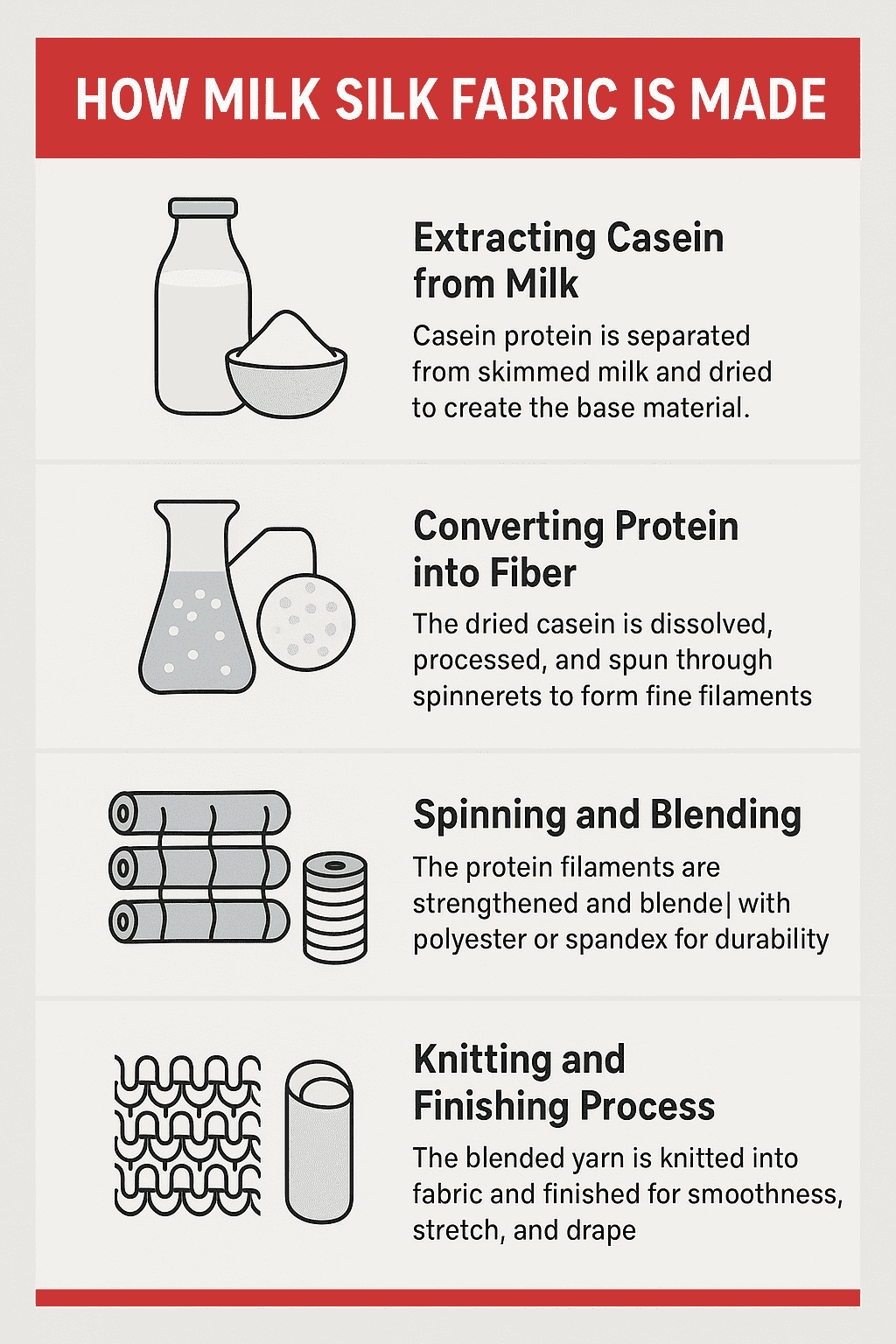
Cotton velvet
Cotton velvet is a velvet made out of yarns of cotton and is heavier and stronger compared to silk velvet. It is not as shiny as silk or synthetic velvets are. Nevertheless, cotton velvet is robust and less expensive thus is popular in casual attire and furniture.
Polyester velvet
Among the alternatives with the form of synthetic fibers is polyester velvet, which is a cheaper substitute. It is sturdy, wrinkle resistant and usually less difficult to look after as compared to natural velvets. The appearance of silk can be copied with modern polyester velvets, and they are used in cheap fashion and interior.
Rayon/viscose velvet
Viscose (rayon) velvet is a product that is made with the regenerated wood pulp fibers to mimic the softness of silk. It forms a good covering and is a pleasant shinning, almost as shiny as silk velvet. Rayon velvet is used in both clothing and upholstrey as a cheaper high-shine substitute to silk.
The key Properties of Velvet Fabric

Softness and texture
Velvet is famous because of the tightly packed fibers and it is very soft. The tightly interlaced strands form a cushion like linen texture that is soft and pleasant to the touch. Besides, the thick pile of velvet provides it with a high-quality, lush texture that can be felt.
Shine and nap
The stack of velvet has varying light reflections according to the direction. This gives the cloth a certain shine; by moving it, the hue may become either brighter or darker. In particular, the thick pile of velvet gives a soft lustre and rich colour density.
Weight and drape
Velvet clothes are either medium or heavyweight cloths, which make them substantial. This weight enables the velvet to fall well with graceful folds and hang freely. In fact, velvet is a gorgeous material that provides elegance to all clothes and curtains.
Warmth and insulation
Velvet is a good insulator since the thick pile traps air and keeps one warm. The cloth is also comfortable during colder seasons and this is the reason why it is commonly employed in winter apparel and thick curtains. This thickness however ensures that a velvet can be hot or even too thick during hot weather.
Types of Velvet Fabric
Crushed velvet
Crushed velvet fabric of emerald green and lustrous rippling texture. This velvet is of a ornamented mottled look formed by grappling or pressing the material when moist. It is a random flattening and shifting of the pile treatment that creates an unequal reflective pattern of highlights and shadows. What is obtained is a theatrical, glossy finish with a velvety touch that is not only stunning to look at, but also to touch.
Stretch velvet
Stretch velvet is spandex that is weaved into the fabric making it elastic and comfortable. It is capable of going far enough to embrace the body hence it is suitable in fitting dresses or dances. Stretch velvet is still made of the same soft pile despite its flexibility and offers the same amount of comfort as well as a snug fit.
Embossed velvet
Embossed velvet is stamped through heat and pressure into a design flattening the pile at certain points. The patterns or images formed on the fabric are the raised and flat areas obtained as a result of the process. Embossed velvet is used in both upholstery and fashion to provide ornamental texture and complexity to the material.
Panne velvet
One form of crushed velvet is known as Panne velvet, in which heavy pressure is pressed in one direction only. This lays the pile down flat giving it an extra-smooth glossy appearance. Panne has gorgeous draping qualities and is frequently worn as gowns and as a formal wear.
Velvet vs velour
Velour is also regularly used together with crushed velvet as a comparable material. Nevertheless, velour is commonly a wool fabric knitted and produced out of cotton and polyester. It is plush like velvet but stretchier and it is typically matte. True velvet on the contrary is more firmer draped with its woven structure and shorter pile giving it a deeper sheen.
Is Velvet Breathable?
Natural velvet materials such as cotton and silk are not very air-tight. The fibers aid in the release of heat in cases of mild conditions. Nevertheless, artificial velvet usually reserves heat and stops airflow.
Consequently, the breathability is dependent on the type of fibers. Cotton velvet is more comfortable in the warmer weather. In the meantime, velvet suits made of polyester make indoor settings cooler.
Is Velvet Warm or Cool?
Velvet tends to be warm due to the thick pile. This building contains air and minimizes the air losses. That is why, velvet is used by many in winter clothes and interior.
Lightweight cotton velvet may however be cooler. This alternative is more suitable during the transition periods. Consequently, velvet modifies depending.
on fiber and thickness.
Common Uses of Velvet Fabric
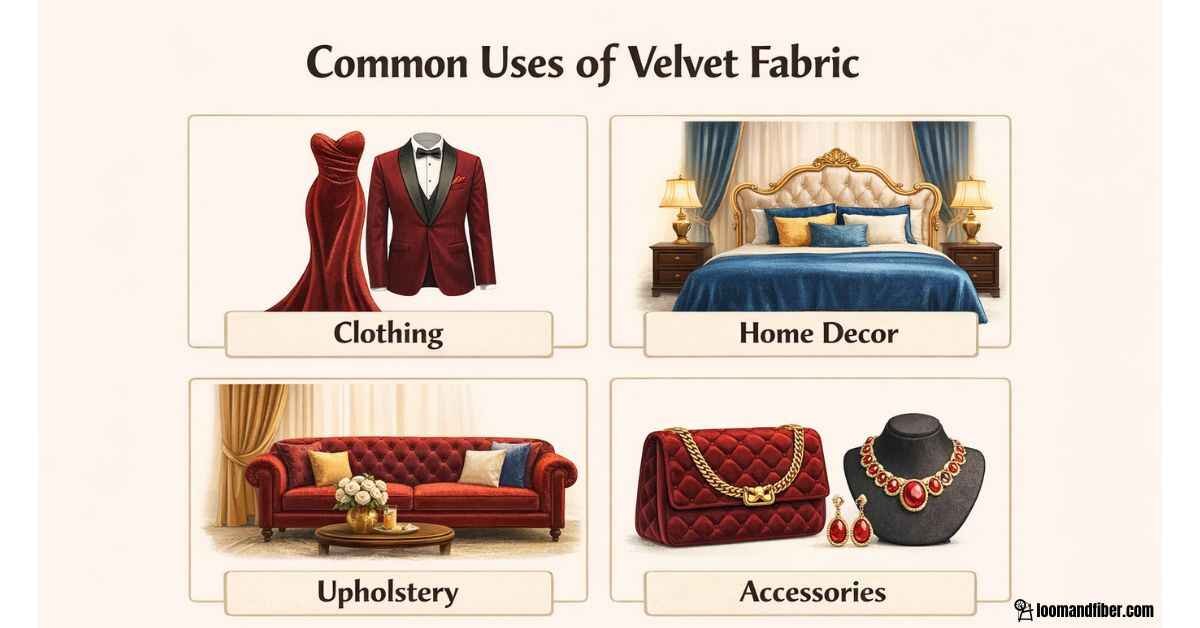
Clothing (dresses, jackets, pants): Velvet is used in fancy dresses, particularly evening dresses and formal dresses. It is a good-looking fabric and is frequently employed to make gowns, blazers, and custom pants.
Furniture and upholstery: Sofas, chairs and cushions are highly utilized in heavy velvet. It has a soft texture and is easy to use as upholstered furniture.
Curtains and home decorations: Velvet curtains, pillows, and throws provide a luxurious impression in the interiors. It has great sound insulation and drape.
Accessories: Velvet is also found in accessories such as shoes, handbags, hats, scarves, and ribbons to provide a luxurious and glamorous touch to the outfits.
Velvet vs Velour vs Velveteen
| Feature | Velvet | Velour | Velveteen |
|---|---|---|---|
| Construction | Woven (double-cloth pile) | Knitted (pile knit) | Woven (pile on weft) |
| Pile length | Short, dense | Medium to long | Short and thick |
| Appearance | Lustrous, smooth | Plush, matte | Dull, matte |
| Stretch | Minimal (unless stretch fibers added) | High (elastic) | Minimal |
| Common uses | Formal wear, upholstery, drapery | Casual wear, tracksuits | Coats, costumes, upholstery |
Key differences
Velvet is a woven, velour a knitted and velveteen a velvet made of cotton. The pile of velvet is that of warp threads whereas the velveteen is of weft threads. Velour is elastic and is stretchy whereas velveteen is dull-finished and less flowing than velvet.
Appearance and texture
Velvet has a lush pile that is rich and glossy in appearance and the pile of velour is lighter and less shiny. Velveteen is similar to velvet except that it has a rough, dull finish. Velvet is usually smoother; velour is soft and plush, and velveteen is thick and firm.
Best use cases
Velvet suits formal wear and furniture due to the graceful surface and fall. Velour is used in casual or sportswear (such as track clothes) and blankets with its stretch. Velveteen comes in durable garments (including coats or costumes) and domestic textiles to have an antique feel of velvet.
Advantages and Disadvantages of Velvet Fabric
- Pros: Softness and luxury; insulating warmth; rich sheen and drape; modern velvets are durable and stain resistant.
- Cons: may be costly (particularly silk); needs to be washed carefully; pile may smash or leave traces; not particularly breathable in solid weaves.
- Use: velvet can be used on formal clothes and decorations; it should not be used when it is too hot or in very active activities.
How to Care for Velvet Fabric
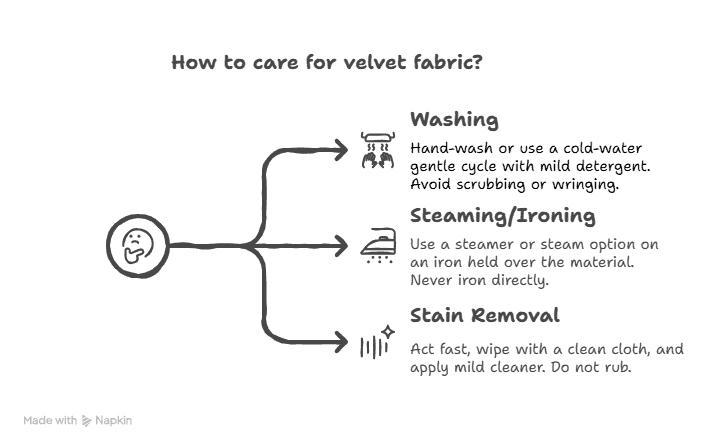
- Washing instructions: Hand-wash or put the velvet clothes inside a cold-water gentle cycle. Wipe using a light detergent and do not scrub or wring to keep the pile intact.
- Steaming or ironing: Velvet should never be ironed. Heat and pressure will cause flattening of the pile. Rather, apply some steamer or steam option on an iron that is held over the material. This will loosen the wrinkles and will pull up the nap without flattening the fibers.
- The basics of stain removal: Act fast. Wipe the blots with a clean cloth. On stains, apply a mild cleaning fabric and dry lightly- do not rub.
Does Velvet Fabric Wrinkle or Crush?
Nap damage: the pile on Velvet is crushable when twisted or pressed. It should not be wringed or ironed because the nap may be permanently flattened.
Storage suggestions: Store velvet by hanging or keep it flat so as not to get creased. Store them at a cool and dry location that does not expose the pile to sunlight.
How to repair pile: In case of a flattened pile, steam should be used to erect the fibers. With a handheld steamer (or an iron on the Steam option) take the device slightly above the cloth and move it around to puff up the nap.
Conclusion-
You have a complete idea about what is a velvet fabric and why it is so special. Velvet is made up of a beautiful, comfortable, and crafted piece of fabric. Its elevated stack, opulent look and touch are popular in fashion and furnishing.
Also, velvet is adaptable using various types of fibers and styles. Silk luxury, durable polyester, velvet can be used in all needs. When well taken care of, it will be able to retain its grace over the years.
Consequently, the culture of velvet still remains a symbol of sophistication. Velvet is the ideal choice, be it on the body or home decoration as it never fails to bring classiness and coziness.
Read More>> What is MilkSilk Fabric?
FAQs
Pure velvet particularly silk can be really costly. Traditional weaving was a labor-intensive process and thus, even the well-made velvet can be more expensive than the common fabrics. Most present-day velvets are however mixed or artificial lowering the cost.
Velvet may be durable especially when it is produced using hard fibers such as polyester. A large number of performance velvets are extremely wear and stain-resistant. Nevertheless, the pile may get flattened in case of frequent crushing of the fabric.
Vegetable materials such as silk or cotton were used to make traditional velvet. Nowadays, velvet is commonly manufactured with synthetic material or as a mix (cotton/synthetic, silk/rayon, etc.) to enhance wearability and to make it more affordable. S.A. that is always to have the label to tell what fibers are used to make a velvet.
Velvet is also able to bear certain moisture but becomes damaged due to excessive wetting. When velvet gets wet, it is to be dried in a flat surface and steamed to get the nap back. Velvet should not be saturated or placed in the dryer, since water or heat may be crushing or deforming the fibers.
Yes, velvet is commonly applied in upholstery due to the luxurious appearance and touch. Good upholstery velvet is rather strong and offers a full texture to the sofa and chairs, even though it may leave any signs of wear.
I was always curious about how velvet gets its signature softness. After reading this, it’s clear that the pile construction is key. I also didn’t realize how much of an impact the fiber type (like cotton vs. silk) could have!
I was able to find good information from your blog posts.