
Introduction-
Consider the rugged bag that you use daily. Or the flighty shoes you depend upon rough roads. The same material is used even in the strong tents that are used in outdoor trips. That is the stuff you see, so strong and sturdy everywhere? That’s canvas.
You find it too in the boards of painting, furniture, and working clothes. It is hard initially, though, it becomes softened overtime. Due to this equilibrium, individuals depend on it regarding fashion and power.
Therefore, when you have ever wondered why canvas endures so long, you are on the right track. Let us get it down simple enough.
What Is Cotton Canvas Fabric?
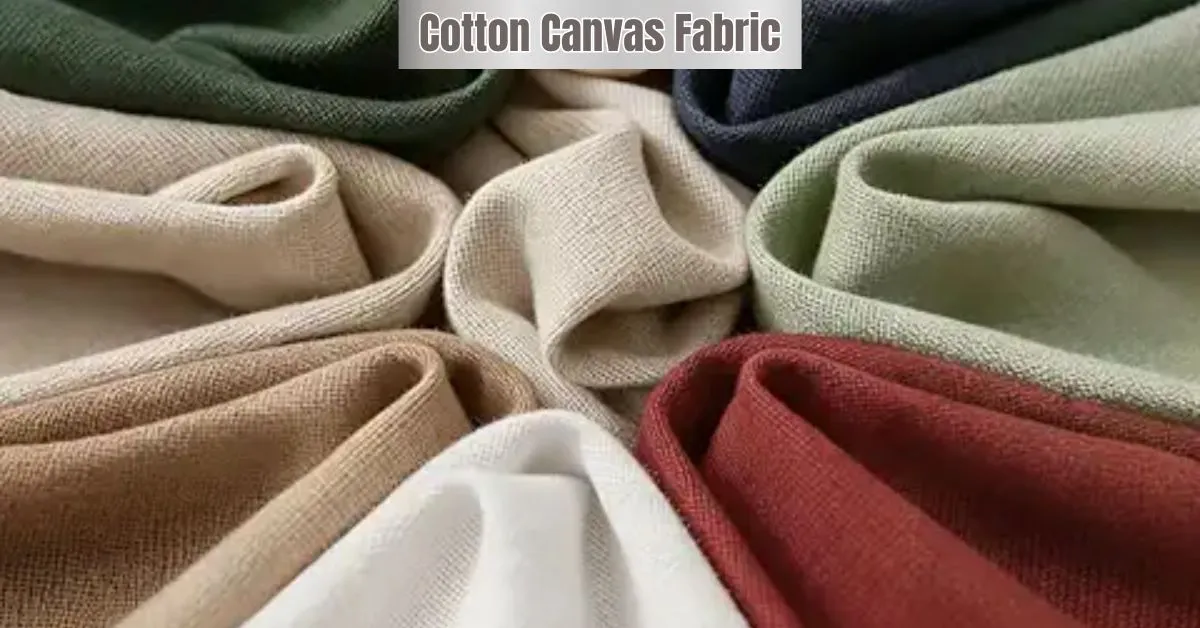
Cotton canvas material is thus a density, dense, and heavy cotton fabric. It is plain-weave, that is, all the warp threads pass over every weft thread and vice versa, which provides the material with the balanced strength. Its toughness and a high level of thread count require the material to be able to support large weight and withstand rough usage so it is commonly utilized in products that require longevity.
How Cotton Canvas Fabric Is Made
Plain Weave Structure
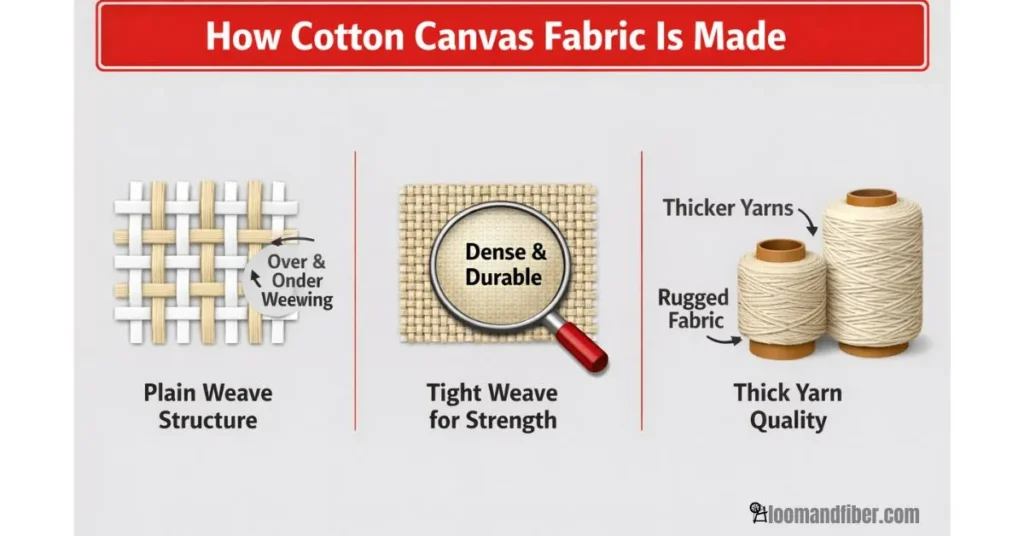
A plain weave is the simplest weave of a textile that a cotton canvas starts with. In this 1×1 weave, each warp yarn passes over and under each weft yarn in turn. The outcome is a flat and crosshatched surface that has numerous points of intersection. It is this high number of binding points that make canvas stable in nature and resistant to tears. The yarns are generally single and undone in plain canvas (such as lighter artist canvas) giving the surface a relatively smooth effect.
Tight Weave = Strength
There are types of cotton canvases which tighten this weave. Duck canvas (another form of canvas) is a fabric made with two yarns in the warp, that is, a much more dense canvas. This reduction in weight, as it is called by weaving, turns the canvas heavier and harder. Consequently, tight weave duck canvas has better tensile strength and abrasion resistance than regular canvas. As an illustration, industrial grade duck canvas can have 300 or more threads per inch, and is very resistant to punctures and wind.
Yarn Thickness Impact
Yarn thickness is also another important factor. Canvas is heavier and stronger made of thicker and heavier yarns of cotton. Weight of fabric is commonly quoted in the number of ounces per square yard: e.g. a 12-oz canvas is made of heavier yarns than a 10-oz canvas. As a rule, the canvas weight is between 6 oz (light) and 24 oz (ultra-heavy). To produce heavier canvases (greater GSM or oz), thick or multi-ply yarns are used. The thick yarns form wider threads, and thus fewer threads are required to fill up the cloth, though the thick ones provide more strength on their own.
Types of Cotton Canvas Fabric
Duck Canvas (Numbered Grades)
Duck canvas is a heavy canvas, graded by weight. It uses a tighter weave (often 2-ply warps). It’s classified by numbers: #12 is light (~11.5 oz/sq yd or ~390 g/m²) used for light bags and fine canvases, #10 (~14.75 oz, 500 g/m²) for sturdy totes and work shirts, and #8 or lower (up to ~18 oz) for heavy-duty gear like boat covers, sails, and floor cloths. In general, the lower the “duck” number, the heavier and stronger the fabric.
Best uses: #12–10 are good for art canvases or casual bags; #8–6 are best for outdoor gear, backpacks, and industrial use.
Read More>> What is Duck Cotton Fabric?
Plain Canvas
Plain canvas is the plain cotton canvas which is not subject to special treatment or plies. Practically, this commonly refers to medium weight canvas (c. 8-10 oz) that can be generally used. It is of average plain weave, and is some lighter and more pliant than duck canvas. Home decor and other apparel products which require durability but not excessive weight are usually made of plain cotton canvas. As an example, canvas of 8-10oz is frequently used on curtains, cushions, and slipcovers.
Best applications: Consumer: crafts, curtains, tote bags, and clothing (such as heavy jackets). It is not as hard as heavyweight duck and therefore it is more drapey.
Worst applications: Too light to be used in heavy industrial applications (such as high-wear workwear or heavy tarps).
Waxed Canvas
Waxed canvas Waxed canvas This is cotton canvas (typically duck) that is covered or impregnated with wax. Waxing A classic method of waxing involves rubbing the fabric with either paraffin or beeswax. The weave is filled with the wax which gives it a slight shininess and renders the material waterproof. Waxed canvas can resist rain, and stains, but it is breathable. With time it acquires a distressed patina, and it gets more pliable.
Best applications: Outdoor products such as tents, boat coverings, jackets and waxed canvas bags (need to be water resistant).
Worst applications: Not to machine-washed goods (wax dissolves) or very light stuff, since wax increases the stiffness and weight.
Organic Canvas
Organic canvas is produced using cotton, produced without the use of pesticides or fertilizers. It otherwise is the same weave and same weight as normal canvas. The advantage is environmental in nature: Organic farming requires much less water and chemicals. Organic canvas may be offered on any of the above categories (organic duck, organic plain or even waxed with vegetable wax).
Best applications: Brands or products with green or environmental claims of sustainability, e.g., sustainable fashion or decor. Organic canvas works just as well in terms of durability as the traditional cotton canvas.
Key Characteristics of Cotton Canvas
Durability
Cotton canvas is famous in terms of durability. It has a plain-weave construction with heavy yarns and as such, the cloth does not wear, tear or abrade easily. Cotton duck in particular is very durable: e.g. in testing, a typical 12oz cotton duck can survive more than 10,000 abrasion cycles. In common parlance, canvas products (bags, tents, sails) serve years of service when working hard. It is hard due to the numerous interlocking points and thick strands and therefore canvas fabrics continue to work when the lighter cottons fail.
Thickness
Canvas is available in different thickness (weights). Lighter canvases (~6–8 oz, ~200–270 g/m²) are still enough heavy by garment standards, while heavyweight canvases (12–24 oz, ~400–800 g/m²) are very thick. Heavier canvas is harder and will not fall easily and has greater strength and stiffness. On the rule a greater number of ounces per yard or gram per square meter is a more heavy, thick canvas. Thick canvas is less prone to cuts and punctures whereas thin canvas is more flexible but less protective.
Water Resistance
Cotton canvas is not waterproof but water-resistant. The tight weave causes the light rainfall to bead up on the surface in short term but with a longer time of wetting will ultimately get soaked. Plain canvas will become so wet and heavy when it is not treated. The uncoated cotton canvas will be wet on the inside in case of heavy rain. In order to perform better, canvas is frequently treated as well, such as waxed or laminated to resist water. (Waxed cotton is made very water-resistant, though not totally waterproofed.)
Read More>> Is Polyester Water Resistant or Water Proof?
Breathability
Even though it is tough, the cotton canvas is quite breathable due to its ability to permit the passing of air and moisture vapors, which are made of cotton fibers. Cotton has good moisture retention (approximately, 7-8 percent) as such, the canvas is able to absorb body sweat without becoming damp. It is not statical and smells not like artificial fibers. Canvas will be cooler and moisture will be vented compared with nylon or PVC fabric used in hot or humid weather.
Hardness vs. Softness With the Course of Time
New, heavyweight canvas (particularly, waxed) may be stiff initially. It is tough and therefore it maintains shape and is difficult to be punctured. Cotton fibers will however, soften over time with use. With time, the canvas will break in – it will get more supple and will not lose its fundamental strength. Sneakers or work boots, e.g. heavy canvass, usually soften after a few weeks of use. After frequent handling, even a waxed canvas tent or bag will plunder into pliability.
Cotton Canvas vs Other Fabrics
Twill vs Cotton Canvas
Cotton twill is woven in diagonal, whereas the canvas is in plain weave. Due to this, twill is soft and more comfortable to wear in everyday life. Nevertheless, canvas is tighter, but it makes it stronger. Therefore, canvas is suitable to heavy-duty items, whereas twill is appropriate to comfort-based clothes.
Cotton Canvas vs Denim
Denim also employs twill weave which makes it flexible and soft. Cotton canvas on the contrary is harder and more rigorously organized at first. Thus, canvas works more in utility and rough products. In the meantime, denim is more suitable in fashion and day-to-day.
Cotton Canvas vs Polyester
Polyester is a synthetic cloth, which is waterproof and fast drying. Cotton canvas, on the one hand, is more natural and breathable. Canvas is more comfortable particularly in the hot weather. Polyester is however better when there is exposure to wet environment and outdoor.
Cotton Canvas vs Linen
Compared to cotton canvas fabric, linen is light and it is more permeable to air. Due to this fact, linen is colder and more appropriate to the summer outfits. Nevertheless, the canvas is more resistant to stress and made of more durable material, meaning that it should be chosen in case of durability; the linen is more comfortable.
Common Uses of Cotton Canvas
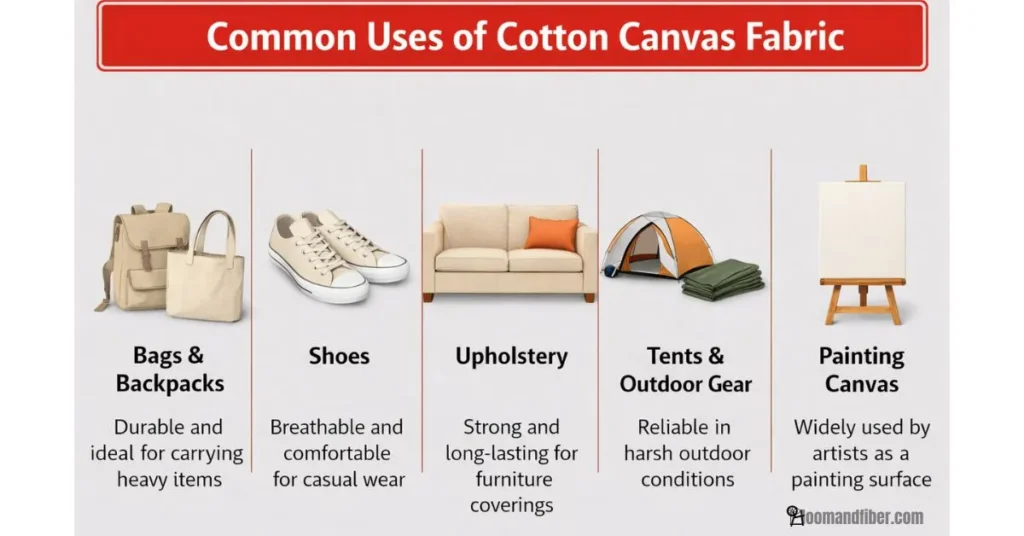
- Bags & Backpacks: Canvas is tough, which is why it is suitable in totes, duffles, and rucksacks. It takes form when heavily loaded. Canvas bags are durable and green; they transport equipment and food items every year. Best: Bags that one carries daily; worst: Delicate fashion bags (canvas will appear to be bulky).
- Shoes: Canvas material is commonly applied in sneakers and casual shoes ( consider the vintage canvas sneakers ). It is breathable, lightweight, and cleanable. Shoes have fine weave, which makes them tear resistant. Best: summer or fashion sneakers; worst: heavy rain boots (they will get soaked in canvas).
- Upholstery / Decor: Canvas covers slipcovers, cushions, curtains, wall hangings, etc. in the home decor. It is very durable even when used all the time (e.g. on the furniture by kids or pets). The texture of Canvas gives it an informal appearance. Best: Strong cover materials and durable-looking furnishings; worst: Finery or bed-clothing (canvass is too hard to make into a luxurious drape).
- Tents and Outdoor Gear: Camping Tents, boat covers and awnings always use heavy cotton duck. it may be waxed in order to protect it against the weather. Canvas tents are breathable and more insulated compared to synthetic tents as well as being highly durable. Best: Canvas tents, tarps, waxed jackets; worst: ultralight backpacking tents (they are too heavy), equipment that must be fully waterproofed (unless treated).
- Painting Canvas: Canvas is used by the artist as the surface of the oil and acrylic works. Plain weave and sizing (primer) give the painting a great adhesion surface. Cotton canvases (typically available pre-stretched or in a roll form) are appreciated on the basis of their balance of strength and fine texture. Best: any painting; worst: applications with great stretch or elasticity (there is very little stretch or elasticity in canvas).
Pros and Cons
- Advantages: Canvas has plain weave and thick cotton yarns which make it highly durable and tear resistant. It is environmental friendly (cotton is a natural, biodegradable fiber). Canvas is very diverse as well, it can be dyed or printed, waxed or covered and used in an infinite number of ways. Its weight and breathability ensure it can be used by the user (as clothes or shoes). It is valued by many due to its aesthetics (a rough, natural appearance) and the fact that the cotton canvas becomes pleasurably soft after a while.
- Disadvantages: Canvas is dense and inflexible in comparison with the lighter materials. Thick canvas is a heavy one and falls not like cotton poplin. It is not waterproof in itself – untreated canvas will soak water (but will be helped on by waxing). Unless pre-shrunk, canvas also shrinks (approximately 3-5% after washing). Raw cotton can easily fade under the bright sun and needs thorough washing without any special finish. To conclude, it has disadvantages, namely its weight, and proper treatment/care required.
Is Cotton Canvas Good Quality?
Cotton canvas is of high quality or low quality. It is based on the density of the weaves and the thickness of the yarn. You would thus want to test the GSM prior to purchasing. GSM is referred to as grams per square meter. Greater GSM signalizes more massive and powerful cloth. As an illustration, 300-400 GSM suits a bag, whereas 200 GSM suits dressings.
Check stitching quality and finishing also. Canvass is of good cloth and smoothness. It consequently carries a longer and better duration.
Is Cotton Canvas Waterproof or Water-Resistant?
Natural cotton fabric is not waterproof. It absorbs water since the cotton fibers absorb water. As such, untreated canvas is easily wet. Nevertheless, waxed or treated canvas is waterproofed. The coating does not allow water to enter fast. Nevertheless, it is not completely waterproof as the synthetic fabrics.
Therefore, you should use a waxed canvas in case you want to protect against water. Otherwise, standard canvas, in dry weather.
How to Care for Cotton Canvas Fabric
- Washing
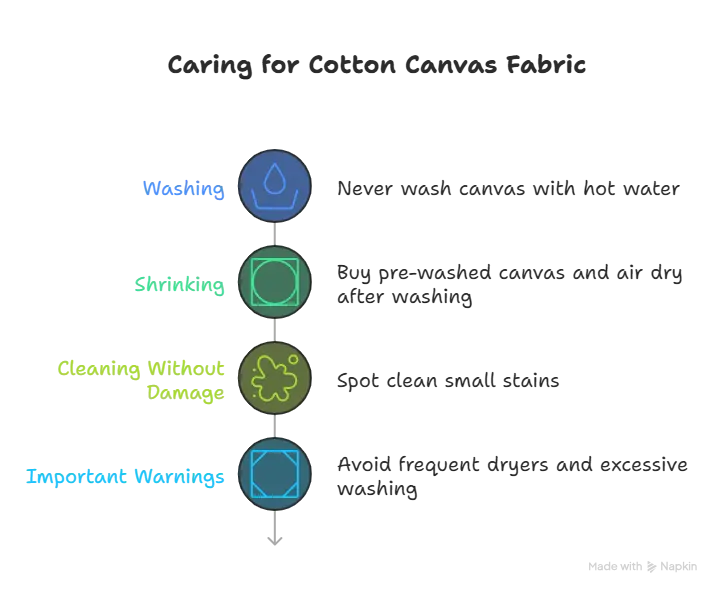
- Never wash canvas with hot water. The fabric can be shrunk by hot water. In addition, do not use harsh detergents in washing the fiber.
- Shrinking
- Cotton canvas can shrink when it is washed. Thus, it is safer to use pre-washed canvas. Drying by air is also a way of minimizing shrinkage.
- Cleaning Without Damage
- Small stains are best cleaned by spot cleaning. A soft brush or cloth is used. This technique makes the textile durable.
- Important Warnings
- Do not use dryers frequently. Do not wash the product too much as well, to preserve its strength. Canvas lasts longer when well taken care of.
Is Cotton Canvas Eco-Friendly?
The natural fibers are used to create cotton canvas. It is thus green and more eco-friendly. This is more preferable to synthetic fabrics. Nevertheless, ordinary cotton agriculture involves use of water and chemicals. Organic canvas is more appropriate, that is why. It is much simpler to the environment.
Therefore, when you think of being sustainable, then use organic cotton canvas. It promotes sustainability and environmental friendliness.
Conclusion-
The strength and versatility of cotton canvas fabric is distinctive. It has a plain weave, but it gives big strength in terms of durability. Due to this reason, it is applicable in the daily as well as in work-intensive applications.
However, it is stiff, but it becomes easier with time. Besides, it is breathable and naturally comfortable. It is however not absolutely waterproof and therefore you should make a wise choice.
Canvas is a powerful fabric in case you require a long lasting and working fabric. All one has to do is to choose the type that suits you, and it will last a lifetime.
Read More>> What is Cotton Voile Fabric?
FAQs
Yes, the cotton canvas is very tough because of tight plain weave. It is tear free, abrasion free and can withstand lots of wear. Thus, it is commonly applied to bags, tents and work wear.
Cotton canvas does shrink, particularly on the first washing. High heat and hot water enhance the possibility of shrinkage. As such, cold water and air drying should be used.
Canvas is in reality a form of cotton material but thicker in structure. It is stronger and more durable compared to ordinary cotton fabrics. But ordinary cotton is softer and more fitting to dress up.
Yes, bags and backpacks should be on canvas. It is able to bear a lot of weight and does not tear or deform. Thus, numerous brands apply it to everyday bags which last long.
Yes, it is natural cotton canvas so it absorbs water due to the fibers. Waxed or treated canvas can however withstand water to a certain degree. Nevertheless, it is not a hundred percent waterproof just like synthetic materials.