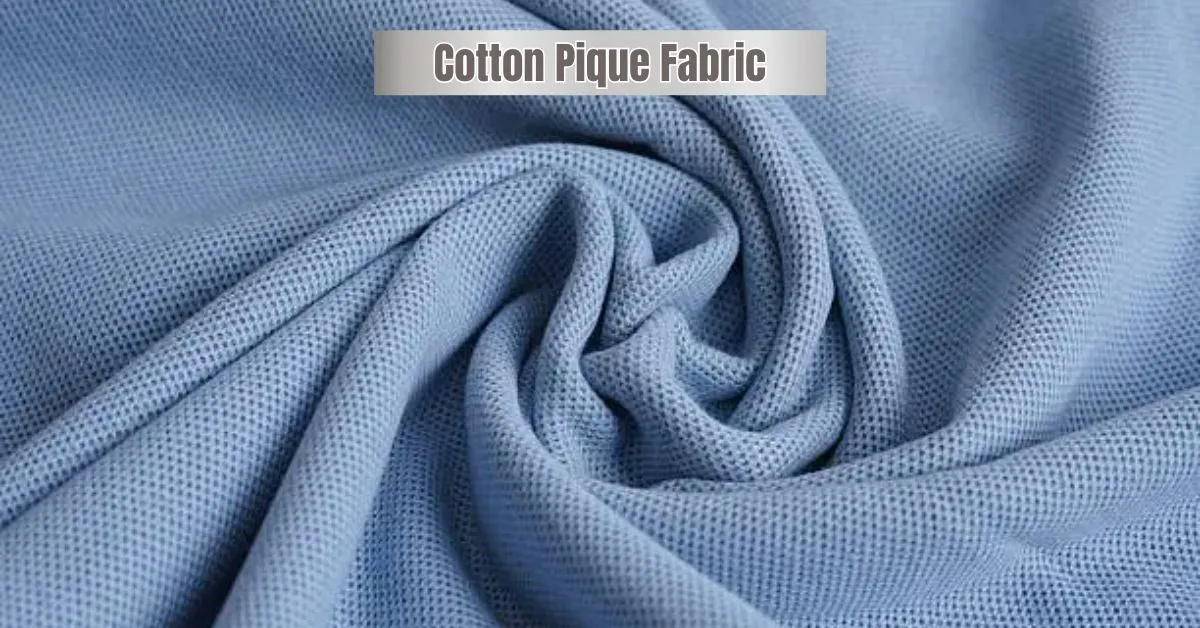

Cotton piqué is a durable, textured cotton fabric that has a corded or waffle-like appearance. Its unique knit texture creates air pockets, resulting in a breathable, absorbent cloth. The textured and robust cotton piqué fabric is perfect for polos and casual sportswear.
What Is Cotton Piqué Fabric?
Cotton piqué is a cotton-fiber knitted or woven fabric. It has a honeycomb (waffle) texture produced by double weft-knitting or dobby weaving. This creates a textured effect (ribs, cords or honeycombs) on the fabric. This texture is what gives piqué its distinctive appearance, but also makes it strong but lightweight. So, cotton piqué is a textured and airy cotton used in a variety of casual and semi-formal clothing.
What Does “Piqué” Mean in Fabric?
Piqué is derived from the French word for “to quilt” or “to prick”. It refers to its quilted look. Piqué’s quilted texture provides less skin contact and improved air circulation. As such, the quilted structure makes piqué extremely breathable, moisture-absorbent, and strong. This makes piqué ideal for warm-weather and sportswear.
How Cotton Piqué Fabric Is Made
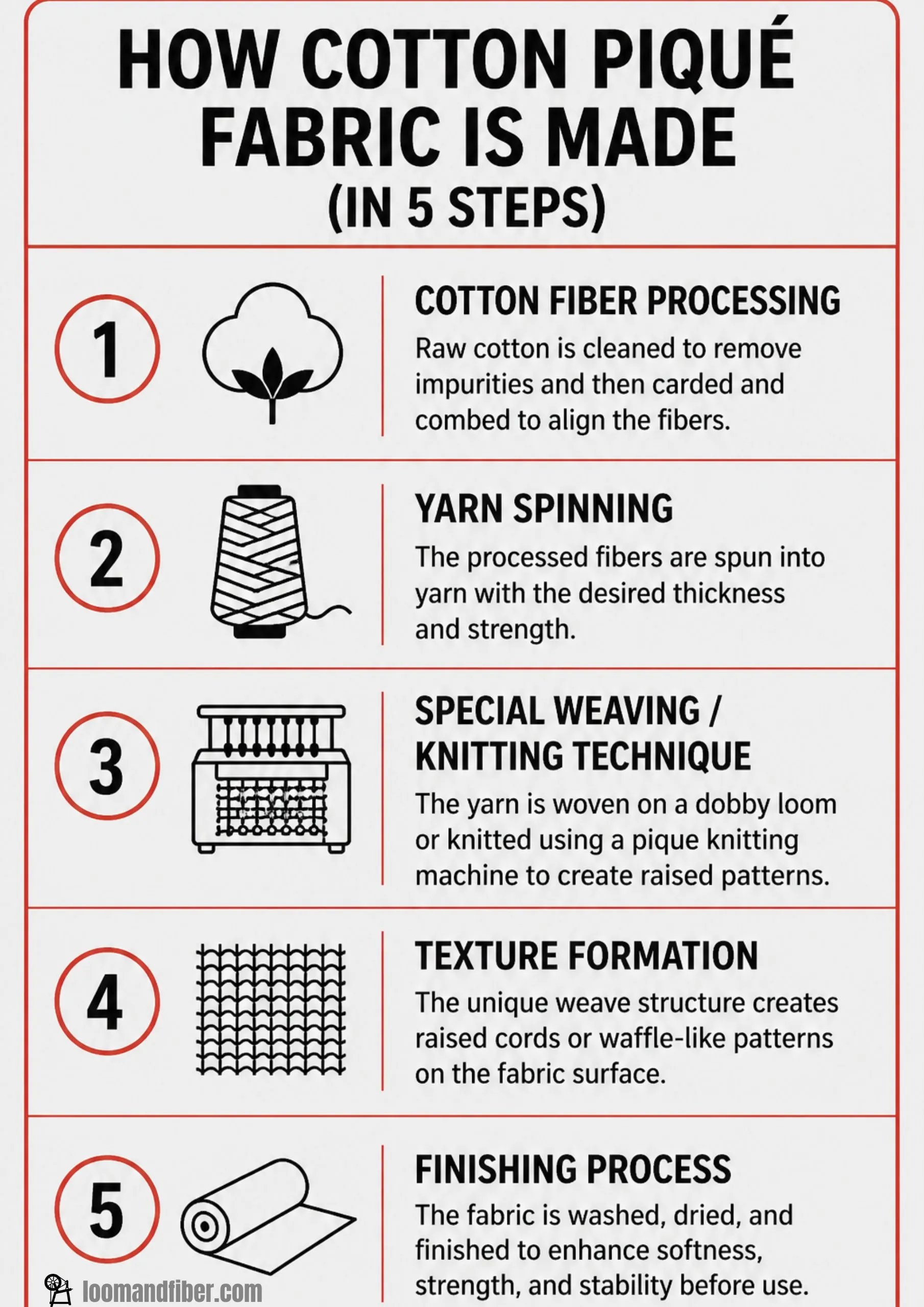
Cotton Fiber Preparation: Quality cotton bolls are ginned and spun. The cotton can be combed or mercerized to enhance strength and softness.
Dobby Loom for Pique: Woven pique is woven on a dobby loom or Jacquard loom. This raises selected warp yarns to form geometric designs (in honeycomb or waffle patterns) in the fabric.
Rea More>> What is Jacquard Cotton?
Double-Knit Pique: For knitted pique, two sets of yarns are combined using specialized knitting techniques to create the fabric structure. One set of yarns creates the front pattern (to form the ribs or bumps) and the other set sits on the back. The two sets of yarns knitted together give the elasticity and texture of piqué.
Creating the Texture: As weaving or knitting proceeds, the pattern of the fabric is created: tuck stitches or corded weaves are formed into small raised areas. This creates the honeycomb or birdseye effect. The textured structure inherently forms spaces for air and, thus, piqué is a light and breathable fabric.
Key Characteristics of Cotton Piqué Fabric
- Waffle/Honeycomb Texture: Mainly known for its raised weave. Pique has a slight waffle or honeycomb texture that’s visible. This creates a textured pattern and provides traction.
- Breathable: The small spaces between the fabric make pique very airy. So it’s cool in hot weather.
- Long-lasting: Pique is more resistant to stretching than flat knits. It is generally more resistant to losing shape than many flat knits, though it may still stretch over time.
- Slightly Heavier Weight: Pique is slightly heavier than a jersey knit cotton. It’s heavier, which makes it more durable. Medium weight pique can be a little bulky.
- Sweat-Wicking: The textured structure helps absorb moisture and allows airflow for better comfort. When coupled with breathability, cotton pique can help to keep you dry.
Types of Cotton Pique Fabric
Knit Pique
Knit piqué is traditional polo shirt fabric. It is typically made using a knit structure with tuck stitches, giving it a slight waffle appearance. It’s stretchy and flexible due to the double knit, which makes it soft and comfortable. Knit piqué is generally a lightweight to medium weight, and has a good drape with some firmness. It is typically found in sport polos and sweaters.
Woven Pique
Woven piqué’s pattern is created by weaving (usually on a dobby or Jacquard loom). This time, the fabric has raised parallel cords or ribs. Woven piqué is less stretchy but more rigid than knit. It was traditionally used for formal clothing (such as shirt fronts and ties) and is now used for dress shirts, jackets and cotton furnishings. Its appearance is quilted, making it look especially elegant.
Birdseye Pique
Birdseye piqué has a fine, diamond (or hexagonal) pattern. The texture of the dots resemble a small “bird’s eye”. The small weave improves air circulation and absorption of moisture. It is typical of more elegant casual clothing, or high-quality polo shirts. By not being too obvious, the fabric appears mostly solid even though you can see the tiny honeycomb weave up close.
Honeycomb Pique
Honeycomb piqué has a bigger cell-like pattern (like a honeycomb). It creates larger raised areas and larger troughs. This creates a very three-dimensional effect. Honeycomb piqué is generally heavier and bulkier. It’s typically used in warm-weather polos, as well as in dresses. This term refers to the design of the raised pattern, which enhances airflow, while stretch depends on the knit structure and fiber content.
Common Uses of Cotton Pique Fabric
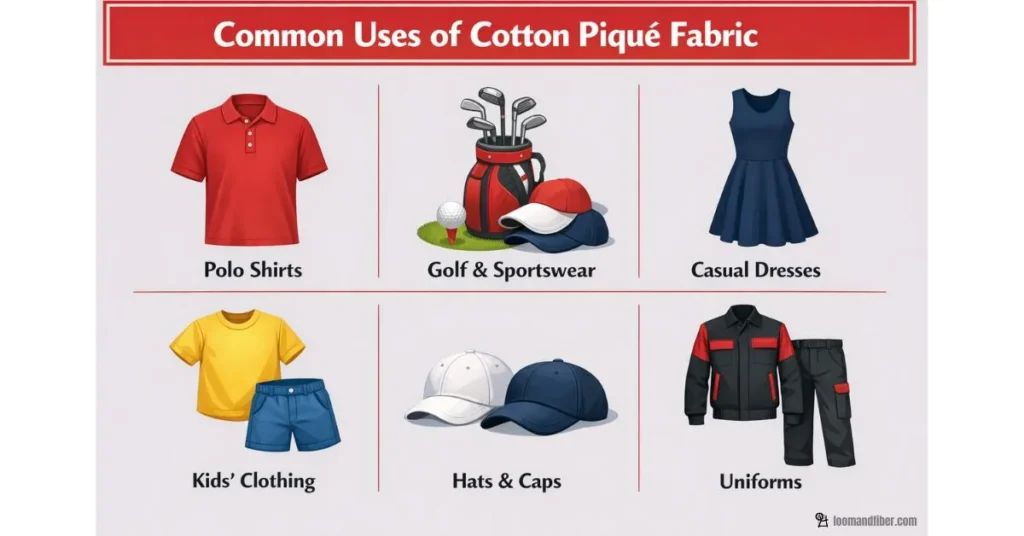
- Polo Shirts: Their most classic use. Piqué knit is the fabric of choice for polos, particularly golf or tennis. This material has a stiff texture and collar stand, ideal for the sporty, preppy polo.
- Sportswear: In addition to polos, cotton piqué is used in golf shirts and casual sports tops. The moisture-wicking and breathability make it perfect for casual exercise and hiking.
- Casual Tops: There are many knit piqué tees and sweaters with a smart-casual appearance. For instance, long- or short-sleeve piqué tees use the material for its texture.
- Dresses & Skirts: Medium-weight piqué is used for tailored summer dresses, skirts and blouses. The texture lends elegance and structure, without being stiff.
- Home Textiles: Woven piqué (a type of quilted cotton) has been used in bedding, quilts and even diapers. These traditional applications take advantage of piqué’s texture and softness.
Cotton Piqué vs Other Fabrics
Cotton Piqué vs Jersey
Piqué and jersey are both cotton knit fabrics, but they have different constructions. Piqué fabric has a textured surface (similar to waffle or fine ribbing) and jersey is plain. So pique fabrics tend to be crisp (for instance, collars will stand), while jersey drapes and feels softer. Here are a few differences:
| Property | Cotton Piqué | Cotton Jersey (T-Shirt) |
|---|---|---|
| Texture | Raised, structured waffle/honeycomb | Smooth, flat knit surface |
| Breathability | High (air circulates in texture) | Moderate (solid knit) |
| Durability | Generally durable, though this depends on fabric quality and construction | Less durable over time |
| Collar Support | Sturdy (stands up without interfacing) | Slouchy (needs interfacing to stiffen collars) |
| Common Use | Polo shirts, uniforms, smart polos | T-shirts, casual tees, undergarments |
Cotton Piqué vs Interlock
Interlock is a double-knit (like piqué), with a mirror-like surface. A comparison:
| Property | Cotton Piqué | Interlock Knit |
|---|---|---|
| Texture | Textured weave (waffle/rib) | Very smooth; flat on both sides |
| Weight | Light to medium weight | Generally medium-heavy |
| Breathability | High (due to textured mesh) | Moderate (denser knit) |
| Stretch | Moderate stretch | Stable structure with moderate stretch |
| Typical Use | Polo shirts, golf apparel | T-shirts, leggings, undergarments |
Cotton Piqué vs Polyester Blends
Piqué can be made with blends of polyester or spandex. Here’s how they compare:
| Property | 100% Cotton Piqué | Piqué Blend (Cotton/Poly) |
|---|---|---|
| Material | Pure cotton yarns (natural fiber) | Cotton mixed with synthetic fibers |
| Feel | Soft, natural softness (can be slightly coarse in weave) | Slightly smoother or silky if blended with poly or spandex |
| Moisture Handling | Breathable, absorbs sweat comfortably | Wicks moisture and dries faster |
| Durability | Durable; breathable but can fade/shrink | Very durable; resists fading and shrinking |
| Use Case | Classic polos, casual wear | Sports polos, uniforms, stretchy activewear |
Advantages and Disadvantages

Comfortable & Ventilated: Piqué’s bumpy knit allows air to flow through, keeping you cool. Piqué feels like a T-shirt to many because it absorbs moisture and is soft on skin.
Durable: Piqué has a coarse texture, making it wear well. It can hold up to repeated washings, though it may sag or pill over time. It retains its shape, so collars don’t flop.
Retains Shape: Piqué knit has a “backbone” thanks to the honeycomb pattern. If you want a shirt collar that doesn’t flop, go for piqué. You don’t need collar stiffeners.
Stylish Texture: The ribbed or waffle texture creates a more “expensive” look than regular cotton. It gives a little texture to flat knits, making them look more expensive.
Thicker Fabric: With extra yarn and a different weave, piqué is heavier than smooth jersey. This can make it bulky for some applications. It’s not as drapey as a typical T-shirt.
Can Shrink: Piqué, like other 100% cotton fabrics, can shrink in the wash, particularly if not pre-shrunk. Washing and drying at high temperatures may shrink. Pre-shrunk or gentley washed pique is ideal.
Not as Soft as Jersey: Texture, while desirable, may be less soft than flat knits. Cotton jersey can be softer and stretchier than pique to some people. Piqué may need to be broken in or made with the highest quality cotton (such as Pima) for softness.
Is Cotton Pique Good for Summer?
Yes. Cotton piqué is great for hot weather. The waffle-knit weave of cotton piqué creates air pockets that help circulate air and whisk moisture away. In fact, piqué is breathable and helps keep you cool in the heat of the day. This is why cotton piqué is often used in golf and tennis shirts. Designers explicitly report that piqué “excels in warm temps” due to its textured surface which reduces fabric cling and improves airflow(and increases ventilation).
Read More>> Types of Lightweight Cotton Fabric for Summer.
How to Identify High-Quality Cotton Pique

- ✔ Fabric Density
- Higher density means better durability
- Feels solid and well built
- ✔ Texture Definition
- Clear and consistent pattern
- Indicates good manufacturing quality
- ✔ Cotton Quality
- Combed cotton feels smoother
- Uncombed cotton may feel coarser
- ✔ Stitching Quality
- Even and tight stitches
- Longer-lasting fabric
Pricing Guide: Is Cotton Piqué Expensive?
Cotton Type: High quality cotton (Pima, Supima, organic) pique is more expensive. Regular cotton pique is reasonably priced, but premium cotton or novelty finishes add to the cost.
Brand & Source: Polo brands with designer piqué fabric will be more expensive. Generic pique fabric (by the yard) is inexpensive, but mill-made pique is expensive.
Fabric Weight (GSM): Thick pique fabric has more yarn and will be more expensive. Lightweight pique is more affordable, but heavy pique (for jackets or heavy polos) is pricier.
Specialty Trets: “Pre-shrunk” or “moisture-wicking” pique or with anti-microbial finishes may be slightly more expensive as a result.
In general, cotton pique will cost mid-market for cotton. Be sure to compare apples to apples in fabric content and weight.
Care and Maintenance Tips
- Use Cold or Warm Water: To prevent shrinkage, wash cotton piqué garments in cold or warm water on a delicate cycle. Avoid vigorous washing.
- Don’t Dry at High Heat: Cotton will shrink and weaken. Use low heat or air dry your piqué. Take them out of the dryer quickly to avoid wrinkles.
- Iron Inside-Out: If ironing is necessary, iron inside-out. Iron on medium heat. This prevents ironing the texture flat and preserves the 3-dimensional finish.
- Use Mild Detergents: Strong chemicals or bleach will harm cotton and bleach dyes. Opt for a mild detergent, particularly for dyed piqué.
- Avoid Heavy Bleaches or Solvents: Cotton piqué takes dye and can be weakened by bleaches. Use mild soapy water for spills.
Is Cotton Pique Sustainable?
The sustainability of cotton piqué largely depends on the cotton used. Traditional cotton cultivation uses too much water and pesticides. But organic cotton piqué avoids synthetic chemicals, though water usage can still vary depending on farming practices. Indeed, there is even GOTS-certified organic cotton pique. And many modern piqué blends are made with sustainable materials. For instance, sustainable pique can be made from bamboo, lyocell or recycled polyester.
Another eco-friendly feature: pique clothes are durable, so may last for many years. By investing in a long-lasting cotton pique dress or polo shirt that you wear often, you’re being more sustainable than buying multiple low-cost fast fashion shirts. So, 100% non-organic cotton piqué is no more sustainable than conventional cotton, but choosing versions with organic or recycled cotton, or mixes with eco-friendly fibers, are good choices.
Conclusion-
So, you know what cotton pique is. It’s a textured cotton fabric that’s durable and breathable. Also, it’s ideal for summer clothes and polo shirts.
Also, it has a crisp appearance making it fashionable. While it has some cons, it has more pros.
If you want to explore more, you might also find cotton jersey, cotton broadcloth or double gauze interesting.
So, will you be wearing cotton piqué next?
FAQs
Cotton piqué is most commonly used for polo shirts, sportswear and casual wear. It’s breathable and structured.
It depends on use. Piqué is firmer and less stretchy, jersey is softer and stretchy.
Yes, it will shrink in hot water. So, check labels.
Yes, the weave is breathable. So, it’s cool.
Because it is breathable, durable and structured. So, it is comfortable.