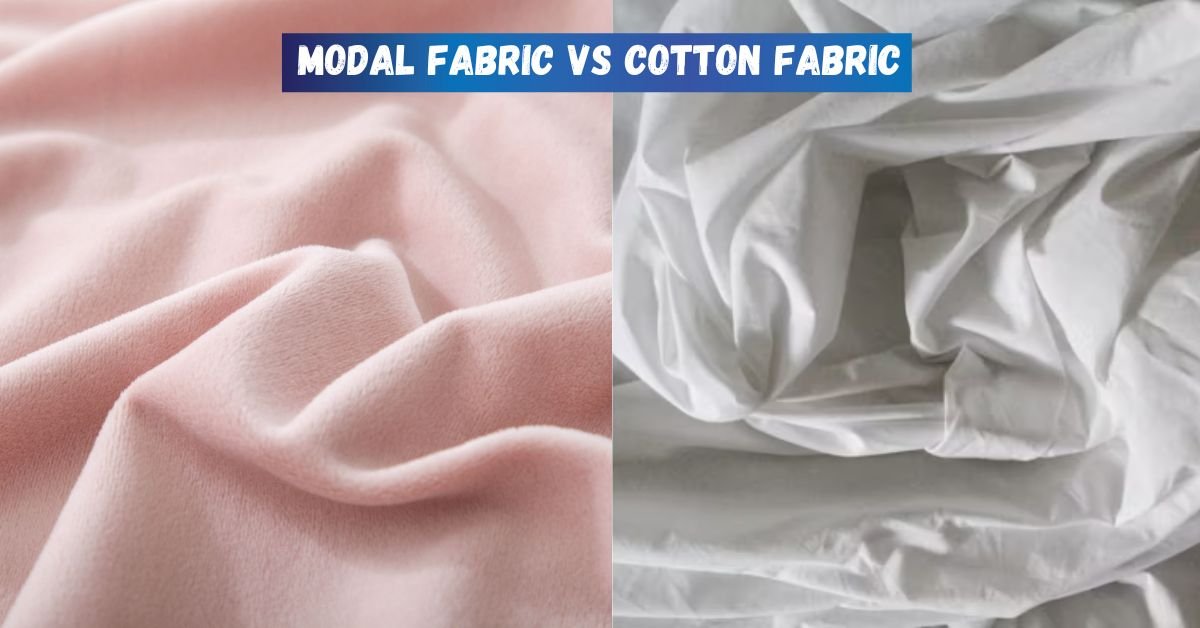

Introduction
In the battle between modal fabric vs cotton, a lot of people wonder which is better in terms of comfort, performance, or eco-friendliness. Both modal and cotton are popular for clothing, home textiles, and personal wear because they are soft and breathable. However, these two materials, while they may seem alike at a glance, possess unique attributes which makes each of them suitable for specific uses.
From a consumer’s standpoint, the questions arise: is workout clothing made from modal fabric better? And is cotton still king for everyday comfort? These questions, and others, from fashion to functionality are valid. The goal of this article is to explore and answer questions ranging from texture and durability to sustainability and price, helping the reader to make an informed decision.
| Feature | Modal | Cotton |
|---|---|---|
| Origin | Beech tree pulp | Cotton plant fibers |
| Softness | Extremely smooth & silky | Soft but slightly textured |
| Breathability | Excellent | Very good |
| Moisture-Wicking | High (absorbs ~50% more than cotton) | Moderate |
| Durability | Moderate | High |
| Shrink Resistance | Resistant | Prone to shrinkage |
| Wrinkle Resistance | Resists wrinkles | Wrinkles easily |
| Eco-Friendliness | Sustainable if closed-loop | Sustainable if organic |
| Cost | Medium to high | Low to premium |
Modal Fabric Overview
Definition and Origin
Modal fabric is a semi-synthetic fabric which is a result of the fabric’s modal process, which occurs through a chemical process. It is a type of rayon, but unlike the other types, modal is more refined, making it more durable and soft compared to standard rayon. It was developed in the 1950s in Japan, and it enjoyed an increased popularity due to its luxurious feel.
Let’s take a look at how wood pulp is transformed into silky fabrics. Fibers obtained from spinning wood pulp are woven into fabrics and today, modal is extensively incorporated into active wear, undergarments, and even loungewear owing to its soft texture and high absorbency.
Manufacturing Process
In contrast to polyester, which is fully synthetic, modal is partially derived from natural sources. Modal is a fiber derived from beech wood which undergoes a chemical process such as soaking beech wood chips in sodium hydroxide so that the cellulose within the chips can be extracted. Through purification, the cellulose is extracted in fibers, ready to be spun and dried into machinery.
Though modal still makes use of a chemical process, a lot of manufacturers today have adopted closed-loop techniques which allow the recycling of the water and solvents used in the bottom line, making modal fiber partially more eco-friendly than other semi-synthetic fibers.
Key Properties of Modal
- Softness: Compared to cotton, modal is smoother and soft and is often compared with silk.
- Breathability: It allows air to pass through, so it can keep you cool and dry.
- Moisture-wicking: Modal is able to absorb 50% more moisture than cotton, which is great if you are in a really sweaty environment.
- Stretchability: Compared to normal cotton, modal offers greater stretch and is even more comfortable.
- Color retention: Modal dye proves the fabrics can keep colors luminous even more vivid.
Pros and Cons of Modal Fabric
Pros:
- Extremely soft
- Excellent moisture absorption
- It does not fade easily
- Resists shrinkage
Cons:
- More expensive than regular cotton
- May pill over time
- It requires gentle washing and proper care for long lasting
What is Cotton?
Definition
Cotton is a natural fiber from the fluffy bolls of the cotton plant. Its been used in textiles for thousands of years. Its appeal lies in its breathability, durability, and versatility. Cotton is easy to grown, harvested, and spun into yarn.
Cotton is a natural fiber and is bio-degradable, making him friend of Mother Nature. Also, it is soft and hypoallergenic, and suitable for babies and people with soft skin.
Types of Cotton
- Organic Cotton: Grows with no harmful pesticides or synthetic fertilizers. Its safer for the skin and better for the environment.
- Pima Cotton: One of the better known types of cotton, with longer and softer fibers.
- Egyptian Cotton: Premium cotton grown in Egypt with long fibers making the fabric luxuriously soft and strong.
This variation can be quite useful when balanced with your specific demands.
Key Properties of Cotton
- Breathability: Air circulation is easy and abundant.
- Durability: Woven cotton keeps its strength over time.
- Hypoallergenic: Ideal for people with sensitive skin and those who easily develop allergies.
- Easy care: Most cotton fabrics can be washed and maintained with machines, making their care simple, but be careful to avoid shrinkage.
Pros and Cons of Cotton
Pros:
- Cotton is durable
- It is an affordable
- Having hypoallergenic properties
- Easy to wash and care
Cons:
- Cotton shrinks easily
- Wrinkles quickly
- Conventional cotton uses heavy pesticides and high water consumption
Modal vs Cotton: Key Comparisons
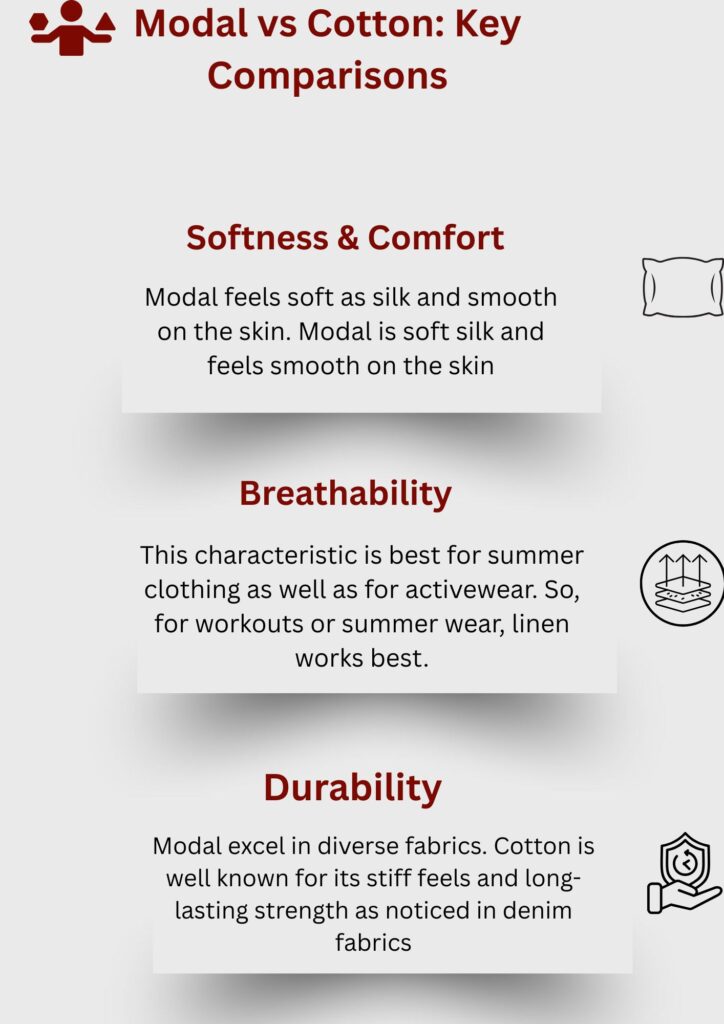
Softness & Comfort
Modal feels soft as silk and smooth on the skin. Modal is soft silk and feels smooth on the skin. While Modal does soften further with wash, cotton, for its part, has a soft but stiff start.
Here, cotton is extracted for its soft feels and luxurious experiences.
Breathability
This characteristic is best for summer clothing as well as for activewear. So, for workouts or summer wear, linen works best.
Durability
Modal excel in diverse fabrics. Cotton is well known for its stiff feels and long-lasting strength as noticed in denim fabrics. While Modal can be strong, its stretchable and flexible nature is prone to fabric pilling. But there are Low grade cotton and blends that modal fades in due to its low grade.
Environmental Impact
Modal production doesn’t require as much water and land as conventional cotton farming does. Also, the closed-loop manufacturing system does not do any more harm than is necessary. Still, the use of chemicals within the production of modal could be problematic if not certified “green.”
Among the different varieties of cotton, organic cotton is the most sustainable while conventional cotton is extremely water intensive and full of pesticides.
Shrinkage & Wrinkling
Modal does not shrink nor wrinkle, making it perfect for low-maintenance clothing. However, cotton does shrink in pure forms and often needs to be ironed, especially after washing.
Care & Maintenance
Modal can be more difficult to wash and dry compared to cotton because it is more delicate and needs to be washed in cold water. Drying at high heat can also be damaging. Ironing is often necessary for cotton clothing and wash.
Cost Comparison
Modal is more expensive than cotton, but not as expensive as Egyptian or Pima cotton. Modal’s more complicated production also brings it more expensive than moderate quality cotton, the prices of which vary widely in accordance to its type and quality.
Best Uses
- Modal: Perfect for exercising, sleep, and any form of movement like stretching, or sweating.
- Cotton: Best for basic apparel and wear, bedding, t-shirts, and garments that require frequent washing.
Is Modal More Breathable Than Cotton? (Scientific Comparison)
Both modal and cotton are breathable since they are fibers that are made out of cellulose. But modal fibers are finer and smoother as compared to cotton fibers. This enables the circulation of air and also enhances moisture uptake.
In comparison to cotton, modal can absorb much more moisture without becoming wet. That is why modal garments are usually cooler to wear in the course of exercise or in hot temperatures.
Cotton is also a good breathable cloth, although when one is drenched it can retain moisture longer. Modal evaporates moisture more quickly, and is therefore more appropriate on active lifestyles.
Technically, modal has a slight advantage in moisture management, whereas cotton is also good in general breathability.
Modal vs Cotton vs Bamboo Fabric
Bamboo comes up very often when the issue of fabrics as a means of comfort and longevity is discussed.
| Feature | Modal | Cotton | Bamboo |
|---|---|---|---|
| Softness | Silky smooth | Soft | Very soft |
| Breathability | Excellent | Very good | Excellent |
| Moisture Control | High | Moderate | High |
| Sustainability | Good (closed-loop) | Good if organic | Good (varies by process) |
| Durability | Moderate | High | Moderate |
| Cost | Medium | Low to High | Medium |
Bamboo fabric is praised as soft and antibacterial in its reputation whereas modal is praised as moisture controlling. Cotton is the most adaptable and the strongest.
Modal and bamboo compete closely and have similar conditions in terms of sustainability and softness. Cotton would win in case the durability and the price are of the highest concern.
Sustainability: Modal vs Cotton
Modal: Eco-Friendly Advantages
Modal is eco-friendly because it is biodegradable, and its extraction processes make use of sustainable forestry methods. Its land and water use is lower than that of cotton. Companies like Lenzing use a closed-loop system to produce modal, which limits land and water use, and emission and solvent wastage.
Modal does raise some concerns its chemically processes, which does require using harmful substances unless strict environmental standards are meetings.
Cotton: Environmental Work and Challenges
Standard cotton growing practices require a lot of water and use harmful pesticides. This is bad for the environment and for nearby communities. A more sustainable option is organic cotton, which does not use harmful chemicals.
Buying certified organic cotton drastically reduces the harmful impact of cotton farming.
Related phrases: is modal sustainable, the impact of cotton on the environment
Modal vs. Cotton: Which Is Better For Different Uses?
Which Is Better for Gym Wear?
The modal is typically an excellent choice to use in workouts since it is efficient in wicking moisture and it is lightweight. Cotton absorbs and remains wet longer which can be uncomfortable when doing vigorous exercises.
Which Is Better for Summer?
Both of the fabrics are breathable, yet modal is cooler due to its better moisture management. Cotton can also be used in summer particularly in lightweight weave.
Which Is Better for Winter?
Cotton is better used as a layering in winter since cotton fabrics of a thicker nature are warm. Modal is light and more appropriate during the transitional seasons.
Which Is Better for Babies?
The reason why organic cotton is mostly used on babies is because it is natural and free of chemicals. Modal is soft enough, but parents usually resort to organic cotton as it is better with sensitive skin.
Underwear: Which Is Better?
Modal is very popular with underwear due to its softness and stretchiness being silky. Cotton makes the clothes breathable and safe in everyday use.
What Is Better with Bed Sheets?
The modal sheets are luxurious and smooth, and do not shrink. Cotton sheets are long-lasting and crisp particularly the long-staple sheets as the Egyptian bed sheets. The decision would be whether to go with an ultrafine smooth feel or go with traditional cotton coziness.
Modal vs. Cotton: Which One Should You Choose?
Comfort and Softness → Modal
Modal is best for comfort clothing because it is ultra-soft and silky. If luxury and feel are the priorities, consider modal.
Durability and Easy Care → Cotton
Modal is not as durable as cotton. It does not stand up to regular washing, rough use, or long-term wearing like cotton does. It is best suited to items used on a daily basis.
For Workout Clothes → Modal is the Winner
When it comes to gym wear, yoga, or any kind of active wear, modal is the best option because it is quick to dry and moisture-wicking.
For Sensitive Skin → Opt For Organic Cotton
For those with sensitive skin, organic cotton is the best option because of its hypoallergenic benefits and chemical-free farming practices.
Common Misconceptions
“Modal is synthetic”
This is a common myth. Modal is semi-synthetic, meaning it’s made from natural materials but processed with chemicals. It’s not fully synthetic like polyester.
“Cotton is always better”
While cotton is versatile, modal may outdo it in softness, moisture control, and eco-friendliness. The better option depends on the specific use case.
Common Uses of Modal Fabric vs Cotton
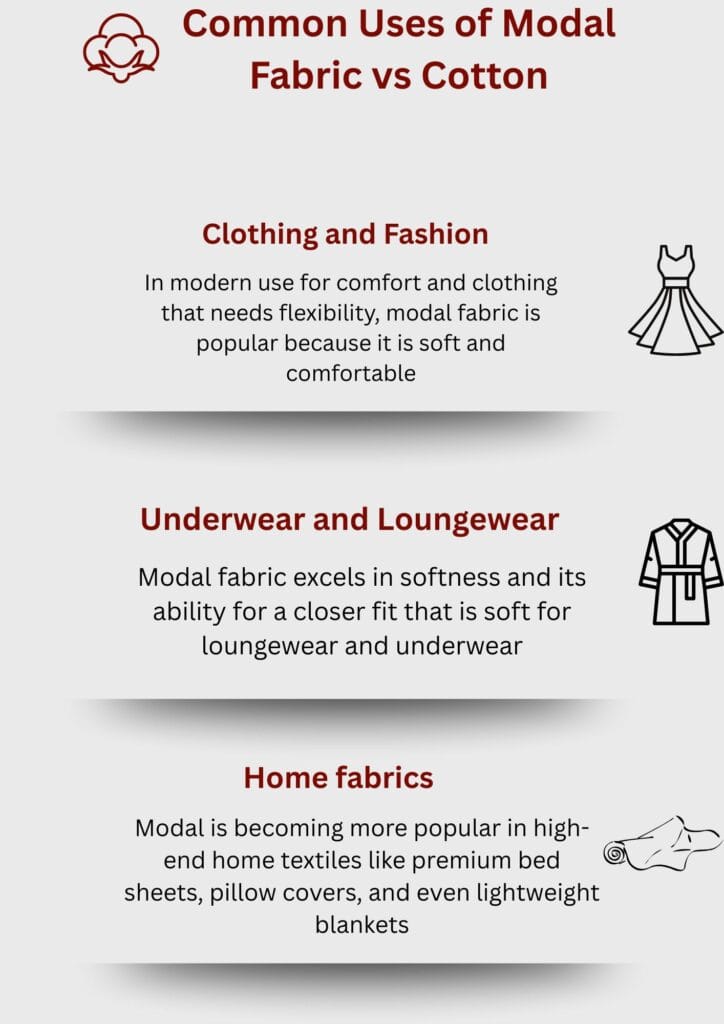
Clothing and Fashion
In modern use for comfort and clothing that needs flexibility, modal fabric is popular because it is soft and comfortable. It is also used in activewear, yoga pants, undergarments, and stylish loungewear. Modal is commonly used in activewear, yoga pants, undergarments, and stylish loungewear. Breathing and wickable in nature, modal’s texture compliments skin and keeps smooth against it. On the other hand, cotton is the choice fabric for casual everyday clothing for t-shirts, jeans, dresses, or even for children. It is breathable and durable which makes it a timeless apparel fabric used around the globe for everyday wear.
Underwear and Loungewear
Modal fabric excels in softness and its ability for a closer fit that is soft for loungewear and underwear. Because underwear is washed often, it needs to retain its texture, modal’s soft and smooth feel works best. While preferring breathable and natural fabrics the person spf holistic skin, cotton, a bit firmer, makes it better. Organic Boost cotton is amazing for this category especially for allergy and sensitive skin.
Home fabrics
Modal is becoming more popular in high-end home textiles like premium bed sheets, pillow covers, and even lightweight blankets. Modal’s cool, silky feel along with the graceful, luxurious drape enhances any bedroom. Cotton remains the most popular choice for home textiles. It is found in many products like towels, bed linens, curtains, and even furniture fabrics. Most households prefer cotton because it is durable and easy to look after.
How to Wash Modal vs Cotton Properly
Proper care increases fabric longevity.
Washing Modal:
- Use cold water
- Choose gentle cycle
- Avoid high heat drying
- Do not use harsh detergents
- Air dry when possible
Washing Cotton:
- Wash in warm or cold water
- Safe for regular cycles
- Can tolerate higher heat (but may shrink)
- Ironing often required
Modal must be handled a little more carefully than cotton.
Modal vs. Cotton Longevity Test: Which Lasts Longer?
Cotton can normally last long with frequent washing and heavy usage. It is mostly applied in heavy wear such as denim and hard labor.
Modal is soft and colored but can pill with time, particularly the low-end products. Modal resists shrinkage more but cotton can withstand rough treatment more.
Where long life in harsh environment is a consideration, cotton is favored. In case the aim is retaining softness, modal performs well.
Conclusion
Both modal fabric and cotton have their benefits and drawbacks. Modal fabric is best suited for soft and breathable clothing and contemporary uses. Cotton is a tried and true daily wear fabric because it is durable and easy to maintain. In terms of sustainability, environmentally friendly modal and organic cotton are equally good. Modals typically outperform in comfort and function, while cotton is cheaper and long-lasting so it is a go-to for most people.
Ultimately, the decision is yours while considering comfort, spending, how it affects the skin, and value to you. This guide helps you decide what fabric works best for you and your lifestyle.
Read More>> About the toxicity of Modal Fabric.
FAQS
It depends. Modal is better for comfort and moisture control, while cotton wins on durability and affordability.
No. Modal is more resistant to shrinkage and retains shape better than cotton after washing.
Absolutely. As it is hot out, so breathable clothes that can absorb moisture like modal is the best option.
Yes, modal is preferable in terms of sweating since it retains more moisture and evaporates quicker than cotton. Cotton would retain more sweat, and it may be wet when one is engaged in vigorous work.
Modal is soft and smooth and, therefore, can be used on most sensitive skin type. But organic cotton usually is used on very sensitive or even allergic skin.
The reason why modal is pricier is because of its advanced production and chemical treatment. It is also priced higher than normal cotton because the production process is of high quality, and it is closed-loop.
It’s interesting to see how modal is outperforming cotton in terms of softness and breathability, but I was surprised by its higher environmental impact. I wonder if future innovations could make modal even more sustainable.
Modal’s softness and breathability make it a standout fabric, but its environmental impact is an important consideration. Advancements in production methods could potentially reduce its footprint, making it a more sustainable option. Balancing performance with eco-friendliness will be key for future innovations. It’s exciting to think about the possibilities for improving such a versatile material.
I appreciate the section on environmental impact. It’s great to see more sustainable fabric options like modal coming to the forefront, but I wonder—what are some ways cotton farming can improve its environmental footprint?