

Introduction-
What do we mean by cotton flannel? It is simply a loose soft, woven, cotton fabric that has a fuzzy texture. This softness is achieved by brushing by the manufacturers. It is therefore really warm, soft and comfortable to the touch.
In the past, flannel was first found in Wales in the seventeenth century. At the moment, it was made using wool by people. Nevertheless, the current production changed to cotton in terms of comfort and low cost.
Cotton flannel is still used today due to its ability to combine breathability with warmness. In addition, it is applicable in day to day attire, bedding, and baby products. Thus, individuals are using it due to comfort-based life styles.
What Is Cotton Flannel Fabric Made Of?
100% Cotton Fibers
Cotton flannel consists of 100 percent cotton. Practically speaking this implies that it is made of spun cotton yarn, and brushed to get the nap. Cotton is a natural plant fiber and it is soft, breathable, and absorbs moisture. Long- staple cotton yarns are the best materials in producing the cotton flannel because they spin into soft and strong cloth. Actually, even the softest flannel in the market is not wool or synthetic fiber, but 100 percent cotton. Due to its pure cotton, cotton flannel has a smooth touch when it is not brushed and soft nap when brushed. It is a warm kind of light wool, yet all cotton.
Cotton Flannel vs. Wool Flannel
Flannel as an item is a product of wool though in recent times cotton flannel has been used in garments. Wool flannel is also heavier, denser and warmer because of the insulative properties of wool. Cotton flannel on the contrary is lighter and more breathable. On a practical level, the cotton flannel shirts are soft and cozy, and the wool ones are firmer and warmer (flannel suits or jackets). Wool flannel can also be itchy to some individuals compared to cotton flannel which is usually soft on the skin.
Types of Yarns: Carded vs. Combed Cotton
In the production of cotton flannel, the mills can use carded cotton yarn or combed cotton yarn. Fibers of cotton used to make carded yarn are irregularly oriented so as to have numerous short fibers remaining. This softens carded yarn and wool-like. Consequently, the flannel yarn that is carded is soft and fuzzy, although a little less uniform. On the contrary, in combed cotton yarn, the shorter fibers have been pulled off, and the long fibers brought into place. Combed yarn is less fuzzy and stronger and smoother. It creates a less despicable flannel, which is less perishable in the long run.
How Cotton Flannel Fabric Is Made
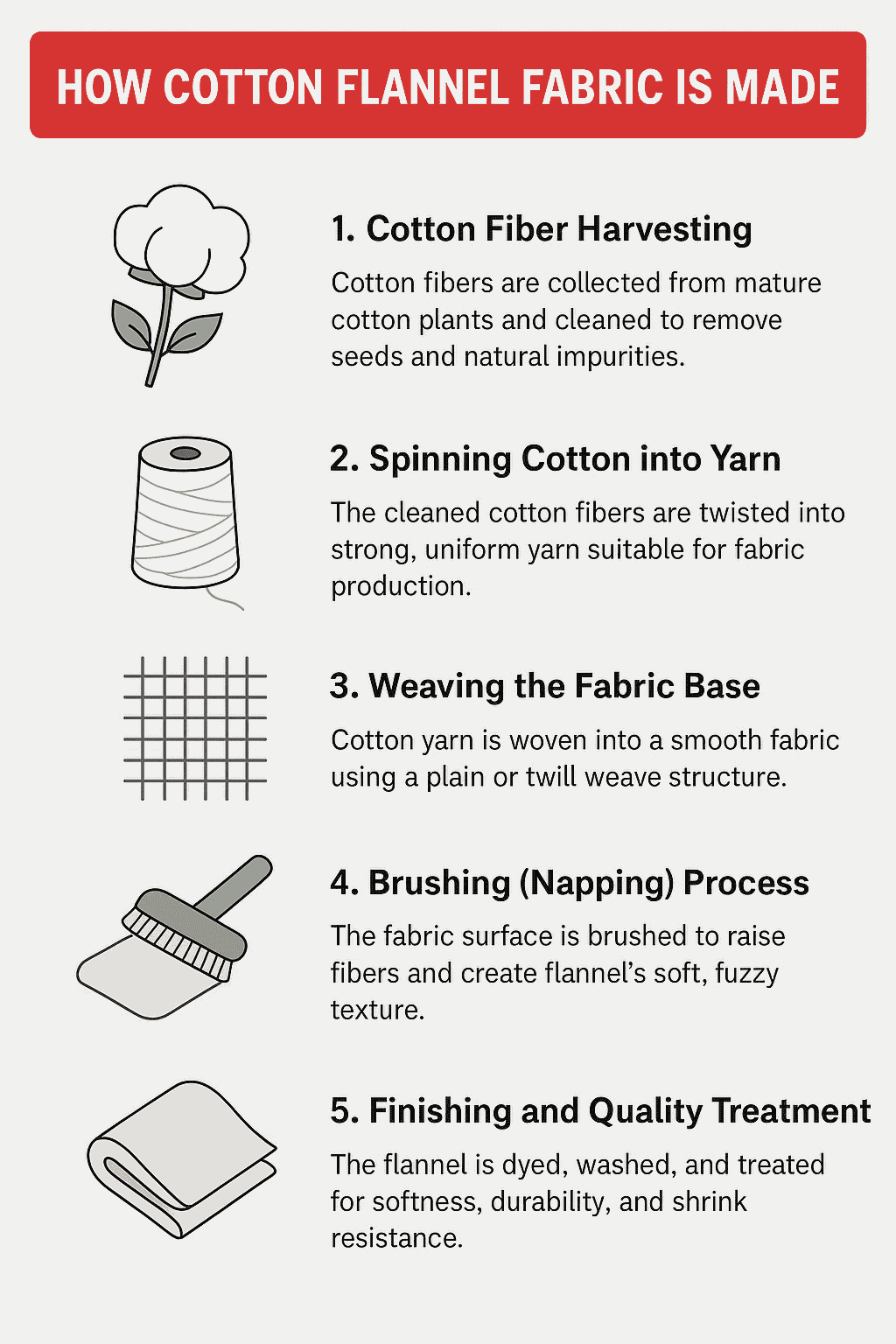
Weaving Process
The beginning of cotton flannel is through weaving of cotton yarn into a fabric. It may be plain weaved (plain over-under), twilled (diagonal ribbing). Indeed cotton flannel is woven in either twill or plain weave. The fabric selection influences the texture: a twill fabric is a stronger material that has a slight diagonal effect whereas a plain weave is less complicated and more homogenous. In both instances, the weave tends to be loose enough, such that the surface may be brushed later. The clothing can be washed or bleached after the weaving so that it is ready to be napped.
Raising (Brushing) Soften process
Once weaved, the cotton flannel is subjected to a brushing or napping process in order to make it develop its softness that is characterized. A machine that contains fine brushes (which have wire-covered rollers) works over the cloth. It is a mechanical brushing which raises fine fibers out of the loosely spun yarns to give a nap on one or both sides. Practically, operators move the cloth under such brushes several times. Every pass raises additional fibers, making the flat cotton surface look like a furred one. It is this lifting process which converts the woven cotton into soft and fuzzy flannel.
Single-Sided vs Double-sided Brushing
Manufacturers can brush cotton flannel on either side or both sides. On the inside (or outside) is a nap on single-sided flannel and the rest is relatively smooth. One side brushing leaves one side of the face soft and the other side crisp. Both sides of the flannel are brushed resulting in a nap on both sides. This renders the cloth more comfortable and kindly everywhere.
Flannel may actually be brushed on either side or both sides of the material. One-sided brushing causes the inside to be soft and the outside crisp and two-sided brushing causes all the softness and warmth to be as much as possible. The flannel that is always mostly used is the type of double-brushed type of flannel that is used in heavy winter shirts or bedding when one wants the greatest level of coziness.
Key Characteristics of Cotton Flannel Fabric
Soft, Fuzzy Texture
Brushing elevates fine cotton fibers on the cloth fabric.
Consequently, cotton flannel is soft, and smooth to touch.
Thus, it provides high levels of comfort in daytime and nighttime.
Warmth and Insulation
The tendency of the raised fibers to trap pockets of warm air is effective.
Therefore, cotton flannel assists in the preservation of body heat.
This insulation renders it to be perfect in cool and cold seasons.
Breathability
Cotton fibers are natural which enables the passage of air via the cloth steadily.
In this way, the use of cotton flannel is able to stop the accumulation of heat.
This balance makes the wearer comfortable and warm.
Weight: Lightweight vs Heavyweight Flannel
Light flannel is suitable in layering and non-cold weather.
Heavyweight flannel on the contrary offers greater insulation.
Thus, seasonal suitability is determined by weight of fabric.
Moisture Absorption
The cotton fibers are able to absorb moisture effectively on the skin.
Consequently, the cloth decreases the dampness in the course of use.
This aspect enhances comfort particularly when one is asleep.
Is Cotton Flannel Breathable?
Yes, cotton flannel is breathable since it is made using fresh cotton fibers. These are fibers which permit the passage of air to move freely. Thus, the fabric does not trap heat rather releases it.
Moreover, the weaved construction helps to maintain a constant air circulation between the strands of yarn. Cotton flannel is therefore comfortable in the long run. This aspect aids in avoiding overheating in the house.
Flannel keeps warm in cool climates and does not make one sweat. Nevertheless, in warmer regions, lighter weight cotton flannel is better. Thus, the weight of fabric is a significant factor.
Flannel is much warmer and softer as compared to poplin. Poplin remains pale and light instead. Chambray is, nevertheless, less heavy than flannel.
Is Cotton Flannel Warm?
The brushed surface of cotton flannel is a good source of reliable warmth. The fibers raised are good traps of air. Consequently, the fabric will keep natural body heat trapped.
Due to such structure, flannel does not feel heavy and feels cozy. Thus, it is the favorite of many individuals in fall and winter seasons. It is very cozy in cold mornings and evenings.
Cotton flannel is also good with pajamas, shirts, and beddings. Also, it can be worn under jackets and sweaters. It, therefore, improves the comfort during winter.
Cotton Flannel vs Regular Cotton Fabric
| Feature | Cotton Flannel | Regular Cotton Fabric |
|---|---|---|
| Texture | Soft, fuzzy napped surface on one/both sides | Smooth, flat surface |
| Warmth | Insulating and warmer, traps body heat | Lightweight and cooler |
| Best Uses | Cold-weather shirts, sleepwear, bedding | Warm-weather clothing, everyday wear |
| Durability/Care | May pill or shrink (gentle wash needed) | Generally durable, easy care |
Texture Difference
Raised fibers make cotton flannel brushed and fuzzy. Regular cotton, on the contrary, is smooth and level. Hence, the flannel has a warmer and less rough hand touch.
Warmth Comparison
Flannel traps are used to trap warm air between elevated fibers in an effective manner. Consequently, it offers visible cold weather insulation. Cotton can be worn on a regular basis and is cooler.
Best Use Cases
Cotton flannel is applicable where the shirts are used during sleep and winter. It also fits blankets and home cozy cloths. Ordinary cotton is used to fit summer services, everyday clothes and light beddings.
Durability and Care
Normal cotton also endures frequent washing and it wears out less easily. Cotton flannel can end up pilling up as a result of brushing. Nevertheless, flannel is just gently washed to retain its quality.
Cotton Flannel vs Wool Flannel
| Feature | Cotton Flannel | Wool Flannel |
|---|---|---|
| Fiber | 100% cotton fibers (soft plant fiber) | 100% wool fibers (sheep’s wool) |
| Warmth | Soft warmth, moderate insulation | Very warm, superior insulation |
| Skin Sensitivity | Gentle and good for sensitive skin | Can be itchy; wool allergens |
| Cost | Generally affordable | Usually higher-priced |
Fiber Differences
Cotton flannel is made with natural cotton fibers of plants. Wool flannel is an animal fabric that is typically wool of sheep. Thus, they are significantly different in terms of their texture, care, and comfort.
Warmth Comparison
Fashionable wool flannel provides better insulation during excessive cold weather. Cotton flannel is warming without getting too hot. Cotton, therefore, fits better in moderately cold and mild climates.
Skin Sensitivity
Cotton flannel is soft and non-irritable to the skin. It can be itchy to the sensitive users using wool flannel. Thus, cotton flannel is still safer to wear every day.
Cost Comparison
Cotton flannel is also quite cheap and available. The reason why wool flannel is more expensive is the sourcing and processing of the fibers. This has led to the preference of cotton flannel by a budget conscious buyer.
Common Uses of Cotton Flannel Fabric
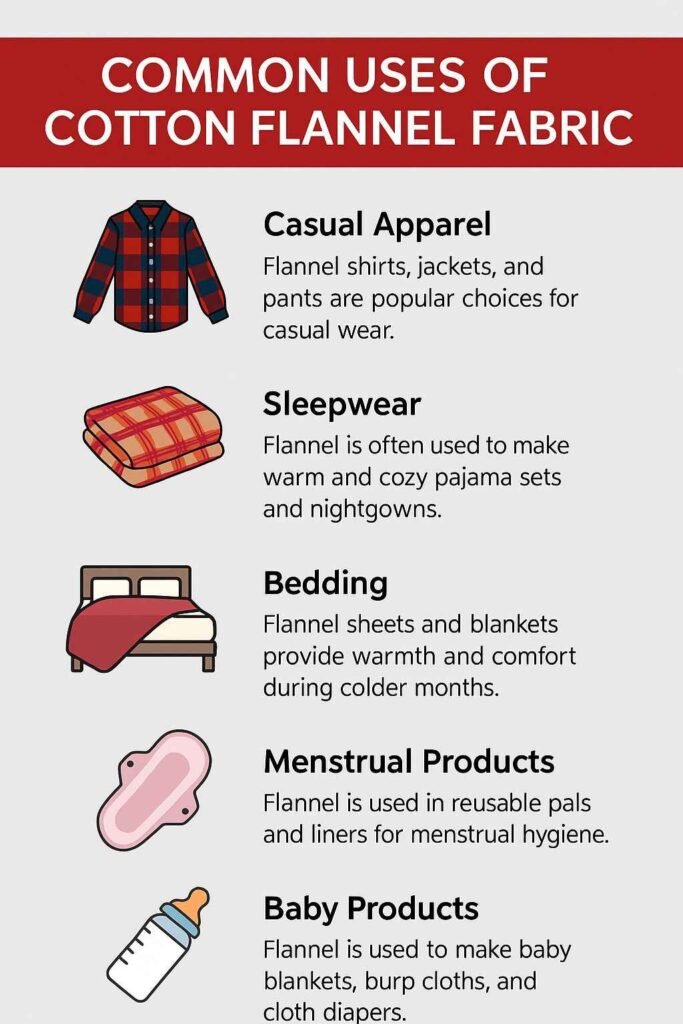
- Pajamas & Sleepwear: Traditional uses are flannel pajamas and nightgowns. It is an excellent fall and winter cozy sleepwear because the fabric is soft and warm. Actually, the flannel sheets and night clothes are promoted as one way of enabling individuals to keep warm during the night.
- Baby Clothing: Cotton flannel is used in baby clothes such as baby onesies, sleepers and baby blanket. It has a soft, cushy touch that is harmless to the skin of infants. Even baby flanneries are produced with being brushed twice, so as to make it soft. Cotton flannel is the preferred choice of parents in snuggly outfits and baby clothes because it is natural and breathable.
- Bedding & Blankets: It is insulation of flannel sheets, pillow cases and blankets that are treasured. When the weather is colder, people change their cotton flannel sheets to provide them with the additional snugness. When it gets cold blankets and flannel throws are used to provide a warm cover. The breathability is moisture-wicking and thus ensures that sleepers are not overheated.
- Home Textiles: Home Textile: In addition to clothing, flannel is used in home decor. Flannel curtains, cushion coverings, and upholster can bring about a warm rustic appearance. Home flannel material insulates: e.g. flannel curtains make rooms warmer during winter. It is also applied to throw pillows and seasonal decor to make the place look homely.
Pros and Cons of Cotton Flannel Fabric
Pros:
Cool and Comfy: Cab’s brushed surface provides a soft, smooth but plush hand-feel. It is so soft and comfortable to touch.
Breathe: It allows air to pass through and wipe the dampness, therefore, it will not feel clammy. Actually, cotton flannel is generally more breathable as compared to wool flannel.
Skin-friendly: is produced of natural cotton, and is hypoallergenic, typically used on sensitive skin and babies.
Affordable: The flannel is typically cheaper than wool or synthetic fleece because it is 100 percent cotton. You need not pay big to get warm flannel sheets or shirts.
Easy to Sew: being a cotton fabric, it is easy to sew. It is easy to cut and is applicable in numerous domestic sewing on activities such as quilting, shirts among others.
Cons:
Can Pill: Pilling of flannel, particularly when doing numerous washes, is possible. The loose strands on the surface are capable of making small bubbles. Pilling can be minimized by the use of the soft wash and not rough drying.
Shrinks without Pre-washing: Cotton tends to shrink naturally and thus unwashed flannel can shrink by as much as 2-5 percent when it is washed in warm water. To reduce shocks, it is better to pre-wash cloth or clothes in cold water.
Not Suited to Hot Weather: Since it is warm, flannel will be too thick to wear in hot summer. Flannel Light-weight flannel can be used on cool nights, but during daytime heat a thin cotton or linen will be needed.
How to Care for Cotton Flannel Fabric
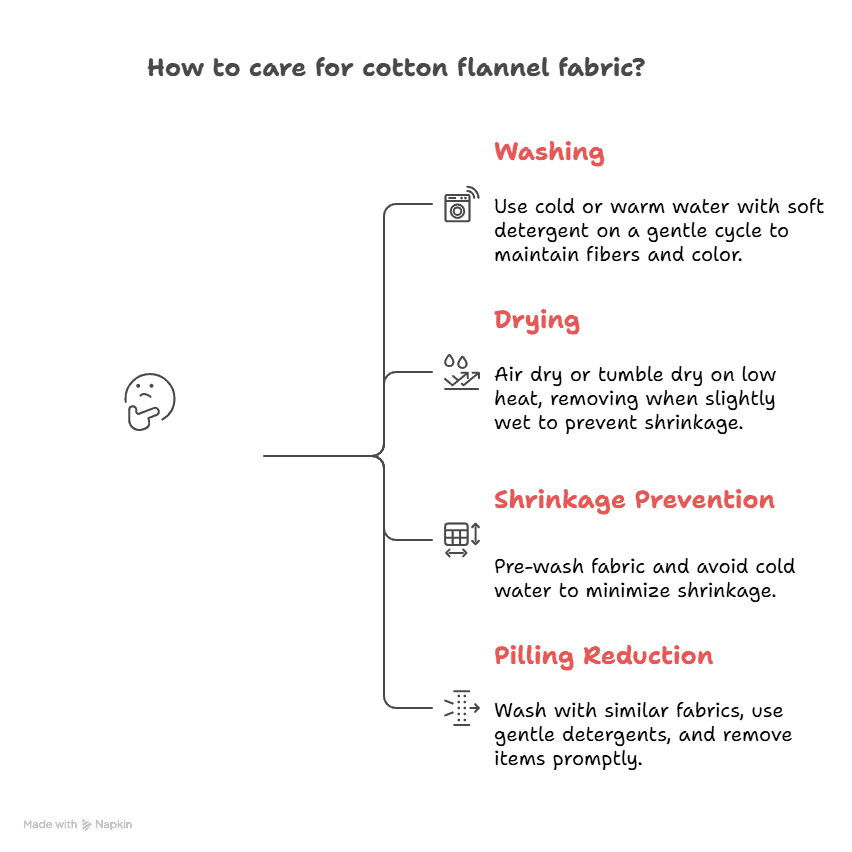
- Washing: Machine wash cold or warm (do not use hot water) on a full cycle on gentle cycle. This maintains the fibers and color. Wash with a soft detergent, no bleach. Wear clothes inside out in order to reduce friction.
- Drying: Flannel is better dried by air. When drying, tumble dry at the least heat and take out the articles when slightly wet. Fibers are prone to over-drying and high heat which leads to shrinking. Do not have too much or too much heat because even cotton flannel will shrink heavily when overheated.
- Prevention of Shrinkage: Pre-washing of flannel yardage prior to sewing will reduce the amount of shrinkage. Never wash flannel in cold water. When you will have to use the dryer, stop it. Set iron on a low if necessary. Whether it is about flannel, proper washing routine plays a major role in ensuring it is right.
- Reducing Pilling Instructions: To minimize pilling, one should wash flannel in flannel and use a gentle cycle. Do not use harsh detergents or softeners, especially liquid softeners which have the tendency to clog the fibers. It also helps to remove stuff in a timely manner and do not overload the washer. In the case of pilling, pills can be removed with the help of a fabric shaver or comb.
Cotton Flannel Fabric, is it eco-friendly?
There is cotton flannel, which is made of natural cotton fibers harvested off plants. Consequently, it can be biodegraded when it comes to the termination of its life cycle. This attribute minimizes environmental wastage in the long run.
In addition, the production of cotton does not require as much use of fossil-based materials as synthetics. Consequently, cotton flannel poses a reduced risk of microplastic in the process of washing. This advantage safeguards the water systems and aquatic animals.
Even better environmentally-friendly is organic cotton flannel. It does not use toxic pesticides and artificial fertilizers. It therefore promotes a healthy soil, water and agricultural communities.
Cotton flannel is better in the environment than synthetic flannel. Artificial flannel tends to lose microplastics in the process of washing. However, cotton flannel decomposes naturally.
And with that said, traditional cotton cultivation is capable of consuming a lot of water. Nevertheless, sustainable sourcing and organics minimize this. Thus, certified cotton flannel should be purchased by eco-conscious buyers.
How to Identify High-Quality Cotton Flannel
Fabric Weight (GSM)
An increase in GSM means durability.
Tight Weave
Very thick weaving enhances durability.
Softness Durability
Flannel that is of quality does not become stiff in the laundry.
Colorfastness
Colors must not be fast fading.
Pre-Shrunk Labels
Denotes low risk of shrinkage.
Conclusion-
Cotton flannel material is suitable to the individuals who appreciate warmth and comfort. It is suitable when it comes to sleepwear, winter shirts and bedding. Thus, it is suitable to daily home comfort. The garment suits the cool and mild weather. But then it can be too hot in hot seasons. The light weight versions are more appropriate in summer.
All in all, cotton flannel is soft, breathable and affordable. It, therefore, provides good value to comfort-driven customers. It has been a trusted and feasible piece of textile.
Read More>>What is satin silk fabric?
FAQs
The major percentage of cotton flannel fabric incorporates 100 percent cotton fibers. However, some blends exist. Hence, reading the label is still significant during the shopping process. Flannel made of pure cotton is more comfortable and has better breathability. Also, it is appropriate with sensitive skin. There is a slight difference with the blended versions.
Yes, cotton flannel may be shrunk in the heat. This risk is aggravated by hot water and high dryer settings. Thus, it is necessary to take good care. Pre-washing could cut down the shrinkage. Additionally, cold washing is less deteriorative of size. Care labels should be adhered to.
No, flannel is not a type of fiber but a type of finish on fabric. The raw material is referred to as cotton. As such, flannel may be produced out of either cotton or wool. Cotton flannel is a blend of cotton and a brushed fabric. Consequently it is warmer and softer than ordinary cotton.
Yes, the cotton flannel is soft and not irritable. It does not have rough synthetic fibers. As such, individuals with delicate skin would like it. Moreover, breathable cotton helps to eliminate discomfort of the skin. The feature assists in avoiding redness and itching when worn.
Cotton flannel is good in baby clothes and baby blankets. It feels soft and warm. Thus, it ensures that babies feel at ease. In addition, cotton flannel is soft in removing moisture. The attribute enhances comfort of the skin and decreases the chances of irritation.