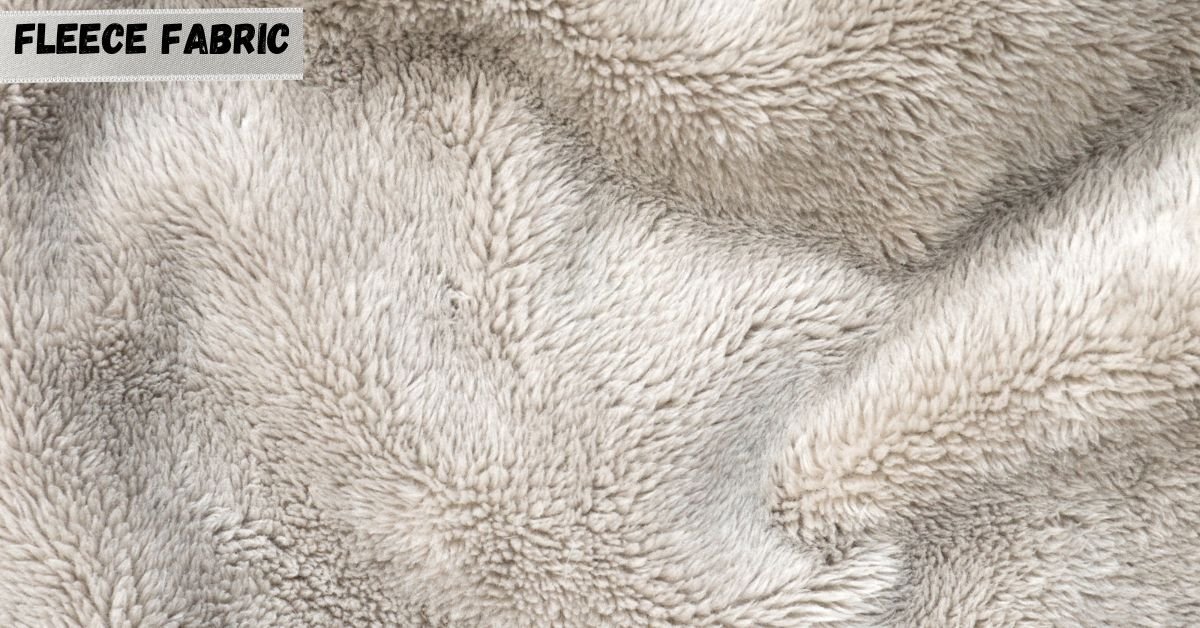

Fleece cloth is soft, warm, and light, and that is why, it is popular everywhere. Nevertheless, the question of how the fleece textile is created in the contemporary textile factories remains with a lot of people. This cloth is a product of an intricate production process with a sophisticated textile technology. Fleece was popular due to the fact that it does not weight a lot yet gives warmth. In addition, it also dries fast and is affordable to use as daily garment.
Consequently, fleece today is used in jackets, blankets, sportswear, and bedding. Simplely put, the manufacturers produce fleece by mistreating fibers into a yarn, knitting fabric, and brushing its surface. Every step enhances softness, insulation and performance. This tutorial describes the process of manufacturing the fleece fabric in a sequential manner and in a very straightforward way.
What Is Fleece Fabric?
Fleece is a fabric that is pile and warm and comfortable. It is designed to resemble wool without animal fibers that manufacturers use. Consequently, fleece is warm and light. Fleece is not produced by sheep and goats like wool. It is primarily based on synthetic fibers instead. Hence, it does not shrink and dries much quicker. Individuals wear fleece in jackets, hoodies, blankets and outdoor apparel. It also sells well when it comes to baby clothes and home fabrics. It has a high level of versatility hence in demand.
What Is Fleece Fabric Made Of?
Polyester Fibers (Raw Material)
The primary material used in the manufacture of fleece is polyester.
It is durable, flexible and resistant to moisture.
It also aids fleece to retain its shape after washing.
Recycled PET Bottles
A lot of manufacturers are using recycled bottles.
They transform PET wastes into fibers of polyester.
This is a sustainable approach that would decrease landfilling.
Natural and Blended Fleece
There are fleece versions with blends of cotton or wool.
These mixes enhance breathability and texture.
But the most widespread one is the pure polyester fleece.
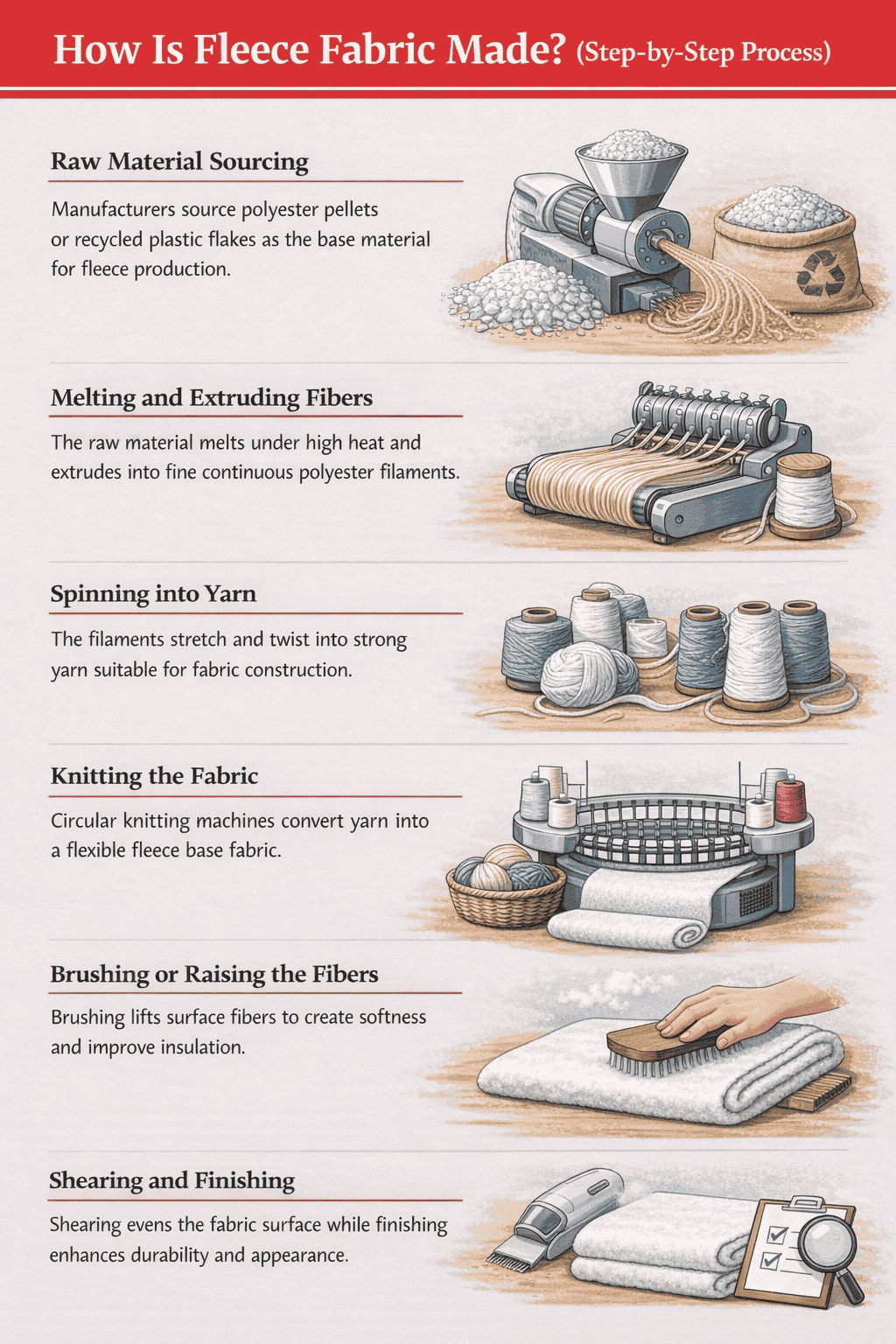
How Is Fleece Fabric Made? (Step-by-Step Process)
Raw Material Sourcing
Polyester pellets or recycles of plastic flakes are obtained by manufacturers.
The base fiber structure is obtained through these materials.
Quality sourcing brings uniformity in the performance of the fleece.
Melting and Extrusion of Fibers
The pellets are melted in high temperatures.
The molten polymer is then forced through thin filaments by the use of machines.
These filaments become solidified with cooling to form fibers.
Spinning into Yarn
The fibers are twisted into nonstop yarn.
Spinning enhances flexibility and strength.
This stage is a preparation of fibers to be used in forming fabrics.
Knitting the Fabric
The fleece base fabric is made of circular knitting machines.
Knitting brings about elasticity and tenderness.
With knitting, there is higher insulation as compared to weaving.
Raising or Brushing the Fibers
The brushing removes loose fibers on the fabric.
This is what makes the fleece its mark of softness.
It also traps air as thermal insulation.
Shearing and Finishing
Shearing removes fibers to achieve evenness.
Durability and appearance are enhanced with finish treatments.
Quality inspection is followed on the fabric.
How Recycled Fleece Fabric Is Made
PET bottles are collected to start the process of recycled fleece. Used plastic bottles are collected and separated. This measure ensures that plastic does not find its way to landfills. The bottles are then cleaned and shredded by the manufacturers. The flakes are melted and transformed to polyester fibers. These fibers are also produced in the same way as the fleece.
Fleece that has been recycled saves a lot of energy. It also reduces carbon emission. Thus, it is in favor of environmentally friendly textile production.
Why Fleece Fabric Is Brushed
The functional role of brushing is important. It raises the fibers in order to form a puff-like top. This building is effective as a trap of warm air. Consequently, brushed fleece gives great insulation. It has a softer touch to the skin. Directly, therefore, brushing makes things more comfortable.
Fleece is single-brushed and is raised up on one side. Fleece is very fluffy with the double brush. The two are used in different end uses.
Types of Fleece Fabric Based on Manufacturing
Polar Fleece
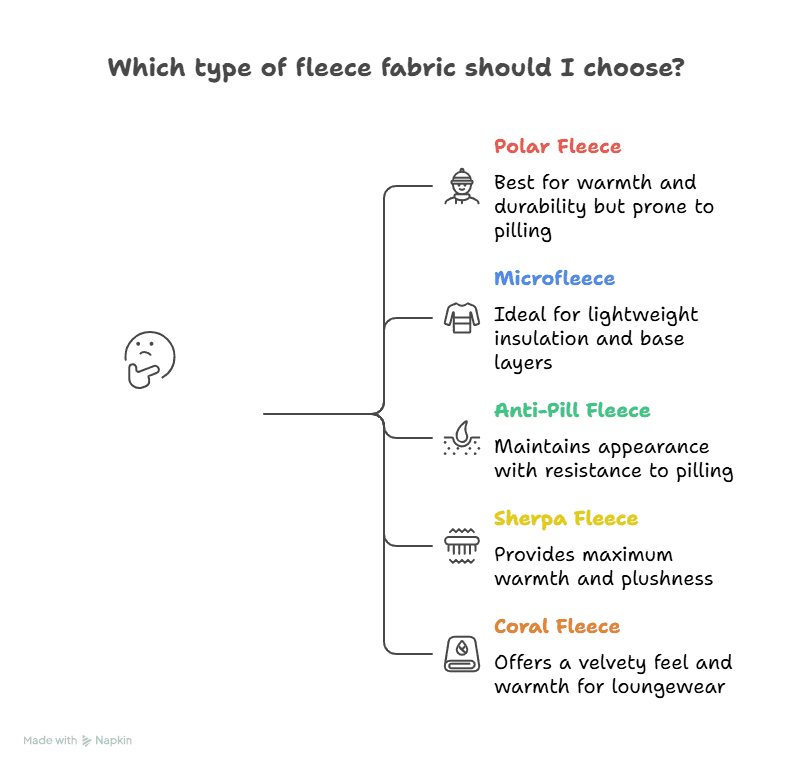
The standard polyester fleece is typically mid- to heavyweight. Polar fleece can be of 200-400 GSM and be double-sided pile. It is sturdy and holds a tremendous amount of heat. Pilling with use is however susceptible . It is a cheap inexpensive, mass-produced fleece that is commonly worn in jackets, pullovers and blankets.
Microfleece
Very fine fibers of a thin and lightweight fleece (usually 100-200 GSM). Microfleece offers decent insulation with respect to its weight despite being very thin. It is low profile, smooth and works perfectly as base layers or even light jackets. Microfleece has a slim hand-feel and has smooth surface, but is very thin. This renders it excellent in close to skin feel or sportswear.
Anti-Pill Fleece
This kind is made or designed to oppose pilling. It can either employ longer-staple fibers or chemical finishes. Anti-pill fleeces have a more presentable appearance. To take one instance, a good fleece is frequently shaved in a regular manner to avoid fuzz-ball. This makes anti-pill fleece desirable to clothes that are supposed to be heavily used.
Sherpa Fleece
Sherpa fleece looks like a sheep with a long and thick pile on one side. It is extremely plush and fluffy, and is most warm. But the deep pile can easily be pilled unless finished. Sherpa is commonly worn to form linings of jackets, vests or heavy sweatshirts, where additional warmth and a sort of wool-like feel are required.
Coral Fleece (Raschel Fleece)
Coral fleece is a fine looped textile on a knit, with a short yet extremely dense pile. It is smooth as velvety terry cloth. It is light and is often used as blankets and loungewear, though it is a good retainer of warmth. Coral fleece is not very elastic, but is valued by its fluffy and coral-like finish.
Is Fleece fabric synthetic or natural?
Fleece material is mostly synthetic. Polyester is a petroleum derivative. Thus fleece can never be considered a natural fiber. Fleece blends of cotton are available. These blends enhance breathability and lightness. They are however expensive and slow to dry. Fleece is more durable, inexpensive, and synthetic. Natural blends are comfortable and have airflow. All of them cater to various tastes.
Is Fleece Fabric Environmentally Friendly?
Conventional fleece raising is a cause of concern. It is dependent on non-renewable resources. Also, it releases microplastics in the process of washing. Nevertheless, fleece that is recycled is a better option. It recycles the plastic waste effectively. This technique lowers the environmental effect. Signs can be used to find eco-friendly fleece. Find Global Recycled Standard marks. These certifications guarantee responsible production.
Is Fleece Fabric Warm?
Fleece keeps warm well according to its weight. Its flushed fibers retain body heat. This insulation can be used in cold conditions. Fleece is also lightweight unlike wool. It is also lessening in drying speed following exposure to moisture. So, fleece is favored by outdoor lovers. Fleece is the most suitable in dry conditions. Its thermal efficiency is enhanced by layering. Warmth is further increased with proper design.
Is Fleece Fabric Breathable?
Fleece is permeable to moderate air. Ventilation is done by knitted building. As such, it avoids overheating on exercise. Wicking fibers pull out sweat. This prevents dampness and discomfort of the skin. This feature is an advantage to athletic wear.
Fleece is best used as lightweight. Microfleece suits are active. Fleece suits are heavy and suits in cold.
Is Fleece Fabric Waterproof or Water-Resistant?
Normal fleece is not waterproof and yet mildly resistant to water. Polyester is a hydrophobic fiber and therefore fleece is likely to repel the light moisture. The synthetic fleece will have less capacity to capture water and will dry quicker in comparison to natural fabric. During light rain or snow a fleece garment will not wet easily but will become wet with time in case it is left long enough. To enhance this, most fleece clothes are treated or lined: a jacket can have a DWR coating or even woven shoulders which repel water off.
Pros and Cons of Fleece Fabric
- Lightweight: Fleece is extremely lightweight to its warmth. It is easy to put on and to layer.
- Warm: The pile is full of fur, and it helps a lot to keep warm. Fleece is one that may be quite warm during low temperatures.
- Soft: Brushing also provides fleece with a plush and cozy feel. It feels soft against skin.
- Affordable: Polyester fleece is cheap to make and therefore fleece garments are generally more affordable than wool.
- Fast drying: Polyester fibers dry fast once they get wet. Fleece keeps the water out and it dries quicker than most natural fabrics.
- Not biodegradable: Fleece is made of plastic, therefore, it does not decompose in nature and can cause waste.
- Can pill: Fleece of poor quality may appear in the form of small balls of fibres (pills) on the frictional surface. Fleece that is of a high quality is trimmed (sheared) to prevent this.
- Heat-sensitive: Polyester melts or becomes deformed in high temperature. It is impossible to iron or place fleece in a very hot dryer, or it will shrink or melt.
How Fleece Fabric Is Used in Clothing & Home Textiles
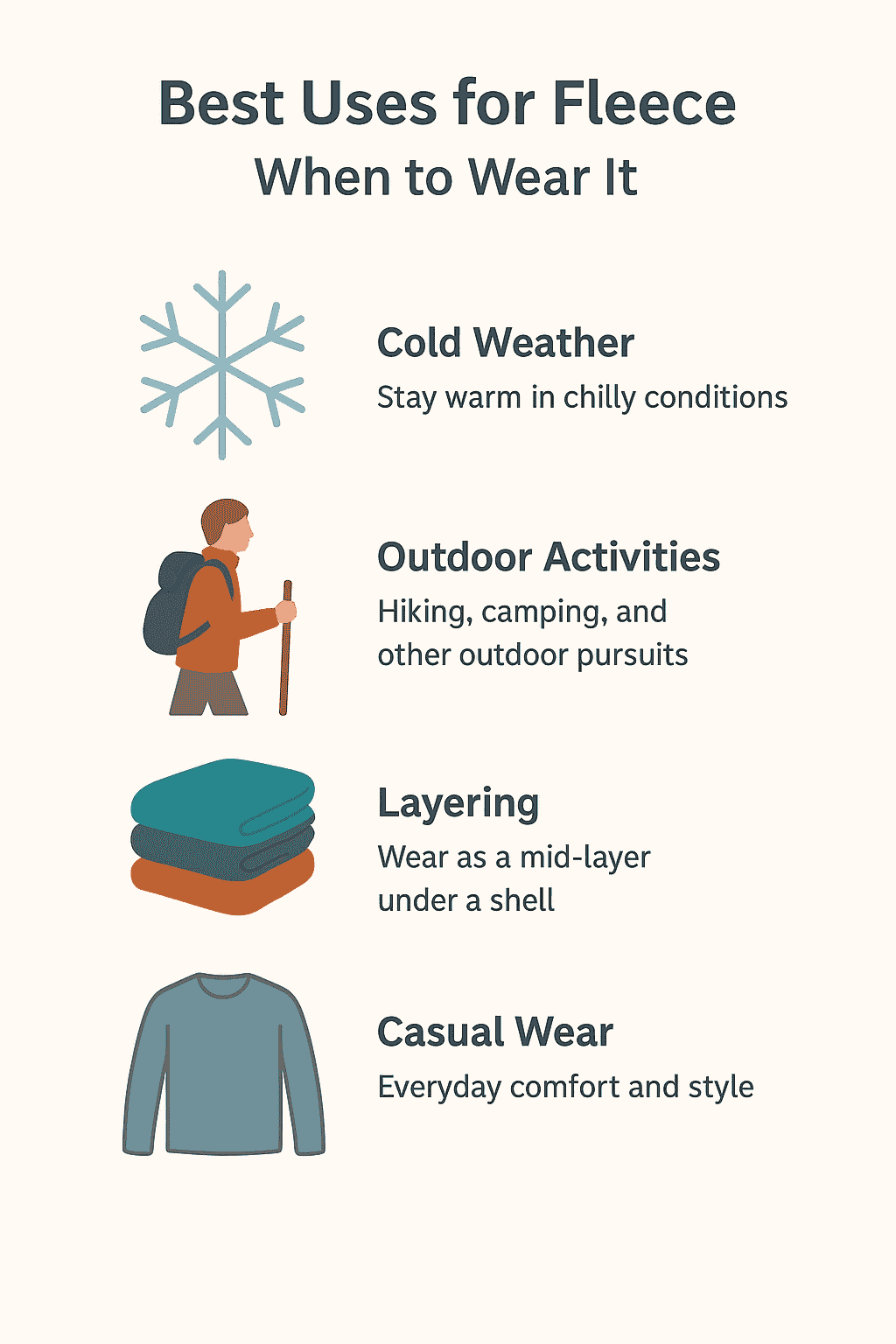
Jackets & Hoodies: Fleece is a casual outerwear. It is lightweight and warm, which makes it perfect as a pullover, vest, hoodie, jacket, etc. The fabric is insulating and not chunky and that is why it is used in an outdoor garment.
Blankets: Fleece blankets are used as bedding and throw. They are soft, velvety and can be washed in the machine. Fleece throws are warm and soft, and are cheap.
Sportswear: Since fleece repels water and is insulating, it is worn in sweatshirts, track pants, and other active wear layers in hiking, running or gym work. It is breathable and stretchable, which qualifies it as cold-weather training clothing.
Baby Clothing: Fleece is very soft and has a hypoallergenic quality and is good to use as baby clothes and blankets. The softness and warmth of fleece are suitable to infants.
Bedding: Fleece sheets and pillow covers will be sold as warm and comfortable. There are also bedding that combines cotton on the one hand, and the fleece on the other to slide in and have comfortable nights.
How to Identify High-Quality Fleece Fabric
- GSM (Fabric Weight): A high-quality fleece tends to have a higher GSM (grams per square meter), or a denser and thicker piece of fabric. The thicker fleece is warmer and more significant.
- Pilling Resistance: Select anti-pill tagged or treated fleece to minimize bobbling. Fleece of good grade is evenly sheared and can be treated with anti-pilling coats.
- Softness Retention: The cloth must be soft to touch at first and soft at the end of the washing. Fleeces of high quality are made of fine fibers and stable finishes because they do not become hard with time. By simply rubbing a swatch against a swatch, one should easily restore the nap.
- Fiber Density (Pile Thickness): The pile is made of tight knit fibers. Denser pile has better insulation. Inspection of the fleece at hand: ideal fleece is plush and even with no appearing thin patches.
How to Care for Fleece Fabric
- Washing: Use cold water in the machine wash on a light cycle. Do not use bleach and fabric softeners (they can weaken the fibers and decrease wicking). To reduce friction, it is better to zip or invert clothes.
- Drying: Dry fleece when dry. In case of dryer, dry on low power. High heat may destroy the fibers or may shrink them. Fleece should not be left longer in the dryer as it will produce unnecessary electrostatics.
- Prevention of Pilling: Wash fleece inside-out. Tighten Velcro and take off all loose stuff to prevent abrasion. Fleece can be brushed lightly with a soft brush after washing or have a lint shaver to take off the pills. Among others, avoid rough carpet surfaces.
- Storage: Keep fleece clothes folded in a dry area. Hanging can be used to stretch the cloth. Store fleece out of hot spots (radiators) and do not put it around objects that can snag. An ideal place is a cool and ventilated closet.
Conclusion-
This knowledge on how to make fleece fabric assists the buyers in making an informed choice. It consists of a combination of fiber science, knitting, and finishing. Every step improves warmth, softness, and durability. Fleece is very comfortable and very performing. Nevertheless, the sustainability lies in the choice of fiber. Fleece recycling promotes a green future. The selection of good fleece enhances the life span. Responsible care lessens environmental impact. Thus, the production of the fleece really counts.
Read More>> About what is fleece fabric made from?
FAQs
Yes. Fleece is nearly always polyester, that is, plastic fiber. In essence it is produced using oil-based PET. Most of the fleece fabrics currently are made of plastic bottles that are recycled.
Fleece in industries is continuously produced, and rather quick, although overall processing time may change. Since it takes a single day in factory terms to melt polymer to created fabric, a batch can be accomplished in a day. (Precise timings are not usually issued.) In general, contemporary mills rapidly rotate yarn, knit fabric and brush it, and frequently finished fleece cloth is ready in hours after installation.
Fleece made of pure polyester normally does not shrink. But when it is washed or dried on a very high heat it may shrink or deform to a very little extent. To ensure a very slight amount of shrinkage machine-wash the fleece in cold water, and tumble-dry them in low heat or just leave them to dry. Such treatment will ensure that the size and shape of the fleece are maintained constant.
Fleece is usually highly skin-friendly. It is hypoallergenic and soft thus making it comfortable to most people including children. It is synthetic thus it does not support dust mites and it is also easier to clean compared to wool. Nevertheless, there are individuals whose skin is extremely sensitive and may experience a certain degree of discomfort or in the event of wearing fleece directly against the skin over long periods. Generally, fleece is soft and non-slippery to the skin among the majority of users.