
Introduction-
Is fleece cotton? The answer to this is yes and no. Fleece is mainly composed of polyester which is a synthetic fiber that is made out of petroleum. Nevertheless, there is a more natural and soft version of cotton fleece.
A lot of individuals mix up fleece with cotton due to this fluffy and cozy-feeling. Factually, most of the fleece cloth in the market consists of polyester. Cotton blends, on the contrary, are even soft and breathable. We are going to discuss the 7 main distinctions of cotton fleece and polyester fleece in this article, as well as analyze their applications, characteristics, and care-advice.
At the conclusion, you are going to be fully aware of what type of fleece is going to suit your purposes better.
What is Fleece Fabric?
Fleece is a soft, insulating fabric that was originally developed as a man-made wool substitute. It gets its name from the soft “fleecy” feel of the brushed pile. Today’s common fleece fabrics are knitted or brushed textiles that trap air and retain warmth. In fact, polar fleece – the classic synthetic fleece – was invented in 1979 by Malden Mills in Massachusetts. It is a polyester knit with a fuzzy surface meant to mimic wool. Fleece is generally lightweight yet very warm. For example, Wikipedia notes that polar fleece is “napped and insulating”. Fleece’s bulk comes from many tiny fiber loops or tufts that create air pockets, so it traps heat efficiently.
Fleece is widely used in cold-weather clothing and gear. You’ll find fleece in jackets, vests, hats, mittens, hoodies, sweatpants, and even blankets. As Wikipedia explains, polar fleece is used in “jackets, hats, sweaters, sweatpants, … hoodies, pajamas, [and] blankets”. Likewise, Cotton Incorporated says “Fleece is perfect for cold weather…the lining of leggings…fleece-lined boots, coats, and even blankets!”. Because fleece is often made of polyester, it dries quickly and sheds moisture, making it popular for outdoor sports and active wear.
Is Fleece Made from Cotton?
Fleece is typically non-cotton, by default. When humans refer to the term fleece, they almost invariably refer to polyester fleece (or a combination). According to one of the sources, the garments produced out of this material are made of an artificial synthetic fiber that is made by people. Most of the fleece is pure polyester. That is, standard fleece is a plastic-based fabric.
There is however, such thing as cotton fleece. Cotton fleece is brushed knit that is frequently worn in sweatshirts and with infants. It is either 100 percent cotton or a cotton/polyester mix. An example is a textile guide which states that Cotton fleece is just one, that can be made using 100% cotton or made of a mix of polyester and cotton. Practically, most of the so-called cotton fleece clothing contains a little bit of polyester to make it last. According to Cotton Inc., fleece that contains cotton fibers is greener and breathable as compared to pure polyester fleece.
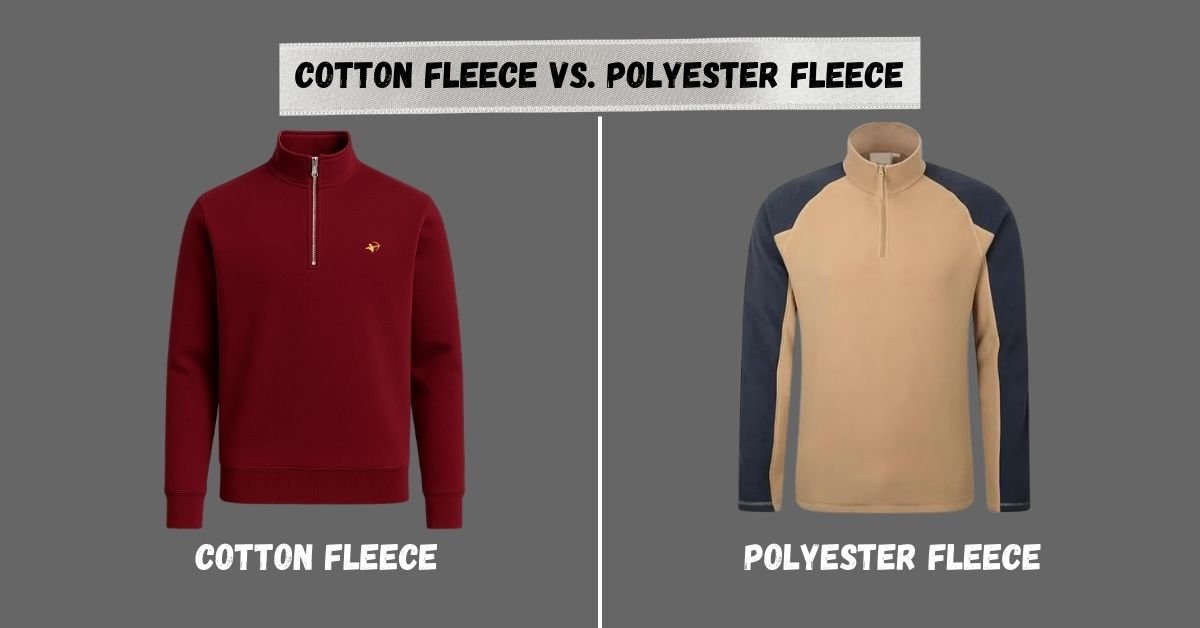
Cotton Fleece vs. Polyester Fleece

Cotton Fleece:
This is a variety of fleece which is primarily composed of cotton fibers (commonly a loopback knit with an inner brushed pile). It can be natural and soft to the touch and is quite comfortable on the skin. The cotton fleece is breathable and also absorbs water just like normal cotton. It is comfortable at first, but since cotton absorbs water and sweat, it may get weighty when it is wet. Fleece made of cotton are typically long lasting and simple to take care of; they become softer after each washing. Nevertheless, the high purity of cotton fleece makes it subject to shrinkage or deformation when it is washed in hot water. Overall, cotton fleece is heavier and thicker than regular polyester fleece and has that old-fashioned cozy sweatshirt vibe.
Polyester Fleece:
This is standard synthetic fleece that is produced out of polyester. Polyester fleece is extremely light but highly insulating; its fluffy nap traps body heat, therefore, it is able to remain warm even though it is light. Due to the hydrophobic quality of polyester, this type of fleece is waterproof and fast drying. It is also stain resistant and wicks sweat. Polyester fleece is usually quite durable – it is not easily abrasive and will not shrink. A disadvantage is that it is not as breathable as cotton; the polyester does not absorb water, and therefore it may get clammy in hot weather or accumulate the electric charge.
| Property | Cotton Fleece | Polyester Fleece |
|---|---|---|
| Texture & Feel | Natural cotton softness; somewhat heavier | Synthetic pile feel; lightweight fuzzy |
| Warmth | Provides good insulation, but loses warmth if wet (since it absorbs water) | Excellent warmth-to-weight; traps air even if damp |
| Breathability | Highly breathable and moisture-absorbent | Less breathable; instead it wicks and dries fast |
| Moisture | Absorbs sweat and moisture (stays wet longer) | Repels water; dries quickly |
| Durability | Durable but can shrink or pill if not pre-washed | Very durable; resists wear, stretching, and shrinking |
| Care | Can shrink; wash gentle/cold, tumble-dry low | Easy care; machine wash & dry (often anti-pill treated) |
Key Differences: Fleece vs. Cotton Fabric
Softness
Fleece are fluffy and cozy with their brushed surface whereas cotton is natural and soft.
Moisture Absorption
Cotton soaks and retains moisture, thus it is not as suitable when it is cold and wet. Fleece keeps the moisture off and dries quicker.
Warmth
Fleece is warmer than cotton due to the air pockets that insulate it. In hot weather, cotton is cool but in cold weather it does not hold many warmth.
Care
Cotton is the type that should be washed with more care as it can shrink. Fleece made of polyester does not shrink and is less difficult to maintain.
Eco-Friendliness
Cotton is biodegradable and organic cotton in particular. Polyester fleece is capable of releasing microplastics yet recycled polyester is more environmentally friendly.
Types of Fleece Fabric
Polyester Fleece
This is the classic “polar fleece” most people know. It is made entirely from polyester fibers. Polyester fleece comes in varying weights (e.g. 100, 200, 300 GSM) and can be very lightweight or heavy. It has a pile or nap that is warm and plush. Polyester fleece is water-resistant and wind-resistant by nature, making it ideal for outdoor jackets and active wear. Common sub-types include anti-pill fleece and wind block fleece. The drawback is that it is 100% synthetic – it can generate static and will shed microplastics over time.
Cotton Fleece
Cotton fleece is a brushed cotton knit often used in sweatshirts, hoodies, and baby clothes. It blends soft cotton yarns (or is sometimes 100% cotton) with a fuzzy inner surface. This fleece variant feels very soft and natural. It is highly breathable and comfortable for everyday wear. It does not insulate as strongly as polyester fleece (especially when damp), but it provides moderate warmth for casual use. Cotton fleece is hypoallergenic and easy to wash, though it can shrink if heated. In essence, cotton fleece offers a cozy “fleece” feel using natural fiber.
Microfleece
Microfleece is an ultra-lightweight version of polyester fleece. Its fibers are thinner than silk, giving it a very fine, soft texture. Microfleece is warm for its weight but much lighter and more breathable than standard fleece. It wicks moisture rapidly, which helps evaporate sweat. Because it’s so light, microfleece is often used in high-activity gear or as a lining. It will be less bulky but also slightly less insulating than heavier fleece.
Polar Fleece
Polar fleece is just another name (a trademark) for a heavyweight polyester fleece. As Wikipedia notes, polar fleece was developed to mimic wool. It is very insulating due to its dense, high-loft pile. Polar fleece jackets, vests, and blankets are common for winter and cold climates. It stretches easily and traps air, making it warm yet flexible. Heavy polar fleece (300 GSM) can be quite thick, while lighter weights are used for mid-layers. Originally a Malden Mills product, polar fleece is now a generic term for thick polyester fleece.
Sherpa Fleece
Sherpa fleece is a plush, fuzzy style of fleece designed to simulate sheepskin wool. It usually has one smooth side and one fluffy, looped side. The loops on the surface give it a wool-like texture that traps even more heat. Sherpa fleece is commonly a blend of polyester (and sometimes some cotton). It is used as a lining in jackets, hoodies, and boots, or as a stand-alone jacket. While it is very warm, sherpa fleece is heavier and bulkier. It also tends to shed more lint and requires careful washing to keep its texture.
Is Cotton Fleece Better than Polyester Fleece?
Both types have advantages and disadvantages. Cotton fleece can be considered to have excellent comfort: it is soft, breathable, and does not irritate sensitive skin. It is non irritating and is comfortable. Nevertheless, cotton fleece is moist and slows down in drying. It also wrinkles and shrivels much easier. Conversely, polyester fleece is very warm and tough. It evaporates and evapoys fast. It is less expensive and does not stretch. The offside is that polyester fleece is less breathable and can cause some individuals to sweat or build up of static.
Practically, cotton fleece can be more used in casual comfort (e.g. lounging, sleeping, baby clothes), but polyester fleece in performance (e.g. hiking, skiing, athletic wear). As an example, cotton fleece is a good material to use to create a warm-up hoodie to be worn at home, whereas polyester fleece is a better choice when spending time at sports in wintertime. Cotton is breathable, hypoallergenic, as one source states, and inexpensive, but polyester is more technical. Choose cotton fleece for comfort and natural feel; choose polyester fleece for superior warmth and quick drying.
Is Fleece Warmer than Cotton?
Yes, fleece is mostly warmer than cotton. Fleece traps air in its fibers and this produces insulation. This gives it lightweight but efficient in holding heat.
Cotton, in its turn, is less effective in trapping air. It is cool in hot seasons and not much insulated in cold. Fleece is a better choice than cotton in case you want it to be warm.
Is Fleece Breathable Like Cotton?
No, fleece is not breathable as cotton. Cotton is free to breathe and this makes it more comfortable during hot weather.
Fleece is moisture wicking, however, so it drags the sweat off the skin. This makes fleece superior in cold or wet weather whereas cotton is superior in hot and dry weather.
Is Fleece Eco-Friendly?
Polyester fleece is not as eco-friendly as it is created with the help of petroleum and releases microplastics during the washing process. These micro plastics find their way into waterways and destroy aquatic life.
Fleece made of cotton is more sustainable because cotton is natural and it biodegrades. Even better to the environment is organic cotton fleece.
The eco-friendliness of fleece is on the way to be enhanced by future innovations such as recycled polyester fleece and organic cotton blends. When these options are selected the environmental impact is less.
How to Identify Cotton Fleece vs. Synthetic Fleece
The following are some of the tips to distinguish between them:

- Feel and appearance: Cotton fleece tends to be heavier and more matte, and its texture is natural cotton. Polyester fleece can be quite fluffy or “slippery” and can be more clingy to statical.
- Stretch: Polyester fleece usually has an easier time stretching; cotton fleece is a little stiffer.
- Burn test: This is a positive test (be careful!). When you burn a small piece of the stuff: Cotton will burn instantly and smell of the burning paper, and leave a soft gray ashes. Polyester will melt or melt away the flame, and the odor of chemicals or burning plastic, leaving it as a hard, shiny bead. Such distinctions are based on the plant fiber chemistry of cotton and the synthetic cotton fabric of polyester.
- Label: The simplest method is to read the garment label. It will enumerate the fiber content (e.g. 80% cotton, 20% polyester). When it is stated that it is polyester or PET, it is synthetic fleece. When it states that it is 100 percent cotton or a mixture of mostly cotton it is cotton fleece.
Fleece or Cotton: Which One Is better?
It is based on application and requirement.
Blankets and lounge wear: To keep warm and cozy such as a blanket or at-home hoodie, polyester fleece is the choice as it is extremely warm and comfortable. Nevertheless, cotton fleece blanket is breathable and soft against skin, which is a favorite among people who desire comfort all year round.
Winter Coats and sportswear: Polyester fleece tends to be a better choice when it comes to outdoor activities. It keeps the body warm when wet and dries fast and can be covered with a shell. A jacket of cotton would be wet and heavy.
Infant garments and delicate skin: Cotton fleece carries the day. It is non-sensitizing and will not rash sensitive skin. It is harmless when kids inadvertently put in their mouths. Polyester fleece is warm and potentially generates shock when creating its static and does not dissolve drools.
Everyday essentials: A plain sweatshirt or sweatpants will use cotton fleece as an option since it is comfortable and breathable. It’s also easier to sew at home. Polyester fleece or a cotton-poly mix is usually used in gym clothes or hiking base because it is more durable and able to resist moisture.
Conclusion-
So, is fleece cotton? The obvious answer is no, and fleece is typically polyester but there is cotton fleece which is a softer, more natural version. Fleece Polyester is very popular due to its warmth, durability, and quick-drying characteristics, thereby becoming popular in outdoor and performance stocks. Cotton fleece, in its turn, glorifies in day-to-day comfort, breathability and sustainability, particularly organic cotton.
The actual decision is really in your hands- polyester fleece will keep you warm in cold and damp weather and cotton fleece in everyday use and sensitive skin. The two fabrics have distinctive advantages, and that is why they enjoy market popularity in the field of fashion and household fabrics. Performance, comfort or sustainability are your priorities? Fleece of any type provides an all-season, cozy versatility.
Read more>> About blizzard fleece fabric.
FAQs
No, in most cases fleece is not cotton. The word “fleece” normally refers to a polyester fabric. However, there are products called “cotton fleece” which are either 100% cotton or cotton-blend fabrics. So while cotton fleece can exist, most fleece clothing is synthetic.
Yes, cotton fleece is quite warm for casual use. Cotton fleece traps heat in its soft brushed pile, so it provides excellent insulation for hoodies and sweatshirts. It won’t be as toasty as heavy polar fleece in freezing weather, but it is warm enough for cool conditions.
Cotton fleece is generally better for sensitive skin. Cotton is hypoallergenic and breathable, so it rarely irritates. Polyester fleece can sometimes feel scratchy or generate static, and synthetic chemicals in the dye may bother very sensitive individuals. If you have sensitive skin or allergies, a cotton-rich fabric or bamboo fleece might be safest.
Yes. Cotton fibers shrink when exposed to heat, just like any cotton garment. If you wash or dry cotton fleece in hot water, it will likely shrink or deform. Even polyester fleece can shrink if over-heated, but cotton fleece is especially prone to shrinkage. Always wash fleece gently and tumble-dry low to minimize shrinking.