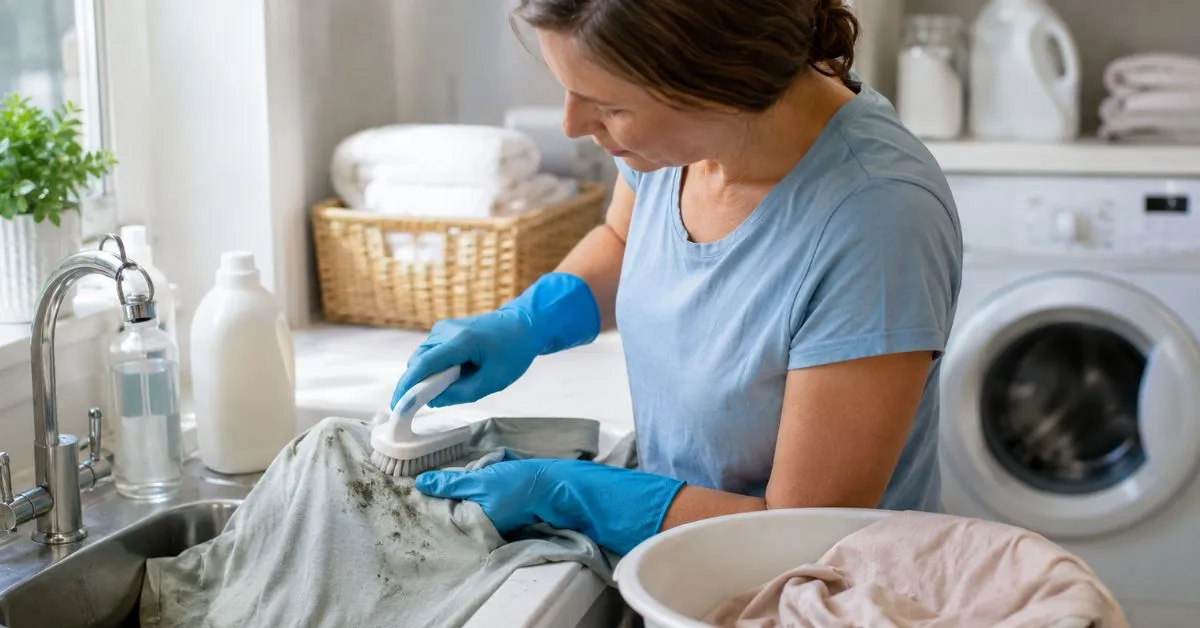

Yes, you can often wash mold out of clothes when the fabric is washable. However, success depends on the fabric type, mold level, odor, and damage. Light mold on cotton, polyester, denim, towels, and bedding usually responds to pretreatment, proper washing, and complete drying. However, heavily moldy clothes may not be safe or worth saving. Also, silk, wool, leather, suede, vintage fabrics, beaded garments, and dry-clean-only clothing need specialist care. Mold can leave stains even after cleaning, because fungal growth may discolor fibers. Therefore, the goal is not only stain removal. The goal is safe handling, mold reduction, odor control, fabric protection, and moisture prevention.
What Does Mold on Clothes Mean?
Mold on clothes means fungi found moisture, warmth, and organic material on fabric. Clothes often develop mold after staying damp in baskets, washing machines, closets, suitcases, basements, or plastic bags. Mold can appear as black, green, gray, white, or fuzzy spots. It can also create a strong musty smell. It is stated that mold can look like colored spots, smell musty, and should be removed when seen or smelled.
Mildew on clothes is often used for light surface mold or musty growth. However, both mold and mildew need moisture. Therefore, cleaning the fabric without fixing damp storage conditions rarely solves the problem. Moisture control is the key to mold control.
| Problem | What It Means |
|---|---|
| Mold spots | Visible fungal growth on fabric. |
| Mildew smell | Odor from moisture, bacteria, or early fungal growth. |
| Stain after washing | Pigment damage may remain after mold removal. |
| Fabric damage | Mold may weaken natural fibers over time. |
| Reappearing odor | Moisture, washer mildew, or closet humidity may remain. |
Can Moldy Clothes Be Saved or Should They Be Thrown Away?
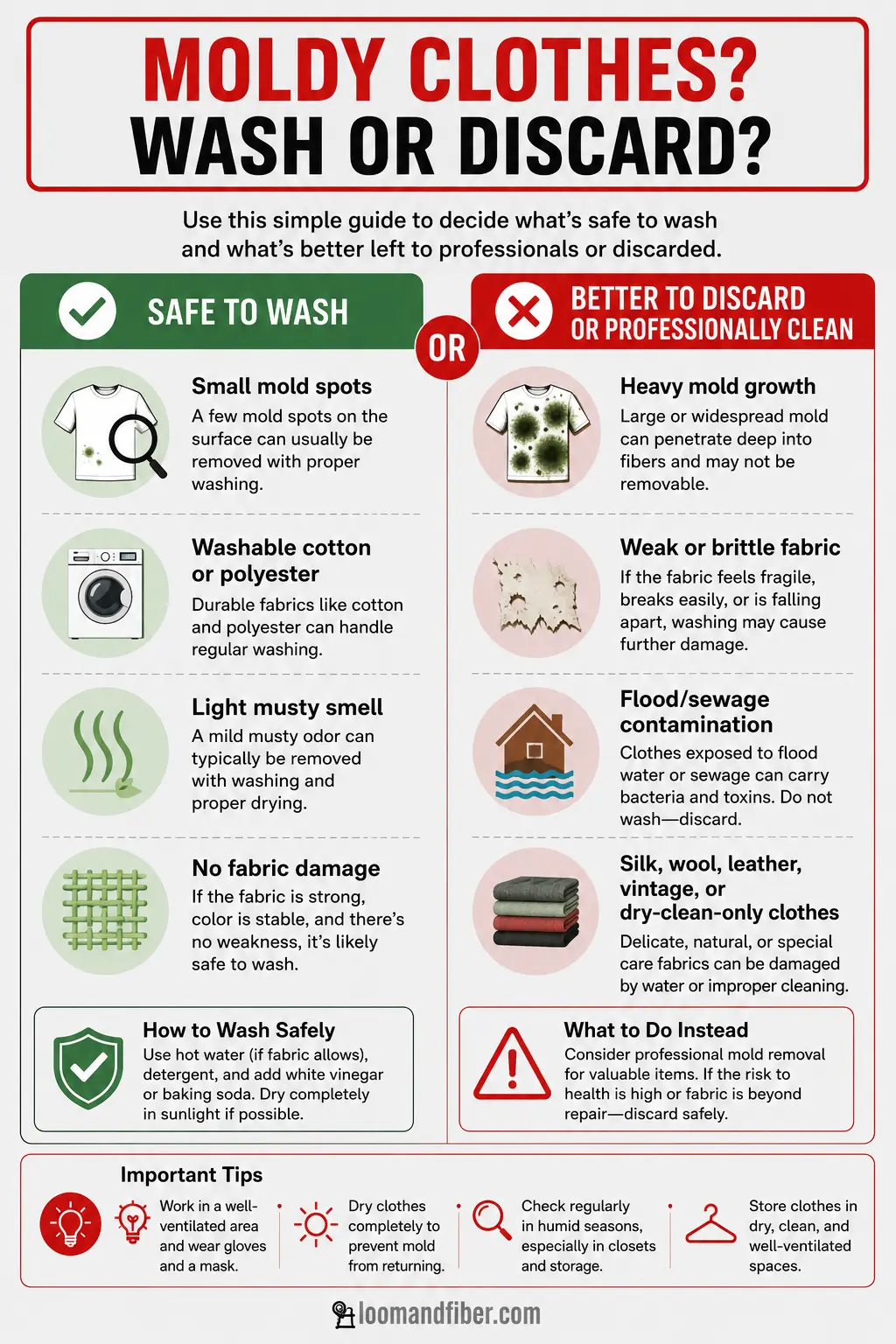
You can save many moldy clothes if the growth is light and the fabric remains strong. However, you should discard clothing when mold covers a large area, the fabric feels weak, or contamination involves flood water or sewage. Mold can grow into porous materials, so heavy contamination may become hard to remove fully. It is noted that mold may be difficult or impossible to remove completely from porous materials.
| Condition | Best Action |
|---|---|
| Small mold spots on washable cotton or polyester | Pretreat, wash, inspect, and dry completely. |
| Strong musty odor but no visible mold | Deep wash, deodorize, and air dry fully. |
| Mold covers a large fabric area | Consider discarding the item. |
| Fabric feels weak, slimy, or brittle | Discard because fiber damage may be serious. |
| Baby clothes, underwear, or towels with heavy mold | Replace if cleaning fails after one repeat wash. |
| Silk, wool, leather, vintage, or beaded clothing | Use professional textile cleaning. |
| Dry-clean-only clothing | Contact a dry cleaner before home treatment. |
| Flood-water or sewage-contaminated clothing | Discard or follow disaster-cleaning guidance. |
| Expensive or sentimental clothing | Ask a specialist before aggressive cleaning. |
Safety Before Washing Moldy Clothes
Take Moldy Clothes Outside.
Take moldy clothes outside before brushing, shaking, or sorting them. This step reduces indoor mold spores and dust. It also keeps loose growth away from clean laundry.
Do Not Shake Mold Indoors.
Do not shake moldy clothes inside your home. Shaking can spread spores onto floors, carpets, furniture, and nearby clothing. Instead, handle the item gently outdoors.
Wear Gloves When Mold Is Visible.
Wear rubber, nitrile, vinyl, or other protective gloves when touching moldy clothes. Protective gloves and avoiding bare-hand contact with moldy items is recommended.
Use a Mask When Exposure Is Higher.
Wear an N95 respirator when cleaning heavy mold or many affected garments. This is also wise if you have allergies, asthma, or mold sensitivity. It is at least a NIOSH-approved N95 respirator during mold cleanup.
Keep Cleaners Separate.
Never mix bleach with ammonia, vinegar, or other cleaners. This can create dangerous fumes. It is warned not to mix bleach with ammonia or any other cleanser.
Protect Sensitive People.
Keep children, older adults, allergic people, and immunocompromised people away from heavy mold cleanup. Mold exposure can worsen symptoms in sensitive people. CDC advises high-risk people to avoid moldy environments during cleanup.
How to Wash Mold Out of Clothes: Step-by-Step Method
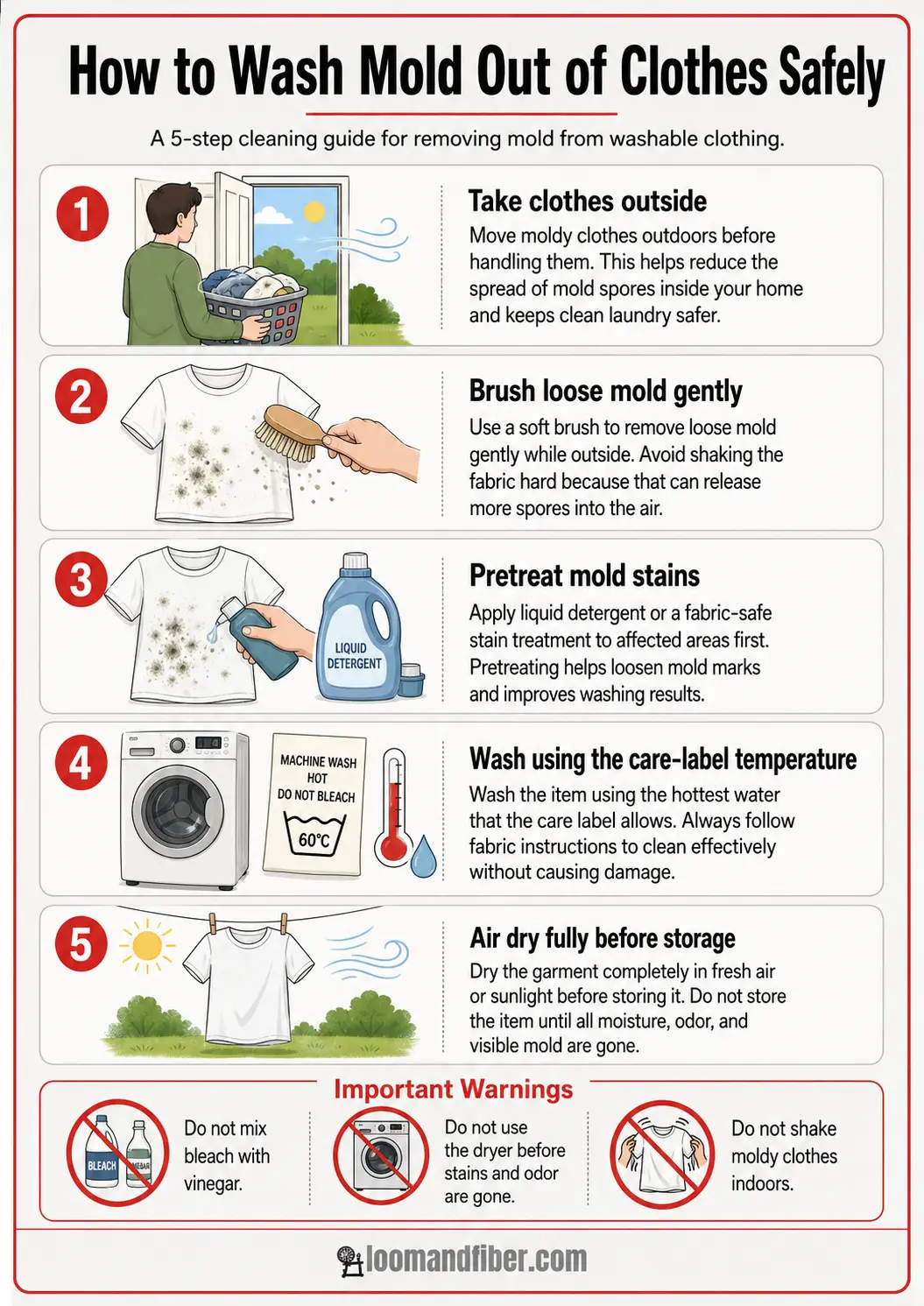
Step 1 — Take the Clothes Outside and Remove Loose Mold
First, take the garment outside and brush away loose mold gently. Use a soft brush, and avoid hard scrubbing on weak fibers. UGA Extension also recommends brushing mildew off outdoors before laundering fabrics.
Step 2 — Pretreat the Mold Stain
Next, apply liquid laundry detergent directly to the mold stain. For washable fabrics, you may also use oxygen bleach, vinegar, or sanitizer. Always test cleaners on a hidden area before wider use.
Step 3 — Wash in the Hottest Water Safe for the Fabric
Then, wash the garment using the hottest water allowed by the care label. Do not use one universal temperature for every fabric. Hot water may shrink wool, fade colors, or damage delicate finishes.
Step 4 — Air Dry in Sunlight or a Ventilated Area
After washing, air dry the item fully in sunlight or strong ventilation. Do not use a dryer until stains and odors disappear. Heat can set remaining mold stains and musty smells.
Step 5 — Inspect Before Wearing or Storing
Finally, inspect the garment under bright light before wearing or storing it. If odor or spots remain, repeat treatment once. If mold remains after repeat cleaning, discard or seek professional help.
Best Mold Removal Methods by Fabric Type
Different fabrics need different mold-cleaning methods. Therefore, always read the care label first. UGA Extension also advises reading care labels and pretesting stain removers before treatment.
| Fabric Type | Best Method | Important Warning |
|---|---|---|
| White cotton | Detergent plus chlorine bleach if allowed. | Bleach can weaken fibers with overuse. |
| Colored cotton | Detergent plus oxygen bleach or vinegar. | Avoid chlorine bleach unless label allows it. |
| Polyester | Detergent plus oxygen bleach or laundry sanitizer. | Avoid high heat if the label warns against it. |
| Towels | Hot wash if label allows, then dry fully. | Replace if odor survives repeat washing. |
| Bedding | Deep wash with detergent and oxygen bleach. | Do not fold until completely dry. |
| Denim | Pretreat, wash warm or hot if safe, then air dry. | Sunlight may fade dark denim. |
| Silk | Avoid soaking and harsh rubbing. | Use professional cleaning for visible mold. |
| Wool | Avoid hot water, bleach, and agitation. | Wool can shrink, felt, or weaken. |
| Leather | Do not machine wash. | Use leather specialist care. |
| Suede | Do not wet-clean at home. | Water can stain or harden suede. |
| Vintage textiles | Use dry removal only when safe. | Consult a textile conservator. |
| Beaded fabrics | Avoid soaking and heavy agitation. | Beads can snag, rust, or stress fabric. |
| Dry-clean-only clothes | Ask a dry cleaner before treatment. | Home washing may ruin structure. |
For fragile historic textiles, Smithsonian guidance recommends gentle dry methods after mildew dries. It also warns that wholesale washing or dry cleaning is not always recommended.
Vinegar, Bleach, Borax, Baking Soda, or Oxygen Bleach: Which Works Best?
No single cleaner works best for every moldy garment. Instead, the safest choice depends on fabric type, color, stain level, and care-label limits. Also, never combine cleaners without product-label approval.
| Cleaner | Best For | Warning |
|---|---|---|
| White vinegar | Musty odor and light mildew on washable clothes. | Never mix vinegar with bleach. |
| Chlorine bleach | White bleach-safe cotton. | It can damage colors, wool, silk, and spandex. |
| Oxygen bleach | Colored washable clothes and remaining stains. | It often needs soaking time. |
| Borax | Odor support and laundry boosting. | Follow package directions carefully. |
| Baking soda | Light odor support. | It is not a strong mold remover alone. |
| Laundry sanitizer | Odor and hygiene support. | Use only according to product instructions. |
| Liquid detergent | First-line pretreatment for stains. | It may not remove deep discoloration alone. |
White Vinegar for Moldy Clothes
White vinegar can help reduce musty odor in washable clothing. However, it should not replace careful washing and drying. Also, never combine vinegar with chlorine bleach.
Chlorine Bleach for Moldy Clothes
Chlorine bleach can work on white bleach-safe cotton. However, it can fade colors and damage delicate fibers. Therefore, use it only when the care label allows it.
Oxygen Bleach for Mold on Clothes
Oxygen bleach is often safer for colored washable fabrics. It helps lift stains without the harshness of chlorine bleach. However, it still needs label-safe use and proper soaking time.
Baking Soda for Musty Clothes
Baking soda can help with light odor support. However, it does not replace detergent, oxygen bleach, or sanitizer. Use it as a booster, not the main mold treatment.
Can You Wash Black Mold Out of Clothes?
You can sometimes wash black-looking mold out of clothes when growth is light. However, color alone does not identify the mold species. Therefore, treat any visible mold seriously and avoid breathing loose spores.
Black mold stains may remain even after cleaning. That does not always mean live growth remains. However, stains, odor, and fabric weakness show the garment needs more treatment or disposal.
Do not believe claims that vinegar removes every black mold problem. Also, do not assume one wash removes all spores. Instead, wash carefully, dry completely, inspect closely, and prevent moisture.
How to Remove Mold Smell from Clothes
Rewash With Strong Detergent
First, rewash musty clothing with a quality liquid detergent. Use the warmest water allowed by the care label. Then, run a full rinse to remove loosened residue.
Add Vinegar When Fabric-Safe
Next, add white vinegar during washing only when the fabric allows it. Vinegar helps reduce musty odor in many washable fabrics. However, never use vinegar with bleach.
Use Oxygen Bleach for Washable Fabrics
Oxygen bleach can help remove odor and light staining. It works best when the garment can safely soak. Always follow the product label and garment care label.
Try Laundry Sanitizer for Odor Support
Laundry sanitizer may help when odor survives normal washing. It can support hygiene in towels, gymwear, and bedding. However, it must match the fabric and product directions.
Dry the Clothes Completely
After washing, dry clothes fully before storage. Even slight dampness can restart odor and mold growth. Therefore, check cuffs, seams, waistbands, and thick areas carefully.
Check the Washing Machine
Sometimes, clothes smell moldy because the washer has mildew. Check the door gasket, detergent drawer, drum, and drain area. Then, clean the machine before washing more laundry.
Check Closet Humidity
Closet humidity can make clean clothes smell musty again. Improve airflow, reduce crowding, and avoid damp walls. Also, use a dehumidifier in humid rooms.
What Not to Do When Washing Moldy Clothes
- Do not mix bleach with vinegar, ammonia, or random cleaners. This can release dangerous fumes. It is warned against mixing bleach with ammonia or other cleansers.
- Do not place moldy clothes directly in the dryer. Dryer heat can set stains and odors. Also, heat does not fix the moisture problem that caused mold.
- Do not store damp clothes in baskets, plastic bags, or closed closets. Mold needs moisture to grow. Therefore, storage habits matter as much as washing.
- Do not use chlorine bleach on wool, silk, leather, suede, or spandex-heavy clothing. Bleach can damage fibers and finishes. Use fabric-safe methods instead.
- Do not assume perfume removes mold. Perfume only hides odor for a short time. The fabric still needs washing, drying, and moisture control.
- Do not wash heavily moldy clothes with clean laundry. Heavy mold can spread residue and odor. Wash affected garments separately until they pass inspection.
- Do not keep valuable moldy textiles without expert advice. Aggressive home washing can cause holes, dye loss, or texture damage. Smithsonian guidance warns that damaged mildewed textile areas may weaken further during treatment.
Why Mold Comes Back After Washing
Clothes Were Not Fully Dried.
Mold often returns when clothing stays slightly damp. Thick seams, waistbands, towels, and hoodies dry slowly. Therefore, always dry garments completely before folding.
Closet Humidity Is Too High.
High humidity allows mold spores to grow again. EPA explains that mold will not grow without water or moisture. Therefore, moisture control prevents repeat problems.
The Washing Machine Has Mildew.
A dirty washer can transfer musty odor to clean clothes. Front-loader gaskets, detergent drawers, and drain areas often trap moisture. Clean the washer before blaming the garment.
The Laundry Basket Traps Damp Clothes.
Wet towels, sweaty gymwear, and damp uniforms should not sit in baskets. Closed piles hold heat and moisture. As a result, mildew odor develops quickly.
Clothes Were Stored in Plastic.
Plastic bags block airflow and trap moisture. Seasonal clothing can become musty inside sealed plastic. Instead, use breathable garment bags for long storage.
The Mold Source Is Still Nearby.
Sometimes, clothing mold comes from the room, not the garment. Check walls, wardrobes, basements, ceilings, and windows. Fix the source before storing cleaned clothes again.
How to Prevent Mold on Clothes
Dry Clothes Completely Before Storing.
Always dry clothes fully before folding, stacking, or hanging. Damp fabric creates the perfect mold environment. This step matters most for towels, denim, hoodies, and bedding.
Keep Closets Ventilated.
Leave airflow space inside wardrobes and closets. Ventilation helps moisture escape from stored fabrics. It also reduces stale odors.
Avoid Overpacking Wardrobes.
Overpacked wardrobes block air movement between garments. They also trap humidity around fabric surfaces. Therefore, leave space between stored items.
Use a Dehumidifier in Damp Rooms.
A dehumidifier helps control closet humidity in wet climates. It is especially useful near basements, bathrooms, and exterior walls. EPA repeatedly emphasizes moisture control for mold prevention.
Do Not Leave Wet Laundry in the Washer.
Move washed clothes out of the machine quickly. Wet laundry left overnight can develop musty odor. Also, it can transfer mildew smell to the washer.
Clean Washer Seals and Drawers.
Clean rubber seals, detergent drawers, and drum areas regularly. These parts can hold detergent residue and moisture. As a result, they may create odor problems.
Store Seasonal Clothing in Breathable Bags.
Use breathable cotton garment bags for seasonal clothing. Avoid plastic when storage areas feel humid. Breathable storage helps reduce trapped condensation.
Avoid Damp Walls.
Do not store clothing directly against damp walls. Exterior walls, basement walls, and leaking areas can raise humidity. Move wardrobes forward to improve airflow.
Fix Water Problems Quickly.
Repair leaks, condensation, and damp storage areas fast. EPA advises cleaning mold promptly and fixing the water problem. Otherwise, the mold problem will likely return.
Conclusion-
Yes, you can wash mold out of clothes when the item is washable, lightly affected, and still strong. The best method is simple: handle it safely, brush loose mold outdoors, pretreat stains, wash according to the care label, and dry completely. However, you should discard heavily moldy, damaged, sewage-contaminated, or repeatedly musty items. Also, you should use professional care for silk, wool, leather, suede, vintage fabrics, beaded garments, and dry-clean-only clothing. Most importantly, prevent mold from returning by controlling moisture, drying laundry fully, cleaning the washer, and improving closet ventilation.
Read More>> Oil Stain on Clothes after Washing: And how to fix them?
FAQs
You can often wash mold out of clothes completely when the growth is light. However, stains may remain if mold pigments damaged the fabric. EPA also notes that mold may cause cosmetic damage that cleaning cannot fully reverse.
Vinegar can help with light mildew odor on washable clothes. However, it is not a guaranteed solution for heavy mold. Also, never mix vinegar with bleach.
Bleach may help on white bleach-safe cotton. However, it can ruin colored or delicate clothing. Always follow the care label and never mix bleach with other cleaners.
Lightly moldy washable clothes should be washed separately first. This reduces odor transfer and loose residue. Heavily moldy clothes should not go with clean laundry.
Use the hottest water allowed by the care label. Hot water may help washable towels and cotton. However, cold or warm water may be safer for delicate or colored fabrics.
Do not put moldy clothes in the dryer before cleaning them. Dryer heat can set stains and odors. First, wash, inspect, and confirm the smell is gone.
Mold stains can become permanent on some fabrics. Fungal pigments may discolor fibers even after washing. Also, older mold stains are harder to remove.
It is usually safe to wear clothes after successful washing and complete drying. However, do not wear them if odor, spots, or irritation remain. Sensitive people should be more cautious.
Dry cleaners may help with mold on structured, delicate, or dry-clean-only garments. However, they may refuse heavily contaminated items. Call first and explain the mold problem clearly.