
Conventional textile production can create serious environmental problems when fiber sourcing, farming, dyeing, finishing, and waste management are poorly controlled. Eco-friendly fabrics are breathable and lightweight and help wick sweat just like conventional fabrics. Eco-friendly summer fabrics commonly include linen, hemp, organic cotton, lyocell, modal, responsible viscose, and recycled cotton. But just because a fabric is made from natural fibers doesn’t mean it is eco-friendly. The sustainability of the fabric also depends on the source of the fibers, the farming practices, how forest-based raw materials are sourced, how the fibers are processed, dyed, and the fabric’s durability and certifications, as well as how it’s cared for and its end-of-life impact.
Responsible fabric choices matter to brands and manufacturers now more than ever. Textile Exchange reported that global fiber production reached around 132 million tonnes in 2024, up from around 125 million tonnes in 2023.
What are the best sustainable fabrics for summer clothing?
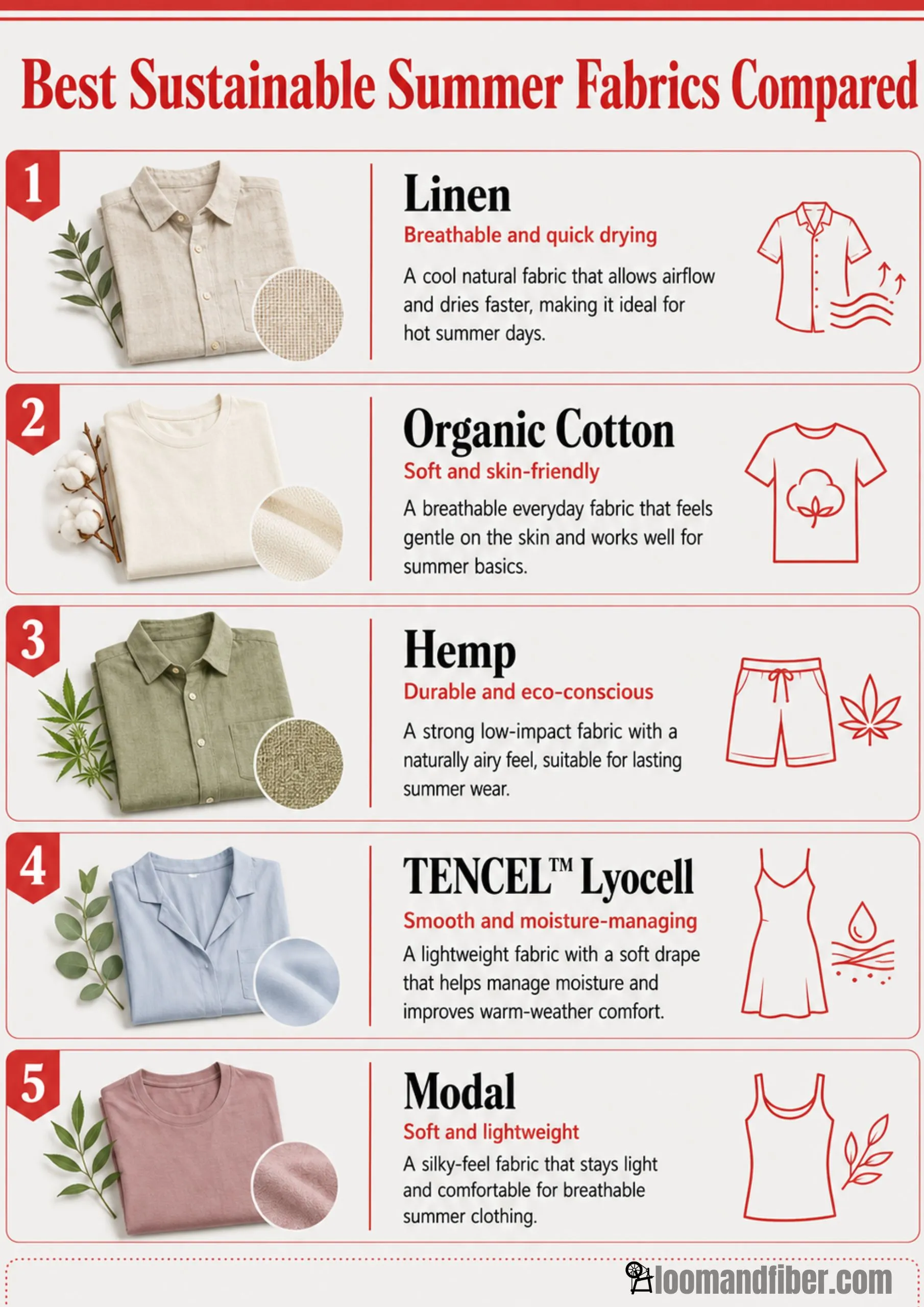
The best sustainable summer clothing fabrics are linen, hemp, organic cotton, lyocell, modal, viscose, and recycled cotton. These fabrics are suitable for summer because they support airflow, absorb or manage moisture, and can feel lighter against the skin. While all of these fabrics are great for summer, the best sustainable fabric to use also depends on the climate, the type of garment, and how the fabric is woven as well as its certification.
In hot weather, linen is often considered one of the best options for its airflow and rapid drying, while organic cotton is noted for making soft everyday basics. Lyocell and modal are considered smooth and comfortable for dresses, t-shirts, and underwear.
| Fabric | Best For | Summer Benefit |
|---|---|---|
| Linen | Shirts, dresses, trousers | Very breathable and quick drying |
| Hemp | Shirts, pants, casualwear | Durable, breathable, low-impact |
| Organic cotton | T-shirts, dresses, underwear | Soft, breathable, skin-friendly |
| TENCEL™ lyocell | Dresses, shirts, loungewear | Smooth, breathable, moisture-managing |
| Modal | Lightweight tops, underwear | Soft, drapey, comfortable |
| Recycled cotton | Casual clothing | Reduces textile waste |
| Responsible viscose | Dresses, blouses | Soft, breathable, but certification matters |
2. What Makes a Fabric Sustainable and Summer-Friendly?
Summer-friendly sustainable fabric should be lightweight, moisture managing, and durable, while reducing environmental impact and chemical-safety risks during production. Sustainability includes the source of the raw materials, as well as the inputs and management from farming and water, to the dyeing and garment life, and the disposal impact.
Breathability
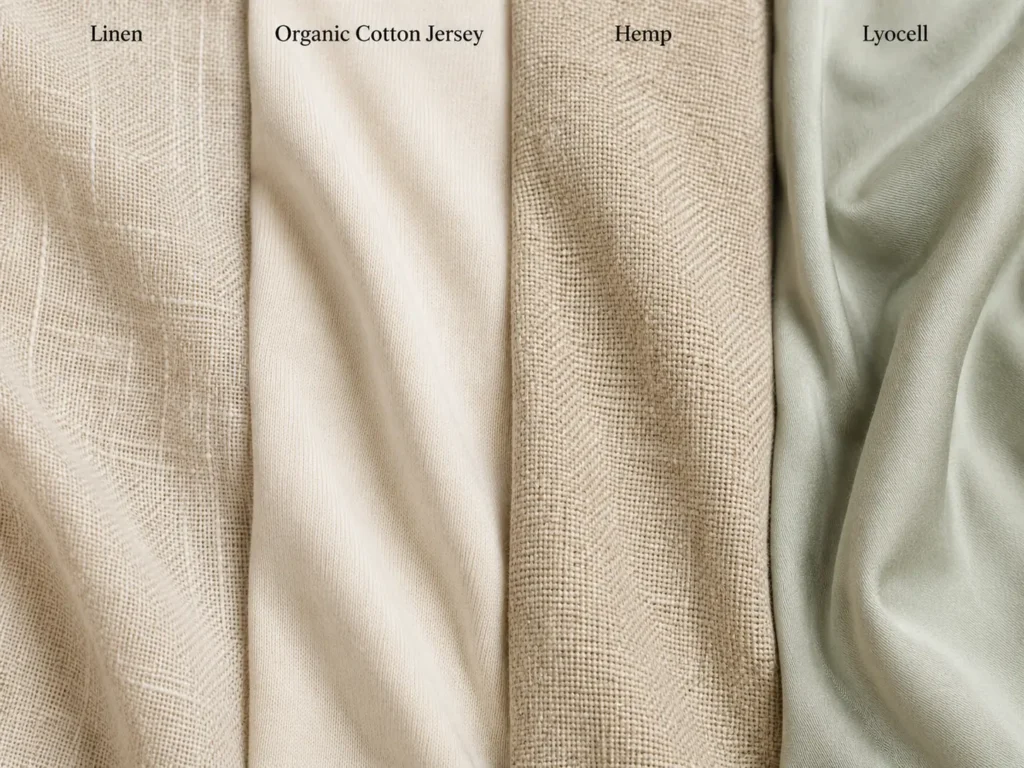
Breathable fabric allows heat to escape from the body.Loose woven fabrics like linen, hemp, and natural cotton fabrics often feel cooler than synthetic fabrics.
Moisture Absorption
Moisture behavior affects how dry, fresh, and comfortable clothing feels. In the summer, cotton can feel fresh at first, but it may stay wet longer after absorbing sweat. Linen absorbs moisture and dries faster. Lyocell and modal feel smooth and help manage moisture.
Drying Speed
In humid weather, fabrics that dry slowly can feel heavy and cumbersome. Fast-drying linen and lightweight loose-weave cotton fabrics can feel more pleasant in humid weather.
Fabric Weight and Weave
Yes, fabrics that are lightweight and loosely woven tend to be cooler than thicker fabrics. A heavy organic cotton sweatshirt is too warm to wear in summer. Organic cotton can work in voile, jersey, lawn and poplin.
Fiber Source
Fiber source can affect land, water, and the use of chemicals, forests and waste. Plant-based fabrics are linen, hemp, and cotton. Wood-based fabrics are lyocell, modal, and viscose. Fabrics that are made from recycled fibers go a long way in not using virgin fibers.
Processing Impact
Processing can negatively affect sustainability through chemical use, dyeing, water consumption, and energy use. A fabric may have a good starting fiber, but can become very poor in sustainability through harmful dyeing, poor wastewater control, and unsafe finishing chemicals.
Durability
Sustainable summer clothing should be long-lasting to limit waste and lower the use of resources. A long-lasting linen shirt can be more sustainable than a weak “eco” fabric. Buyers should evaluate fabric strength and the quality of the stitching and care.
3. Best Sustainable Fabrics for Summer Clothing Ranked
The best fabric for cooling is linen, the best for durability is hemp, the best for softness is organic cotton, and the best for moisture comfort is lyocell. Each fabric has its own strength. The best sustainable fabric can vary depending on the garment type, climate, and expected frequency of wear.
1. Linen
Definitely! It is one of the best sustainable summer fabrics. Linen is a summer fabric that is made from the flax plant. It is naturally breathable, moisture absorbent, and dries quicker than most fabrics used in summer clothing. It helps heat escape.
2. Hemp
Hemp fabric is a good option for summer shirts, casual pants, overshirts, and workwear. Washing hemp clothing helps soften them, but the fabric still remains strong. Hemp is often more structured than cotton, but a hemp-cotton fabric blend can improve softness while retaining the strength and breathability.
3. Organic Cotton
In summer, organic cotton can be better if it uses certified organic farming and responsible processing.
Organic cotton is soft, breathable, and comfortable against the skin. It is great for summer basics like t-shirts, dresses, underwear, and kidswear.
GOTS is one of the leading standards in the textile processing of organic fibers. It sets environmental, human-rights, and social criteria across the textile supply chain.
4. TENCEL™ Lyocell
Yes, TENCEL™ lyocell is smooth, breathable, has great drape, and manages moisture. Lyocell is manufactured from wood pulp. It’s good for dresses, shirts, loungewear, and lightweight summer pants and tops.
In the production of TENCEL™ lyocell, a closed-loop process is employed in which 99.8% of the solvent is recovered.
5. Modal
Modal is a sustainable summer fabric when the sourcing and processing of the wood are done responsibly. It is soft, smooth, and drapes well. As a result, it is used in the manufacture of underwear, lightweight summer tops, dresses, sleepwear, and base layers.
Modal is not inherently sustainable. It is important to look at the sourcing of the wood, the management of the chemicals, and the certifications to determine sustainability.
6. Recycled Cotton
Yes, recycled cotton is a sustainable option for summer clothing. Recycled cotton is good for casual summer clothing like t-shirts, light overshirts, and casualwear, though it may need to be blended to improve its strength.
Recycling cotton may shorten the length of the fibers, which is why recycled cotton may be blended with organic cotton to improve durability and the hand of the fabric.
7. Responsible Viscose
Viscose can feel cool and breathable, but its sustainability is dependent on its sourcing and processing. Viscose drapes well and can be used for summer dresses, blouses, skirts, and shirts. However, viscose that is not sourced sustainably can lead to deforestation and chemical pollution.
Textile Exchange explains how viscose, modal, and lyocell are all cellulosic fibers made by humans. The environmental impact of these artificial cellulosic fibers depends largely on how the wood or other cellulosic source material is produced and processed.
4. Natural vs Artificial Sustainable Summer Fabrics
No. Natural fabrics are not always the more sustainable option, nor are artificial fabrics always a bad option.
Some natural fabrics that are good for summer include linen, hemp, and organic cotton. Natural fabrics can help keep you cool in the summer.
Artificial cellulosic fabrics are modal, lyocell, and viscose. These fabrics are made from wood pulp, so sourcing forests is an important consideration.
Recycled fabrics, such as recycled cotton and recycled polyester, can also provide a more sustainable option. While polyester is a synthetic fiber, recycled polyester helps limit the use of virgin petroleum-based polyester.
5. Sustainable Fabrics for Hot and Humid Weather
In humid weather, the best fabrics include linen, lightweight cotton, lyocell, modal, and other loose-weave fabrics. Humidity makes the evaporation of sweat more difficult. Fabrics, therefore, must be lightweight, loose, quick drying, and breathable. For hot weather, the Mayo Clinic recommends lightweight, loose-fitting clothing since tight clothing impedes the cooling effect.
Best Fabrics for Dry Heat
In dry heat, organic cotton, lyocell, hemp, and linen are all great choices. In a dry heat, sweat evaporates quickly, and so the cooling effect of natural fabrics is even more apparent.
Best Fabrics for Humid Weather
The best options are linen, lightweight cotton, lyocell, modal, and loose-weave fabrics. Even in humid weather, cotton can absorb a lot of moisture. Cotton voile, lawn, and poplin, or a loose jersey, can still work.
Fabrics to Avoid in High Humidity
Avoid heavy polyester, acrylics, thick denim, all coated fabrics, and closely woven nylon. The fabrics can trap heat, or stick to the skin. Performance polyester works for activewear, if it is light and moisture wicking.
6. Sustainable Summer Fabrics by Clothing Type
Use linen for summer shirts, lyocell for summer pants, cotton for summer basics, and modal for summer layers. The same fabric can perform differently depending on the garment. A summer shirt, summer pants, and activewear may each require different fabric weights, weaves, stretch levels, and moisture performance.
Best Sustainable Fabric for Summer Shirts
The best options are linen, organic cotton, or hemp-cotton blends, and lyocell. Linen provides the coolest feel. Organic cotton provides a softer feel. And lyocell has the best drape.
Best Summer Dress Fabrics
Linen, TENCEL™ lyocell, modal, and organic cotton voile all work well.Lyocell or modal can be used for drapey, flowy dresses, while the more crisp, breathable, and premium summer looks can be done with linen.
Best Sustainable Fabric for Summer T-Shirts
Organic cotton, recycled cotton, hemp-cotton, and lyocell blends. Organic cotton jersey is lovely and soft, but hemp-cotton blends can provide a better balance of durability and texture.
Best Sustainable Fabric for Summer Pants
Linen, hemp, organic cotton twill, and linen-cotton blends. Summer pants should be breathable and have the right amount of structure, so lightweight linen and hemp blends can provide comfort and good durability.
Best Sustainable Fabric for Underwear and Base Layers
Organic cotton, modal, and lyocell are great for soft base layers. These materials are smooth and help manage sweat better than rough or heavily finished base layer fabrics.
Best Sustainable Fabric for Active Summer Clothing
Recycled polyester blends, lyocell blends, and lightweight performance fabrics. Active summer clothing usually has a higher demand for stretch and the need for faster drying, so incorporating a small amount of synthetic fiber can improve stretch, durability, and garment life.
7. Sustainable Fabric Certifications to Look For
GOTS, OEKO-TEX® STANDARD 100, FSC, PEFC, bluesign, GRS, and RCS.
While these certifications help reduce vague or misleading sustainability claims, buyers need to look at the scope, fiber, and supplier documents.
GOTS
GOTS helps in organic fiber processing with environmental and social guidelines.
This is particularly helpful for organic cotton. Thus, GOTS-certified organic cotton provides more certainty compared to plain “organic” cotton.
OEKO-TEX® STANDARD 100
It verifies that textiles have been tested for harmful substances and meet the standard’s safety limits.
According to OEKO-TEX, STANDARD 100 is a certification for fabrics tested from the yarn to the finished fabric. (oeko-tex.com)
FSC or PEFC
certifications help verify responsible sourcing of forest-based raw materials used for cellulosic fibers.
FSC certification is important for fabrics of viscose, modal, and lyocell since they are derived from wood pulp.
Textile Exchange Standards
These standards help in documentation of preferred fibers and recycled and responsible sourcing.
These standards help brands in substantiating the material claims, thus they greatly help in supply chain transparency.
Bluesign
Bluesign helps in the safer use of chemicals and responsible manufacturing in the textile supply chain.
This helps brands in managing their chemical impacts during the processing of textiles. This is important since dyeing and finishing are key sustainability issues.
8. Greenwashing Claims to Avoid
What claims for sustainable fabrics could be misleading for purchasers?
Claims like “eco-friendly,” “natural,” “bamboo,” “biodegradable,” and “recycled” can be misleading if they are not supported by clear sourcing, processing, certification, and fiber-content evidence. Greenwashing has companies presenting their words attractively without evidence from their supply chains. Buyers need to ask for certifications, processing details, and fiber percentages.
- What does “bamboo fabric” mean? It can refer to mechanically processed bamboo linen or to bamboo viscose/rayon, which is made through a chemical regeneration process.
- “Eco-friendly” fabrics should come with a certification. The brand should be able to explain the controls they have for the fiber, dyeing, and finishing, as well as those of the factory.
- Just because fabric is “Natural” does not mean it is sustainable. Conventional cotton can have a heavy chemical burden, for example, and is not sustainable.
- “Biodegradable” impacts the end of life of a garment, and a garment can include dyes, finishes, trims, sewing threads, and blended fibers.
- “Recycled” needs to explain the recycling content and not imply full circularity when the garment contains only a small percentage of recycled material.
9. Sustainable Fabric Comparison: Comfort, Cooling, and Eco Impact
Linen is great for cooling, Hemp is great for long lasting, and Organic Cotton is the softest while Lyocell has great moisture comfort.
| Fabric | Breathability | Sweat Handling | Drying Speed | Softness | Durability | Eco Impact | Best Use |
| Linen | Excellent | Very good | Fast | Medium | High | Often strong | Shirts, dresses, trousers |
| Hemp | Very good | Good | Medium-fast | Medium | Very high | Often strong | Shirts, pants, overshirts |
| Organic cotton | Good | Good | Medium-slow | High | Medium-high | Better with certification | T-shirts, underwear, dresses |
| Lyocell | Very good | Very good | Medium | Very high | Medium-high | Strong with responsible sourcing | Dresses, shirts, loungewear |
| Modal | Good | Good | Medium | Very high | Medium | Depends on sourcing | Tops, underwear, sleepwear |
| Recycled cotton | Good | Good | Medium | Medium-high | Medium | Reduces waste | Casualwear and blends |
| Responsible viscose | Good | Good | Medium | High | Medium |
This comparison is meant to help consumers choose fabric by purpose. Go beyond just the trends or the fiber name.
Read More>> Cotton Vs Hemp.
10. Best Sustainable Fabric Blends for Summer
They can be beneficial for comfort, strength, and softness, while also improving wrinkle resistance and price. Although this can make recycling more difficult, there should be a clear and justifiable purpose for every blend.
Linen-Cotton Blend
This blend adds the breathability of linen with the softness of cotton. It works great for all garments from Shirts to Dresses, and Trousers to Summer Uniforms. This blend also avoids wrinkling of pure Linen.
Hemp-Cotton
Hemp-cotton blends combine hemp’s strength and breathability with cotton’s softness. This fabric may be appropriate for casualwear, workwear, overshirts, and durable summer pants.
Lyocell-Linen
Lyocell-linen blends combine linen’s cooling feel with lyocell’s smoothness and drape. This fabric blend may be appropriate for premium shirts and wide-leg pants, as well as skirts and summer dresses that may be more on the elegant side.
Organic Cotton-Modal
Organic cotton-modal blends combine cotton’s natural softness with modal’s smooth feel and drape. This fabric blend may be appropriate for underwear, shirts, sleepwear, and base layers of a lighter weight.
Recycled Cotton-Organic Cotton
Blending recycled cotton with organic cotton can improve softness, strength, and durability. This fabric blend may be appropriate for casual T-shirts, jersey tops, and summer basics which may be more relaxed.
Recycled Polyester-Cotton
Refers the consumer to breathability and drying speeds of activewear. Other fabrics such as linen or cotton are going to be more appropriate for everyday summer humidity, as recycled polyester blends still need careful consideration for odor retention, microplastic shedding, breathability, and end-of-life recycling.
11. Which Sustainable Summer Fabrics Are Best for Sensitive Skin?
The best options are organic cotton, lyocell, modal, and washed lightweight linen.
Breathability and irritation are a concern for sensitive skin, so a chemical safety certification may be as important as fiber type.
Organic cotton is excellent for underwear, t-shirts, kidswear, and sleepwear. Lyocell and modal are perfect for those who dislike rough textiles and prefer smooth fabrics.
Lightweight linen has a crisp finish that many find uncomfortable. With repeated use, linen is known to soften.
Textiles that are rough, poorly finished, heavily dyed, or treated with harsh finishes can be poor choices for sensitive skin. Also consider OEKO-TEX® STANDARD 100, which verifies that the textile has been tested for harmful substances and meets the standard’s safety limits.
12. How to Choose Sustainable Summer Clothing Before Buying
- Consider the fiber, the certification, the weight of the fabric, the weave, the fit, the dyeing, the durability, and the care.
- An excellent summer garment is cool, durable, and has clear material information. Consumers should not consider garments with vague sustainable claims.
- The fiber content should be listed and include specific percentages, e.g. 100% Linen or 70% Organic Cotton.
- Consider the certification next. GOTS, OEKO-TEX®, FSC, PEFC, bluesign, and Textile Exchange are all good options.
- Then, consider the weight of the fabric. Lower-weight fabrics are usually cooler. The weave and garment structure also matter.
- Loose fits allow for better airflow, while tight clothing can be uncomfortable.
- If recycling is a concern, consider fabric blends. Mono-material garments tend to be more easily recycled.
- Low-impact dyes and safer chemistry and wastewater controls can improve sustainability of dyeing and finishing.
Choose classic, simple styles and colors to make the garment easier to wear for longer. Gently wash to care for and extend the life of your garment. Your habits also influence the sustainability of your purchase.
How to Care for Sustainable Summer Fabrics
Question: In what ways can sustainable summer fabrics be maintained for longevity?
- Fabrics should be washed with care, air dried often, not subjected to overexposure to heat, and repaired as soon as damages occur.
- The sustainability of longer lasting fabrics is more value-adding than having to replace them. Fabric selection should incorporate care as a factor.
- Linen, cotton, lyocell, and modal should be washed using cool or lukewarm water.
- Dryers can damage the shape of fabric and cause more shrinking, so air drying is best.
- Worn clothing should not be washed more often than necessary. Instead, air them out between wears if they are not soiled.
- High-heat drying can damage fabric shape more than gentle washing with mild detergent.
- Breathable fabrics need to be stored in dry spaces to prevent odors and damage.
Common Mistakes to Avoid When Choosing Sustainable Summer Fabrics
- Buyers should avoid choosing fabric by fiber name alone.
- Bamboo viscose is not automatically sustainable, because its impact depends on chemical processing, sourcing, and wastewater control.
- Fabric weight and weave should not be ignored.
- Thick organic cotton for hot weather is a poor choice.
- Dyeing, finishing, and the impact of blended fibers should not be ignored.
- Care, washing impact, and certifications should be prioritized over trends.
- These mistakes worsen comfort and sustainability. Fabric selection should balance cooling comfort, durability, quality, and end use.
Conclusion: Best Sustainable Fabrics for Summer Clothing
What is the best sustainable fabric for summer clothing?
Answer: Linen is usually the best cooling fabric, but hemp, organic cotton, lyocell, modal, recycled cotton, and responsible viscose are good alternatives.
The best sustainable fabrics for summer clothing are those that are easy to breathe in, light, strong, grown and processed in a responsible manner, and safe to process. Linen is best for breathability; hemp for strength; organic cotton for soft basics; and lyocell for smooth comfort.
Sustainability does not rest solely on the fiber name. Certification, dyeing and finishing processes, quality of the garment, care, and its eventual disposal all matter. The best fabric choice for summer therefore combines all elements for comfort and climate, along with sustainability standards and long-term use.
FAQs
The best sustainable fabrics for summer clothing are linen, hemp, organic cotton, and TENCEL™ lyocell because they are breathable, lightweight, and good for hot weather.
Linen is one of the most sustainable summer fabrics because it is from the flax plant, is breathable in the heat, dries quicker than cotton, and is very durable if well cared for.
Organic cotton is good for summer clothing because it is soft and breathable, and is great for T-shirts, dresses and warm-weather casual clothing, as well as summer shirts.
Some of the best fabrics for hot and humid weather are linen, lightweight organic cotton, hemp, and TENCEL™ lyocell. All of these sustainable fabrics help manage sweat and allow for airflow.
Bamboo fabric can be soft and breathable, but it is not automatically sustainable. Its environmental impact relies on how it is processed. When bamboo is processed mechanically, its impact is usually lower than when bamboo is processed into bamboo viscose via a chemical process.