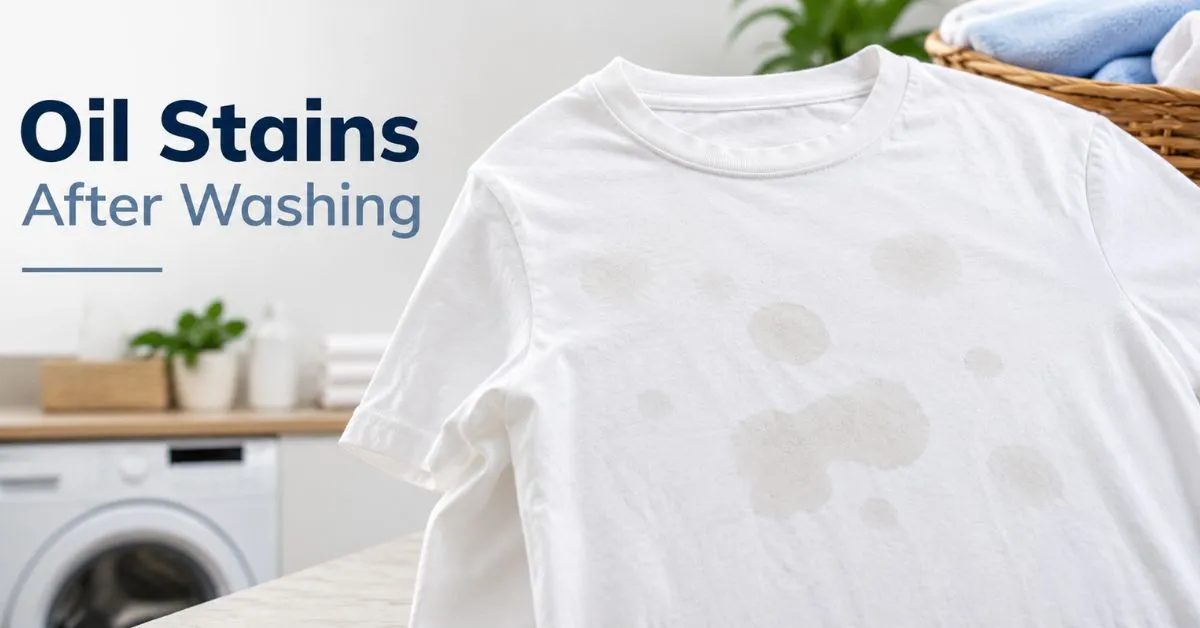

Oil stains on clothes after washing are greasy, translucent, yellow, gray, or dark marks that remain or appear after laundry. Usually, they happen because grease was not pretreated before washing. However, fabric softener residue, detergent buildup, washer grime, overloading, or mechanical grease can also cause oily spots on laundry. The safest first step is simple. Do not put the garment in the dryer. Instead, treat the dry stain with liquid laundry detergent, clear dish soap, or a grease stain remover. Then, wash it again using the warmest water allowed by the care label. If several garments develop new oily marks in one load, check the washer, softener dispenser, detergent dose, and drum buildup. The American Cleaning Institute advises using the warmest safe setting for tough stains and avoiding the dryer until the stain is removed.
Why Do Oil Stains Appear on Clothes After Washing?
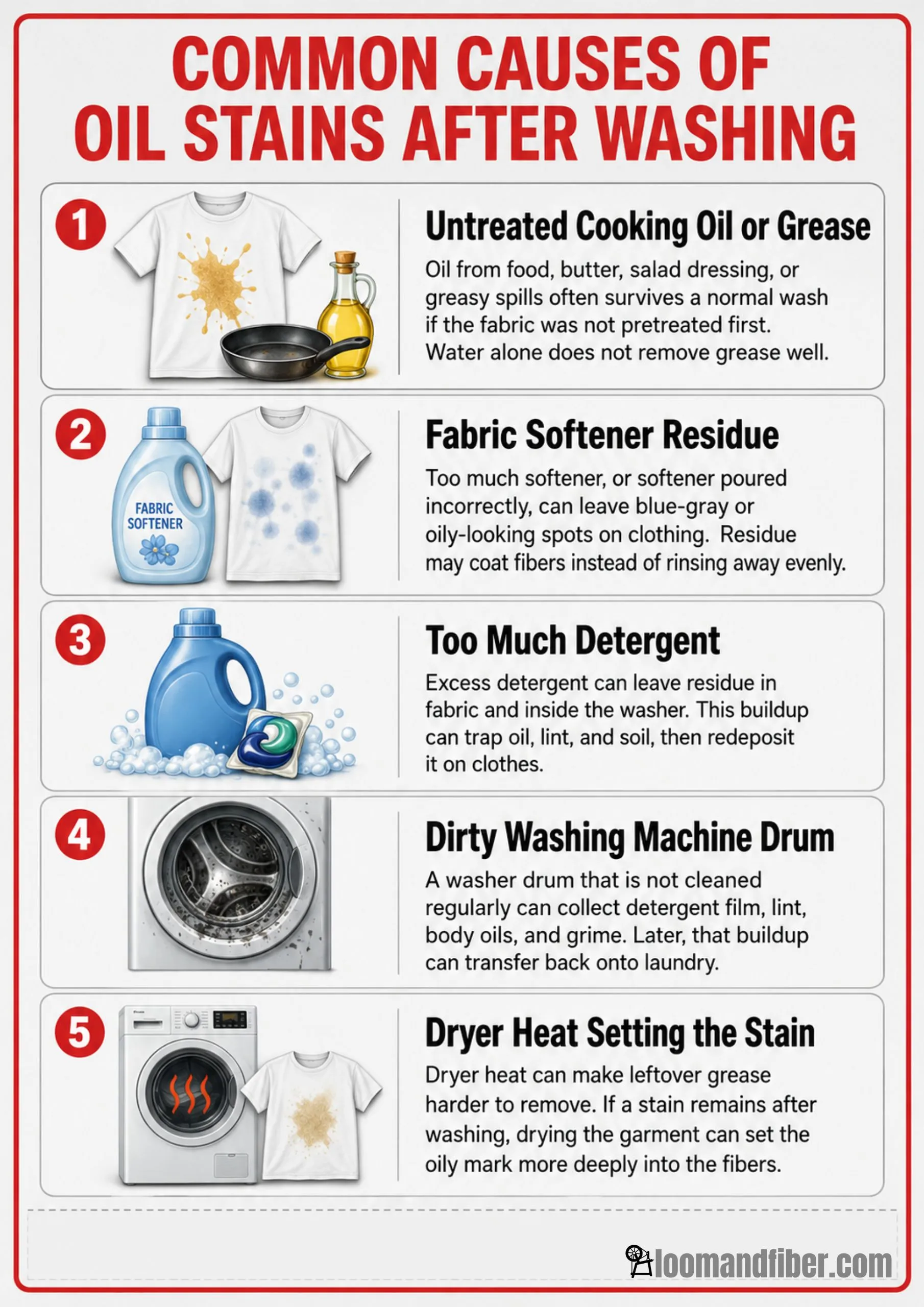
Oil stains appear after washing when grease remains, residue redeposits, or washer buildup transfers to fabric.
Oil does not dissolve easily in water. Therefore, normal washing may remove surface dirt while leaving oily residue behind. After the garment dries, the translucent spot often becomes more visible.
Grease Was Present Before Washing but Not Pretreated
Cooking oil, butter, salad dressing, body oil, lotion, sunscreen, and makeup cling strongly to fibers.
Therefore, water alone cannot lift these greasy soils from cotton, polyester, denim, or blends.
Pretreatment gives detergent time to loosen oil before the wash cycle starts.
Dryer Heat Made the Oil Stain Harder to Remove
Dryer heat can make grease stains more stubborn.
Therefore, always inspect stained clothing before machine drying.
If the mark remains, repeat pretreatment before using heat again.
Fabric Softener Left Oily-Looking Spots
Fabric softener can create greasy-looking stains when too much product enters the rinse cycle.
Also, spots can appear when softener touches fabric directly or distributes unevenly.
Whirlpool and Maytag note that excess softener can cause spotting or discoloration.
Too Much Detergent or Laundry Pods Left Residue
Too much detergent can leave residue on clothes and inside the washer.
As a result, residue can trap body oil, lint, soil, and softener film.
This problem becomes worse in cold water, short cycles, or overloaded loads.
The Washing Machine Drum Has Greasy Buildup
A dirty washer drum can redeposit grime onto clean laundry.
Over time, detergent residue, body oils, lint, and softener collect around seals.
Consequently, random oily marks may appear even on previously clean clothing.
The Washer May Have a Mechanical Grease or Oil Leak
Mechanical washer grease usually creates dark, black, or gray oily marks.
If cleaning the washer does not help, a worn part may be leaking grease.
In that case, stop guessing and arrange a professional washer inspection.
Quick Diagnosis: What Type of Oil Stain Is It?
Match the stain color, texture, and pattern to the most likely cause.
| Stain Appearance | Likely Cause | Best First Action |
|---|---|---|
| Transparent greasy spot | Cooking oil, lotion, body oil | Pretreat with liquid detergent or dish soap |
| Blue-gray oily spot | Fabric softener residue | Rewash without softener; clean dispenser |
| Dark or black grease marks | Washer buildup or mechanical grease | Clean washer; inspect drum and gasket |
| Waxy patch | Detergent pod or softener residue | Soak and rewash in warm water |
| Yellow oily stain | Body oil, sunscreen, deodorant, sebum | Use enzyme detergent or grease pretreatment |
| Multiple random spots in one load | Washer, detergent, softener, or overloading | Run a washer cleaning cycle |
How to Remove Oil Stains from Clothes After Washing
Treat the dry stain, wait, rewash safely, then air-dry before inspection.
Step 1: Do Not Put the Garment in the Dryer
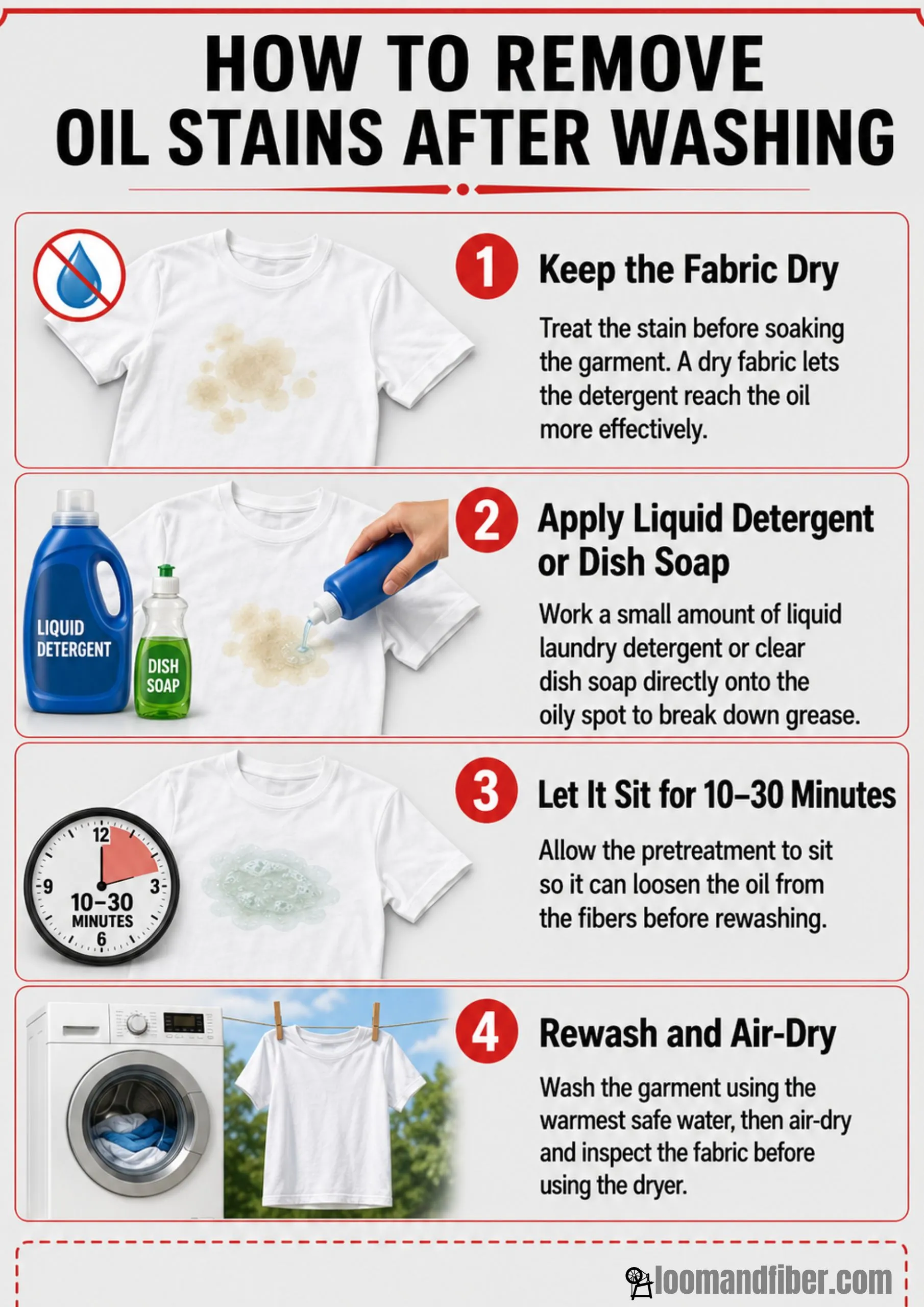
Do not dry oil-stained clothing until the stain is fully removed.
Dryer heat can make grease stains harder to lift.
Therefore, keep stained garments away from heat until treatment works.
Step 2: Treat the Stain While the Fabric Is Dry
Treat oil stains before soaking the fabric.
Water can temporarily block detergent from reaching oily residue.
Therefore, apply grease treatment directly to the dry spot first.
Step 3: Apply Liquid Laundry Detergent or Clear Dish Soap
Apply liquid laundry detergent, grease stain remover, or clear dish soap.
The American Cleaning Institute recommends pretreating grease before laundering safely.
However, use dish soap sparingly to avoid heavy suds.
Step 4: Let the Pretreatment Sit
Let the pretreatment sit for 10 to 30 minutes.
This dwell time helps surfactants loosen oily residue from fibers.
For older stains, wait longer only on durable, colorfast fabrics.
Step 5: Wash Using the Warmest Safe Water
Wash with the warmest water allowed by the care label.
Warm water helps detergent move grease away from fabric.
However, avoid heat on silk, wool, elastane, prints, and delicate dyes.
Step 6: Air-Dry and Inspect Before Drying
Air-dry the garment after washing.
Wet fabric can hide remaining oily marks.
Finally, inspect the dry garment before using the dryer.
How to Remove Set-In Oil Stains After Drying
Set-in oil stains may require more than one treatment. Heat can bond oily residue more firmly to textile fibers. GE Appliances also advises detergent pretreatment, a 30-minute wait, and rewashing with the hottest water safe for the item.
- Place backing behind the stain: Put cardboard or a towel behind the stained area.
- Apply detergent directly: Add liquid laundry detergent or clear dish soap to the spot.
- Work it gently: Rub with fingers or a soft brush without damaging fibers.
- Wait before washing: Let the treatment sit for about 30 minutes.
- Rewash safely: Use the warmest water allowed by the garment care label.
- Air-dry first: Air-dry, inspect, and repeat treatment if needed.
Best Products for Oil Stains on Clothes
Choose products by stain type, fabric type, and garment care limits.
Liquid Laundry Detergent
Liquid laundry detergent works well on washable cotton, polyester, blends, and everyday clothing.
It contains surfactants that help lift grease from fabric.
Also, it rinses more easily than thick pastes or heavy soaps.
Clear Dish Soap
Clear dish soap helps break down cooking oil, butter, and greasy food stains.
However, use only a small amount on washable fabrics.
Too much dish soap can create foam and become difficult to rinse.
Enzyme Detergent
Enzyme detergent helps with body oil, sebum, collars, underarms, and workout clothes.
Lipase enzymes target fat-based stains, including butter, oil, and human sebum.
However, enzyme products may harm delicate fibers like silk or wool.
Baking Soda, Cornstarch, or Chalk
Baking soda, cornstarch, and chalk absorb fresh oil before washing.
However, they work less effectively after a full wash and dry cycle.
Use them early, then follow with detergent pretreatment.
Oxygen-Based Pretreatment
Oxygen-based pretreatment helps washable whites and colorfast fabrics.
It works well when oil mixes with sauce, food, sweat, or body soil.
However, always test colored fabric before using longer soak times.
Oil Stains by Fabric Type
Yes, fabric type controls water temperature, scrubbing strength, and product choice.
Cotton
Cotton usually tolerates stronger pretreatment and warmer water.
However, dyed cotton can fade when scrubbed aggressively.
Therefore, test hidden seams before treating dark cotton clothing.
Polyester and Synthetic Fabrics
Polyester can hold body oil and greasy residue strongly.
Additionally, athleticwear often traps sebum inside synthetic yarns.
Use enzyme detergent when the care label allows it.
Denim
Denim can handle targeted pretreatment better than many delicate fabrics.
However, hard scrubbing may fade the treated spot.
Instead, rub gently and wash denim inside out.
Wool and Silk
Wool and silk need gentle care.
Do not use dish soap, enzymes, hot water, or strong scrubbing.
For valuable garments, choose dry cleaning or specialist textile care.
Spandex and Stretch Fabrics
Spandex loses strength when exposed to high heat.
Therefore, avoid hot water and high dryer settings.
Use cool or warm water according to the care label.
Why Clothes Get New Oil Spots in the Washer
New washer spots often come from residue, buildup, overloading, or mechanical grease.
Dirty Washer Drum
A dirty washer drum can collect detergent film, lint, softener, and body oils.
Then, this buildup can transfer back onto clothing.
A monthly clean washer cycle helps reduce excess detergent buildup.
Fabric Softener Dispenser Buildup
Fabric softener can thicken inside the dispenser.
Then, it may release unevenly during the rinse cycle.
As a result, blue-gray or translucent oily marks can appear.
Overloaded Washer
Overloading stops clothes from moving freely.
Therefore, detergent and rinse water cannot reach every fabric surface.
This allows residue, oil, and soil to redeposit.
Cold Water and Heavy Grease Loads
Cold water may struggle with heavy oily laundry.
Also, short cycles may not give detergent enough cleaning time.
Use warm water when the care label allows it.
Mechanical Grease from Washer Parts
Mechanical grease usually leaves black, gray, or dark oily streaks.
If stains continue after cleaning, the washer may need repair.
Therefore, inspect seals, drum areas, and service history.
How to Stop Oil Stains from Coming Back After Washing
Pretreat stains, dose products correctly, and maintain the washer.
- Pretreat stains first: Treat oil stains before washing the garment.
- Measure detergent correctly: Use the detergent amount recommended for load size and soil level.
- Avoid direct softener contact: Never pour fabric softener directly onto clothes.
- Reduce overloading: Leave enough room for clothes to move freely.
- Clean the drum monthly: Run a clean washer cycle to reduce residue buildup.
- Clean the dispenser: Remove softener and detergent buildup from dispenser compartments.
- Separate greasy towels: Wash kitchen towels and greasy work clothes separately.
- Use warm water safely: Use warm water when the care label permits it.
- Check before drying: Inspect stained clothing before using dryer heat.
- Avoid excess heat: Keep stained items away from high dryer settings.
Common Mistakes That Make Oil Stains Worse
Heat, harsh scrubbing, wrong products, and ignored care labels worsen stains.
Drying Before Checking the Stain
Drying stained clothing makes grease harder to remove.
Heat can set oily residue deeper into fibers.
Therefore, inspect clothing before every dryer cycle.
Using Too Much Dish Soap
Dish soap can help grease stains, but excess creates problems.
Too much foam can overload rinsing and leave residue.
Use a pea-sized amount for small stains.
Scrubbing Aggressively
Aggressive scrubbing can damage fibers and distort fabric texture.
It can also fade dyed garments in one spot.
Instead, use gentle pressure and longer dwell time.
Using Bleach on Oil Stains
Chlorine bleach does not dissolve grease effectively.
It can also damage colored fabrics and weaken fibers.
Use detergent-based pretreatment instead.
Ignoring the Care Label
Care labels protect fabric structure, dye, and finish.
Some garments cannot handle hot water or enzymes.
Therefore, always check the label before treatment.
When the Stain Is Not Actually Oil
No, detergent, softener, rust, dye, and mildew can mimic oil stains.
Detergent Stains
Detergent stains often look white, blue, waxy, or streaky.
They usually happen when detergent fails to dissolve.
Rewashing with proper water level often removes them.
Fabric Softener Stains
Fabric softener stains often look greasy, grayish, bluish, or translucent.
However, they are residue spots, not food oil.
Stop using softener temporarily and clean the dispenser.
Rust or Hard Water Marks
Rust marks appear orange, brown, or yellow.
They do not feel greasy when touched.
Check water quality, pipes, and washer drum damage.
Color Transfer
Color transfer appears as dye patches or colored shadows.
It does not usually create a transparent greasy ring.
Wash new dark garments separately to prevent transfer.
Mold or Mildew Marks
Mold marks look dark, irregular, and sometimes fuzzy.
They often smell musty after damp storage.
Wash and dry laundry promptly to prevent mildew growth.
Special Cases: Different Oil Stains Need Different Treatment
No, stain source changes the best product and treatment time.
Cooking Oil Stains After Washing
Cooking oil stains usually respond well to dish soap or liquid detergent.
Treat the dry stain first, then wash safely.
Repeat if the garment was already dried.
Motor Oil or Machine Grease After Washing
Motor oil and machine grease need stronger pretreatment.
They may also require repeated washing.
Wash these garments separately to protect other laundry.
Body Oil Stains on Shirts, Collars, and Pillowcases
Body oil stains often come from sebum and sweat.
Use enzyme detergent when the fabric allows it.
Also, wash collars and pillowcases in warm safe water.
Sunscreen Oil Stains
Sunscreen can leave greasy or yellow stains.
These marks appear often on white shirts and swimwear.
Pretreat with liquid detergent before washing.
Lotion or Makeup Oil Stains
Lotion and makeup contain oils, waxes, pigments, and silicones.
Therefore, they need pretreatment before machine washing.
Use liquid detergent or a stain remover first.
Should You Wash Oil-Stained Clothes in Hot or Cold Water?
Use the warmest water allowed by the care label.
Hot water can help detergent remove grease from durable fabrics. However, hot water can shrink, fade, or damage delicate and stretch fabrics. Therefore, avoid one-rule advice like “always use hot water.” Instead, choose the warmest safe water for that garment. The American Cleaning Institute also recommends the warmest safe setting for tough stains.
Can Oil Stains Be Permanent?
Oil stains are not always permanent, but time and heat make them harder.
Fresh oil stains usually come out more easily than old stains. However, repeated washing, dryer heat, oxidation, and long storage can make removal harder. Therefore, treat oily marks as soon as you see them. If one treatment fails, repeat before drying again.
Expert Laundry Checklist for Oil Stains After Washing
Question: What is the best checklist for oily marks after laundry?
Direct Answer: Identify the source, pretreat correctly, rewash safely, and maintain the washer.
- Identify the stain: Decide whether it is oil, softener, detergent, rust, dye, or washer grease.
- Skip the dryer: Do not dry the garment until the stain disappears.
- Treat it dry: Apply pretreatment before soaking the garment.
- Use the right product: Choose detergent, dish soap, or grease stain remover.
- Wait before washing: Let treatment sit before the wash cycle.
- Wash safely: Use the warmest safe water for the fabric.
- Air-dry first: Inspect the garment only after air-drying.
- Clean the washer: Clean the drum if several garments show spots.
- Pause softener: Stop fabric softener if oily spots keep appearing.
- Repeat carefully: Treat set-in stains more than once when needed.
Conclusion-
Oil stains on clothes after washing usually come from untreated grease, fabric softener residue, detergent buildup, washer grime, or heat-set stains. Therefore, the best solution is a two-part approach. First, treat the garment correctly with detergent, dish soap, or stain remover. Then, fix the laundry routine by measuring detergent, avoiding excess softener, cleaning the washer, and checking stains before drying. With careful treatment, most oily marks on clothes can be reduced or removed safely.
Read More>> Can you Wash Mold out of Clothes and How?
FAQs
Oil stains after washing can come from untreated grease, fabric softener residue, detergent buildup, a dirty washer drum, overloaded laundry, or mechanical grease. Sometimes, the stain was already present before washing. However, washing removed surrounding dirt and made the oil easier to see.
Yes, many dried oil stains can still be removed. However, they may need repeated pretreatment because dryer heat makes grease harder to lift. Treat the dry stain, wait, rewash safely, then air-dry before inspection.
Clear dish soap can help remove cooking oil, butter, and greasy food stains from washable fabrics. However, use only a small amount. Too much dish soap can create excess foam and leave residue.
Your washer may leave grease spots because of drum buildup, softener residue, detergent residue, overloading, or mechanical grease. First, clean the washer and dispenser. If dark oily streaks continue, arrange a repair inspection.
Fabric softener stains can look oily, but they are usually residue spots. They happen when softener coats fabric unevenly. Stop using softener temporarily, then clean the dispenser and rewash affected garments.
Wash oil stains in the warmest water safe for the fabric. Hot water may help durable fabrics. However, it can shrink, fade, or damage delicate, synthetic, and stretch garments.
Oil stains can appear after drying because water temporarily hides translucent grease. Once the fabric dries, the oily mark reflects light differently. Therefore, always inspect garments after air-drying.
Baking soda can absorb fresh oil before washing. However, washed or dried oil stains usually need detergent, dish soap, or a grease-targeting pretreatment. Use baking soda early for the best result.