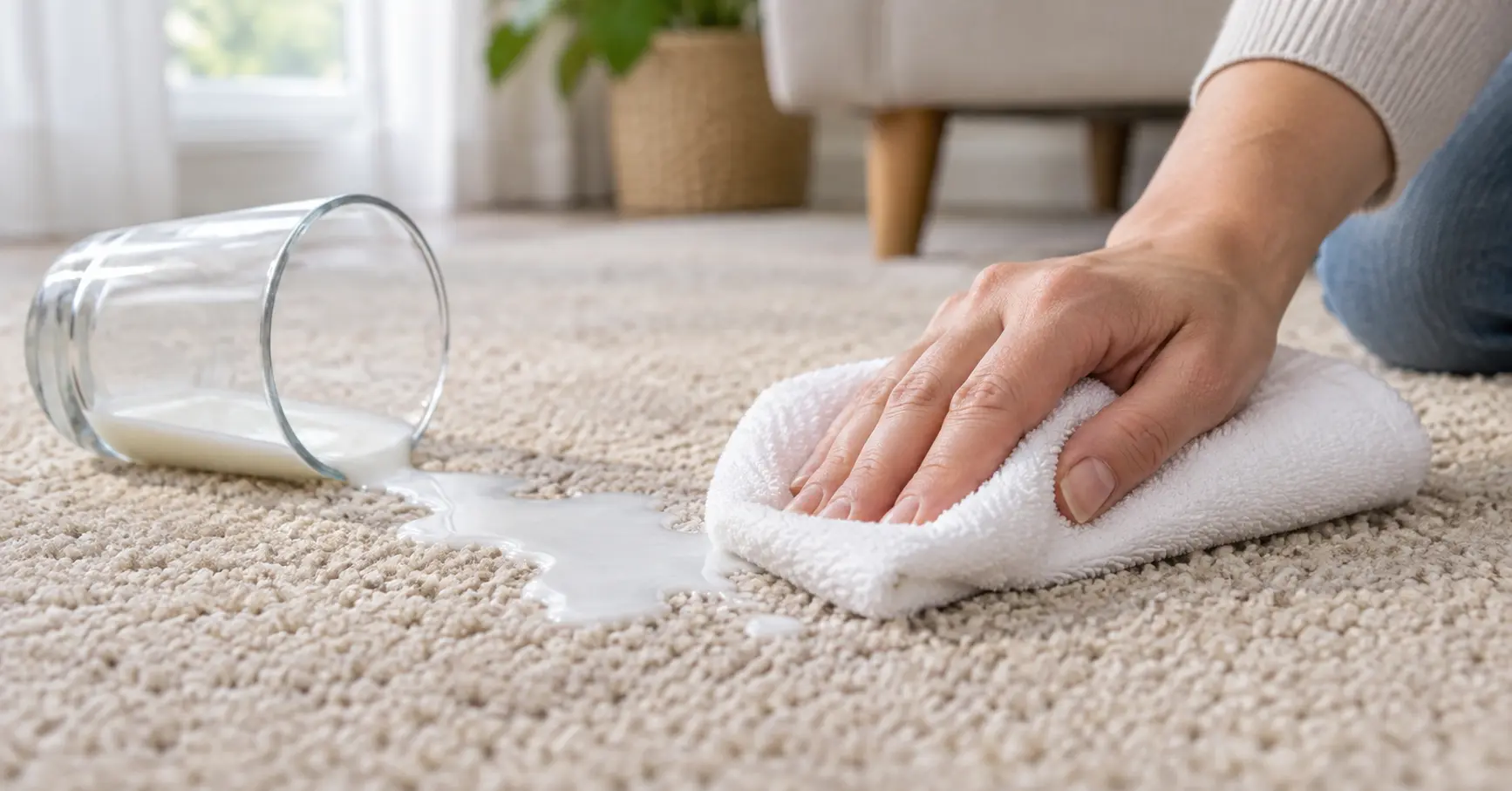

Blot the liquid, clean the spot with a mixture of cool water and dish soap or white vinegar. Work from the outside in. For dried or smelly stains, you’ll need an enzyme cleaner to break down the proteins found in milk that can cause odor.
Removing milk stains from carpets can be a bit more complicated than other types of spills. Milk contains proteins and fat that get embedded in carpet fibers and can sour, leaving a lingering odor long after the stain has been cleaned. Here’s how to get milk stains out of carpets, whether the spill was recent or has already dried.
Fresh vs. Dried Stain
| Stain Type | Best Cleaner | Water Temp | Time Needed |
|---|---|---|---|
| Fresh spill | Dish soap + water | Cool/lukewarm | 5–10 minutes |
| Dried stain | Enzyme cleaner | Cool | 15–30 minutes |
| Lingering odor | Vinegar or baking soda | Cool | Several hours (odor absorption) |
| Old/set-in + smell | Hydrogen peroxide (spot-test first) | Cool | 10–15 minutes + drying time |
How Milk Stains Are Different From Other Stains
Unlike a straightforward spill like coffee, milk contains fat, protein, and sugar that behave differently in carpet fibers. Fat can leave behind a greasy residue, protein can bind to the carpet fibers, and lactose can sour, leaving a smell. Hot water and carpet cleaners can also cause the proteins to “cook” into the fibers of the carpet.
Supplies
- Clean white towels or paper towels
- Cool or warm water
- Dish soap or white vinegar
- Baking soda
- Spray bottle
- Hydrogen peroxide (optional)
- Enzyme cleaner (optional)
- Wet/dry carpet vacuum (optional)
How to Remove a Milk(Fresh) Stain From Carpet
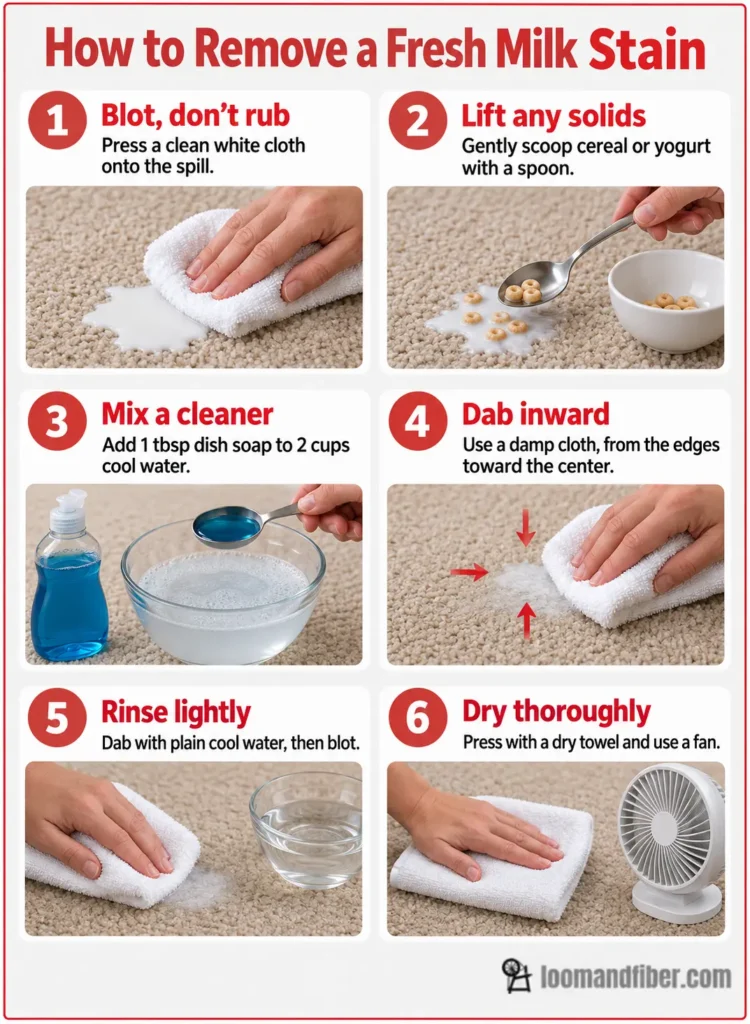
Blot up any excess liquid with clean paper towels or a clean white cloth immediately, being careful not to allow the liquid to seep into the padding beneath the carpet. Rubbing the milk into the fibers may push it deeper into the padding, making it more difficult to remove.
Scrape away any solids. Use a spoon or a dull knife to carefully remove any bits of cereal, yogurt, etc.
Mix a cleaning solution of 1 tablespoon of liquid dish soap (or vinegar) to 2 cups of cool water.
Blot the stain from the outside in with a clean white cloth, using the cleaning solution. This will help draw the milk stain out with the solution.
Use plain water to dab the spot until the soap has been rinsed out. Blot the area dry with a clean white cloth.
Use paper towels to dry the area. If possible, open a window or use a fan to help the area dry faster. Moisture in carpet padding can cause mold to grow.
How to Remove a Dried-Up Milk Stain
The proteins in milk have already bonded to the carpet fibers, so they’ll need to be broken down and loosened, along with any hardened bits of the stain.
- Dampen the area with water and let it sit for a few minutes.
- Gently scrape off any flakes.
- Apply an enzyme cleaner to the spot and let it sit for the recommended amount of time, then blot. This type of cleaner will get rid of any odor caused by the milk stain, as well as break down the proteins in the milk.
- Baking soda can be used to deodorize the spot after it has dried. Let it sit for a few hours (or ideally, overnight) before vacuuming up the powder.
Like dried blood stains, dried milk stains contain proteins that bond to carpet fibers, which is why enzyme cleaners work best.
How to Get Rid of a Sour Milk Smell in Carpet
Milk that has started to sour has bacteria in it that can get trapped deep in carpet fibers, causing a sour smell that doesn’t dissipate easily.
Mix a cleaning solution of equal parts water and white vinegar. Lightly spray the area and blot it dry after a few minutes. Vinegar helps eliminate odors without damaging most carpets.
After the area has dried, you can sprinkle baking soda over the carpet to absorb any sour smells. Wait a few hours (or preferably, overnight) before vacuuming the powder up.
For a more persistent odor, you can use hydrogen peroxide. First, test it on a small, inconspicuous area of the carpet — hydrogen peroxide can lighten some carpets. If it doesn’t harm the carpet, dab it on the sour spot to help kill the odor.

What NOT To Do
- Do not use hot water.
- Do not vigorously scrub the milk stain, as this may damage the carpet fibers.
- Do not leave the carpet damp after cleaning, as this can cause mold and mildew to develop in the padding beneath the carpet.
- Do not ignore the padding beneath the carpet. If there’s a particularly large milk spill, it’s possible that it has seeped beneath the carpet and soaked into the padding.
- “Avoid bleach unless your carpet is colorfast-safe — using it incorrectly can cause a bleach stain that’s even harder to fix than the original spill.”
If the smell continues after treating the carpet, it may be necessary to seek the help of a professional carpet cleaner, who has more powerful equipment that can extract moisture from deep within the carpet padding to get rid of odor-causing mold and mildew.
How to Know When to Call a Professional Carpet Cleaner
If the smell of sour milk persists even after treating the carpet and padding, or if the original milk stain was particularly large, professional help may be needed. Carpet cleaners have powerful suction machines that can remove moisture from the deepest roots of carpet fibers. Some stains — like rust or deeply set-in milk residue — respond better to professional treatment than DIY methods.
Cleaning Solutions — What to Use and Why
| Solution | Ratio | Best For | Caution |
|---|---|---|---|
| Dish soap + water | 1 tbsp soap : 2 cups water | Fresh spills | None significant |
| White vinegar + water | 1:1 | Odor neutralizing | Smell fades once dry |
| Baking soda | Sprinkle dry | Absorbing residual odor | Vacuum thoroughly after |
| Enzyme cleaner | Per product label | Dried stains, protein breakdown | Follow sit-time exactly |
| Hydrogen peroxide (3%) | Undiluted, small amount | Stubborn odor/stains | Spot-test — can lighten carpet |
FAQs
While milk can leave a stain, especially if it’s been sitting in the carpet for a while, it shouldn’t permanently stain a carpet. Fresh spills can typically be cleaned with dish soap and vinegar, while older ones may need an enzyme cleaner to remove proteins that have bonded to the fibers.
A solution of dish soap and water will typically remove a fresh milk spill, while older, more persistent stains may require an enzyme cleaner.
A mixture of dish soap and water, applied by blotting to the stain, will typically remove a milk stain the fastest.
Avoid using bleach to remove milk stains, unless the manufacturer of the carpet has recommended it, as it can damage most carpets. Enzyme cleaners or vinegar are usually just as effective.
This typically means that the milk has penetrated below the fibers of the carpet and into the backing, where it has begun to sour. Treat the carpet to an enzyme cleaner, then let it dry completely. If the smell persists, it may have gotten into the padding beneath the carpet, which may need to be professionally cleaned or replaced.