
Is Tencel Fabric Toxic?
No Tencel fabric is not toxic. Tencel (lyocell) is produced from wood pulp. It employs a closed-loop system, where approximately 99% of the solvent is recovered and reused. Tencel leaves behind negligible chemical residues when properly manufactured and is known for its absorbency and breathability. It is used safely by many including babies and those with sensitive skin. Concerns regarding the safety of Tencel do not stem from the fiber itself, but from the finishing dyes and/or treatments of the fabric.
Why Is Tencel Considered Non-Toxic?
Some of the reasons Tencel is classified as non-toxic are:
- Being made from renewable wood pulp.
- It employs NMMO, a solvent considered significantly safer than many chemicals used in conventional rayon production.
- Around 99% of the solvent is reused and recovered.
- The fiber has very low chemical residue.
- Unlike polyester, it does not shed microplastics.
- Certified Tencel products are tested to help ensure they are free from harmful levels of restricted substances.
| Factor | Verdict |
|---|---|
| Toxic chemicals in fiber | Very Low |
| Skin irritation risk | Very Low |
| Safe for eczema | Usually Yes |
| Safe for babies | Yes |
| Formaldehyde-free | Depends on finishing treatments |
| VOC off-gassing | No |
| Biodegradable | Yes |
| Environmental toxicity | Very Low |
| Microplastic shedding | No |
Tencel Production Process
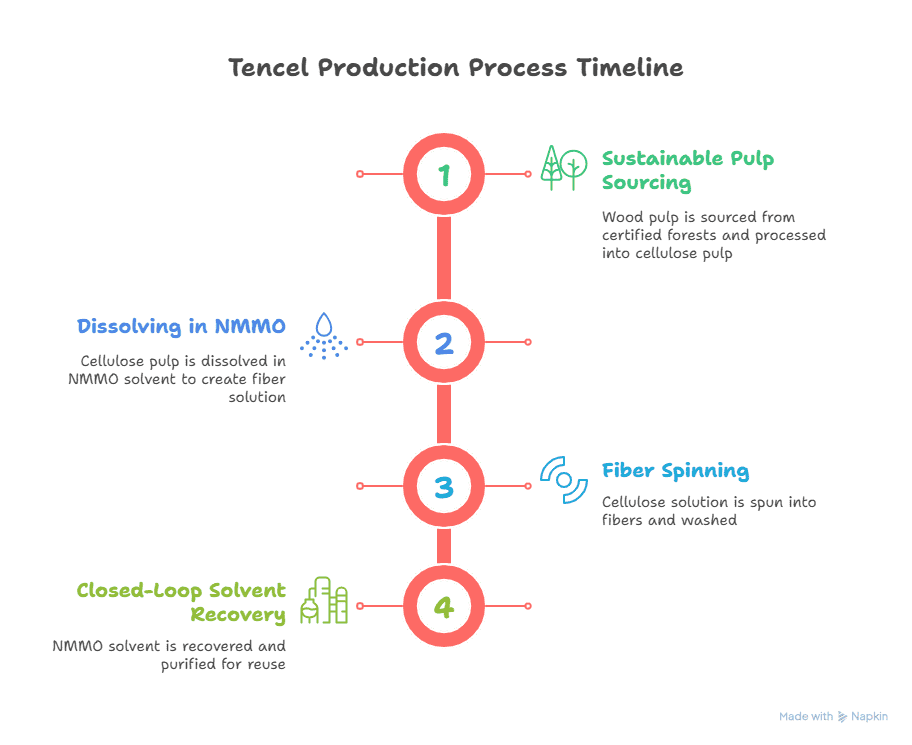
Sustainable Pulp Sourcing
The initial stage of the process involves sourcing wood pulp from forests that have obtained certification. Lenzing obtains cellulose from plantations that follow sustainable management practices which frequently have FSC or PEFC certifications. The forestry plantations utilize fast-growing eucalyptus or beech trees which thrive without significant pesticide application. Raw wood undergoes chipping and drying to produce cellulose pulp that maintains minimal chemical contamination.
Dissolving in NMMO
Wood pulp becomes dissolved when N-methylmorpholine N-oxide (NMMO) acts as an organic solvent. The result of this process creates a thick cellulose solution that can form fibers. The non-toxic and biodegradable properties of NMMO guarantee its safety as a solvent during Tencel production. The Tencel closed-loop system recycles and reuses nearly all of the solvent during this step.
Fiber Spinning
The cellulose solution passes through minute nozzles called spinnerets which produce unbroken filaments. The filaments transform into fibers when they come into contact with the water bath. After the fibers undergo a water washing process to eliminate residual solvent they are stretched and dried to enhance their strength. This stage requires only water and mechanical processing without any heavy chemicals.
Closed-Loop Solvent Recovery
The fiber slurry and the used NMMO solvent undergo separation. The system successfully retrieves approximately 99% of spent NMMO solvent which gets reintroduced into the processing cycle. The closed-loop recovery system stops chemical release while maintaining an extremely clean operation. In the reuse process NMMO undergoes purification to ensure finished fabric contains almost undetectable solvent levels. The treatment of wastewater helps ensure the whole process produces very little pollution.
Does Tencel Fabric Contain Harmful Chemicals?
Tencel fibers are generally not known to contain harmful amounts of formaldehyde, phthalates, PFAS, BPA, or heavy metals. Being produced from plant-based cellulose fibers, Tencel is washed thoroughly during manufacture to remove residual chemicals. The hazard of dyed or treated garments is also dependent on the manufacturer. The best way to guarantee safety in Tencel products is by choosing OEKO-TEX or GOTS certified products.
Chemical Residues & Certifications
Non-toxic Fabric Certifications
Non-toxic fabric certifications accompany Tencel products to show that they contain no harmful residues. The OEKO-TEX Standard 100 certification proves textiles have undergone testing for more than 1,000 harmful substances and received confirmation of their safety for skin contact. Throughout processing The Global Organic Textile Standard (GOTS) limits hazardous dyes and chemicals. Buyers can trust Tencel garments that display these labels because they confirm compliance with stringent safety standards free from prohibited toxic substances.
Tencel vs Cotton and Polyester
The Tencel fabric has significantly fewer chemical residues when compared to traditional cotton and polyester materials. Non-organic cotton retains traces of pesticides and fertilizers while Tencel begins with pure wood pulp. According to research overviews Tencel requires less dye than cotton because it comes from production as a pure white material which eliminates bleaching needs. Polyester stands apart as a complete synthetic plastic material which frequently incorporates additional substances. Research shows that polyester clothing contains substantial amounts of phthalates which function as plasticizers, a risk absent in cellulosic Tencel. Certified Tencel fibers possess fewer residual chemicals in comparison to both untreated cotton and polyester fibers.
Skin Safety & Hypoallergenic Properties
Does Tencel Fabric Cause Skin Irritation?
No, Tencel is one of the best fabrics for sensitive skin. Tencel’s smooth fiber surface means less skin irritation from friction. Its moisture-wicking capabilities help reduce moisture buildup, which may help limit bacterial growth and skin irritation. Tencel is a popular fabric choice for people with eczema, sensitive skin, or skin allergies because of its smooth and breathable structure.
Hypoallergenic and Skin-Friendly
Tencel fabrics exhibit hypoallergenic properties and provide a soft touch ideal for sensitive skin. The fibers maintain a smooth frictionless surface that prevents dust mites and mildew buildup alongside other allergens, reducing skin irritation. A clinical study demonstrated that people suffering from atopic dermatitis (eczema) experienced better comfort with lyocell (Tencel) fabrics compared to cotton which caused less skin irritation. Because of its hypoallergenic properties and gentle touch Tencel proves to be a suitable choice for allergy sufferers and those with sensitive skin.
Moisture-Wicking Comfort
Tencel fibers are very moisture-wicking and breathable. A study revealed that participants found lyocell (Tencel) outperformed cotton in both moisture management and temperature regulation. These fibers quickly soak up perspiration and then expel it which keeps the skin tempered and dry. Tencel gains popularity in activewear and bedding markets because it prevents heat and moisture accumulation during physical activity or nighttime rest.
Expert Verdict
Tencel is considered one of the safest textile fibers according to current research and industry certifications. Its fiber is non-toxic, hypoallergenic, biodegradable under appropriate conditions, and manufactured in a closed-loop system. Tencel is the safest choice for consumers who prefer textile products that are certified by OEKO-TEX Standard 100 or GOTS, because then the dyestuffs and finishing products will also be harmless.
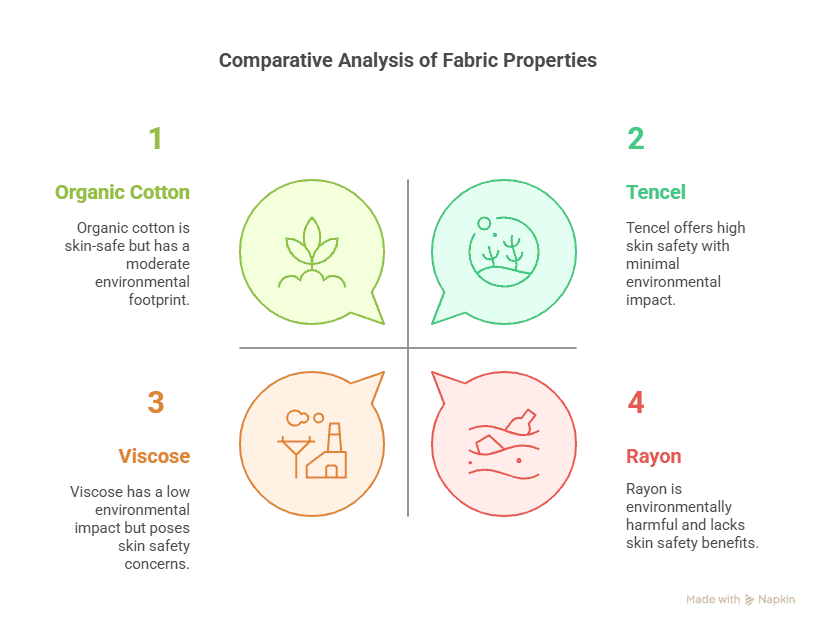
Environmental Impact vs. Toxicity
The minimal environmental impact of Tencel results in its non-toxic properties. The adoption of sustainable practices lowers the risk of environmental toxins spreading through the water, air, and soil.
Viscose and rayon are produced from wood pulp but they involve toxic carbon disulfide as part of their manufacturing process. The chemicals used in viscose and rayon production pose threats to both human workers and natural ecosystems.
The eco-friendly profile of Tencel fabric demonstrates how reducing environmental damage leads to decreased human harm. A clean manufacturing process produces fabric which is safer and cleaner for your skin.
Is Tencel Good or Bad for the Environment?
Tencel has one of the lowest levels of environmental toxicity among fabrics. While traditional viscose rayon relies on carbon disulfide, a toxic chemical, to be produced, Tencel’s closed-loop production system recycles almost all the processing solvents. As a result, Tencel production significantly reduces chemical emissions and water pollution compared with many conventional textile processes. Tencel fibers are biodegradable under appropriate conditions and do not contribute to persistent microplastic pollution like synthetic fibers.
Post-Production Treatments: Are They Toxic?
Chemical Finishes and Fabric Safety
Tencel fabric becomes dangerous when manufacturers apply hazardous dyes or finishes to it. Certain brands utilize wrinkle-resistant or anti-bacterial finishes which include formaldehyde and other harmful substances.
Importance of Organic Dyes
Choose Tencel clothing that uses organic or low-impact dyes to maintain safety standards. Verify fabric integrity by choosing products with GOTS certification to confirm that additional treatments remain safe.
GOTS-Certified Tencel
Tencel products with GOTS certification ensure no harmful treatments exist after production. Clothing that stays close to the skin like underwear and baby wear or bedsheets requires this consideration due to direct skin contact.
Tencel vs Cotton vs Polyester: Which Is Safest?
| Fabric | Toxicity Risk | Microplastics | Skin Friendliness |
|---|---|---|---|
| Tencel | Very Low | No | Excellent |
| Organic Cotton | Very Low | No | Excellent |
| Conventional Cotton | Low to Moderate | No | Good |
| Polyester | Moderate | Yes | Fair |
Choosing Safe Tencel Products
The following criteria help in identifying non-toxic Tencel.
- Check garments for the TENCEL™ trademark to authenticate their lyocell fiber composition.
- Select items with OEKO-TEX Standard 100 or GOTS or FSC certifications because they verify the absence of damaging chemicals.
- Select brands that use low-impact or OEKO-TEX approved dyes since non-toxic Tencel manufacturers usually display this information.
- Select finishes without chemicals and search for labels that specify “free of formaldehyde” or “PFC-free.”
- Review ethical brands’ sustainability reports and product descriptions to find their processing and safety standards information.
Debunking Myths
- Myth: Tencel fabric releases similar toxic residues as traditional rayon which is also known as viscose. Fact: Tencel production replaces carbon disulfide with the non-toxic NMMO chemical.
- The manufacturing process of Tencel allows for ~99% solvent recovery through its closed-loop system, so almost no toxins remain.
- Myth: Lyocell materials including Tencel exhibit the same synthetic and hazardous properties as polyester. Fact: Lyocell is mostly plant-based cellulose, not plastic. The production of Lenzing’s Tencel involves certified wood pulp and environmentally friendly processing which sets it apart from toxic rayon or plastic fibers.
- Myth: Tencel doesn’t qualify as organic material which means it could be considered unsafe. Fact: Tencel production operates under strict control even though it does not qualify as organic in agricultural terms. Proper manufacturing of Tencel results in safety levels equivalent to certified-organic clothing, Certification (OEKO-TEX/GOTS) ensures safety.
- Myth: Tencel off-gasses chemicals. Fact: The manufacturing process for Tencel includes washing and drying to eliminate solvents while ensuring that the material remains free of plasticizers. The tencel fabric does not emit toxic VOCs when maintained at regular room temperatures unlike polyester fibers. Tencel fabrics with certification meet all safety standards for volatile chemicals in garments.
- Myth: The dyes used for Tencel fabric always contain heavy metals. Fact: Multiple Tencel clothing items utilize dyes that have a reduced environmental impact or derive from plant sources. Selecting OEKO-TEX or GOTS-certified Tencel textiles guarantees the use of approved dyes without metals.
Conclusion-
Tencel (lyocell) presents minimal risk to human skin and environmental health. Through its closed-loop production method and non-toxic solvent use Tencel (lyocell) raw fiber remains free from harmful residues. The hypoallergenic properties of Tencel make it breathable fabric that usually does not trigger skin irritation. Dyes and finishes present the primary dangers but selecting Tencel products that have received OEKO-TEX or GOTS certification eliminates these threats. Properly produced and certified Tencel fabric provides a safe option for both human health and environmental protection. Shoppers can feel confident that “is Tencel fabric toxic” has been answered: Selecting appropriately ensures Tencel fabric remains both healthful and environmentally sustainable.
Read More>> About Modal Fabric Toxicity.
FAQs
The extreme softness and gentle touch of Tencel makes it the ideal choice for baby clothing and bedding products. Tencel lacks irritants and allergens which leads many babywear brands to select it for their products.
Tencel does not release toxic VOCs during use like various synthetic textiles do. The closed-loop process used in production guarantees near-total elimination of chemical residues.
The GOTS certification for Tencel ensures it meets organic processing standards even though Tencel as a whole does not always possess organic properties. Always verify the label before purchasing.
Research has not demonstrated that Tencel possesses carcinogenic properties. Under typical production conditions the NMMO solvent remains non-toxic and safe for use.
Pure Tencel fibers are free of formaldehyde. However, in post-production, wrinkle-resistant treatments may use formaldehyde unless the fabric is certified by OEKO-TEX or GOTS.
Tencel is PFAS-free. However, some water-resistant finishes applied to garments may use PFAS, so certification and manufacturer transparency are important.
Allergic reactions to Tencel itself are considered very rare. Tencel reactions are usually attributed to dyes, finishes, or chemicals.
Tencel does not release plastic microplastics because it is a cellulosic fiber rather than a synthetic plastic fiber.
Yes, in most cases it is. Tencel is breathable and biodegradable and does not contribute to persistent microplastic pollution like polyester.