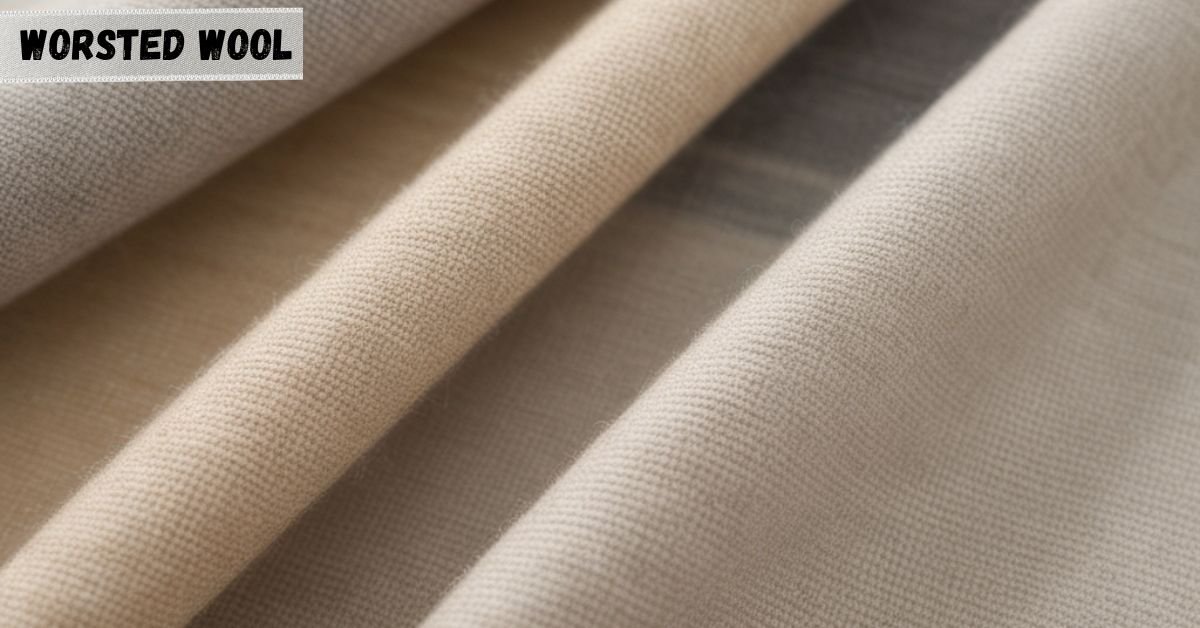

Introduction-
The description of worsted wool suggests a wool fabric that is refined and smooth even at first touch. This is due to the long fibers that, in the case of worsted wool, undergo a special combing process. This is unlike typical wool, which comes with short fibers that, in the case of worsted wool, are removed in manufacturing, prior to the spinning. This process results in a ‘cleaner’ yarn.
Why It’s Called “Worsted”
Why is it called worsted wool, one may ask. Origin of the word worsted is from a small village by the name Worstead which is located in the norfolk region of the united kingdom. This village is known for its quality wool yarn and its innovative combing techniques. Hence, the name worsted wool is a combination of the geographical location and the process of production.
How Worsted Wool Differs from Other Wool Types
Worsted wool is the wool fabric that is unique due to its exclusive use of long, straight fibers. It is the one type of wool that does not have short fibers, and hence there is a strong contrast with the other wool types.
How Worsted Wool Is Made (Worsted Process)
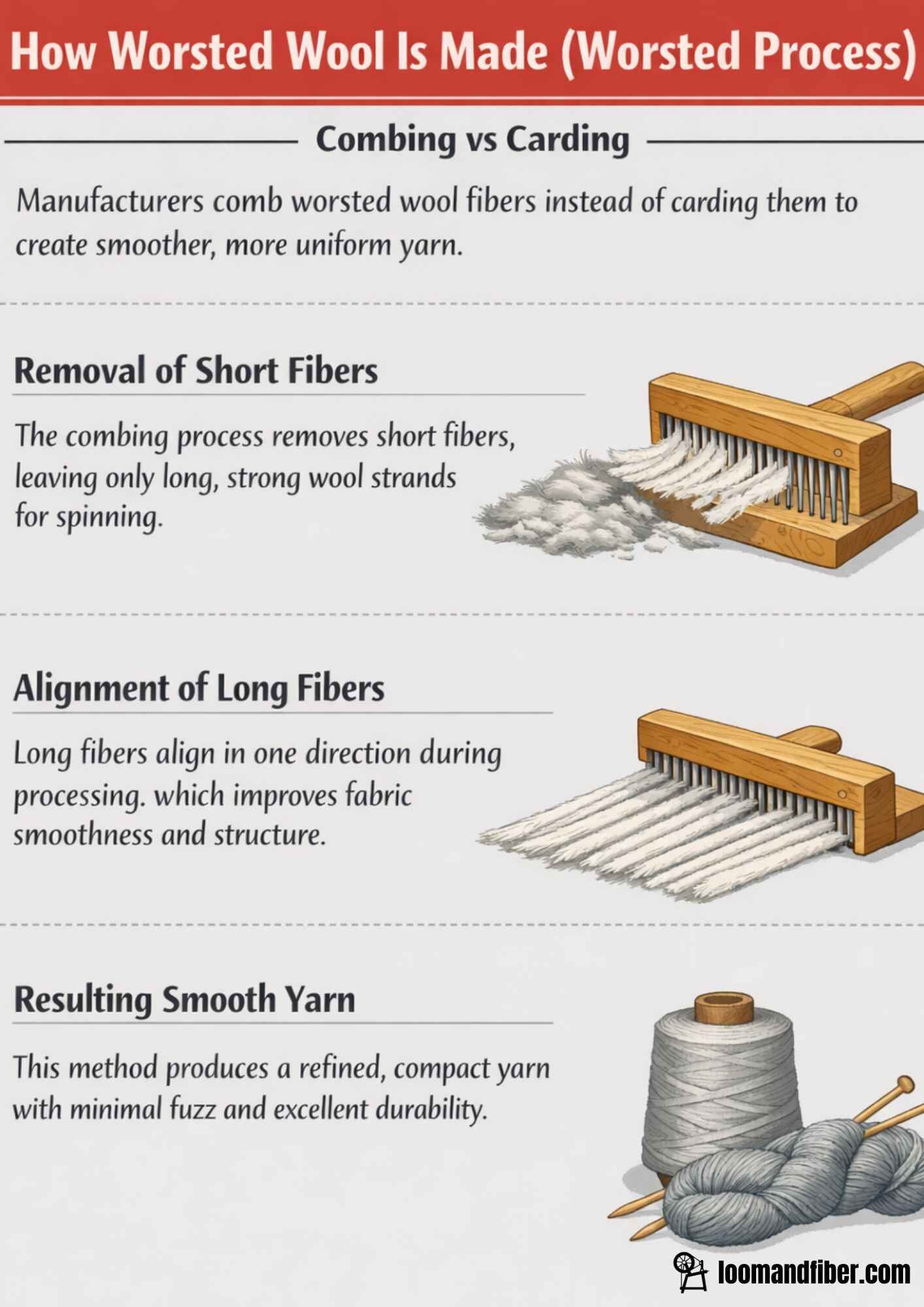
Combing vs Carding
Woolen yarn uses carding, while worsted preparation uses combing. Combing aligns and separates fibers by tugging them through fine teeth. It gets rid of tangles and short fibers, resulting in a top that is ideal for spinning. In contrast, carding transforms wool into a fluffy batt. Carding achieves a fuzzy, open mass of fibers instead of precise alignment. In practice, worsted wool is combed (yarn that is smooth and strong) while woolen is carded (yarn that is loftier and warmer).
Removal of Short Fibers
Processing wool into worsted yarn requires the removal of short fibers. After the first gilling and combing, the wool is combed again to get rid of the short fibers. Only the longest staple fibers are retained. This makes the yarn stronger and more consistent. The remaining long fibers are then made into slivers that are ready for spinning, without twist, and aligned together.
Alignment Of Long Wool Fibers
After short fibers have been removed, the wool staples are aligned parallel. In gill box machines, the slivers are stretched and straightened so that all the wool fibers align in the same direction. This parallel alignment is what distinguishes worsted yarn. Because the fibers are aligned butt-end to tip, the yarn can be spun to achieve very high tensile strength, to produce a fine and smooth thread. The worsted yarn is clean and has strength because all the fibers are aligned in the same direction.
Resulting Smooth Yarn
The worsted yarn produced is very strong and smooth. Because the yarn is very straight aligned and twisted, the yarn produced has no fuzz on it. It makes the fabric produced from it look very crisp because worsted yarn are fine and very even. The high twist spinning fibers used binds the wool fibers together in a very few imperfect way. It makes the yarn ideal for a polished fabric finish with very flat and parallel fibers.
Worsted Wool vs Woolen Wool
Fiber Alignment
After the combing process, the tips of the worsted wool fibers align. As for woolen wool fibers, they stay in a disorganized manner. As a result, worsted fabric has a more polished and fine appearance.
Texture and appearance
Worsted wool looks more refined and structured compared to the soft and fluffy appearance of woolen wool. each fabric looks different and caters to different fashion needs.
Warmth vs. Breathability
Woolen wool insulates more, due to its ability to trap more air. On the other hand, worsted wool has more aligned fibers and therefore, more airflow. This is why worsted fabrics tend to be lighter and cooler.
Typical Uses
Formal tailoring and office outfits require worsted wool, while winter outerwear and sweaters made of woolen wool are more ideal. Each fabric is best in its own area.
| Feature | Worsted Wool | Woolen Wool |
|---|---|---|
| Fiber preparation | Combed; long fibers aligned | Carded; short and long fibers mixed |
| Texture & Appearance | Smooth, fine, even surface | Bulky, soft, fuzzy surface |
| Warmth & Breathability | Lighter weight; can be quite breathable | Heavier feel; traps more warmth |
| Typical uses | Suits, tailored garments | Sweaters, blankets, casual wear |
Key Characteristics of Worsted Wool
Worsted wool must be appreciated for its fine handling and performance. Below are its main attributes:
Sleek and elegant wool
Worsted wool has a delicate and firm feel. The fine combed fibers make the yarn extremely smooth. The fabric surface is more smooth than textured. and because the yarns are uniform, worsted wool clothes have a neat and elegant texture. worsted yarns are respected for producing smooth and shiny finishes.
Lightweight Feel
Even though worsted wool is designed to be lasting, it often manages to feel ‘light’ on the body due to the high-quality wool it is made from. High-end worsted fabrics use fine wool, resulting in a fine, lightweight piece of fabric. The lightweight nature comes from the long fiber staples and fine spinning. Higher “Super” counts (like Super 100s) indicate a thin fiber and therefore, a lighter fabric, which is also closely related to the fine spinning technique.
Durability and Strength
The worsted wool is designed to last. This is due to the long fiber and highly durable spinning process. Many worsted wool fabrics are expensive, and often are the most durable without being cheap woolens. The worsted wool fabrics are designed to be used regularly, and due to their intrinsic recovery, they are able to hold their shape with each use.
Breathability
The worsted wool fabrics, being made without a high super count and designed to be heavy, are surprisingly strong with the breathability. This is due to being made of all natural fibers which help to ‘wick’ moisture. A loosely woven worsted fabric lets air flow through, keeping you cooler. The ‘crimp’ in the fibers designed to trap air for insulation, activates during the process of worsted wool creation.
Wrinkle Resistance
Worsted wool can be great for resisting wrinkles and keeping you looking fresh. The fibers are springy and elastic with a process called worsted. The wool fibers are then mixed with the process, and a bit of worsted tension is added to help. This means that the fabric keeps its shape and any creases smooth out easily. You can wear a worsted wool suit for a whole day and it will look sharp without the need for any ironing.
Is Worsted Wool Warm or Breathable?
Worsted wool maintains a good balance between insulation and breathability. It keeps the body warm without trapping excessive heat. So, it stays comfortable across temperatures. Worsted wool is preferred in spring and summer. Lighter weaves improve breathability. So, worsted wool is better than heavier types of wool. Worsted wool can be layered easily under jackets and coats. It keeps the body warm without being too bulky. It is also good in varying temperatures.
Worsted wool is good at regulating temperature. It also blocks light winds, but is still breathable. So, it is good in different environments.
Common Uses of Worsted Wool
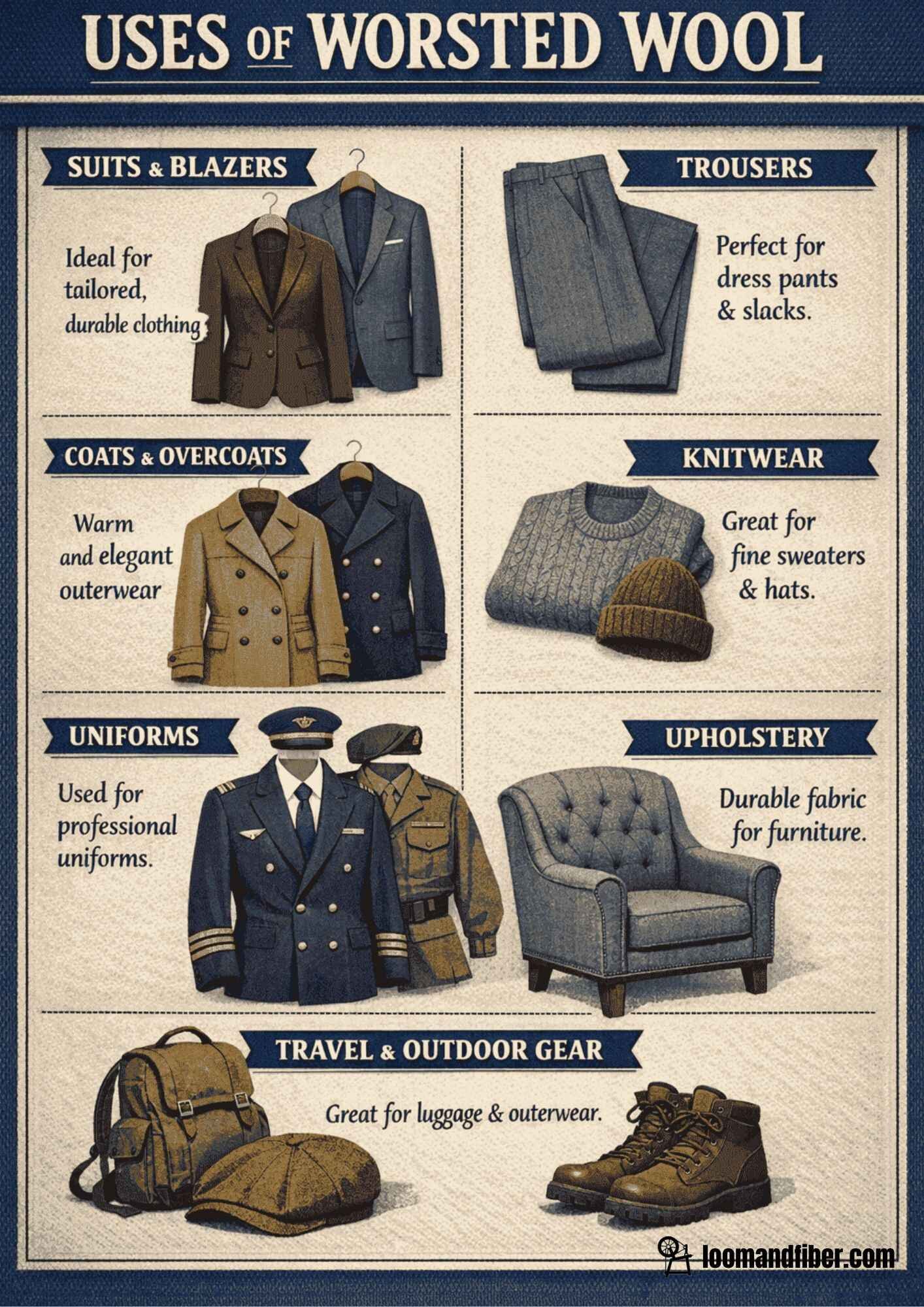
The sturdy but smooth finish of worsted wool give it versatility useful for a variety of garments. Some examples include:
Suits and Formal Wear: One of the most common uses of worsted wool is it’s use as a fabric for men’s tailored suits. All high-end suits are made from worsted wool as the fabric is crisp, sharp, and freshly tailored and drapes perfectly.
Trousers and Blazers: This fabric is perfect for sport coats and dress trousers. Worst wool trousers drape well over the leg and hold a crisp crease. Blazers made out of worsted wool are clean and streamlined.
Dresses and Skirts: For tailored skirts and dresses, worsted wool is perfect for the construction of pencil skirts and formal skirts. The fabric is structured, allowing full silhouettes without any bulk.
Lightweight Sweaters: Worsted wool is also used for lightweight knitwear. Worsted wool is great as it makes cardigans and pullovers non fuzzy and of a good warm weight.
Worsted Wool vs Merino Wool
Are They the Same?
It can be said that worsted refers more to a method of production, while Merino refers to a breed of sheep. So when talking Merino wool and worsted wool, they can mean different things.
Can Merino wool be worsted?
Yes, manufacturers can comb merino fibers. This makes a soft fabric called merino worsted wool. Thus, softness combines with structure.
Comfort and Softness Comparison
Merino worsted wool feels soft on the skin. Some people feel that standard worsted wool is a bit firmer. Both provide excellent comfort.
| Aspect | Worsted Wool | Merino Wool |
|---|---|---|
| Definition | A yarn/fabric spun from combed wool (process) | Wool fiber from Merino sheep (breed) |
| Fiber source | Can be any long-staple wool (often Merino, etc.) | Specifically from Merino sheep |
| Yarn/style | Combed, parallel fibers (smooth worsted yarn) | Can be spun worsted or woolen; known for fine fiber |
| Texture | Smooth, firm finish | Ultra-soft and fine (very thin fibers) |
| Common uses | Suits, formal wear | High-end knitwear, performance apparel |
Worsted Wool vs Cashmere
| Aspect | Worsted Wool | Cashmere |
|---|---|---|
| Origin | Sheep’s wool (often Merino or similar) | Undercoat fiber from cashmere goats |
| Texture | Fine and smooth (combed wool) | Extremely soft and fluffy |
| Warmth | Very warm (good insulation) | Warmer per weight (3× insulating power) |
| Price and Durability | Generally durable and more affordable | Very expensive and delicate |
Texture Differences
Some people might like the plushness of cashmere and some people might like the more smooth and structured feeling of worsted wool.
Warmth Comparison
Cashmere provides the best wool insulation and worsted wool provides a bit of warmth, but with some air flow. Depending on the environment, the choice might vary.
Price and Durability
Cashmere obviously costs much more and worsted wool can endure a bit more wear and tear. So the values are different.
Is Worsted Wool High Quality?
Worsted wool is regarded as good quality as the long strong fibers are used by the manufacturers in the process. The combing process enhances the strength of the yarns, their consistency and performance of the fabric. Due to this, clothes maintain their shape and cannot be worn out easily. Moreover, the worsted wool has a clean and professional look after being used repeatedly. Thus it is durable and finished to a high standard, which is justified by its high-end reputation.
Is Worsted Wool Itchy?
Worsted wool is not as itchy as normal wool since the strands are much smoother and more oriented. The strings minimize the acute ends which can irritate the delicate skin. As a result, the cloth becomes more natural and comfortable when worn over a long period of time. Worsted wool is very tolerable to many people even when not layered. In addition, merino worsted wool is very soft to the fragile users.
Is Worsted Wool Good in Summer?
Worsted fabric is also perfect in summer because it is highly breathable and it does not retain moisture. The parallel fibers enable free movement of air in the cloth. Consequently, there is an easy loss of heat and faster drying of sweat. Light worsted fabric is cool and comfortable in hot weather. Thus, tropical worsted wool is also a favorite to wear as a summer suit.
How to Care for Worsted Wool
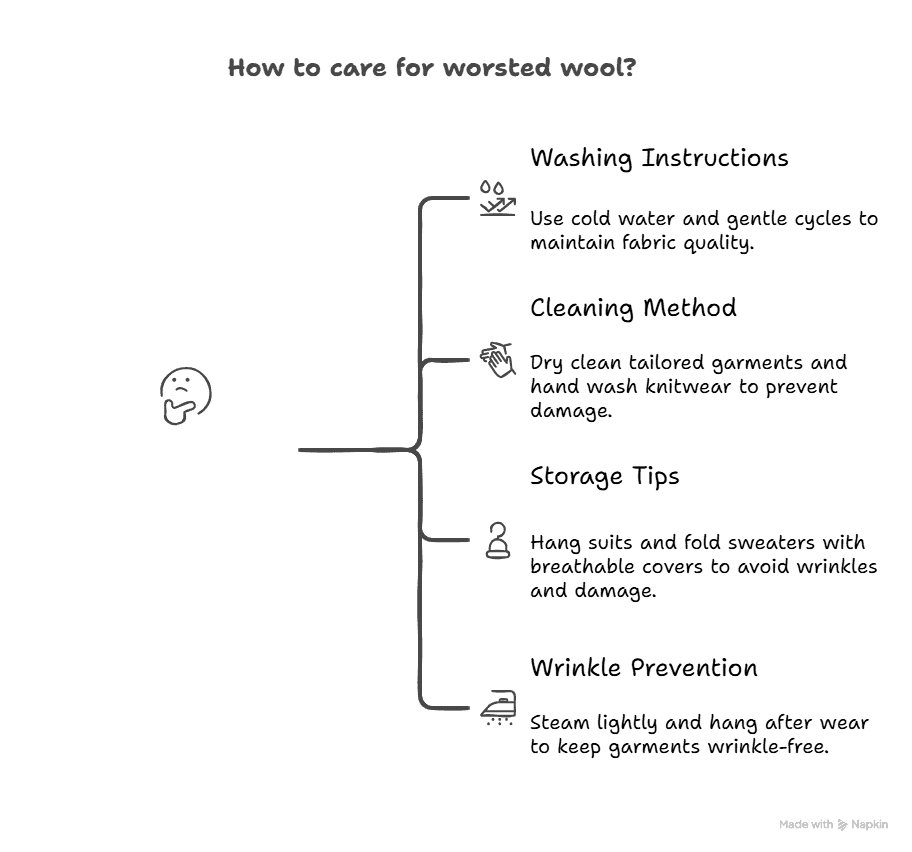
- Cleaning instructions
- Choose water with low temperature
- Pick gentle wash cycles
- Don’t use strong laundering products
- Dry Cleaning vs Hand Washing
- Get dry cleaned any altered pieces
- Knitwear should be washed by hand
- Don’t scrunch or twist the fabric
- Storage instructions
- Suits should be hung properly
- Sweaters should be folded
- Use covers that allow breathability
- To prevent wrinkles
- Use steam on a low setting
- After wearing, clothes should be hung
- Don’t place too many items together
How to Identify Worsted Wool Fabric
- Visual Clues: The surface of worsted wool fabrics is smooth and flat, with a slight sheen and no broken fibers. The fabric has a tight and even weave and low fuzz.
- Feel and Drape: Medium weight worsted wool drapes fluidly. It should feel airy and smooth, with a cool touch, not plush or itchy. Airy and Smooth worsted wool drapes fluidly. It is Medium weight. It should feel and itch pleasantly. It should be cool with a drapey feel. woolen fabrics will feel much loftier, soft and worsted wool will feel crisp and substantial.
- Label Terminology: Tags on garments may say “100% worsted wool”, or may use phrases such as “combed wool, virgin wool, or super 120’s”. The label may even mention the type of wool (merino) and the weave type. The “super” prefix and number relates to the fineness of the wool. The higher the number, the finer the worsted wool.
Is Worsted Wool Worth Buying?
Pros: Worsted wool does not crease and stays sharp, making it highly durable. It is also breathable, moisture-managing and can be worn year-round (at the right weight). The fabric feels luxurious and, drapes beautifully. Plus, a well-made worsted garment lasts a long time and is a staple.
Cons: Pure worsted wool garments are more expensive than fabrics that use blends or cheaper fabrics. These garments also almost always require special care (thus dry-cleaning). Worsted wool has less fluff than knitted or woolen fabrics, so it feels less “cozy” than a wool sweater.
Conclusion-
Worsted wool is a quality wool fabric, a specialized product, which is produced out of long fibers through a process of combing and spinning of a fine smooth yarn. This renders it different to common woolens. The strength of worsted wool, its drape and polish are the results of this peculiar mode of production: the short fibers are taken away, and the rest straightened.
The outcome is a piece of clothing that is light and wrinkle-resistant, and appears fresh in suits and tailoring. It be could be a snappy worsted wool suit, it could be a light summer worsted shirt, it could be a fine woolen knit whatever the case, knowing what is is worsted wool will enable you to select the right fabric to do the job. A garment of worsted wool, when carefully tended to, is sure to be an all-purpose, long lasting investment in your wardrobe.
Read About>> What is Virgin wool?
FAQs
It is wool yarn or cloth that is produced using long fibers that have been combed and spin in a way that the fiber is lying parallel with the other fibers. Short fibers are eliminated by the process of combing to produce a smooth, fine yarn. Worsted wool is basically wool which has been processed and woven so that it does not give a coarse texture but a smooth and high quality fabric.
Worsted is not a different animal fiber, it is a type of wool processing. The worsted wool fabric is usually finer, smoother and stronger compared to the loosely spun woolen fabric. It depends on your requirements: worsted wool is superior in custom-made clothes, whereas standard wool is perhaps superior in warm, thicken-knits.
A lot of contemporary worsted wool clothing is washable in a soft wool pattern. Nevertheless, dry-cleaning of fine worsted suits and trousers is done just to preserve the fabric. Never leave out the care label of the garment.
It can be. Fine worsted wool (high Super numbers especially) is a high quality textile and it is more expensive than regular wool. But worsted wool is distributed over a scale of qualities. A simple 100 percent worsted wool is cheap, but ultra-fine Super 150s+ worsteds are very expensive.