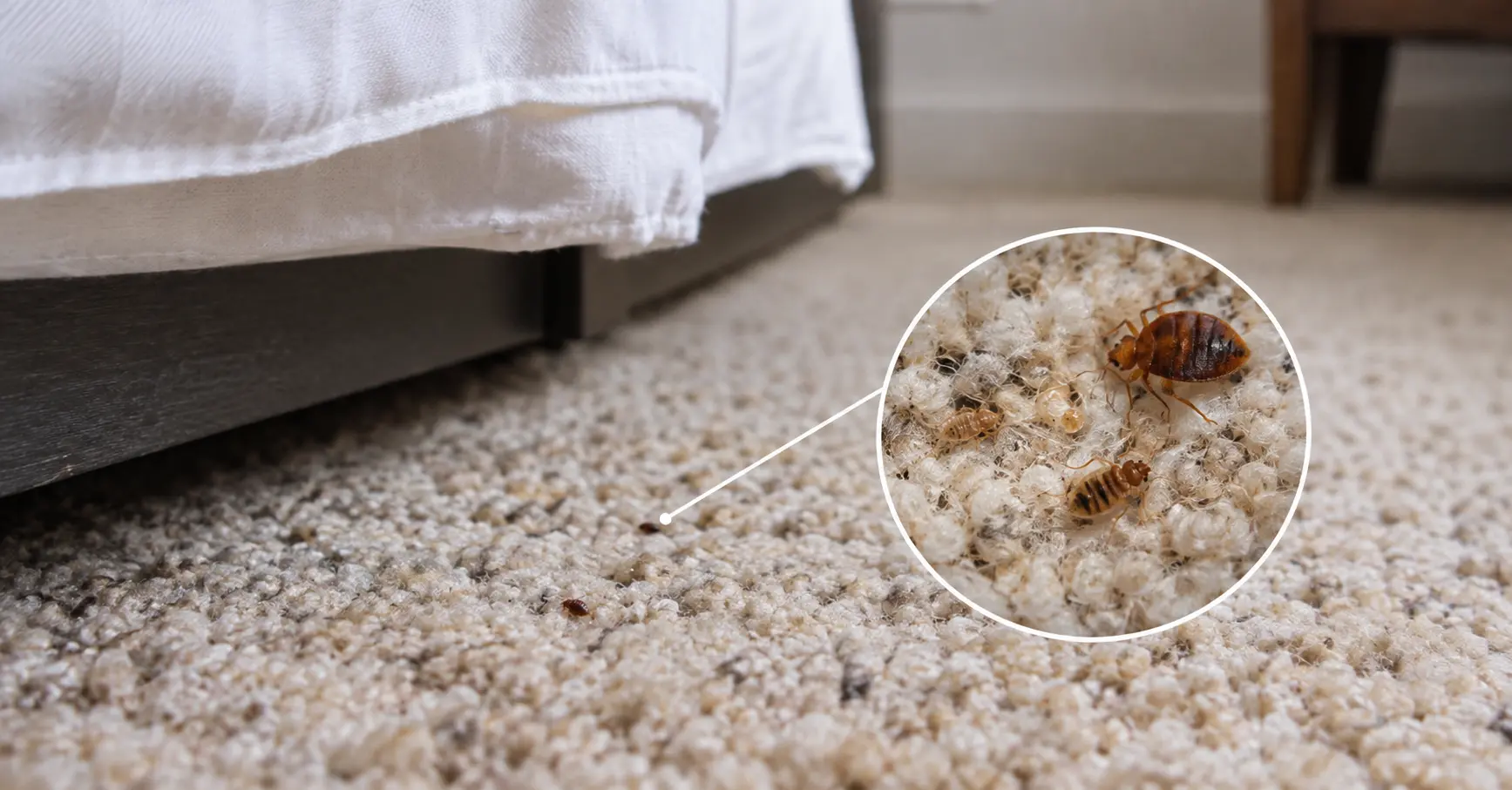

Yes, bed bugs can stay around carpets, including underneath carpet edges. They also hide in nearby cracks and furniture. It is not uncommon for a bug to live inside carpet pile but is rare for bed bugs to stay in carpet. A bug on the carpet does not mean its location is known, so inspect the surrounding sleeping area and furniture as well.
Do Bed Bugs Stay in Carpet?
Bed bugs can stay around carpet but rarely live out in carpet pile (like would fleas do). They prefer tight, safe spaces around sleeping areas, and the edge of a carpet just happens to be one of those. The edge of carpet, along with cracks in wood floors, is a location to check.
There is a huge difference, however, between
crossing a carpet (a bug crawling from a hiding spot to a sleeping person would cross the carpet) and
hiding around a carpet (bugs that settle along a carpet edge, as well as the wall-floor junction or cracks in the area).
Therefore, the question is not really “is it in the carpet?” but rather “where is the bug coming from?” That’s why the next sections deal with inspecting the entire sleeping area.
Where Do Bed Bugs Hide Around Carpets?
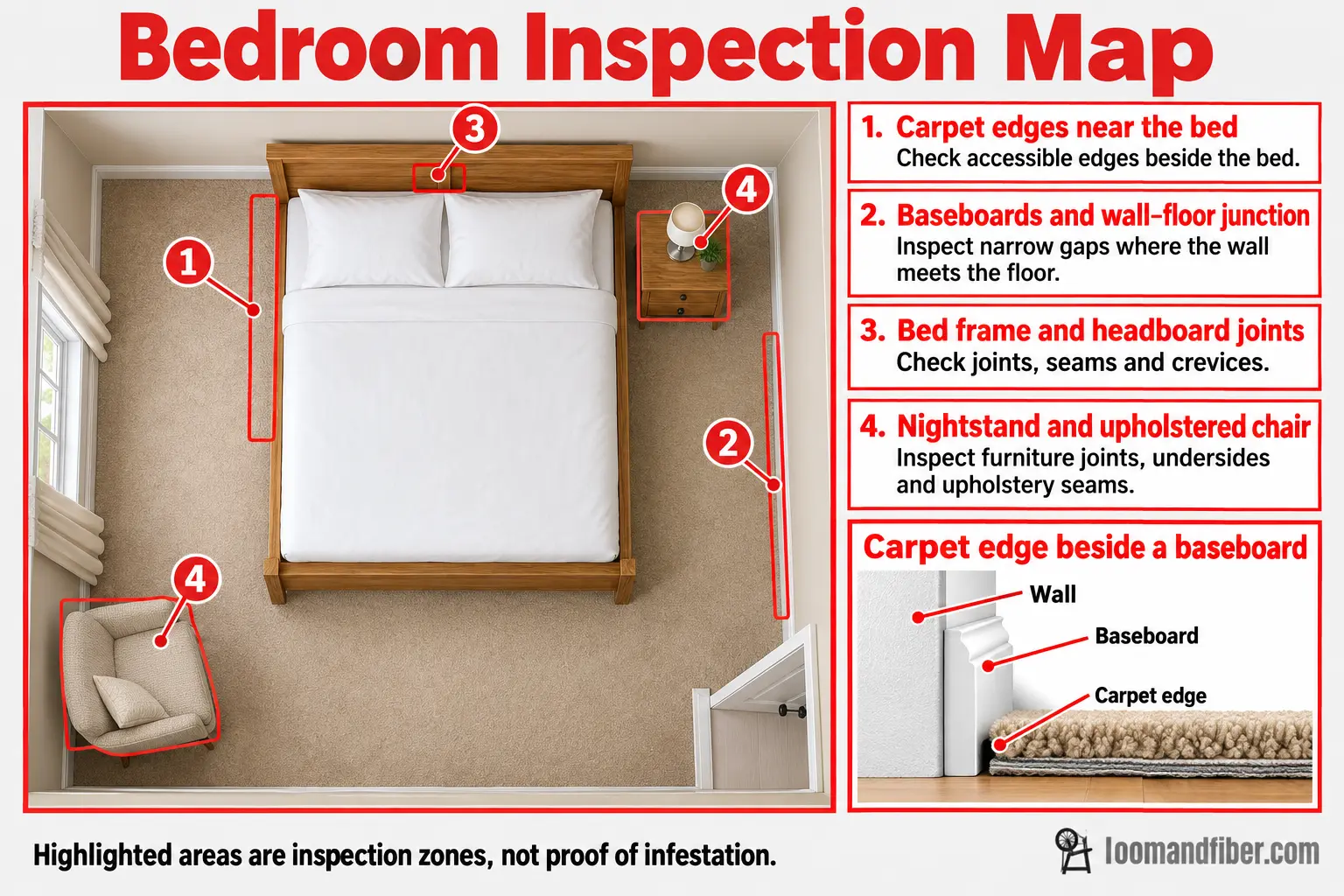
Bed bugs are small and can flatten out, allowing them to live in very tight spaces. Around carpeted rooms, check:
- Edges of carpet ,especially where carpet meets the wall, and under loose edges or tack strips
- The wall-floor junction : along baseboards and any gap behind them
- Beneath and behind furniture: bed frames, headboards, nightstands, chairs, and desks near where people rest
Nearby cracks and wall fixtures: cracks in wood floors, behind pictures and clocks, and behind electrical outlet plates. Bed bugs can be found in each of these
Why inspecting only the surface of the carpet isn’t enough: the pile is rarely anywhere they shelter, and looking at the visible carpet misses the edges, the gaps beneath furniture, and the structures around it. The best is to start by where you sleep or rest and work outward.
Signs of Bed Bugs in Carpet
Look for physical signs, not just symptoms:
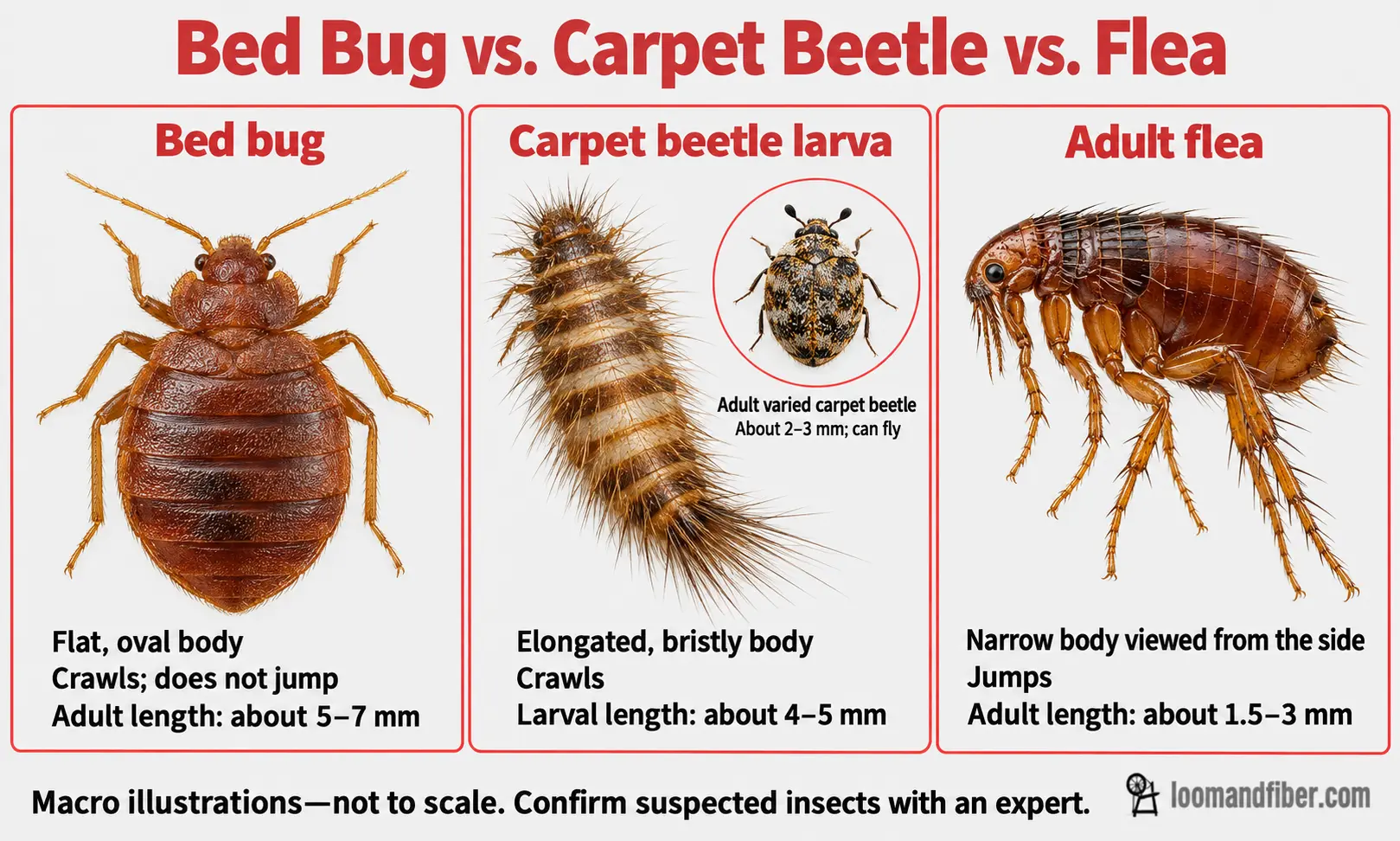
Live insects: Adults are oval, flat, brown, wingless and about 1/4 to 3/8 inch long (approximately the size of a wood tick). After feeding, they appear larger, more elongated, and the color reddish-purple.
Shed skins: The empty shells that young bug leave behind.
Eggs: White, oval, and about 1/16 inch long. They are tucked into cracks and crevices.
Dark droppings: Dark reddish or brown spots or smears. These are digested blood and are usually present on bedding and mattresses, but can occasionally show in nearby areas.
Bites cannot be used as an indicator. Reactions vary from nothing to a red spot to a rash or hives (and look much like reactions to fleas, mosquitoes, or irritants). Bed bugs can only be confirmed by finding them.
How to Check Your Carpet for Bed Bugs
- Start nearby the bed. The area around where you sleep is the most likely place to find evidence, instead beginning across the room.
- Use a flashlight along the edges. Shine it at a low angle along the edge of the carpet and the baseboard (and gently lift loose carpet edges where possible).
- Check nearby furniture. Look at the bed frame, headboard, and any chairs or tables nearby the bed.
- Look in cracks and fixtures. Check for floor cracks and behind the covers of outlet plugs and wall hangings.
- Photograph or collect anything suspicious. Take clear close-up photos. If you can, capture a specimen in a sealed bag or on clear tape.
- Get it identified. County extension agents may be able to identify pests for free. This is important because research found that 76 percent of the samples submitted for identification were not bed bugs.
One important caution: Once you’ve found a bed bug, stop looking and begin control, because disturbed bed bugs vacate their hiding place.
Bed Bugs vs. Carpet Beetles vs. Fleas
Carpet is a common place to find all three, and they’re often confused.
| Bed bugs | Carpet beetles | Fleas | |
|---|---|---|---|
| Appearance | Oval, flat, brown adults; reddish-purple when fed | Adults are tiny, rounded beetles; larvae are small, fuzzy or bristly | Very small, dark, laterally flattened |
| Movement | Crawl; they don’t fly or jump | Adults can fly; larvae crawl | Jump |
| Feeding habits | Feed on blood, mostly at night, usually near sleeping areas | Larvae feed on natural fibers and animal-based materials; they don’t feed on blood | Feed on blood, commonly from pets |
| Typical evidence | Live bugs, shed skins, eggs, dark spots near sleeping areas | Shed larval skins, damaged fabric or carpet | Bites, often on lower legs; flea dirt, and activity around pets |
Can Bed Bugs Lay Eggs in Carpet?
Bed bugs lay eggs in protected hiding places, which can be found in the cracks and crevices around carpet edges and furniture. After mating, females lay white, oval eggs in these spaces. A female can lay 200 to 250 eggs in the course of her life, and eggs hatch in about 6 to 10 days.
Why it’s not enough to just remove the visible bugs: Eggs are tiny, hidden, and when a bug-free area has been inspected, the new nymphs can begin appearing. Available guidance recommends monitoring for about evidence every few days after initial cleanup, and notes that finding bugs again may indicate eggs have hatched or some were missed, so retreatment may be needed.
How Long Can Bed Bugs Survive in Carpet?
There is no one survival period that fits all. It varies with temperature, life stage, and the blood meal availability.
Available guidance suggests:
Young nymphs can have a survival range of days to months without a blood meal.
Older nymphs and adults can survive much longer, up to a year in optimal conditions.
Under ordinary conditions, adults only live around 2 to 4 months.
Treat these as ranges, not guarantees. A cool, undisturbed room can keep bugs alive longer than a warm one, and a person who makes a home habit of their bugs has a regular blood meal supply. Therefore, continued inspection is recommended, at least for a year, after treatment.
What to Do If You Find Bed Bugs in Carpet
- Confirm the identification. Use a county extension office or a pest professional before spending money on treatment.
- Vacuum carefully. Be slow along carpet edges, baseboards, and nearby furniture. It is advisable to seal the vacuum bag as tightly as possible and throw it away in an outdoor trash can immediately. For a bagless vacuum, pour the contents into a sealed bag outdoors and clean the canister.
- Inspect surrounding areas. Check bed frame, nearby furniture, and any wall fixtures. Bed bugs can turn up in other rooms.
- Reduce hiding places. It is recommended to seal small cracks and crevices with silicone caulk and declutter around the sleeping area so you can see what you’re doing.
- Contain the bed. Mattress and box spring casings designed for bed bugs and interceptors under bed legs help capture bugs.
- Coordinate treatment. Successful control is often helped by everyone in the home cooperating, and it can take weeks to months. Many sources advise professional help.
- Keep records. Keep track of dates that evidence was found. This can help determine if treatment helped or was needed.
Does Carpet Cleaning Kill Bed Bugs?
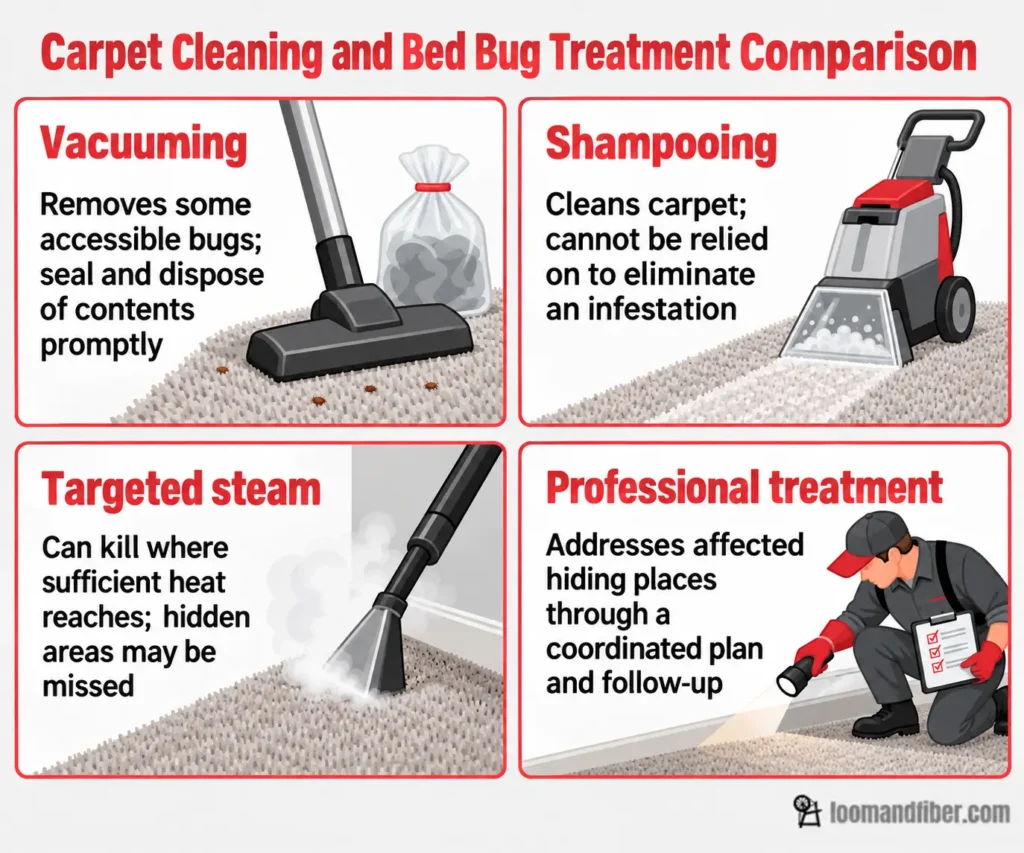
While cleaning can help get rid of some bugs, it is not a control plan. Here’s what each method can and can’t do.
Vacuuming
Vacuuming gets rid of bugs that are easy to see, and is recommended as part of a control plan. But it can’t get rid of those that live deep down in cracks, carpet edges, or in furniture. What you do with the dirt and bugs that come out of the vacuum is just as important as the cleaning itself.
Shampooing
Shampooing is for dirt and stains. The guidance reviewed for this article doesn’t mention a method to get rid of bed bugs — only vacuuming, steam, heat, and professional treatment. So don’t rely on shampooing as a main way to get rid of bugs.
Steam treatment
Steam cleaners can clean cracks and crevices and get into the carpet, baseboards, and bed frames. The recommended temperature to get bugs is at least 130 degrees, and it should not be blown out hard, which can scatter the bugs. You can put a diffuser on the steam cleaner to prevent that. But it’s not a complete plan, these methods don’t kill their eggs and there may be other places the bugs have hid.
Should you remove or replace your carpet?
Replacing carpet rarely works on its own, and can create new areas for the bugs to hide. The bugs can also be in the baseboards, cracks in the floor, the bed frame, and in any other furniture. Replacing carpet in a room with bugs is just giving them a new place to live nearby.
If you do decide to remove carpet, talk to a pest professional first.
Disturbing carpet can spread the bugs to other rooms.
It’s a good idea to contain any materials that you remove, and seal them tightly in heavy plastic bags before bringing them through the house.
Make sure to treat the edges of the floor, tacks, and baseboards after the carpet is removed.
Don’t throw the carpet away lightly. It is recommended that you take infested items to a professional disposal site so that others don’t take them and have the bugs in their home.
How to reduce the risk of bed bugs coming back
The reality is that there is no home that is bed bug proof. No matter how clean you are, you run the risk of having bed bugs move in. They are great hitch hikers, and can come from traveling, second-hand items, or other people living in the home
Monitor
Put interceptors on the legs of your bed to know when they are around
Declutter
Fewer places means less places for bugs to hide, and makes it easier to inspect and clean.
Inspect second hand things like furniture, clothing, and luggage. You shouldn’t pick up used furniture from the street. Check things you bring into the home, especially after traveling, especially in the places you set your bags.
Follow up
Do regular inspections, every 7 days for at least a year after treatment, as a precaution.
When should you call a pest professional?
You should call a pest professional
If you aren’t sure what you have
Activity goes on after your monitoring and treatment,
If it spreads to other rooms,
or if you live in a shared building. Landlords should tell their tenants and have other units inspected, as they may be responsible for the treatment.
FAQ
Can bed bugs live in area rugs?
They can live underneath the rug, and around the edges. They could also live in the floor or furniture around the rug. Make sure to check underneath the rug, and the furniture that is around the rug, not just on top of the rug.
Can bed bugs travel across carpet?
Yes, bed bugs crawl, so they can travel across carpet on their way to a host. They can be anywhere that they crawled to get to the host. If you find one bug in the middle of the carpet, it’s not necessarily their home.
Does finding one bed bug mean that there are more?
Not necessarily, because they could have hitchhiked in. But because they tend to hide in larger numbers around places where they can find a host to feed from, like a bed, one confirmed bug is a good reason to check all of your belongings and furniture. It is worth noting that some bugs do sometimes live on their own, away from the larger group.
Can bed bugs survive in a vacuum cleaner?
Treat the vacuum cleaner as if it’s an item that might have bugs in it. It is recommended that you seal the bag tightly after each use, and then throw it away in an outdoor waste can. That’s partly so that any bugs that got sucked up don’t get to escape.
Can bed bugs return after carpet treatment?
Yes, because eggs may have been missed, or new bugs may have gotten into the home. Make sure to continue monitoring at least weekly, and for up to a year after treatment.