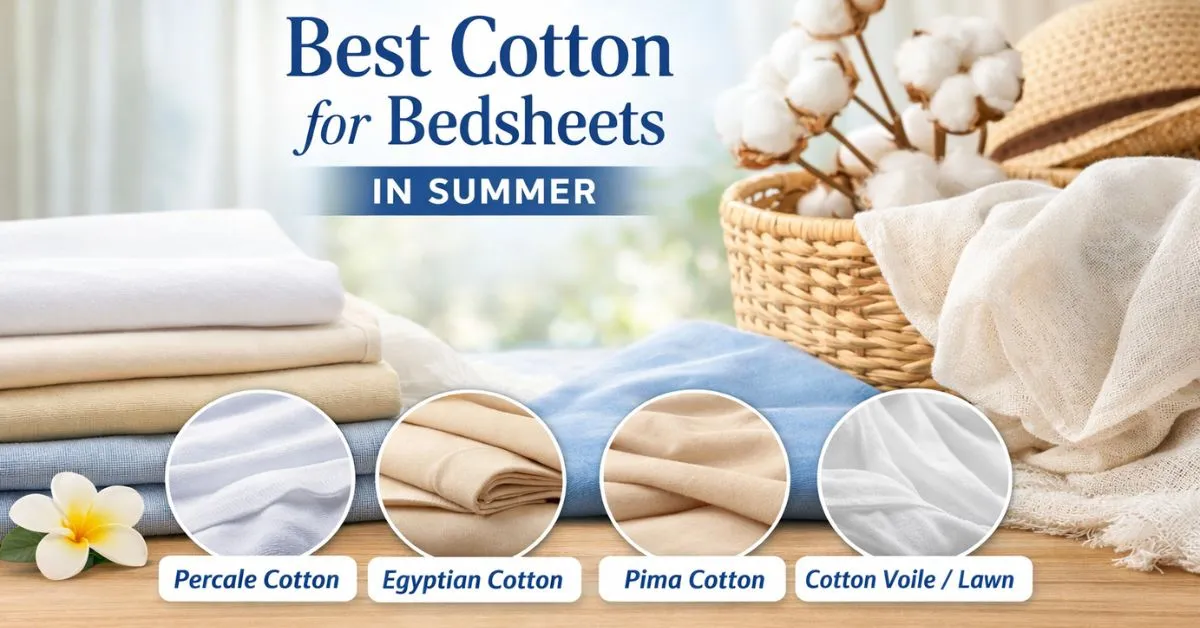

The most breathable cotton option for sheets is percale cotton. For more Premium comfort with a percale weave, Egyptian cotton is excellent. In addition, cotton voile and cotton lawn are better in very hot weather. For the coolest sleep, go for 200-400 thread count.
Introduction-
Are your bedsheets so hot and sticky that you wake up feeling uncomfortable? It’s not your A/C that causes the problem—it’s the sheets.
While some bedsheets made of cotton may better suit the summer season, not all do. Battling cotton bedsheets can be uncomfortable, cool, breezy, and light. These qualities are crucial in extreme heat. These properties depend on the cotton’s weave, the type of cotton, and, ultimately, the thread count. The problem is that most people are wrong about all three.
In this article, you will learn the best cotton sheets that are suitable for summer and will help you keep cool in the summer and in high humidity situations. You will learn which summer sheets are good and which are bad. You will learn how to sleep cool at night, especially if you are in a hot country, or if you are a hot sleeper.
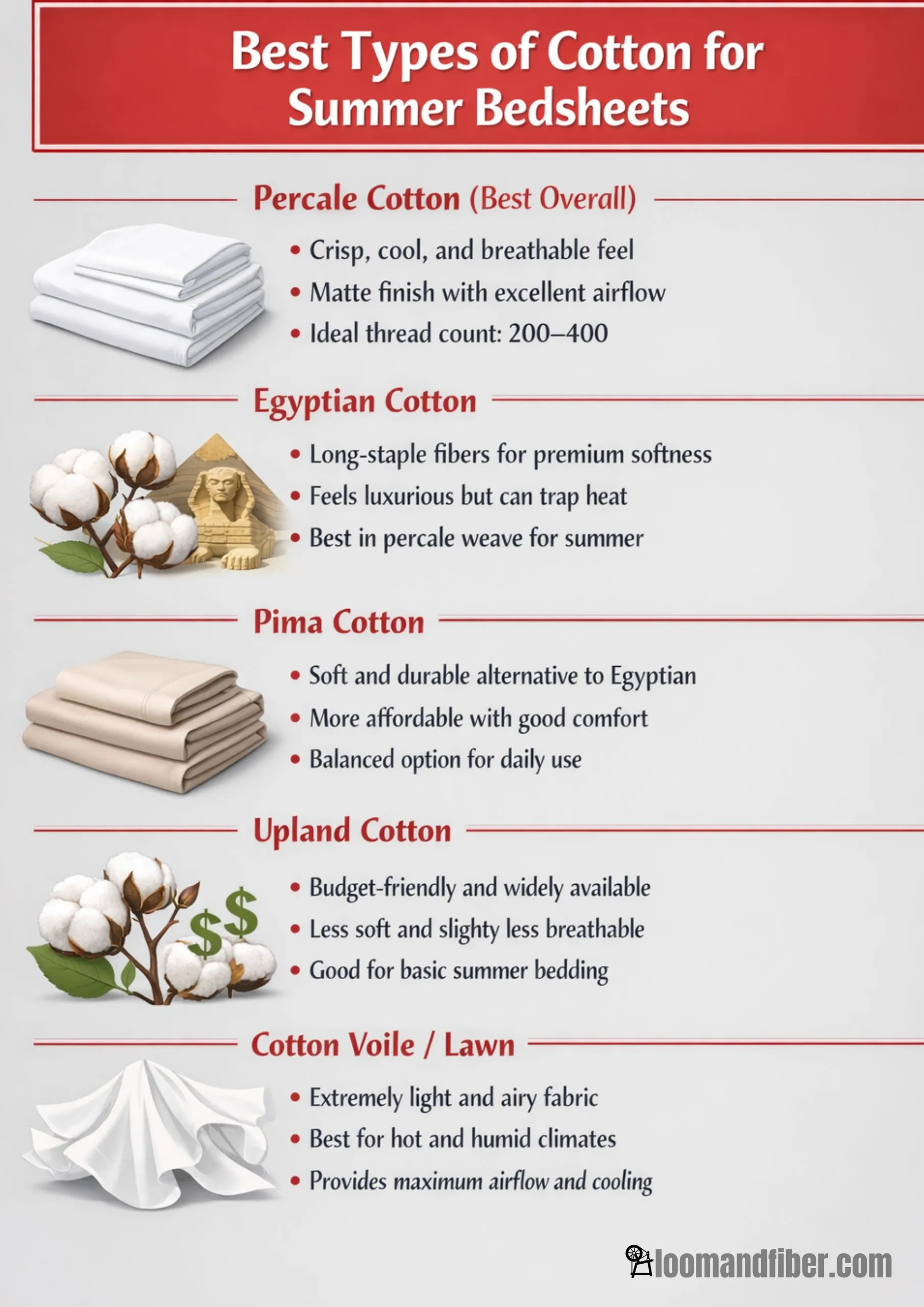
- Best Overall: Percale cotton. This fabric has a light, crisp, and cool feel and is extremely breathable. The airy feel of this fabric is perfect for warm nights.
- Best Luxury: Egyptian cotton. Egyptian cotton is a super soft and premium long-staple fiber. Cotton percale is cool. Many high-end collections use a sateen weave, which is warm, but soft and luxurious.
- Best Budget: Upland cotton. This cotton is soft and breathable but it is a little bit more expensive. With a shorter fiber length, it is less durable than its premium long-staple counterparts.
- Best ultra-lightweight: Cotton voile/lawn. This airy fabric is sheer and gives amazing airflow. Keeps you cool without that stiff feeling.
Why Cotton Choice Matters in Summer
Heat Retention vs Breathability
If your sheets feel sticky at night, it’s not the AC—it’s the fabric. Dense weaves and high thread counts trap body heat, making you overheat. Breathable cotton with an open weave (like percale) lets air flow and warmth escape. For example, crisp percale sheets feel cool and light on skin, whereas thicker weaves cling and hold warmth. Choosing the right cotton and weave ensures your sheets release heat instead of holding it.
Moisture & Sweat Absorption
Cotton’s natural fibers absorb sweat well, which helps you stay comfortable even if you perspire. In an airy weave like percale, airflow aids evaporation, so sheets dry faster on the body. In practice, percale sheets allow more airflow and can reduce night sweats. Conversely, a heavy or synthetic blend might trap moisture on the skin. In short, cotton wicks moisture naturally, and a looser weave maximizes that sweat-wicking effect.
Weave Density and Airflow
Weave construction has a huge impact on airflow. Percale’s simple one-over-one weave creates a lightweight, matte fabric. It feels crisp because air moves freely between threads. Sateen, on the other hand, has a three-over-one weave (more threads on the surface) that yields a smooth, silky feel. That added density makes sateen a bit warmer. In hot months, choosing a low-density percale weave over a dense sateen dramatically boosts ventilation, helping sheets sleep cool.
Best Types of Cotton for Summer Bedsheets
Percale Cotton (The Winner)
Cotton percale sheets are famed for coolness. Made with a one-over-one weave, percale feels “fresh and crisp”. It stays matte (not shiny) and does not cling to you, so even sweaty sleepers feel breeze between their skin and fabric. In a typical percale sheet, a thread count around 200–400 provides optimal softness without sacrificing breathability. The result is a hotel-style, airy sheet that excels in summer heat.
Egyptian Cotton
Long-staple Egyptian cotton is known as a luxury fiber. Its extra-long fibers make sheets exceptionally smooth and durable. In a percale weave (as in premium Egyptian sets), it still feels crisp and can be quite breathable. One reviewer even says Egyptian percale gives “the crisp, cool side of the pillow” and a “fresh, refined feel”. However, many Egyptian cotton sheet sets are woven in sateen for a silky sheen, which adds warmth. In other words, Egyptian cotton can be cool – but only if paired with a lightweight weave. Otherwise, it’s best valued for softness and durability, not maximal cooling.
Pima Cotton
Pima cotton is another long-staple cotton (grown in the U.S., Peru, etc.) and often cheaper than Egyptian. It shares many benefits: it’s naturally soft, breathable, and strong. Pima sheets tend to have a slightly crisper hand initially, softening after washes. In fact, Pima is sometimes called “everyday luxury” – softer than upland but more affordable than Egyptian. For summer, a Pima percale sheet is a great value: you get much of the cooling crispness of a higher-end sheet, along with durability. It makes a fine substitute if Egyptian is out of budget.
Upland Cotton
Upland cotton is the everyday workhorse fiber (about 90% of cotton globally). It has shorter staples than Egyptian or Pima. As a result, Upland is typically less smooth and can be less durable. Pros: it’s inexpensive and still reasonably soft and breathable. That makes it a common choice for budget-friendly sheets. Cons: over time Upland may pill or lose softness, and it won’t feel as luxurious. Many value-basics are made with Upland cotton percale. In summer, Upland percale will do the job of releasing heat, even if it’s not as silky as higher grades.
Cotton Voile / Lawn (Ultra-Lightweight)
Cotton voile (and its close cousin cotton lawn) are lightweight weaves meant for very warm weather. They’re woven with very fine yarns, creating a semi-sheer, “cloud-like” fabric. Voile sheets are extremely breathable and soft: one bedding brand calls its 120gsm voile sheets “light-as-air comfort” that “keeps you cool without feeling crisp”. In practical terms, cotton voile behaves almost like a very thin summer blanket – it covers without trapping heat. These are less common than percale, but they represent the ultimate in summer ventilation. If you live in a really hot or humid place, cotton voile or lawn is an underrated option for staying cool.
Percale vs Sateen: Cool vs Silky
Percale Weave (Crisp & Cool)
Percale sheets use a one-thread over, one-thread under weave. This creates a crisp, matte surface that feels cool to the touch. The looseness of the weave allows maximum airflow. Percale bedding is often described as that classic “fresh hotel” feel. It doesn’t cling to the body, so trapped warmth is minimized. In short, percale = cool and crisp. It’s the go-to for hot sleepers.
Sateen Weave (Soft & Warmer)
Sateen uses a three-over, one-under weave. More thread surfaces give it a silky, lustrous sheen. Sateen sheets feel smooth and fluid, almost like a light satin. The tradeoff is breathability: with more threads packed on the surface, airflow is reduced compared to percale. The result is a sheet that feels slightly warmer. Many sleepers prefer sateen for its coziness in cooler weather. But in summer, its silky warmth can make it less ideal. Use sateen if you like softness and won’t overheat; for summer cooling, percale is generally better.
What Thread Count is Best for Summer? (Myth Killer)
Many shoppers assume higher thread count (TC) means better sheets, but this is a myth in summer bedding. High TC ≠ cooler. In fact, an ultra-high thread count makes the fabric denser and heavier. Dense sheets trap heat, much like a thick blanket. Good Housekeeping testing shows that quality cotton sheets often fall in the 300–500 range. Industry experts note that for most cotton sheets, a TC around 200–400 is ideal. This range keeps the fabric sturdy yet still airy.
For example, many “1000 thread count” sheets use trickery (plying yarns or blends) and end up hot. The California Design Den explains, “as thread count increases, the fabric becomes denser, which can lead to trapped heat and reduced breathability”. In practical terms: a 1000 TC sheet can feel like sleeping under a tight-knit sweater. Stick with mid-range counts for summer and focus on good cotton and weave. Remember: a 100% cotton sheet at 300 TC can outperform a misleading 1000 TC blend in cooling power.
Weave Type vs Fabric Type
Don’t confuse the cotton type with the weave pattern. These are separate factors. Cotton type (e.g. Egyptian, Pima, Upland) describes the fiber’s origin and staple length. Weave (e.g. percale, sateen, twill) describes how those cotton threads are interlaced. For example, “percale” itself isn’t a cotton variety – it’s a weave. The same Egyptian cotton can be woven as percale or sateen, yielding different results.
- Fabric (Cotton) Type: Egyptian cotton, Pima cotton, organic cotton, etc. This affects softness, strength, and durability. Long-staple fibers (Egyptian/Pima) allow finer yarns and feel smoother.
- Weave Type: Percale, Sateen, etc. This controls airflow and hand-feel. A percale weave yields a lightweight, crisp fabric, while sateen weaves make it silky but denser.
In practice, weave usually has a bigger impact on cooling than the cotton variety. For example, a cotton voile (weave) made from any cotton will be airy, and an Egyptian cotton in percale will be cooler than an Upland cotton in sateen. Understanding this distinction helps you choose: focus first on the right weave (percale, low density) and thread count, then pick the cotton type that fits your budget and feel preference.
Best Cotton Bedsheets for Hot Sleepers
Percale Weave Sheets
Hot sleepers and night-sweaters should lean on percale cotton. Its plain weave makes sheets incredibly breathable. In practice, percale sheets stay cool and won’t cling, so even if you toss and turn, you’ll feel a constant breeze. Choose a mid-range thread count and a light color for extra cooling. Many reviewers note that switching to percale cured their “sticky sheet” issue at night.
Cotton Voile/Lawn Sheets
For those in very hot or humid climates, cotton voile or lawn is the ultra-light alternative. These sheets feel nearly weightless, maximizing airflow. Imagine sleeping under a thin veil of cotton rather than a thick sheet. Brands market 120–150 gsm voile as “all-season” in practice it’s summer-all-the-time. If you’re a dorm heatwave or subcontinent resident, duvet-free nights with a cotton voile sheet could transform your sleep.
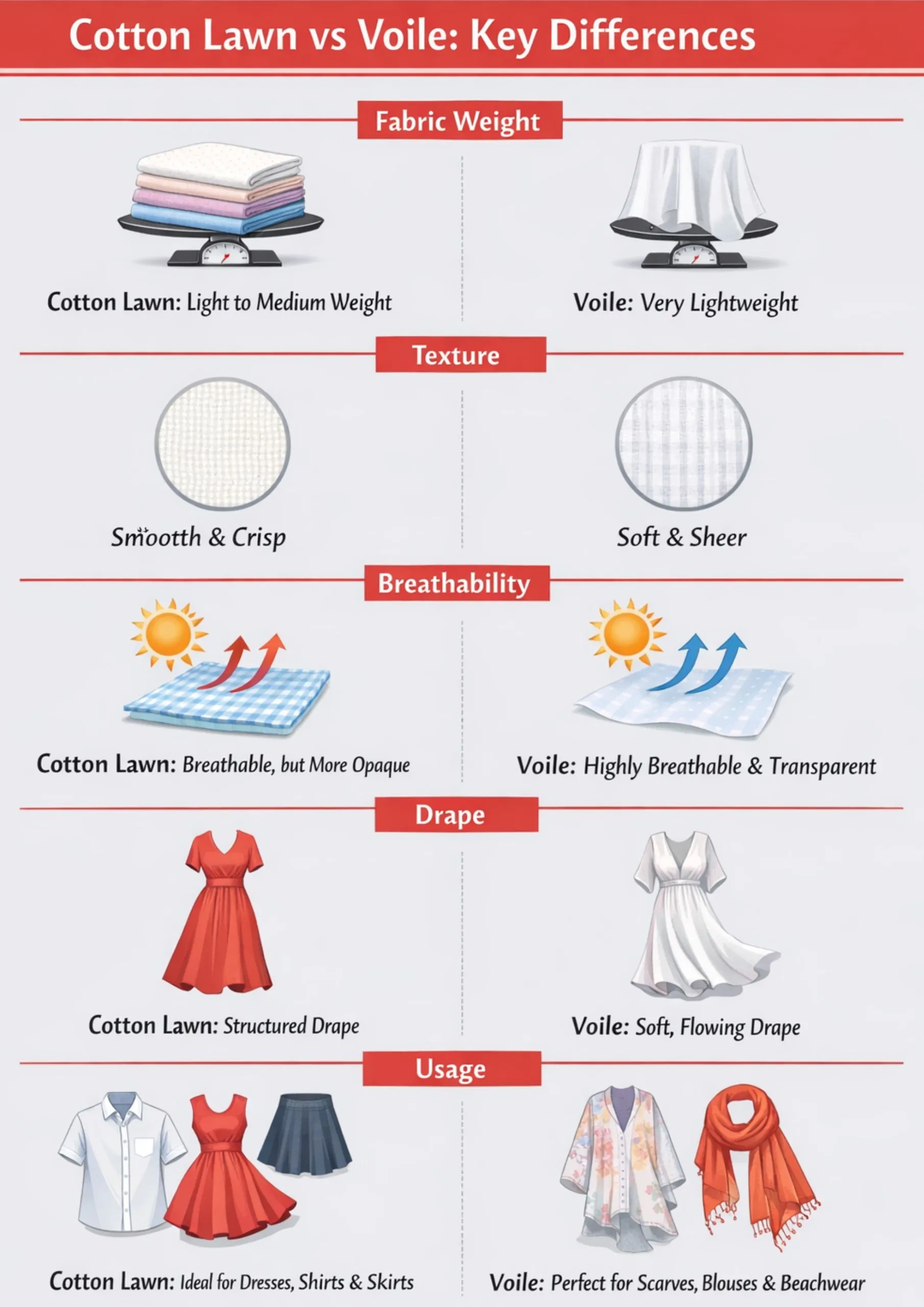
Read More>> Cotton Lawn vs Voile key differences.
Low Thread-Count Cotton Sheets
Sheets on the lower end of the cotton thread count range (around 200–300) tend to be more breathable. A lighter weave means less material to trap warmth. Many cooling sheet collections advertise their lower TC as a feature. Combine low TC with a percale or gauze weave, and you’ll get a sheet that allows maximum airflow. This is key for humid nights, when moisture-heavy air already feels muggy. A low-TC cotton sheet wicks sweat and dries quickly, avoiding that clammy feeling.
How to Choose the Right Cotton Bedsheet
- Climate (Dry vs. Humid): In hot, dry climates, virtually any airy cotton (percale or even sateen) will feel lighter. But in hot and humid areas, lean extra-light: choose percale or voile, and stick to TC ~200–300. If you live in a cool climate, weight matters less, so you might prefer sateen or higher TC.
- Skin Sensitivity: 100% natural cotton is hypoallergenic. If you have sensitive skin, choose high-quality cotton (organic or long-staple) and consider sateen for a gentler feel. Percale is crisp but can feel slightly rough at first; it softens with washes.
- Budget: Higher-quality long-staple cottons (Egyptian, Pima) cost more. If you’re on a budget, look for Upland cotton with a percale weave. You’ll still get breathability. For luxury, premium cotton is fine but remember weave and count matter more for cooling.
- Sleeping Habits: Are you a hot sleeper? Favor crisp percale or lightweight cotton. Do you move a lot? Choose fitted sheets with good elastic and cotton that won’t wrinkle too easily (percale is structured). Do you prefer silky softness? Sateen might feel nicer but know it’s warmer.
- Weave & Thread Count: Always check the weave. Don’t fall for “Egyptian cotton” labels without knowing the weave – Egyptian percale and Egyptian sateen perform very differently. As for count, aim 200–400 TC for cotton (500 maximum).
| Factor | Recommendation | Why |
|---|---|---|
| Climate: Warm/humid vs dry | Warm/humid: Percale or cotton voile, TC ~200–300<br>Warm/dry: Percale or linen-blend, TC ~300–400 | Maximize airflow to stay dry; in dry heat breathe well |
| Sleep Style: Hot vs Cool | Hot sleepers: Percale or voile, lower TC, light colors<br>Cold sleepers: Sateen or higher TC if you need warmth | Hot sleepers need maximum breathability; cool sleepers can prioritize softness |
| Budget: High vs Low | High: Egyptian or Pima percale (luxury long-staple)<br>Low: Upland cotton percale, 200–300 TC | Premium cotton for softness; basic cotton still breathable |
| Sleep Position: Toss & turn vs still | Active (tossing): Smooth, well-fitted sheets (e.g. percale) to prevent bunching<br>Restful: Any comfortable sheet; focus on feel | Sheets that grip the mattress stay in place on active sleepers |
Common Mistakes to Avoid
- Chasing High Thread Counts: Don’t assume 1000+ TC means cooler or better quality. In fact, extremely high counts often use multi-ply yarn tricks and result in denser sheets that trap heat. A 250–400 TC single-ply cotton is usually cooler and just as durable for summer.
- Ignoring the Weave: Some buyers focus only on “cotton type” and forget weave. Remember, a cheap cotton in percale can outperform a luxury fiber in sateen on hot nights. Always check if it’s percale (for coolness) or sateen (for softness). Overlooking weave can leave you with sheets that feel too warm.
- Choosing Sateen in Summer: Sateen feels great, but it’s essentially a light satin. If you pick sateen sheets in summer, you might wake up too warm. Save sateen for winter or transitional seasons. In summer, favor plain-weave cottons.
- Falling for “Egyptian Cotton” Labels: Not all “Egyptian cotton” is real. True Egyptian cotton is hand-picked in Egypt and very expensive. Many brands label lower-grade cotton as “Egyptian” to charge more. Always verify origin or look for reputable certifications. Remember: a sheet with a shady label might be just cheap Upland cotton in fancy packaging.
Conclusion-
Choosing the right cotton for summer bedsheets can transform your nights. Lightweight, breathable weaves like percale or voile keep you cool, while the best thread counts and fibers ensure comfort. In 2026, the top pick remains percale cotton for its crisp, airy feel. But with so many options, there’s a perfect sheet out there for every sleeper. Will you swap to a cooler cotton this summer?
Read More>> Types of Lightweight cotton fabric.
FAQs
A: Yes. Natural cotton fibers are breathable and wick moisture, making them excellent in heat. Cotton sheets allow air to circulate and absorb sweat, whereas synthetics can trap heat. Just pick a lightweight cotton weave (like percale) and a moderate thread count for best summer comfort.
A: Percale cotton is generally considered the coolest. Its crisp, matte weave feels light and stays airy. Long-staple varieties (Egyptian or Pima) add softness, but the key is the percale weave itself. In short, a percale-made sheet (especially in lighter colors) is your go-to for cool comfort.
A: Yes. Percale’s open, one-over-one weave makes it much more breathable and cool to the touch. Sateen’s denser, three-over-one weave is softer but holds more warmth. So in hot weather, percale sheets will help you sleep cooler, while sateen is better for cooler nights.
A: Aim for around 200–400 thread count. This range balances durability with airflow. Avoid ultra-high counts (like 1000+) since they create heavy, heat-retaining sheets. A lower to mid-range cotton sheet will feel lighter and more breathable on hot nights.
A: Generally, yes. Cotton is a natural, moisture-absorbing fiber, so it can help manage humidity by wicking sweat. A cool, percale cotton sheet will be comfortable even in muggy air. However, for extremely humid environments, consider cotton-linen blends or voile for extra airflow. Remember, cotton won’t trap humidity like polyester can, making it a solid choice in damp heat.