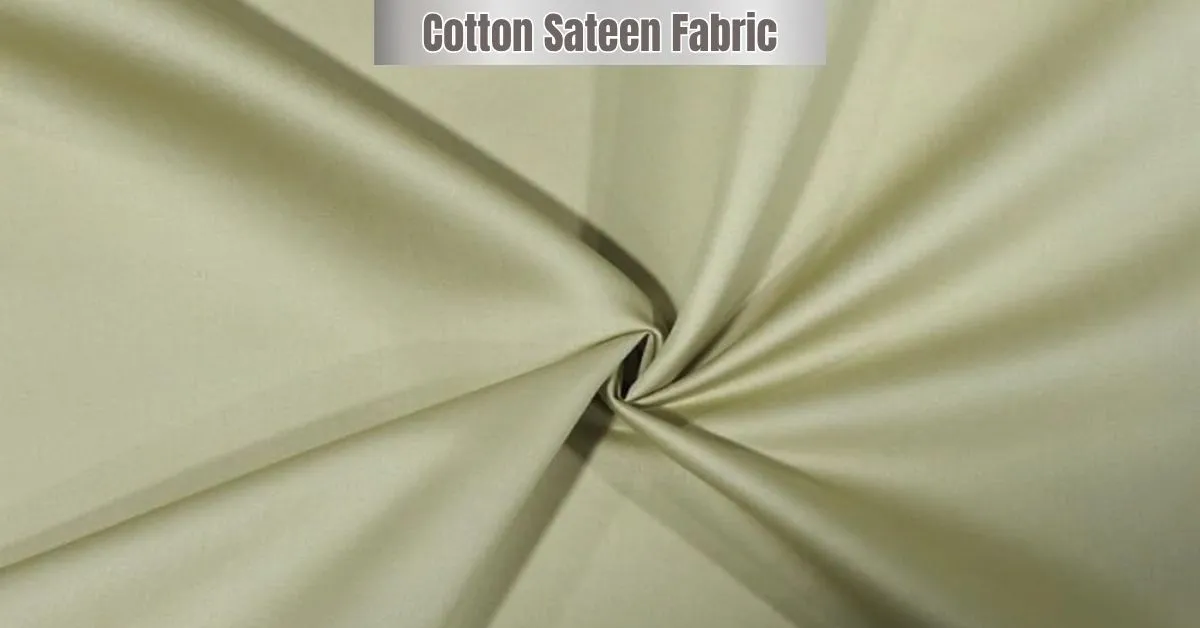

What Is Cotton Sateen Fabric?
Cotton sateen is a woven cotton fabric that has a satin weave, creating a smooth and soft feel with a slight lustrous shine. It is smooth to the touch-like satin, in appearance and structure, but made of staple cotton fibers rather than silk. That is, cotton sateen is breathable and durable providing a satin-like finish (silky and glossy), but with cotton yarns. This provides sateen bedding with a luxurious silky soft feel, without compromising the comfort and breathability that is present in cotton. Cotton sateen is available as soft and high-quality material and as opposed to silk-based satin, it is machine-washable and simpler to take care of.
What Is Sateen Weave?
How the Sateen Weave Works
Sateen is a type of satin weave in which the threads float over multiple yarns before interlacing. Commonly, the yarns are used over four threads and under one (a 4-over-1-under pattern) or three-over-one, as per the number of harnesses. This arrangement reveals a greater amount of thread surface, and therefore the fabric face is extremely smooth and silky. The lighter amount of inter-lacings per inch makes the fabric have a glossy surface and a more heavy drape than plain-weave cotton. Pragmatically, an authentic sateen weave produces a light shininess and a luxurious hand feel -almost suggesting satin- but using all-cotton fibers.
Sateen vs Satin Weave
Sateen and satin have the same weave pattern but are differentiated by type of fiber. It is a weave fabric using silky or smooth synthetics filament yarns and is very desirable due to its shiny face. Sateen is made of spun staple fibers (cotton), and thus is a bit more matte, and a little more substantial. Practically, a cotton sateen is as soft and silky as satin, only more durable and easy to care. As an illustration, sateen can be washed in the machine and more tear-resistant; on the contrary, true satin may need delicate hands.
A Brief History of Sateen Cotton
Sateen weaving began as a cotton-based alternative to silk satin. Chinese silk satin was first imitated by weaving cotton in a similar manner by medieval weavers. In Italy, Italian silk mills and subsequently French and British dyers used sateen in the 16th18th century; it was a high-end fabric among the nobility. Sateen cotton was refined by technical advances by the 19th century.
In 1844 English chemist John Mercer discovered mercerization (treatment of cotton with alkali) to enhance luster and strength. Later this process was perfected by H.A. Lowe in 1890. Cotton sateen was improved in industry such as mercerization and fine spinning to be smoother, stronger and more colorfast compared to earlier types. The most common high-end sateen bedding today is made with mercerized long-staple cotton (usually Egyptian or American).
How Cotton Sateen Fabric Is Made
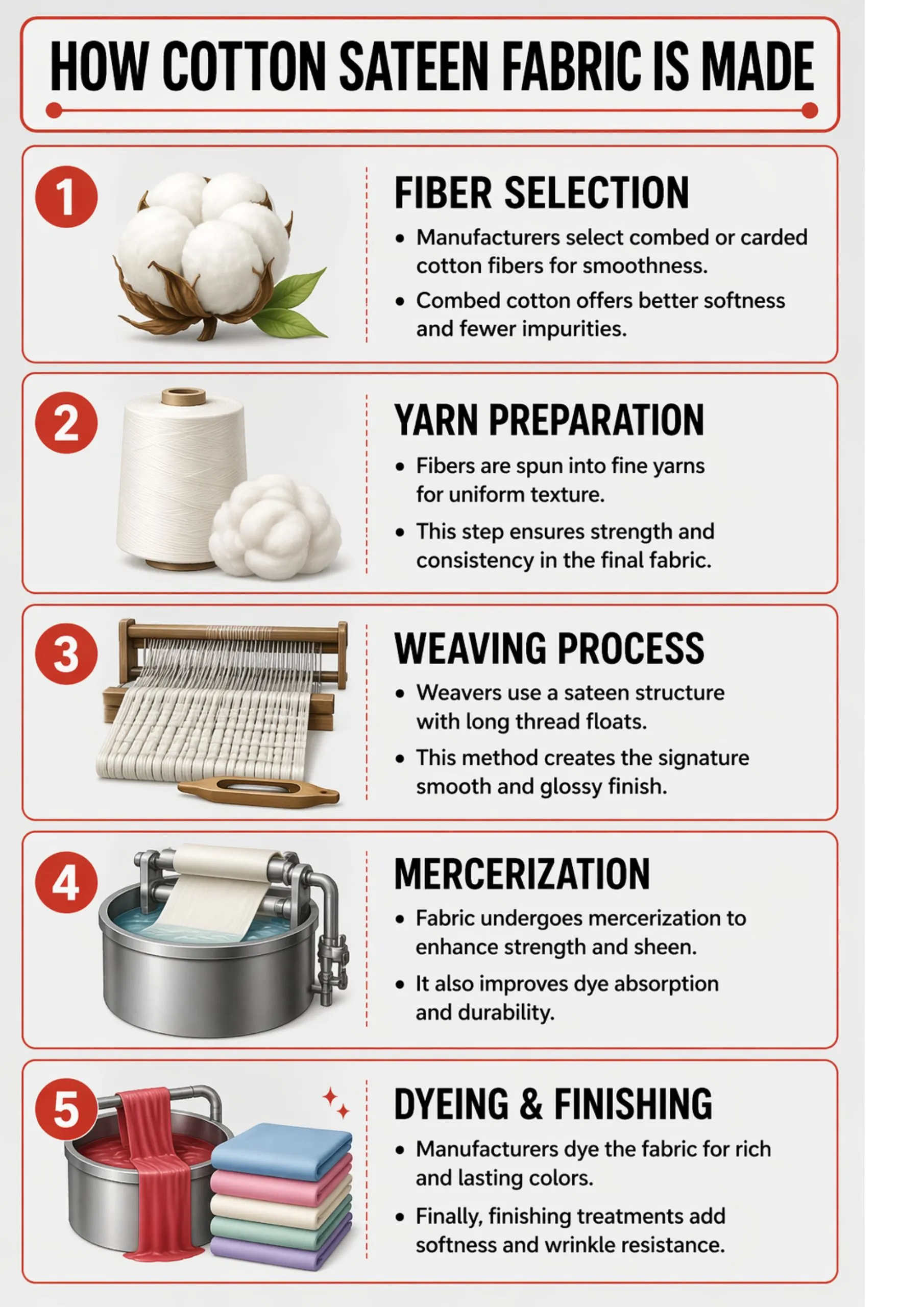
Fiber Selection:
Fine, long strands of cotton are used, sometimes combed to remove short fibers. Long-staple (combed) cotton produces a smoother and stronger yarn as compared to common carded cotton. In case of premium sateen, extra-long staples such as Egyptian or Pima cotton are typical due to their strength and softness.
Yarn Preparation:
The purified fibers are twisted and pulled into homogenous strands. Spinning involves twisting the fibers into yarns; such impurities are removed by combing. Through this process, strong and even yarns are formed which make the fabric durable.
Weaving Process (Sateen Structure):
A satin weave is used on a loom to weave yarns. The weft (crosswise) is usually floated over a number of warp (lengthwise) yarns (e.g., 4 over, 1 under) and then interlaced. This reveals a greater amount of yarn on the surface, and that is the classic smooth face and subdued shine of sateen. The outcome is a heavy drape which is thick and silky.
Mercerization (Key Quality Factor):
The fabric after weaving is usually mercerized. In this chemical finish, cotton is exposed to caustic soda which reinforces the fibers, enhances the luster in the fibers and enhances the uptake of the dye. High-quality sateen needs to be mercerized – it will be livelier and more resilient and the texture will be smoother.
Dyeing & Finishing:
Lastly, the sateen is washed, dyed and softened. Finishing processes may include pre-washing and adding softeners. This action fixes the colour well and provides the material with its end hand-feel. Finished sateen is most often brushed and pre-shrunk, thus, it happens to be an easy-to-wear garment that can be used in bedding or clothing.
Different Types of Cotton Sateen Fabric
Cotton sateen is available in numerous types, which are differentiated by fiber, finish, or application:
By Quality of Fiber:
Long-Staple Cotton Sateen: This is fabricated with exceptionally long cotton strands (e.g. Pima or Supima), and produces extremely smooth, powerful strands.
Egyptian Cotton Sateen: A form of long-staple sateen that is more soft and shiny; high-end.
Organic Cotton Sateen: Made of certified organic cotton. It possesses the same properties as ordinary sateen but it is cultivated without artificial pesticides and fertilizers thus being less harmful to the environment.
Based on Finishing:
Mercerized Sateen: Treated with a chemical to give it additional shine and strength. Mercerized sateen is more dye retentive and appears shinier than un-mercerized.
Brushed Sateen: The face of the cloth is brushed (such as flannel) by a machine, and the side(s) become hyper-soft and fuzzy. Heavy winter bedding is frequently made of brushed sateen.
Read More>> What is Mercerized Cotton?
Based on Usage:
Lightweight Sateen (Clothing): A lighter and finer type that is best suited to clothing. It is smooth and has good drape and is worn in dresses, blouses and lingerie.
Heavyweight Sateen (Bedding and Upholstery): This is a heavier type of weave but denser and is used on sheets, duvet covers, and light upholstery. The weight provides a substantial, comfortable experience in bedding and increased longevity as a home decoration.
The categories represent the wide-ranging long-tail of cotton sateen: light, soft fabric to be used in clothes and heavy, upscale sheets.
Key Characteristics of Cotton Sateen Fabric
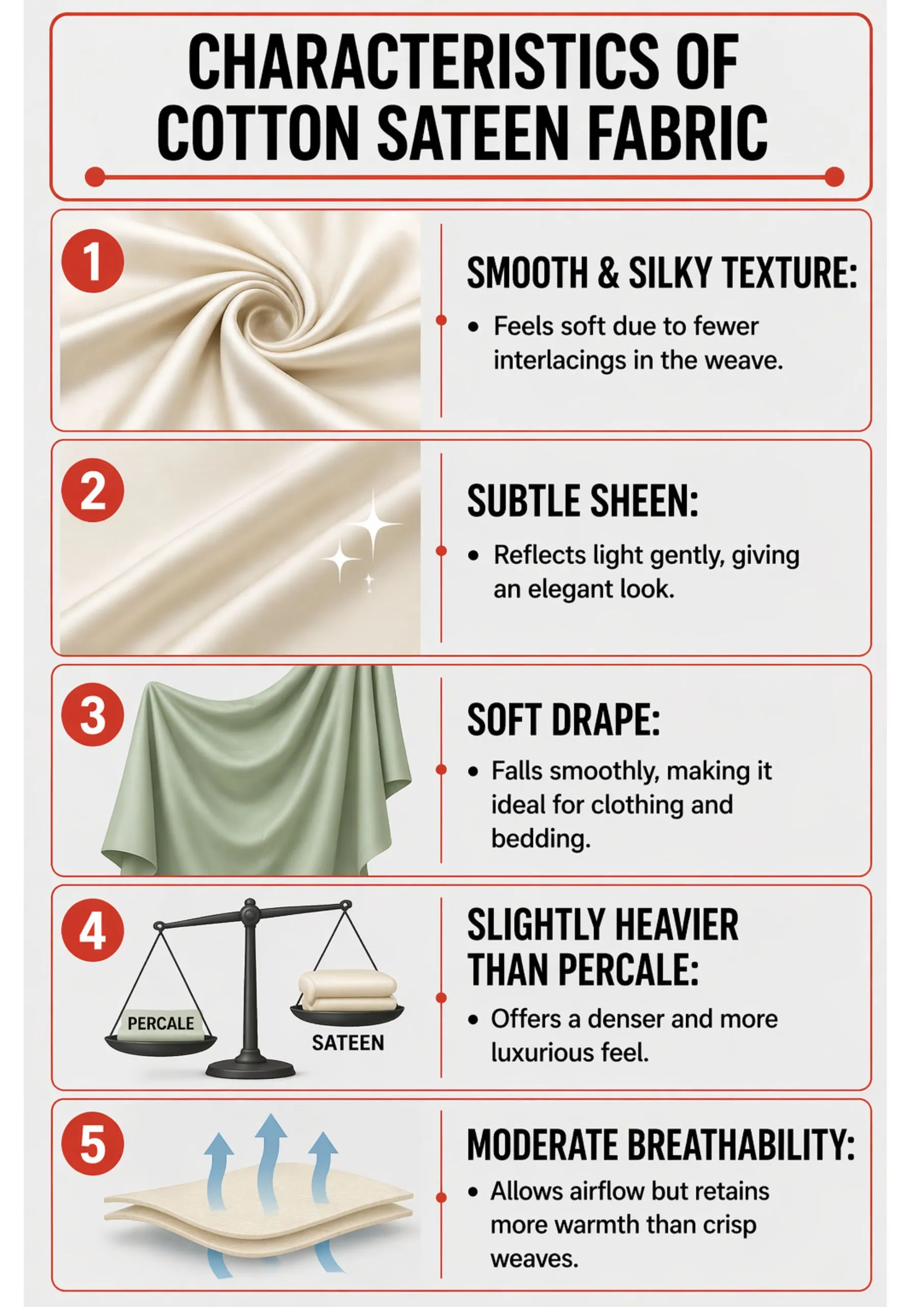
- Smooth & Silky Feel: Cotton sateen is extremely soft and smooth to the skin. The uplifted strands form a smooth slip.
- Subtle Sheen: The satin weave has a natural lustrous sheen (not too glossy) that reflects the light and appears classy.
- Soft Draping: It flows smoothly and is very comfortable. Sateen will be suspended in floppy folds, as opposed to crisper weaves.
- A little more weight: Sateen is heavier than percale cotton of the same thread count. This makes it warm and enveloping.
- Moderate Breathability: Although cotton sateen is breathable (since it is all cotton), its tighter weave makes it a bit less airy than plain percale. It does not block the air, and it provides a balance between warmth and comfort.
Cotton Sateen vs Other Fabrics
Sateen vs Percale
The weave of the satin material used in making Sateen makes it have a shiny and silky-smooth surface. It is a little heavier and tighter knot than percale, and will therefore sleep better and feel most natural to the skin. Percale is one-over-one; it feels crisp, cool and matte. Overview: sateen is smooth and warm, drapey, low-iron; percale is crisp, cool, breathable, and wrinkles easily.
| Characteristic | Sateen (4/1 Weave) | Percale (1/1 Weave) |
|---|---|---|
| Weave | Satin/sateen weave (long floats) | Plain weave (tight one-over-one) |
| Feel | Smooth, silky, lustrous | Crisp, matte, cool |
| Warmth | Warmer and denser | Cooler and lightweight |
| Drape | Drapes beautifully (fluid) | More rigid structure |
| Wrinkles | More wrinkle-resistant | Tends to wrinkle easily |
Sateen vs Satin
Sateen and satin are woven the same, except that satin is woven with filament strands, such as silk or nylon, whereas sateen is woven with spun cotton fibers. They are both smooth, with satin being smoother and more fine. Compared to silk or polyester satin, cotton sateen is easier to wash and more durable.
| Characteristic | Sateen (Cotton) | Satin (Silk/Synthetic) |
|---|---|---|
| Fiber | Staple cotton yarns | Filament yarns (silk, nylon, polyester) |
| Lustre | Soft sheen | High sheen (very shiny) |
| Durability | Durable, strong | More delicate, less durable |
| Care | Machine washable | Often hand-wash or dry-clean |
| Cost | Generally less expensive | Generally more expensive |
Sateen vs Poplin
Poplin is a plain-weave textile that is generally made of cotton or even a combination of cotton and blends; it is lightweight and has a smooth and fine feel. Sateen, on the other hand, is a heavier satin-weave cotton fabric. Poplin is typically more breathable and thinner, and the tight satin weave of sateen makes it more dense and shines with a silky look. Basically: poplin = plain, lightweight cotton; sateen = floated weave, richer, heavier cotton.
| Characteristic | Sateen (Satin Weave) | Poplin (Plain Weave) |
|---|---|---|
| Weave | Satin weave (e.g. 4:1 floats) | Plain weave (1:1 interlace) |
| Texture | Smooth, lustrous surface | Fine, smooth but matte |
| Weight | Generally medium to heavy | Usually lightweight |
| Typical Use | Bedding, drapery, upholstery | Light apparel (shirts, dresses) |
| Look & Feel | Silky sheen, “rich” fabric | Matte look, crisp feel |
Common Uses of Cotton Sateen Fabric
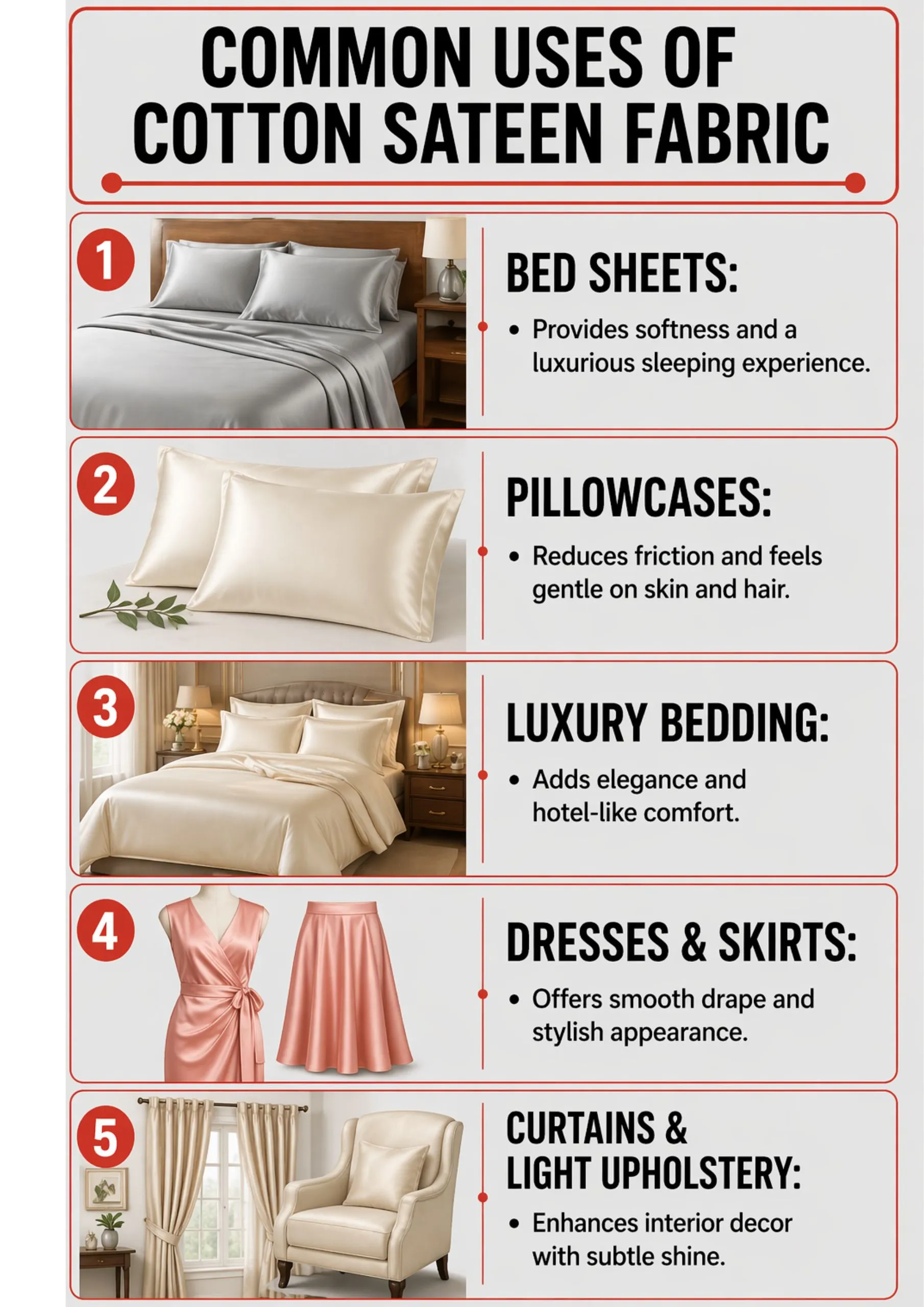
Bed Sheets: The most popular application. Sateen sheets are smooth and appear lavish, thus are commonly used as high-end bedding.
Pillowcases: Matches sateen sheets, which offer a smooth surface to sleep.
Luxury Bedding & Duvet Covers: Designers work with cotton sateen as the material in comforters and shams; the shininess and lightness of the material make the bedding look like a luxury hotel.
Dresses & Skirts: Clothing can be made with a lighter-weight sateen. It falls well and is a little shiny, which fits dresses, blouses, skirts and even pajamas.
Curtains and Light Upholstry: Sateen is soft and heavy enough to be used as curtains or cushion-covers, where a certain degree of lustre is needed. It gives a faint gloss to domestic furnishings.
Pros and Cons of Cotton Sateen Fabric
Pros:
Luxury feel: Soft and smooth to touch, almost silky, and provides a high end, comfortable touch.
Classy finish: The medium-smooth sheen provides a sophisticated appearance to bedding and clothes.
Heavier than percale: It is warmer due to its denser weave, making it suitable for cooler seasons.
Low iron: Sateen will not wrinkle as easily as plain cotton, so it frequently comes out of the dryer and looks good.
Cons:
Can trap heat: The fine weave can be hot so light sleepers or hot climates might find it too hot.
May pill: The same applies to any cotton that has short strands, pilling may occur due to excessive wear and laundering. (This is minimized by long-staple fibers.)
Less crisp: It is not as crisp, cool, as percale; some find sateen less fresh or airy.
Thread Count & GSM Explained
- Optimal Thread Count: Cotton sateen sheets are usually in the range of 300-600 threads. The result of this range is a smooth durable fabric that is not too delicate or too thick.
- High Thread Count Myth: Be wary of high counts (800 and above). Multi-ply-yarn tricks are frequently used with extremely high thread counts in sateen (and in any weave) and do not necessarily give better quality. Actually, above about 800 threads/inch, there is very little increase in softness or strength. Pay attention to the quality of fiber and weave and not only number.
- GSM (Fabric Weight): The grams per square meter is a term that is used to determine the weight of a fabric. Sateen sheets are typically midweight: typically 130-150 GSM to be balanced in their feel. The higher the GSM (e.g. 150+), the thicker and heavier a sheet is, the lower the GSM (110 -130) the light and airy it feels.
How to Choose High-Quality Cotton Sateen
- 100% Cotton vs Blends: The material to seek is 100 percent cotton sateen (not poly-cotton blends) to achieve all breathability and feel. Blends made of synthetic will not be so soft or tough. The best are certified long-staple cotton (Egyptian, Pima, Supima).
- Long-Staple Fibers: Sateen is produced out of long-staple cotton. These fibers are wove into thinner and stronger strands, which result in a smoother and more durable fabric. As an example, Egyptian cotton sateen takes extra-long fibers to achieve a silky finish.
- Mercerization Check: Mercerized sateen is more shiny and remains bright after washing. When making purchases, pay attention to whether the product refers to mercerized cotton – it implies more robust, glossier strains.
- Weave Density: Check weave: tight satin weave (4-over-1 float) is a true sateen. Sateen of a high quality will be woven in a uniform and thick way without any gaps. Do not wear loosely woven or thin sateen which can be transparent or weak.
Care & Maintenance Guide
- Washing: Cottons sateen can be washed in cold or warm water on a gentle cycle. Wash with a low-strength detergent to keep it soft.
- Drying: Dry in tumble dryer at low temperature. Wipe out immediately to avoid over-wrinkles. Sateen is resistant to wrinkles, but it dries better on medium/low to maintain fibers.
- Ironing: Wash and dry cotton sateen on cotton (high) level when necessary. It has a smooth surface, and so the wrinkles are easy to press out. (In many cases, sateen bedding appears ironed, with little ironing needed due to its weave.)
- Avoiding Pilling: Wash inside out and similar color. Do not overload the machine so as to reduce abrasion. Delicate sateen items should be washed in a fabric softener or a mesh bag. Sateen (long-staple) is the best pilling resistant.
Sustainability & Eco-Friendliness
Organic Cotton Sateen:
Cotton sateen is less harmful to the environment when produced in an organic way. No artificial pesticides or fertilizers are used in the production of organic cotton and the fiber is biodegradable.
Certifications:
Find OEKO-TEX® Standard 100 and GOTS. OEKO-TEX is a certification mark that the fabric contains no harmful chemicals (safe to skin). GOTS ( Global Organic Textile Standard ) guarantees that there is at least 70% content of organic fibers, no toxic dyes, and ethical manufacturing. A sateen GOTS-certified can be traced all the way to the farm and to the final fabric and be eco-friendly to the strictest standards.
Environmental Impact:
Cotton farming may be water-consuming. But there are new trends when they utilize recycled cotton yarns and have take-back programs when it comes to sheets. Recycled or organic sateen will reduce water consumption and pesticide run off. To minimize chemical waste, natural dyes are also being used. In general, the influence of cotton sateen is related to sourcing: organic and recycled certainties significantly enhance eco-credentials, and conventional cotton has a higher footprint.
Trends in Cotton Sateen Fabric (2026)
Sustainable Production:
The industry is shifting towards complete transparency. Recycled cotton and traceability tags are also being used by brands in order to demonstrate a journey of a fabric. Processes of natural dyeing and take-back recycling programs are increasing in number, so sateen sheets of the future could be made with recycled fibers and less water-intensive dyes.
High-end sateen Bedding Growth:
High-end sateen bedding is still booming. Bedding is regarded as a statement of identity and status and thus high end sateen sheets and prints are sought. Increase in luxury hotels and wealthy markets leads to innovation in sateen decoration and luxury prints.
Blended Innovations:
Sateen is combining with performance fibers. Indicatively, most sateen sheets are now being made with lyocell/Tencel or even silver/zinc to act as moisture-wicking and anti-bacterial. These blends provide functionality (such as cooling or odor resistance) to the smooth sateen hand. We are also witnessing stretchy sateen fabrics (with some spandex) at fitted sheets and garments.
Smart Textiles:
Technologies are making their way into bed. Temperature-controllable sateen fabrics (using cooling gels, or phase-change materials) can regulate a coolness based on your body temperature. Antimicrobial finishes (infused silver or zinc) aid sateen to resist bacteria and odors. More sateen products which actively regulate comfort and cleanliness will be seen in 2026.
Conclusion-
So now you know about cotton sateen fabric and why it is so important. It provides comfort, elegance and softness in clothing as well as bedding. Besides, it is a high-quality material due to its smoothness and light gloss.
Nevertheless, the decision on the appropriate quality is a determinant of quality and longevity. Thus, when purchasing, take into account the fiber type, weave, and finish. Then, will you wear sateen to be luxuriously comfortable or percale, crisp and clean?
Read More>> What is Cotton Broadcloth fabric?
FAQs
Yes. The cotton sateen is breathable just like any cotton, hence it is okay to use during the hot weather. Nonetheless, it is a little heavier than plain-weave sheets, therefore it will feel a bit warmer. Concisely, it continues to breathe properly and balance of warmth and movement of air. Cotton sateen that is light-colored may be used all year long.
No. Due to the tight satin weave, cotton sateen is wrinkle resistant. It has a silky appearance superior to a number of plain weaves. Sateen sheets will tend to come out the dryer almost smooth. Iron to get a crisp finish, although a lot of users do not iron sateen.
Sateen is not another fiber but is a cotton weave. It does not necessarily feel better than plain woven cotton, it simply is different. The feel of sateen is a silky, luxurious one, whereas a normal cotton (percale) is crisp and cooler. Select sateen to be smooth and shiny; select percale to be cool and matte. Each has its use.
Cotton sateen can be lasting with adequate safeguarding. High quality sateen sheets may take a long time before they wear. Practically, quality-sateen bedding can be used 3 or more years of frequent service with no loss of attractiveness. The quality of the fiber and care determines longevity.
Yes. Sateen cotton is breathable as it is 100% cotton. Its satin is thicker than percale, therefore it retains a bit more heat, yet it is able to allow airflow. Sateen is comfortable to many throughout the year, not stifling but warm.