
What Is Poly Cotton Fabric?
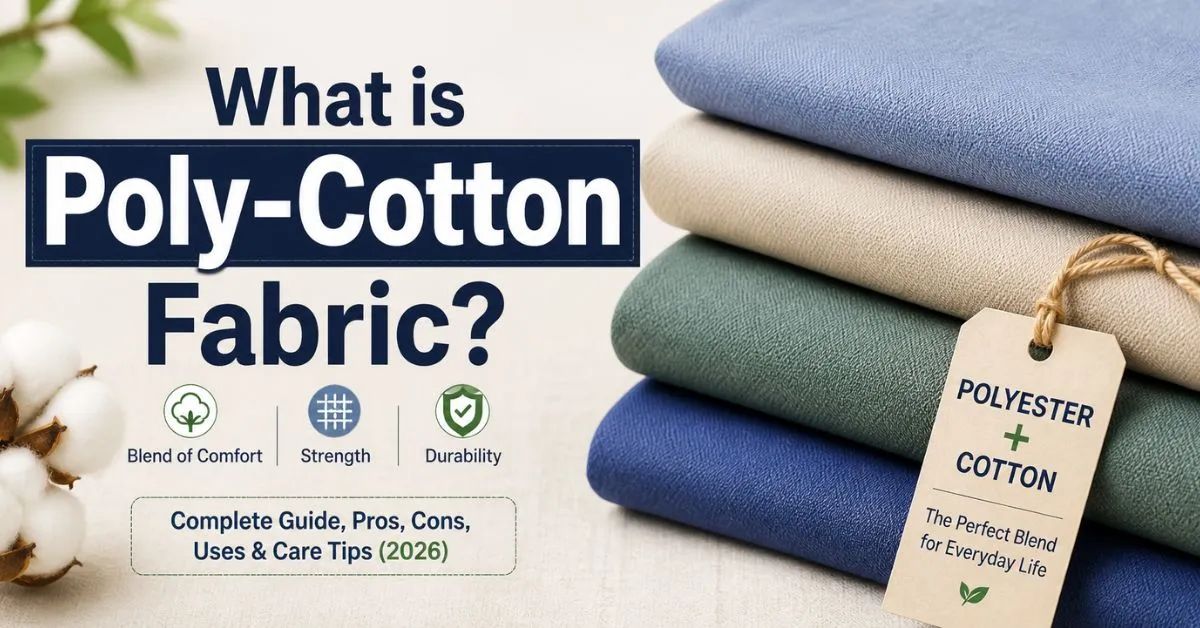
Poly cotton fabrics have interwoven polyester and cotton. Combining synthetic polyester and natural cotton makes a fabric that is durable, soft, breathable, and economical. Poly cotton fabrics often have a blend of either of the following, 65% polyester to 35% cotton or, 50% polyester to 50% cotton.
Poly cotton blends have become popular with today’s shirts, uniforms, bedsheets, and upholstery. This blend is more wrinkle resistant than pure cotton, yet remaining softer than pure polyester. Because of this, poly cotton blends are often considered a more affordable option than pure cotton fabrics.
What Is Poly Cotton Fabric Made Of?
Polyester Fibers in Poly Cotton Fabric
Polyester is made from petroleum byproducts and belongs to the family of synthetic fibers. It is strong, does not wrinkle easily, helps with maintaining the overall shape of the fabric, and aids in quick drying.
Polyester fibers improve the fabric’s durability, abrasion resistance, and overall strength, helping the fabric last longer. Poly cotton thus tends to be more durable than pure cotton.
Cotton Fibers in Poly Cotton Fabric
Cotton is a naturally occurring fiber and grows in cotton plants. It is also soft, breathable, and it feels good against the skin. Polyester does not absorb much water, while cotton improves airflow and comfort compared to pure polyester.
Common Poly Cotton Blend Ratios
Manufacturers use several blend ratios depending on the intended use:
| Blend Ratio | Main Feature | Common Uses |
|---|---|---|
| 65% Polyester / 35% Cotton | Durable and wrinkle-resistant | Uniforms, workwear |
| 50% Polyester / 50% Cotton | Balanced comfort and durability | T-shirts, bedding |
| 80% Polyester / 20% Cotton | Strong and lightweight | Industrial textiles |
| 60% Cotton / 40% Polyester | Softer feel | Casual clothing |
How Blending Changes Fabric Behavior
Blending polyester with cotton improves durability while cotton helps maintain softness and breathability. Poly cotton combines the beneficial properties of both fibers while reducing some disadvantages found in pure fabrics.
How Is Poly Cotton Fabric Made?
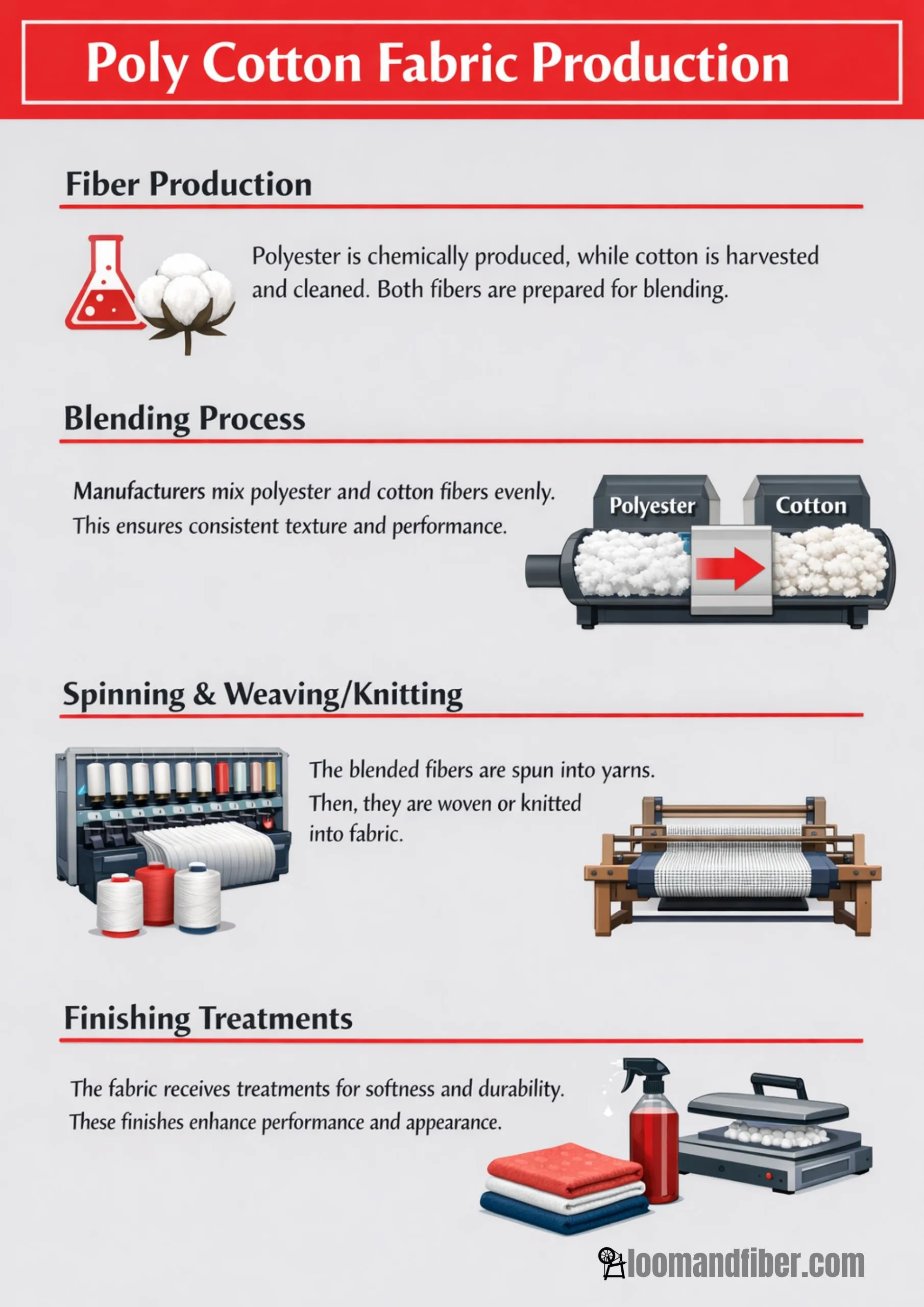
Polyester Fiber Production
Petroleum-based fibers are melted and extruded by the manufacturer into thin filament. They are stretched and then cooled to create strong fibrous strands.
Cotton Fiber Harvesting
After ginning, the harvested fibers are cleaned and de-seeded. The cleaned fibers are then prepared for spinning.
Fiber Blending Process
Before spinning, textile mills must evenly mix the cotton and polyester fiber for an even strength, texture, and overall performance.
Spinning and Fabric Formation
The blended fibers are placed into machines which spin them into yarn and either weave or knit them into the fabric. Weaving creates a more structured fabric, whereas knitting creates a more flexible fabric.
Finishing Treatments
Finishing treatments can improve wrinkle resistance, softness, stain protection, and color retention. These treatments enhance the overall performance and appearance of the fabric.
What GSM Is Best for Poly Cotton?
The GSM of a poly cotton fabric is determined by the use circumstance. GSM stands for grams for every square meter and is a measurement for the weight of a fabric.
GSM affects the fabric’s breathability, durability, thickness, and overall feel. Lower GSM means reduced fabric heaviness. A fabric of lower GSM is often more breathable and soft. A fabric with heavier GSM is generally more durable and structured.
Recommended GSM for Different Uses
| Use | Recommended GSM |
|---|---|
| Summer shirts | 100–140 GSM |
| Bedsheets | 120–180 GSM |
| School uniforms | 180–240 GSM |
| Workwear | 220–300 GSM |
| Upholstery | 250+ GSM |
Key Characteristics of Poly Cotton Fabric
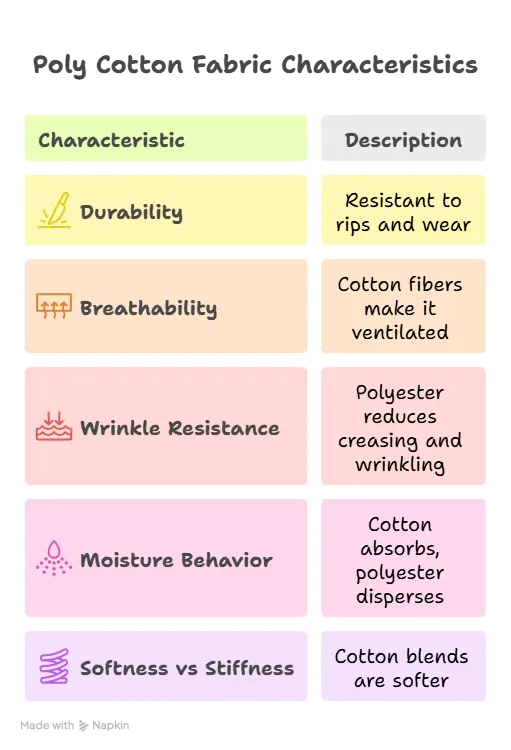
Durability
Polyester cotton is very resistant to rips and other wear and tear. The polyester fibers also help the strength and longevity of the fabric.
Breathability
The cotton fibers also make the fabric more breathable than pure polyester. This is because cotton allows better airflow through the fabric.
Wrinkle Resistance
Due to the polyester, the fabrics have less creasing and wrinkling. Due to this, fabrics made of poly cotton have minimal ironing.
Moisture Behavior
Cotton dries slower, but it absorbs the moisture. Polyester helps move moisture toward the fabric surface, allowing it to evaporate more quickly. This helps while exerting yourself.
Softness vs Stiffness
Higher-cotton blends are usually softer and more comfortable. Higher polyester blends can also be good quality but are less soft.
Advantages of Poly Cotton Fabric
- Cost Efficient
- Poly cotton is almost always cheaper than pure cotton fabrics of high quality.
- Less Maintenance
- Less ironing is required because the fabric is more wrinkle resistant.
- Lasting Strength
- Polyester adds a strong durability to the fabric and decreases the rate of fabric wear.
- Less Shrinkage
- Poly cotton fabrics typically shrink less than their pure cotton counterparts.
- Quick Dry
- The drying time decreases after a wash due to the quicker evaporation of moisture.
- Shape Retention
- The fabric tends to maintain its form even after being washed consistently.
- Dye Retention
- Poly cotton fabrics tend to hold dyes better than pure cotton fabrics.
Disadvantages of Poly Cotton Fabric
- Poly Cotton has A Lower Breathability Than Cotton
- Compared to 100% cotton, poly cotton retains more heat, making it less breathable.
- Less of a Natural Feel
- Some blends may not feel as soft and natural as cotton to sensitive skin.
- Environmental Impacts
- Polyester fiber production relies on fossil fuels and contributes to microplastic pollution.
- More Static Electricity
- Higher blends of polyester may cause more static when the air is dry.
- More Heat Sensitivity
- Higher ironing temperatures may damage polyester.
Does Poly Cotton Pill?
Poly cotton fabrics are known to pill, particularly when a lower quality blend is used. This is because loose fibers start forming mini fabric balls, due to them rubbing against one another. Higher polyester content may increase pilling because synthetic fibers tend to hold pills on the fabric surface. However, tightly woven fabrics and high-quality yarns pill less frequently. Tightly woven fabrics and high-quality yarns pill less. Good washing practices and controlling the surfaces that touch the fabric can reduce pilling.
Is Poly Cotton Good for Bedsheets?
Bedsheets made with poly cotton are very comfortable and easy to maintain. The naturally soft and breathable cotton is finished with polyester for durability and anti-wrinkle properties. With poly cotton sheets, you’re receiving faster-drying and wash-shrink-resistant qualities. Because of these qualities, poly cotton sheets are a popular go-to for households. That said, in hot and humid climates, pure cotton sheets tend to be cooler and softer.
Why Hotels Use Poly Cotton Sheets
When sheets need to go through frequent laundering, poly cotton sheets stand up to the test, making them a go-to for a lot of hotels. Polyester helps reduce wear and wrinkling, making the sheets easier to maintain. Poly cotton sheets dry faster, which lowers laundry costs; and the blend resists shrinking better than pure cotton sheets. With a poly cotton sheet, hotels get a blend of better maintenance and costs.
Poly Cotton vs 100% Cotton
COMFORT COMPARISON
100% cotton has a natural soft and cooling feel against the skin. Poly cotton has better durability and has a balanced comfort.
DURABILITY
Poly cotton has better resistance against wear and tear and against shrinkage. Pure cotton wears faster over time.
MAINTENANCE
Poly cotton has better resistance against wrinkles and has a quicker dry time. Cotton wrinkles easier and has more of a tendency to shrink.
COST
Poly cotton is more affordable when compared to premium cotton fabrics. This is preferred by most manufacturers.
APPLICATIONS
Cotton is more favorable for its breathability and softness. Poly cotton is better for uniforms, every day clothing, and bedding.
| Feature | Poly Cotton | 100% Cotton |
|---|---|---|
| Breathability | Moderate to high | Very high |
| Durability | High | Moderate |
| Wrinkle Resistance | Excellent | Low |
| Shrinkage | Low | Higher |
| Drying Speed | Fast | Slower |
| Softness | Moderate to high | Very soft |
| Maintenance | Easy | Moderate |
| Cost | Lower | Higher |
Poly Cotton vs Polyester
Breathability Difference
Poly cotton’s better airflow results from cotton’s natural breathability. Pure polyester, however, is more likely to trap more heat in the summer. With this in mind, poly cotton feels more comfortable when worn over the course of the day.
Sweat Absorption
The moisture management properties of poly cotton are better due to cotton’s natural ability to absorb sweat. Conversely, polyester absorbs very little water, although it can still wick moisture away from the skin. This difference in moisture absorption helps poly cotton feel less sticky during physical activities.
Feel on Skin
Poly cotton is better in the comfort department due to the much softer feel poly cotton has in relation to polyester. Pure polyester has a more plastic/slick/slippery feel. Many people opt for blends for this exact reason.
Percale vs Jersey Poly Cotton
Compared to Jersey poly cotton, Percale poly cotton uses a plain weave and results in a fabric that is lighter, more breathable, and crisper. Because of this, percale poly cotton is more suitable for hot climates and cooling bedsheets. Jersey poly cotton uses a knitted weave, and results in a fabric that is softer and more flexible. Jersey poly cotton is a better fabric option for cold climates. Because of this, the best option depends on personal comfort.
Is Poly Cotton Fabric Good for Summer?
During the summer, poly cotton fabric can be a great option, mainly the lighter blends, and especially if the fabric has more cotton content, as they generally provide a feeling that is cooler and more breathable. High concentrations of polyester can be problematic if the weather is extremely hot, as the fabric has the potential to trap more heat. In these cases, lighter blends such as 50/50 or 60/40 blends are more suitable in regards to summer clothing and bedding. Improvement in airflow is greatly increased with a loose weave which proves that the ratio of blends is not the only concern in fabric construction.
Read More>> Types of Lightweight Summer Fabrics.
Is Poly Cotton Fabric Breathable?
Poly cotton fabric is moderately breathable. This is because cotton is the more naturally ventilated fiber. But when there is more polyester in the mix, ventilation is slightly decreased compared to pure cotton.
From a scientific perspective, polyester is more water resistant, while cotton cellulose absorbs more moisture. Which means cotton is better at moisture evaporation while poly cotton balances breathability, moisture management, and durability. Good ventilation in poly cotton is better than polyester but less than linen or even cotton.
Is Poly Cotton Good for Sensitive Skin?
Poly cottons can suit most people with mildly sensitive skin. Higher cotton blends tend to feel softer, more breathable, and less irritating against skin. In contrast, more polyester can mean more heat and discomfort. Chemical finishes and/or rougher fibers can also be irritating. Hence, softer blends with more cotton percentages are a safe choice for sensitive skin.
Is Poly Cotton Fabric Stretchy?
Standard poly cotton fabric has low stretch and only slight flexibility that is attributed to the yarn structure and the technique they use for weaving. However manufacturers also add some synthetic fibers like elastane or spandex to the poly cotton fabrics to enhance that flexibility. Because of the enhanced flexibility, these fabrics are commonly used for activewear and fitted apparel.
Also poly cotton knits offer higher stretch than poly cotton weaves. So flexibility is best attributed to the construction of the fabric.
Common Uses of Poly Cotton Fabric
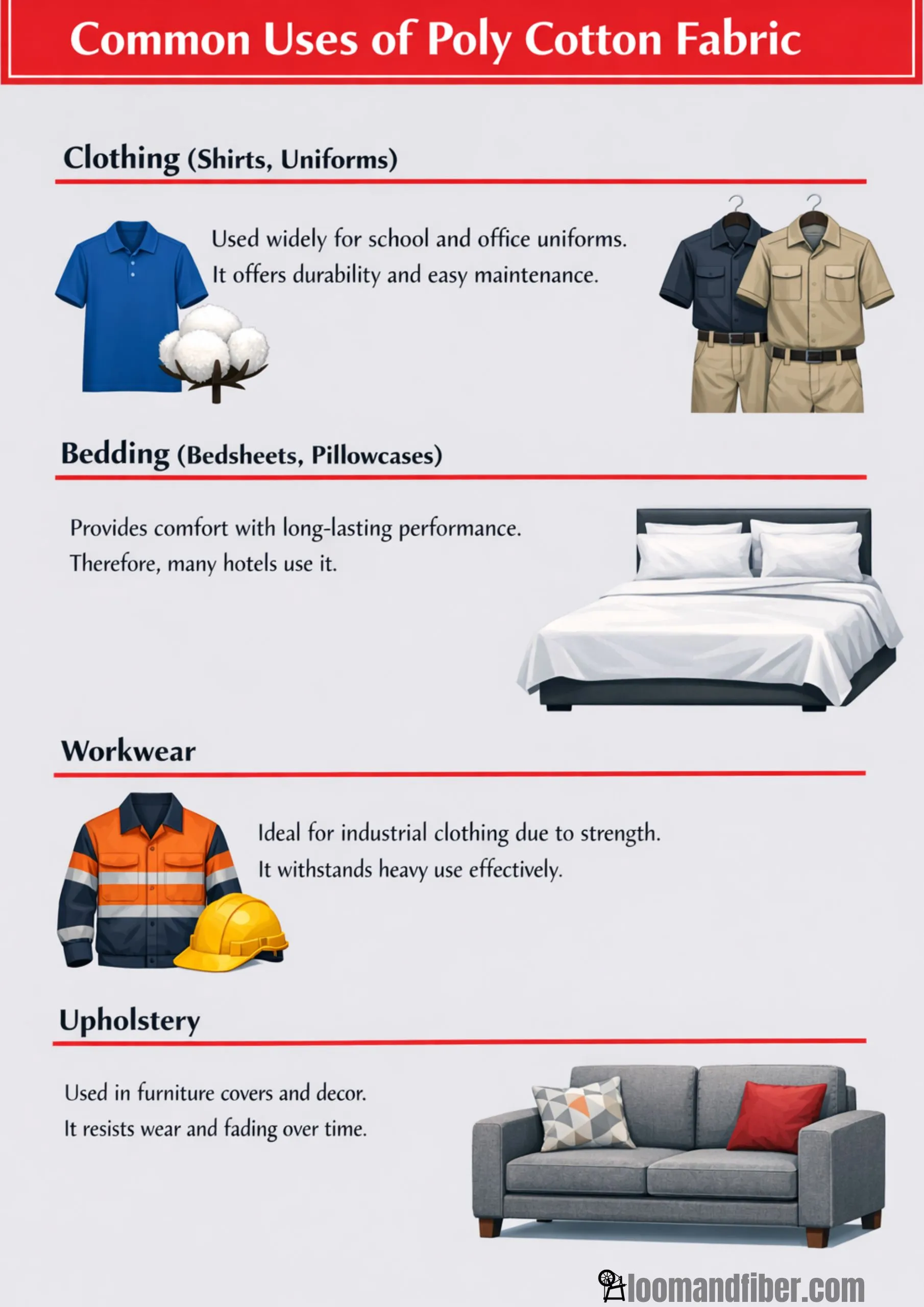
Poly cotton and its uses:
- Clothing
- Poly cotton is commonly used for work uniforms, medical uniforms, and casual clothing
- Bedding
- Poly cotton is common in bedsheets, pillow covers, and duvet covers.
- Protective clothing
- Poly cotton is often used in heavy-duty uniforms and protective clothing.
- Upholstery
- Poly cotton is commonly used in upholstery, cushions, and other home furnishing products.
- Home Textiles
- Common poly cotton products include curtains, table linens, and decorative fabrics.
How to Care for Poly Cotton Fabric
- Washing Instructions
- Wash poly cotton fabrics in cold or warm water using a mild detergent.
- Drying Tips
- Use a low tumble dry setting to minimize damage to the fibers and prevent the poly cotton fabric from wrinkling.
- Ironing Guide
- Iron poly cotton on a medium setting, as high heat can melt the polyester.
- Stain Removal
- Stains should be treated as soon as possible to facilitate removal during the wash. Otherwise, the stain can be set into the fabric.
- Storage Advice
- Garments should be stored away from excessive heat and moisture to prevent fabric damage.
Is Poly Cotton Fabric Eco-Friendly?
Poly-cotton fabric has its pros and cons for the environment. Polyester production relies on petroleum, and polyester fabrics can release microplastics into waterways.
Cotton farming can require large amounts of water and pesticides, while polyester production depends on fossil fuels and releases microplastics, so both fibers have different environmental impacts.
Recycled polyester brings down the need for petroleum, and helps with pollution. Organic cotton decreases the need for pesticides. So, poly-cotton blends are now found more and more in modern textile production.
Ideally, consumers will opt for the combinations that have recycled polyester and responsibly sourced cotton. In the end, poly-cotton can be more eco-friendly by improving manufacturing processes and making products last longer with a lower environmental impact.
Does Poly Cotton Release Microplastics?
Poly cotton fabric can release microplastics due to the presence of polyester. Since polyester is synthetic, when woven into fabric, it can release strands of microplastics into the water when the product is washed, leading to river and ocean pollution. Clothes that have a higher polyester composition are known to release more microplastics when compared to others. To mitigate microplastic pollution, one can use microfiber catching laundry bags and wash the clothes in a gentler setting. Additionally, using a blend of recycled polyester may also have a lower environmental impact.
Does Poly Cotton Shrink or Fade?
Poly cotton fabric is more resistant to shrinking compared to pure cotton due to the polyester stabilizing the fabric structure.
Polyester also improves fabric’s color retention despite regular washes. Hence, poly cotton fading will be less than many natural fabrics.
Extreme heat can damage the fibers and alter the fabrics’ look over time. Following fabric care can improve the poly cotton’s longevity.
Is Poly Cotton Fabric Good Quality?
Manufacturers can create superior quality poly cotton fabric using balanced blends and skillful weaving.
High-quality poly cotton can feel soft and smooth while offering durability similar to many cotton fabrics. High-quality woven fabric should be breathable and resistant to pilling. The quality of the blend affects the fabric’s comfort, durability, and appearance. Higher quality cotton is less likely to lose its color or structure.
Before purchasing products, Consumers should examine the stitching, weave quality, fabric softness, and weight.
Different Types of Poly Cotton Blends
65/35 Poly Cotton Blend
Focuses on durability with a lower level of focus on comfort and ease of care. Many industries use this blend, specially for uniforms and workwear.
50/50 Poly Cotton Blend
An even distribution of comfort, ease of care, and durability. Good for apparel and bedding that is meant to be used casually.
Performance Poly Cotton Blends
Performance poly cotton blends may include additional fibers or fabric treatments to improve stretch, comfort, and moisture-wicking performance. These fabrics are used in high-end sportswear and activewear.
Where Is Poly Cotton Fabric Used / Produced?
Global production of poly cotton textiles is significant in China, India, Pakistan, Bangladesh and Vietnam. Many clothing factories use poly cotton for industrial uniforms, hospitality textiles, medical clothing and consumer clothing. This fabric remains in high demand because of the low cost to produce it along with its performance advantages.
Buying Guide: How to Choose the Best Poly Cotton Fabric
- Analyze the Blend Ratio
- The softest, most breathable fabrics contain a larger proportion of cotton.
- Consider the Thread Count
- Higher thread counts can contribute to a softer and more durable fabric.
- Match the Use
- Bedding should be soft, while work apparel should be more durable and made of polyester.
- Inspect Fabric Weight
- Lightweight fabrics are cooling, whereas heavier fabrics are more durable.
- Examine Finishing
- Quality of the fabric can improve with anti-wrinkle and moisture-control finishes.
- Inspect Stitching and Weave
- Carefully constructed, tighter weaves usually result in higher-quality and more durable fabric.
Conclusion
Poly cotton fabric is a popular blend that combines the properties of cotton and polyester. Spread the love for poly cotton fabric! As it resists shrinking and wrinkling while drying quickly, it’s highly favored and used fabric for clothes, bedding, workwear and home textiles.
Poly cotton offers a balanced level of breathability, durability, and easy maintenance. However, the blend of polyester and cotton fabric, it also raises some environmental concerns.
This works best if you are looking for a durable, affordable, easy-to-maintain fabric blend and is mostly suitable for everyday use.
Read More>> What is Cotton Oxford Fabric?
FAQs
Poly cotton blends are more durable and resist wrinkling better. Cotton, though, may be softer and more breathable.
Poly cotton blends are usually tolerated by most. Higher-cotton blends are usually better for sensitive skin.
High polyester content blends may trap moisture and heat. However, balanced poly cotton blends can still remain comfortable.
Indeed, polyester fibers greatly enhance strength, tear-resistance, and durability over time.
Certainly, lightweight poly cotton, especially with a higher cotton blend, is great for warmer climates.