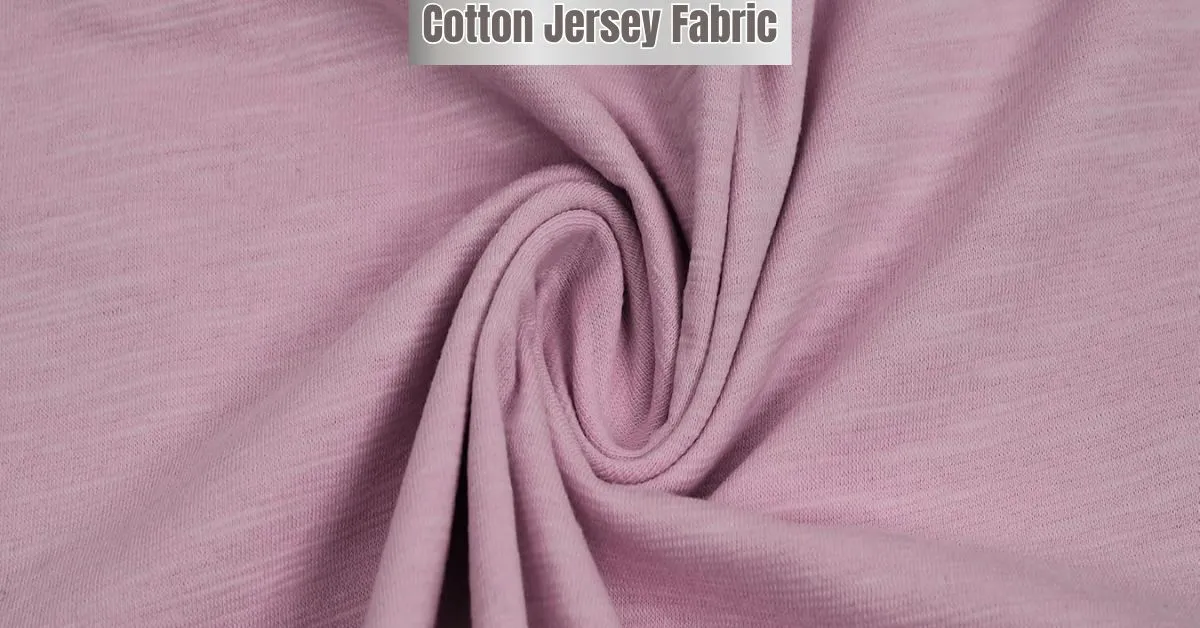

Cotton jersey is a knitted fabric that is composed of cotton fibers. Its surface is smooth, soft and natural. This is a stretchy breathable cotton knit that is commonly utilized as comfortable clothing such as T-shirts and dresses.
What Is Cotton Jersey Fabric Made Of?
Cotton Fibers
Cotton jersey is produced using mainly 100% cotton fibers. Premier versions also tend to have long-staple combed cotton as an added softness measure. These cotton threads ensure the natural breathability and absorbency of the fabric, which makes it adherent to the skin.
Knit Construction
Cotton jersey is also knitted unlike woven cloth. Spinning machines were circular knitting machines, which interlocked spun cotton yarns into a cloth. This forms the classic jersey knit- a smooth right hand and a looped back. Inter-looping of the yarns is done in the knitting process and this is what makes jersey stretch and drape.
Knit vs Woven Structure
Cotton jersey (knit) is different to woven cotton (such as poplin). Knits are made out of loops of yarn that hook together, where woven fabrics weave the threads in right angles. Owing to this structure, knit fabrics trap more air in natural pockets, which makes jersey lighter and more stretchable than a tightly woven cotton. Practically, a cotton jersey garment will be softer and less rigid than a garment of similar weight but of woven cotton.
How Is Cotton Jersey Fabric Made?
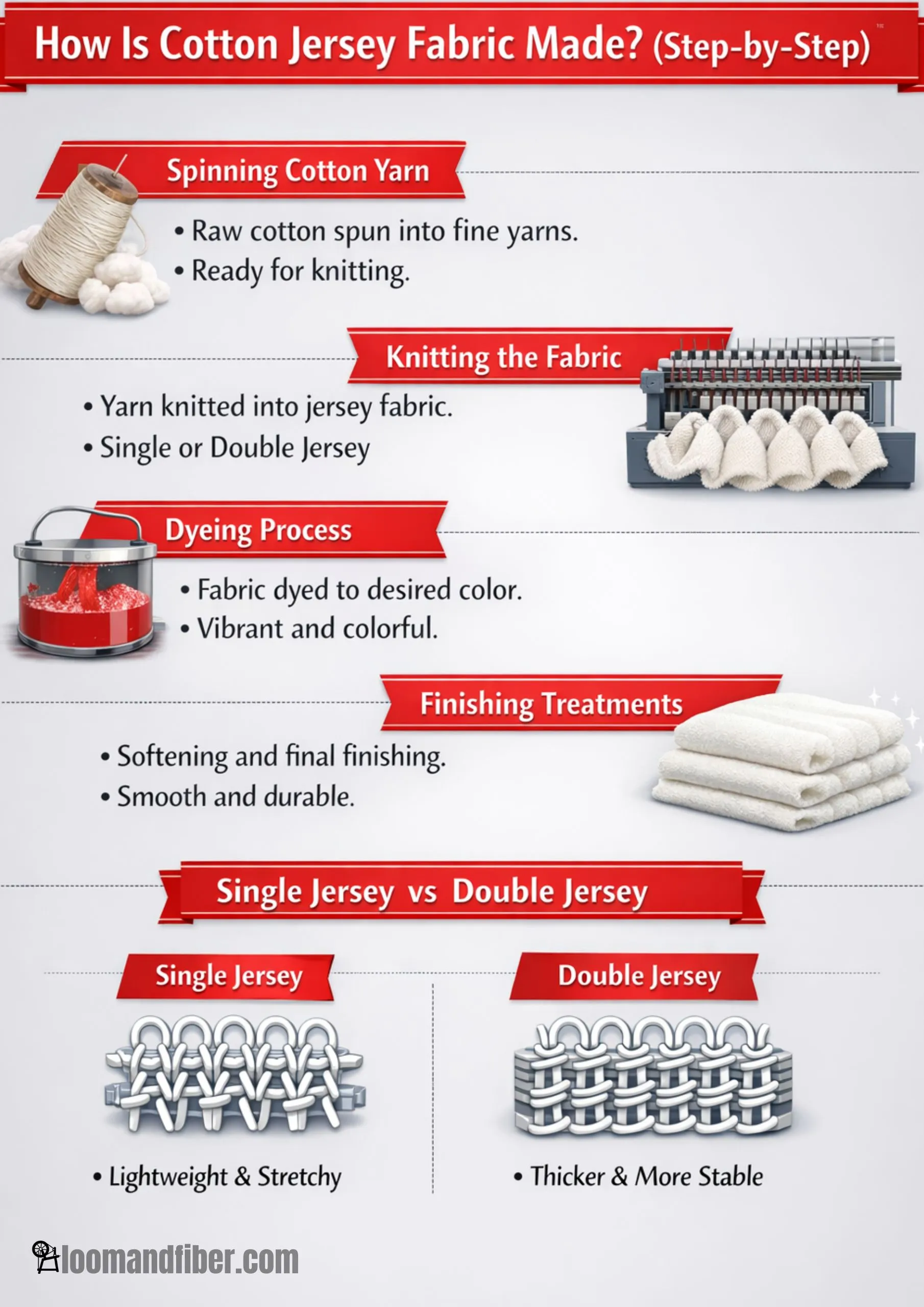
Spinning. Ginned, cleaned, carded and spun yarn is produced out of raw cotton. To produce smooth cotton yarns, carding is done, followed by drawing and spinning.
Knitting (Single vs Double). Circular knitting machines are fed with the yarn to create jersey fabric. One type of needle is applied to a single-jersey knit, making a single layer of fabric with a smooth face (and slightly textured back). Its edges cut generally curl. A double-jersey (interlock) knit is made with two needle beds, creating a heavier, two-layer fabric that is not curling, smoother on the outside, and heavier.
Dyeing. The fabric is washed and dyed after knitting. Fiber-reactive or pigment dyes well on cotton jersey. Softness and color are usually preserved by using low-impact dye.
Finishing. The cloth is subjected to finishing processes. Techniques like mercerizing (to increase strength and luster) and sanforizing (to control shrinkage) are common. Last finishes enhance performance and feel of the jersey. An example is that mercerized jersey is more durable and shinier, whereas sanforized jersey shrinks much less.
Types of Cotton Jersey Fabric
Single Jersey Fabric:
The most common type is a single-knit jersey. It is smooth on one side and looped on the other. This fabric is soft and lightweight but its cut edges curl up. Single jersey is worn in standard T-shirts and casual.
Double Jersey Fabric:
It is a two-layer jersey, which is also known as double-knit or interlock. It’s thicker and heavier than single jersey. On either side, double jersey is smooth, well-shaped and does not curl. It is worn on warmer and more structured clothes (such as sweaters or heavier tops).
Slub Jersey:
Slub jersey is produced using yarns that have purposely placed thick areas (slubs). This gives a special texture appearance. It feels ultra soft and drapey. Slub jersey is breathable like cotton, but it has a slight, inconsistent texture to give it a visual appeal.
Read More>> What is Slub Cotton?
Interlock Jersey:
Essentially a type of double jersey, interlock is a tight double-knit cotton jersey. It is extremely stable and smooth. Interlock is more dense and solid and is normally applied to high-end T-shirts and dresses since it retains the shape and feels luxurious.
Stretch Jersey:
This is cotton jersey mixed with a small amount of elastane/spandex. The four-way stretch and high recovery are contributed by the elastic fiber added. Stretch jersey is as soft as cotton but can stretch significantly more (good in activewear or fitted clothing).
Key Characteristics of Cotton Jersey Fabric
- Softness: Cotton jersey is very soft since the fine cotton fibers and knitted structure make it. Jersey knit is very comfortable as it is not thick, but it is soft and gentle on the skin.
- Breathability: The loose knit of the jersey, coupled with the natural wicking of cotton, is able to allow the air to flow. Cotton jersey is very effective in absorbing and moving moisture off the body. This makes you cool and dry, particularly during hot weather.
- Stretchability: Knit jersey has a stretchy quality due to the knit loops. It bends easily, particularly its width. Cotton jersey of high quality will stretch and then spring back well without getting out of shape.
- Lightweight Nature: Due to the less yarn and air entrapment of knitted loops, cotton jersey is likely to be lightweight. Its open knit design results in the fact that jersey consumes less fiber per square inch than a woven fabric, making clothes feel lighter and more comfortable.
- Curling Edges: One of the characteristics of single jersey is that its cut edges will curve towards the right side of the fabric when not hemmed. It is typical of knit fabrics and can be dealt with by doing an appropriate seaming or even by using a double-knit in case curling is undesired.
Advantages and Disadvantages of Cotton Jersey Fabric
Pros:
Comfy: Jersey is extremely smooth and elastic and tender to the skin. Its soft texture and malleability make it very comfortable to wear all day.
Breathable: The fabric is breathable and absorbs sweat and keeps you cool. Cotton jersey can be used in warm weather or as a sportswear due to its breathability due to being moisture-wicking.
Cost effective: Jersey fabrics are usually cheap to make. Cotton jersey is a good compromise of quality and price. Customers have easy access to cotton jersey products, which are comfortable and priced at affordable costs.
Cons:
Shrinkage: 100% cotton jersey is easy to wash, which is prone to shrinkage. Unless they are pre-shrunk and washed properly, garments tend to shrink. Adhere to care instructions (low heat, gentle wash) to keep this to a minimum.
Shape Loss: A pure cotton knit can lose its shape over time. It is able to curl at edges and might not recover as well as blends. After stretching or washing Jersey may also get slight twisting (skein) in the knit.
Durability: Untreated cotton jersey is not as durable as the woven cotton. It can wear and tear easier. Jersey will wear out faster in high-friction places than a heavy woven fabric, particularly when it is not applied with finishes to give the material strength.
What Is Cotton Jersey Fabric Used For?
Cotton jersey’s combination of softness and stretch makes it perfect for everyday garments. It’s a go-to fabric for comfortable casual wear. To illustrate, it is very popular in T-shirts and tops since it flows over the body and moves with the body. The medium weight jersey is ideal in dresses and skirts that have a loose flow.
It’s also popular for activewear. Cotton jersey blends tend to be used in styles such as yoga pants, sports tees, and athletic tops due to their breathability and ease of movements. Parents adore jersey as baby clothes and children pajamas because of its soft touch and carelessness. Actually, they are usually worn in everyday tees, sleepwear, baby onesies, scarves, and daytime dresses. Soft cotton jersey is also used to make comfortable loungewear and pajamas.
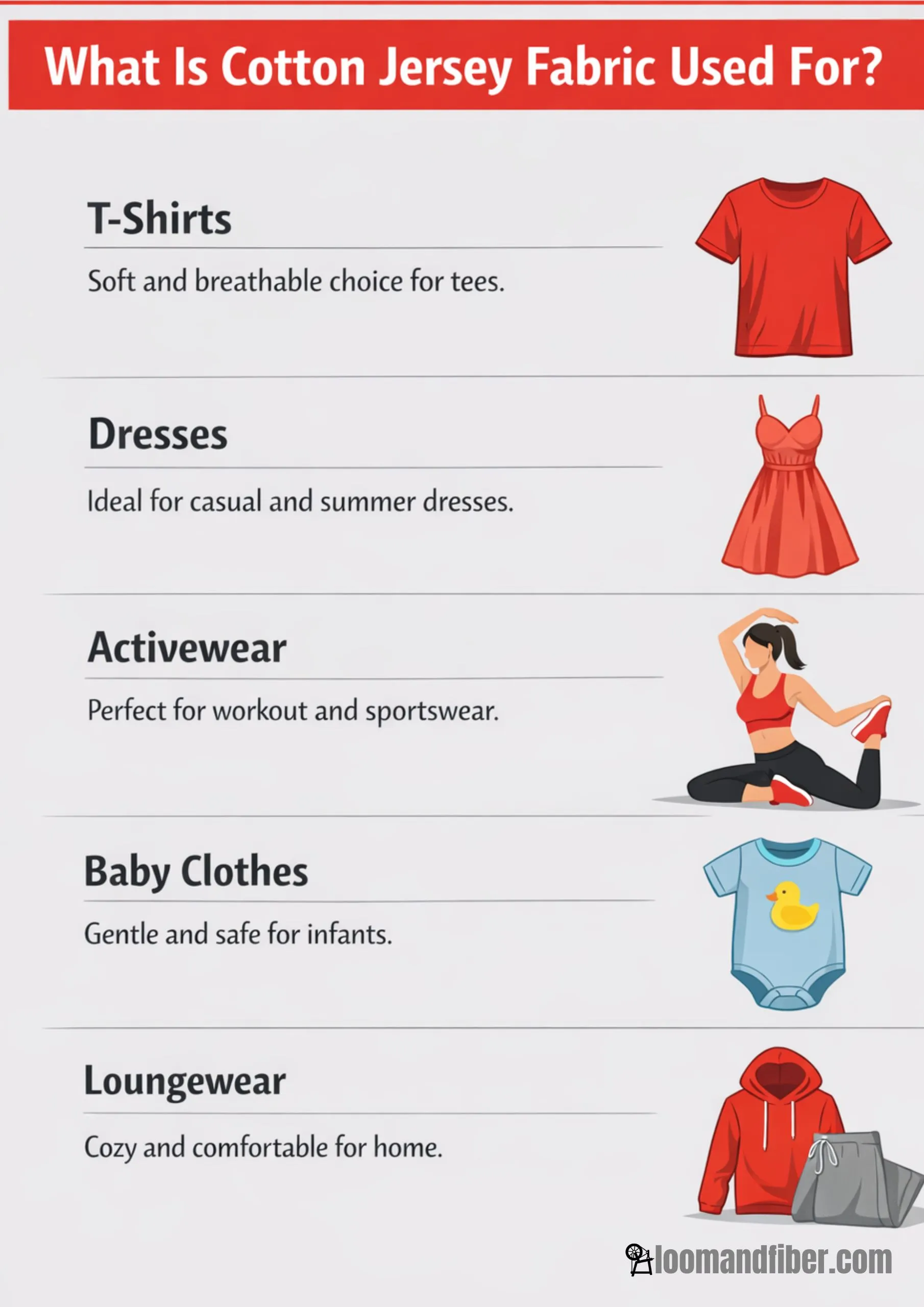
- T-shirts & Tops: Standard application – soft and can be stretched to fit snugly.
- Dresses & Skirts: Jersey of medium weight and is so loose that it is used in casual dresses.
Activewear: Best with workout tees and leggings (with extra spandex) due to their ability to move with the body. - Baby Clothes: Cozy and tender to the babies, onesie, sleepsuit and children tees.
- Loungewear: Pajamas, robes and lounge sets take advantage of its softness and comfort.
Cotton Jersey vs Other Fabrics
Cotton Jersey vs Cotton Interlock
Interlock (double-knit) is simply a double-layered jersey. Interlock is heavier and more sturdy than single-knit cotton jersey. Both sides of cotton interlock are smooth, do not curl easily, and have limited stretch. Single jersey, on the other hand, is more light and loose. Interlock has been selected due to its structure and warmth, and single jersey due to its lightweight feel.
Cotton Jersey vs Polyester
Pure cotton jersey is breathable and natural to touch on skin whereas polyester jersey (synthetic fibers) is more durable and quick to dry. Poly jerseys are also great in keeping the color and are also resistant to wrinkles, although it is not as cool and breathable as cotton. Concisely, cotton jersey is superior in comfort and breathability whereas polyester blends are harder and will not shrink easily.
Cotton Jersey vs Rib Knit
Rib knit (1×1 or 2×2 ribs), is vertical, high stretch and jersey knit is smooth. Ribbed fabric is highly stretchy and is worn by cuffs, collars and waistbands. Cotton jersey is plain-faced and falls over the body with ease- it is made on the body of clothes such as the torso of a T-shirt. Rib knit is as stretchy in every direction and fits tighter, and jersey is stretchy in width but less firm to handle.
Cotton Jersey Fabric GSM Guide (Lightweight to Heavyweight)
120-180 GSM – Lightweight: Thin jersey, perfect in summer T-shirts, baby clothes and loose tops.
180-280 GSM- Medium-Weight: Standard-weight jersey to wear with everyday T-shirts and casual dresses and lounge wear.
280 and above GSM- Heavyweight: Thick jersey typically worn as a sweatshirt, hooded jacket or fitted clothing.
(GSM = grams per square meter; the higher the GSM, the heavier the fabric and the denser it is.)
How to Choose High-Quality Cotton Jersey Fabric
- Hand Feel & Smoothness: The material must be soft, smooth and supple. Hardness or difficulty means less quality.
- Stretch & Recovery: Check the stretch: quality jersey will stretch without any bagging and then resumes its original shape. Bad recovery will cause the cloth to slack or to distort.
- Stitch Density: Check the loops of the knit. Premium jersey is tightly knitted without loose gaps and snags. Unstable loops or holes are indicative of inexpensive cloth.
- Fiber Quality: Check the label to find such words as combed cotton or ring-spun. Combed cotton with long staples produces smoother stronger yarn. Jersey of high quality may be made of long-fiber cotton to ensure durability and softness.
How to Care for Cotton Jersey Fabric
- Washing: Jersey clothes: Clean the clothes using cold or lukewarm water in a gentle cycle. Wash with a light detergent and do not use harsh bleach which may make the fibers weak. Turn things inside-out so as to save the surface and colors.
- Drying: Dry where possible. When dryer is used, tumble at low heat and take out items as soon as possible. Heat can cause shrinkage of cotton and destroy elasticity. Drying knits in a flat manner is important in preserving the shape.
- Shrinkage Prevention: Before sewing or wearing, new jersey fabrics must be pre-washed to prevent shrinkage. This shrinks the fabric in a manner that is controlled. Hot water and high-heat drying are the worst to avoid and cause the majority of shrinkage. Wash clothes and then flatten them or hang them on a padded hanger, to minimize wrinkles.
Cotton Jersey Fabric Trends in 2026

Sustainable Cotton:
Eco-friendliness is key. There is increased demand on organic, recycled and regeneratively-grown cotton in jersey fabrics. To support sustainable fashion, shoppers want cotton that has been sourced and pesticide-free.
Organic Jersey:
Organic cotton jersey is popular with consumers because it is comfortable and hypoallergenic. To address health and environmental objectives, in 2026, a variety of brands focus on organic and low-impact dyed jerseys. Critical and organic materials are on the fashion.
Performance Blends:
Designers are incorporating more performance fibers with cotton jersey. Having a small portion of elastane, recycled polyester or Tencel customizes the performance of fabric. These mixes keep cotton comfortable with added stretch, durability or moisture wicking. Such blended jerseys, which are engineered to be blends of cotton with modern functionality, are common by 2026.
Conclusion-
Cotton jersey fabric goes beyond the “most comfortable” fabric, and can even be described as the most versatile fabric. It’s soft and breathable, yet still has the ability to stretch, which is why it’s great for everyday wear. It’s even good for high fashion, as it has many different types and uses.
Cotton jersey fabric is continuing to pioneer innovation to stay on trend with sustainable and high performance materials. As a buyer, a designer, or a manufacturer, one must be completely knowledgeable of the materials they purchase to make the most informed decisions.
The real question is, how long does cotton jersey fabric have left as the number one fabric in comfort driven fashion?
Read More>> What is Cotton Double Gauze Fabric?
FAQs
Not necessarily. Cotton jersey commonly denotes 100% cotton knit, however, blends are available. A few cotton jersey fabrics contain some synthetic fibers (such as elastane or polyester) to provide stretch or resilience. The fabric label should always be examined to determine whether it is pure cotton or a mixture.
Yes. The stretch inherent in cotton jersey is due to the knit construction. It stretches naturally across the grain, and most jerseys have some spandex (stretch jersey) to give it even greater stretchiness. This renders jersey an ideal one to use in form-fitting clothing.
Absolutely. Cotton jersey is ideal for summer wear. It is lightweight knit, which allows air to pass through, and the material absorbs the sweat and evaporates. During hot weather, people usually wear cotton jersey T-shirts and dresses due to the ability to keep the skin cool and dry.
Read More>> Lightweight Cotton Fabric for Summer.
Jersey made of pure cotton may shrink without being pre-shrunk. When it is washed in hot water or dried in high heat it tends to lose size. Wash jersey in cool water and tumble dry low (or air dry) not to get surprised. Shrinkage can also be controlled through pre-washing the fabric prior to sewing or wearing.