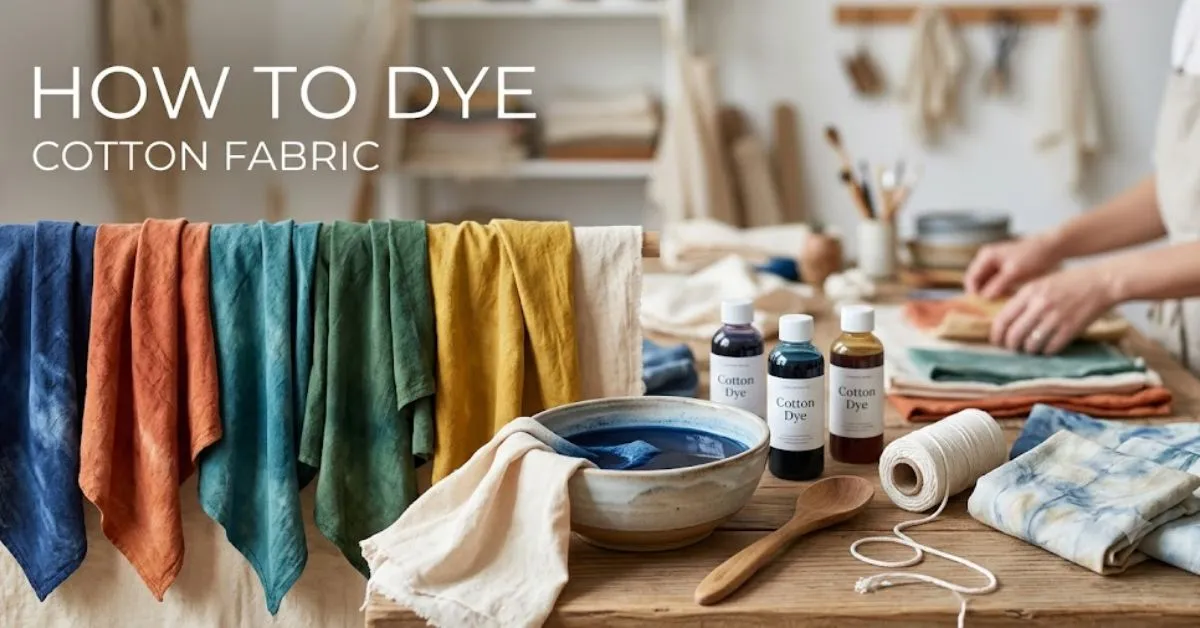

Dyeing cotton is easier than other fabrics because cotton can easily absorb dyes. Wash your fabric, prepare your dye bath, and soak your cotton until it is evenly saturated, then rinse. Fiber-reactive dyes can provide the most vibrant and longest-lasting results. With the right preparation and proper dye-fixation techniques, you can achieve a professional-quality finish. If you’re looking to bring some life back to your faded fabrics, wanting some custom colored fabric, or just want to try a tie-dye project, most dyeing techniques work well on cotton and can produce excellent results.
How to Dye Cotton Fabric?
Can Cotton Fabric Be Dyed?
Cotton absorbs dye very effectively because it is composed of natural cellulose fibers. This is why dyeing cotton can produce vibrant and long-lasting results.
What Dye Works Best on Cotton?
The best dyes for cotton are fiber-reactive dyes, which chemically bond with cellulose fibers. Since cotton is a cellulose fiber, it can bond with the dye to produce brighter colors that can withstand multiple washes.
Is Cotton Easy to Dye?
It’s super easy to dye cotton at home. It’s one of the most popular fabrics for dyeing because it absorbs dye much more readily than fabrics such as polyester.
How Long Does Dyeing Take?
Dyeing cotton fabric usually takes only about thirty to sixty minutes. If you’re dying multiple shades of fabric, the lighter shades will usually take less time than the darker shades.
Why Dyeing Cotton Fabric Is Easy
The Science Behind Easy Dyeing
Whereas many fabrics lack sufficient moisture, the naturally occurring cellulose in cotton fibers forms a porous structure that readily absorbs water and dye. This means that the dye will penetrate deep into the fabric.
Additionally, the hydroxyl groups in cotton fibers form a quick bond with various dye types. Therefore, cotton tends to yield more intense colors than synthetic fabrics.
Why Does Cotton Hold Dye Better Than Other Fabrics?
Cotton generally absorbs dye more uniformly than many synthetic fabrics because of its absorbent cellulose structure. This results in bright and uniform colors.
Additionally, cotton allows dye to penetrate deep into the fabric.
Dye Absorption: Cotton vs Polyester
| Fabric Type | Dye Absorption |
|---|---|
| Cotton | Excellent |
| Linen | Excellent |
| Rayon | Excellent |
| Polyester | Poor |
| Acrylic | Very Poor |
Why Does Cotton Absorb Dye Better Than Polyester?
Polyester fibers are plastic-based synthetic fibers, which makes them difficult to dye using commonly available fabric dyes.
On the other hand, the moisture and dye absorption capabilities of cotton make it an excellent fabric for home dyeing.
What Is The Best Dye For Cotton Fabric?
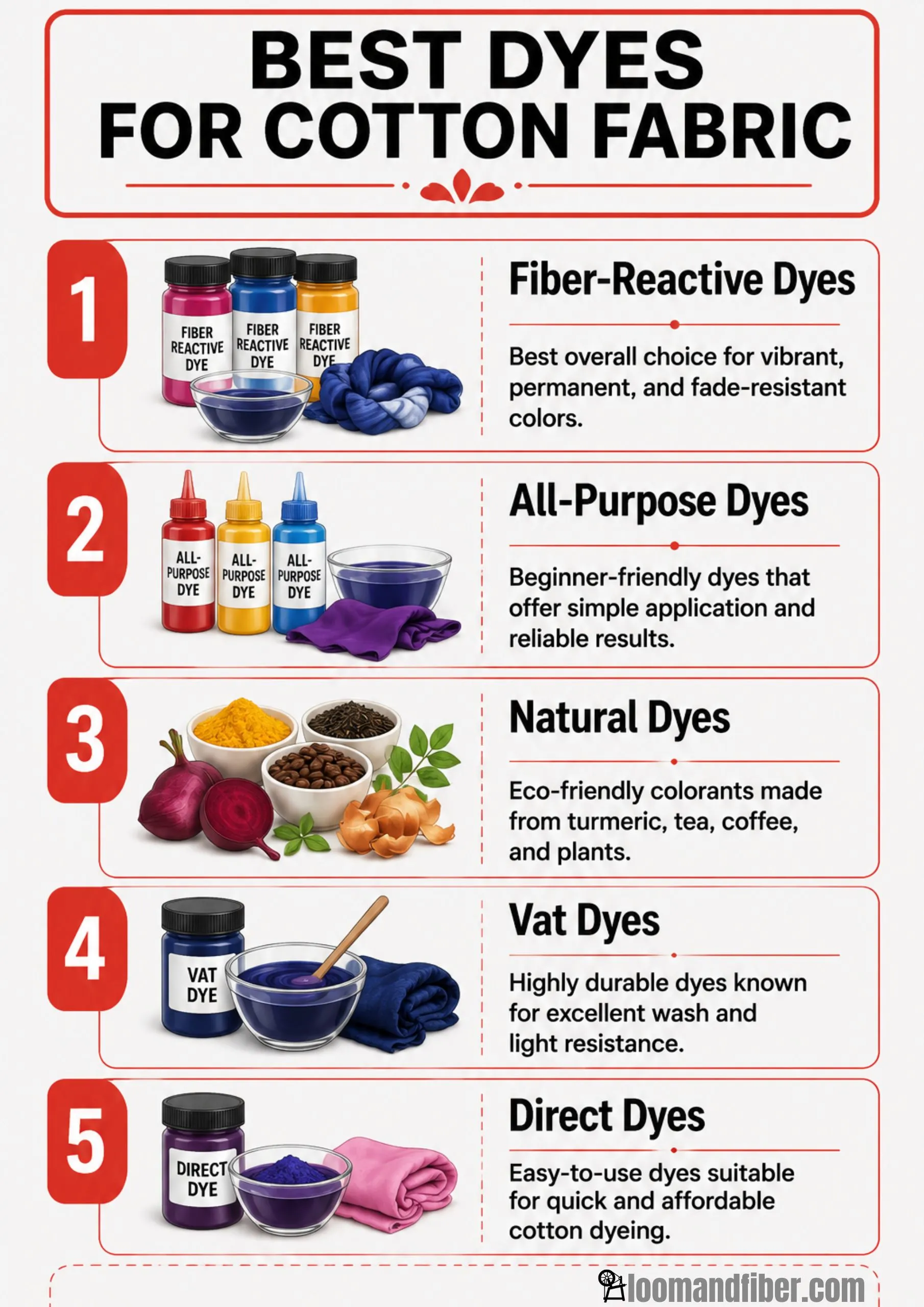
Fiber-Reactive Dyes
Why Are Fiber-Reactive Dyes The Best Choice For Cotton?
- Fiber-reactive dyes form a permanent bond with cotton fibers.
- They are bright and yield intense colors.
- They have excellent wash and fade fastness.
- They are especially effective with 100% cotton fabrics.
- They’re often used by professional textile dyers.
All-Purpose Dyes
Why Are All-Purpose Dyes Popular for Beginners?
- All-purpose dyes are readily available in craft stores.
- Dyers don’t need much equipment.
- Most home dyeing projects turn out well.
- All-purpose dyes work with cotton and a variety of blended fabrics.
- They are a great option for beginners.
Natural Dyes
Why Do Some People Prefer Natural Dyes?
- All natural dyes come from either plants or foods.
- Natural dyes are eco-friendly.
- They can produce a wide range of unique and attractive colors.
- They work great for small crafts.
- They attract customers who want to be eco-friendly.
Sources of Natural Dyes
Turmeric
- Creates dye that is bright yellow.
- Vibrant colors can be produced very quickly.
- May fade quickly in comparison to synthetic dyes.
Beetroot
- Can produce pink to reddish-purple shades, though the color may fade over time.
- Can be used for a beautiful natural color.
- Needs special care to make the dye last.
Onion Skins
- Produce a dye that is yellow or orange.
- Can achieve very rich colors.
- Dyes well on cotton and linen.
Tea
- Can produce a beige or tan dye.
- Gives the fabric a vintage look.
- Works well for projects that are meant to look old.
Coffee
- Creates a natural earth tone dye.
- Has very subtle color shifts.
- Dyeing works best on light cotton.
Vat Dyes
What Are Vat Dyes?
- Vat dyes have great color fastness.
- They have excellent resistance to washing and light exposure.
- They are great for industrial textile production.
- They demand intricate application procedures.
- They are not as common for beginners.
Direct Dyes
What Are Direct Dyes?
- Direct dyes attach readily to cotton fibers without requiring a chemical reaction.
- Direct dyes are simple to use.
- Direct dyes yield acceptable results.
- Direct dyes have lower wash fastness.
- Direct dyes are often used when ease of application is more important than maximum wash fastness.
Dye Type Comparison Table
| Dye Type | Color Fastness | Ease of Use | Best For |
|---|---|---|---|
| Fiber-Reactive | Excellent | Moderate | Cotton |
| All-Purpose | Good | Easy | Beginners |
| Natural Dyes | Fair | Moderate | Eco-Friendly Projects |
| Vat Dyes | Excellent | Difficult | Industrial Use |
| Direct Dyes | Moderate | Easy | Basic Projects |
Supplies Needed to Dye Cotton Fabric
Fabric Dye
- Fabric dye is the color source for the project.
- Dye should be selected based on its compatibility to the cotton fibers.
- The type of dye impacts the color’s permanence.
Rubber Gloves
- Rubber gloves keep hands from getting stained.
- They also keep hands safe from dye chemicals.
- Dyeing with gloves on is more safe than dyeing without gloves.
Stainless Steel Container
- Stainless steel dyeing containers will not get dye stains.
- Stainless steel containers resist permanent staining and are unlikely to react with dye chemicals.
- Also, there are no unwanted chemical reactions.
Measuring Cups
- Measuring cups help mix dye properly.
- Accurate measurements help achieve consistent color.
- Consistency is important for a desired outcome.
Salt
- Some dyes require salt for better absorption.
- Salt helps bind dyes to cotton.
- As a result, dyes look more intense.
Soda Ash
- Soda ash assists the activation of fiber-reactive dyes.
- It enhances cotton’s dye bonding.
- In turn, it improves color permanence.
Stirring Spoon
- Having a special stirring spoon helps distribute dye.
- Stirring reduces the appearance of dye spots.
- It helps color spread evenly.
Protective Covering
- Using plastic sheets on surfaces helps prevent dyes from spilling.
- This makes cleanup easier by preventing stains on work surfaces.
How to Prepare Cotton Fabric Before Dyeing
Wash the Fabric First
Cotton fabric should always be washed before dyeing.
Manufacturing residue, wax, dirt, and oils are removed which helps the dye to absorb more evenly.
Remove Dirt and Oils
Dirt and oils of the body create a barrier that keeps dye from bonding to the fiber.
Clean fabric allows the dye to bond more effectively with the fibers.
Remove Stains Before Dyeing
Stains already present on fabric may remain visible after dyeing.
Stains should be removed prior to dyeing.
Pre-Soak the Fabric if Necessary
Some thicker cottons may need a soak prior to dyeing.
Damp cotton absorbs dye better.
Weigh the Fabric
Weighing fabric can help determine how much dye to use.
Dye suggestions are based on the weight of the fabric.
Read More>> What is GSM in Fabric?
Fabric Weighing Dyeing Help
A light cotton shirt uses less dye than a heavy cotton blanket.
Weighing the fabric helps achieve a consistent and accurate dye concentration.
Step-by-Step Instructions for Dyeing Cotton Fabric
Dyeing cotton fabric requires seven basic steps.
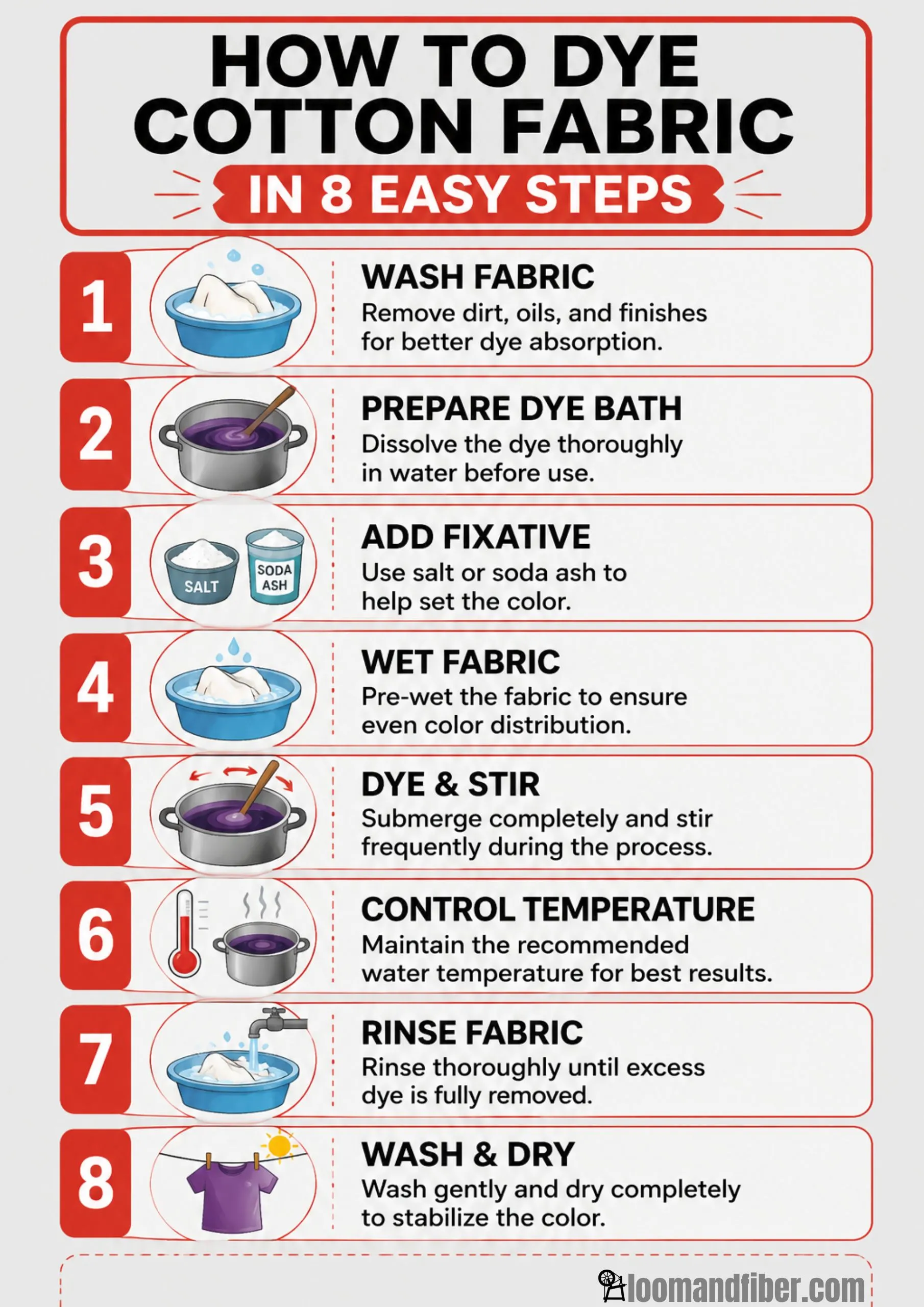
- Wash Fabric
Dirt and oils on the fabric will make the finished dye job uneven. So, clean your fabric, so it can absorb the dye more evenly. - Prepare the Dye Bath
Add water to a container based on the instructions with your dye package and completely dissolve the dye before adding any fabric. Dye baths must be well mixed, so color will be even. - Add Salt or Soda Ash
For improved absorption and fixation of the dye to the fabric, along with more color-fast results, your dye bath must have either salt or soda ash. - Wet the Fabric
Dye will absorb evenly throughout the fabric. Therefore, to help minimize streaks, add your fabric to the dye bath after it has been moistened. - Submerge and Stir
For the first 5-10 minutes, it is recommended to submerge and stir the fabric continuously to help dye solutions achieve the best results. - Maintain Temperature
To help color develop, dye solutions also require the temperature to be controlled throughout the process. - Rinse Thoroughly
Excess dye should be rinsed out of the fabric. It is also necessary to thoroughly rinse the fabric dye with water to help keep your fabric from bleeding color. - Wash and Dry
Dyed fabric must be washed separately with a gentle or mild detergent and then dried according to the dye manufacturer’s instructions.
How Much Dye Do You Need?
Depending on the dye type, salt or soda ash may be used to improve dye uptake and color development. The amount of dye used will depend on the desired shade as well as the weight of the fabric.
| Shade | Dye Requirement |
|---|---|
| Light Shade | 25–50% Recommended Amount |
| Medium Shade | Standard Amount |
| Dark Shade | 150–200% Standard Amount |
Example Calculation
For 500 grams of cotton fabric:
- Light shade may need 5 grams of dye.
- Medium shade may need 10 grams of dye.
- Dark shade may need 15–20 grams of dye.
Best results are achieved by following the manufacturer’s guidelines.
How Long Should Cotton Fabric Stay in Dye?
Light Shades
- Typically need 10–20 minutes.
- Short times produce minor color changes.
- Pastel shades develop with this time.
Medium Shades
- Usually need 30–45 minutes.
- This duration usually produces a more uniform and deeper color.
Dark Shades
- 45–60 minutes of soaking is typical.
- Longer dyeing times can help deepen color, depending on the dye type and concentration.
Dyeing Time Chart
| Shade Desired | Approximate Time |
|---|---|
| Light | 10–20 Minutes |
| Medium | 30–45 Minutes |
| Dark | 45–60 Minutes |
Best Water Temperature for Dyeing Cotton
Cold-Water Dyes
Cold water dyes need no heating and therefore save energy, though the dye uptake is slower.
Warm-Water Dyes
Many warm-water dyes perform best in moderately warm water, following the manufacturer’s recommendations. These dyes tend to be quicker and provide better results compared to cold-water dyes. This makes warm-water dyes a popular choice for many home dyeing projects.
Hot-Water Dyes
Hot-water dyes often require temperatures above 140°F. Heat increases the absorption of dyes, which means colors can be more intense and develop more quickly.
How to Set Dye in Cotton Fabric
Even after multiple washes, properly fixing cotton dye means a longer-lasting color. The right dye fixation minimizes fading, bleeding, and ultimately, color loss.
Salt as a Dye Setting Aid
In dyeing cotton, salt helps some dyes move more effectively from the dye bath into the fiber.
Though salt does not fix dyes to fabric, it does help improve dye uptake.
Salt is also used with direct and all-purpose dyes.
Advantages of Salt
- Assists with dye uptake.
- Can help produce more intense coloration with certain dye types.
- Improves color uniformity.
- Helps reduce patchy dye results.
Soda Ash for Fiber-Reactive Dyes
In the dyeing of fiber-reactive dyes, soda ash is the fixative of choice.
It increases the dye bath pH, causing dye to bond with cotton fibers.
When used with soda ash, fiber-reactive dyes improve their wash fastness.
Advantages of Soda Ash
- Helps create a permanent bond between fiber-reactive dyes and cotton fibers.
- Improves wash fastness.
- Enhances color vibrancy.
- Improves color longevity.
Does Vinegar Set Dye For Cotton?
Vinegar is thought to help set dye to cotton fabric permanently.
This is only partially true.
Vinegar helps bond acid dyes to wool and silk, but it does not set fiber-reactive dyes used on cotton.
For dyeing cotton, soda ash is a better choice.
Dye Fixation Comparison
| Fixative | Works on Cotton | Permanence | Best Use |
|---|---|---|---|
| Soda Ash | Excellent | High | Fiber-Reactive Dyes |
| Salt | Good | Moderate | Direct and All-Purpose Dyes |
| Vinegar | Limited | Low | Acid Dyes on Protein Fibers |
How to Dye Cotton Fabric Naturally
Natural dyeing uses plant materials to create color for cotton fabric without using synthetic dyes. As a downside, the color usually requires a mordant and a lot of upkeep to maintain.
Dyeing Cotton with Turmeric
This spice will yield a bright yellow color. The dye sets quickly and is very vibrant, but will fade with prolonged exposure to the sun.
Color Produced
Bright Yellow
Fastness
Moderate
Difficulty Level
Easy
Dyeing Cotton with Onion Skins
Onion skins give a yellow-orange color that is deep and rich. Because of this, onion skins are a very popular color source.
Color Produced
Golden Yellow to Orange
Fastness
Good
Difficulty Level
Easy
Dyeing Cotton with Beetroot
Beetroot can produce pink to reddish-purple shades, but the color has poor lightfastness and tends to fade quickly.
Color Produced
Pink to Red
Fastness
Fair
Difficulty Level
Moderate
Dyeing Cotton with Tea
Tea yields soft beige to tan colors. This dye is very good for styling your fabric to look old and antique.
Color Produced
Light Brown to Beige
Fastness
Moderate
Difficulty Level
Easy
Dyeing Cotton with Coffee
Coffee imparts an earthy brown hue to fabric with subtle tonal variations.
Color Produced
Brown
Fastness
Moderate
Difficulty Level
Easy
Dyeing Cotton with Avocado Pits
Avocado pits can produce soft pink shades on cotton when used as a natural dye.
Color Produced
Soft Pink
Fastness
Moderate
Difficulty Level
Moderate
How to Tie-Dye Cotton Fabric
Parts of the fabric are intentionally protected from the dye to create tie-dye patterns. As a result, these methods produce a truly unique project.
Creating a Spiral Design
Why Choose Spiral?
- A spiral is a traditional tie-dye pattern.
- Works well on cotton t-shirts.
- Rubber bands can hold the pattern.
- Multiple colors can be added.
- The pattern will be colorful and dynamic.
Creating a Bullseye Design
Why Choose Bullseye?
- A bullseye contains a pattern of circles.
- It is easy to do as a beginner.
- Works well on both clothing and home textiles.
- Using different colors creates contrast and produces a pattern that is easy to see.
- The results remain visible after laundering.
Creating a Crumple Design
Why Choose Crumple?
- Requires minimal prep.
- Random folds create a pattern.
- Every project is unique.
- Good for beginners.
- Colors blend beautifully.
Stripe Design
Why Choose Stripe?
- A cleaner look.
- The design is compatible with curtains and bedding.
- The width of the fold determines the width of the stripes.
- Creates a more structured appearance.
- Modern design styles are compatible with this design.
How to Dye Different Types of Cotton Fabric
Cotton fabrics have different behaviors when colored because of the different characteristics of the fabrics’ weaves.
Cotton Muslin
Muslin has a loose weave and absorbs dye easily. Dye is usually bright and even. Less stirring during dyeing is required for muslin compared to other fabrics. Thus, muslin is recommended for beginners.
Cotton Canvas
Canvas has a thick and tightly woven fabric. Because of this structure, dyeing can take a long time. For satisfactory results, thorough dye penetration is important to achieve an even dark color.
Cotton Jersey
Cotton jersey has a knit structure. Fabrics with knit structures usually have even dye absorption. Jersey tends to produce vibrant colors, which is why this cotton type is recommended for clothing.
Cotton Lawn
Lawn is a smooth and lightweight cotton that can easily absorb dye. Dye on cotton lawn fabric can be bright due to rapid dye absorption, but distortion may occur if excessive handling of the fabric is done.
Cotton Denim
Denim has a thick structure. For this fabric, dark dye colors are often preferred. Because of this structure, denim may require extra attention during dyeing to achieve an even color.
Cotton Twill
Cotton twill has a weave with diagonal features. Dyeing is easy because twill fabric has even absorption, and the dye can be deep. Twill may shrink less noticeably than some other cotton fabrics, depending on fabric construction and finishing.
Quilting Cotton
Most quilting cotton fabrics take dye pretty well. The fabric has a balanced weave that allows for good dye absorption. While dyeing, the fabric keeps its shape. As a result, quilting cotton is generally reliable for dyeing projects.
How to Dye Cotton Clothing
How to Dye Cotton T-Shirts
Cotton T-shirts are some of the easiest clothing items to dye.
To dye a T-shirt, give it a wash, evenly apply the dye, and rinse and wash separately.
How to Dye Cotton Dresses
Dyeing cotton dresses requires a bit more space.
Use a larger container for dyeing. Even coloring can be aided through consistent stirring.
How to Dye Cotton Hoodies
Hoodies contain thicker fabric sections.
Because of this, dyeing hoodies can take a bit more time. Darker shades often produce better results for dyeing hoodies.
How to Dye Cotton Jeans
Dyeing cotton jeans is pretty easy.
Keep in mind that there is already indigo dye, so be realistic with color expectations.
How to Dye Cotton Bed Sheets
Dyeing a large sheet requires a large dye bath.
To ensure even coloring, a bathtub works great.
How to Dye Cotton Curtains
Dyeing curtains can breathe a little life back into them.
Just make sure the fabric is mostly cotton. Dyeing fabrics with a lot of synthetic fibers can lead to issues.
Common Cotton Dyeing Problems and Solutions
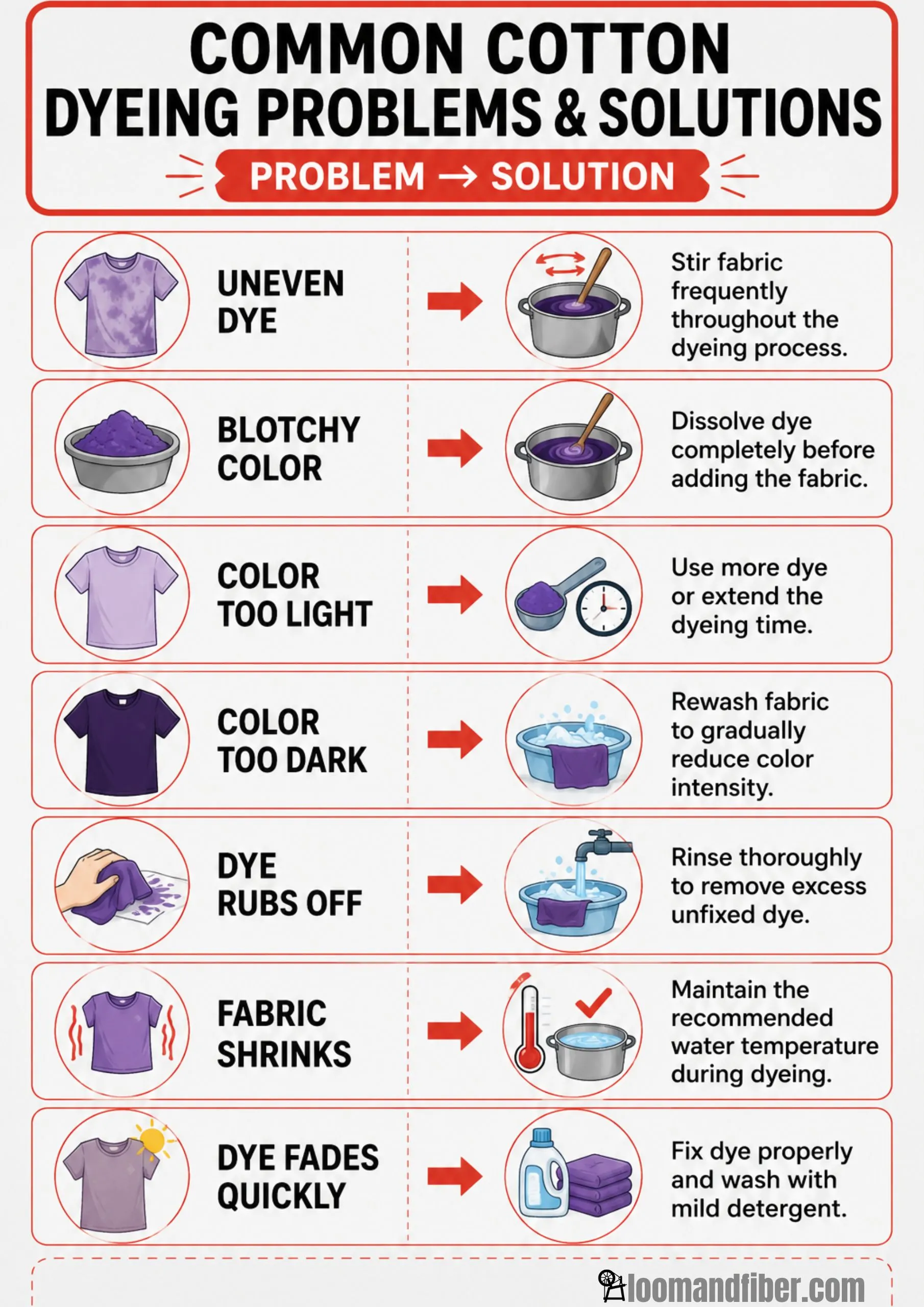
Uneven Dye
Dyeing can come out uneven if not enough stirring is done. Dye may not penetrate some sections of fabric if it’s folded. This can be fixed by constant movement.
Blotchy Color
If the dye is not completely dissolved, and insufficient stirring is done, blotchy coloring can occur. Always make sure to completely dissolve the dye and stir well before use.
Color Too Light
Weak color can be the result of insufficient dye concentration or short dyeing times. Increase the quantity of dye or the duration of the soak.
Color Too Dark
Darker shades are the result of excess dye, but may be lightened with repeated washings. To avoid this, consider the concentration of the dye being used.
Dye Rubs Off
Dye that rubs off is often the result of excess surface dye. Excess dye particles can be rinsed away, which will reduce color transfer.
Fabric Shrinks
High temperatures can cause shrinkage to the cotton fabric. Shrinkage can also be minimized with a pre-wash.
Dye Fades Quickly
Dye that fades quickly can be a result of poor fixation. Rapid fading can also be caused by strong detergents. Proper fixation will improve color fastness.
Cotton Dyeing Troubleshooting Table
| Problem | Likely Cause | Solution |
|---|---|---|
| Uneven Dye | Poor Stirring | Stir Frequently |
| Blotchy Color | Undissolved Dye | Mix Thoroughly |
| Color Too Light | Insufficient Dye | Increase Dye Amount |
| Color Too Dark | Excess Dye | Wash Repeatedly |
| Dye Rubs Off | Excess Residue | Rinse Thoroughly |
| Fabric Shrinks | Excess Heat | Control Temperature |
| Dye Fades Quickly | Poor Fixation | Use Proper Fixative |
Why Cotton Dye Fades
When dye molecules break down or their bond with the cotton fibers weakens, the color begins to fade.
- UV Exposure
- The pigments in dye are degraded when exposed to UV light, so fading is accelerated the longer the dye is exposed.
- Hot Water Washing
- Using hot water over time can reduce dye retention, meaning colors may fade faster.
- Harsh Detergents
- Colored fabrics will lose brightness sooner from the use of strong detergents.
- Poor Dye Fixation
- Poor dye fixation means dye molecules can be easily removed by washing.
- Excess Dye Residue
- Excess dye will continue to be removed during washes, meaning that rinsing after dyeing is essential.
How to Wash Dyed Cotton Fabric
First Wash After Dyeing
- Wash dyed cotton fabrics separately.
- Use cool water and mild detergent.
- Do not use fabric softeners.
- Rinse thoroughly.
Regular Washing
- Use cold or lukewarm water.
- Separate dark and light colors.
- Do not overload the washing machine.
- Use gentle wash cycles.
- Do not allow the fabric to be overly agitated.
Choosing the Right Detergent
- Use color-safe detergents.
- Avoid bleach.
- Use gentle formulas.
- Use the least amount of detergent necessary.
- Follow the wash instructions.
Best Drying Methods
- Air drying helps keep the fabric from fading.
- Shade drying protects from UV exposure.
- Low heat helps reduce fading.
- Don’t overdo tumble drying.
- Remove the fabric promptly after drying is complete.
Is It Safe to Dye Cotton Fabric?
It is safe to dye cotton fabric, so long as you take the proper precautions while handling synthetic dyes, hot water, and dye additives.
Skin Safety
Most dyes are safe to use when handled according to the manufacturer’s instructions. However, direct contact is not recommended. Some people may experience skin irritation from dyes, and exposure to dye solutions, particularly powdered dyes, should be kept to a minimum.
Use Gloves When Dyeing Fabric
Dyeing fabric can be a long process. Using rubber or nitrile gloves can prevent stains and help reduce skin irritation from dyes.
Use Dye in a Well Ventilated Area
Dyeing fabric can be safe if done in a well-ventilated area. It can reduce exposure to airborne dye particles and chemical vapors.
Do Not Use Food Containers to Dye Fabric
Kitchen cookware should never be used to dye fabric. It is best to use containers, measuring tools, and spoons that are set aside for dyeing fabric only.
Keep Dyes Away from Children and Animals
Dyes, fixatives, and chemicals should be stored safely and all work surfaces should be cleaned after a project.
Safe Dyeing Checklist
| Safety Measure | Importance |
|---|---|
| Gloves | Protect skin |
| Ventilation | Exposure reduced |
| Separate Containers | Food contamination prevented |
| Old Clothing | Prevents staining |
| Secure Dyes | Household safety improved |
| Instructions | Fewer mistakes |
Environmental Concerns Associated with Cotton Dyeing
Although dyeing cotton uses water, energy, and chemicals, there are many ways to lessen the environmental impact.
Water Use
Water is essential for preparation, dyeing, rinsing, and washing during fabric dyeing.
As a result, large-scale dyeing projects use a lot of water.
Issues with Synthetic Dyes
Some synthetic dyes contain chemicals that can contaminate water systems if improperly disposed of.
This makes responsible disposal very important.
Advantages of Natural Dyes
Natural dyes can be sourced from renewable plants.
They can also be biodegradable.
Natural dyes still use water and require resources for processing.
Low-Impact Fiber-Reactive Dyes
Modern fiber-reactive dyes can bond to cotton very effectively. As a result, less unfixed dye may enter wastewater.
This can help reduce dye waste when used correctly.
Responsible Dye Disposal
Concentrated dye solutions should never be poured directly into storm drains.
Dye disposal should:
- follow local disposal policies
- dilute rinse water adequately
- properly dispose of leftover chemicals
- use only the amount of dye needed
- reduce waste.
Tips for Sustainable Cotton Dyeing
- Use natural dyes for small projects.
- Minimize re-dyeing.
- Reduce dye usage where possible.
- Air dry fabric.
- Use low-impact dyes.
- Reuse dye baths where possible.
- Dye multiple items in a single batch.
Conclusion
Dyeing cotton is incredibly easy since cotton absorbs dye so readily. As long as the dyeing is done with the right preparation, dye, temperature, and fixatives, your results can be beautiful and long-lasting.
In addition to the ease of dyeing cotton, the fabric is also very versatile. Dyeing cotton can be used to restore faded clothing, modify household textiles, create tie-dye projects, or experiment with a variety of natural dyes.
Remember that even with the versatility and ease of dyeing cotton fabric, successful results require proper preparation, suitable techniques, and patience. With the techniques provided in this guide, you can confidently dye cotton fabric and create attractive, refreshed colors and designs.
Read More>> How to Soften Stiff Cotton Fabric?
FAQs
Yes, dyeing 100% cotton is very easy. Fibers of 100% cotton are cellulose-based and therefore absorb dyes very well.
Yes, many modern fiber-reactive dyes do not require boiling. Some of them even work well at room temperature.
Food coloring can stain cotton; however, results are not long-lasting because the color is not permanently bonded to the fibers.
Cotton can be dyed in virtually any color. Fiber-reactive dyes generally produce some of the brightest and most durable colors.
Yes, a number of all-purpose and fiber-reactive dyes can be used in the washing machine by following the instructions provided by the manufacturer.
Dyeing cotton may require the use of salt in specific situations, but fiber-reactive dyes typically rely on soda ash for proper fixation.
It can, especially when the cotton has been newly dyed. Wash and dry newly dyed items separately until excess dye has been removed.
Muslin, quilting cotton, lawn, and jersey generally accept dye very well because of their absorbent fiber structure.
After research a couple of of the weblog posts in your web site now, and I really like your manner of blogging. I bookmarked it to my bookmark website listing and will be checking again soon. Pls take a look at my website online as effectively and let me know what you think.