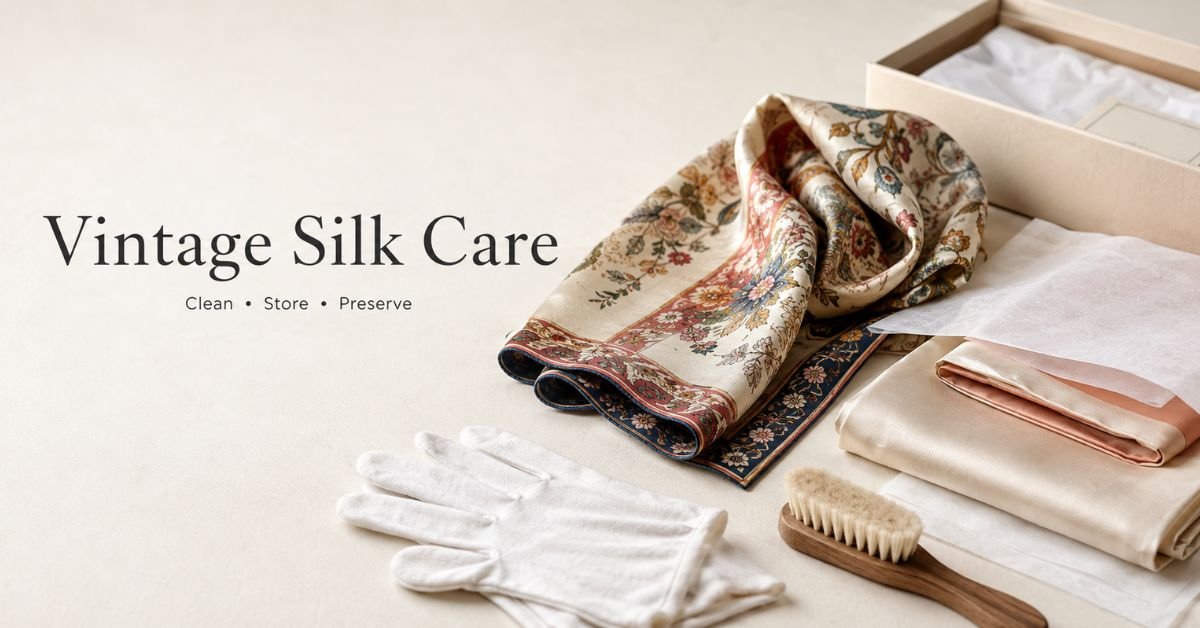

How to Care for Vintage Silk and Delicate Fabrics?
Vintage silk and delicate fabrics require slow, careful, low-risk care. Always handle fabrics with clean, dry hands after washing them. Examine the fabric before washing it. Pay special attention to the dyes, and avoid all forms of washing that utilize machines. Protect the fabric from heat. The safest care method is a combination of approaches: don’t clean fabrics unless you’re sure they’re stable. If they become damp, let them dry flat in a supported position. If possible, keep the fabrics away from harsh chemicals, light, insects, humidity, and pressure. Fabrics with painted surfaces, beading, and metal should be handled by a professional. Because silk can split, bleed, shrink, and change under stress, preservation is more important than cleaning. Most of the time, the best answer to how to care for vintage silk and delicate fabrics is prevention, gentle handling, and stable storage.
The Safest Way to Care for Vintage Silk
- Use clean hands or cotton gloves.
- Avoid machine washing fragile pieces.
- Never tumble dry vintage silk.
Silk Care Instructions
- Direct sunlight should be avoided when drying vintage silk garments.
- Do not place garments in plastic dry-cleaning bags.
- When cleaning an item, avoid stain removers that contain bleach, enzymes, or peroxides.
- When flexible, try to store silk items flat.
- Acid-free tissue paper can help protect fragile fabric.
- Care should be taken to maintain consistent low temperatures and humidity. The ideal temperature is 65 to 70 degrees Fahrenheit. The ideal humidity is 40 to 50 percent.
Storage Environment
Silk can dry out and become more fragile as it ages. Modern silks are better able to withstand gentle washing compared to vintage silks. It is important never to treat vintage silks as if they were modern ready-to-wear silks.
Sometimes silk that has been extensively used can become brittle, fragmented, or “shattered.” Once a silk item has reached this stage, washing it is especially damaging.
Older garments often have vintage beading, dyes, laces, or metallic threads. These are often easier to damage than the silk that holds them and require extra care when determining the best cleaning method.
Many older silk fabrics are weighted silk. Particularly when a fabric has been weighted with metallic salts, special care should be taken. These fabrics in particular are highly susceptible to damage.
Identify the Fabric Before You Clean It
How to Read Old Care Labels
While older care labels do not indicate contemporary cleaning methods, they may still indicate the method that relates to the fiber and construction of the item. For instance, if the label suggests “dry clean,” do not assume the item is safe for dry cleaning without a fabric inspection.
How to Identify Silk by Texture, Sheen, Drape, and Weave
Silk has a smooth and light feel and can drape nicely with a soft sheen. A shiny appearance alone does not prove or disprove that a fabric is silk. Relying on a visual check of sheen is not sufficient.
Why Satin Is a Weave, Not Always Silk
Satin is a weave that can be silk or other fibers. Since other fibers can be woven in a satin construction, be sure to check the fiber content when deciding if water, steam, or heat can be applied.
Why Velvet, Lace, Chiffon, and Beaded Fabrics Need Separate Care
Each of these fabrics has its own individual challenges that require unique care. The pile of velvet, the open structure of lace, the tendency for chiffon to snag, and the stress and weight of beaded fabrics all imply individual care for these materials.
Why Unknown Vintage Fabric Should Be Treated as Fragile
Vintage fabrics of unknown construction may contain silk or other fragile materials. In many cases, the fibers of these fabrics may shrink or become weaker when wet. Therefore, assume these fabrics are fragile.
Be Cautious Before Washing and Stain Removal
- Check the seams. Weak seams or loose threads may damage the construction if wet or if the fabric is rubbed.
- Look for existing damage. Visible tears or splits will only become worse when subjected to care methods such as washing.
- Check for yellowing. Body oils, oxidation, acids, or previous storage can cause yellowing.
- Look for brownish age spots. Brown spots can be from staining, mildew, or damage to the fibers.
- Check for bleeding dye. Bleeding dye can ruin patterns, linings, and surrounding fabrics.
- Feel for dry or crunchy texture. Crunchy silk can often mean unstable silk and weakened fibers.
- Check for beading and embroidery damage. Loose beads and threads can damage old fabrics.
- Check for tarnished metallic threads. Tarnished threads can leave stains on silk and weaken silk and threads.
- Look for old underarm stains. Body stains can weaken and discolor silk.
- Smell for mildew. A mildew smell can mean past moisture and the possible presence of mold.
- Check for insect holes. Tiny holes can indicate moths, carpet beetles, or past infestations.
Colorfastness test, the one you can never skip
Give the item quick press with a damp white cloth or cotton swab on a hidden area before washing. If color does not transfer, the item may still need further assessment before washing. The Canadian Conservation Institute recommends a colorfastness test before wet cleaning is considered.
Test a hidden area such as a seam allowance, loose thread, or hem. Use a white cotton swab and cool distilled water. Press the swab on the fabric. Do not rub. Finally, check for color transfer on the swab.
In order to avoid leaving water marks, do not test water on visible areas. Be sure to test water on every type of color, trim, lining, and every printed section.
Red, dark blue and black printed silk can all bleed if they come into contact with water.
Some dyes are less stable than others and are more prone to bleeding.
Printed silk can be especially vulnerable to dye bleeding and can bleed from one color to another.
To minimize the damage, be sure to test all colors before washing the whole item.
If dye does transfer, do not continue any wet cleaning.
Let the area dry completely without the use of any heating elements. The only options are dry surface cleaning or getting advice from a conservator.
If there is bleeding, cracking, or softening of the silk, consider professional help.
This is also the case for heirlooms or wedding dresses. Conservators can clean with lower-risk methods as they can test the items.
Can You Wash Vintage Silk at Home?
Usually, no, unless the silk is strong, stable, undecorated, unlined, and has passed testing. Vintage silk should not be washed at home because the silk is usually fragile, weakened, stained, or printed. It also should not be washed at home if it is beaded or lined.
The only exception is if the silk is strong, dye-stable, cleanly sewn, unlined, and undecorated.
Washing is too risky for weak silk.
Old silk also cannot handle any rubbing or friction.
It is bad because it can cause permanent surface damage.
Soaking can loosen the silk dyes, but also is bad because it increases bleeding and shrinkage.
Wringing breaks delicate fibers. Twisting puts heavy strain on delicate fibers.
How to Safely Hand Wash Vintage Silk
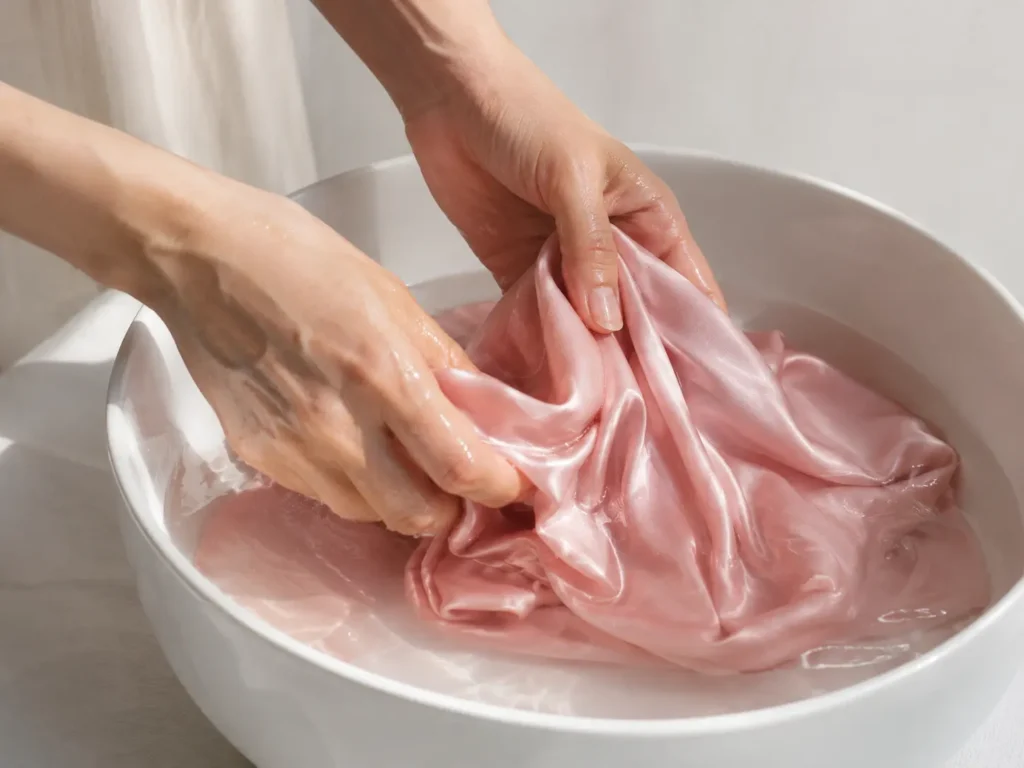
- Using cool water can help with fiber stress and shrinkage.
- Use a silk-safe detergent. Silk-safe detergents are mild and do not use bleach, enzymes, or optical brighteners.
- Only wash one silk item at a time. This avoids dye transfer and snags.
- Do not scrub silk. This can pull and lead to a loss in structure. Instead, support the silk with your hands.
- Do not twist or wring. This can cause silk to break and lose its structure.
- Slowly replace the rinse water to remove detergent. This helps remove detergent without agitating the fabric.
- Rolling the silk in a towel to remove excess water is the best method of removing water while not damaging the textile.
- Always dry silk away from sunlight.
How to Remove Silk Stains
Fresh Water-Based Stains
If the stain is water-based, always test before using any water-based cleaning methods. It is better to leave a stain than to cause more damage to the silk.
Oil and Grease Stains
For oil-based stains, only use cornstarch if the silk can take the powder. Let the cornstarch sit for a while to absorb the oil and then remove with a gentle brush.
Sweat and Underarm Stains
Sweat can weaken silk fibers and lead to permanent staining. You should never aggressively rub or scrub at the underarm areas.
Yellow Age Stains
Yellowing causes brown marks due to the aging of silk and oxidation and may exhibit the deterioration of the silk rather than surface dirt.
In such cases, it may not be possible or safe to completely remove the stain.
Rust or Metal Stains
Rust or metal stains on silk require a professional’s help. Standard rust removers may burn or weaken silk, and metal trims may rust and stain the fabric again.
Unknown Old Stains
For unknown old stains, it will help to test the material before attempting to remove the stain. Never apply a commercial stain remover directly, and when in doubt, it is better to leave the stain rather than damage the fabric.
Removing Odor from Vintage Silk Without Washing
Air the Garment Indoors
Locate the garment in a clean, shaded, and indoor room, and allow the fabric to air out. Be careful to avoid outdoor sunlight, pollution, and unstable outdoor humidity, which may damage silk.
Use a Smooth, Clean Dry Rack
The garment should be supported over areas of silk that are weakened. Move the silken garment only when it is stable.
Avoid Direct Sunlight
While sunlight may reduce odors, it may also weaken silk. For ventilation and reduced odors, silk should be kept in the shade.
Use Activated Charcoal Nearby
Charcoal should be kept in a clean container so that no dust is transferred, and should be placed near the textile (and not on it) to absorb odors.
Skip the Perfume, Febreze, Essential Oils, and Vinegar
Don’t use any fragrance or deodorizers on silk.
Such products stain, discolor, or leave a residue.
Vinegar alters dyes and finishes too.
Never Seal Moist Fabric in Plastic
Damp fabric needs air before it’s stored.
Plastic can trap moisture in old, dry, used fabric.
It may even make mildew and odor worse.
Dry Cleaning Vintage Silk: Safe or Risky?
Dry cleaning is risky for vintage silk and should only be considered by a specialist after inspection. Some cleaners use solvents, mechanical tumbling, heated solvent removal, and pressing, which may be rough on fragile garments.
Dry cleaning can dry the textile fiber and introduce mechanical stress to the fabric. When preservation is most important, dry cleaning is not the ideal option.
It can be good for residue removal and some oil based soils on strong, stable, and undecorated garment silks that are not in a fragile state. Even then, the cleaner has to be knowledgeable on the condition of the vintage garment and avoid rough finishing.
Poor silk condition, fragile linings, beading, painted areas, metallic elements, extensive staining, and reactive trims increase dry-cleaning risk. Always discuss and explain the limitations of dry cleaning before giving the garment to the cleaner.
First, ask the dry cleaner: A) Do you clean fragile antique silk? B) Do you test the dyes? C) Is tumbling out of the question? D) Do you handle fragile trims? E) Do you finish garments by hand?
“Delicate dry clean” is not the same as conservation cleaning. Conservation cleaning relies on testing, documenting, limited treatment, and long-term preservation. Commercial cleaning usually focuses on wearable appearance, not long-term preservation.
Can You Steam and Press Vintage Silk?
Careless steam and heat can ruin vintage silk. Lightly press through a clean cloth only after testing. Steaming silk with shattered silk, painted surfaces, embellishments, or unstable dye is a big no.
Silk can be steamed to relax light wrinkles, but always keep a distance. A steamer should never be held close.
Moisture can damage silk with unstable dyes by lifting or spreading pigments. It is best to support the silk and leave it in storage.
The silk can be pressed from the back side, but it is best to keep it at a low level. A clean cloth should be used.
Storing Vintage Silk and Delicate Fabrics
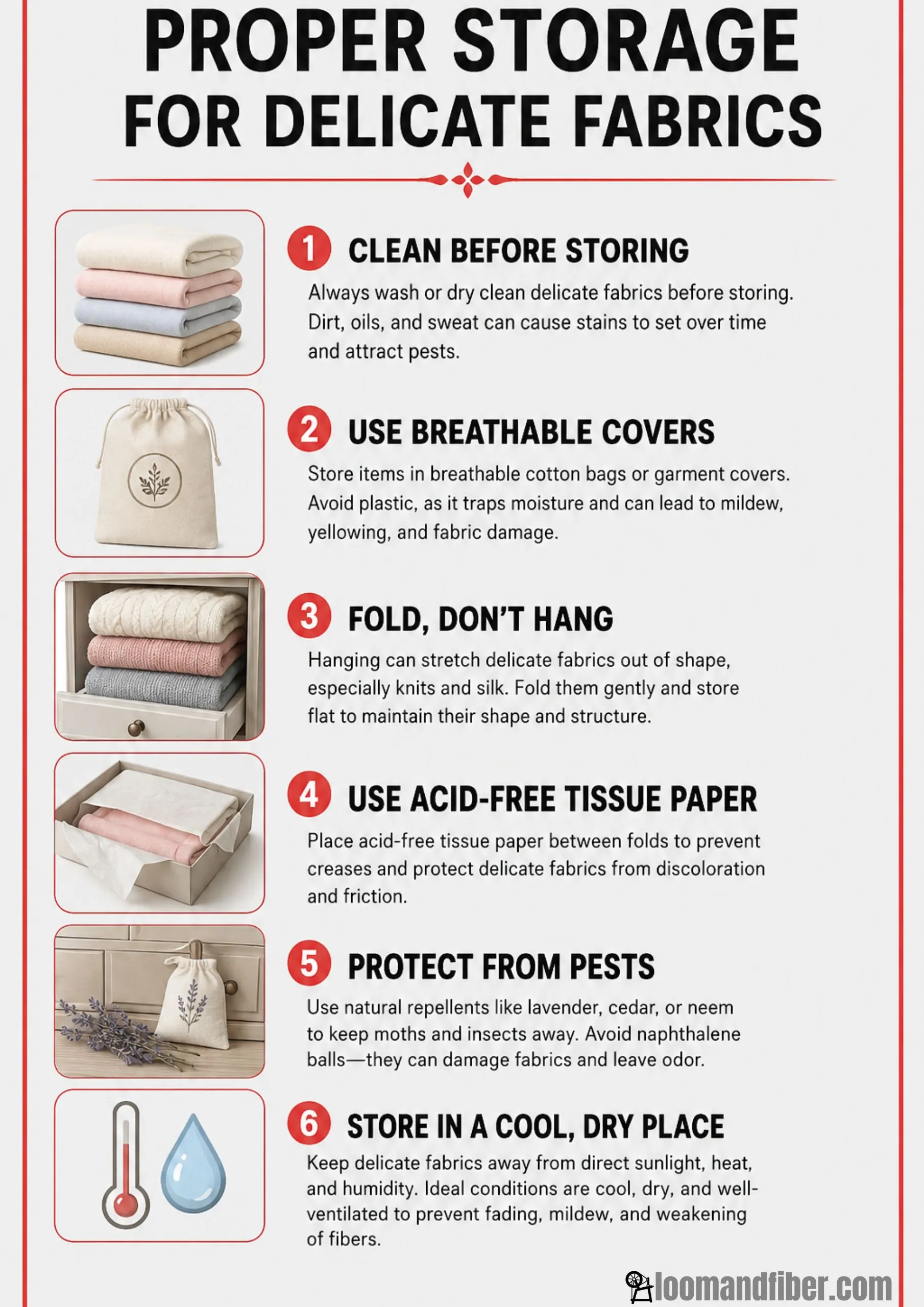
- Always store clean silk to keep pests away from food soils and perspiration residues.
- Use acid-free tissue to support the silk and avoid sharp creases.
- Never use plastic bags. A plastic bag can trap moisture, creating a bad environment for the silk.
- Putting cardboard directly on fabric is a bad idea. It can cause the transfer of acids to fragile textiles from the cardboard.
- Don’t use wire hangers. They create stressful points on your clothes.
- Store flat for heavy clothes. They should be supported fully.
- Use padded hangers only for stable clothes. Padded hangers help reduce strain on stable garments.
- Leave ample space inside any folds. Breakage can be lessened by putting tissue rolls in folds.
- Refold along new lines. It is recommended by the Smithsonian to change the position in which the fabric is folded to relieve tension on fibers.
How to Prevent Moths, Mold, and Fabric Pests
Monthly inspections help catch pests early. Pests can damage fabrics by leaving droppings (powder), lacerations (holes), and webs. They also leave signs of their presence by producing bad (musty) odors and leaving loose fibers and larvae.
Keeping storage clean limits pest attraction. Dust and lint can be pest food.
Since pests eat food crumbs, and leave body soils (dirt) around, leave only dry, clean clothes.
Breathable storage, like cotton garment bags, helps fabrics breathe safely. Acid-free boxes are a good option but avoid ordinary cardboard as it makes direct contact with fabrics.
Moth traps mainly detect adult moths; larvae are the stage that damages fabrics. Adult moths also don’t damage fabrics.
Mothballs, sprays, and scented oils leave residues and harmful stains on silk. These methods may damage fabrics.
Secondhand vintage fabrics should be quarantined. They should be inspected, and kept away from stored fabrics.
Larvae are a high risk to conservation of fabrics especially those made from silk, wool, and other animal based materials.
How to Display Vintage Silk Safely
Long term displays shouldn’t be hung as seams and fabrics can be damaged by gravity.
Direct sunlight and direct contact with unsafe display surfaces should be avoided as they cause fabric damage.
Sunlight can damage fabrics, and UV-filtering glass can reduce ultraviolet exposure, but it does not eliminate all light damage.
Silk is a fragile fabric and can’t be pinned as it will create holes. Evenly distributed supports are a safer option.
- Change Art Exhibits. Less time being viewed helps reduce damage from constant light exposure.
- Avoid Displays near Fireplaces, Windows, and Vents. Heat and Soot damage and degrade fabrics.
What Not to Do With Vintage Silk
- Bleaching vintage silk is a bad choice. Bleaching vintage silk will dull and turn yellow.
- Rubbing stains on vintage silk is a bad choice. It will spread the stain and damage the exhibit.
- Don’t submerge vintage silk displays in unknown dye or cleaning solution. It may bleed into other areas of the exhibit.
- Don’t use hot water on silk. It will dull and distort the fabric.
- Don’t tumble dry silk. It will damage the fabric and dull the finish.
- Don’t put silk in plastic dry-cleaning bags. Plastic traps moisture and provides the perfect environment for deterioration.
- Don’t hang garments with beads.
- Don’t directly spray perfume on silk. It will stain.
- Don’t directly iron vintage silk. It will dull and scorch.
- Don’t use stain removers without first testing on a hidden, low-risk area.
When to Call a Conservator
You should call a conservator for wedding dresses, heirloom silk, museum quality pieces, and couture garments. You should not attempt to clean these yourself.
Call a conservator for silk that has deteriorated, gilt beadwork, sequins, and silk that has been painted. These textiles may fall apart if you subject them to moisture, heat, or pressure.
For substantial stains, mold, water damage, and unidentified antique fabric, a professional is required, especially for items with severe stains, mold, water damage, or unidentified antique fibers. There are times when we need to prioritize preservation over stain removal.
Care Guide by Delicate Fabric Type
Vintage Silk
Vintage silk can be fragile, delicate, and vulnerable to splitting.
Use water only when the fabric passes a general inspection and a simple dye test.
Flat is the only option for the storage of weakened, heavy and valuable vintage fabrics.
Chiffon
Chiffon is easily snagged, stretched, and torn.
When drying or washing chiffon, the entire fabric must be supported.
Chiffon should never be hung when wet.
Chiffon should never be dried by hanging from narrow points.
Lace
Hanging lace when wet causes distortion due to weight.
Lace should be dried flat on a clean towel.
Velvet
Since velvet has a pile, it should never be ironed or subjected to direct pressure.
Steaming may only be used when the dye and pile are stable.
Velvet should never be ironed directly on the pile.
Organza
Organza tends to develop creases, weakens, or splits along folds. Tissue supports help prevent tight packing.
Satin
Satin can be made from several fibers. Before cleaning, check fiber content. Also test the fabric’s response to heat and water.
Rayon
Wet vintage rayon may weaken and lose shape. Handle with care and avoid soaking and rough movement.
Beaded Fabrics
Beaded fabrics should be stored flat. Beads can stress older fabrics, so use acid-free tissue barriers to prevent snagging.
Vintage Silk Care Checklist
- Inspect for any damage.
- Test for dye bleeding.
- Weak or valuable silk should never be washed.
- Cool water should only be used when silk is safe.
- Scrubbing, wringing, bleaching, and tumble drying are never permitted.
- Blotting is preferred for liquid stains.
- Dry flat and away from sunlight.
- Store silk with acid-free tissue.
- Silk should be kept cool, dry, dark, and ventilated.
- For fragile or valuable silk, consult a conservator.
Conclusion-
The best way to care for vintage silk and other delicate fabrics is to keep the fabric from getting damaged in the first place. Make sure to thoroughly inspect the fabric first. Always do a spot test for any cleaning or treatment. Be sure to avoid damage from heat or chemicals. In the case of valuable, stained, and irreplaceable textiles, the safest choice is to seek professional care.
FAQs
Vintage silk may only be washed if it is strong, colorfast, undecorated, and not valuable. All other silk items are too fragile to be washed.
Inspection and dye testing should be the first steps for cleaning any old silk. The lowest-risk method should always be used to remove dirt.
Though somewhat of a last resort, dry cleaning may be permitted for vintage silk that is strong and stable. However, fragile silk should never be dry cleaned.
Yellow stains usually come from sweat, oxidation, or body oils. Sometimes, there is damage from the fabric being stored with acidic materials. Fiber damage can also indicate long-term deterioration from poor storage. Avoid the use of bleach and any strong removers as they can further damage the fabric. If the silk is valuable, it is best to consult a conservator.
Air out vintage silk in the shade, and ventilate the room with clean, dry air. Activated charcoal can be kept nearby, but not directly touching the silk. Spraying the fabric with any kind of perfume, vinegar, or storing the silk in a plastic container can all be very damaging to the silk as well.