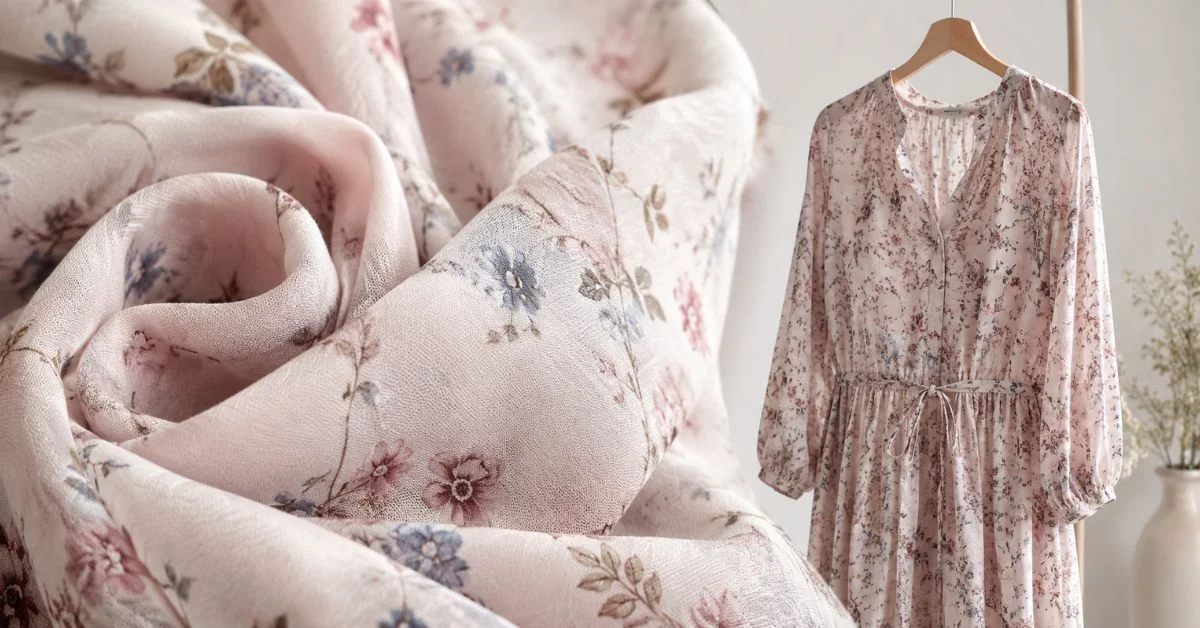

Challis fabric is a light, plain-weave, soft fabric with a nice drape. It is usually made from wool, rayon, viscose, cotton, or polyester. Challis tends to be more breathable and flexible than poplin, twill, or canvas. These properties make it a popular choice for dresses, blouses, skirts, scarves, and warm-weather clothing. Challis is a type of fabric construction and finish that can be applied to various fibers. The fabric is highly dependent on the fiber used to make it. Rayon challis, for example, has amazing drape, while cotton challis is more breathable and easier to work with.
What Does Challis Fabric Look and Feel Like?
Challis fabric typically has a smooth surface that is soft to the touch. It usually has a slight sheen but is not as shiny as satin or charmeuse.
Challis is generally light and less structured, so it drapes beautifully over the body rather than hugging the figure. It is also not as stiff as some other fabrics. When you touch it, it should not feel hard or stiff. It should flow freely in your hand.
The following are some of the features of challis fabric:
- A light and airy feel
- A soft hand or slightly brushed surface
- Drape
- Plain weave
- Smooth surface
- Matte or low shine
- Comfort
- Printed designs
- Low structure
Challis is typically available in floral, paisley, geometric, abstract, and seasonal prints, as well as solid colors.
How Is Challis Fabric Made?
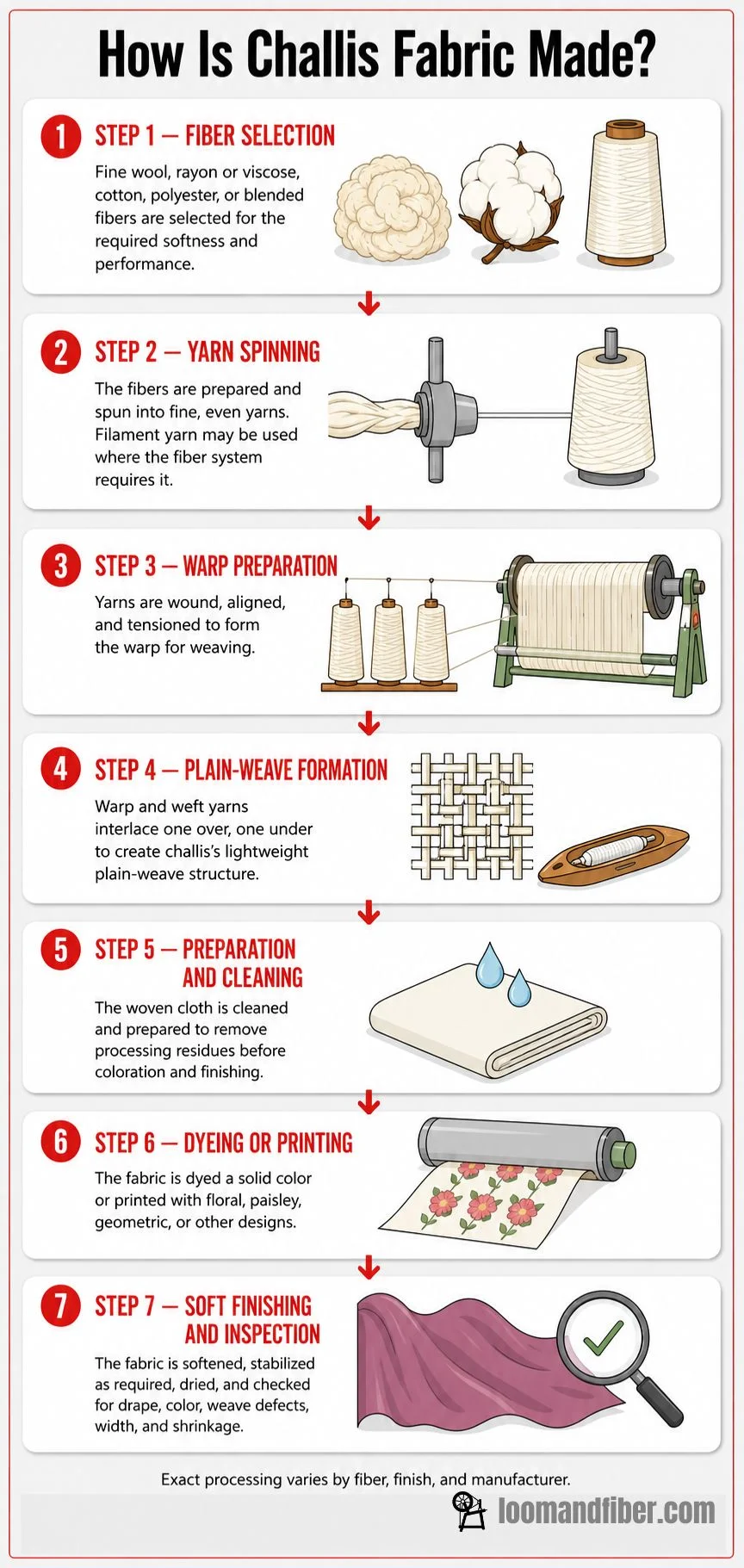
Challis is typically a plain weave fabric. This means that the weft and warp yarns are woven over and under each other to create a simple pattern.
The resulting fabric has a softer drape than similar weaves like twill or satin, but finer yarns and a lighter weight make it feel much softer. The following steps are typically involved in manufacturing challis fabric:
- Finer yarns are spun from wool, rayon, cotton, polyester, or other fibers.
- The yarns are woven into a simple pattern of over and under weft and warp threads.
- The resulting fabric is dyed or printed.
- The fabric is washed or finished to achieve the desired feel.
- The fabric is inspected for flaws, color variation, and other issues.
The specific process depends on the type of fabric.
What Is Challis Fabric Made Of?
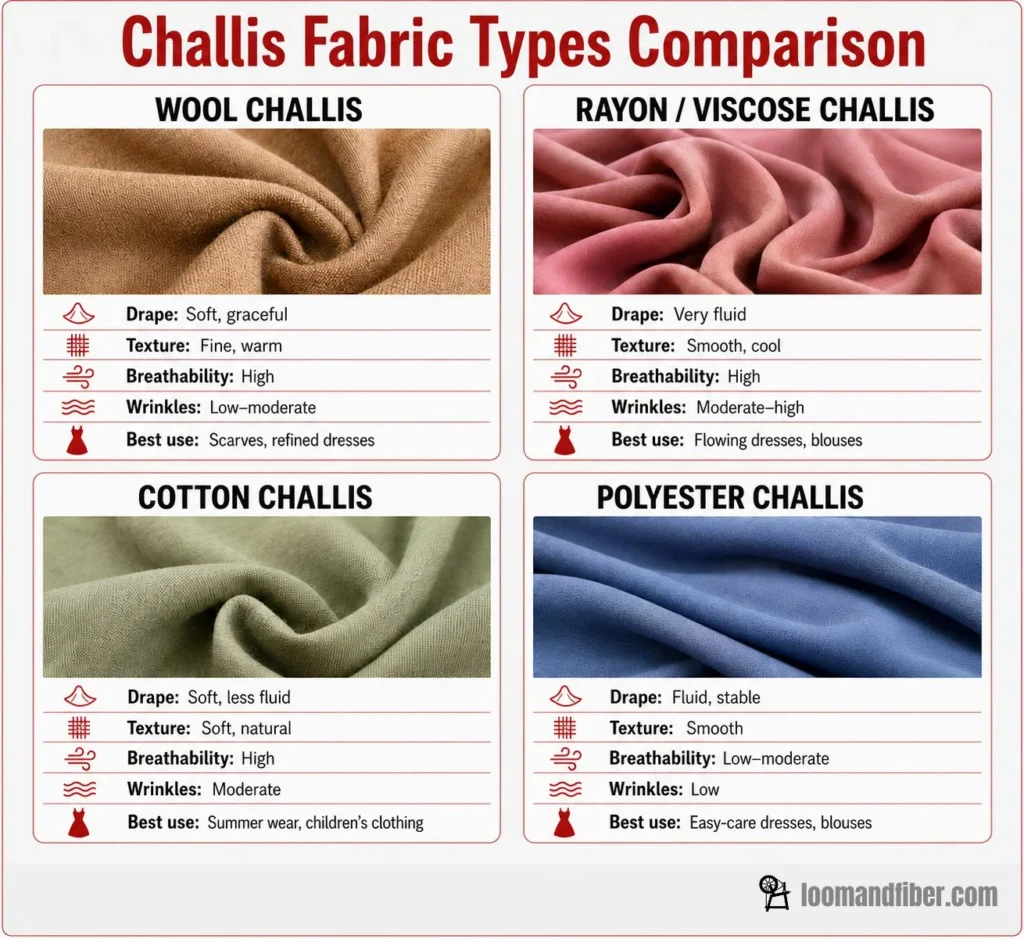
Challis fabric can be made from several types of fibers. The fiber content of challis fabric has a significant impact on its drape, breathability, durability, shrinkage, cost, and care.
Wool Challis
Wool challis is the traditional fabric, made from fine wool yarn. It is a lighter alternative to traditional wool fabrics. Wool challis is warm but breathable, making it ideal for winter clothing. It is a good choice of fabric for scarves, dresses, blouses, skirts, and other garments.
Rayon Challis
Rayon challis is one of the most popular types of challis fabric. It is made from rayon yarn and is typically very soft and cool to the touch. Rayon challis drapes beautifully and is perfect for dresses with ruffles, gathers, and other fluffy details. Rayon challis tends to be more delicate than other types of challis, and it wrinkles easily when wet.
Viscose Challis
It is a type of rayon challis made from viscose yarn. Viscose challis and rayon challis are often used interchangeably, but some retailers may differentiate between the two. Viscose challis typically has beautiful colors and drapes nicely. It is a popular choice for summer dresses, skirts, blouses, and scarves.
Cotton Challis
Cotton challis is a type of challis fabric made from cotton yarn. It is similar to rayon challis in many ways, but it is generally slightly less soft and drapey. It is a good choice for light dresses, children’s clothing, tops, nightdresses, and other summer garments.
Polyester Challis
Polyester challis is a type of challis fabric made from polyester yarn. It is generally more wrinkle-resistant than rayon challis or cotton challis. It is also more durable. However, it is typically less breathable than wool challis or cotton challis.
Blended Challis
Rayon, cotton, polyester, (cotton polyester blend = polycotton) wool, or other yarns can be blended to create a challis fabric with the desired qualities. Blended challis can be a good choice if you want to balance comfort and durability. However, it is important to remember that blended challis is only as good as the materials used to make it.
What Are the Properties of Challis Fabric?
Softness
Challis fabric is generally very soft. You should be able to feel the difference when you touch it. However, the level of softness varies depending on the type of challis. Rayon challis is typically very smooth, while wool challis is usually a bit more coarse.
Drape
Drape is a very important characteristic of challis fabric. Challis fabric flows beautifully and drapes over the body rather than clinging to it. It is perfect for flowing dresses, blouses, skirts, and other garments that require a certain amount of volume. However, it is not ideal for garments that require more structure.
Lightweight
Challis fabric is generally very light, making it ideal for blouses, dresses, scarves, and other garments. However, the weight of challis fabric varies depending on the type of fabric. Always check the fabric’s weight in grams per square meter or ounces per square yard before purchasing.
Breathability
Cotton challis, wool challis, rayon challis, and viscose challis are typically more breathable than polyester challis. However, breathability also depends on the garment’s construction, fabric weight, and lining. In addition, certain treatments and finishes can affect a fabric’s breathability.
Absorbency
Rayon challis and cotton challis are typically more absorbent than polyester challis. However, the level of absorbency also depends on the type of fabric, garment construction, and finishes. In general, more breathable fabrics tend to be more absorbent.
Wrinkles
Rayon challis and cotton challis fabrics tend to wrinkle easily. Wool challis tends to be less wrinkly, while polyester challis is generally the least likely to wrinkle.
Opacity
Challis fabric can be opaque or sheer, depending on the type of fabric and construction. Light or sheer challis fabric needs to be lined for dresses or skirts. Always test how sheer the fabric is before cutting out your garment.
Is Challis Fabric Good for Summer?
Challis fabric can be a great choice for summer clothes. It is light and flows beautifully, so it is perfect for dresses, skirts, and blouses. However, not all types of challis are created equal. Some types of challis, such as polyester challis, tend to trap more heat than others. In addition, dark colors tend to be warmer than light colors, so it is best to go for light colors when possible. The following tips will help you choose the best challis fabric for summer:
- Look for a light fabric.
- Go for cotton, rayon, or viscose challis rather than polyester challis.
- Choose a loose garment.
- Look for an opaque fabric.
- Go for a soft fabric.
- Check the fabric’s shrinkage and color retention.
Does Challis Fabric Stretch?
Challis fabric does not typically have much stretch. Woven challis only stretches slightly when pulled on the bias. However, some types of challis, such as spandex challis, have more stretch. In addition, some manufacturers may refer to their stretchy fabric as challis fabric even if it is not woven challis.
Uses of Challis Fabric
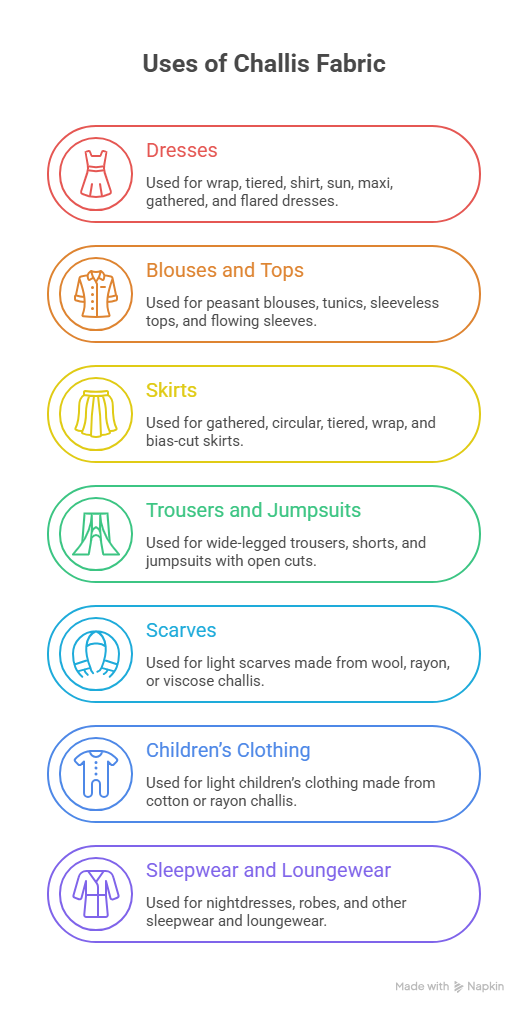
Challis fabric is a good choice for a wide range of garments. The following are some of the most common uses for challis fabric:
Dresses
Challis fabric is perfect for dresses. It can be used to make wrap dresses, tiered dresses, shirt dresses, sundresses, maxi dresses, and many other types of dresses. Gathered challis dresses and dresses with flared skirts are also very popular. However, it is important to note that very tight dresses may need additional structure.
Blouses and Tops
Challis fabric is a good choice for blouses and other types of tops. It can be used to make peasant blouses, tunics, sleeveless tops, and other garments with flowing sleeves. A light interfacing is usually required for blouses with plackets, collars, cuffs, or other details.
Skirts
Challis fabric is great for skirts of all sizes and styles. It can be used to make gathered skirts, circular skirts, tiered skirts, wrap skirts, and skirts with other types of unusual cuts. It is also good for bias-cut skirts. However, very sheer or light skirts may require a lining.
Trousers and Jumpsuits
Challis fabric can be used to make a wide range of garments. It is a good choice for wide-legged trousers, shorts, jumpsuits, and other garments with a more open cut. However, it is important to remember that challis fabric is not very stretchy, so it is best to avoid tight trousers.
Scarves
Wool challis, rayon challis, and viscose challis are all good options for making light scarves. The fabric drapes beautifully and is very comfortable around the neck.
Children’s Clothing
Cotton challis and rayon challis can be used to make light children’s clothing. However, it is important to remember that children’s clothing may need to be washed more often, so it is best to choose a durable fabric. In addition, make sure that the fabric is safe for children.
Sleepwear and Loungewear
Challis fabric can be a good choice for nightdresses, robes, and other types of sleepwear and loungewear. However, it is important to choose the right type of fabric. In addition, it is important to remember that some fabrics may require special care.
Advantages of Challis Fabric
The main advantages of challis include:
- Softness
- Beautiful drape and fall
- Lightness
- Perfect for warm-weather clothing
- Great for gathers
- Available in a wide range of colors and prints
- Can be used in dresses, blouses, skirts, and scarves
- Less bulky for layers and flowy garments
- Its combination of softness and drape is what makes it so sought after by designers.
Disadvantages of Challis Fabric
The main disadvantages of challis include:
- Rayon and cotton challis may shrink
- Can be difficult to cut due to lightness
- May wrinkle
- Light colors may be see-through
- Can slip when sewing
- Fine yarns may snag
- May stretch out on bias
- Rayon challis may weaken when wet
- Does not provide much structure for tailored garments
- Prints may be skewed if not cut on the grain
Challis Fabric vs Rayon
Challis and rayon are not two separate terms. In fact, challis refers to a class of lightweight and soft fabric, whereas rayon is a type of regenerated cellulose fiber.
Thus, rayon challis is simply a fabric made from rayon fibers using the challis weave. Rayon can also be used to make crepe, twill, satin, jersey, and other weaves.
Challis vs Cotton Lawn
Cotton lawn is a fine, light, and airy cotton fabric with a plain weave. Lawn is generally more crisp and structured than rayon challis.
Challis drapes more beautifully than lawn, while the latter is easier to work with when something light yet structured is needed. Use challis for flowy garments and lawns for lightly structured sheers.
Challis vs Voile
Voile is a sheer, lightweight, and airy fabric that is often more sheer and transparent than challis. Cotton Voile is also more crisp and may need to be lined, whereas challis is softer and more opaque.
Challis vs Crepe
Crepe is a fabric with a pebbly surface, which can be achieved through twisting the yarn, using a special weave, or finishing the fabric. Challis, on the other hand, has a smooth surface and a plain weave.
Both crepe and challis can be draped beautifully, but crepe offers more texture and is less likely to wrinkle, depending on the fiber and weight.
Challis vs Chiffon
Chiffon is a very sheer and light fabric made from tightly twisted yarns. The surface of chiffon can be slightly rough and may need to be lined, whereas challis is smooth and does not require a lining. Chiffon is more transparent and airy, while challis is more opaque and drapes beautifully.
Challis vs Poplin
Poplin is a tightly woven fabric with a fine ribbed surface. It is generally more firm and crisp than challis and is often used to make shirts, dresses, uniforms, and other garments that require structure and shape, whereas challis is better suited for flowy and gathered garments.
How to Sew Challis Fabric
Challis fabric tends to slip, stretch, and be unpredictable when cutting and sewing. The following tips will help get the best results when working with challis:
Prewash the Fabric
Prewash the fabric as you would the finished garment if the fabric is washable. This will remove excess shrinkage that could make pattern pieces inaccurate.
If the fabric is dry clean only, make sure to follow the specific preparation instructions provided by the supplier.
Stabilize Before Cutting
Do not allow the fabric to hang over the edge of the table, as this can cause it to slip. Using pattern weights and a rotary cutter can help prevent this. When using scissors, make sure to lift the fabric as little as possible to avoid stretching.
Use a Fine Needle
A sharp size 60/8, 70/10, or another fine needle is ideal for sewing challis. The needle size will also depend on the fiber content, weight, and number of layers. Always test the needle on a sample swatch before working with the actual fabric.
Choose Suitable Thread
A good all-purpose polyester thread will work for most challis garments. For cotton challis, use cotton thread, but make sure to test the strength and shrinkage of the thread before sewing the actual garment.
Shorten the Stitch Length
For most woven challis garments, a stitch length of 2.0-2.5 mm is ideal. Very short stitches will damage the fabric, whereas long stitches will not provide enough support.
Stabilize Stress Areas
Necklines, shoulders, buttons, waist seams, and pockets may need additional support in the form of stay stitching, seam tape, or interfacing, depending on the design. The stabilizer should not make the fabric stiff.
Finish Raw Edges
Raw edges of challis may require an overlock stitch, narrow zigzag stitch, French seam, or another finish to prevent fraying. The choice of finish will depend on the design, transparency, and weight of the fabric.
Let Bias Garments Hang
When working with bias-cut skirts and dresses, make sure to let them hang before hemming to allow the fabric to relax.
How to Wash and Care for Challis
The care instructions will largely depend on the fiber content, dyes, and finishing. The name of the fabric does not indicate whether it can be machine washed or requires special care. The following general guidelines can help in caring for challis garments:
Follow the Manufacturer’s Care Instructions
Always follow the specific care instructions provided by the manufacturer.
Wash in Cool Water if Possible
Rayon and cotton challis should be washed in cool water to prevent shrinkage.
Gentle Cycle or Hand Wash Delicates
If the garment is made from a delicate fiber or has special finishing, machine wash it on a gentle cycle or hand wash it.
Do Not Twist or Wring Wet Garments
Rayon garments may weaken when wet, so support them from underneath when possible.
Air-Dry or Hang as Recommended
If possible, air-dry the garment on a flat surface or a suitable hanger.
Press on Low or Medium Heat
Use low or medium heat when pressing the garment, and always press from the wrong side, especially for printed challis. Use a pressing cloth to avoid shine and heat marks.
Dry Clean Wool Challis
Wool challis garments may need to be dry cleaned if the care instructions specify so.
Before washing a printed garment, test an inconspicuous part for shrinkage, dye bleeding, and color transfer.
Does Challis Fabric Shrink?
Cotton, rayon, and viscose challis tend to shrink when exposed to heat, so it is best to follow the care instructions provided by the manufacturer. Shrinkage largely depends on the fiber, tension during manufacturing, and finishing. It is always a good idea to prewash the fabric before cutting, especially if it is a washable fabric. When buying challis fabric for garments, make sure to ask the manufacturer if there is any shrinkage after washing. For woven challis, the shrinkage is usually between 5% and 15%. For rayon challis, the shrinkage largely depends on the weave and finishing. Polyester challis, on the other hand, rarely shrinks, but it can still be damaged by high heat.
How to Identify Good-Quality Challis
The quality of challis fabric should be determined by the following characteristics:
Softness
The fabric should feel soft to the touch. If the fabric is stiff or hard, it is likely to be of poor quality.
Uniform Weave and No Faults
A good challis fabric will have a uniform weave without any holes or thick spots.
Snap Back When Stretched
A good challis fabric will return to its original shape when stretched.
Registration of Prints
If the fabric has a print, make sure that the design is not blurry and is well registered.
Color Fastness
The fabric should not bleed or lose color when washed.
Grain is Straight
The fabric should not be skewed.
Not Too See-Through
Unless specified, the fabric should not be too sheer.
No Snags, Pills, or Broken Yarns
The fabric should not have any surface-level imperfections.
Weight and Width are Suitable
The fabric should be neither too heavy nor too light for the end-use. Similarly, the width should also be suitable for the project.
Shrinkage and Color Fastness Information
The manufacturer should provide all the relevant information about the fabric’s shrinkage and color fastness.
When buying fabric for production, it is a good idea to request a sample to determine the quality rather than relying on pictures.
How to Choose Challis Fabric for a Project
When choosing a challis fabric for a project, the silhouette of the garment is the starting point. Flowy dresses and blouses will look best in rayon or viscose challis, whereas challis made from cotton is ideal for garments that require breathability and ease of care. Once the silhouette has been decided, the following factors should also be considered:
- Fiber
- Weight
- Drape
- Opacity
- Stretch
- Shrinkage
- Print Direction
- Color Fastness
- Width
- Care
- Seam Strength
- Lining Requirements
- End-Use Regulations
When shopping online, make sure to request a swatch, as pictures do not always show the drape, hand, transparency, and other qualities of the fabric.
Conclusion-
Challis is a light plain-weave fabric with a nice drape and feel of softness. Traditionally, it was made from wool, but today, it is usually made from rayon, viscose, cotton, polyester, or a blend of these materials.
This fabric is perfect for making skirts, dresses, blouses, loose pants, scarves, and other summer clothing. However, since the term challis does not refer to a particular type of fiber, it is important to check the composition, weight, transparency, shrinkage, and care instructions.
FAQs
Challis can be made from natural fibers such as wool or cotton, or from regenerated cellulose such as rayon and viscose, or from synthetic fibers such as polyester. The fiber content should be specified.
It depends on the weight and yarn of the fabric. Some lighter challis fabrics can be semi-sheer, whereas darker or heavier fabrics can be opaque.
Challis can be difficult to sew, especially for beginners, as it tends to slip and stretch. Using the right tools and techniques can make it easier.
Rayon challis can be breathable and comfortable to wear, especially in warm weather. However, it also depends on the weave, garment construction, and other factors.
Rayon challis tends to wrinkle easily, whereas polyester challis is less likely to wrinkle. Similarly, wool challis may wrinkle less.
Challis is a great choice for formal clothing such as flowy dresses, skirts, and blouses. It is not ideal for structured garments.