
Can You Use Acrylic Paint as Fabric Paint?
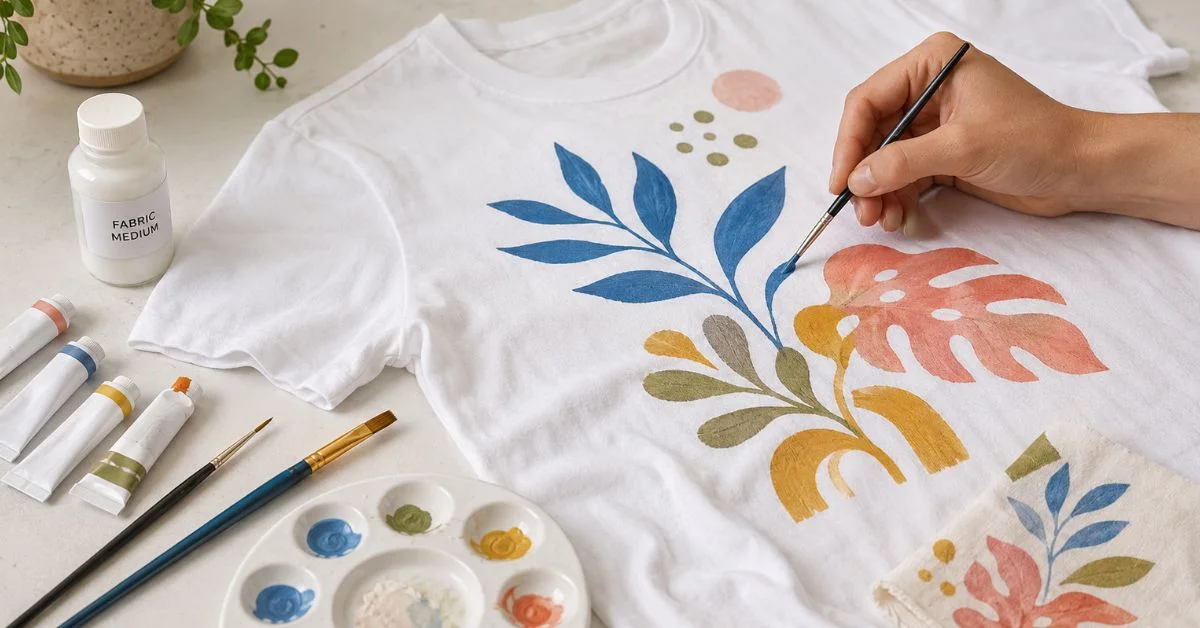
Yes, you can use acrylic paint as fabric paint, but it is better to mix it with a fabric medium. The medium will make the acrylic washable, flexible, and not crack when the fabric is bent.
Acrylic paint may be used as described above if it is not going to be subjected to frequent washing. Using acrylic without a medium is better for decorative purposes.
But when it comes to clothing, bags, cushions, shoes, or other flexible items – using paint mixed with a medium and heat-set will give better results.
Acrylic Paint on Fabric: How Does it Work?
Acrylic paint consists of pigment and acrylic polymer. When it dries, the polymer seals it in a water-repellent plastic-like coating.
This means that acrylic paint is somewhat universal since it can be used on many surfaces like paper, wood, and fabric. At the same time, it has several features specific to it and works differently when applied to different materials.
When acrylic paint is used on textile, the following properties are characteristic:
- Acrylic polymer does not allow the fabric to breathe.
- Thick acrylic layers tend to crack.
- It may slip on the tightly woven fabric.
- It will chip off when the garment is washed or worn.
- A heavily painted surface will hamper the fabric’s flexibility.
None of these effects are significant when it comes to decorative paintings or other objects. Canvas paintings, for example, do not need to be worn or washed.
But for clothing and other personal belongings made of fabric, it is worth considering more carefully how acrylic-based paints affect them and how to treat such coatings.
Acrylic Paint vs Fabric Paint: Any Difference?
Acrylic and fabric paints often use similar pigments and binders, but they are formulated for different surfaces.
| Feature | Regular Acrylic Paint | Fabric Paint |
|---|---|---|
| Flexibility | Can become stiff | Designed to move with fabric |
| Wash resistance | Variable | Usually better when correctly set |
| Fabric feel | May create a hard surface | Generally softer |
| Preparation | Often needs fabric medium | Usually ready to use |
| Best use | Crafts and decorative textiles | Clothing and washable projects |
| Color selection | Very wide | May be more limited |
Fabric paint is the more dependable choice for garments. Regular acrylic paint is useful when you already own suitable colors, need a particular shade, or are completing a project that will receive limited washing.
Why Fabric Medium is Added to Acrylic Paint
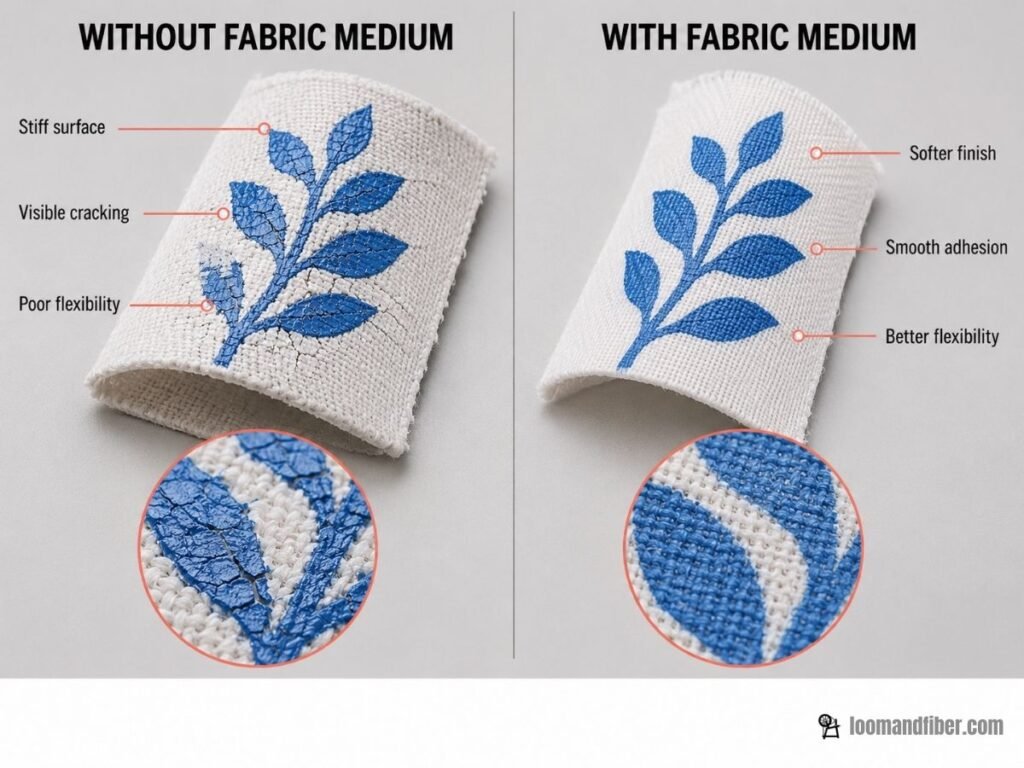
Fabric medium is a liquid additive that can be used to make acrylic paint more flexible and suitable for fabric. It helps achieve the following effects:
- Improved flexibility – reduces stiffness and cracking of the acrylic paint film
- Better adhesion – prevents acrylic paint from peeling off the fabric
- Washability – allows the acrylic-painted fabric to be washed without damaging the design
- Color accuracy – helps achieve the desired colors when mixing the paint
- Softness – reduces the plastic-like feel of acrylic paint
- Compatibility – makes acrylic paint suitable for different types of fabric
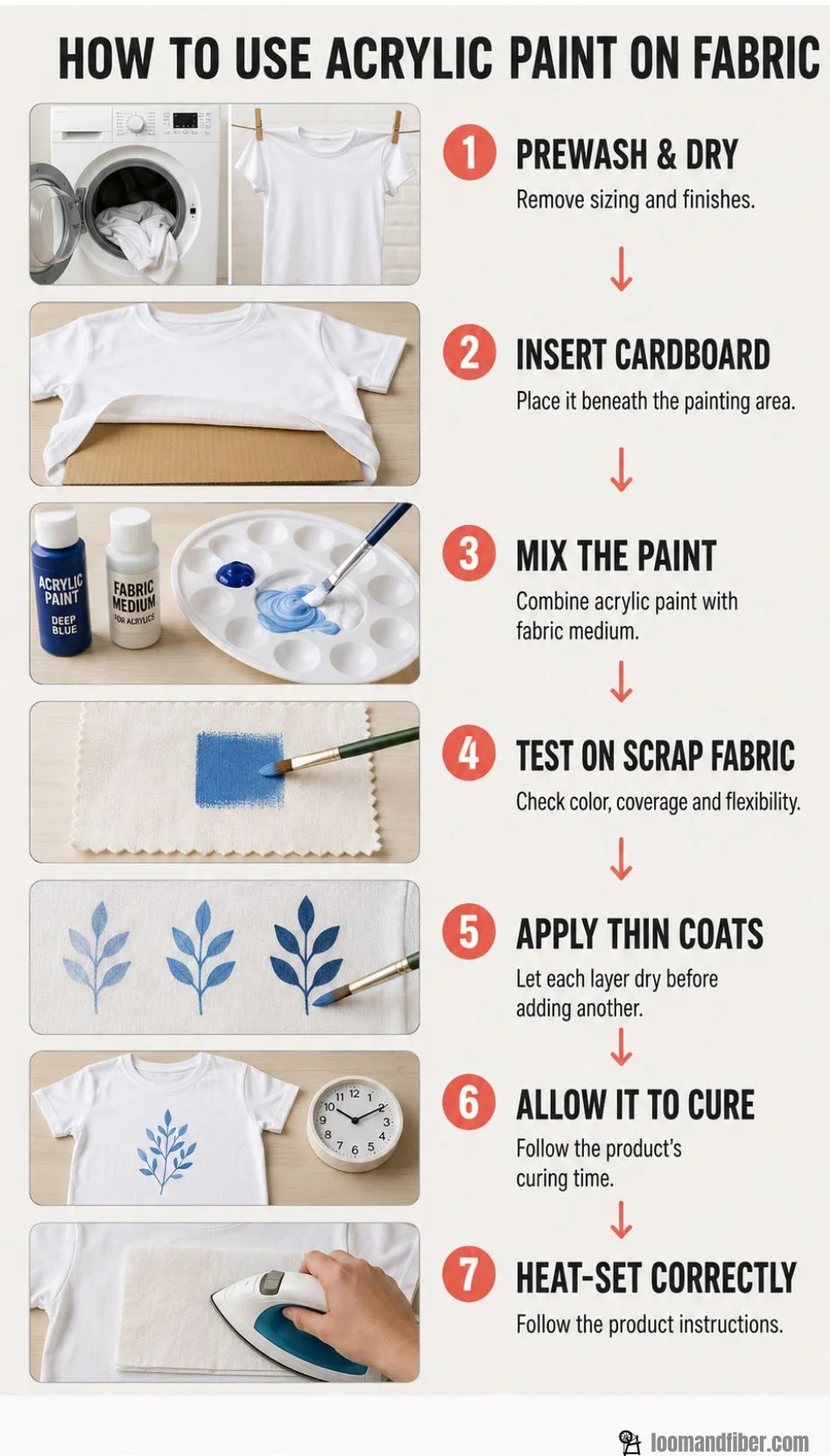
The fabric medium thins the acrylic paint, but it does not affect the binder as much as water. This means that it is easier to work with, but it should be mixed with acrylic paint in the right ratios. A typical ratio is 1 part of fabric medium to 2 parts of acrylic paint, but the instructions that come with the product should be followed.
Can You Use Acrylic Paint without Fabric Medium?
Acrylic paint can be used without a fabric medium, but the results will be less predictable. It is better to use acrylic paint without adding a medium for the following projects:
- Decorative paintings – such as canvas paintings or fabric wall art
- Banners and signs – made from cotton, canvas, or other stable fabric
- Costumes – where flexibility is not critical
- Accessories – such as canvas bags or handbags
- Crafts – including fabric-based art projects
- Display items – that are not used often
Acrylic paint is not suitable for most clothing items because it makes the fabric stiff and causes cracking. It can be used on a cotton T-shirt or a canvas bag, but the results will be less predictable than when using fabric paint.
If fabric medium is unavailable, soft body acrylic paint can be used to minimize stiffness. It should be applied in thin layers to achieve the desired coverage. This type of acrylic paint will not provide the same flexibility as fabric paint.
Acrylic paint should not be thinned with water because it will affect the binder and reduce adhesion. A small amount of water can be used to thin the paint, but it should not exceed 10% of the acrylic paint solution.
What Fabrics are the Most Suitable for Acrylic Paint?
The most suitable fabrics for acrylic paint are stable and not slippery. The best options are cotton, canvas, and denim. Other fabrics can be used, but they may require additional preparation.
Cotton Fabric
Cotton fabric is a good option for acrylic painting because it is a stable and absorbent material. Its fibers hold the acrylic paint solution, which makes it easier to achieve an even design. The following cotton items can be painted:
- T-shirts – cotton is a common fabric for T-shirts, so acrylic paint should work well on it
- Canvas bags – canvas is made from cotton, so it can also be painted
- Denim – denim fabric is usually made from cotton, but it may have a plastic coating
- Cushion covers – made from cotton or canvas
Cotton fabric can be used to make acrylic-painted clothing and accessories. It is important to make sure that the fabric is not slippery or stretchy.
Canvas Fabric
Canvas fabric is made from cotton or hemp. It is a stable and absorbent material that can hold acrylic paint well. Canvas is often used to make bags, shoes, aprons, banners, and other items.
Canvas is a good option for acrylic painting, but heavy canvas should not be used for clothing. It will be too stiff and will affect the comfort of the item.
Denim Fabric
Denim fabric is usually made from cotton and has a stable weave. It can be used to make jeans, jackets, and other clothing items. Acrylic paint can be applied to denim in thin layers to achieve the desired design.
Jeans and denim jackets can be painted, but their design should not include large areas of paint. The areas that are often bent or stretched, such as knees and elbows, are more likely to crack.
Cotton/Polyester Blend
Cotton/polyester blend is a stable and flexible fabric. It can be used to make clothing and accessories, but acrylic paint may not adhere to it well. The paint may also peel off the fabric when it is washed.
Cotton blends with a higher percentage of cotton are easier to paint than those with a higher percentage of polyester. The fabric should be tested before painting to make sure that the paint adheres to it well.
Polyester Fabric
Polyester fabric is a slippery and stretchy material. Acrylic paint may not adhere to it well and will peel off when the item is washed. It should be used with caution, and a suitable fabric medium should be used.
Polyester fabric can be painted, but it is not the best option for acrylic painting. Some polyester fabrics are water-resistant and will prevent acrylic paint from adhering to them.
Stretchy Fabric
Spandex, lycra, and other stretchy materials are difficult to paint. A design that looks good on a flat surface may crack when the item is worn. Acrylic paint is not a good option for such fabrics, but the following techniques can be used:
- Painting the fabric when it is stretched – the fabric should be held in a stretched position until the paint dries
- Using a flexible fabric paint – such materials are designed to be used on stretchy fabrics
- Using thin layers of paint – thick layers of paint will crack when the fabric is stretched
- Avoiding large areas of paint – large areas of paint will be affected by the stress of the fabric
- Testing the design on a small piece of fabric – it should be stretched to the desired position to see how the paint will hold
How to Turn Acrylic Paint Into Fabric Paint
Acrylic paint can be used to make fabric paint by adding a fabric medium. The following materials are needed to do that:
- Acrylic paint
- Fabric medium
- Fabric to be painted
- Paintbrushes or other applicators
- Cardboard or plastic
- Iron and pressing cloth (if needed)
Preparing the Fabric for Painting
The fabric should be washed and dried before painting. It should not be washed with fabric softener because it will affect the ability of the paint to adhere to it. The excess moisture should be removed from the fabric before painting.
The fabric should also be ironed to remove creases. It will be easier to achieve an even design on a stable surface.
Protecting the Back of the Fabric
A piece of cardboard, plastic, or another suitable material should be placed under the painting surface. It will prevent the paint from sticking to the wrong side of the fabric. This is especially important when painting a garment because the design will not be visible on the wrong side of the fabric.
Using paper as a protective layer is not recommended because it may adhere to the fabric when the paint dries.
Mixing the Paint Solution
The acrylic paint and fabric medium should be mixed in the ratios that are recommended by the manufacturer. The paint should only be mixed in the amounts that are needed for the project. Custom colors may be unstable, so it is important to test the mixture on a separate piece of fabric.
The mixed solution should be tested on a piece of fabric to make sure that it adheres to it well and provides the desired colors. It should also be stretched to see if it will crack when the fabric is bent.
Applying the Paint Solution
The paint should be applied in thin layers with a paintbrush or other applicators. The fabric should be painted in the direction of the grain where possible. The solution should be pushed into the fibers to achieve an even design.
The design should be left to dry before applying the next layer. It is better to apply thin coats of paint rather than one thick coat.
Allowing the Design to Cure
The paint should be left to cure for the amount of time that is recommended by the manufacturer. It should not be disturbed while it dries. The curing time is usually longer than the drying time.
The fabric should be left alone for at least 24 hours after it is painted. Some acrylic paints and fabric mediums may require more time before the design can be heat-set or washed.
Heat-Setting the Painted Design
Most acrylic paints and fabric mediums need to be heat-set to achieve a permanent effect. The following steps can be used to do that:
- The paint should be allowed to dry before the design is heat-set
- The garment should be turned inside out if possible
- A pressing cloth should be placed over the design
- An iron should be used to apply heat to the design
- The iron should be moved constantly to avoid burning the fabric
Steam should not be used if the manufacturer’s instructions do not recommend it. Some fabric mediums do not need to be heat-set, so the instructions that come with the product should be followed.
How to Prevent Acrylic Paint from Cracking on Fabric
Acrylic paint cracks when it is applied too thickly or when it is used on the wrong fabric. It can also crack when the item is washed or worn. The following tips can help prevent acrylic paint from cracking on fabric:
- Thinning the acrylic paint with a fabric medium
- Using thin coats of paint
- Avoiding painting over seams
- Avoiding painting large areas of fabric
- Allowing the paint to cure
- Heat-setting the design when possible
- Using a stable fabric
- Washing the item gently
Cracks can also occur when the item is worn or laundered. Fine details and small patterns are less likely to crack than large areas of paint.
How to Wash Fabric Painted With Acrylic Paint
Acrylic paint should be washed gently even when it is properly cured. The following tips will help wash the item without damaging the design:
- Waiting until the paint is fully cured
- Turning the garment inside out
- Using cold or warm water
- Using a gentle cycle
- Using a mild detergent
- Avoiding bleach and other chemicals
- Avoiding direct heat when possible
Hand washing may be a safer option for some garments. It will help preserve the design and reduce the risk of cracking.
Machine washing and high-temperature drying should be avoided because they can damage the design.
Is Acrylic Paint Permanent on Fabric?
Acrylic paint is not permanent on fabric, but it can be made more durable. It should be cured and heat-set when possible. The following factors will affect the permanence of acrylic paint on fabric:
- The type of fabric
- The thickness of the paint layer
- The use of a fabric medium
- The preparation of the fabric
- The curing and heat-setting process
- The frequency of washing
- The amount of stress and abrasion
Acrylic paint can be made permanent on a cotton tote bag, but it will crack on a stretchy athletic T-shirt.
Common Mistakes to Avoid When Using Acrylic Paint on Fabric
Painting Unwashed Fabric
New fabric often has sizing or other chemicals on it. They should be removed before painting because they affect the ability of the paint to adhere to the fabric.
Applying Thick Layers of Paint
Thick layers of paint dry slowly and crack easily. It is better to apply several thin layers of paint to achieve the desired effect.
Using Too Much Water to Thin the Paint
Water should not be used to thin acrylic paint because it affects the binder and reduces adhesion. A fabric medium should be used instead.
Skipping the Test Patch
A test patch should always be used to check how the paint affects the fabric. It will show whether the paint adheres to the fabric, how much it changes the color, and how much it affects the flexibility of the fabric.
Washing the Item Too Soon After Painting
The item should not be washed until the paint has cured. Washing it too soon can damage the design and cause it to fade or crack.
Skipping the Care Instructions
The care instructions should always be followed to make sure that the design is not damaged. The fabric may need to be washed in warm water, but the paint may require cold water. The two should be compatible.
When Should You Use Real Fabric Paint Instead of Acrylic Paint?
Fabric paint is a safer option in the following cases:
- The item will be washed often
- The fabric needs to remain soft
- The fabric is stretchy
- The design covers a large area
- The design needs to be durable
- The item is intended for resale
- The item is children’s clothing or a valuable garment
Fabric paint reduces the risk of cracking, fading, and other issues.
Can You Use Acrylic Paint as Fabric Paint for Commercial Products?
Acrylic paint can be used for commercial products, but it should be tested. If the product is intended for resale, test samples should be created to make sure that the paint will hold.
They should also be subjected to the following tests:
- Washability
- Rubbing or crocking test
- Resistance to cracking
- Stretching recovery
- Skin irritation test
- Compliance with the requirements of the target market
Acrylic paint should only be used for commercial products if it has been tested and proven suitable for the intended purpose.
Conclusion-
Can you use acrylic paint as fabric paint? Yes, it can be used on cotton, denim, canvas, and other fabric. It should be mixed with a fabric medium and cured properly to achieve a flexible and durable design.
Acrylic paint can be used on fabric without a fabric medium, but the results will be less predictable. It is best suited for decorative projects, but it can also be used on clothing. Fabric paint is a safer option for most commercial and personal projects.
Read More>> How to Print Photos on Fabric?
FAQs
When completely cured, acrylic paint is typically waterproof but may start cracking and peeling due to improper application or may start fading. Using fabric medium, heat setting, and special washing may improve the paint’s ability to resist washing.
Applying acrylic paint on the fabric may make it stiff, especially if you used thick strokes or did not properly diluted the paint. To prevent the fabric from stiffening, use fabric mediums and thin the acrylic paint.
Using acrylic paint on a t-shirt is possible, but only under certain conditions. First, a cotton t-shirt should be pre-washed to remove sizing and lint. Next, add a little bit of water into the paint to make it thinner and add fabric medium to thin the paint. Apply thin coats and carefully follow the acrylic paint instructions for heat setting.
The sealing of acrylic paint on the fabric with hairspray is not recommended. It will give the garment a stiff look and feel. Moreover, hairspray is somewhat oily and may cause the painted area to look discolored and dirty.
Using the Mod Podge as a fabric medium is not recommended since it will make the paper stiffer than when using a specific medium for fabric. However, products similar to Mod Podge may be used if one follows the directions for washing and heat treating the fabric.
It depends on the product, but most acrylic paints should be cured for at least 72 hours before the fabric is washed.