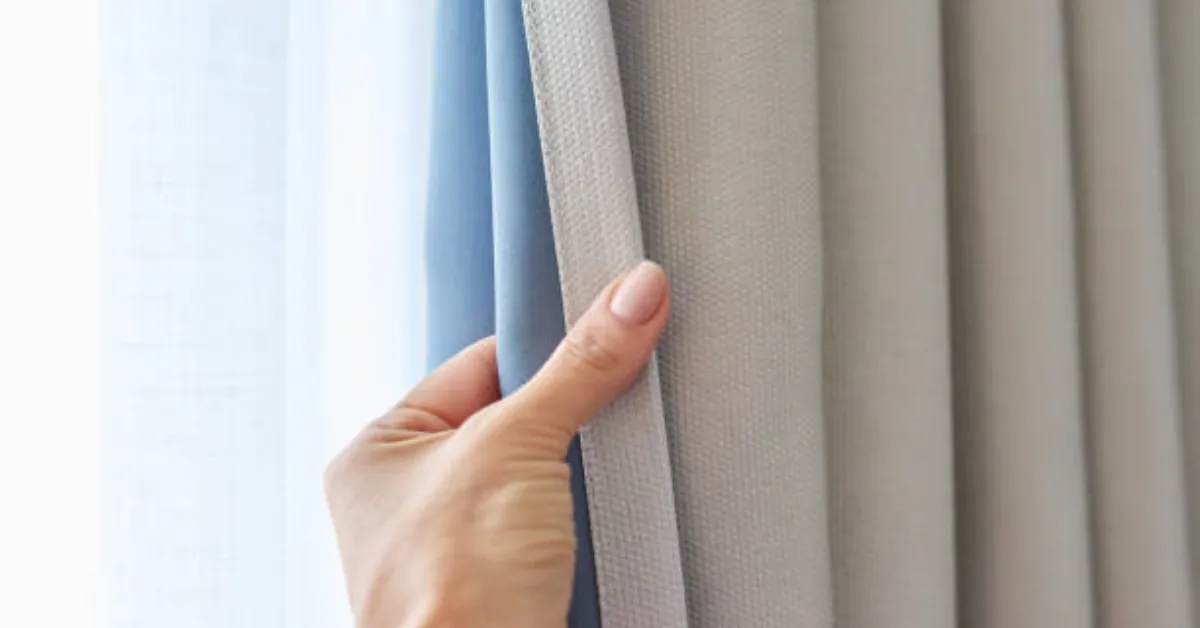

Do Blackout Curtains Block Heat?
Yes, but to some extent. Blackout curtains prevent sunlight from reaching surfaces within your room, which reduces the amount of heat those surfaces absorb. Medium-coloured drapes with a white plastic backing can reduce heat gains by up to 33%, according to the U.S. Department of Energy. Whether or not you’ll get this level of reduction will depend on:
- Lining – white or light backing will be more effective.
- Fit – any side/top/bottom gaps will let heat through.
- Timing – if you close them before the sun hits the glass your room will be cooler. If you’ve left them open until your room is hot then they won’t remove the heat already stored in the room.
Blackout refers to how much light the curtains can block, not heat. Thin blackout panels can make your room dark but still hot. Blackout curtains will give a cheap option with no installation if you already have a suitable rod or track but should not replace external blinds/window film/air-con.
How Heat Enters Through Windows
Much of the heat that makes a sunny room uncomfortably hot in the summer can be due to sunlight. To understand which blackout curtains will help and which won’t, we need to look at how heat enters through windows.
Radiation – Sunlight travels through the glass and gets absorbed by the surfaces in your room (floor, walls, furniture, bed etc). This can be a major cause of heat gains in the summer and can be reduced by curtains. Conduction – The glass gets warm and heat passes through. A curtain can reduce heat transfer by trapping still air between the glass and fabric. Convection – Warm air rises around your hot window. Any gaps around your curtain will allow the warm air to circulate.
Light blocking doesn’t mean heat blocking. Even if your curtain can block almost all visible light it may offer limited heat reduction. This is because it may be very thin, have a dark backing or have gaps around the edges. If your curtain absorbs the light then it will turn it into heat. You want to reflect the sunlight and ensure your curtain fits well to reduce the other two methods.
Blackouts, Thermal and Room Darkening Curtains
There are many types of curtains available to do different jobs. Thermal curtains will help with heat. Take a look at how they’re constructed.
| Type | Main job | Light blocked | Heat and insulation | Best for |
|---|---|---|---|---|
| Room-darkening | Soften and reduce light | Partial | Low | Living rooms where some daylight is wanted |
| Standard blackout | Block light | Nearly all (when sealed) | Low to moderate; depends on weight and lining | Bedrooms, nurseries, shift workers |
| Thermal | Slow heat transfer | Partial to high | Moderate to high | Rooms with big temperature swings |
| Thermal blackout (lined or multi-layer) | Both | Nearly all | Highest of the four | Sunny west- and south-facing rooms |
As a general rule, if you want a cooler room then look for lined and heavy curtains. Thermal blackout curtains with a white backing will generally be a good choice.
Factors That Affect How Well Blackout Curtains Block Heat
There are four factors to consider when looking at how well your blackout curtains will block heat.
Lining & Backing Colour
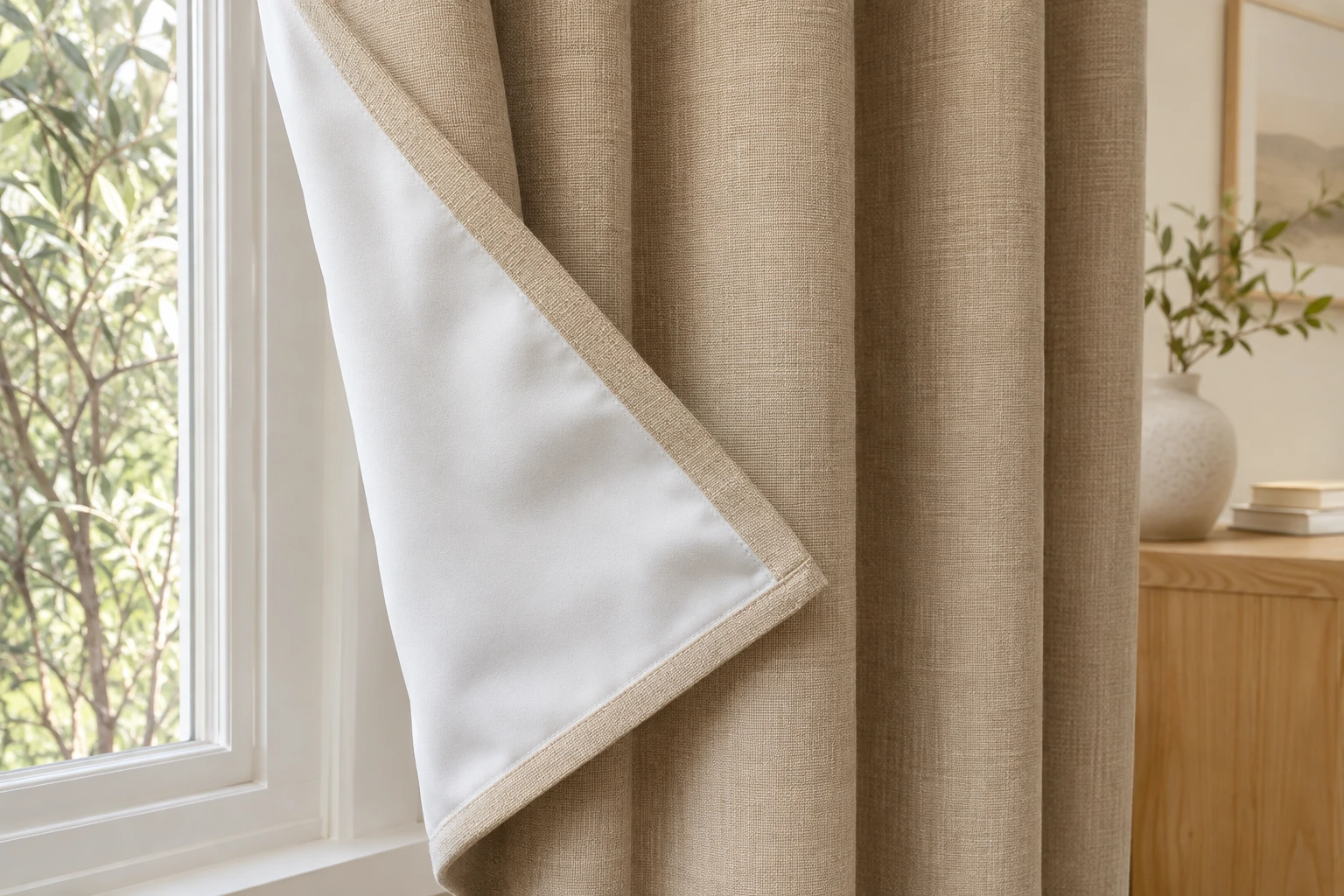
The main factor will be what colour the lining is facing the window. If it’s white or light then more sunlight will be reflected. If it’s dark then it will absorb more light and become warm, causing heat to radiate. This means the colour you can see from the inside matters less. The DOE figure refers to medium-coloured drapes with a white plastic backing.
Weave & Coating
There are different ways to create blackout curtains. These will affect how well they block heat:
Triple Weave – Has a dark yarn in the middle. Provides good darkness and some insulation. No extra coating to peel. Foam/acrylic coating – The back of the curtain has an extra coating to stop light. Often the best value for money as long as it’s light coloured. Film/PVC backed – Very effective at blocking light; heat reflection depends on the backing’s reflective properties. Less breathability and can be stiff. Lined – Extra layers to create an air gap.
Fibre & GSM
Generally the heavier and denser the fabric the better it will be at slowing down heat. However, the weave and lining will also affect this.
| Fabric type | Typical GSM | Heat performance | Notes |
|---|---|---|---|
| Lightweight polyester blackout | 200-280 | Moderate | Good light block, limited insulation |
| Mid-weight triple-weave polyester | 280-380 | Good | The common sweet spot for bedrooms |
| Heavy velvet or chenille | 380-540 | Very good | Dense pile traps air; can feel heavy and look formal |
| Wool blends | 300-400 | Very good | Natural fiber traps air; less common and pricier |
| Cotton or linen with blackout lining | 250-400 | Good with a proper lining | Breathable and cooler to the touch; the lining does the blocking |
These figures will vary depending on the brand. Use as a guideline.
Things To Look For On Labels
Backing Colour – White/light is best for summer. GSM/Fabric Weight – Linings – Coating – Triple Weave – Thermal/Insulation – Width Options – Ensure you can get panels that will fully cover your window with some extra.
Why Your Room May Still Be Hot With Blackout Curtains
If your room is still hot with your curtains closed then it’s likely to be one of the following:
- Not closed in time – If your curtains are closed after sunlight has hit your floor, walls and furniture then they won’t remove that stored heat. Try closing them before direct sunlight hits your window. 2. Dark Backing – If the backing is black or dark grey then it will absorb sunlight and radiate heat. 3. Lightweight Fabric – Light blackout panels will block the light but provide little insulation. 4. Gaps – If the panels are narrow, leave gaps at the top or don’t reach the sill or floor then warm air will circulate. 5. Hot Glass – If there’s strong sunlight then your window will become a radiator. If your curtains are hanging against the glass they can become warm too. You want a little gap. 6. Heat Source – If your roof, west facing wall, appliances and poor ventilation are causing heat issues then this can overcome the effect of your curtains.
Can Black Blackout Curtains Make a Room Warmer?
They can. Dark colours will absorb more sunlight. This will make your curtains warm and the air around them, although they may still reduce heat gain compared with an uncovered window. A white/light reflective backing will be your best choice. If you really like dark curtains then look for ones with a light lining on the window side.
What Blackout Curtains Won’t Do
They won’t actively cool your room below the outside air temperature and won’t fix poor wall or roof insulation or a hot roof. They won’t replace external blinds, reflective window film or air-con on very hot days. If used effectively they will reduce how quickly your room warms up.
How To Hang Blackout Curtains To Reduce Heat
The way you hang your curtains can make a big difference. According to the DOE you should hang drapes as close to the window as possible, reaching the sill or floor, and seal the sides.
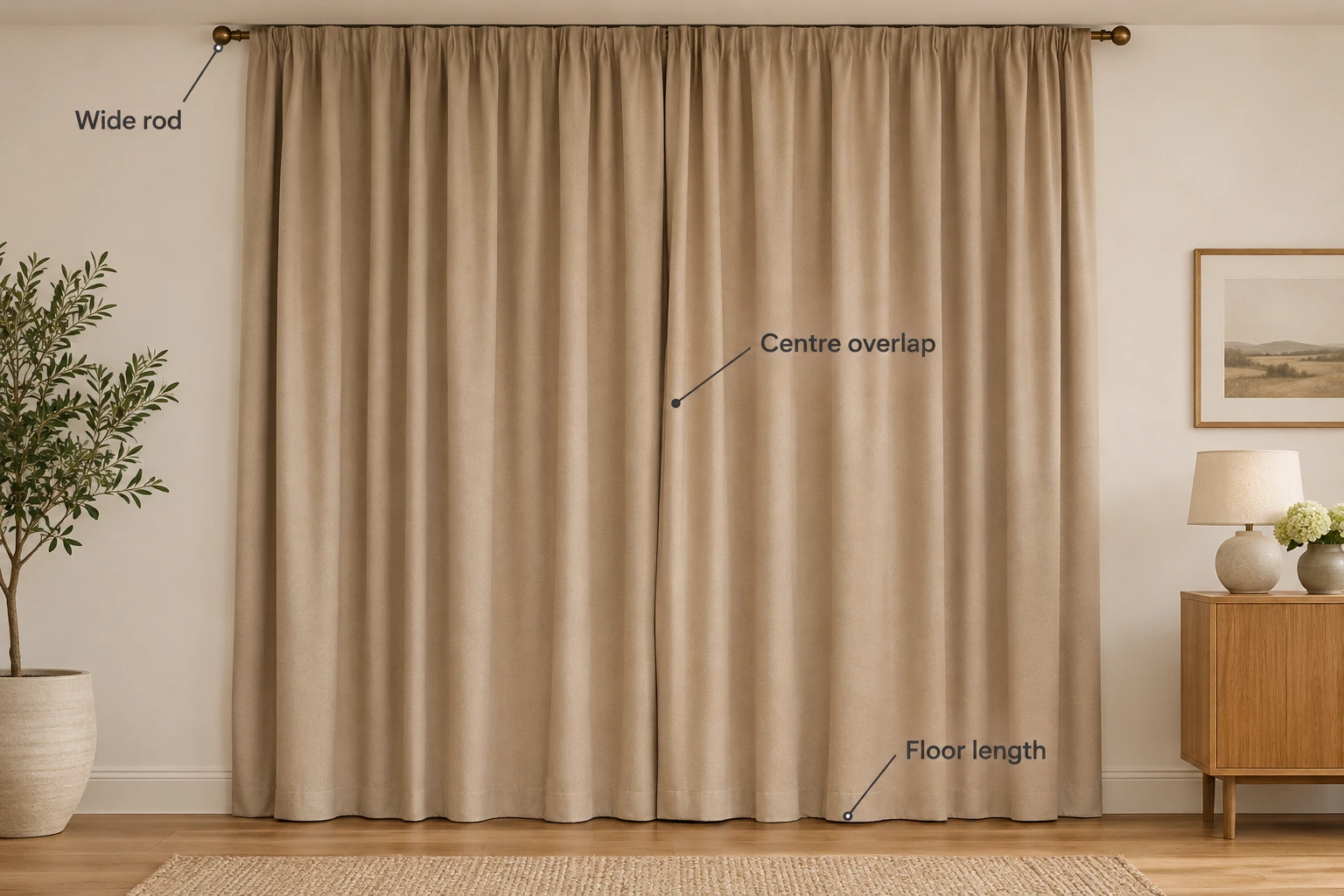
- Mount wide – Ensure you have a wide rod that extends 4-6 inches beyond each side of the window frame. This will ensure the panels fully cover the glass.
- Mount high – Position the rod close to the ceiling or just above the window frame, and seal the top gap to limit sunlight and air movement from above.
- Floor Length – Ensure your curtains reach the floor (or at least the sill). This will reduce air flow along the bottom.
- Wide Panels – Ensure your panels have a combined width of at least 1.5-2 times your window width. This will ensure the fabric is ruffled.
- Centre Overlap – Ensure you have two panels that overlap or meet in the centre. Use magnetic tape or Velcro to seal the centre.
- Side Seals – Use a wraparound rod, side returns or cornice to reduce convection along the edges.
- Small Gap – Ensure you have a small gap between the curtain and glass. Don’t push the fabric up against the hot glass.
- Thermal Liner – Add a thermal liner to give a cheap upgrade. If your curtains are light blocking but feel thin or warm in the sun then this will help.
- Layer Up – Add sheers or blinds to give you light control in the day and an extra layer.
When To Close Them
Window Orientation
In the Northern hemisphere your East facing windows will get strong morning sunlight, South facing windows will get high sunlight in the middle of the day and West facing windows will get intense afternoon sunlight when your room is already warm. Start with your west and south facing windows. According to the DOE you should close any window coverings that are getting direct sunlight in the summer.
Simple Routine
Close your curtains on any windows facing the sun before direct sunlight hits the glass. Keep them closed throughout the hottest part of the day. Open your windows after the sun has gone down to let in cooler air if it is cooler outside than indoors. Close your windows when the outside air becomes warmer than indoors, and close sun-facing curtains before direct sunlight reaches the glass.
Winter & Year Round
The same fabric that blocks sunlight will also reduce heat loss through cold glass. According to the DOE you should close your drapes at night and on any windows that aren’t getting sunlight. Open them during sunny days to let in solar heating. Heavy/lined curtains will help the most.
Blackout Curtains Vs Other Ways To Block Heat From Windows
Blackout curtains are one of the easiest options to block heat from your windows but won’t be the most effective. As a general rule external window coverings will be better than internal ones.
| Option | Heat reduction (DOE where cited) | Strengths | Limits |
|---|---|---|---|
| Blackout or thermal curtains with light backing | Up to about 33% for medium-colored drapes with white backing | Cheap, no installation, also block light and add privacy | Interior; performance depends on fit and color |
| Reflective blinds, fully closed | Around 45% | Adjustable slats; good on sunny windows | Gaps between slats; less insulation in winter |
| Cellular (honeycomb) shades | Often cited as among the best interior options | Trapped air cells insulate in both seasons | Higher cost; need an accurate fit |
| Solar shades | Varies by openness | Cut glare and heat while keeping some view | Don’t give full darkness |
| Reflective window film | Varies by film; check NFRC ratings | Works at the glass, keeps daylight | Permanent; can alter the view and appearance |
| Exterior awnings | Up to 65% (south-facing) and 77% (west-facing) | Stop sun before it reaches the glass | Cost and installation; not available to everyone |
Best Combinations
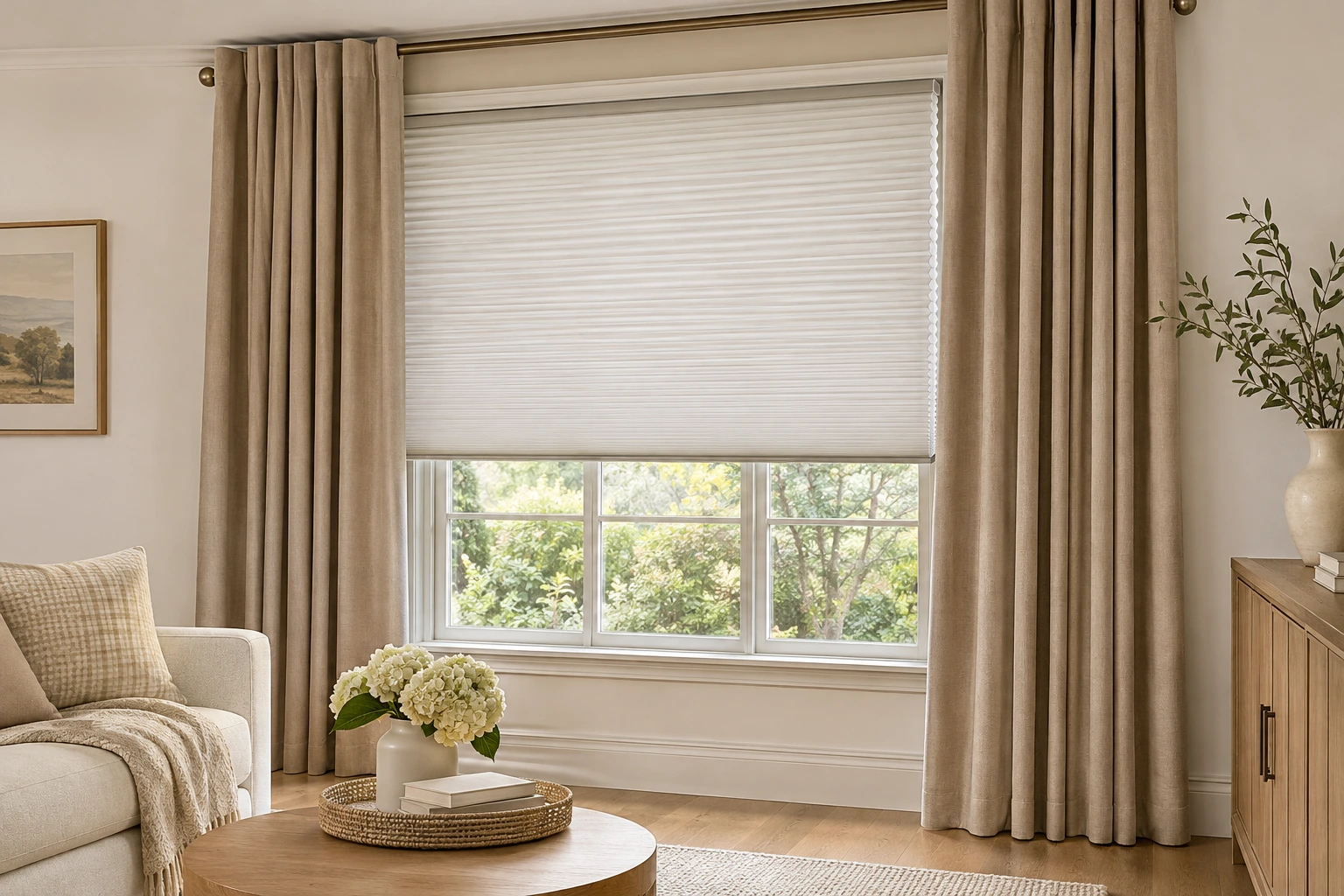
Blackout Curtains + Sheers/Blinds – Use blinds during the middle of the day and blackout curtains for full darkness at night. Cellular Shades + Curtains – A strong combination for large windows. Film + Curtains – Solar-control film will reduce solar heat gain through the glass throughout the day. Curtains will help with darkness and insulation during winter. External Shading + Anything – The most effective option for badly overheating rooms.
FAQs
Yes. They block sunlight to reduce heat. Medium-coloured drapes with a white plastic backing can reduce heat gains by up to 33%, according to the DOE. Using a light backing, a tight fit and good timing will give the best results.
They can. If your backing is dark then it can absorb sunlight and release heat into the room, although the curtains may still reduce heat gain compared with an uncovered window. Dark colours absorb sunlight and turn it into heat.
White/light on the window side. The front matters less. White backed curtains will reflect more sunlight. Dark backed curtains will absorb more sunlight.
Thermal blackout curtains will generally be a good option. They do both! Blackout curtains will block the light but thermal curtains will reduce heat transfer. Look for lined or multiple layered curtains.
It’s likely to be due to closing them too late, dark backing, lightweight fabric, gaps on the sides and hot glass. Ensure they fit well and are closed at the right time.
Yes. Heavy/lined curtains will reduce heat loss through cold glass. Close them at night and open during sunny days to let in solar heating.
It depends. Highly reflective blinds that are fully lowered with closed slats can reduce solar heat gain by around 45%, according to the DOE. Cellular shades are good at insulation. Blackout curtains provide full darkness when properly fitted and can help with insulation during winter. Layering both together works well.