
Introduction to Ringspun cotton-
Ringspun cotton is made of cotton that has been twisted and thinned into strong and fine yarn. This process is a type of spinning called ring spinning, in which the fibers are spun continuously on a ring frame. This creates long, compact strands of yarn. In simple words, it is smoother and softer than normal cotton. In fact, because the yarn is spun tighter, ringspun cotton fabric is normally “finer, softer and more durable” than regular cotton. This gain in quality is not always the case. Regular (carded) cotton, for instance, is usually produced using a less advanced technique. Carded cotton fibers get spun after they are only roughly aligned. This results in a coarse yarn and weaker quality of cloth.
In comparison, open-end spinning (commonly known as regular cotton) results in thicker, rougher yarn. Open-end cotton is produced in a fast, automated manner that drives down production cost. While this method is cheap, the end product can feel rough. Additional twisting and thinning makes ring-spun cotton softer and stronger. The constant twisting gives it strength while softness comes from the layered twisting. Because the fibers in ringspun yarn are bound tightly, the fabric is smooth unlike standard cotton which has rough “fuzz.”
Comparing ring spinning and open-end spinning
,Open-end machines put cotton into a rotor which creates the yarn quickly, however, the end product has a fuzzy surface. Unlike ring spinning which takes time and each yarn’s fiber is twisted around a ring spindle, aligning the fibers neatly. As a result, the yarn produced from ring spinning is smoother and finer. To sum up, ringspun cotton is cotton yarn that is spun on a ring frame instead of open-end machinery which makes the texture much better.
Benefits of Ringspun Cotton
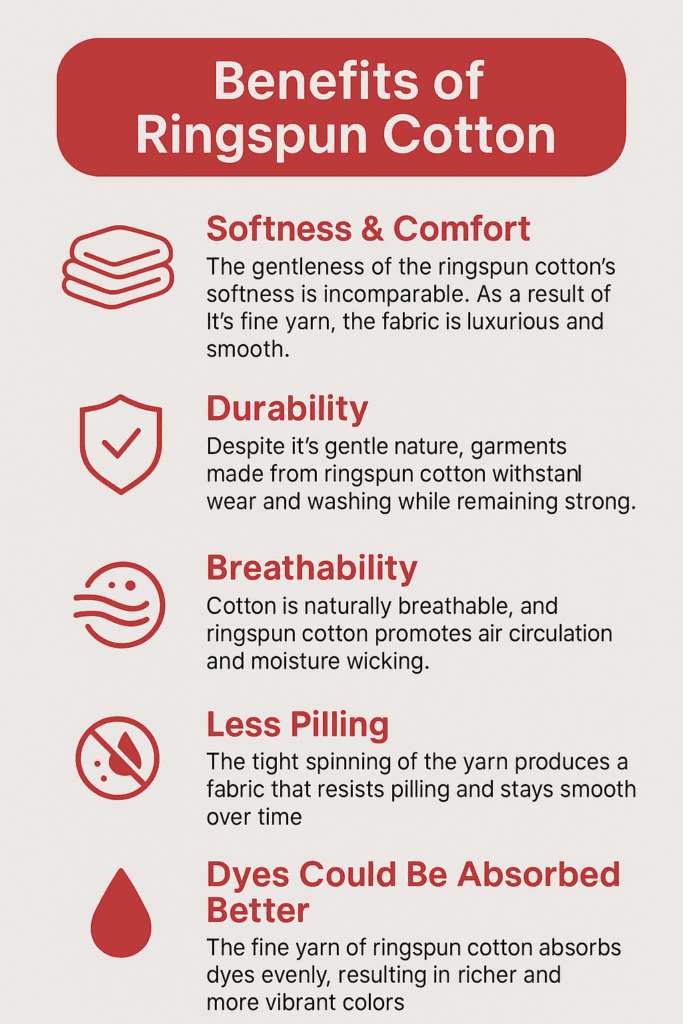
Softness & Comfort:
The gentleness of the ringspun cotton’s softness is incomparable. This is evident with the yarn’s amazing smoothness due to the fibers being tightly spun. As with many other threads, garments made from cotton that has been ringspun will be soft to the touch and smooth against skin contact. This is evident with RealThreads explanation of ringspun fabric which states it’s “so much finer, softer” compared to the rough standard cotton. In addition, many describe how dreams feel by comparing it to wearing ringer spun tees as a result of it’s fine yarn and silky texture. Therefore, shirts or sheets created using this specially treated cotton are far luxurious compared to those made out of standard cotton.
Durability:
The gentle nature of ringspun cotton does not strip off its durability. As with other types of yarns, garments made using hydrocarbons undergo a twisting process which softens and strengthens the garments. This means garments stand up well to wear and washing while also softening the yarn. Because the long fibers are spun continuously, a dense and robust yarn is produced. In fact, the strands of ringspun cotton “withstand more punishment” and have increased fabric strength. In comparison with cheap cotton, a ringspun tee withstands tearing and pilling over time. As soft as ringspun cloth may feel, it is surprisingly strong and able to stand the test of time when given normal care.
Breathability:
Cotton is a naturally breathable fabric, and ringspun cotton is no different. It assists with air circulation and moisture absorption. According to RealThread, “takes [breathability] to the next level.” meaning, ringspun shirts and sheets will allow sweat and heat to escape more freely than synthetic materials. This is beneficial for warm weather clothing, exercise apparel, and bedding. Because of the fine yarn of its, the fabric also does a better job at wicking moisture, ensuring comfort while keeping you dry.
Less Pilling:
Another added benefit is reduced pilling (the tiny fuzz balls that appear on fabric). The long fibers with fewer ends sticking out that make ringspun yarn results in reduced pilling. Short fibers that would unravel into pills are removed during the combing and spinning process. As experts say, this makes the fabric pilling more pilling resistant while smoothing its overall appearance. Practically, this means a ringspun shirt will maintain its appearance after numerous washes unlike lower quality cotton that tends to become fuzzy.
Dyes Could Be Absorbed Better:
Absorption of colors can be done nicely on ringspun cotton. Fine yarn is able to absorb dyes more evenly, and deeply because of the tight spinning. In the case of compactly spun fibers, dye penetration is uniform. The end result is richer and more vibrant color. In fact, textile researchers have shown that high-quality yarns with better fiber alignment “improves dye absorption, producing richer and more vibrant colors”. This is why ringspun fabrics are often strikingly colorful, whether printed or dyed colors.
Ringspun Cotton vs. Regular Cotton
| Regular Cotton | Ringspun Cotton | |
| Texture | Coarser and rougher | Less pilling, finer look |
| Strength | Weaker yarn | Stronger, long fibers |
| Cost | Cheaper | More expensive |
| Comfort | Basic comfort | Premium comfort |
| Appearance | More prone to pilling | Less pilling, finer look |
Ringspun cotton is better than standard cotton in both feel and quality. Regular cotton (often open-end spun) does breathe and is durable, but does not have much smoothness to it. As ShirtSpace mentions, regular cotton’s softness “pales in comparison” to ringspun. A ringspun T-shirt, for example, feels and drapes better than a basic cotton tee. The durability is higher too – the strong yarn means ringspun garments “will stand the test of time.” This is why premium apparel makers choose ringspun for their top products. The downside is cost; extra processing means more expensive, and many sources note that increased fabric manufacturing cost is the only drawback to ringspun. To summarize, while regular cotton is fine for budget basics, high-end tees are geared towards those who want the superior feel and lasting quality of ringspun cotton, thus making it worth the additional cost.
Ringspun Cotton vs. Combed Cotton
Both combed cotton and ringspun cotton enhance the qualities of regular cotton, but in different ways. The improvement comes from an extra combing step done before the spinning process, so combed cotton has short fibers and impurities trimmed away, leaving long, aligned strands which create smoother, stronger yarn. A ringspun cotton, is the spinning of the yarn on a ring frame. Often, the label “combed ringspun” is used to describe a blend of both techniques which is often the case.
Manufacturing:
The processes of carding and combing remove short strands from cotton, and the cotton is often yarned on open-end machines. Ringspun yarn goes through a process where the fibers are twisted continuously, and if the spun yarn is ringspun, the fibers are of longer combed type. In brief, ring spinning yarn twists fibers into yarn and combing straightens and preps it for twisting.
Softness:
Combing, and ringspinning increase the softness of materials, but combed ringspun is the softest. Since the short fibers are removed, it smoothens the surface and makes it extra smooth. Further refinement occurs during the ringspinning of the yarn. This is why many premium shirts are made from combed ring-spun cotton. On its own, combed cotton is very smooth and soft, especially when spun. Sometimes, ringspun cotton is not as smooth because it has more short fibers. A fabric that is only ringspun or only combed, a combed ringspun fabric will always feel softer and finer.
Durability:
They both have suitable levels of durability. Long fibers will bond better when they are paired together. Fabrics created through combed fibers and ring spinning tend to be very strong. If we look at just combed-open-end vs ringspun (carded), usually it is the ringspun that wins in longevity because the twist helps to keep the fibers together when put under stress. But true combed ringspun is the champion in strength and longevity.
Which is softer/more durable?
With combing and ringspinning together, you get the best of both. Comparing two products would make soft and non-ringspun cotton softer than the opposite. This is the case because combing creates smoother yarns. Non Combed ringspun does have some superiority to both combed yarn and spun open-end yarn due to the extra twist it has. If you seek a specific product, keep an eye out for branded products. A shirt labeled “combed ringspun cotton” means it uses both methods for maximum softness and durability.
Common Uses of Ringspun Cotton
Ringspun cotton is soft and comfy. You can find it in T-shirts, hoodies, sweatshirts, polos and many more. It is also used by well known brands such as Nike, Hanes, and Bella+Canvas. Nike and Hanes utilize ringspun tees while Hanes uses them for their premium tees. Bella+Canvas is infamous for their AirLume combed ring-spun cotton blanks, which are cherished for their extreme softness. Aside from t-shirts, underwear and socks also make use of ringspun cotton because they are breathable and gentle on the skin. Combed ringspun cotton is also utilized in luxury loungewear and baby clothes due to their soft nature. In the household, bath linens and cotton towels can be produced using this. Heavily threaded sheets and pillowcases made from fine yarn are soft but strong.
It also produces plush and absorbent towels and blankets. Any product that needs to have a gentle touch such as premium bedding or cozy socks can be made using ringspun cotton.
Is Ringspun Cotton Better? (Pros & Cons)
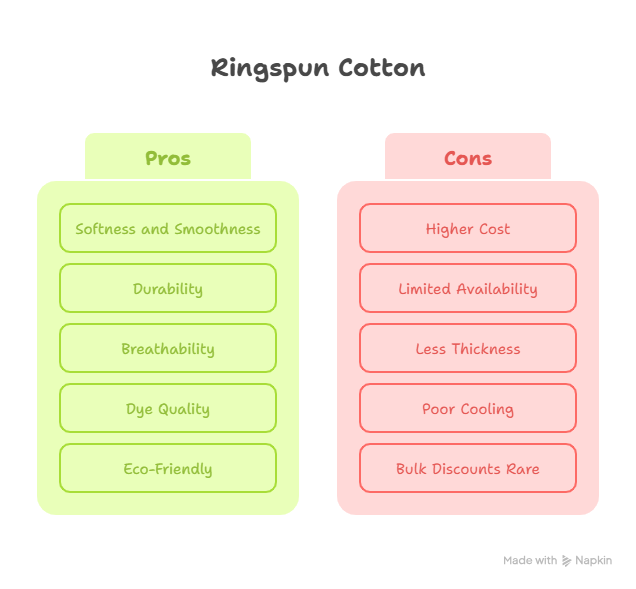
Pros: The advantages mentioned above make ringspun cotton a leading contender. It is softer, smoother, and more durable than regular cotton. It is also highly breathable, and dyes take brilliantly to it. Wearing ringspun garments often feels like indulging in a small luxury. From a sustainability perspective, for eco-conscious shoppers, ringspun cotton (especially if it’s organic) aligns with eco-friendly purchasing since quality materials are more durable and require replacement less often.
Cons: Cost and availability are the main drawbacks. As with many other products, ringspun garments usually retail at a higher price. Very low price points and bulk discount shirts may be difficult to find. Availability can vary; some cheap brands only carry open-end cotton. Extremely light ringspun fabrics can be less thick or insulating. Cool-blend apparel that uses ringspun cotton may not be very cool. However, for most consumers, only paying a bit more is the only downside. Many feel the added softness and durability is worth the expense.
How to Identify?
In assessing the presence of ringspun cotton, one could check the labels and feel of the fabric. Most commonly, you can check the label or description which often states “100% ringspun cotton” or “ring-spun.” A premium variant sometimes displays “combed and ring-spun cotton.” If the label remains unclear, touching the fabric will help. The touch of this fabric is smooth and fine. You may run your hand along the knit or weave: in case it feels silky rather than rough, it is likely ringspun. When juxtaposed with normal cotton, ringspun fabric’s softness is striking. In fact, it’s yarn undergoes a process whereby it has “fewer loose threads and imperfections,” thereby making the fabric smoother. Additionally, check the price. Mid-range to higher-end items are more likely to use it, while a plain T-shirt priced a couple of dollars is highly unlikely to be ringspun.
Caring and Maintenance
It requires the same care as other cotton garments, with a few additional recommendations to maintain its appearance.
For washing, stick to cold or lukewarm water on gentle cycles. Avoid harsh and hot washes as they break down fibers over time. For ringspun items, clean them with similar colors to prevent dye-transfer. Mild detergent is recommended to preserve the garment’s softness while avoiding bleach, which weakens cotton. For drying, air drying is preferred for avoiding shrinkage, but if the use of a dryer is necessary, low heat should be used and items removed promptly after drying to avoid loss of softness.
Washing garments with prints or bright colors requires turning them inside out to shield the surface and prevent color transfer. Do not overload the machine; ringspun fabrics need space to move while getting cleaned. If needed, medium heat can be used to iron the fabric, but it is best done on the wrong side of the fabric. In summary, gentle treatment is essential for ringspun cotton.
Following this guideline alongside cold washes and gentle drying will ensure softness and shape retention through multiple washes. While most tees are pre-shrunk, label instructions should still be followed. Properly looking after these garments will keep the fine yarn in preserving conditions for years to come.
Where to Buy Ringspun Cotton Products
It’s products are widely available. Retailers such as Amazon and specialty stores offer ringspun cotton t-shirts, hoodies, and other items. Wholesale distributors of blank apparel for custom printing often have ringspun styles, particularly for bulk purchases. These products are carried at branded clothing shops, sports retailers, and even found at department stores and discount retailers. Eco-conscious brands market their fabrics as “organic ringspun cotton.”
Luxury or heavy-weight ringspun shirts can reach $30-$40 in stores. The price for branded shirts varies; basic ringspun t-shirts are listed at $5-$10 for wholesale blank shirts and upwards to $20 for branded shirts. Towels, sheets, or garments made from this specially processed cotton will be more expensive than those made from standard cotton due to the quality of yarn used. The soft and durable nature of ringspun fabric often comes at a premium.
Conclusion-
What is ringspun cotton? It is a buzzword; more importantly, it is a specific type of yarn that provides comfort and its long-lasting quality. If you are looking for T-shirts, bedding, or even gym wear, this cotton is always a top-notch choice in fabric.
If softness is a priority, ringspun cotton is a worthwhile investment. Now that you are informed on its benefits, we hope that you make smarter purchasing decisions for your wardrobe.
FAQs
As for ringspun cotton, it is 100% cotton fiber that has gone through a ring machine. The term “ringspun” is only related to the spinning method. Most of this fabric clothing is labeled “100% Cotton”. (Some garments may contain a blend of polyester or rayon but as long as it states ‘ringspun cotton’ it means pure cotton yarn).
All cotton fabrics tend to shrink when washed in hotter water or dried on high heat settings. While ringspun cotton may often be pre-shrunk, it is essential to washes it carefully. To prevent any shrinkage, cold water along with low to no heat drying should be used. Proper care will ensure minimal shrinkage.
Of course. It is very gentle on the skin. Fewer irritants come from the long and smooth fibers. One example is smoother ring spun garments which makes them, “less likely to irritate sensitive skin.” Those who suffer from skin sensitivities prefer combed ringspun cotton clothing and bedding due to the softness and pureness.
The ring spinning process does increase the time and labor volume. This increase in time and effort does lead to higher production costs. The price, however, is easily justified because of the fabric quality.