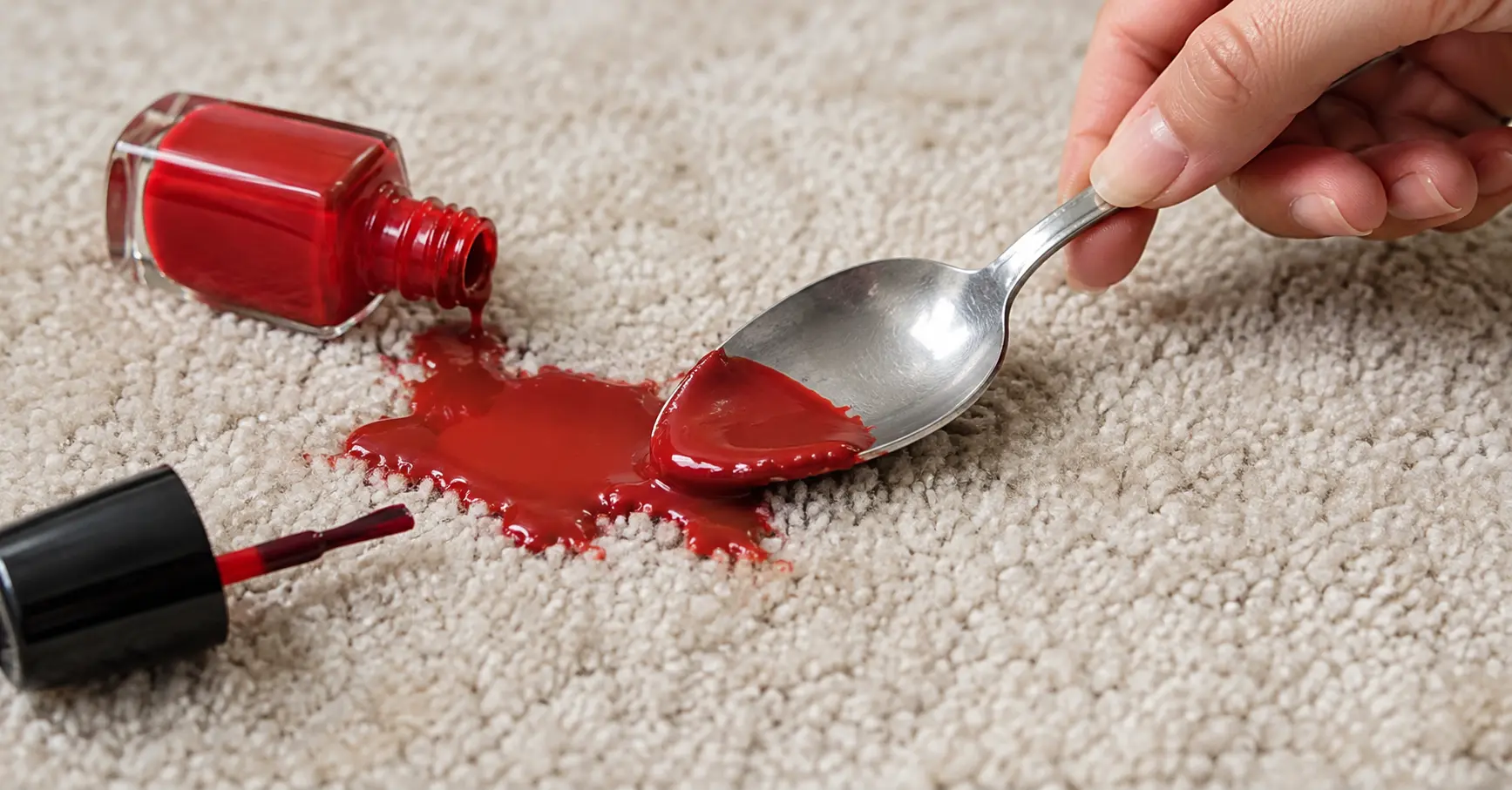

Blot the nail polish spill on the carpet, and dab at it with a bit of non-acetone nail polish remover or rubbing alcohol on a clean white cloth to lift the polish from the outside of the stain in. To remove dried polish from carpet, soften the polish with rubbing alcohol or an ice cube, then scrape and blot it away. Always test any treatment on a hidden patch of your carpet first, as acetone can ruin or discolor certain types of carpet, such as wool.
Supplies You’ll Need
- Clean white cloths or paper towels
- Non-acetone nail polish remover
- Acetone-based removal solution
- Rubbing alcohol
- A dull knife or the edge of a spoon
- Ice cubes (optional)
- Dish soap
- White vinegar
- Baking soda
- Cold water
Before You Begin: 3 Things to Know
- Do a patch test on a hidden seam of your carpet before treating a visible spot, as acetone can ruin or discolor some carpets.
- Blot, don’t rub; rubbing can push the nail polish into the fibers and spread out the stain.
- Always work from the outer edges of the stain in. That way, you’ll stop the stain from spreading.
How to Remove Fresh (Wet) Nail Polish Stains from Carpet
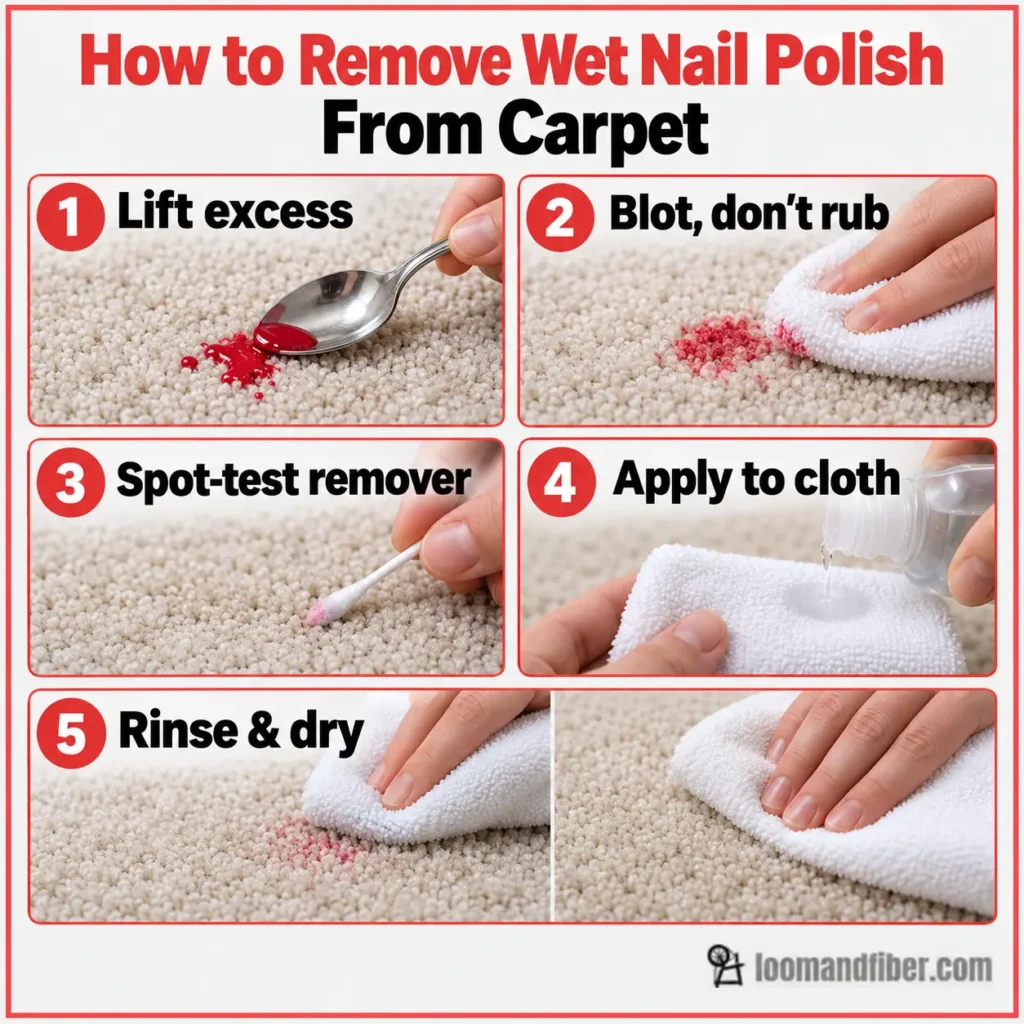
- Blot up as much of the liquid polish as possible with a clean cloth or paper towel, taking care not to smear it.
- Use a dull knife or the edge of a spoon to gently scrape away any thick clumps of polish.
- Dab a bit of non-acetone remover on a clean cloth and blot the stain, working from the edges of the stain in, and using a new section of the cloth until it picks up color.
- Rinse the affected area with a damp cloth and cold water to remove the smell of the remover.
- Blot the area dry with a clean towel.
How to Remove Dried or Set-In Nail Polish Stains from Carpet
Dried polish is tougher, but still treatable — much like dried blood stains on carpet, the key is softening before lifting. Treat your carpet to the following methods until the polish lifts.
- Rubbing Alcohol
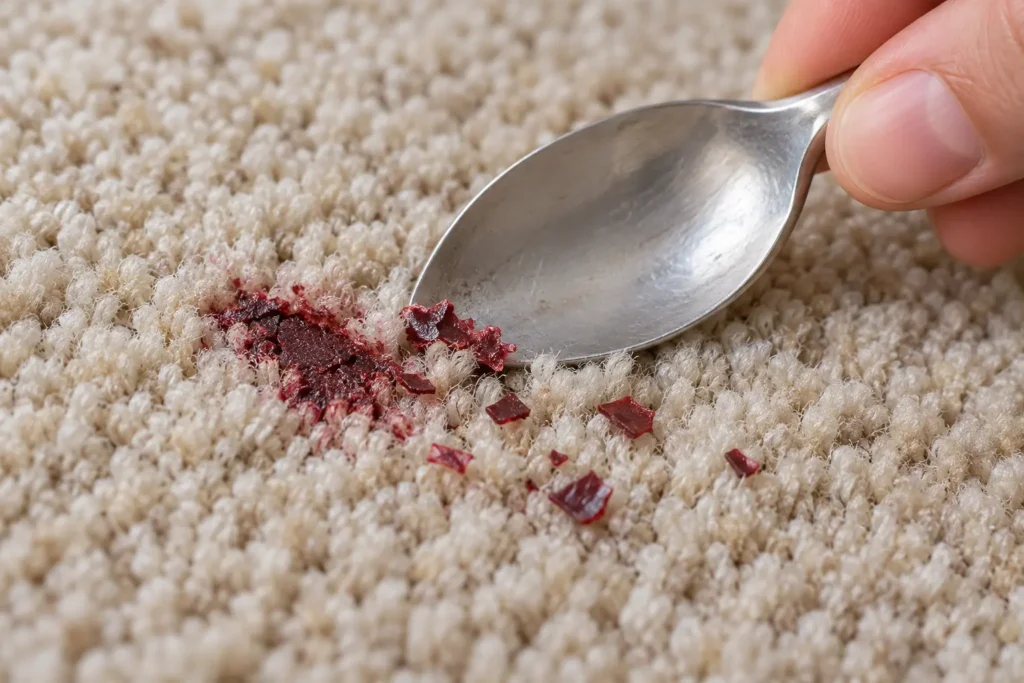
Soak a cloth in rubbing alcohol and press it into the polish until it’s soft, for one to two minutes. Once softened, gently scrape the polish away with a dull knife. Continue blotting the area with more alcohol until the stain is gone. - Freezing
Run an ice cube over the damaged spot until the polish has hardened and is easier to scrape or chip away with a dull knife. Then, vacuum up the bits of removed polish. This same freezing trick works well for removing wax from carpet, too. - Acetone-Based Remover
Use this method only on synthetic carpets. Dab a bit of acetone-based remover on a clean cloth and press it into the stain, letting it soak for 30 to 60 seconds. Then, blot the liquid away with the cloth with firm pressure. Repeat this process until the stain is gone, rinsing the cloth in warm water between blotting sessions. - Hairspray
This old remedy works surprisingly well. Dab a tiny bit of hairspray directly onto the stained area and let it sit for 60 seconds; the alcohol in it will help to soften the set-in nail polish. Then, blot the liquid away with a cloth.
Which nail polish remover is safe for carpet?
The truth is, there is no universal solution for removing polish from any carpet. According to the Carpet and Rug Institute, for removing fingernail polish stains, non-acetone remover is the way to go, while one of the recommended techniques by Shaw Floors actually includes using an acetone-type remover. In both cases, it is better to take care of the problem right away, and treat the spot with caution, blotting rather than soaking.
In some cases, rubbing alcohol may help too, but it is better to check that it does not harm your carpet on a small hidden spot. Besides, it is vital never to try more than one stain removal product if the first one proves to be ineffective. If the dye from the polish comes off on your cloth, or if the fibres start to feel different, or the spot begins to spread, stop immediately.
Nail Polish Removal by Carpet Type
| Carpet Type | Safe Products | Avoid |
|---|---|---|
| Synthetic (nylon, polyester, olefin) | Acetone remover, rubbing alcohol | Excessive heat |
| Wool or natural fiber | Non-acetone remover only, rubbing alcohol (diluted) | Acetone (can dissolve/yellow wool fibers) |
| Colored or dyed carpet | Non-acetone remover, spot-test extensively | Acetone (risk of color bleaching) |
| Antique or delicate rugs | Professional cleaning recommended | Any DIY solvent without testing. Not all stains respond to the same treatment, and solvent-based removers carry similar risks when taking grease out of carpet or dried polish. |
What NOT to Do
Avoid the following when removing nail polish from carpet:
- Acetone on wool, silk-blend, or antique rugs
- Scrubbing the stain
- Using hot water. Don’t use hot water — heat can set the stain permanently. And if a stain requires bleach, note that bleach carries its own carpet-damage risks similar to acetone.
- Skipping the spot test on your carpet, even if it seems safe.
How to Remove Remaining Stains or Discoloration from Your Carpet
Sometimes after removing the polish itself, you may find that the carpet still has a faint stain or discoloration. Do the following to remove it:
- Dab at the affected area with a few drops of dish soap mixed into warm water.
- To deal with any lingering discoloration, try using a solution of equal parts water and white vinegar, apply with a cloth, and blot. (This is the same base method that works for getting coffee out of carpet.)
- To absorb any lingering smell or residue, sprinkle some baking soda on the damp, cleaned area. Let it sit for 15 minutes, then vacuum the carpet.
- Finally, rinse the area with clean water and blot it dry.
When to Call a Professional Carpet Cleaner
If your carpet is a valuable or antique wool rug or has a silk-blend or other delicate fibers, leave the job to a professional carpet cleaner. Likewise, call a professional if your attempts to remove the nail polish have resulted in significant discoloration – the right carpet cleaner will have the right tools to lift it out without hurting the fibers.
FAQs
Acetone can ruin or discolor wool, silk-blend, or dyed carpets, but it should be safe for synthetic carpets like nylon or polyester if you do a spot test first.
Soften it with either rubbing alcohol or an ice cube and then gently scrape it away with a dull knife. Finish by blotting with a few drops of non-acetone remover on a clean piece of cloth.
On its own, vinegar isn’t likely to remove nail polish, but a solution of equal parts vinegar and water works well on discolored spots or stains.
WD-40 may work, as it has some solvent power to it, but it’s more likely to leave behind an oily residue that could stain natural fibers.