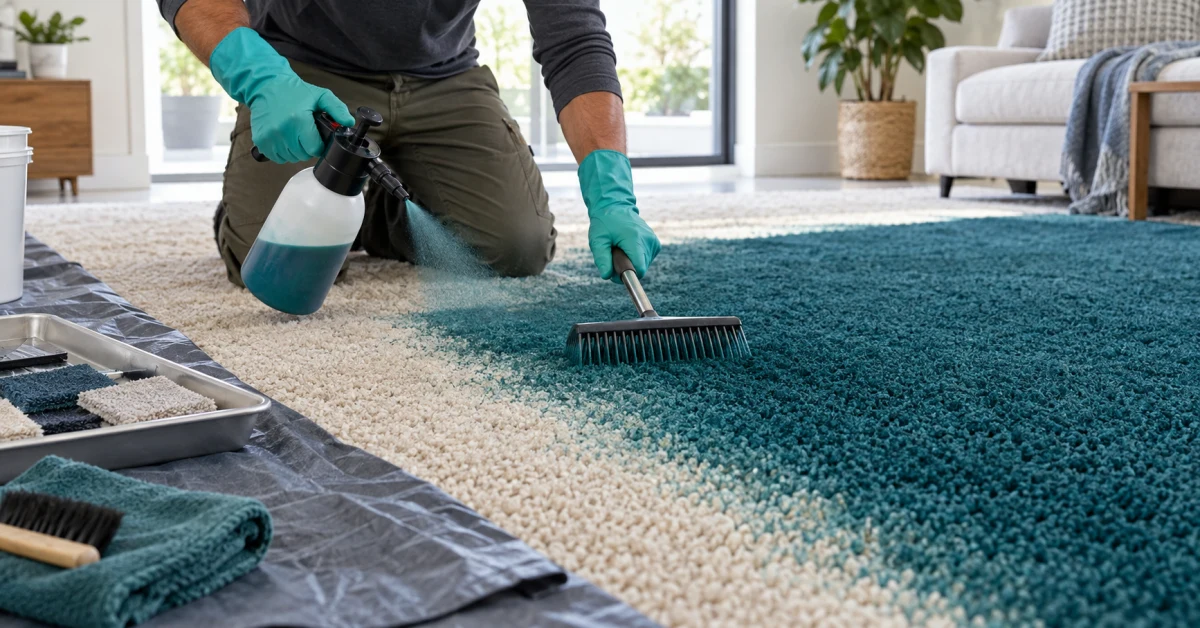

Yes, you can dye carpet—but only when the fiber and color change are suitable. Nylon and wool carpets are the best candidates for purpose-made carpet dye, while polyester, olefin (polypropylene), acrylic, and many blends usually will not accept standard acid carpet dyes evenly. Carpet dye is translucent, so it can deepen or shift an existing color but cannot make a dark carpet lighter. For the best result, identify the fiber, clean the carpet thoroughly, test a hidden area, and follow the dye manufacturer’s mixing, temperature, and pH instructions exactly.
This guide explains how to dye an installed carpet safely, when a DIY attempt makes sense, and when the project belongs in professional hands.
Can Your Carpet Be Dyed?
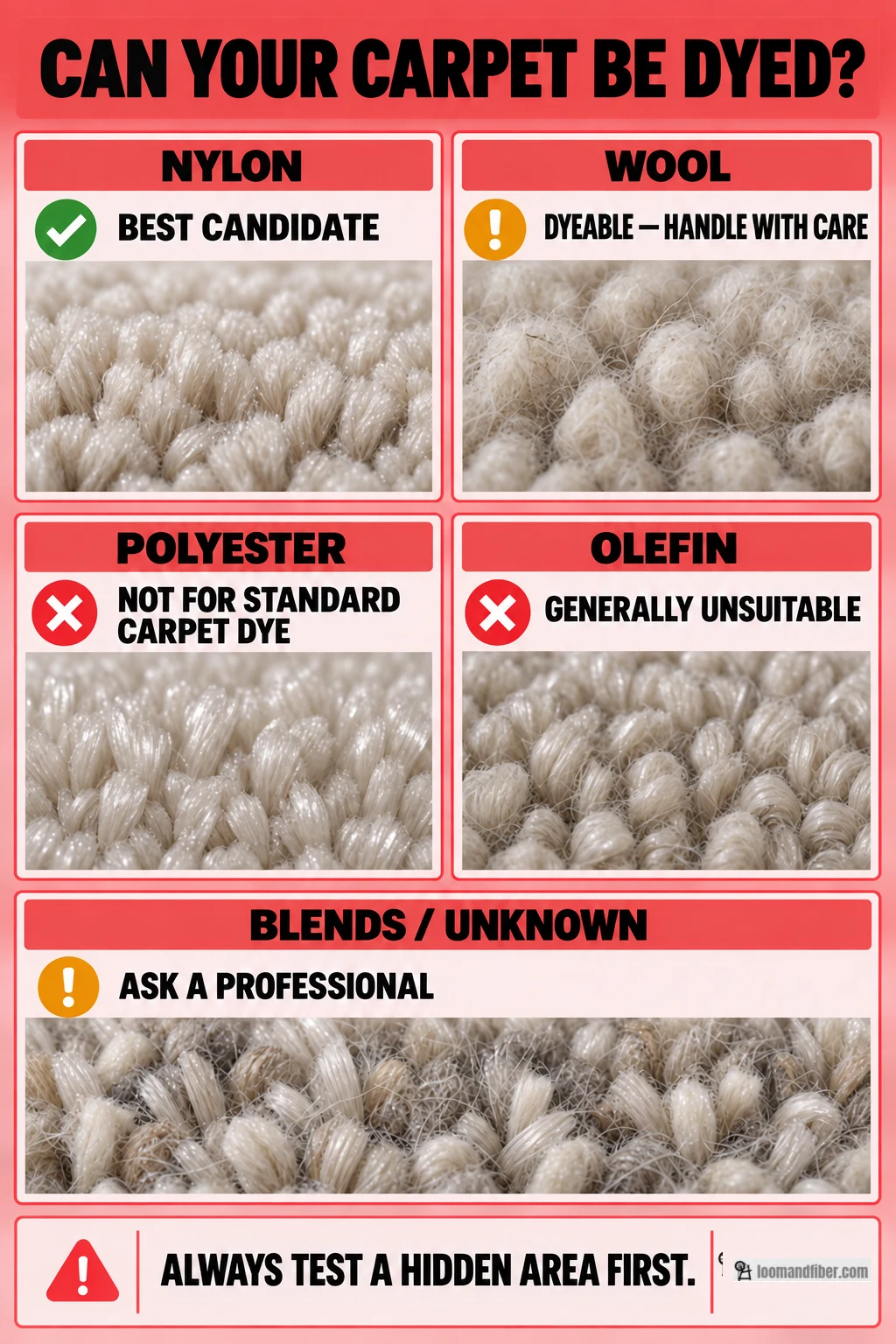
The fiber matters more than the carpet’s age or pile height. Most carpet dye sold for on-site recoloring is an acid dye designed to bond with nylon or protein fibers such as wool. It will not work the same way on every synthetic carpet.
| Carpet fiber | DIY dye suitability | What to know |
|---|---|---|
| Nylon | Usually the best candidate | Accepts compatible carpet dye well, although stain-resistant treatments can affect absorption. |
| Wool | Dyeable, but delicate | Can accept acid dye, but heat, pH, and agitation must be controlled to prevent damage. |
| Polyester | Generally unsuitable | Standard nylon/wool carpet dye will not reliably bond to polyester. |
| Olefin or polypropylene | Generally unsuitable | The fiber is highly resistant to ordinary carpet-dye systems. |
| Acrylic, triexta, or blends | Needs expert assessment | Results depend on the exact fiber composition and how the carpet was manufactured. |
Check the manufacturer’s label, purchase records, or a retained carpet sample before buying dye. If you are unsure how nylon differs from natural fibers, our guide to whether nylon is a natural fiber explains its basic structure and properties. Solution-dyed fibers and some factory-applied stain protectors can resist recoloring even when the general fiber type seems compatible.
Before You Dye: Five Important Checks
- Confirm the fiber. Do not guess from appearance. Ask the manufacturer, retailer, or a carpet professional if the label is missing.
- Choose a darker, compatible color. Dye adds color; it does not remove the color already present. Beige may become tan, brown, olive, or another deeper shade, but it cannot become white.
- Inspect the condition. Dye will not repair worn pile, delamination, mold, pet contamination, or damaged padding. It also will not hide every dark stain.
- Check the warranty. DIY dyeing may void a carpet or stain-protection warranty.
- Test the complete process. Apply the mixed dye to a hidden area or spare offcut, let it dry fully, and judge the dry color—not the wet color.
Choose the Right Carpet Dye
Use a product specifically labeled for your carpet fiber and for the size of your project. A general-purpose fabric dye is not automatically suitable for installed carpet. A complete carpet-dye system may include color powder or concentrate, a pH-adjusting product, and a fixing or rinsing step. Use only the components and ratios named by that manufacturer.
Color selection is partly subtractive: the existing carpet shade remains underneath the new translucent dye. A yellow-beige carpet dyed blue may lean green, for example. Staying in the same color family and moving one or more shades darker is usually more predictable. Order a small quantity or sample first whenever possible.
Supplies You May Need
- Fiber-compatible carpet dye and all manufacturer-specified additives
- Vacuum and an appropriate carpet-cleaning or extraction machine
- Accurate measuring jug, scale, and dedicated mixing container
- Clean pump sprayer or the applicator specified by the dye maker
- Carpet rake or soft carpet brush approved for the pile
- Plastic sheeting, painter’s tape, and drop cloths
- Chemical-resistant gloves and splash-resistant eye protection
- Thermometer if the instructions require a particular solution temperature
- White towels for checking transfer and cleaning small drips
Keep dye tools separate from kitchen utensils. Dye is permanent and can stain skin, grout, baseboards, furniture, and nearby textiles.
How Can You Dye Carpet? Step by Step
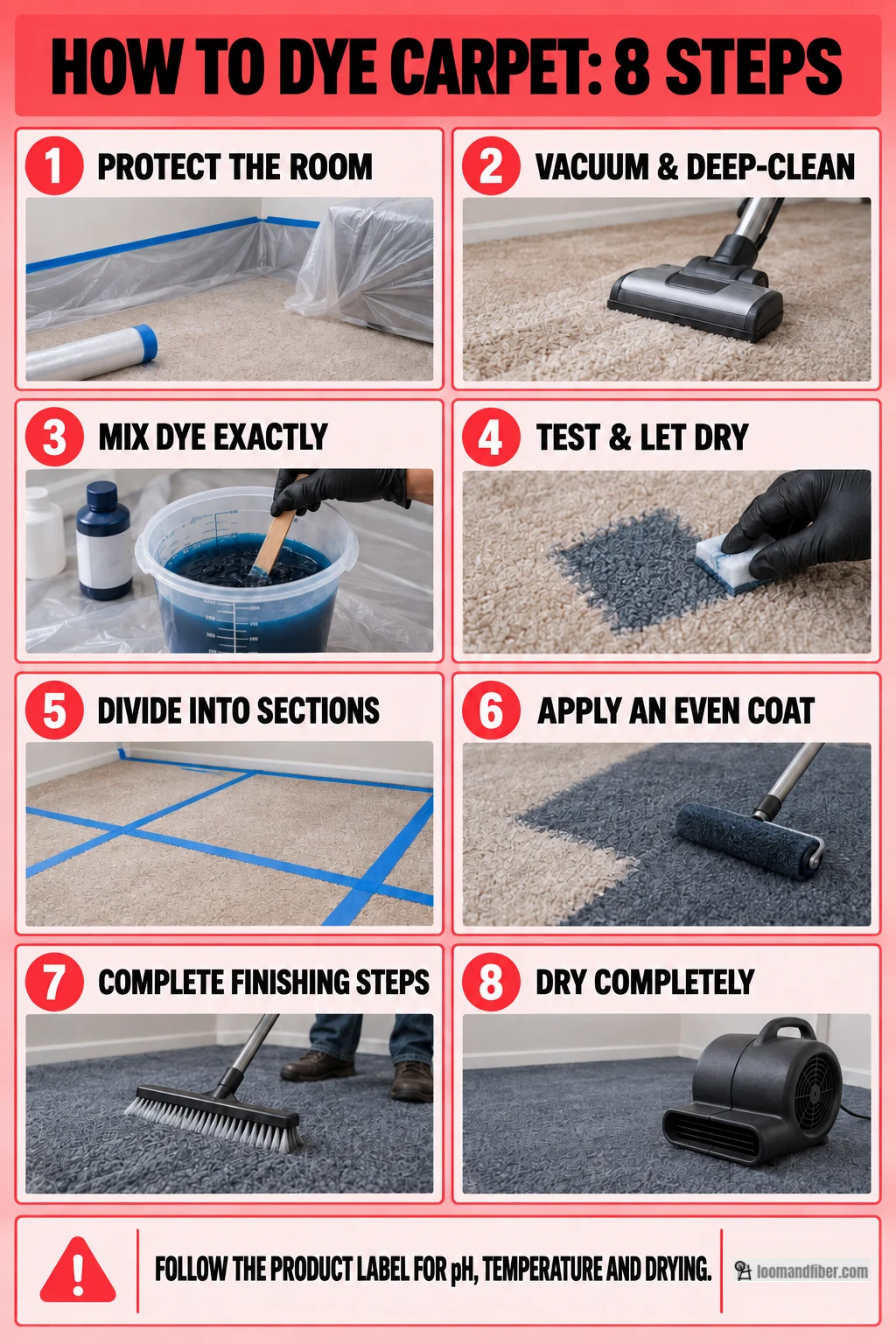
1. Empty and Protect the Room
Remove furniture, rugs, and movable objects. Vacuum dust from baseboards, then protect baseboards, thresholds, walls, doors, and any flooring that is not being dyed. Plan an exit route so you do not walk across finished sections. Open windows and arrange cross-ventilation without pointing a fan directly at wet dye.
2. Vacuum and Deep-Clean the Carpet
Vacuum slowly in two directions. Then clean the carpet using a method compatible with both the fiber and the dye system. Oil, soil, detergent residue, stain protector, and spot-cleaner residue can all create pale patches or streaks. Extract rinse water thoroughly and follow the dye instructions on whether the carpet should be dry or uniformly damp before application.
If sanitation is also a concern, handle that before recoloring and use a fiber-safe method; our guide on how to disinfect carpet explains why disinfecting and ordinary cleaning are different jobs. Never combine cleaning chemicals or apply dye over an unknown residue.
3. Mix the Dye Exactly as Directed
Read the full label and Safety Data Sheet before opening the product. Measure the dye, water, and any pH or fixing additives precisely. Use the water temperature specified by the manufacturer; different systems have different requirements. Mix enough for a consistent section or the entire room, because estimating separate batches can cause visible color changes.
4. Test and Let the Sample Dry
Test behind a door, inside a closet, or on a spare piece. Apply the dye with the same tool, coverage rate, dwell time, and finishing steps planned for the room. Let the test dry completely. Confirm the color, feel, evenness, and lack of transfer to a clean white towel before continuing.
5. Divide the Floor Into Manageable Sections
Use natural boundaries or imagine a grid of small sections. Begin at the corner farthest from the exit. Keep your batch, sprayer pressure, walking pace, and application pattern consistent. If two people are working, one can apply while the other gently works the dye into the pile.
6. Apply a Controlled, Even Coat
Apply the dye at the manufacturer’s stated coverage rate, overlapping passes only enough to maintain a wet edge. Work it through the visible pile with a carpet rake or approved brush so the tips and lower fibers color evenly. Avoid pouring dye directly onto the floor or saturating the backing and pad. More liquid does not mean deeper or more permanent color.
7. Complete the Required Finishing Step
Some systems call for extraction, rinsing, grooming, a fixer, or a specific dwell period; others do not. Follow the instructions for your exact product rather than improvising. Treat edges and transitions carefully, then inspect the surface from several angles while it is still workable.
8. Dry the Carpet Completely
Ventilate the room and keep people and pets out until the carpet is fully dry and the product’s stated re-entry time has passed. Do not replace furniture early. Air movement and dehumidification can help, but avoid excessive heat unless the manufacturer permits it. For practical moisture-control tips, see how to dry carpet fast.
Spot Dyeing a Bleach Mark vs. Dyeing a Whole Room
Spot dyeing is color restoration, not ordinary stain removal. A bleach mark has lost color, and any remaining oxidizer must be neutralized with a product intended for that dye system before color is added. Matching several component colors in an existing carpet is skilled work, so a professional repair often looks better than a single-color DIY patch.
If the spill is recent, first follow the safe containment steps in our guide on how to get bleach out of carpet. Do not pour another chemical onto bleach residue, and never mix bleach with ammonia, acids, or other cleaners.
Common Carpet-Dyeing Mistakes
- Dyeing the wrong fiber: The best technique cannot make standard acid dye bond properly to olefin or polyester.
- Trying to go lighter: Dye cannot lift the existing color. Lightening requires a different process and can permanently damage carpet.
- Skipping a dry test: Wet carpet usually looks darker, making an immediate color judgment unreliable.
- Using generic fabric dye: Choose chemistry made for the identified carpet fiber and installed-carpet application.
- Ignoring pH, temperature, or ratios: Guesswork can lead to weak bonding, color variation, or fiber damage.
- Applying too much liquid: Overwetting can carry dye into the backing, adhesive, or pad and increases drying problems.
- Stopping mid-room: Letting an edge dry before the next pass can leave a visible line.
- Expecting dye to hide damage: Color does not repair worn fibers, ripples, burns, or deep contamination.
Safety Considerations
Follow the product label and Safety Data Sheet, including ventilation, glove, eye-protection, and first-aid directions. Keep children and pets away from the work zone. Cover skin, protect adjacent finishes, and never use food-preparation containers for dye. If you use powered extraction equipment, keep plugs and connections dry and use a properly protected outlet.
Stop if you develop eye, skin, or breathing irritation. A valuable wool carpet, an unknown blend, extensive bleach damage, mold, strong pet odor, or a room with poor ventilation is a good reason to hire a trained carpet-dye technician instead.
Aftercare for Dyed Carpet
- Wait for the manufacturer’s full cure or dry time before vacuuming or moving furniture back.
- Use furniture protectors until you are certain no residual moisture remains.
- Blot future spills promptly rather than scrubbing.
- Use a cleaner approved for the fiber and dye; avoid bleach and high-pH spotters unless specifically permitted.
- Test every new cleaning product in a hidden area.
- Keep a record of the dye formula and batch in case a future touch-up is needed.
Frequently Asked Questions
Can you dye carpet without removing it?
Yes. Compatible nylon and wool carpet can often be dyed while installed. Protect the room, avoid soaking the backing, and use an application system intended for on-site carpet dyeing.
Can you dye a carpet a lighter color?
No. Carpet dye is translucent and adds color; it does not remove the existing shade. Choose the same depth or, preferably, a darker compatible color.
Can ordinary fabric dye be used on carpet?
Do not assume it can. Use a product specifically labeled for your carpet fiber and application method. Generic fabric dye may produce uneven color, poor bonding, or transfer.
Can polyester carpet be dyed?
Not reliably with the acid-dye systems typically used on nylon and wool carpet. Polyester requires different manufacturing-level chemistry, so replacement is usually more practical for an installed polyester carpet.
How long does dyed carpet take to dry?
Drying time varies with the product, application rate, carpet construction, temperature, humidity, and airflow. Follow the label and keep the room out of service until the carpet is fully dry rather than relying on a universal number of hours.
Will carpet dye rub off?
A compatible dye that is mixed, bonded, finished, and dried correctly should be permanent. Color transfer suggests that the dye did not bond properly, excess dye remains, or the wrong product was used. Stop using the area and contact the dye manufacturer or a professional.
Can carpet dye cover stains?
It may make some light discoloration less noticeable, but it will not reliably cover dark stains, oily residue, physical damage, or contamination. Clean and assess the carpet first; dye only when the remaining surface is sound and evenly receptive.
The Bottom Line
So, how can you dye carpet successfully? Start with confirmed nylon or wool, choose a purpose-made dye in a darker compatible shade, prepare the fibers meticulously, test the complete process, and apply measured sections with a consistent wet edge. The dye maker’s directions for pH, temperature, coverage, finishing, and drying take priority. If the fiber is unknown, the carpet is valuable, or the room is large, professional recoloring is the safer route.