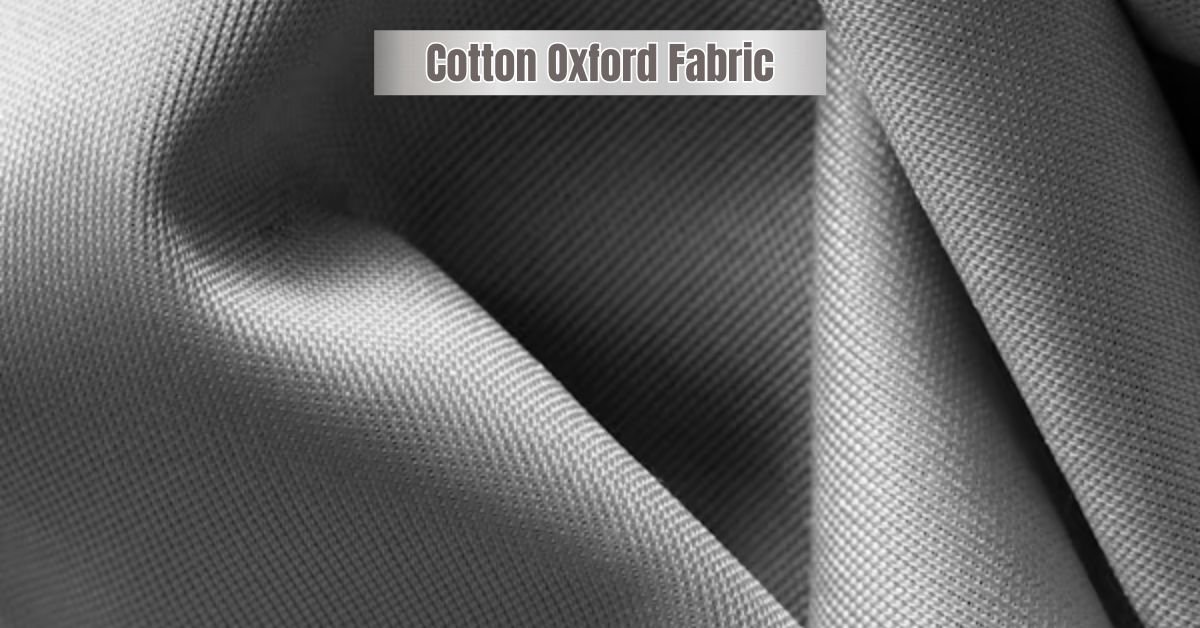

Cotton Oxford fabric is a traditional cloth woven in a special 2×2 basketweave. This creates a robust, airy and slightly textured fabric. It retains its shape and is often used for casual Oxford shirts and other casual garments.
What Is Cotton Oxford Fabric?
Cotton Oxford cloth is a soft yet durable cotton weave. It is made by weaving fine warp yarns with coarser weft yarns, which creates a slightly bumpy grid pattern. The basketweave pattern lends a nice texture and the cotton fibers ensure it is soft and breathable. In all, Oxford cloth is a heavy, soft cloth that makes an excellent choice for durable everyday shirts.
Key Characteristics:
- Soft but durable: A mix of fine and coarse yarns make the cloth soft but resistant to wear.
- Unique feel: The 2×2 basketweave pattern creates a slight texture and “bumpiness” in the fabric.
- Breathable: Cotton fibers allow air circulation so it helps keep the wearer cool.
- Good drape & shape: Retains shape after washing, and doesn’t wrinkle nearly as much as other lightweight cotton fabrics.
How Cotton Oxford Fabric Is Made
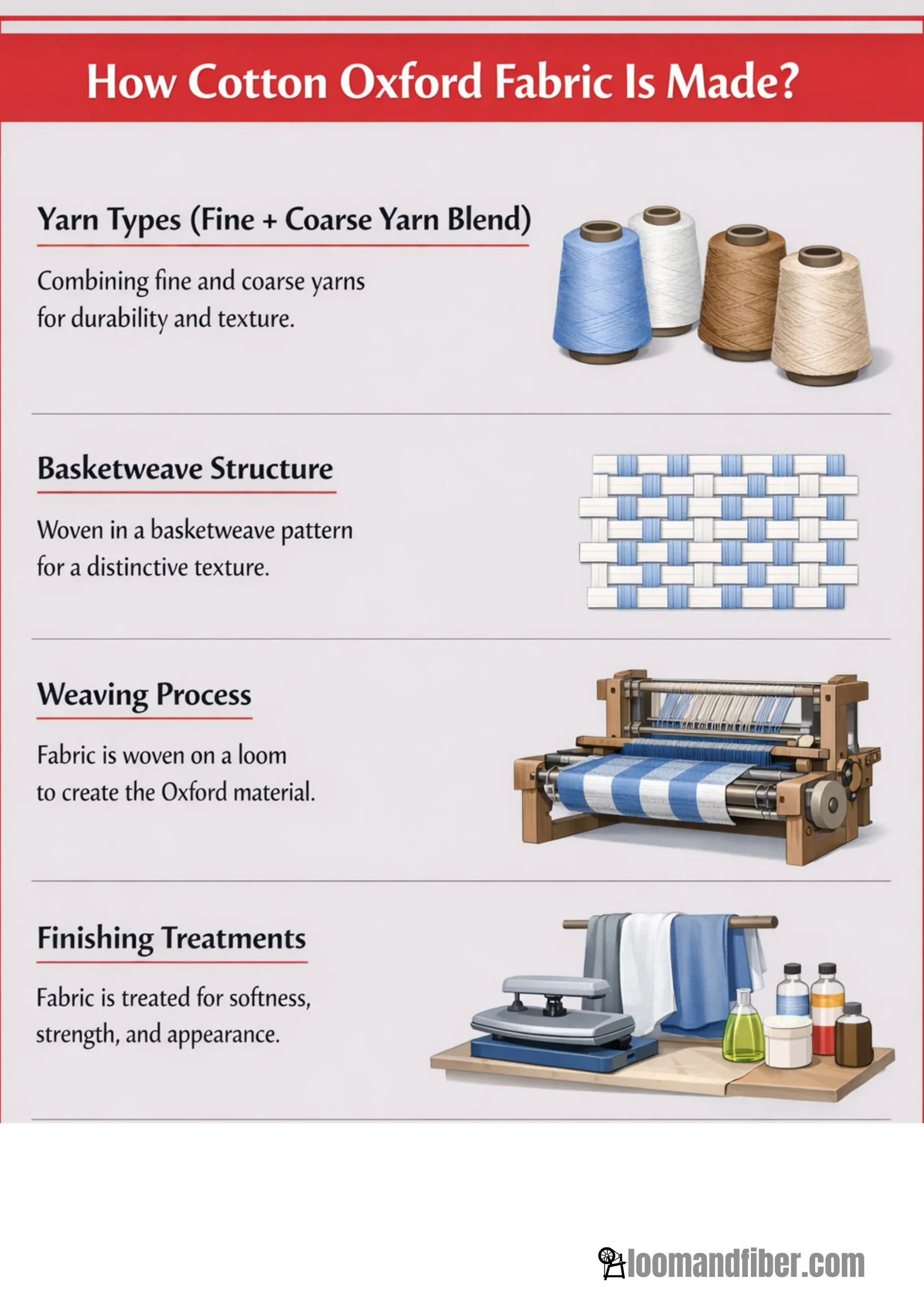
Yarn Types
Yarns of varying thicknesses are used. Normally, very thin warp (longitudinal) cotton yarns are combined with thicker filling (crosswise) yarns. Usually the filling yarn is undyed and the warp yarns are coloured. This combination results in the weight and softness of Oxford cloth.
Basketweave Structure
The unique feature is the basket weave (2×2). This involves weaving two threads over and under two threads. This repeating pattern forms a checkerboard pattern similar to a basket. This woven chunkiness makes the fabric strong and has a distinctive texture.
Weaving Process
When producing cloth, coloured yarns are loaded onto a loom and machine woven. The loom bundles two or more warp threads, which move together over the weft, creating the basket pattern. Mass production uses automatic looms, small runs or quality mills may loom the cloth by hand.
Finishing Treatments
Finishing treatments are applied to Oxford fabric after weaving. It can be preshrunk or given a rinse to soften. Other Oxfords are mercerized for additional shine or enzyme-washed for a softer feel. This enhances color, feel and prepares the cloth for garment production.
Key Features of Cotton Oxford Fabric
- Airflow: The cotton and basketweave are airy. It is a breathable cloth, so it doesn’t make you hot.
- Durability: The 2×2 basketweave makes Oxford cloth durable. It’s also pretty resistant to washing.
- Wrinkle Resistance: Oxford doesn’t wrinkle as much as linen. It hangs reasonably well and looks relatively crisp when washed, but will wrinkle more than treated cloth or very smooth weaves.
- Texture & Appearance: The basket weave pattern and often multi-colored weave create a speckled appearance. It is traditional, casual and classic.
- Comfort: 100% cotton is soft to wear. It is heavy, but not scratchy, so clothes feel warm but crisp.
Different Types of Oxford Fabric
| Fabric Type | Weave & Yarn | Look & Common Use |
|---|---|---|
| Plain Oxford | 2×2 basket weave, thicker yarns | Rougher texture, thick and durable. Casual button-downs, work shirts |
| Pinpoint Oxford | Fine basket weave, fine yarns | Smoother and higher thread count. Dressier than plain Oxford |
| Royal Oxford | Fine basket weave, very fine yarns | Very smooth with subtle sheen. Formal shirts for elegant wear |
| Oxford Chambray | Lightweight basket weave, yarn-dyed | Soft, lightweight, heathered look. Great for summer or casual shirts |
Plain Oxford
The traditional “Oxford cloth” employs the standard 2×2 basket weave with fat yarns. It has a coarse, casual feel. Oxford is fairly heavy and durable. It is commonly used for traditional button-down shirts and overshirts.
Pinpoint Oxford
Pinpoint Oxford is a more refined Oxford cloth. It has a basket weave with finer, high thread count yarns and it is more refined and dense than Oxford cloth. It still has some drape and texture but less so, so pinpoint is a good choice for dressier or business-casual styles.
Royal Oxford
Royal Oxford is a deluxe version. It is made with fine yarns and a fine basketweave, occasionally with decorative patterns. This makes it soft, drapey and shiny. Royal Oxford shirts are very elegant and are often used for formal occasions and dress shirts.
Oxford Chambray
Oxford chambray refers to Oxford fabric with a chambray-like appearance. It’s a lighter Oxford (approximately 90 gsm) which can be made with colored warp and white weft. It has a speckled, heathered appearance. Oxford chambray is soft, light and perfect for warm climate clothing and casual shirts.
Common Uses of Cotton Oxford Fabric
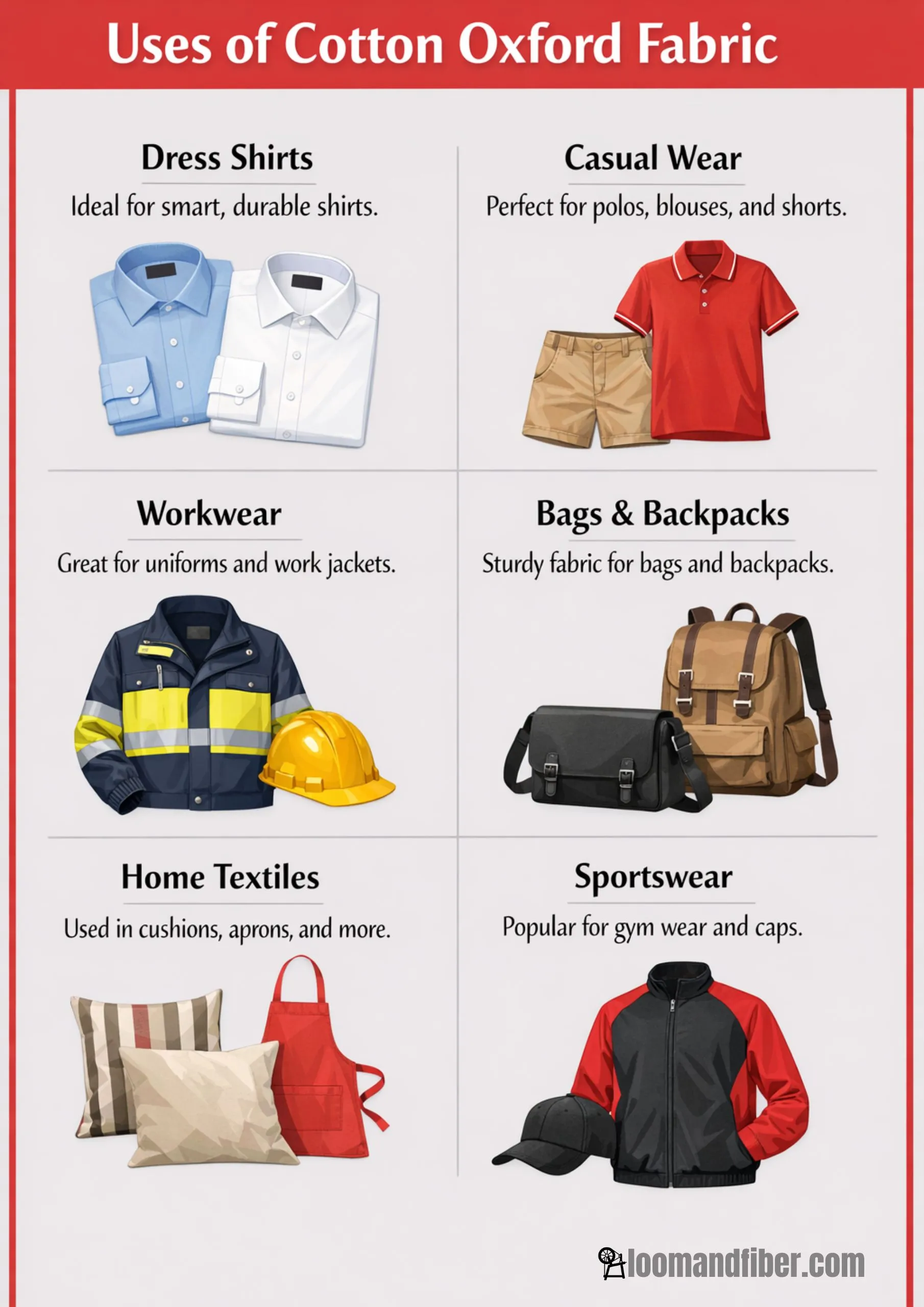
- Formal Shirts (particularly button-down): OCBD and other dress shirts are traditionally made of Oxford cloth. It strikes a good balance between comfort and formality, making it ideal for smart-casual workwear or weekend wear.
- Everyday Shirts: In addition to formal shirts, Oxford is also popular for casual shirts. The heavy fabric creates a casual appearance that can be worn with jeans or chinos.
- School Uniforms: Oxford’s neat look and durability are also ideal for school uniforms. It’s wrinkle-resistant and withstands student wear.
- Light Bedding: Brushed Oxford cotton is used for linens. Brushed Oxford sheet and pillow cases are soft and durable. It starts out soft, and gets softer with every wash.
- Workwear: Oxford can also be used in light jackets, overshirts and work uniforms. Its durability makes it suitable for regular wear” or “moderate wear.
Cotton Oxford vs Other Fabrics
| Fabric | Weave | Texture & Formality | Typical Use |
|---|---|---|---|
| Oxford | 2×2 basket weave | Substantial, textured, matte | Casual/Smart-casual shirts |
| Poplin | Plain weave | Smooth, crisp, lightweight | Dress/business shirts |
| Broadcloth | Fine plain weave | Very smooth, formal | Formal/dress shirts |
| Twill | Diagonal weave | Soft drape, subtle sheen | Dress pants, denim, casual wear |
Oxford vs Poplin
Cotton Oxford is a coarse 2×2 basket weave, making it heavier and textured. Poplin is a fine plain weave with fine yarns, producing a very crisp surface.
Oxford vs Broadcloth
Broadcloth is just a fine plain-weave cotton (such as poplin). It is fine, with no apparent weave, and is soft and opaque. On the other hand, Oxford cloth is heavier and burlier. Broadcloth is used to make formal shirts, while Oxford is considered more workwear-like. In reality, the basketweave of Oxford cloth makes it more rugged but less structured than broadcloth.
Oxford vs Twill
Twill (like jeans) has a diagonal weave, allowing it to be soft and have a sheen. Oxford uses a basket weave, while twill has a diagonal weave structure, so Oxford is more rigid and lacks shine. Twill is soft and drapes well, with wrinkle resistance. Meanwhile, Oxford is stiffer and heavier. Twill is found in dress trousers, denim shirts, and Oxford is the staple cloth for casual shirts.
Advantages and Disadvantages
Pros:
- Tough: With a basketweave and high-quality cotton, it’s very durable.
- Breathable: It is a type of cotton, so it is airy.
- Versatile: Good for casual and business-casual.
Cons:
- Heavier: Thicker than plain weaves.
- Less Formal: Less formal than plain weaves.
Is Cotton Oxford Fabric Good for Summer?
Cotton Oxford is fairly summer-friendly because of its breathability. The weave allows air to flow through, so you won’t overheat. But regular Oxford shirts are mid-weight (130-160 GSM), which is heavier than summer weight.
Read More>> Types of Lightweight Cotton Fabric for Summer.
How to Care for Cotton Oxford Fabric
- Washing: Wash in a machine on warm with a mild detergent. Cotton Oxford can usually be machine-laundered. It’s best to turn shirts inside out.
- Ironing: Medium heat and steam. Ironing will work well with Oxford fabric.
- Shrinkage: Oxfords are often preshrunk but to play it safe, use cool water and low heat in the dryer. Hand wash or machine wash on a gentle cycle to pre-shrink new shirts.
- Drying: Tumble dry low or air dry. Cotton can shrink and wrinkle if exposed to high temperatures, so we recommend tumble dry low or hang dry. Hanging the shirt immediately and reshaping the weave will help maintain the crisp appearance.
How to Identify High-Quality Oxford Fabric
- Thread count: Good Oxford weaves have a fairly even thread count, but the yarn quality and evenness of the weave are critical.
- Weave tightness: Check the basket weave. A good Oxford will have closely packed threads.
- Texture: Good Oxford will be even and crisp, not floppy.
- Fabric weight(GSM): Traditional Oxford shirting is medium weight (130-160 gsm).
Is Cotton Oxford Fabric Ecofriendly?
The sustainability of Cotton Oxford relies on the type of fiber and production. Cotton is water- and pesticide-intensive, so a non-organic Oxford has a moderate environmental impact. But cotton is natural and biodegrades. The best environmentally friendly Oxfords are those made from organic cotton (certified by the Global Organic Textile Standard or GOTS) or recycled cotton/polyester. These alternatives are better for the environment than average cotton.
Conclusion-
Cotton Oxford is a tough, breathable fabric with a basketweave pattern. We’ve explored its characteristics – soft tough, moderately heavy, and textured. Its variants (plain, pinpoint, Royal, chambray) allow you to select anything from a boorish work shirt to a fine dress shirt. Its benefits (comfortable, durable, versatile) make it ideal for shirts, uniforms and even sheets.
For the planet, look for organic and/or recycled cotton Oxford to lessen environmental impact. So, Oxford remains a popular and versatile fabric: stylish for smart-casual, easy to maintain, and good year-round.
Read More>> What is Cotton Pique Fabric?
FAQs
Oxford cloth is usually 100% cotton, but not necessarily. High-quality Oxford shirt cloth is often 100% cotton and is soft and comfortable. But you will also find Oxford cloth that is a cotton and polyester blend, particularly in performance or uniforms. Always check the label.
Oxford is more casual than formal. Its basket weave makes it look casual. However, some Oxfords such as pinpoint or Royal Oxford cloth can be suitable for business-casual and some formal occasions. In all, traditional Oxford cloth is ideal for casual and business-casual shirts, but not black-tie.
No, it’s not as wrinkly as other weaves. The basketweave and heavier threads keep Oxford cloth wrinkle-resistant. It does wrinkle when folded or stored, but it can be ironed or hung to flatten it. It’s a cleaner look than thin cotton or linen.
Yes. Cotton Oxford is very airy. The woven cotton basket-weave structure allows air circulation, which makes it feel cool.
Absolutely. In fact, cotton Oxford is a traditional shirt fabric. It’s durable, resistant and comfortable. Oxford shirts are staple wardrobe items, both for casual and dressy occasions.