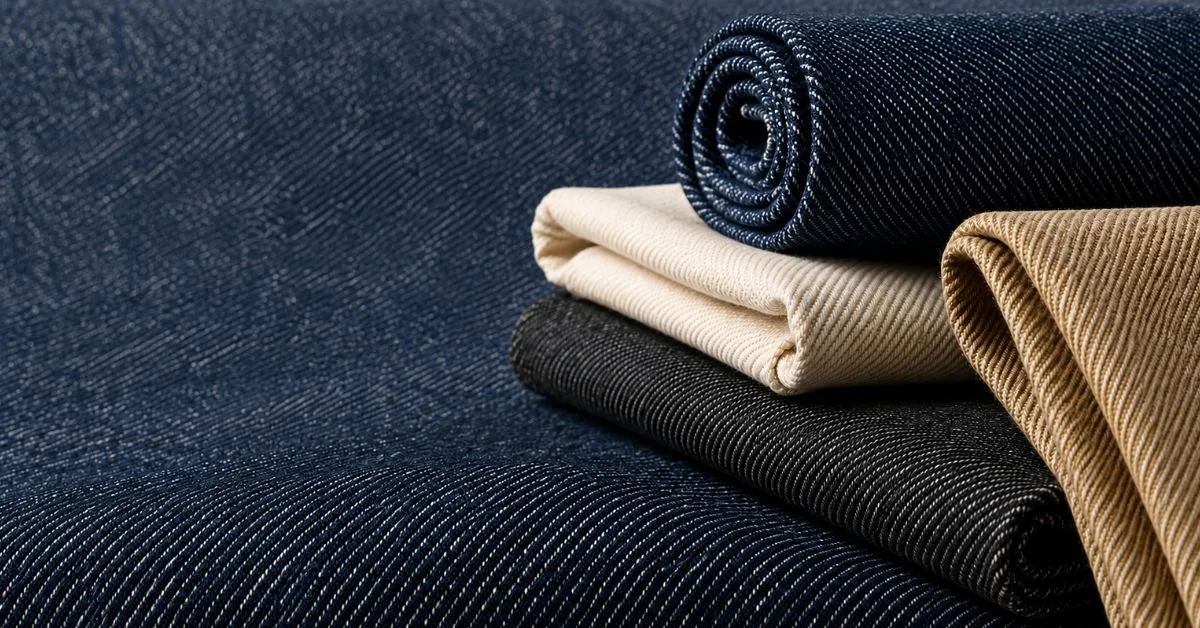

Introduction: What Is Bull Denim?
Bull denim is a heavy cotton twill fabric that is often piece-dyed after weaving for a more uniform color on both sides. Manufacturers typically produce it from a cotton yarn, although stretch and blended variations are also available. The 3×1 twill construction is common, but it is always necessary to check the exact specifications before purchasing. Bull denim is usually a firm, substantial fabric that is heavier than most of the denim available for apparel. Manufacturers use it for slipcovers, upholstery, cushions, bags, aprons, workwear, and structured garments. It is a strong but flexible canvas that is suitable for both utility and fashion products. However, it is not inherently waterproof, stain-proof, or fire-resistant. The word bull refers to the fabric’s substantial quality, and it does not imply any animal origin.
Quick Facts About Bull Denim
- Typical fiber: 100% cotton, with some blended or stretch variations
- Weave: Dense twill, commonly 3×1
- Common appearance: Solid, evenly colored surface
- Typical character: Heavy, strong, structured and gradually softening
- Common weights: Often around 10–14 oz/yd², but lighter and heavier products exist
- Best known uses: Slipcovers, upholstery, bags, aprons and structured apparel
- Stretch: Usually none unless elastane is specified
- Water resistance: Not naturally waterproof
- Washability: Depends on dye, finish and end-use specification
The commercial nomenclature is not fully standardized, so it is essential to understand that not all of the fabrics named bull denim are equal. It is also necessary to remember that weight is not the sole characteristic of such denim. The yarn density, weaving pattern, and finishing treatments also impact its properties.
Why Is It Called Bull Denim?
The term bull typically refers to the fabric’s substantial and heavy character. However, there are various theories about the name’s origin, and most of them lack sufficient evidence. Therefore, it is better not to assume that any particular fact or event led to this designation. It is also essential to remember that bull denim is not made from leather, hides, or any other animal tissues. The word bull does not describe the fiber content of this fabric.
How Is Bull Denim Constructed?
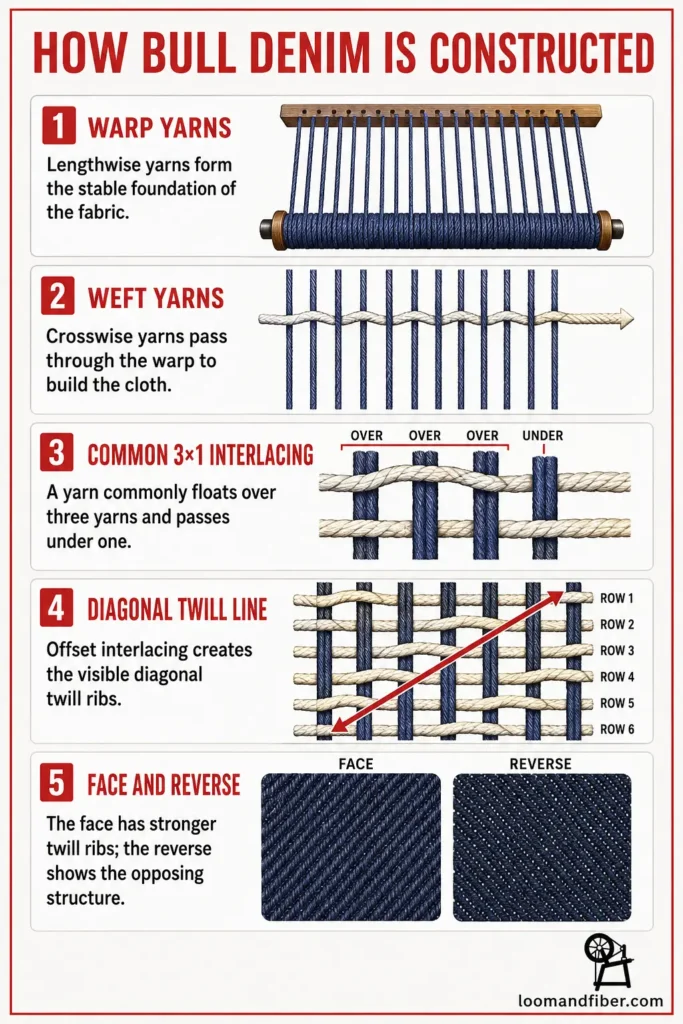
Bull denim is a twill fabric, which means that its weft yarns cross the warp yarns at an angle. The interlacing pattern on the fabric’s surface is created by the warp and weft yarns. Most of the variations of this denim use a 3×1 construction, which means that three warp yarns cross one weft yarn. However, it is always necessary to check the exact weaving pattern before purchasing.
A 3×1 construction means that one yarn floats over the three warp yarns before crossing under them. The angle of the float is responsible for the fabric’s distinctive ribs. They run along the length of the fabric at an angle. The yarns that float over others make the fabric flexible, while those that cross three warp yarns hold its structure. Bull denim is usually a firm, substantial fabric with a moderate amount of drape. It has a solid, uniform coloration that is achieved by piece-dyeing after weaving. This process makes the cross-section of the yarns fully colored, so that the fabric’s face and back are virtually indistinguishable. However, it is not always possible to achieve full color uniformity, especially for light-colored denim.
Some of the characteristics of bull denim are partially dictated by its sett. This term describes the number of warp and weft yarns per inch. The sett impacts the yarn density, which in turn determines the fabric’s weight, drape, and feel. A higher sett usually means that the yarns are closer to each other. This results in a fabric that feels more compact and does not allow as much light to pass through. The construction of twill also impacts abrasion resistance, as the yarns rub against each other at an angle.
How Is Bull Denim Made?
The production process can vary depending on the manufacturer, but most of them follow a similar sequence of steps:
- Preparation of cotton fibers
- Yarn production
- Warp preparation
- Weaving process
- Dyeing
- Fabric finishing
- Inspection
- Labeling and packaging
Most of the manufacturers make bull denim from carded cotton fibers. These fibers are combed and prepared for spinning. The spinning process creates yarns from the fibers. Warp yarns are prepared separately for weaving. The fabric is then produced by interlacing warp and weft yarns. It is important to note that most of the manufacturers piece-dye the fabric after weaving. This step is crucial for achieving the solid coloration typical for this denim. The finished fabric is then washed, softened, sanforized, brushed, and inspected. The inspectors ensure that the fabric weight and width are consistent and that the material does not have any defects. Rolls of fabric are labeled and packaged accordingly.
The carding process ensures that the fibers are properly oriented before spinning. The spinning process itself makes yarns from the fibers. It is essential to prepare the warp yarns correctly since they are under the greatest tension during weaving.
Most of the manufacturers that produce bull denim piece-dye their fabrics after weaving. However, it is always necessary to check whether the desired coloration is achievable. Sanforization is a process that eliminates shrinkage during laundering. It is essential to remember that sanforized bull denim might still shrink slightly after washing. Softening processes improve the drape of the fabric, but they might also make it stiff. Finishing treatments can also impact the fabric’s waterproofness, stain resistance, and other properties. Therefore, it is always essential to request the production specifications before purchasing.
How Bull Denim Is Dyed
The dyeing process determines the appearance of the finished fabric. Traditional jeans denim is usually made from indigo-dyed yarns, while bull denim is piece-dyed after weaving. Indigo-dyed fabrics have a characteristic blue coloration that is deeper on the face of the fabric and lighter on the back. This effect is caused by the fact that only the yarns are dyed, and not the entire cross-section of the yarn. As a result, the face of the denim is darker, while its back is almost white. The friction of the fabric against light-colored surfaces also reveals the white color of denim’s back.
Bull denim is piece-dyed, which means that the fabric as a whole is dyed after weaving. This process makes the yarns fully colored, so that the cross-section of the yarns is of a uniform color. As a result, the face and back of the fabric are virtually indistinguishable. However, it is still possible that the two sides of bull denim might differ in coloration. This mostly depends on the dyeing process and the specific characteristics of the fabric. Piece-dyed cotton fabrics can be found in a variety of colors, from black and white to natural and fashion colors. Therefore, bull denim can be used to make garments, accessories, and other products in virtually any solid color.
What Does Bull Denim Look and Feel Like?
Bull denim usually has a distinctive appearance that is determined by its construction. The fabric has visible diagonal lines that are created by the interlacing of warp and weft yarns. These lines become more prominent when the fabric is exposed to light at an angle. The coloration of bull denim is typically uniform, with no noticeable variations on the fabric’s face or back. It is essential to remember that the appearance of denim is to a large extent determined by its weight. Heavier fabrics have a more substantial look and feel than lighter ones. Heavier bull denim also has a tighter weave, which makes it less prone to wrinkling.
Bull denim typically has a firm, structured feel that is characteristic of twill fabrics. It has a smooth surface that is not as coarse as most utility canvases. The fabric also has limited drape, which means that it does not flow as easily as some other types of denim. Heavier weights of bull denim are more substantial and less flexible than lighter weights. However, they still have better drape and feel than most canvas materials of a similar weight. New bull denim might feel stiff, but it will typically soften after washing and with continued use.
Practical Bull Denim Identification Test
Before purchasing bull denim in bulk, it is essential to conduct a few tests to determine the characteristics of this fabric. These tests will help identify the weight, feel, and appearance of the fabric.
Test Description Check the fabric’s surface for visible diagonal lines Examine the fabric’s face and back for color uniformity Fold the fabric to check its stiffness Expose the fabric to light to examine the cross-section of its yarns Feel the tightness of the yarn arrangement Read the fabric’s composition description Check the weight specification Ask whether the fabric is preshrunk Request information about the fabric’s colorfastness and shrinkage characteristics Ask for a sample before purchasing upholstery fabric
Bull Denim Weight Explained
Most manufacturers that produce bull denim express its weight in ounces per square yard (oz/yd²). This measurement describes the weight of one square yard of fabric. Some manufacturers also use grams per square meter (GSM) as a standard weight measurement. The two systems are interchangeable, but it is essential to remember that 1 oz/yd² equals approximately 33.906 g/m².
- 10 oz/yd² ≈ 339 GSM
- 12 oz/yd² ≈ 407 GSM
- 14 oz/yd² ≈ 475 GSM
Most of the bull denim fabrics that are available commercially weigh between 10 and 14 oz/yd². However, there are also lighter and heavier variations of this denim.
Lighter Bull Denim
Lighter weights of bull denim are easier to work with and create less bulky seams. They are also suitable for garments, aprons, and other lightweight accessories. It is always important to check the specifications of the fabric, as its weight determines its performance characteristics.
Midweight Bull Denim
Midweight variations of bull denim offer a good balance between flexibility and structure. They are perfect for a wide range of applications, including home accessories and apparel. This weight of bull denim is usually suitable for most projects, but it is always essential to examine the specifications of the fabric.
Heavy Bull Denim
Heavy bull denim is ideal for applications that require a substantial fabric. It can be used for slipcovers, aprons, and other products that need to retain their shape. However, heavy weights of bull denim also create bulkier seams and might be difficult to work with.
Bull Denim Properties
Durability
The tight construction of bull denim makes it a durable fabric that can withstand moderate abrasion. However, the durability of this fabric also depends on the yarn strength, finishing, and seam construction. The weight of the fabric is not necessarily indicative of its durability.
Structure
Bull denim typically has a firmer structure than most of the apparel denim fabrics. This property makes it suitable for products that need to retain their shape, such as bags or covers. It also makes bull denim more challenging to work with in certain applications, such as garments with a dramatic drape.
Breathability
Cotton bull denim is typically a breathable fabric, but its tight construction prevents it from being as breathable as some of the lighter cotton fabrics. Therefore, heavy weights of this denim might be uncomfortable to wear in warm weather.
Absorbency
Untreated bull denim is a fairly absorbent fabric. This property makes it challenging to use in applications that require water resistance. Most of the manufacturers that offer bull denim provide specifications regarding the fabric’s waterproofness and stain resistance.
Softening
Bull denim typically softens with washing and with continued use. This characteristic is particularly important for garments and covers, as it enhances the comfort of the finished products. However, some finishing treatments might also impact the softness of this fabric.
Shrinkage
Bull denim typically shrinks after laundering, which means that it is essential to follow the manufacturer’s care instructions. The preshrinking process eliminates most of the shrinkage that is typical for untreated denim. However, it is always necessary to remember that preshrunk fabric might still shrink slightly after washing.
Color Behavior
Bull denim is available in a wide range of colors, including black, white, natural, and various fashion colors. Piece-dyed denim typically has a uniform coloration that is virtually indistinguishable on the fabric’s face and back. However, it is always important to request a sample to ensure that the desired color is available.
Dark colors might be more challenging to work with, as they might bleed or transfer to other surfaces. It is essential to examine the colorfastness of the fabric and follow the manufacturer’s recommendations when laundering or caring for the fabric. Exposure to sunlight might also impact the color of the fabric.
Stretch
Most of the conventional bull denim fabrics do not have significant stretch. This characteristic is especially important for garments, as it determines the comfort and fit of the finished product. Stretch bull denim usually contains elastane, which makes it more comfortable to wear. It is essential to request the specifications of the fabric to ensure that its stretch properties are suitable for the intended application.
Advantages and Disadvantages of Bull Denim
Advantages
- Strong and durable
- Resists abrasion
- More structured than apparel denim
- Usually softer than utility canvas
- Available in a wide range of solid colors
- Suitable for upholstery and sewing applications
- Washable, if allowed by the manufacturer
- Becomes softer with washing
- Has good shape retention
- Can be used for apparel and utility applications
Disadvantages
- Heavy and difficult to work with
- Might shrink during laundering
- Dark colors might bleed
- Can be too heavy for certain applications
- Takes longer to dry
- Not inherently waterproof
- Can be uncomfortable to wear
- Can absorb liquid and stains
- Has limited drape
- Might require matching of dye lots
What Is Bull Denim Used For?
Bull denim is a versatile fabric that can be used for a wide range of applications. However, it is essential to choose the right weight and specifications for each project.
Upholstery and Furniture
Bull denim is suitable for upholstery applications, as it can withstand the demands of everyday use. Manufacturers often use this fabric to make seat covers, chair backs, and other upholstery products. It can also be used for ottomans, cushions, and upholstered headboards. The tight construction of this denim ensures that the finished products have a smooth surface and well-defined edges. The cotton content also makes it comfortable against the skin.
Slipcovers
Bull denim is a popular choice for removable slipcovers. Its firm construction ensures that the finished product holds its shape, while its flexibility allows it to be easily placed over various pieces of furniture. Manufacturers also offer preshrunk variations of this fabric, which is essential for washable slipcovers. The solid coloration of bull denim also makes it a great option for slipcovers.
Bags and Accessories
Bull denim can be used to make a wide range of bags and accessories. The firm construction of this fabric ensures that the finished products hold their shape, while its tight weave prevents the bag from stretching out of shape. The fabric is also ideal for making utility bags, as it can withstand the demands of everyday use. However, it is essential to reinforce the handles and other stress points when working with this fabric.
Aprons and Workwear
Bull denim is a great option for making aprons, as it can withstand the rigors of everyday use. Its tight weave makes it fairly abrasion-resistant, while its firm structure ensures that the apron holds its shape. It can also be used to make workwear products, such as utility jackets or trousers. However, it is essential to ensure that the weight of the fabric is suitable for the intended application.
Clothing
Bull denim is a popular choice for making clothing items, such as jackets or trousers. It can also be used to make skirts or dresses, but it is essential to ensure that the weight and structure of the fabric are suitable for the intended application. Heavy weights of this denim might not be appropriate for garments that require a dramatic drape.
Home Decor and Crafts
Bull denim can be used for a wide range of home décor and craft applications. This fabric is ideal for making cushion covers, as its firm structure ensures that the finished product holds its shape. It can also be used to make storage bags, table covers, and other utility products. Some lighter variations of this denim can also be used for curtains, but it is essential to ensure that the weight and characteristics of the fabric are suitable for this application.
Is Bull Denim Good for Upholstery?
Bull denim can be a great option for upholstery, but it is essential to ensure that its characteristics match the demands of the intended application. The weight and structure of this fabric make it suitable for most residential upholstery applications. However, it is essential to ensure that the selected variation of bull denim has sufficient abrasion resistance. This is especially important for furniture that experiences heavy use, such as a family sofa. A removable slipcover experiences different wear conditions than a permanent upholstery cover, so it is essential to match the characteristics of the fabric to the demands of the application.
Is Bull Denim Good for Clothing?
Bull denim is a great option for making clothing items, such as jackets or aprons. It has a firm structure that allows the finished garments to hold their shape, while its moderate weight makes it comfortable to wear. This fabric is ideal for most utility clothing items, such as chore jackets, work aprons, or structured trousers. It can also be used to make skirts, dresses, and other garments that require a substantial fabric.
Bull Denim vs Regular Denim
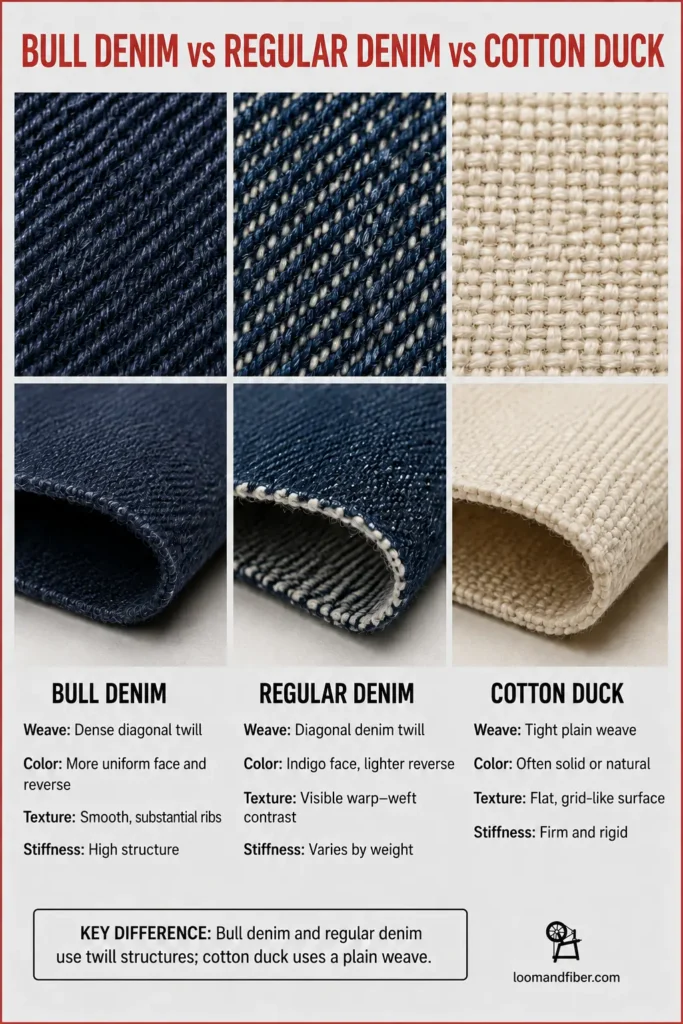
Regular denim and bull denim are two variations of denim that are used for similar applications. However, there are also several significant differences between these fabrics. Traditional denim is typically made from indigo-dyed warp yarns and white weft yarns. This construction creates the characteristic blue coloration of denim garments, as well as the white threads on the fabric’s back. Bull denim is typically piece-dyed after weaving, which creates a uniform coloration on both sides of the fabric.
It is also important to note that not all variations of bull denim outweigh regular denim. Some of the regular denim fabrics are also fairly heavy, especially those that are designed for workwear applications.
Cotton Duck vs Bull Denim
Bull denim and cotton duck are two durable cotton fabrics that have different construction and characteristics. Cotton duck typically has a plain weave, while bull denim is a twill fabric. These differences make duck a stiffer and more abrasive fabric, while bull denim has a distinctive diagonal pattern. Duck is usually available in a wide range of weights, from light to extra heavy. Heavier weights of duck are often used for making tents or other heavy-duty products, while lighter variations of this fabric are suitable for garments or accessories.
Cotton duck is typically used for making canvas products, such as bags, tents, or tarps. It is a fairly stiff fabric that is ideal for making utility items. However, it is usually more challenging to work with than bull denim. Finishing treatments can also impact the characteristics of duck fabric. For example, waxed duck is more waterproof and durable than untreated duck.
Bull denim typically has a smoother surface than duck, which makes it more comfortable to wear. It is also easier to work with in most applications. Therefore, it is a better option for making garments and other products that require a soft and flexible fabric. However, duck might be a better choice for making heavy-duty products, as it is a stiffer and more durable fabric.
Bull Denim vs Canvas
Canvas is a general term that describes a variety of fabrics with different weights and characteristics. These fabrics typically have a plain weave, but their surface appearance and properties can vary significantly. Canvas products are usually made from cotton, although they can also be made from other fibers, such as hemp or linen. Most canvas fabrics are fairly stiff, especially when compared to bull denim.
Bull denim is a twill fabric that typically has a distinctive diagonal pattern and a smooth surface. This construction makes it more flexible and comfortable to work with than canvas. However, it is essential to remember that the characteristics of canvas depend on the fiber content and finishing treatments. Some canvas fabrics are quite soft and flexible, while others are stiff and coarse.
Most canvas products are fairly abrasive, which makes them suitable for making utility items. However, their properties can vary significantly depending on the weight and weave of the fabric. Lighter canvas fabrics are typically more flexible and comfortable to wear than heavier variations of this fabric.
Bull denim typically feels more comfortable against the skin than canvas, so it is a better option for garments and other apparel products. Canvas is usually better suited for making utility items, such as bags, tarps, or tents. Some canvas products also have special treatments that make them waterproof, durable, or flexible.
Bull Denim vs Twill
Twill is a general term that describes a variety of fabrics with a distinctive diagonal pattern. These fabrics typically have a tighter construction than plain weave fabrics, which makes them more durable and structured. Twill can be made from a variety of fibers, including cotton, wool, and synthetic materials. Most of the cotton twill fabrics are fairly durable and have a characteristic diagonal pattern on their surface.
Bull denim is a type of cotton twill that typically has a fairly tight construction. This construction, along with the fabric’s weight, makes it more substantial than many other twill fabrics. The surface of bull denim also has a distinctive diagonal pattern. There are many variations of cotton twill, including denim, drill, gabardine, and chino. Therefore, it is not possible to distinguish between twill and bull denim by looking at the fabric’s surface.
Bull Denim vs Drill Fabric
Drill fabric is a durable twill that is typically made from cotton or a cotton blend. This fabric has a fairly tight construction, which makes it strong and abrasion-resistant. It also has a distinctive diagonal pattern on its surface, similar to most twill fabrics. Most of the drill fabrics are fairly heavy, which makes them ideal for making durable garments or utility items. The weight and tightness of drill also make it similar to bull denim.
Drill fabric is often used for making uniforms, workwear, and durable garments. These applications are similar to the uses of bull denim, but drill is typically a lighter fabric than bull denim. Therefore, it is essential to examine the specifications of these fabrics to determine which one is more suitable for a particular application.
Bull Denim vs Raw Denim
Raw denim refers to denim that is not washed or treated before being sold. This means that the fabric is stiff and has a characteristic blue coloration. Raw denim garments develop unique creases and wear patterns as they are worn. The term raw denim does not describe the construction of the fabric, since most denim garments, including those that are not raw, have a similar twill weave.
Bull denim typically has a fairly tight construction that is similar to most denim garments. However, it usually has a uniform coloration that is achieved by piece-dyeing the fabric after weaving. This dyeing method makes the cross-section of the yarns fully colored, which results in the fabric having the same color on its face and back. Therefore, bull denim is substantially different from raw denim, since most of the characteristics of this fabric are dictated by its construction and dyeing process.
Preshrunk vs Unwashed Bull Denim
Preshrunk bull denim has been specially treated to reduce the amount of shrinkage that occurs after laundering. This treatment typically makes the fabric more stable, which means that it will not shrink as much after washing. However, it is still possible for preshrunk denim to shrink, especially if the laundering instructions are not followed correctly.
Unwashed bull denim typically shrinks after the first few washes. This shrinkage can be fairly significant, depending on the characteristics of the fabric. As a result, it is essential to follow the laundering instructions provided by the manufacturer.
Unwashed bull denim typically has a crisper hand than preshrunk variations of this fabric. However, preshrunk denim is more stable, which means that it will not shrink as much after washing.
How to Check Bull Denim Quality
High-quality bull denim typically has uniform coloration and construction. It should also feel firm and structured, without being overly stiff. However, it is essential to examine the fabric more closely to ensure that it has good quality and can withstand the demands of the intended application.
Simple Bull Denim Sample Test
- Cut a sample from the fabric
- Mark a square on the sample with permanent stitches
- Measure the square to determine its original size
- Wash the sample according to the manufacturer’s instructions
- Measure the square to determine the changes in size
- Calculate the fabric’s lengthwise and widthwise shrinkage
- Rub the fabric against white cotton
- Check whether the fabric transferred its dye to the cotton
- Stitch several layers of this fabric together with the equipment that will be used for the actual project
- Rub the stitched sample and examine its wearing characteristics
This test will help determine the basic characteristics of bull denim, but it is not as accurate as a laboratory test.
Does Bull Denim Shrink?
Cotton bull denim may shrink during the washing and drying process, especially if not preshrunk. Shrinkage may be evident in the length, width, or both, depending on the tension of the yarns. Even preshrunk denim may exhibit some shrinkage after washing, so it is important not to assume that preshrunk always means no shrinkage. The best way to test shrinkage is to wash a sample in the recommended detergent, temperature, and drying method. When washing slipcovers, it is critical to preshrink all lengths of fabric to avoid mismatched panels.
How to Wash Bull Denim
It is important to follow the care instructions provided by the supplier, as finishes, dyeing, and upholstery treatments may require specialized washing techniques.
In general, it is best to:
- Wash dark colors separately
- Use cold or warm water
- Use a mild detergent
- Avoid overloading the washing machine
- Do not use chlorine bleach
- Use a gentle or moderate cycle
- Remove the denim promptly after washing
- Avoid high heat in the dryer
- Air dry when possible
- Press the fabric according to the fiber content
How to Prevent Color Bleeding and Crocking
Bleeding, crocking, and fading are three distinct issues that affect the color of denim. Bleeding occurs when the dye from the fabric washes out and onto other surfaces. Crocking happens when the color transfers to another material through rubbing, either wet or dry. Fading describes the gradual loss of color, either from washing, exposure to sunlight, or abrasive forces. It is a good idea to test all fabrics for bleeding and crocking before use. To do this, simply rub a white cotton cloth against the denim sample in both dry and damp states.
Does Bull Denim Fade?
Bull denim may be subject to fading from washing, rubbing, and exposure to light, especially if the original colors were dark or intense.
The likelihood of fading depends on several factors:
- Dye type
- Depth of color
- Dye fixation
- Number of washes
- Water temperature
- Detergent strength
- Exposure to sunlight
- Abrasion resistance
- Finishing agents
- Overall colorfastness
Piece-dyed denim typically offers good color consistency, but it is not completely resistant to fading.
Furniture pieces that are exposed to direct sunlight may develop uneven fading, so it may be a good idea to use blinds or rotate the upholstery to avoid light exposure.
Is Bull Denim Waterproof?
As it is usually made of cotton, bull denim is not waterproof. The fibers and the space between them can absorb or allow liquid to pass through. Denim with a tight weave may resist some moisture, but it is not reliable for protecting against spills or rain. However, some waterproof coatings can be applied to the fabric. The coating’s properties will determine the level of protection and resistance to moisture.
Read More>> Is polyester waterproof or just water-resistant?
How Long Does Bull Denim Last?
There is no general durability rating for bull denim, as it largely depends on the quality and the conditions it is exposed to.
Some of the most important factors include:
- Fiber type
- Yarn quality
- Weight
- Weave density
- Abrasion resistance
- Exposure to sunlight
- Washing and drying frequency
- Seam strength
- Applied pressure
- Pets and children
- Chemical exposure
- Indoor or outdoor use
A decorative cushion that is rarely used may well last longer than a family sofa. Thus, it is important to consider the intended use when purchasing bull denim.
Is Bull Denim Sustainable?
Bull denim can be a sustainable choice due to its potential for long-term use. Heavyweight denim can be used for multiple projects, reducing the need for frequent replacements. Cotton is also a natural and renewable resource, although it requires water and agricultural inputs to grow. The fiber needs to be processed, dyed, and finished, which can be energy-intensive.
Some more sustainable options include:
- Organic cotton
- Recycled content
- Reduced water and energy in processing
- Low-impact dyeing and finishing
- Durable constructions
- Repairability
- Transparency in production
- Certifications
Blends and coated fabrics can be harder to recycle, while elastane can affect the recovery rate at the end of the product’s life cycle. Therefore, it is important to evaluate the entire lifecycle of a textile, not just its fiber content, when considering sustainability.
Safety and Certification Checks
Different regions and markets have varying regulations and standards for textile goods. It is important to understand the requirements for the intended end-use of the fabric.
Some common considerations include:
- Fiber content declarations
- Restricted substances
- Wet and dry colorfastness
- Applicable flammability standards
- Upholstery specifications
- Children’s product safety
- Formaldehyde content
- Chemical residue limits
- Traceability documentation
- Textile certifications
Most standard bull denim fabrics are not inherently flame-resistant or food-safe.
Children’s items may need to meet specific safety standards, such as those related to flammability.
Similarly, weight alone does not determine the protective capabilities of a workwear fabric; the entire construction and certification of the garment matter.
It is best to consult relevant standards and certification bodies for specific requirements.
Conclusion
Bull denim is a heavy cotton twill fabric with a distinctive diagonal pattern. It is different from duck canvas, which usually has a plain weave. Most often, it is piece-dyed, so it has a consistent color throughout the fabric. Bull denim typically weighs between 10-14 oz/yd², making it suitable for a wide range of applications. However, weight alone is not an indicator of quality or performance. Bull denim is not inherently waterproof or flame-resistant, so it is important to choose the right finishes or protective fabrics for specific needs. Ultimately, specifications can be a better guide than general terms when selecting this type of denim.
Read More>> What is Selvedge Denim?
FAQs
Bull denim is typically made from cotton yarns, woven together in a dense twill pattern. Cotton-polyester blends and stretch variants are also available. Stretch bull denim always contains a small percentage of elastane, so it is important to check the fiber content.
Compared to lighter denim, bull denim is generally heavier. Most often, it weighs between 10-14 oz/yd². However, this may overlap with the weights of jeans denim, so it is best to look at the weight specifications rather than the names.
Bull denim is usually piece-dyed, so it has a consistent color throughout. Jeans denim typically has colored warp yarns and light weft yarns, which makes it lighter on the reverse side and gives it a more contrasting appearance. However, both denim types are usually made in a twill weave.
Bull denim can be used for residential upholstery, slipcovers, and cushioning. However, it is important to check the abrasion resistance, seam strength, colorfastness, shrinkage, and care instructions. Upholstery that is permanently attached or subject to heavy use will need to be more durable than something that is used decoratively and can be removed.
Bull denim and cotton duck are two different fabrics. Bull denim is a twill weave, so it has a diagonal ribbed appearance. Cotton duck is a plain weave with a more squared appearance. Both are strong, but their constructions differ.