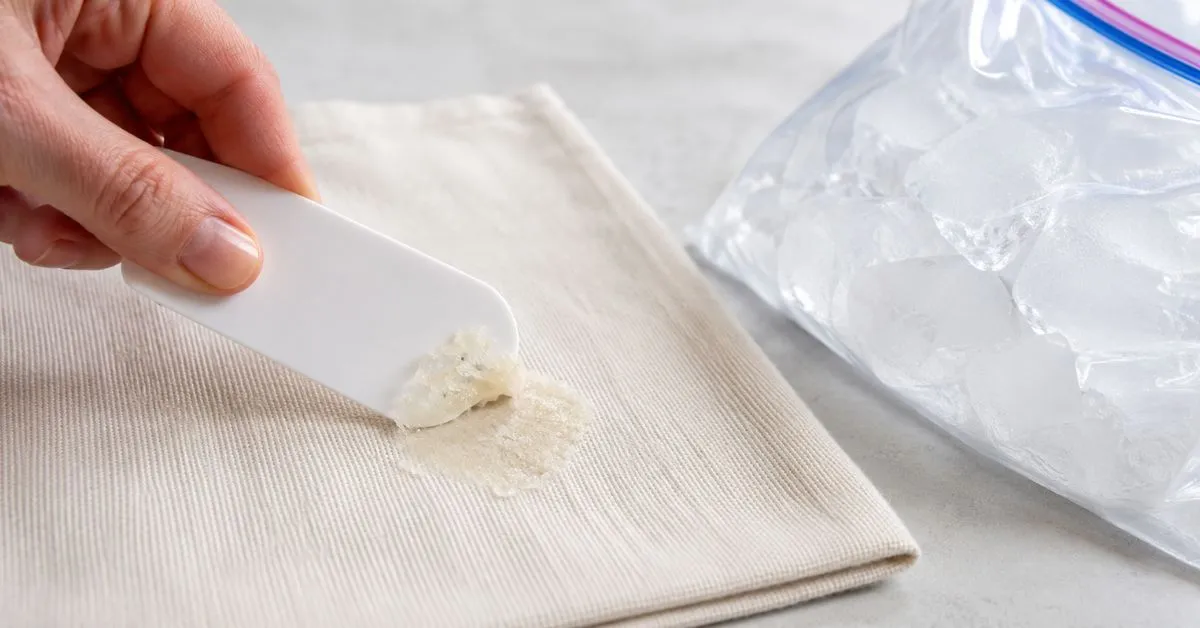

A hot glue gun melts polymer adhesives, which then stick to clothes, upholstery, curtains, or craft fabric. The good news is that hot glue is often removed without causing any damage. The best way is to allow the polymer to harden, detach as much of it as possible, and then clean the remaining spot in accordance with the fabric’s care needs.
Do not rub hot glue off fabric since you will push it deeper and cause a stain. You should always read the care label on the fabric before attempting to use any hot glue removal method.
How to Get Hot Glue Off Fabric
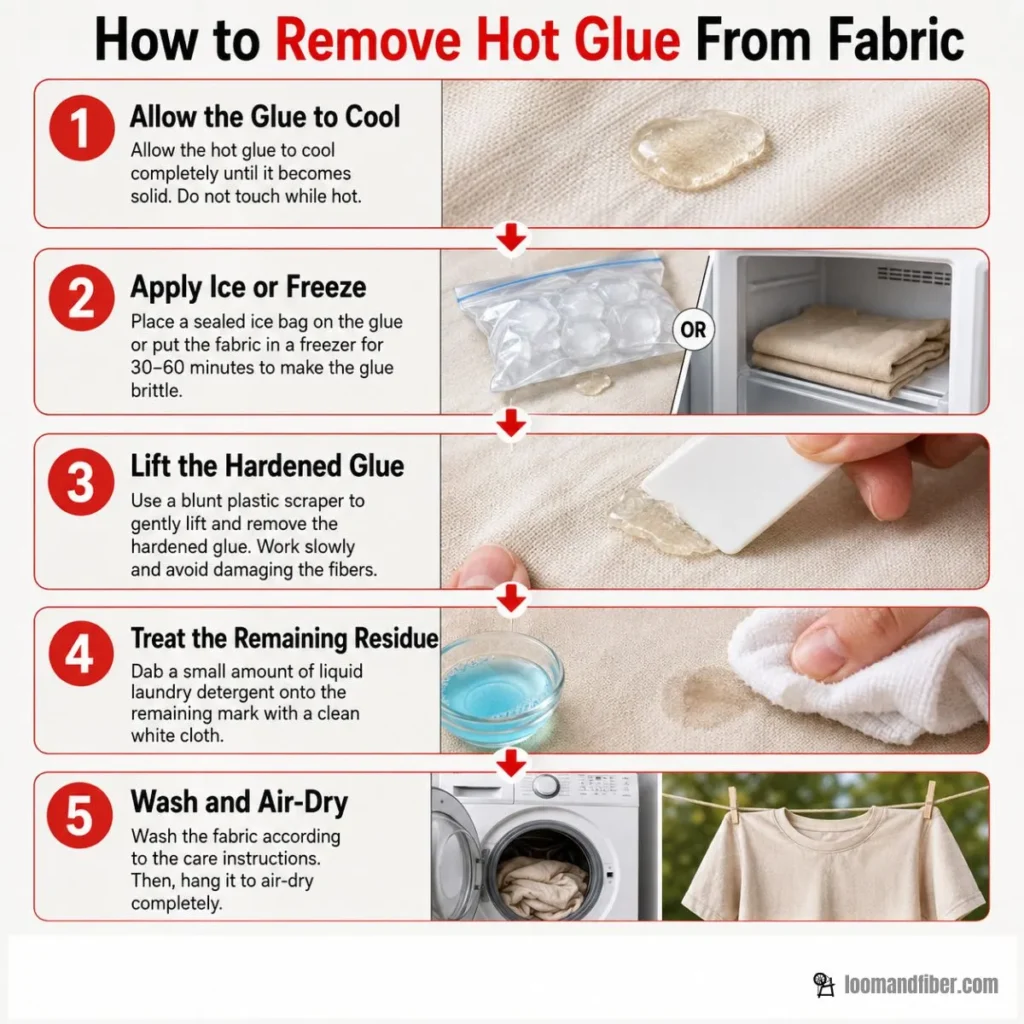
To get hot glue off fabric, leave it alone to cool and harden. You can place the garment in a freezer for 30 to 60 minutes and let the glue cool or press a bag full of ice against it. After the glue has hardened, you can try to lift it off with a spoon, blunt knife, or plastic scraper. If there is glue residue left, you may need to dab the stain with rubbing alcohol or acetone. Wash the fabric in accordance with its care label after the glue is removed.
Supplies You May Need
- Ice cubes or a freezer
- A resealable plastic bag
- A spoon or a dull butter knife
- A plastic scraper or an old bank card
- White paper towels
- A clean white cloth
- Rubbing alcohol
- Acetone-based nail polish remover
- Liquid laundry detergent
- An iron
- An ironing board
- Cotton swabs
Always start with the mildest method and the least amount of heat or chemicals.
Let the Hot Glue Cool First
Do not attempt to wipe hot glue from fabric when its warm and pliable. When glue is fresh, it will smear across the surface and bury itself deeper in the fibers of the fabric. It is also painful to rip a thick glue stain from a burn.
Always wait for glue to cool and harden before trying to remove it. It might take 10-20 minutes, depending on the size of the spot. Once the glue has cooled, it should be easier to peel, crack, or scrape from the fabric.
If hot glue gets on your skin, cool the irritated area under running water. Never try to forcibly remove hardened glue from a burn.
Method One: Freeze the Hot Glue
The safest and most effective way to get hot glue off most washable fabrics is to freeze it.
Step 1: Place the Fabric in the Freezer
Fold the fabric so that the glue does not come in contact with itself. Then, seal it in a clean plastic bag and place it in the freezer for 30-60 minutes.
If there is not enough room in a freezer, you can place a bag of ice cubes on the glue. Always try to keep the glue dry because melting water can dampen the fabric.
Step 2: Test the Glue
Test if the glue is sufficiently frozen and brittle. If the glue can still be bent, you will need to apply more ice.
Step 3: Lift the Hardened Glue
Use your finger nails or a dull knife to lift a corner of the glue from the fabric. Try to peel or scrape the adhesive off slowly. Never use a razor or a sharp blade because it can slit the fibers or cut through the material.
Step 4: Treat the Residue
After you remove the main body of the glue, you can dab the fabric with liquid laundry detergent to remove the remaining mark. Wait 10 minutes, work the solution into the fibers, and wash the fabric in accordance with its care label.
Method Two: Use an Iron to Transfer the Glue
The second method for getting hot glue off fabric is to use an iron to transfer the adhesive onto something absorbent.
This approach works best on stubborn glue that has embedded itself in the fibers of the fabric. Always try the previous method before using this one because the heat from an iron can damage certain delicate materials.
Never use this method on the following fabrics:
- Acetate
- Acrylic or modacrylic
- Some polyester fabrics
- Coated textiles
- Fabric labeled “do not iron” or “do not press.”
Step 1: Check the Care Label
Always check the care label to make sure that the fabric can withstand the heat of an iron. If it can, iron the fabric on the lowest setting possible with the steam function turned off.
Step 2: Position the Stained Area
Place the fabric with a glue stain, face down, on top of a few layers of plain white paper towels or a clean, unwanted cotton cloth. Always avoid using colored or patterned paper because the dye may bleed onto the fabric.
Step 3: Apply Gentle Heat
Press the iron against the back of the fabric for about 10-15 seconds. Never move the iron back and forth because it will smear the hot glue.
Step 4: Replace the Absorbent Material
Lift the fabric and inspect the transferred glue. Always use a clean section of absorbent paper or a new piece of cotton cloth for the next pass. Repeat until there is no more glue residue. Then, let the fabric cool and wash it as needed.
Method Three: Remove Residue With Rubbing Alcohol
Rubbing alcohol can help loosen some residue left from hot glue. It is safer than acetone but may still remove certain dyes or finishes. Always spot-test rubbing alcohol and do not try to use it on sensitive or delicate materials.
Step 1: Spot Test
Test the effects of rubbing alcohol in an inconspicuous area. Let it sit for several minutes and carefully examine the treated fabric for any undesirable effects. If the fabric does not show any undesirable changes, then proceed with the following steps. Otherwise, skip to the next method.
Step 2: Cover the Stain
Place a white towel under the glue spot. Dampen a cotton swab or a clean white cloth with rubbing alcohol and gently dab the edges of the dry adhesive. Wait one or two minutes for the bond to break before using a blunt edge to lift the glue from the fabric.
Step 3: Wash the Fabric
Rinse and wash the fabric in accordance with its care label. Avoid vigorously rubbing the fabric because it may spread the glue or remove fabric colors.
Method Four: Use Acetone Carefully
Acetone is a strong chemical solvent that can strip hot glue from certain fabrics. However, it can also remove fabric dye and ruin special finishes. Do not use it on the following materials:
- Acetate
- Triacetate
- Modacrylic
- Delicate or unidentifiable fibers
- Printed fabric (test first)
- Coated, laminated, or waterproof fabric.
Spot-test acetone on a hidden part of the fabric. If the fabric changes color or texture, then stop right away. If the fabric passes the spot test, then lightly dampen a cotton swab with acetone. This will help dissolve some of the glue on the fabric. But, do not soak the glue or the fabric. Blot the fabric with a clean white cloth before rinsing and washing the fabric in accordance with its care label. Always work in a well-ventilated area and do not expose acetone to an open flame.
How to Get Hot Glue Off Different Fabrics
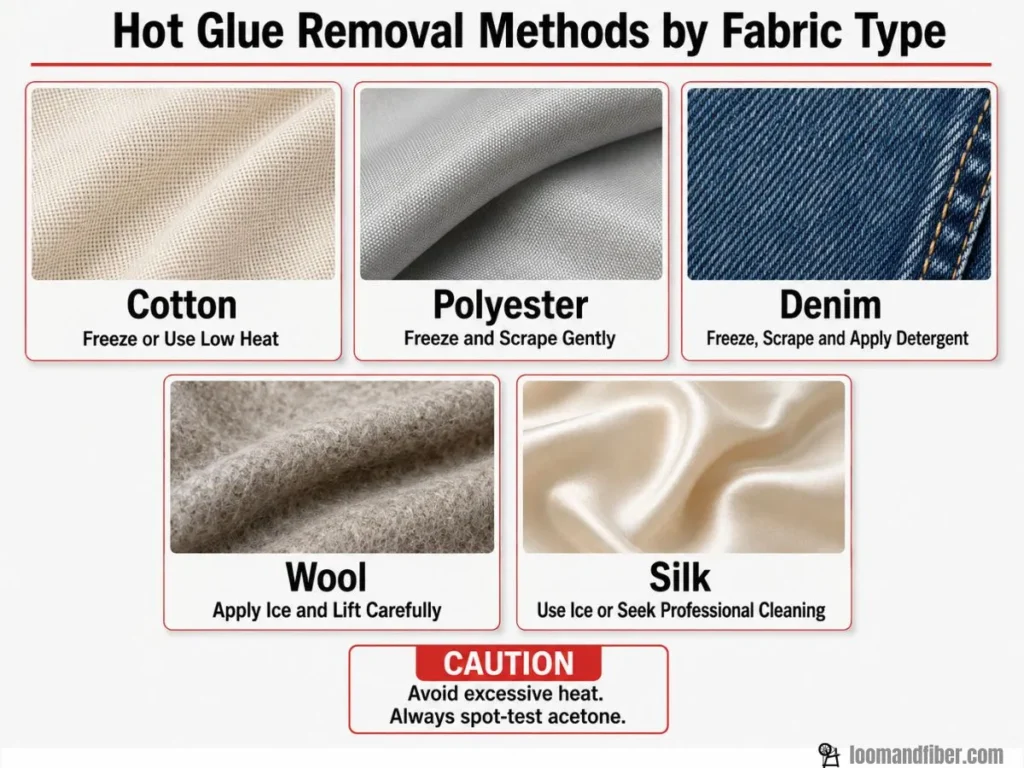
Hot glue can adhere to any fabric, but removal methods vary depending on the fiber in which it is stuck. Here are some general guidelines.
Cotton & Linen
Cotton and linen are strong fibers that tolerate most hot glue removal treatments. However, always avoid excessive heat and scrubbing. Acetone should be safe to use on some cotton but should always be spot tested first. Never vigorously scrape or pick at the fibers in loosely woven linen.
Polyester
Polyester can handle the freezing process but should never be exposed to extreme heat. Always use the lowest setting on an iron if the care label allows any pressing at all. Solvents may remove printed designs and special finishes, so always spot-test before use.
Denim
Hot glue tends to stay on top of tightly woven denim and may come off cleanly after freezing. Use a dull edge to peel the glue away from the fabric. Always treat any remaining glue with liquid laundry detergent.
Since denim dye can transfer, always spot-test alcohol and acetone on the inside of the garment.
Wool
Wool fibers can be stretched, matted, or pilled. Always try to freeze the glue and remove it gently. Avoid excessive heat or scrubbing. Valuable garments or items with a care label that says “dry-clean only” should be taken to a professional cleaner.
Silk
Silk is delicate and should not be scrubbed, submerged in water, or scratched. Avoid using acetone on silk without professional help. You may be able to cool off a small glue stain with an ice-filled bag and try to lift it without bending the fabric. Expensive silk garments should always be taken to a dry cleaner.
Velvet
Hot glue can hide deep inside the pile of a velvet fabric. Always allow the glue to harden and cool further with an ice bag. Try to lift it without pushing the fibers down. Avoid using heat or an iron. For glue that is inside the pile, a professional cleaner is the best option.
Upholstery & Carpets
Place a bag of ice over the glue until it hardens. Break or lift the glue off with a spoon or plastic scraper, starting at the edges. Never soak the upholstery because moisture can get into the padding underneath. Always test cleaning products or carpet cleaners in an inconspicuous place first.
How to Remove Hot Glue from Fabric Without Acetone
Most of the time heat glue adhesive doesn’t require acetone for removal. Your best alternatives to get hot glue off fabric include:
- Harden the adhesive with ice;
- Freeze, peel, and/or scrape removable clothing/fabrics gently;
- Use a care-label-approved ironing method safely;
- Apply liquid detergent over residue after hot glue fabric is removed;
- Consider rubbing alcohol to treat remaining dark liquid adhesive marks (as long as pre-testing didn’t reveal fabrics and stain react poorly).
Cold glue also reduces the glue’s overall tackiness in preparation for later sublimation at mild temperatures or through mechanical means. Many DIY or commercial stain removal processes consider freezing or solidifying an adhesive more practical than treating fabric with potentially hazardous or inappropriate substances.
How to Remove Hot Glue from Delicate Fabric
If you’re wondering how to remove hot glue from fabric, don’t apply excessive heat or forceful mechanical action to heat-sensitive materials. To safely take glue off clothes and fabric, cool it down by placing an ice pack wrapped in a zip-lock plastic bag over the glue mark. Try to remove glue in one piece from fine, flowing, fragile, or stretchy materials: support fabric by lying it flat on a soft surface, and don’t continue lifting glue residue if your hands exert any forceful pressure on fabric fibers.
In such cases, professional cleaner’s services could yield better results compared to any home remedy. You’ll get the assurance of a guaranteed full or partial discoloration-removal method if you inform a cleaner of the nature of the glue-based glue stain.
What Not to Do
Avoid such hot glue removal mistakes when getting glue out of fabric, as they can complicate the stain removal process:
- Avoid rubbing, smearing, or dragging glue.
- Avoid pulling out soft, pliable adhesive through fibers.
- Avoid using a razor or knife.
- Avoid heating glue beyond its melting point unless you confirm fabric has gone through a laundering process.
- Never apply acetone directly on hot glue and fabric.
- Don’t put clothing in a tumble dryer before removing all glue residue and stain.
- Never mix various chemicals prescribed for the removal of fabric adhesive deposits.
- Never use colored towels to dry glue-stained items.
Tumble drying can bond remaining glue deposit with fibers deeper, which makes it unwise to skip other hot glue removal options. Consider air-drying items containing fabric that has gone through hot glue removal treatment in a washing machine.
How to Remove the Remaining Stain
The solid glue could sometimes have been removed but left a dark, greasy or stiff remainder Dab a little heavy duty liquid detergent into the residue on washable fabrics. Work the solution into the fabric for several minutes and wait 10 to 15 minutes. Wash on the warmest setting allowed by the manufacturer’s care symbol. Before drying, feel and visually examine the fabric If the discolored spot still looks like a stain, reapply the liquid detergent wash instead of putting it in the dryer.
A permanent residue could also be the result of damaged fabric fibers, displaced dye or a glue stain that had bonded fabric molecules. In this case, professional cleaning could help, but it might not eliminate the spot on fabric.
When to Use a Professional Cleaner
Seek professional help when:
- the laundry’s care label indicates the need for dry cleaning
- the fabric is delicate: silk, velvet, wool, lace or older fabric items
- the fabric has intricate additions that could be harmed by heat
Use a professional cleaner for big glue spots and when the adhesive has soaked into interior padding. Also, consider getting professional help if fabric fiber content is unknown or if home remedies alter the fabric’s color or texture. Immediately stop any treatment if the dyed fabric is fading or a rough patch, ring-like spot or frayed area appears after using household methods to remove glue.
Conclusion-
The simplest response to the question how to remove hot glue from fabric is to cool the hot glue spots on fabric. Remember that freezing is a safer alternative to using excessive heat or harsh chemicals. Use an iron to remove adhesive from materials that tolerate the heat produced — a hair dryer on the lowest setting can be a safer alternative to direct iron contact, but it still generates high temperatures.
Also, keep in mind that acetone is a solvent that can alter the appearance of some fabrics. Always follow the manufacturer’s instructions and do the hot glue removal procedures on a hidden spot before treating the visible areas of any clothing, upholstery or other fabric items. Pay attention to fabric care labels and avoid using a washing machine to dry fabric objects until the glue adhesive is completely gone.
Read More>> Can you use Acrylic Paint as Fabric Paint?
FAQs
Hot glue can be removed from most types of fabric where it makes a glue deposit that has cooled sufficiently to be lifted, scraped or peeled off. The removal is not always total, especially on loosely woven items or those made from delicate materials, but it is possible.
Alcohol can be used on fabric to loosen hot glue residue from a surface. It should not be applied liberally — always test a small hidden spot first to ensure that the rubbing alcohol does not remove any dye from the fabric.
Acetate and triacetate are both synthetics that could be harmed by acetone. Acetone can also ruin many other fabrics besides these, even if they appear to be heat-treated. Again, test a small hidden area first to see if any adverse effect will occur.
Washing the item on the hot setting alone will not entirely remove solid hot glue — a more aggressive mechanic method is required to remove the thick glue residue. Wash the fabric item only after carefully removing the bulk of the hot glue. After the wash cycle, be sure there is no glue left on the clothing and dry the fabric naturally by air.
Vinegar is a weak acid that may loosen hot glue on fabric, but it is generally not the preferred glue remover. A more effective approach for dissolving adhesives would typically be a cold glue removal solution and/or the hot glue removal with hot towel method.
The easiest way to remove glue quickly is to cool the adhesive until it stiffens, then use a flat spatula to loosen and lift the glue away. Hot glue spots on fabric items can often be broken down just as easily by cooling them sufficiently, ideally in a refrigerator or on very cold metal.